Fulltext
The full text is available in PDF.
International Cardiovascular Research Journal
An annual journal in scientific affiliation with the Cardiovascular Research Center, Shiraz University of Medical Sciences

Image Credit:Int Cardiovasc Res J
Authors
Background: Recent years, have witnessed extended and continuous indication of cardiac pacing. However,
increasing number of patients suffered new congestive heart failure (CHF) and aggravated CHF after pacing
therapy. We used blood B type nutriuretic peptide (BNP) to predict the occurrence of CHF in patients with different
types of pacemakers. To assess single N-terminal brain nutriuretic peptide (NT-pro BNP) as a predictor
tool for ventricular dysfunction in different cardiac pacing mode.
Methods: Out of 480 consecutive patients with pacemaker more than 6 months, 79 patients with average age
of 65±13, and more than 90% ventricular pacing participated in the present study. Those with CHF prior to
pacemaker insertion were excluded. The patients underwent medical history and examination, echocardiography
(M-mode, Doppler, and Tissue imaging) and blood sampling for pro-BNP. Twenty five, 12, and 42 patients
had Dual chamber (DDDR), single chamber pacing with dual chamber sensing ( VDDR), and Single chamber
(VVIR) pacemakers respectively
Results: Single pro-BNP level in patient with DDDR and VDDR pacing was lower than in those with VVIR
pacing (P< 0.0001) but in Echocardiography left ventricular (LV) dysfunction was not lower in DDDR than
VDDR and VVIR pacing patients (P= 0.190).
Conclusion: Single level of pro-BNP is lower in double chamber pacing in comparison with single chamber
pacing. Therefore, it seems that dual chamber pacing causes less LV dysfunction.
© 2010, Author(s). This open-access article is available under the Creative Commons Attribution 4.0 (CC BY 4.0) International License (https://creativecommons.org/licenses/by/4.0/), which allows for unrestricted use, distribution, and reproduction in any medium, provided that the original work is properly cited.
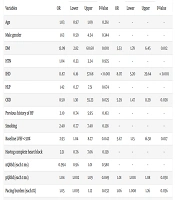
Payami B, Zakerinia M, Moradi A, Easapour Moghadam M, Akiash N. Pacing-Induced Cardiomyopathy in Right Ventricular Pacemaker Patients: Prevalence and Risk Factors in an Iranian Cohort. Int Cardiovasc Res J. 2025;19(1):e164447. doi: https://doi.org/10.5812/icrj-164447
Eysenck W, Sulke N, Gallagher A, Jouhra F, Patel N, et al. Right Ventricular Septal Pacing vs. Right Ventricular Apical Pacing Following Atrioventricular Node Ablation: A 10-Year Follow-up. Int Cardiovasc Res J. 2018;12(3):e69785. doi:
Carbone V, Marafioti V, Pia Calabro M, Oreto G. Sustained ventricular fusion simulating a biventricular pacing. Int J Cardiovasc Pract. 2017;2(1):e130056. doi: https://doi.org/10.21859/ijcp-020104
Esmaeilzadeh M, Saadatifar H, Mohebbi A, Noohi F, Samiei N, et al. Prevalence of Left Ventricular Diastolic Asynchrony in Patient with Systolic Heart Failure. Int Cardiovasc Res J. 2019;13(1):e175353. doi:
Koura HM, Abdalla NM, Hamed Ibrahim M, Abo Hashish MMA, Zaki SM. NT-proBNP in Children With Left to Right Shunt and Dilated Cardiomyopathy. Inn J Pediatr. 2016;26(3):e4485. doi: https://doi.org/10.5812/ijp.4485
Last Update: 3 weeks ago
Last Update: 3 weeks ago
Last Update: 3 weeks ago
Last Update: 2 hours ago
Last Update: 1 day ago
Last Update: 4 days ago