Fulltext
The full text is available in PDF.
International Cardiovascular Research Journal
An annual journal in scientific affiliation with the Cardiovascular Research Center, Shiraz University of Medical Sciences
Image Credit:Int Cardiovasc Res J
Authors
Background:
Right Ventricular Septal (RVS) pacing is often recommended as a more physiological alternative to Right Ventricular Apical (RVA) pacing.
Objectives:
This study aimed to determine the long-term outcomes in patients persistently paced following Atrioventricular Node (AVN) ablation.
Materials and Methods:
This study was conducted on 200 patients who underwent Permanent Pacemaker (PPM) implantation prior to AVN ablation with either RVA- or RVS-pacing. Primary endpoints were hospitalization due to Heart Failure (HF) and death. Secondary endpoints included changes in Ejection Fraction (EF), inter- and intra-ventricular dyssynchrony measures, and paced QRS duration. Demographic data were obtained from all patients. In addition, CT chest examinations were analyzed to confirm RVS lead position.
Results:
The mean survival time from AVN ablation was 6.32 ± 4.294 years in the RVA group and 3.00 ± 2.546 years in the RVS group (hazard ratio = 3.512, P = 0.0001). The results showed no significant differences between the two sites regarding hospitalization due to HF. Baseline and follow-up EFs were respectively 48.4 ± 13.8% and 53.1 ± 8.5% for RVA pacing and 52.0 ± 10.6% and 55.2 ± 11.3% for RVS pacing (P = 0.911). Moreover, 76% of the patients in the RVS group had a septal lead confirmed on CT chest review. Twenty-four percent of the RVS leads were in alternate sites, including the RVA and free wall.
Conclusions:
The results revealed was no diminution in EF with either lead position at long-term follow-up. The mortality rate was significantly less in RVA pacing compared to documented septal pacing although a quarter of the RVS leads were found in alternate sites on CT chest review.
© 2018, Author(s). This open-access article is available under the Creative Commons Attribution 4.0 (CC BY 4.0) International License (https://creativecommons.org/licenses/by/4.0/), which allows for unrestricted use, distribution, and reproduction in any medium, provided that the original work is properly cited.
Moaref A, Fallahzadeh E, Zamani J, Najib K. The influence of right ventricular apical pacing on left atrial volume in patients with normal left ventricular function. Int Cardiovasc Res J. 2018;1(3):e79410. doi:
Carbone V, Marafioti V, Pia Calabro M, Oreto G. Sustained ventricular fusion simulating a biventricular pacing. Int J Cardiovasc Pract. 2017;2(1):e130056. doi: https://doi.org/10.21859/ijcp-020104
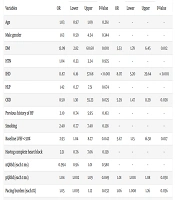
Payami B, Zakerinia M, Moradi A, Easapour Moghadam M, Akiash N. Pacing-Induced Cardiomyopathy in Right Ventricular Pacemaker Patients: Prevalence and Risk Factors in an Iranian Cohort. Int Cardiovasc Res J. 2025;19(1):e164447. doi: https://doi.org/10.5812/icrj-164447
Rostambeigi S, Alizadehasl A, Mahmoudian H, Sanati H, Mohammadi Z. Immediate and Short-Term Impacts of Successful Percutaneous Transvenous Mitral Commissurotomy on Right Ventricular Function. Int Cardiovasc Res J. 2020;14(3):e101968. doi:
Jorat MV, Aslani A, Nikoo MH. Implanting CRT via Endo-Cardiac Route When Tricuspid Valve is Metallic. Int Cardiovasc Res J. 2017;8(1):e12059. doi:
Last Update: 1 month ago
Last Update: 1 month ago
Last Update: 1 month ago
Last Update: 2 hours ago
Last Update: 5 hours ago
Last Update: 4 days ago

