Cover image of the article: Improvement of Pain, Edema, and Knee Giving Way in Intermittent Hydrarthrosis Following Mobilization with Movement Techniques: A Case Report

Image Credit:J Adv Immunopharmacol

Improvement of Pain, Edema, and Knee Giving Way in Intermittent Hydrarthrosis Following Mobilization with Movement Techniques: A Case Report

Authors

Fateme Bokaee1,*
1Department of Physical Therapy, School of Rehabilitation Sciences, Isfahan University of Medical Sciences, Isfahan, Iran
*Corresponding Author: Department of Physical therapy, School of Rehabilitation Sciences, Isfahan University of Medical Sciences, Isfahan, Iran. Email: fatemebokaee@yahoo.com

Journal of Advanced Immunopharmacology:Vol. 6, issue 2; e173160
Published online:Aug 26, 2026
Article type:Case Report
Received:Jun 28, 2026
Accepted:Aug 21, 2026
How to Cite:Bokaee F. Improvement of Pain, Edema, and Knee Giving Way in Intermittent Hydrarthrosis Following Mobilization with Movement Techniques: A Case Report. J Adv Immunopharmacol. 2026;6(2):e173160. doi: https://doi.org/10.69107/jai-173160

Abstract

Introduction:

Intermittent hydrarthrosis (IH) is characterized by periodic attacks of synovitis in large joints, most commonly the knee. No successful treatment has been documented to prevent or abort these attacks. Mobilization with movement (MWM) comprises manual therapy techniques used to improve pain and joint motion. This case report aimed to evaluate the effects of MWM techniques on knee pain, edema, and giving way in patients with IH.

Case Presentation:

A patient with IH underwent 10 sessions of MWM techniques. Knee pain, edema, and giving way were assessed before and after treatment. Following the intervention, knee pain, edema, and giving way improved.

Conclusions:

MWM techniques may be valuable for managing knee pain, edema, and episodes of giving way in patients with IH.

1. Introduction

Intermittent hydrarthrosis (IH) is an autoinflammatory disease also known as periodic hydrarthrosis, periodic synovitis, or periodic benign synovitis (1). IH is characterized by recurrent, brief episodes of joint swelling (2). Clinical management of IH requires differential diagnosis from other conditions that cause intermittent arthritis. Each patient may have an individual rhythm, pattern, and cycle of arthritic episodes, and there is no defined interval between episodes (3). Although the knee is the most commonly affected joint, other joints, including the ankle and elbow, may also be involved. Fluid accumulation within the joint can cause discomfort and impaired movement (1). IH does not respond to steroids, or the response may be less than expected (4).
Mobilization with movement (MWM) is a manual therapy technique in which the patient actively performs the painful movement while the physiotherapist applies a sustained glide to the joint. This technique aims to restore a full, pain-free range of motion (5). The effectiveness of MWM may be attributable to two mechanisms. First, MWM may alter central nervous system input by increasing pain-inhibitory signals or reducing pain-facilitating signals. Mobilization techniques may involve not only local physiological mechanisms but also central mechanisms, including facilitation of descending inhibitory pathways from higher levels of the brainstem or inhibitory pathways in the spinal cord. Second, MWM may modulate the motor system. By altering sensory input, MWM may modulate pain perception and influence pain-related changes in muscle activation patterns. Previous studies have shown rapid improvements in pain and function following MWM in orthopedic disorders (6, 7). To the best of our knowledge, no previous studies have investigated the effects of MWM techniques in patients with IH. This case report aimed to determine the effects of MWM techniques on knee pain, edema, and giving way in IH.

2. Case Presentation

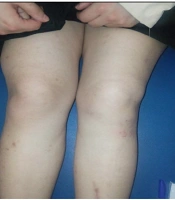
P.K. was a 27-year-old woman referred to the physiotherapy clinic at Isfahan University of Medical Sciences because of left knee pain, recurrent knee edema, and giving way. She had been diagnosed with IH 2 years earlier by a rheumatologist. Her chief complaints were knee pain, edema, and giving way. Other appendicular and axial joints were normal. She also reported daytime knee stiffness. Her family history was unremarkable. On observation, knee edema was present (Figure 1).
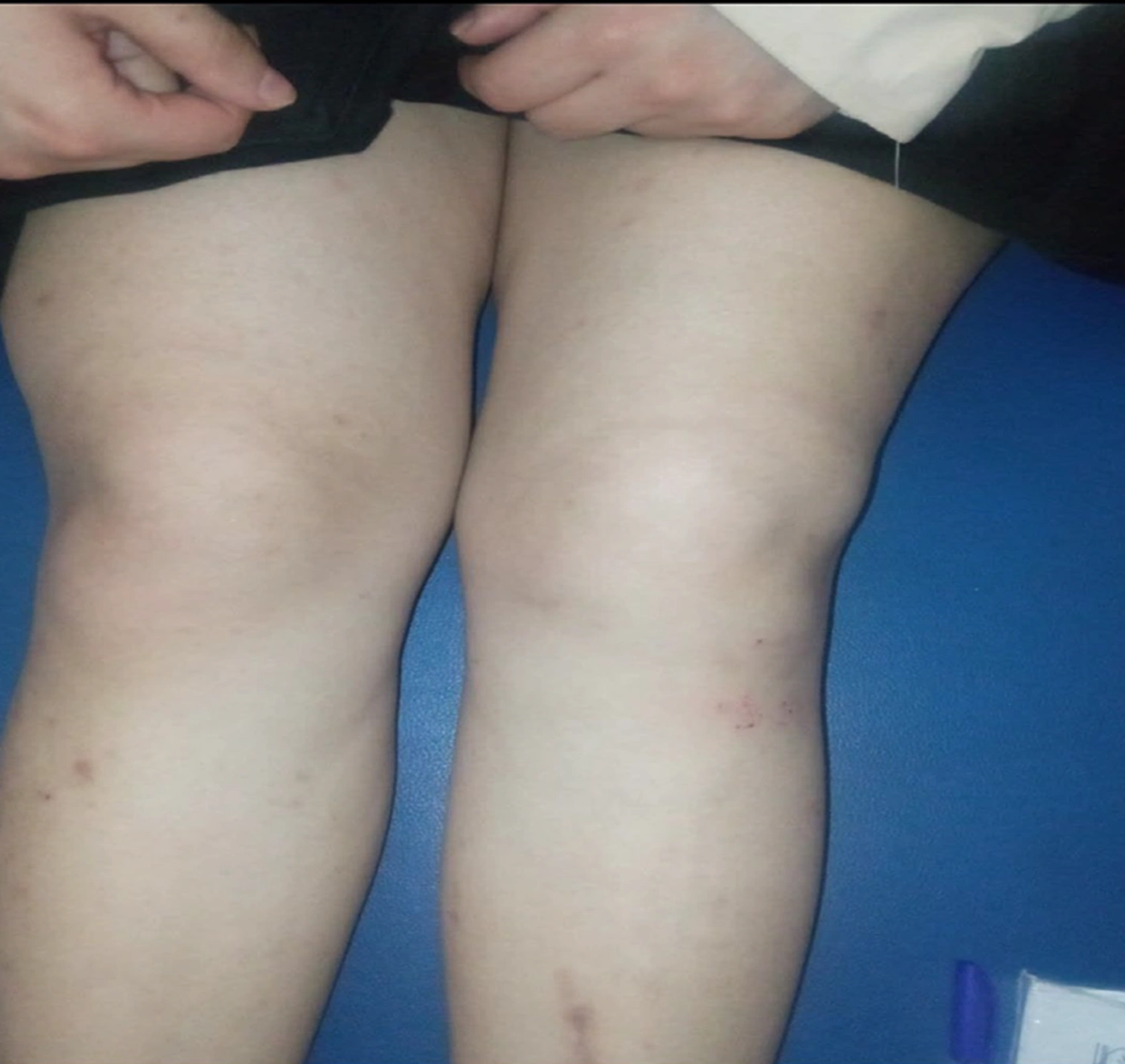
Knee edema before application of MWM techniques
Figure 1.
Knee edema before application of MWM techniques
On physical examination, she reported pain and discomfort at terminal knee extension. On palpation, the joint was not warm, and tenderness was present at the attachment of the pes anserine muscles. During gait, the stance phase on the left knee was shorter than that on the right. She was taking hydroxychloroquine daily; however, her clinical condition remained unchanged, and the medication was ineffective.
To reduce pain and improve terminal knee extension, MWM techniques were applied by a physical therapist with 20 years of experience. The techniques consisted of medial glide and lateral rotation of the tibia in the supine position. For the medial glide technique, the knee was positioned at 45 degrees of flexion. The therapist applied a medial glide to the tibia using the palmar aspect of the right hand on the upper aspect of the leg and the left hand on the lower aspect of the thigh. The therapist then maintained the medial glide while asking the patient to extend the knee throughout the range of motion. For the lateral rotation technique, the therapist grasped the upper aspect of the tibia with both hands, rotated the tibia laterally, and asked the patient to extend the knee while maintaining the lateral rotation throughout the range of motion (5).
The MWM techniques were applied gently and were pain-free during and after application. During the first session, 3 sets of 3 repetitions of the MWM techniques were performed. Because pain and knee extension improved after the first session, the therapist applied 5 sets of 10 repetitions during subsequent sessions. One set of overpressure, defined as passive end-range pain-free pressure, was applied as the final set of the technique. A 1-minute rest period was provided between sets. The patient participated in 10 physiotherapy sessions, with 3 sessions per week. She was instructed to perform home exercises 3 times daily, with 10 repetitions, to maintain pain reduction and the increased terminal knee extension range. The home exercise program included repetitive terminal knee extension and straight-leg raising exercises in the supine position.
After 10 sessions of MWM techniques, knee pain decreased from 9 to 2 on the visual analog scale. Knee edema was reduced (Figure 2).
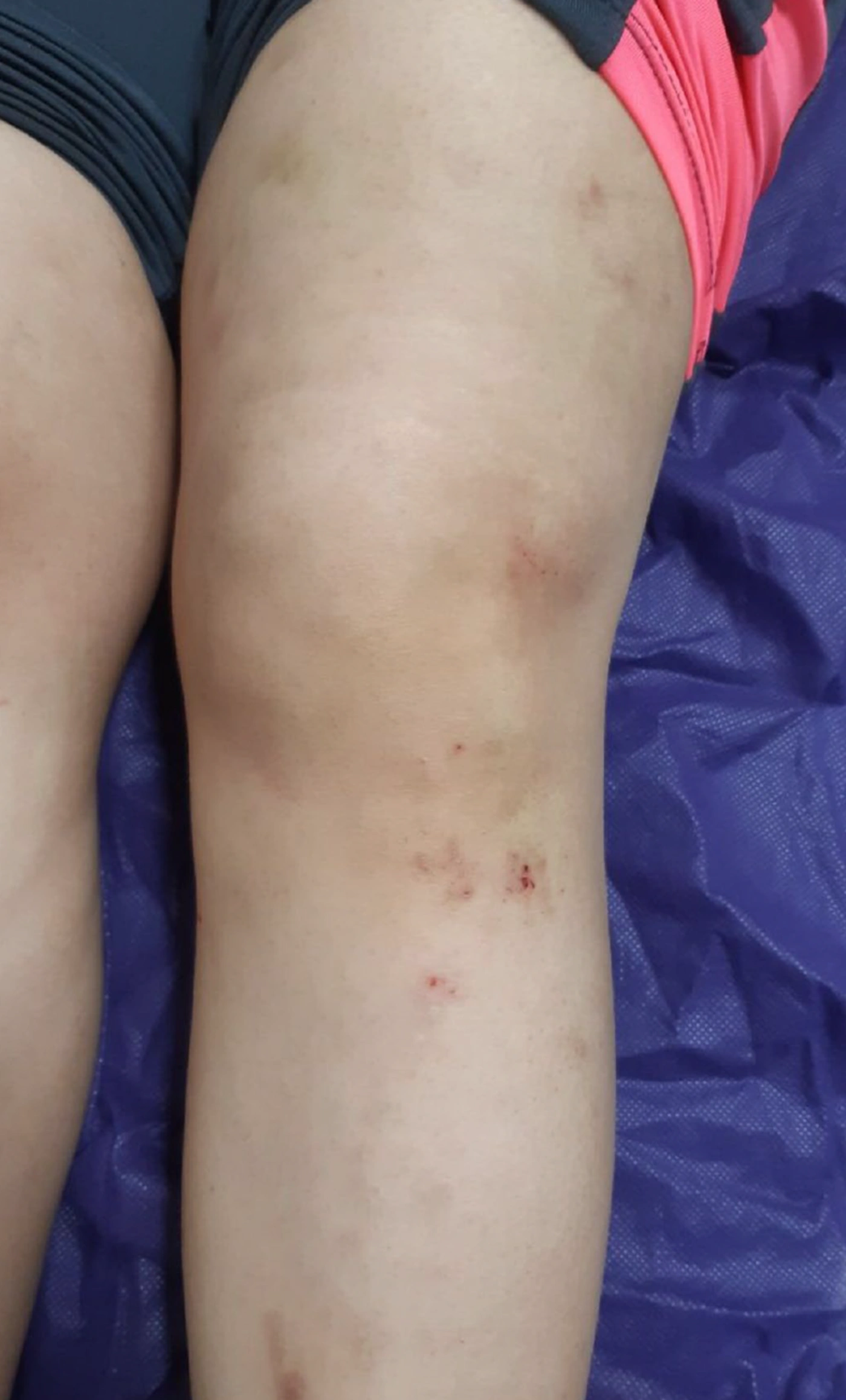
Knee edema after application of MWM techniques
Figure 2.
Knee edema after application of MWM techniques
The patient also reported improvements in knee stiffness and giving way during walking.

3. Discussion

This case report evaluated the effectiveness of MWM techniques for knee pain, edema, and giving way in IH. The findings indicated improvement in all 3 outcomes following MWM. IH is characterized by episodes of swelling that usually affect 1 knee, although both knees may be affected (4). In this case report, MWM techniques were applied. These techniques involve pain-free, sustained glides combined with active movements and are often considered effective for improving pain and joint mobility (8). In addition to their mechanical effects, MWM techniques may alter pain perception and motor control and improve joint stability and movement efficiency (9, 10). MWM techniques have both biomechanical and neurophysiological effects. Mobilization techniques have been shown to reduce nociceptive input and modify spinal and supraspinal processing. They may also stimulate descending inhibitory processes and reduce pain intensity. Stimulation of mechanoreceptors during joint mobilization is associated with increased proprioceptive acuity and improved neuromuscular control (11). Motor learning may also be enhanced through the active movement component of MWM. Previous studies have confirmed that the ability to perform active, pain-free movement improves functional performance and decreases fear avoidance (12, 13). Repetitive MWM techniques may facilitate neuroplastic changes in motor function (14).
The observed positive effects may not be solely mechanical and neuromuscular but may also be reinforced through an immunological pathway. By applying gentle mechanical forces to inflamed articular tissues, MWM techniques may alter the behavior of immune cells in the joint, particularly macrophages, thereby reducing the inflammatory response and creating an anti-inflammatory environment within the joint. Given the autoinflammatory nature of IH, this represents a plausible biological mechanism underlying the effectiveness of this therapeutic approach (15-18).
In this case, we focused on achieving terminal knee extension because the patient reported pain in this range and had tenderness at the attachment of the pes anserine muscles. Tenderness at this site may have been secondary to impaired terminal knee extension during stabilization of the knee joint.
To the best of our knowledge, this case report is among the first to investigate the effects of MWM techniques on knee pain, edema, and giving way in IH. Because of the lack of similar studies, comparison with previous findings is not possible. This case report provides preliminary data on the potential effectiveness of MWM techniques in IH. Based on the present findings, MWM techniques may reduce the consequences of IH. Future studies may clarify whether these techniques should be incorporated into the standard management of IH.
Although the results of this case report were positive, they are insufficient to conclusively establish the efficacy of these techniques in IH. Several limitations should be considered when interpreting the findings. This report describes only 1 case and reports only the short-term effects of MWM techniques. Similar studies with larger samples and follow-up assessments are recommended to determine the persistence of the clinical effects of these techniques.
In conclusion, based on this case report, MWM techniques may be valuable for managing knee pain, edema, and giving way in patients with IH.
Footnotes

  • AI Use Disclosure:The authors declare that no generative AI tools were used in the creation of this article.

  • Authors' Contribution:The author conducted all aspects of the study.

  • Conflict of Interests Statement:The author does not declare any conflicts of interests for this study.

  • Data Availability:The data that support the results of present case study are available on request from corresponding author of study.

  • Ethical Approval:Informed consent was obtained from all participants.

  • Funding/Support:No funding was received for this study.

  • Informed Consent:Patient signed written informed consent form to publish her report.

References

  • 1.
    Cabrera AR, Martinez M, Paulino R, Hinojosa Y, Oduntani KO, Onyema O, et al. Intermittent hydrarthrosis, rare, unknown, underdiagnosed and forgotten: First report in Gambia. Med Clin Sci. 2023;5(7):1-4. https://doi.org/10.33425/2690-5191.1101.
  • 2.
    Cañete JD, Aróstegui JI, Queiró R, Sanmartí R, Ballina J, Bosch X, et al. Association of intermittent hydrarthrosis with MEFV gene mutations. Arthritis Rheum. 2006;54(7):2334-2335. [PubMed ID: 16802374]. https://doi.org/10.1002/art.21923.
  • 3.
    Gómez-Puerta JA, García-Melchor E. Young woman with relapsing arthritis. Reumatol Clin (Engl Ed). 2010;6(1):58-62. https://doi.org/10.1016/S2173-5743(10)70012-5.
  • 4.
    Queiro-Silva R, Tinturé-Eguren T, López-Lagunas I. Successful therapy with low-dose colchicine in intermittent hydrarthrosis. Rheumatology (Oxford). 2003;42(2):391-392. [PubMed ID: 12595650]. https://doi.org/10.1093/rheumatology/keg068.
  • 5.
    Ughreja RA, Shukla YU. Mulligan's mobilisation with movement (MWM) relieves pain and improves functional status in osteoarthritis knee. Int J Physiother. 2017;4(2):132-138. https://doi.org/10.15621/ijphy/2017/v4i2/141954.
  • 6.
    Vicenzino B, Wright A. Effects of a novel manipulative physiotherapy technique on tennis elbow: a single case study. Man Ther. 1995;1(1):30-35. [PubMed ID: 11327792]. https://doi.org/10.1054/math.1995.0247.
  • 7.
    Vicenzino B, Paungmali A, Buratowski S, Wright A. Specific manipulative therapy treatment for chronic lateral epicondylalgia produces uniquely characteristic hypoalgesia. Man Ther. 2001;6(4):205-212. [PubMed ID: 11673930]. https://doi.org/10.1054/math.2001.0411.
  • 8.
    Westad K, Tjoestolvsen F, Hebron C. The effectiveness of Mulligan's mobilisation with movement (MWM) on peripheral joints in musculoskeletal (MSK) conditions: a systematic review. Musculoskelet Sci Pract. 2019;39:157-163. [PubMed ID: 30583976]. https://doi.org/10.1016/j.msksp.2018.12.001.
  • 9.
    Kong H, Wang XQ, Zhang XA. Exercise for osteoarthritis: a literature review of pathology and mechanism. Front Aging Neurosci. 2022;14. 854026. [PubMed ID: 35592699]. [PubMed Central ID: PMC9110817]. https://doi.org/10.3389/fnagi.2022.854026.
  • 10.
    Sobhani V, Hashemi SE, Mir SM, Ghorbanpour A. Impact of proprioceptive exercises on pain, balance, and fall risk in the elderly with knee osteoarthritis: a randomized clinical trial. Cureus. 2024;16(10). e70885. [PubMed ID: 39497862]. [PubMed Central ID: PMC11533887]. https://doi.org/10.7759/cureus.70885.
  • 11.
    Khan MA, Natarajan SB, Azmi MA, Islam H, Asif M, Patafi MAM, et al. Effectiveness of Mulligan mobilization versus proprioceptive exercises in knee osteoarthritis: a randomized controlled trial. Retos. 2026;75:963-976. https://doi.org/10.47197/retos.v75.118251.
  • 12.
    Aman JE, Elangovan N, Yeh IL, Konczak J. The effectiveness of proprioceptive training for improving motor function: a systematic review. Front Hum Neurosci. 2015;8:1075. [PubMed ID: 25674059]. [PubMed Central ID: PMC4309156]. https://doi.org/10.3389/fnhum.2014.01075.
  • 13.
    May J, Krzyzanowicz R, Nasypany A, Baker R, Seegmiller J. Mulligan Concept use and clinical profile from the perspective of American certified Mulligan practitioners. J Sport Rehabil. 2015;24(4):337-341. [PubMed ID: 25474191]. https://doi.org/10.1123/jsr.2014-0178.
  • 14.
    Lin LH, Lin M, Hsieh GJ, Chen HI, Sun SF, Tsai RJ. Mobilization with movement on reducing pain and disability for knee osteoarthritis: a systematic review and meta-analysis of randomized controlled trials. J Man Manip Ther. 2026;34(2):102-117. [PubMed ID: 40265821]. [PubMed Central ID: PMC13007429]. https://doi.org/10.1080/10669817.2025.2495576.
  • 15.
    Tani Y, Kishi T, Miyamae T, Kawamoto M, Kawaguchi Y, Taniguchi A, et al. The evaluation of gene polymorphisms associated with autoinflammatory syndrome in patients with palindromic rheumatism complicated by intermittent hydrarthrosis. Clin Rheumatol. 2020;39(3):841-845. [PubMed ID: 31897954]. https://doi.org/10.1007/s10067-019-04883-w.
  • 16.
    Andrés M, Pascual E. Anakinra for a refractory case of intermittent hydrarthrosis with a TRAPS-related gene mutation. Ann Rheum Dis. 2013;72(1):155. [PubMed ID: 22887853]. https://doi.org/10.1136/annrheumdis-2012-202087.
  • 17.
    He Y, Jin K, Pan B, Li K, Mai JDH, Xu X, et al. Nanoscale acoustic oscillator for mechanoimmunology: NAOMI. Sci Adv. 2025;11(33). eadx3851. [PubMed ID: 40802748]. [PubMed Central ID: PMC12346274]. https://doi.org/10.1126/sciadv.adx3851.
  • 18.
    Liang X, Guo Z, Chen Z. Advances in macrophage mechanoimmunology: Understanding the role of ultrasound mechanical effect. Ultrasound Med Biol. 2026;52(2):259-271. [PubMed ID: 41219090]. https://doi.org/10.1016/j.ultrasmedbio.2025.10.010.

Copyright

Copyright © 2026, Journal of Advanced Immunopharmacology. This open-access article is available under the Creative Commons Attribution-NonCommercial 4.0 (CC BY-NC 4.0) International License (https://creativecommons.org/licenses/by-nc/4.0/), which allows for the copying and redistribution of the material only for noncommercial purposes, provided that the original work is properly cited.

Similar Articles

13
Dec
2009
Effect of MobilizationGrad 1 in Pain and Reduction of Osteoarthritic Knee

Effect of MobilizationGrad 1 in Pain and Reduction of Osteoarthritic Knee

Mehdi Tavakoli,
Farid Bahrpeyma

Tavakoli M, Bahrpeyma F. Effect of MobilizationGrad 1 in Pain and Reduction of Osteoarthritic Knee. Zahedan J Res Med Sci. 2010;11(4):e94355. doi:

19
May
2011
The effect of mobilization on improvement of physical function  in knee osteoarthritis

The effect of mobilization on improvement of physical function in knee osteoarthritis

Mahdi Tavakkoli,
Farid Bahrpeyma

Tavakkoli M, Bahrpeyma F. The effect of mobilization on improvement of physical function in knee osteoarthritis. J Kermanshah Univ Med Sci. 2011;15(1):e69713. doi:

2
Sep
2017
Effectiveness of knee exercises versus combined knee and hip exercises in treatment of patellofemoral pain: A randomized clinical trial

Effectiveness of knee exercises versus combined knee and hip exercises in treatment of patellofemoral pain: A randomized clinical trial

Farzane Soleimani,
Fateme Derisfard,
hossein Negahban,
Fateme Esfandiarpour

Soleimani F, Derisfard F, Negahban H, Esfandiarpour F. Effectiveness of knee exercises versus combined knee and hip exercises in treatment of patellofemoral pain: A randomized clinical trial. koomesh. 2017;19(3):e152901. doi:

30
Nov
2019
Comparing the Effect of Exercise Therapy With Kinesio Taping on Pain and Electrical Activity of Muscles in Women With Patellofemoral Pain Syndrome

Comparing the Effect of Exercise Therapy With Kinesio Taping on Pain and Electrical Activity of Muscles in Women With Patellofemoral Pain Syndrome

Ali Yalfani,
Maryam Abdolmaleki,
Zahra Raeisi

Yalfani A, Abdolmaleki M, Raeisi Z. Comparing the Effect of Exercise Therapy With Kinesio Taping on Pain and Electrical Activity of Muscles in Women With Patellofemoral Pain Syndrome. J Inflamm Dis. 2024;23(4):e156170. doi:

17
Aug
2024
A Comparison of Combined Pilates-Kinesio Tape and Mulligan-Kinesio Tape Exercises on Pain, Lumbar Range of Motion, Hamstring Strength, and Pelvic Rotation in Women with Non-specific Chronic Low Back Pain

A Comparison of Combined Pilates-Kinesio Tape and Mulligan-Kinesio Tape Exercises on Pain, Lumbar Range of Motion, Hamstring Strength, and Pelvic Rotation in Women with Non-specific Chronic Low Back Pain

Atieh Alizad Arablouye Bishe,
Farideh Babakhani,
Siamak Kazemi Sufi

Alizad Arablouye Bishe A, Babakhani F, Kazemi Sufi S. A Comparison of Combined Pilates-Kinesio Tape and Mulligan-Kinesio Tape Exercises on Pain, Lumbar Range of Motion, Hamstring Strength, and Pelvic Rotation in Women with Non-specific Chronic Low Back Pain. J Clin Res Paramed Sci. 2024;13(1):e145793. doi: https://doi.org/10.5812/jcrps-145793

More by these authors

Fateme BokaeePubMedScholar
Share
Cited by
Metrics