The observed increase in laparoscopic cholecystectomy among teenagers and young adults at our facility prompted an investigation into the prevalence and potential risk factors associated with gallstone disease in individuals aged 15 - 40 years. The results reveal significant patterns, necessitating a discussion on the evolving landscape of gallstone disease in younger individuals and the factors influencing this trend.
Previous research, such as the Sirmione study (
6), indicates that women aged 18 - 65 years are more susceptible to cholelithiasis compared to men within the same age group, with an overall prevalence of gallstone disease at 6.9% (8.9% among women and 4.5% among men). Furthermore, the incidence of gallbladder disease increases with age, with Schirmer et al. (
7) reporting that approximately 20% of individuals over 40 and 30% of those over 70 develop biliary calculi. Women are about four times more likely than men to develop gallstones during their reproductive years, although this gender disparity diminishes with age.
Earlier studies have shown that the risk of developing gallstone disease increases with factors such as the number of pregnancies, obesity, and hypertriglyceridemia (
4,
6,
7,
11).
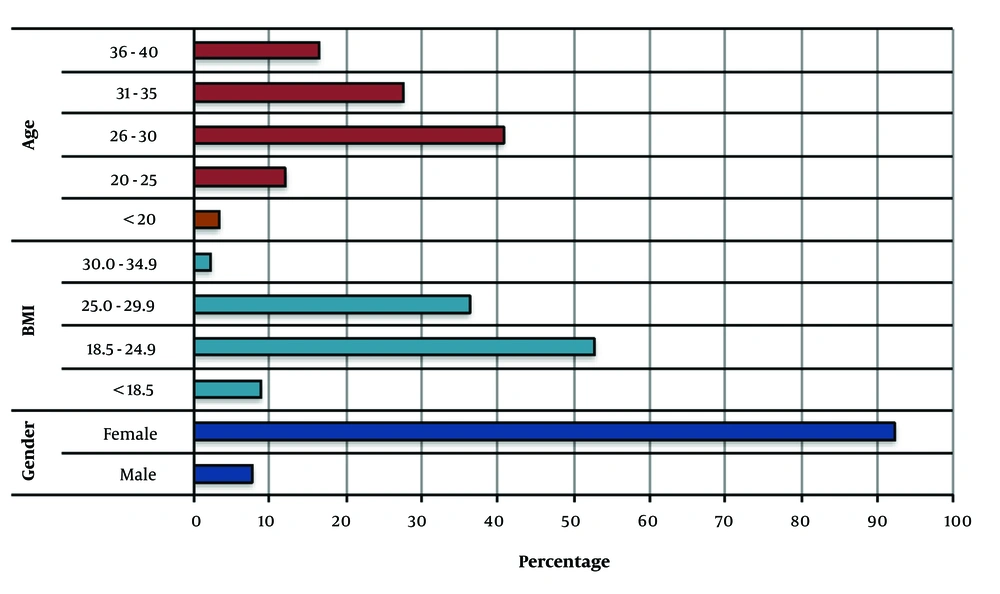
In our study, the predominance of females among the affected demographic, with 56.1% of cases occurring in individuals under 30 and an overarching majority (83.6%) under 40 years of age, aligns with contemporary research trends. This is consistent with recent studies documenting an increased prevalence of gallstone formation and associated hospital admissions among individuals younger than 30 years, reflecting a shift in age incidence (
1,
5,
8,
9). Additionally, Chilimuri et al. found that the prevalence of gallstones among young patients surged to 2.96% by 2010 over a 15-year period, with a notable 30% increase in hospitalizations due to gallstone disease, particularly among females (
8).
In contrast to earlier literature, a retrospective cross-sectional study by Mehta et al. in 2012, involving 404 children under 18, found a statistically significant association between obesity and symptomatic gallbladder disease in juveniles (
12). However, our study's finding of substantial prevalence (52.7%) among individuals with average weight (BMI 18.5 - 24.9) suggests a need to reconsider the association of gallstones with obesity alone.
In earlier research, Constantinescu et al. analyzed 1,905 cases of cholecystectomy to highlight the significant prevalence of gallstones and their underlying causes in young individuals. Their findings emphasized that age, female gender, pregnancy, and obesity were the most prevalent risk factors associated with gallstone formation (
2). These observations were further supported by a study conducted in Korea (
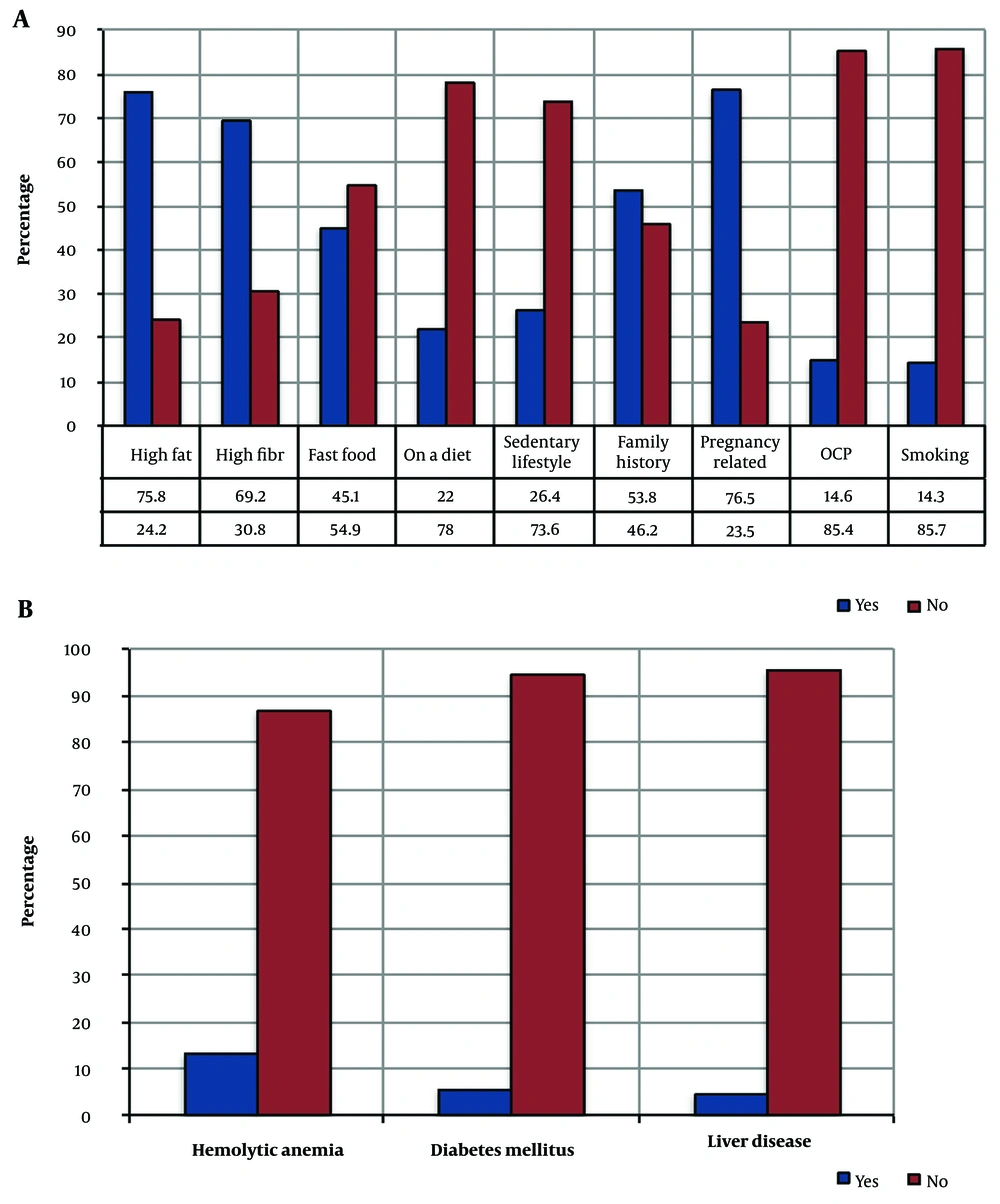
3). This study assessed modifiable risk factors and chronic conditions as potential contributors to gallstone formation, finding high-fat diet (75.8%) and sedentary lifestyle (73.6%) to be prevalent among affected individuals. Surprisingly, a notable proportion of individuals (69.2%) maintained a high-fiber diet, which is known for its preventive properties against gallstone formation. Pregnancy-related factors, which accounted for 76.5% of the cases, highlight the importance of considering reproductive history as a contributing factor (
13).
Although the prevalence of gallstones varies by country, certain factors such as age, female gender, and genetic predisposition are considered unchangeable, while factors like obesity, rapid weight loss, oral contraceptive use, and physical inactivity are considered modifiable (
14). Our study's findings align with existing knowledge about the risk factors associated with gallstones. Notably, only a small proportion of patients in this cohort reported engaging in rapid weight loss diets, using oral contraceptives, or being physically inactive. This suggests that while these factors can contribute to gallstone development, they may not be as prevalent among the study population compared to other risk factors.
Previous literature has proposed a correlation between chronic liver diseases, such as cirrhosis (
15), diabetes, and hemolytic anemia (
14), and the onset of various types of gallstones. In our study, the presence of modifiable risk factors and chronic conditions, including hemolytic anemia (13.2%), diabetes mellitus (5.5%), and liver disease (4.4%), underscores the complex nature of gallstone etiology within this population cohort.
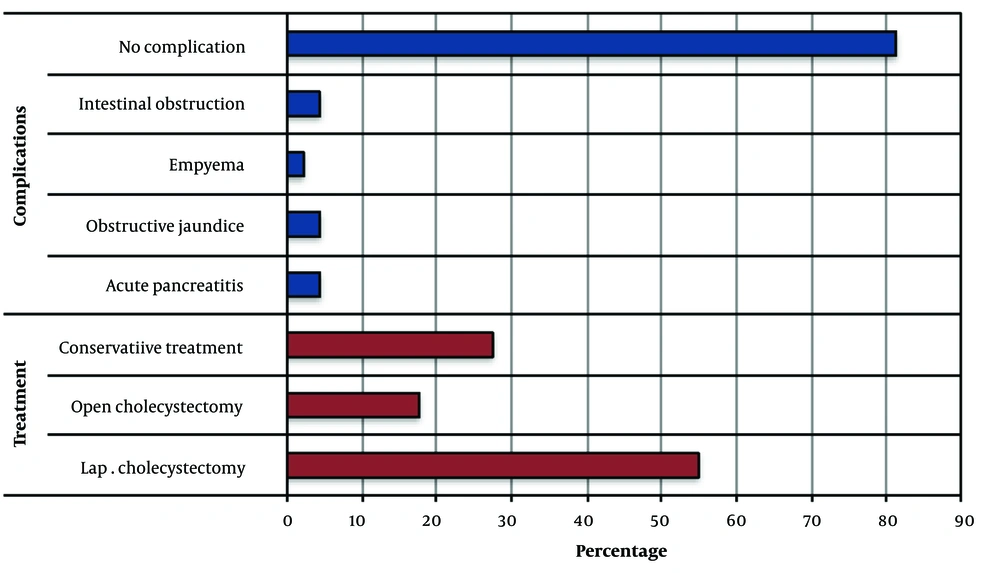
The predominant use of laparoscopic cholecystectomy (54.9%) in this study reflects a shift in treatment preferences. A significant portion of patients (27.5%) opted for conservative treatment, indicating a nuanced approach to management. Although complications such as acute pancreatitis (4.4%), obstructive jaundice (4.4%), empyema (2.2%), and intestinal obstruction (2.2%) were present in some cases, they were notably absent in the majority (81.3%). This suggests an overall favorable outcome in the management of gallstone disease in this cohort. The findings emphasize the importance of timely management to reduce potential morbidity and improve outcomes for adolescents with gallstones. Previous studies suggest that delayed interventions can lead to increased rates of complications, such as common bile duct stones and severe pancreatitis, particularly in younger patients (
10,
12,
13).
This study has several limitations. Firstly, it focused exclusively on individuals aged 20 - 40 years or younger. To improve the study's breadth, including both younger and older populations would be beneficial. Secondly, the study suffered from a limited sample size. More accurate results might have been obtained with a larger and more diverse sample, including additional variables such as liver function tests, lipid profiles, and ultrasound scans. In quantitative studies, sample size significance is generally higher than in qualitative investigations.
5.1. Conclusions
Our study examines the prevalence and risk factors associated with gallstone disease in individuals aged 20 - 40 years, revealing notable patterns and considerations. It confirms the well-established predominance of gallstone disease among females, particularly within this age bracket, consistent with prior research. Additionally, the study highlights a concerning trend of increasing gallstone formation and related hospitalizations among individuals under 30 years old, indicating a shift in age incidence patterns. While traditional risk factors like obesity and pregnancy remain significant, the study challenges the association of gallstones solely with obesity, noting a significant prevalence among individuals of average weight. It also emphasizes the complex interplay of modifiable risk factors and underlying chronic conditions in gallstone formation, underscoring the need for a comprehensive understanding of gallstone etiology in this demographic. Treatment preferences are shifting towards laparoscopic cholecystectomy, with generally favorable outcomes, although conservative management is also chosen by a considerable proportion of cases. Despite limitations such as a narrow age focus and sample size constraints, the study provides valuable insights into gallstone disease among young individuals, informing both research and clinical practice.