


1. Context
Video game addiction, now recognized as a behavioral disorder by the World Health Organization, is characterized by compulsive gaming behavior that significantly interferes with daily life (1). Prevalence rates range from 4% to 40% across the globe, with Asia being one of the hardest-hit regions (2). The intersection of mindfulness therapy and gaming addiction has started to receive scholarly attention, with emerging research indicating that mindfulness interventions can reduce cravings, impulsivity, and maladaptive gaming patterns (3). Given the developmental sensitivity of adolescents, understanding how mindfulness-based approaches can be integrated into treatment plans for this age group is essential for developing effective preventive strategies and therapeutic programs aimed at curbing digital game addiction in youth populations (4).
Mindfulness-based therapies have gained increasing recognition as effective interventions for a wide range of behavioral and psychological issues, including addiction-related behaviors. Recent studies suggest that mindfulness can help individuals develop greater self-awareness and emotional regulation, which are crucial in managing addiction symptoms (5). Specifically, mindfulness interventions tailored for adolescents have shown promise in reducing impulsivity and improving mental health outcomes (6), potentially serving as preventive and remedial measures against addictive behaviors such as gaming addiction (7). As digital engagement among youth continues to escalate, there is a growing interest in exploring how mindfulness-based strategies can mitigate problematic video game use, especially within vulnerable age groups like adolescents aged 13 to 18 (8).
Given the developmental vulnerabilities and the increasing prevalence of problematic gaming behaviors in youth, mindfulness interventions offer a feasible and effective strategy to enhance self-regulation, reduce impulsivity, and foster healthier digital habits. In conclusion, integrating mindfulness-based approaches into prevention and treatment programs holds significant promise for addressing adolescent video game addiction.
2. Objectives
This systematic review and meta-analysis aimed to evaluate the effectiveness of mindfulness practices in preventing and treating video game addiction in adolescents aged 13 to 19 years.
3. Methods
3.1. Research Question
The objective of this study was to investigate the role of mindfulness practices in treating video game addiction in adolescents. Specifically, the focus was on evaluating the effectiveness of mindfulness-based interventions in reducing the severity of internet and video game disorders among adolescents aged 13 to 19 years.
3.2. Search Strategy
The databases PubMed, Web of Science, and Google Scholar were systematically searched to identify relevant studies. The search strategy was implemented using the following combination of keywords and Boolean operators: ((((((Mindfulness Therapy[Title]) OR (Mindfulness-based therapy[Title])) OR (Mindfulness intervention[Title])) AND (gaming Addiction[Title])) OR (Video Games[Title])) OR (Video game addiction[Title])) OR (Digital game addiction[Title])) AND (Adolescent[Title]) AND (("2000"[Date - Create] : "2025"[Date - Create])). The search was restricted to studies published between 2000 and 2025 (Figure 1).
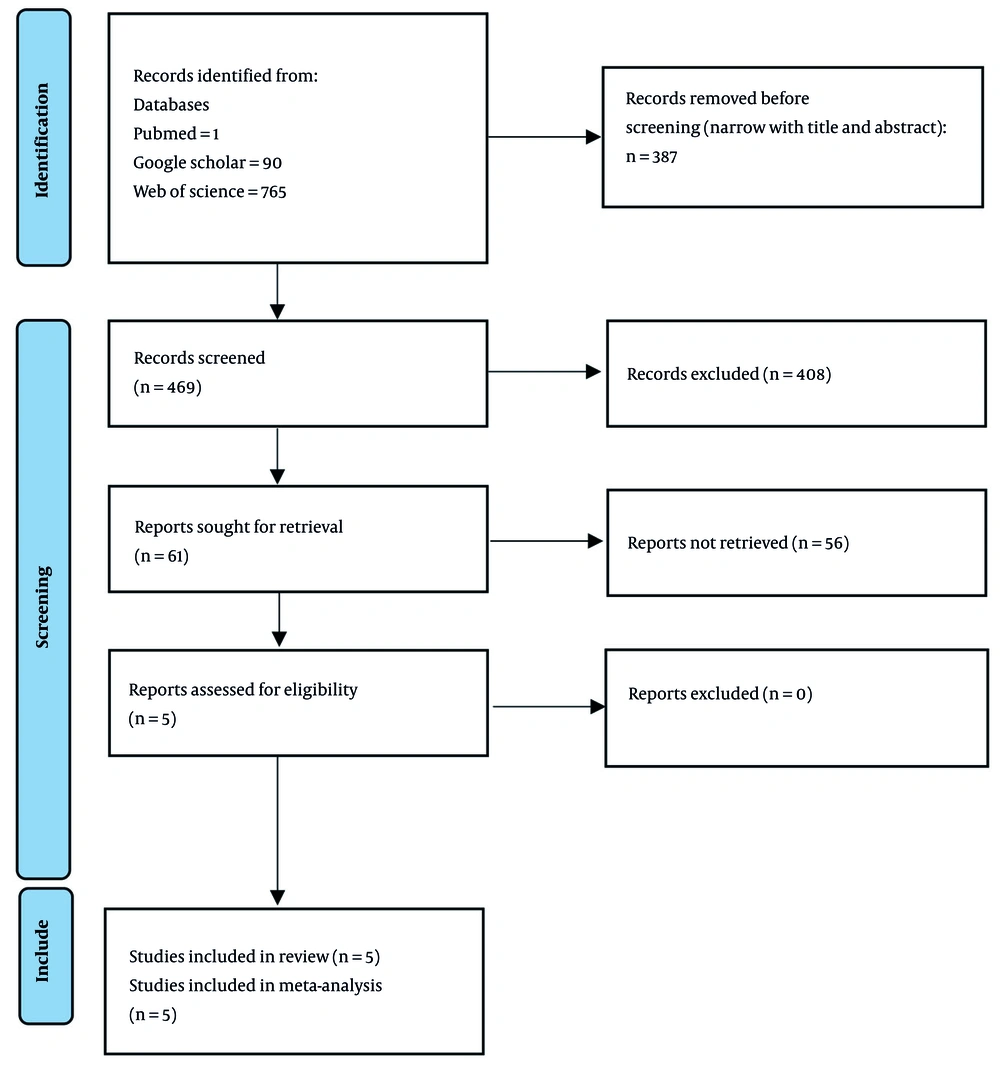
Figure 1.
PRISMA 2020 flow diagram for new systematic reviews which included searches of databases (9)
3.3. Target Population
The population of interest included adolescents (aged 13 - 19 years) who participated in studies examining video game addiction and the effects of mindfulness interventions.
3.4. Inclusion and Exclusion Criteria
1. Inclusion criteria:
- Studies with titles relevant to mindfulness practices, mindfulness-based interventions, and video or digital game addiction in adolescents
- Studies published in the fields of mental health, psychology, or child development
- Publications in English
- Studies that assessed the intensity of internet gaming disorders (IGDs) or similar outcome measures
2. Exclusion criteria:
- Studies focusing exclusively on adults
- Studies not related to mindfulness interventions
- Articles lacking quantitative or statistical data on addiction severity
- Incomplete translations or studies of low methodological quality
3.5. Type of Intervention or Exposure
Included studies encompassed various forms of mindfulness-based interventions, such as meditation practices, mindfulness training exercises, and educational mindfulness programs delivered either in group or individual formats. These interventions were primarily designed to mitigate the adverse effects of video game addiction.
3.6. Primary Outcomes
The main outcome assessed was changes in the severity of internet and video game addiction, operationalized through validated measures of IGD severity. Primary results included changes in Addiction Scale scores and reductions in time spent playing games.
3.7. Subgroup Analysis
Based on type of mindfulness technique, a subgroup analysis was conducted to explore differences in effectiveness among types of mindfulness-based interventions according to the specific intervention technique. Studies were grouped by the type of mindfulness protocol implemented. The effect of each subgroup on the severity of IGD was estimated separately, and differences between subgroups were assessed using a random-effects model.
3.8. Data Extraction
Two independent researchers extracted data from each study using a standardized form that included:
- Study characteristics (authors, year of publication)
- Study type (randomized controlled trial, quasi-experimental)
- Sample size and number of participants
- Age range or mean age
- Type and duration of intervention
- Assessment instruments used
- Main outcomes and effect sizes
All data were entered into Microsoft Excel, and after independent verification, were analyzed using Stata version 17.
3.9. Risk of Bias Assessment
Each study was appraised, and its methodological quality was determined according to accepted standards.
3.10. Assessment of Publication Bias
To assess the potential for publication bias, Egger’s test was conducted. This test detects the tendency of smaller studies to report positive results. Funnel plots were generated to visualize publication bias. A P-value of less than 0.05 in Egger’s test was considered indicative of significant publication bias. All analyses regarding publication bias were performed using Stata version 17.
3.11. Statistical Analysis
Data were analyzed using Stata version 17. Intervention effects were pooled using random-effects models and reported as standardized mean differences (SMD) with 95% confidence intervals (CIs).
4. Results
4.1. Included Studies
After conducting advanced searches in PubMed, Web of Science, and Google Scholar without any language restrictions, a total of five studies (2, 10-13) were finally included in the quantitative and qualitative synthesis process (Table 1).
Table 1.Characteristics of Included Studies
| Authors | Place | Design | Sample Size | Mean Age (y) | Target Groups | Number of Session | Type of Intervention | Questionnaire | Quality Assessment | Key Findings |
|---|---|---|---|---|---|---|---|---|---|---|
| Tvrtkovic-Hasandic et al., 2024 (10) | Bosnia and Herzegovina | Experimental study | 27 | 20.33 ± 1.12 | Participants with the IGD symptom criteria | Four weekly 20-min-long attentional focus mindfulness sessions | Virtual-reality-based mindfulness | IGDT-10 | Low quality of assessment | The findings showed a significant reduction in IGD symptoms and weekend gaming time in the treatment people especially in younger people gamers. |
| Shameli et al., 2018 (11) | Iran | Experimental study | 64 | Range of age 14 - 16 | Students IGD | 8 sessions | MBCT | IAT | Low quality of assessment | Cognitive therapy based on mind-fullness reduce the IGD s (P < 0.01). |
| Ni et al., 2024 (12) | China | Randomized clinical trial | 80 | ≥ 18 | Adults with identified IGD | 8 training sessions | MORE | DSM-5-TR proposed criteria for IGD and with IAT scores | Moderate quality of assessment | These results showed that MM can be an effective treatment for IGD and can exert its effects on altering front-pallidal pathway |
| Chau et al., 2019 (2) | Hong Kong | Experimental study | 248 | 10.6 ± 0.97 | Students at risk IGD | 3 months | Psychoeducation program (cognitive behavioral therapy, MM and reality therapy) | self-report version of the Korean Internet Addiction Proneness Scale | Low quality of assessment | Psychoeducation program can have a social impact in successfully mitigating. The symptoms of IGD and enhancing emotional well-being over time. |
| Jameinezhad et al., 2024 (13) | Iran | Experimental study | 30 | range of age 15 - 16 | 9th and 10th-grade male students addicted to the online game | 8 sessions of 90 minutes of mindfulness training | Mindfulness training | OGQ, Whang and Chang, 2002 | Moderate quality of assessment | Cognitive therapy based on mind-fullness reduce the IGDs. |
Abbreviations: IGD, internet gaming disorder; IGDT-10, ten-item internet gaming disorder test; MBCT, mindfulness-based cognitive therapy; IAT, internet addiction test; MORE, mindfulness-oriented recovery enhancement; MM, mindfulness meditation; OGQ, Online Game Questionnaire.
4.2. Quality Assessment of Included Studies
The quality assessment of the included studies indicates that most of the studies were of low to moderate quality. Specifically, only two studies (Ni et al. 2024; Jameinezhad et al. 2024) demonstrated moderate quality, primarily due to better methodological rigor such as specified eligibility criteria and sample size justification. The majority, however, showed low quality mainly because they lacked proper randomization methods and blinding procedures, which are crucial for reducing bias. Overall, these findings suggest that the evidence base contains studies with significant methodological limitations, highlighting the need for more rigorously designed research in this area (Table 2).
Table 2.Quality Assessment of Included Studies
| Variables | Tvrtkovic-Hasandic et al., 2024 (10) | Shameli et al., 2018 (11) | Ni et al.,2024 (12) | Chau et al., 2019 (2) | Jameinezhad et al., 2024 (13) |
|---|---|---|---|---|---|
| Was a method of randomization performed? | 0 | 0 | 1 | 0 | 1 |
| Were the groups similar at baseline? | 1 | 1 | 1 | 1 | 1 |
| Were the eligibility criteria specified? | 1 | 1 | 1 | 0 | 1 |
| Is a sample size justification described? | 0 | 0 | 1 | 1 | 1 |
| Was the patient blinded? | 0 | 0 | 0 | 0 | 0 |
| Was the care provider blinded? | 0 | 0 | 0 | 0 | 0 |
| Result | Low quality of assessment | Low quality of assessment | Moderate quality of assessment | Low quality of assessment | Moderate quality of assessment |
4.3. Meta-Analysis Results
Overall, the meta-analysis using the random-effects model indicated that mindfulness-based interventions have a significant effect on reducing the severity of IGD in adolescents. The pooled SMD was 1.947 (95% CI: 0.599 to 3.295), representing a large and statistically significant effect (P = 0.005). However, the analysis demonstrated substantial heterogeneity among the included studies (I-squared = 96.0%, tau-squared = 2.2063, chi-squared = 99.37, df = 4, P = 0.000), indicating considerable variability in study outcomes and underscoring the necessity for subgroup and sensitivity analyses (Figure 2A).
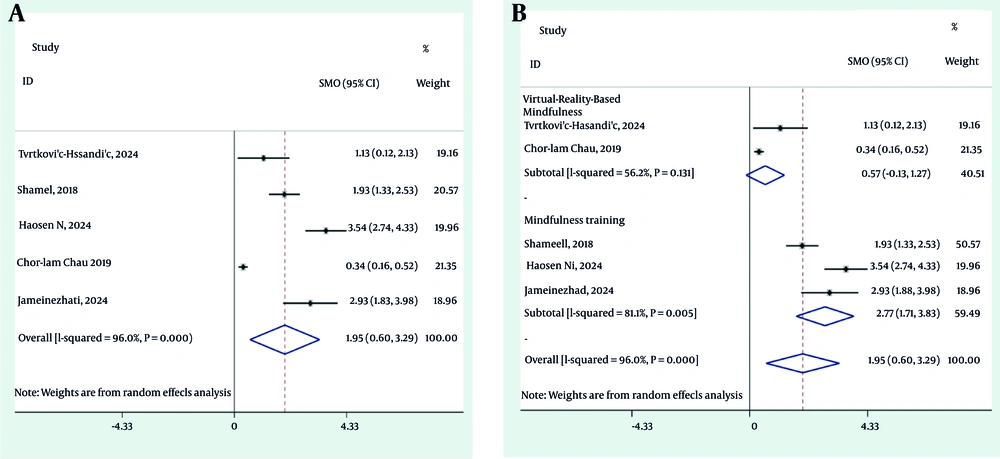
Subgroup analysis (virtual-reality-based mindfulness vs. mindfulness training) revealed that mindfulness training interventions had a large and statistically significant effect on reducing the severity of IGD in adolescents (SMD = 2.77, 95% CI: 1.71 to 3.83, P = 0.000), whereas virtual-reality-based interventions showed no significant effect (SMD = 0.57, 95% CI: -0.13 to 1.27, P = 0.11). Considerable heterogeneity was observed within the mindfulness training group (I2 = 81.1%), while heterogeneity in the virtual reality group was moderate (I2 = 56.2%). These findings suggest that mindfulness training is substantially more effective than other intervention techniques evaluated (Figure 2B).
4.4. Publication Bias
The results of Egger's test suggest that there may be small-study effects, which could be related to publication bias or other factors affecting smaller studies. Although the P-value is marginal at 0.051, it indicates a potential tendency for asymmetry in the effect sizes of smaller studies. This does not conclusively confirm bias but warrants cautious interpretation. It suggests that there might be some influence of publication bias, and further investigation or larger sample sizes are recommended to clarify the validity of the pooled results (Figure 3).
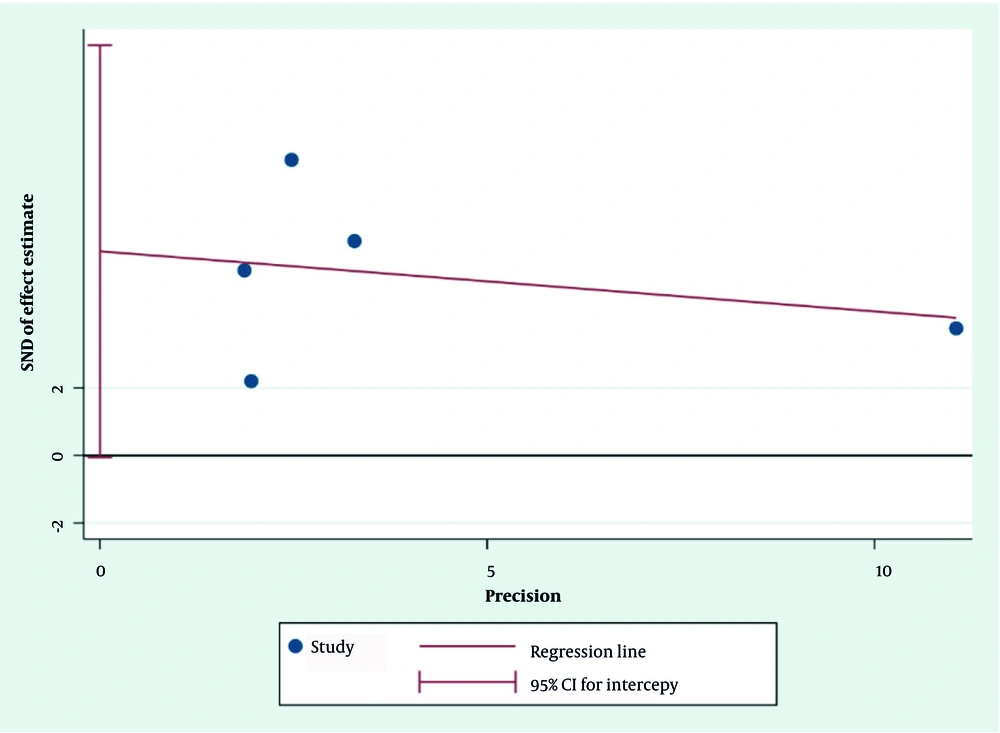
Figure 3.
Egger's test for assessing the small-study effects (publication bias)
5. Discussion
This study's findings demonstrate that mindfulness-based interventions have a significant and substantial effect on reducing the severity of video game addiction among adolescents. The meta-analysis revealed a large pooled SMD (SMD = 1.947, 95% CI: 0.599 to 3.295, P = 0.005), indicating the efficacy of mindfulness practices in addressing IGD symptoms. These results are consistent with previous systematic reviews and meta-analyses reporting the usefulness of mindfulness interventions in mitigating problematic gaming behaviors and internet use (14, 15).
The subgroup analysis highlights that mindfulness training techniques, involving group or individual mindfulness exercises, are far more effective than virtual reality-based mindfulness interventions. Specifically, mindfulness training yielded a large and statistically significant effect (SMD = 2.77, 95% CI: 1.71 to 3.83, P < 0.001), while virtual reality-based approaches did not produce significant outcomes (SMD = 0.57, 95% CI: -0.13 to 1.27, P = 0.11). This suggests that traditional mindfulness training protocols may better target cognitive and emotional processes associated with gaming addiction, such as reducing maladaptive gaming cognitions and enhancing awareness and self-regulation (16, 17).
The observed heterogeneity within the mindfulness training subgroup (I2 = 81.1%) indicates variability across studies, which may stem from differences in intervention duration, protocol specifics, or sample characteristics.
While the overall evidence supports mindfulness as a promising approach to reducing IGD severity in adolescents, the quality assessment revealed that most included studies ranged from low to moderate methodological rigor. Only two studies met moderate quality standards by employing clearer randomization and sample size justification. The predominance of lower-quality studies and the indication of potential publication bias, as suggested by Egger's test (P = 0.051), underscore the need for caution when interpreting these findings. Future research should prioritize well-designed, large-scale randomized controlled trials with rigorous methodologies to confirm and extend these results.
In summary, mindfulness-based interventions, particularly traditional mindfulness training, appear to be an effective strategy for preventing and treating video game addiction in adolescent populations. They offer a non-invasive, accessible treatment option that may complement existing behavioral and psychological therapies. However, given limitations in current evidence, further high-quality studies are essential to establish standardized protocols and elucidate underlying mechanisms more clearly.
5.1. Conclusions
This systematic review and meta-analysis provide evidence that mindfulness-based interventions, particularly traditional mindfulness training, are effective in significantly reducing the severity of video game addiction among adolescents. Despite notable heterogeneity and some limitations related to study quality and potential publication bias, the findings highlight mindfulness as a promising non-pharmacological approach for preventing and treating IGD in youth. Virtual reality-based mindfulness interventions showed less clear benefits, indicating the need for further research in this area. Future well-designed, large-scale randomized controlled trials are essential to confirm these results and to establish standardized intervention protocols for broader clinical application.
5.2. Strengths
This study has several notable strengths, including being one of the first systematic reviews and meta-analyses specifically examining mindfulness-based interventions for video game addiction in adolescents. It employed a comprehensive search strategy across multiple databases from 2000 to 2025 and utilized rigorous subgroup analyses to differentiate the effects of various mindfulness approaches. Additionally, the use of standardized and validated measures for assessing IGD severity and the application of robust meta-analytic techniques, including assessment of publication bias, enhance the reliability of the findings.
5.3. Limitations
The study also has limitations, such as the predominance of included studies with low to moderate methodological quality, which may affect the overall confidence in the results. Significant heterogeneity among studies (I2 = 96%) reflects variability in intervention protocols, populations, and outcomes, complicating the ability to draw clear conclusions. The potential presence of publication bias, indicated by Egger’s test, and the relatively small number of studies (only five) further restrict the generalizability of the findings. Furthermore, virtual reality-based mindfulness interventions did not demonstrate significant effectiveness, underscoring the need for additional research in this modality.
