
1. Background
Diabetes mellitus is a prevalent, progressive metabolic disorder that poses a substantial threat to individual and population health. Over recent decades, its incidence and prevalence have increased markedly, establishing diabetes as one of the most important public health challenges of the twenty-first century (1). Beyond its high prevalence, diabetes is associated with a wide range of adverse cardiovascular, renal, neurological, and ophthalmic complications that substantially impair quality of life and survival (2, 3). Globally, it remains a leading cause of morbidity and mortality and a major contributor to the overall burden of disease (4). Recent estimates indicate that approximately 828 million adults were living with diabetes in 2022, with considerable treatment gaps, particularly in low- and middle-income countries (4-6). These trends reflect not only the growing scale of the epidemic but also persistent inequities in access to effective care.
The burden of diabetes is expected to intensify further in the coming decades. Projections suggest that the number of individuals living with type 1 diabetes alone may reach 9.5 million by 2050 (7, 8). This increase is driven by demographic and societal transitions, including population aging, urbanization, lifestyle changes, and rising obesity rates. In addition to its clinical complications, diabetes imposes substantial economic costs and long-term pressures on health care systems (9, 10). Despite advances in pharmacological therapies and clinical guidelines, disease control remains suboptimal in many settings. This persistent gap between therapeutic potential and real-world outcomes underscores the importance of behavioral and contextual determinants of disease management, particularly medication adherence (5, 6, 11).
Medication adherence is a critical determinant of effective chronic disease management and refers to the extent to which patients’ behaviors align with agreed-upon therapeutic recommendations (12). In diabetes, adherence to oral and injectable therapies is essential for achieving glycemic control and preventing complications (13). However, evidence suggests that suboptimal adherence can reduce treatment effectiveness by up to 40% and remains a major contributor to therapeutic failure (14, 15). Across studies, adherence rates are consistently suboptimal, with only about half of patients adequately following prescribed regimens (14, 16). This creates a paradox in diabetes care: although effective treatments are widely available, their benefits are often undermined by inconsistent use in routine practice.
The complexity of medication adherence in diabetes has been widely documented. Contemporary literature conceptualizes adherence as a multidimensional phenomenon shaped by interacting patient-related, therapy-related, socioeconomic, and health-system factors (17-19). Systematic reviews have highlighted the heterogeneous influence of disease characteristics, treatment burden, patient beliefs, health care access, and social conditions on adherence behaviors (20, 21). Moreover, intervention studies have demonstrated mixed and context-dependent outcomes, suggesting that current models do not fully capture the mechanisms underlying adherence (22, 23). While existing research acknowledges the complexity of adherence, it has been less successful in integrating the perceptual and symbolic dimensions of medicines into explanatory frameworks.
In this context, a pharmaceutical branding perspective offers an underexplored but potentially important lens. Pharmaceutical branding extends beyond marketing labels and encompasses a range of cues through which patients interpret a medicine’s quality, credibility, familiarity, and expected performance (24, 25). These include brand recognition, trust in manufacturers and regulatory systems, perceived quality of generics, product familiarity, and visual characteristics such as packaging and pill appearance (26, 27). Evidence from studies on generic medicines and medication acceptability suggests that patients’ perceptions of efficacy and safety are often shaped by trust, prior experience, and symbolic associations rather than by pharmacological knowledge alone (28-30). For instance, distrust of generic medicines and resistance to substitution have been widely reported among both patients and health care providers (28, 29). In addition, changes in medication appearance can influence patient behavior and may lead to confusion or altered use (26). Economic factors further interact with branding, as branded medications may affect affordability and continuity of treatment (31). Collectively, these findings indicate that branding-related perceptions are plausible determinants of adherence behavior, although they have rarely been conceptualized as such within diabetes research (26, 28, 29, 31, 32).
Despite these insights, the literature remains fragmented. Research on medication adherence in diabetes has largely focused on clinical, behavioral, and system-level factors, with limited integration of branding-related constructs (20, 21, 23). Conversely, studies addressing branding-related issues are often conducted outside the context of diabetes and are rarely incorporated into comprehensive adherence models (26, 30-32). As a result, no integrated, diabetes-specific framework currently exists that systematically incorporates constructs such as trust, perceived quality, brand preference, product familiarity, and medicine appearance alongside established adherence determinants.
2. Objectives
The present study aimed to develop a conceptual framework of medication adherence among patients with diabetes from a pharmaceutical branding perspective. Specifically, it sought to integrate behavioral and branding-related determinants into a theoretically grounded framework to enhance understanding of medication adherence and inform future diabetes management strategies.
3. Methods
3.1. Study Design
This qualitative study used conventional content analysis with an exploratory-descriptive approach. This approach was selected to enable an in-depth understanding of factors influencing medication adherence among patients with diabetes, particularly in relation to pharmaceutical branding.
Medication adherence in chronic conditions such as diabetes is a complex, context-dependent phenomenon that cannot be fully explained by biomedical variables alone. Rather, it is shaped by a combination of clinical experiences, patient perceptions, healthcare interactions, and medicine-related beliefs. In this context, qualitative content analysis provides a systematic and flexible approach for identifying patterns, meanings, and underlying structures within textual data through inductive category development.
An inductive analytical strategy was adopted, allowing themes and categories to emerge directly from the data without imposing predefined theoretical frameworks. This approach was particularly appropriate given the limited integration of pharmaceutical branding-related constructs within existing adherence models.
3.2. Participants and Sampling
The study population consisted of healthcare experts with extensive professional experience in the management and use of medications in chronic disease care, particularly diabetes. Participants were purposively selected from multiple professional groups within the healthcare system, including physicians (internal medicine specialists and endocrinologists), pharmacists, and nurses, to ensure a comprehensive and multidimensional perspective.
A purposive sampling strategy with maximum variation was employed to capture diverse viewpoints across clinical, pharmaceutical, and care-delivery contexts. Participants were selected based on their ability to provide rich, experience-based insights into medication adherence, including both clinical and behavioral dimensions. The inclusion criteria were:
1) a minimum of 20 years of professional experience in relevant healthcare fields;
2) direct involvement in patient care, medication management, or pharmaceutical services; and
3) willingness to participate and share professional experiences.
The exclusion criteria included unwillingness to continue participation at any stage of the study and inability to provide sufficiently detailed or relevant information during the interview process.
Sampling was conducted concurrently with data collection and continued until data saturation was achieved. Saturation was defined as the point at which no new codes, categories, or meaningful insights emerged from successive interviews. A total of 18 participants were included in the study. Although initial saturation was observed in the later interviews, additional interviews were conducted to ensure the completeness and robustness of the emerging thematic structure.
The final sample included participants with diverse professional roles and levels of expertise, including academic faculty members, clinicians, pharmacists in both clinical and managerial positions, and nursing staff. This diversity enhanced the depth and credibility of the findings by incorporating multiple perspectives from different levels of the healthcare system.
3.3. Data Collection
Data were collected through in-depth semi-structured interviews with the selected participants. This method was chosen to facilitate a detailed exploration of expert perspectives on factors influencing medication adherence among patients with diabetes, including both clinical and perceptual dimensions related to pharmaceutical products.
Eighteen face-to-face interviews were conducted at the participants’ workplaces between March 2025 and March 2026. Each interview lasted 90 to 120 minutes. Interviews were conducted in a private, quiet environment to ensure confidentiality and promote open and unrestricted discussion.
An interview guide was developed based on a review of relevant literature and the study objectives. The guide comprised open-ended questions designed to elicit comprehensive descriptions of participants’ experiences and viewpoints. Interviews began with broad, general questions and progressively moved toward more focused and analytical inquiries. Probing questions were used throughout to clarify responses and explore emerging concepts in greater depth.
Examples of guiding questions included:
“What are the main challenges that patients with diabetes face in adhering to their prescribed medications?”
“How do interactions between patients and health care providers influence medication adherence?”
“What role does the brand of a medication play in patients’ adherence to diabetes treatment?”
All interviews were audio-recorded with participants’ consent. In addition, field notes were recorded during and immediately after each interview to capture contextual details and nonverbal observations relevant to data interpretation.
Data collection was conducted concurrently with data analysis. Insights derived from earlier interviews were used to refine subsequent interviews, allowing for deeper exploration of emerging themes and contributing to the achievement of data saturation.
3.4. Data Analysis
Data were analyzed using conventional content analysis based on the approach described by Hsieh and Shannon, with guidance from the analytical framework of Graneheim and Lundman (33, 34). An inductive approach was adopted, allowing codes, categories, and themes to emerge directly from the data.
Data analysis was conducted concurrently with data collection, following an iterative process in which insights from earlier interviews informed subsequent data collection and refinement of the analytical focus.
All interviews were transcribed verbatim immediately after each session. The transcripts were read repeatedly by the research team to achieve immersion in the data and to develop an overall understanding of participants’ perspectives. Meaning units, defined as words, sentences, or paragraphs containing related aspects of a central meaning, were identified and condensed while preserving their core content. These units were then labeled with initial codes.
Coding was performed independently by two researchers to enhance analytical rigor. The coding process was inductive, and no predefined coding framework was applied. After independent coding, the researchers compared codes and discussed discrepancies to reach consensus. This process contributed to refining the coding scheme and ensuring consistency in interpretation.
Codes with similar meanings were grouped into subcategories, which were subsequently abstracted into broader categories and overarching themes. Throughout this process, constant comparison was applied, whereby new data were continuously compared with existing codes and categories to refine conceptual boundaries and ensure internal consistency.
Data management and organization were facilitated using MAXQDA software (version 2020). The software supported systematic coding, retrieval, and organization of the data and enhanced analytical transparency by maintaining traceable links between raw data, codes, and emerging themes.
The analytical process resulted in the identification of themes and subthemes reflecting factors influencing medication adherence among patients with diabetes, including established determinants and underexplored elements related to pharmaceutical branding. These findings were organized into a structured thematic framework to represent the multidimensional nature of adherence behavior.
4. Results
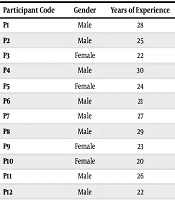
A total of 18 health care experts with extensive clinical and professional experience in diabetes management participated in this study, including endocrinologists, internal medicine specialists, pharmacists, and nurses. Including participants from diverse professional backgrounds provided a comprehensive, multidisciplinary perspective on medication adherence. Their demographic and professional characteristics are presented in Table 1.
Table 1.
Demographic Characteristics of the Participants (N = 18)
| Participant Code | Gender | Years of Experience | Position | Specialty |
|---|---|---|---|---|
| P1 | Male | 28 | Professor | Endocrinology Subspecialist |
| P2 | Male | 25 | Associate Professor | Internal Medicine Specialist |
| P3 | Female | 22 | Physician | Endocrinology Subspecialist |
| P4 | Male | 30 | Professor | Internal Medicine Specialist |
| P5 | Female | 24 | Associate Professor | Internal Medicine Specialist |
| P6 | Male | 21 | Associate Professor | Endocrinology Subspecialist |
| P7 | Male | 27 | CEO, Pharmaceutical Company | Pharmacist, PhD in Pharmaceutical Economics |
| P8 | Male | 29 | CEO, Pharmaceutical Company | Pharmacist, PhD in Pharmaceutical Economics |
| P9 | Female | 23 | Clinical Pharmacist | Pharmacist |
| P10 | Female | 20 | Pharmacy Technical Manager | Pharmacist |
| P11 | Male | 26 | Technical Manager, Pharmaceutical Company | Pharmacist |
| P12 | Male | 22 | Pharmacy Technical Manager | Pharmacist |
| P13 | Female | 21 | Hospital Matron | Nurse |
| P14 | Female | 20 | Hospital Matron | Nurse |
| P15 | Male | 18 | Assistant Professor | Endocrinology Subspecialist |
| P16 | Female | 19 | Clinical Pharmacist | Pharmacist |
| P17 | Male | 17 | Internal Medicine Specialist | Physician |
| P18 | Female | 16 | Technical Manager, Pharmaceutical Company | Pharmacist |
An in-depth, systematic analysis of the qualitative data resulted in the extraction of 850 initial codes. Through a rigorous process of data refinement, including normalization, elimination of redundancies, and conceptual consolidation, 46 overlapping codes were merged, yielding a final set of 804 distinct codes.
Subsequently, the codes were analyzed using the constant comparative method and organized into conceptual clusters based on similarities and underlying meanings. These clusters were further abstracted into subthemes and higher-order themes, forming a structured analytical framework.
The final framework comprised five main themes reflecting the multidimensional determinants of medication adherence among patients with diabetes, encompassing individual, psychological, treatment-related, economic, and health system factors, as presented in Table 2. This framework captures the complex, context-dependent nature of adherence behavior and provides a comprehensive understanding of how these factors interact to shape patients’ engagement with treatment.
Table 2.
Final Analytical Framework of Factors Influencing Medication Adherence in Patients with Diabetes from a Pharmaceutical Branding Perspective
| Categories and Subcategories | Codes |
|---|---|
| Individual and Demographic Factors | |
| Demographic characteristics (age, education, gender) | Age-related adherence variability; Educational influence on treatment comprehension; Gender-based behavioral differences; Experience-driven adherence in older patients |
| Health literacy | Inadequate understanding of disease chronicity; Misinterpretation of treatment necessity; Limited comprehension of medication instructions; Active information-seeking behavior; Health literacy–driven self-management capacity |
| Personality traits and lifestyle | Medication-taking discipline; Responsibility toward self-care; Lifestyle-induced adherence variability; Disruption due to irregular routines; Behavioral consistency in daily medication use |
| Psychological and Behavioral Factors | |
| Trust in treatment (physician, drug, brand) | Physician–patient trust formation; Brand-based trust perception; Distrust due to conflicting information; Trust-mediated treatment persistence; Sensitivity to medication switching |
| Perceived treatment effectiveness | Symptom-based evaluation of effectiveness; Immediate outcome expectation bias; Misinterpretation of symptom relief; Perceived inefficacy leading to discontinuation; Expectation–outcome mismatch |
| Patient lived experience | Prior positive treatment reinforcement; Negative treatment experience generalization; Social experience influence (family/peers); Experience-based decision-making; Observational learning from others |
| Adherence behavioral patterns | Routine-based medication adherence; Irregular medication-taking patterns; Intentional non-adherence (self-discontinuation); Forgetfulness-related non-adherence; Self-adjustment of medication regimen |
| Treatment-Related Factors | |
| Drug characteristics (appearance, name, packaging) | Visual cues influencing perceived quality; Packaging-driven trust formation; Brand recognition and memorability; Confusion due to drug naming similarity; Sensitivity to physical changes in medication |
| Side effects and treatment complexity | Side-effect-driven discontinuation; Perceived intolerance to adverse effects; Polypharmacy burden; Cognitive overload due to complex regimens; Self-modification to reduce treatment burden |
| Ease of medication use | Dose frequency burden; Complexity of administration instructions; Injection-related resistance; Treatment–lifestyle incompatibility; Adaptive but inappropriate schedule modification |
| Understanding of treatment regimen | Fragmented understanding of therapy; Misinterpretation of drug roles; Lack of insight into long-term treatment necessity; Reconstruction of treatment logic by patients; Incomplete comprehension of therapeutic goals |
| Economic and Access Factors | |
| Financial capacity | Cost-related non-adherence; Prioritization of essential expenses over treatment; Dose reduction for cost-saving; Delayed medication purchase; Economic inequality in adherence |
| Access to medication | Physical access barriers; Delayed availability of medication; Multiple pharmacy visits burden; Geographic access limitations; Instability in drug supply |
| Insurance coverage | Inadequate insurance coverage; High out-of-pocket expenses; Administrative complexity in insurance processes; Instability in reimbursement policies; Insurance-mediated access inequality |
| Health System Structural Factors | |
| Physician–patient interaction | Quality of communication; Patient involvement in decision-making; Time constraints in consultations; Clarity of medical explanations; Perceived empathy and support |
| Trust in healthcare system | System-level trust formation; Distrust due to inconsistent services; Influence of public narratives and media; Perceived system inefficiency; Stability-driven trust perception |
| Quality of healthcare services | Perceived service quality; Timeliness of care delivery; Continuity of care experience; Negative care experiences reducing adherence; System performance perception |
| Continuity of care | Follow-up-driven adherence reinforcement; Lack of monitoring and disengagement; Long-term care fragmentation; Feedback-based behavioral correction; Sustained patient–system interaction |
Each theme is described in detail in the following sections, supported by representative quotations and interpretative insights derived from the participants’ experiences.
Collectively, these themes reflect the multidimensional nature of medication adherence in patients with diabetes. The findings indicate that adherence is shaped by interactions among individual, psychological, treatment-related, economic, and system-level factors rather than by a single dominant determinant. Together, these interconnected dimensions illustrate that adherence behavior emerges within a complex, multi-layered context.
4.1. Individual and Demographic Determinants of Medication Adherence
Medication adherence in patients with diabetes is grounded in individual-level characteristics that shape how treatment is interpreted and implemented. This category comprises three interrelated subcategories:
4.1.1. Demographic Influences on Adherence Behavior
Age and educational level emerged as key determinants of adherence. Older patients demonstrated higher adherence due to accumulated experience and greater awareness of the consequences of non-adherence, whereas younger patients were more likely to modify or discontinue treatment. Educational level influenced patients’ ability to understand and engage with treatment, with higher education associated with more active participation and better adherence. As one participant (P5) noted: “Older patients usually cooperate better because they have experienced the consequences of not taking their medication.”
4.1.2. Health Literacy as a Mediating Mechanism
Health literacy functioned as a central mechanism linking patient characteristics to adherence behavior. Limited understanding of the chronic nature of diabetes led to premature discontinuation of treatment and difficulties in correctly following medication regimens. In contrast, higher health literacy was associated with more accurate medication use and active engagement in treatment. One participant (P2) stated: “Some patients stop taking their medication once their blood sugar is controlled because they don’t fully understand the disease.”
4.1.3. Personality Traits and Lifestyle Structures
Personality traits and lifestyle patterns influenced adherence through their effects on routine formation and self-regulation. Organized and responsible individuals were more likely to maintain consistent medication use, whereas irregular lifestyles and competing priorities disrupted adherence. As one participant (P4) explained: “Some patients are very organized and take their medication on time, while others have no routine.”
4.2. Psychological and Behavioral Mechanisms Shaping Medication Adherence
Medication adherence is driven by psychological and behavioral processes through which patients interpret treatment and translate these interpretations into action. This category comprises four subcategories:
4.2.1. Trust as a Foundational Driver
Trust in physicians, medications, and brands emerged as a central determinant of adherence. When treatment was perceived as credible, adherence was sustained, whereas conflicting information and prior negative experiences undermined trust and triggered discontinuation. As one participant (P1) noted: “If a patient trusts their doctor, they will continue treatment even if there are side effects.”
4.2.2. Perceived Effectiveness as a Cognitive Filter
Perceived effectiveness guided adherence decisions, with patients relying on immediate and observable changes rather than long-term outcomes. A lack of perceived improvement or temporary recovery often led to discontinuation. One participant (P3) stated: “If the patient doesn’t feel any change, they think the medication is useless.”
4.2.3. Lived Experience as an Interpretive Framework
Patients’ prior experiences, both personal and social, shaped adherence by influencing how treatments were evaluated. Negative experiences often generalized into broader distrust and affected subsequent treatment decisions. As one participant (P10) noted: “A negative experience can make patients distrust all medications.”
4.2.4. Behavioral Patterns of Adherence
Adherence manifested through behavioral patterns ranging from habitual use to irregular intake and discontinuation. Habit formation facilitated sustained adherence, whereas forgetfulness and competing demands disrupted it. One participant (P6) explained: “Some patients take their medication like brushing their teeth—it becomes a habit.”
4.3. Treatment-Related Determinants and Experiential Interfaces of Adherence
Medication adherence is substantially shaped by treatment-related characteristics that define how therapy is experienced and integrated into daily life. These factors operate as an interface between prescription and patient behavior and comprise four subcategories:
4.3.1. Sensory and Symbolic Attributes of Medications
Medication features such as appearance, packaging, and naming act as perceptual cues that influence patients’ initial judgments about quality and effectiveness. Professionally designed packaging enhanced trust, whereas inconsistency in appearance and complex naming contributed to confusion and reduced adherence. As one participant (P7) noted: “When the packaging looks more professional, patients tend to trust it more.”
4.3.2. Side Effects and Treatment Complexity as Barriers
Side effects and regimen complexity emerged as key barriers, directly affecting patients’ willingness and ability to sustain treatment. Even mild side effects could prompt discontinuation, whereas complex regimens increased errors and led to self-directed simplification of therapy. One participant (P4) stated: “Some patients stop medication as soon as they feel even minor side effects.”
4.3.3. Ease of Use and Integration into Daily Life
Ease of use facilitated adherence by enabling integration into daily routines. Simpler regimens and clear instructions improved adherence, whereas complex dosing schedules and challenging administration methods reduced consistency. As one participant (P6) explained: “The fewer times a drug needs to be taken, the easier it fits into daily routines.”
4.3.4. Understanding of the Treatment Regimen
Patients’ understanding of treatment as a coherent system was critical for adherence. Limited understanding led to selective use, discontinuation, and self-directed modifications, particularly in chronic conditions in which benefits are not immediately observable. One participant (P2) noted: “Some patients think skipping one drug won’t make a difference because they don’t understand its role.”
4.4. Economic and Access Constraints as Structural Determinants of Adherence
Medication adherence is constrained by economic capacity and access to health care services, shifting it from a behavioral choice to a resource-dependent outcome. This category comprises three subcategories:
4.4.1. Financial Capacity as a Limiting Condition
Financial constraints were a primary barrier, particularly in long-term treatment. High costs led patients to reduce dosage or discontinue therapy, even when they were aware of its necessity. As one participant (P7) stated: “When medication costs are high, some patients reduce the dose or stop taking it.”
4.4.2. Access to Medication as a Precondition for Adherence
Access encompassed availability, proximity, and continuity of supply. Barriers to access caused treatment interruptions and reduced adherence, particularly when availability was inconsistent. One participant (P9) explained: “Patients sometimes have to visit multiple pharmacies to find a specific medication.”
4.4.3. Insurance Coverage as a Conditional Facilitator
Insurance coverage influenced adherence by reducing the financial burden when effective, but inadequate coverage, complexity, and instability often limited its impact. As one participant (P6) noted: “When medication is covered by insurance, patients are more likely to continue treatment.”
4.5. Health System Structures as Contextual Determinants of Adherence
Health system structures shape medication adherence indirectly by influencing patients’ experiences, expectations, and trust in the treatment process. These system-level factors create the broader context in which adherence behavior is formed and sustained.
4.5.1. Physician–Patient Interaction as a Key Interface
The quality of physician–patient interaction plays a central role in how treatment is understood and accepted. Clear, empathetic, and participatory communication enhances patients’ engagement and adherence, whereas limited consultation time and insufficient explanation reduce motivation and understanding. As one participant (P1) stated: “If the physician–patient relationship is good, patients are more likely to follow treatment.”
4.5.2. Trust in the Health Care System
Trust in the health care system functions as a higher-order determinant shaping patients’ willingness to adhere. This trust reflects perceptions of system reliability and consistency, whereas instability and negative experiences undermine adherence. One participant (P3) emphasized: “If patients trust the system, they continue treatment even when problems arise.”
4.5.3. Quality of Health Care Services
Perceived service quality influences adherence by shaping the overall treatment experience. Timely, organized, and responsive care enhances motivation and reinforces trust, whereas poor service experiences reduce willingness to continue treatment. As noted by one participant (P1): “When patients perceive services as high quality, they are more likely to continue treatment.”
4.5.4. Continuity of Care
Continuity of care is essential for sustaining adherence over time, particularly in chronic disease management. Ongoing follow-up and communication maintain patient engagement and reinforce treatment behaviors. One participant (P2) stated: “Without follow-up, patients gradually stop treatment.”
4.6. Integrated Interpretation of Qualitative Findings
Medication adherence in patients with diabetes emerged as a multilevel, dynamic process shaped by interactions among individual, psychological, treatment-related, economic, and system-level factors. Individual characteristics established the capacity for engagement, whereas psychological mechanisms, particularly trust and perceived effectiveness, translated this capacity into behavior.
Treatment-related features determined how therapy was experienced and integrated into daily life, whereas economic conditions and access defined the feasibility of adherence. At a broader level, health care system structures shaped the overall treatment experience, providing the context in which adherence behaviors were formed.
Taken together, these findings indicate that adherence is an emergent outcome of interconnected determinants operating across multiple levels rather than a single isolated factor.
5. Discussion
The present findings suggest that medication adherence in diabetes should not be understood as a discrete act of patient compliance but rather as a multilayered process shaped by interactions among patient capability, treatment experience, economic feasibility, and health-system context. This interpretation is consistent with recent evidence showing that adherence to antidiabetic therapy remains suboptimal globally and is influenced by demographic, cognitive, perceptual, therapy-related, and contextual factors (21, 23, 35-37). However, the present study provides a more explicit explanatory sequence: patients first interpret the disease, then interpret the treatment, and only then translate these interpretations into routine use, modification, or discontinuation of medication.
At the individual level, age, education, health literacy, personality traits, and lifestyle patterns appeared to influence adherence through interpretive capacity and routine stability rather than through direct causal effects. The observed roles of younger age and lower education are consistent with studies reporting poorer adherence among younger patients and those with lower educational attainment (38-40). However, the findings suggest that age is better interpreted as a proxy for accumulated illness experience, perceived vulnerability, and competing life demands rather than as an independent determinant. Similarly, health literacy did not merely reflect access to information; it represented patients’ practical ability to understand the chronic nature of diabetes, recognize the need for sustained treatment, and implement medication instructions in everyday life. This interpretation aligns with studies linking health literacy to medication engagement, treatment understanding, and adherence in diabetes and cardiometabolic conditions (41-45).
The psychological and behavioral findings indicate that adherence is mediated by meaning before it becomes behavior. Trust in physicians, medicines, and pharmaceutical brands emerged as a stabilizing mechanism, whereas perceived ineffectiveness, negative prior experiences, and conflicting information weakened treatment continuation. This is consistent with evidence linking physician trust, treatment satisfaction, illness perception, and perceived effectiveness to adherence and glycemic outcomes (46-51). The present study extends these findings by showing that trust is continuously recalibrated through lived experience: patients do not simply accept treatment recommendations but evaluate them against perceived benefit, side effects, social narratives, and previous encounters with medicines. Habit formation, therefore, appears not as a simple behavioral routine but as the outcome of cognitive and emotional stabilization. In other words, medication taking becomes durable when treatment is perceived as credible, beneficial, and compatible with daily life.
Treatment-related factors further demonstrate that medicines function as experiential interfaces between clinical prescription and patient behavior. Side effects, regimen complexity, dosing frequency, and administration burden shaped whether patients could realistically sustain treatment. These findings are consistent with recent work showing that medication burden, side effects, and regimen complexity reduce adherence, whereas simplified regimens and improved tolerability can support persistence (52-55). More importantly, this study highlights a less visible dimension: medicines are not only pharmacological agents but also perceptual objects. Appearance, packaging, naming, and consistency of presentation influenced patients’ judgments about quality, familiarity, and trust. This interpretation is supported by evidence showing that changes in pill or package appearance, generic labels, and perceptions of generic medicines can affect patient behavior and adherence (24, 27, 56). Thus, pharmaceutical branding operates implicitly through the symbolic and sensory features of medicines, shaping how patients decode therapeutic credibility.
Economic and access-related findings show that adherence is also constrained by material feasibility. Financial capacity, medication cost, supply continuity, and insurance coverage formed an interdependent chain; when one element weakened, adherence shifted from a behavioral task to a resource-dependent practice. This interpretation is consistent with studies showing that cost-related nonadherence remains a persistent problem among adults with diabetes and that out-of-pocket burden, benefit design, and affordability influence medication continuation (57-62). However, the present findings add a stronger structural reading: affordability alone is insufficient if medication access is unstable, pharmacy navigation is difficult, or insurance coverage is administratively complex. In this sense, access to medication is not simply a facilitator of adherence; it is a precondition for adherence. Insurance similarly functions as a conditional facilitator, effective only when coverage is adequate, predictable, and easy to use.
The health-system findings further indicate that prescriptions become meaningful action only when embedded in supportive care structures. Physician–patient interaction functioned as a behavioral translation point at which clinical recommendations were transformed into patient understanding, trust, and willingness to continue treatment. This aligns with studies linking physician trust, shared decision-making, patient-centered care, doctor–patient communication, and perceived care quality to adherence and diabetes outcomes (63-67). Continuity of care also appeared critical, particularly because adherence challenges often emerge after treatment initiation rather than at the point of prescription. Recent studies similarly emphasize continuity, follow-up, and coordinated care as mechanisms for sustaining diabetes self-management and improving outcomes (68-70). The present findings extend this literature by emphasizing the cumulative effect of system inconsistency: when information, follow-up, medication supply, and insurance arrangements are unstable, patients may interpret the entire treatment pathway as unreliable, even when individual clinicians provide appropriate care.
Taken together, the findings support a multilevel model of medication adherence in which individual capacity, psychological interpretation, treatment experience, economic feasibility, and health-system performance continuously interact. Existing frameworks, including WHO-informed and COM-B-based approaches, already conceptualize adherence as multidimensional (23, 35, 71, 72). The contribution of this study is to make the interdependence of these dimensions more explicit. Individual characteristics create the capacity to engage; trust and perceived effectiveness shape willingness; treatment characteristics determine everyday burden; economic and access conditions define feasibility; and health-system structures either stabilize or destabilize the entire process. Adherence, therefore, is best understood as an emergent property of the patient–medicine–system relationship rather than as an isolated patient behavior.
The pharmaceutical branding perspective provides an additional conceptual layer. Branding should not be reduced to promotion or market differentiation; rather, it can be understood as a set of perceptual and institutional signals through which patients judge whether a medicine is trustworthy, familiar, available, and worth continuing. Evidence on dosage-form attributes, generic medicines, and product cues supports the behavioral relevance of appearance, naming, packaging, and perceived quality (24, 56, 73). The present findings suggest that brand meaning is also co-produced by supply stability, insurance recognition, pharmacy availability, and trust in the health care system. From this perspective, pharmaceutical branding connects patient perception, medicine experience, market reliability, and system performance—an interface that conventional adherence models often imply but rarely make analytically explicit.
These findings have practical implications for clinicians, pharmacists, insurers, pharmaceutical companies, and health-system managers. Clinicians should prioritize structured explanation, shared decision-making, and follow-up. Pharmacists can support adherence through counseling on substitution, clarification of medicine changes, and navigation of access barriers. Insurers should simplify coverage processes and reduce unpredictable out-of-pocket costs for essential diabetes medicines. Health-system managers should strengthen continuity-oriented care models that integrate clinical, educational, and access functions. For pharmaceutical companies, product consistency, clear naming, patient-oriented packaging, reliable supply, and trust-building strategies should be understood not as peripheral marketing activities but as components of adherence-supportive care. Durable improvements in adherence are likely to require coordinated action across communication, affordability, continuity, medicine experience, and system reliability rather than isolated patient-focused interventions.
5.1. Conclusions
This study indicates that medication adherence in patients with diabetes should be understood as a multilevel and context-dependent process rather than as solely patient-driven behavior. Adherence is shaped by the interaction of individual capacity, psychological interpretation, treatment experience, economic feasibility, and health-system performance. This perspective highlights that improving adherence requires more than patient education or reminders; it requires attention to the broader conditions through which patients understand, access, trust, and sustain treatment.
By incorporating a pharmaceutical branding perspective, this study extends existing adherence frameworks by emphasizing the roles of trust, perceived quality, product familiarity, medication appearance, packaging, supply stability, and system reliability in shaping patients’ engagement with therapy. These findings suggest that adherence-supportive strategies should integrate clinical communication, treatment simplification, affordable and continuous access to medicines, reliable pharmaceutical supply, and trust building across the health care system. Future interventions and validation studies should examine how these dimensions interact and how branding-related perceptions can be responsibly used to support long-term medication adherence in diabetes care.