
1. Background
Nurses constitute the largest group of healthcare providers and, owing to the nature of their profession, encounter a wide range of challenges within healthcare systems. Ethical challenges are among the most important of these and may have far-reaching consequences for both patients and healthcare professionals. Because nursing is inherently an ethical profession, nurses must be adequately aware of ethical issues to provide ethical care and make sound ethical decisions. Ethical sensitivity is a key factor underlying ethical decision-making. It enables nurses to identify ethical challenges, accurately perceive the emotional and cognitive dimensions of a given situation, and ultimately make decisions consistent with ethical principles and outcomes (1, 2, 3, 4). Commitment to ethical practice is a fundamental prerequisite for ethical conduct, and ethical sensitivity is central to the development of such behavior. As the first component of ethical action, ethical sensitivity encompasses an individual’s awareness of ethical dimensions, including tolerance, composure, responsibility, and attentiveness to ethical concerns. It is reflected in an individual’s concern about the consequences of their actions for others and facilitates the distinction between right and wrong conduct. Individuals with ethical sensitivity are more responsive to ethical phenomena and can evaluate situations through an ethical lens (5, 6, 7).
Ethical sensitivity is regarded as the foundation and cornerstone of nursing ethics, providing a basis for effective and ethical patient care. It is an intrinsic capacity that enables individuals to distinguish right from wrong and act accordingly. However, ethical sensitivity extends beyond emotional perception; it requires the personal capacity and experience to recognize the significance of ethical issues in a given situation. By enhancing nurses’ awareness of ethical concerns in their professional environment, ethical sensitivity enables them to make ethical decisions about patient care. Consequently, patients can receive nursing care with greater confidence and trust. In this regard, any deficiency in adherence to nursing ethics may compromise even the most scientifically sound, high-quality nursing care (8). Patient care is a fundamental concept and, indeed, an art within the nursing profession. Providing high-quality, ethical care requires nurses to possess individual, social, ethical, and spiritual competencies. As members of the healthcare team, nurses should be knowledgeable about and sensitive to the ethical issues associated with their profession so that they can respect patients’ rights in decision-making and effectively manage the influence of ethical issues in clinical practice. Nursing is inherently an ethical activity, and nearly every decision made by a nurse involves an ethical dimension. This applies not only to life-or-death circumstances but also to all aspects of everyday nursing practice (5, 9).
Adherence to ethical principles is particularly important in intensive care units (ICUs), where nurses spend considerable time with patients. Care in these settings requires a high degree of sensitivity, and poor-quality care may lead to unfavorable patient outcomes. ICU nurses should perform their assigned duties to the best of their ability, with a strong sense of professional conscience and without requiring direct supervision. If an error occurs, they should report it promptly and take appropriate measures to address it (10, 11). Critical and emergency situations requiring rapid and accurate assessment, immediate decision-making, and timely intervention are common in ICUs. Compared with other hospital wards, ICUs have a higher nurse-to-patient ratio, and nurses are responsible for providing all aspects of patient care. The specific clinical conditions of patients in these units also necessitate more frequent ethical decision-making. Making ethical decisions and understanding the rationale underlying them are integral components of nurses’ daily practice. Nursing care, particularly in ICUs, is replete with situations requiring ethical decision-making (12).
Patients’ ethical and legal rights further underscore the need for ethical sensitivity. Although the nursing profession has ethical codes, mere awareness of these codes does not guarantee their implementation. Nurses must also possess sufficient ethical sensitivity to apply them in practice. As the primary recipients of healthcare services, patients have rights that all members of the healthcare team should consider. These rights are articulated in the Patient Rights Charter (13, 14), which was developed in accordance with high human values, Islamic-Iranian culture, and the principle of the equal inherent dignity of all recipients of health services. The Patient Rights Charter and adherence to ethical principles are intended to improve healthcare outcomes by respecting each patient’s rights and establishing fair and respectful relationships with patients (13, 14). In addition to receiving appropriate care, patients have recognized rights concerning the protection of privacy, preservation of dignity and self-esteem, respect for cultural beliefs, attention to psychological conditions, and consideration of spiritual values. Understanding and respecting these values help healthcare providers identify and fulfill patients’ care needs and priorities (15). Overall, studies conducted in Iran indicate that, despite nurses’ relatively favorable awareness of patients’ rights, deficiencies remain in the practical implementation and observance of these rights. To the best of our knowledge, no recent study has specifically examined the relationship between nurses’ ethical sensitivity and their observance of patients’ rights. This issue is particularly important because nurses, as the largest group within the healthcare team, bear substantial ethical responsibility for patient care. Adequate knowledge of patients’ rights alone cannot ensure their implementation in clinical settings. Therefore, nurses’ ethical sensitivity and attentiveness to patients’ rights should also be considered essential determinants of ethical commitment and adherence to patients’ rights in practice. Although the relationship between ethical sensitivity and ethical behavior may not always be readily predictable, ethical sensitivity enables nurses to interpret patients’ needs and respond to them in accordance with ethical principles (16, 17). In this context, the Patient Rights Charter, as a framework for ethical obligations in healthcare settings, may give rise to numerous ethical considerations in nurses’ clinical decision-making. Nevertheless, studies directly addressing the association between ethical sensitivity and the observance of patients’ rights appear to be scarce or outdated; most previous studies have focused solely on ethical sensitivity. Respect for patients’ rights is especially important in intensive care units, where patients with critical and life-threatening conditions, including those approaching the end of life, are admitted. Such patients require highly sensitive care that protects their dignity and safeguards their rights.
2. Objectives
Therefore, this study was conducted to determine the relationship between intensive care unit (ICU) nurses’ ethical sensitivity scores and their observance of patients’ rights at Shahroud University of Medical Sciences.
3. Methods
3.1. Study Design and Setting
This descriptive-correlational study was conducted in 2026 - 2027 using census sampling of 105 nurses working in intensive care units, namely, the intensive care unit (ICU), coronary care unit, and neonatal intensive care unit, at Bahar and Imam Hossein Hospitals, which are affiliated with Shahroud University of Medical Sciences. Eligible participants held a bachelor’s degree or higher in nursing and had at least one year of work experience in an intensive care setting. Transfer to another ward during the study period was considered an exclusion criterion. Data were collected using a demographic questionnaire, the Ethical Sensitivity Questionnaire developed by Lützén et al., and the Patient Rights Questionnaire developed by Parsapoor et al. The demographic questionnaire assessed participants’ age, sex, marital status, work experience, interest in their field of study and profession, income status, educational level, employment status, and previous participation in professional ethics and patient rights training courses.
3.2. Data Collection and Instruments
Ethical sensitivity was assessed using the 25-item Ethical Sensitivity Questionnaire developed by Lützén et al. The questionnaire is scored on a five-point Likert scale ranging from 0 to 4, with a possible total score of 0 to 100. It comprises six domains: respect for patient autonomy (3 items: 10, 12, and 13); awareness of how to communicate with patients (5 items: 1, 2, 3, 4, and 17); professional knowledge (2 items: 16 and 24); experience of ethical problems and conflicts (3 items: 9, 11, and 15); application of ethical concepts in ethical decision-making (5 items: 6, 8, 14, 18, and 20); and honesty and benevolence in ethical decision-making (7 items: 5, 7, 19, 21, 22, 23, and 25). Total scores of 0 - 50, 51 - 75, and 76 - 100 were interpreted as low, moderate, and high ethical sensitivity, respectively (18). The questionnaire’s face and content validity were reportedly confirmed through expert review by faculty members and ICU nursing specialists. Its internal consistency was reported as Cronbach’s alpha = 0.89.
The perceived necessity of observing patients’ rights was assessed using the questionnaire developed by Parsapoor et al. The questionnaire’s face validity was reported to have been confirmed through expert review, and its reliability was reported as Cronbach’s alpha = 0.90. The questionnaire consists of 21 items rated on a six-point Likert scale ranging from 1 (never) to 6 (always). It includes four domains: respect for patients, their privacy, and nondiscrimination (3 items); patients’ right to access information about their illness (14 items); patients’ right to free choice and decision-making (3 items); and the existence of a patient complaint-handling system (1 item). The total score ranges from 21 to 126. Scores below 47.25 were classified as poor, scores of 47.26 - 73.50 as moderate, scores of 73.60 - 99.75 as good, and scores above 99.76 as excellent. Domain scores were similarly categorized as poor, moderate, good, or excellent based on quartiles of the possible score range for each domain. The questionnaires were completed anonymously, and the confidentiality of participants’ information was ensured. After data collection, the data were entered into SPSS version 18 and analyzed using descriptive statistics, including frequency, percentage, mean, and standard deviation, and inferential tests, including the independent-samples t-test, analysis of variance (ANOVA), and Pearson’s correlation coefficient.
3.3. Statistical Analysis
Data were analyzed using SPSS version 18 with descriptive statistics, including frequency, percentage, mean, and standard deviation, and inferential tests, including the independent-samples t-test, analysis of variance, and Pearson’s correlation coefficient.
3.4. Ethical Considerations
The questionnaires were completed anonymously, and the confidentiality of participants’ information was ensured. All participants provided written informed consent. Ethical approval was obtained (IR.SHMU.REC.1403.194).
4. Results
4.1. Sample Characteristics
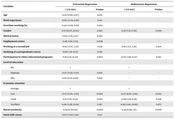
As shown in Table 1, among the 104 participants, 65.4% were female and 63.5% were married. Most participants held a bachelor’s degree (78.8%), reported interest in their field of study (75.0%), and were interested in their current profession (84.6%). Regarding employment status, the largest proportions of participants were permanently employed (39.2%) or working under mandatory service contracts (tarhi) (36.5%). Previous participation in professional ethics training courses was reported by 47.1% of participants, whereas 36.5% had attended patient rights training courses. The participants’ mean age, work experience, and income score were 34.49 ± 8.63 years, 10.28 ± 8.40 years, and 27.39 ± 7.78, respectively. Ethical sensitivity was significantly associated with marital status (P = 0.017), educational level (P = 0.001), employment status (P = 0.001), age (P = 0.008), and workplace (P = 0.050). However, no significant associations were observed between ethical sensitivity and sex, interest in the field of study or profession, previous participation in professional ethics or patient rights training courses, work experience, or income (P > 0.05). Regarding the perceived necessity of observing patients’ rights, workplace was the only demographic variable significantly associated with the total score (P = 0.023). No statistically significant associations were found between the perceived necessity of observing patients’ rights and other demographic characteristics (P > 0.05).
Table 1.
Demographic Characteristics of Study Participants
| Variables | Values a | P value b | P value c |
|---|---|---|---|
| Gender | 0.97 | 0.28 | |
| Male | 36 (34.6) | ||
| Female | 68 (65.4) | ||
| Marital Status | 0.017 | 0.20 | |
| Single | 38 (36.5) | ||
| Married | 66 (63.5) | ||
| Interest in the Field of Study | 0.85 | 0.56 | |
| Yes | 78 (75) | ||
| No | 26 (25) | ||
| Job Satisfaction/Interest | 0.15 | 0.17 | |
| Yes | 88 (84.6) | ||
| No | 16 (15.4) | ||
| Educational Level | 0.001 | 0.330 | |
| Associate Degree | 2 (1.9) | ||
| Bachelor’s Degree | 82 (78.8) | ||
| Master’s Degree | 20 (19.2) | ||
| Employment Status | 0.001 | 0.590 | |
| Contractual | 12 (11.5) | ||
| Human Resources Plan (H.R.P.) | 38 (36.5) | ||
| Corporate | 11 (10.8) | ||
| Permanent | 39 (39.2) | ||
| Tenured/Official | 4 (3.8) | ||
| Previous Participation in an Ethics Training Course | 0.225 | 0.108 | |
| Yes | 49 (47.1) | ||
| No | 55 (52.9) | ||
| Previous Participation in a Patients’ Rights Training Course | 0.220 | 0.123 | |
| Yes | 38 (36.5) | ||
| No | 66 (63.5) | ||
| Workplace | 0.050 | 0.023 | |
| Emam Hossein Hospital | 64 (61.5) | ||
| Bahar Hospital | 40 (38.5) | ||
| Age | 34.49 ± 8.63 | 0.008 | 0.471 |
| Years of Work Experience | 10.28 ± 8.4 | 0.304 | 0.560 |
| Income | 27.39 ± 7.78 | 0.132 | 0.980 |
a Values are expressed as No. (%) or mean ± SD..
b Ethical Sensitivity.
c Perceived Necessity of Observing Patients’ Rights.
4.2. Ethical Sensitivity Scores
As presented in Table 2, the nurses’ mean total ethical sensitivity score was 77.68 ± 10.20, with observed scores ranging from 28 to 99. Among the dimensions of ethical sensitivity, honesty and benevolence in ethical decision-making situations had the highest mean score (20.74 ± 3.83). This was followed by awareness of appropriate communication with patients (16.93 ± 2.74) and the application of ethical concepts in ethical decision-making (15.07 ± 2.69). The mean scores for experience of ethical problems and conflicts and respect for patient autonomy were 9.87 ± 1.72 and 9.62 ± 1.77, respectively. The lowest mean score was observed in the domain of professional knowledge (5.43 ± 1.61).
Table 2.
Nurses’ Ethical Sensitivity Scores by Subdomains and Overall Score
| Variables | Mean | SD | Min | Max |
|---|---|---|---|---|
| Respect for Patient Autonomy | 9.62 | 1.77 | 3 | 12 |
| Awareness of How to Communicate with Patients | 16.93 | 2.74 | 6 | 20 |
| Professional Knowledge | 5.43 | 1.61 | 2 | 8 |
| Experience of Ethical Problems and Conflicts | 9.87 | 1.72 | 3 | 12 |
| Application of Ethical Concepts in Ethical Decision-Making | 15.07 | 2.69 | 5 | 20 |
| Honesty and Benevolence in Ethical Decision-Making Situations | 20.74 | 3.83 | 8 | 28 |
| Overall Score | 77.68 | 10.20 | 28 | 99 |
4.3. Ethical Sensitivity Levels
According to Table 3, among the 104 nurses included in the study, 72 participants (69.2%) had a high level of ethical sensitivity, 30 (28.8%) had a moderate level, and 2 (1.9%) had a low level. These findings indicate that more than two-thirds of the nurses demonstrated high ethical sensitivity and that, overall, ethical sensitivity in the study sample was at a desirable level. Nevertheless, the fact that nearly one-third of the nurses had moderate ethical sensitivity, as well as the presence of a small proportion with low ethical sensitivity, highlights the need for targeted educational programs and interventions to strengthen nurses’ ethical sensitivity.
Table 3.
Distribution of Nurses According to Overall Ethical Sensitivity Levels
| Variables | Frequency | Percent |
|---|---|---|
| Low Ethical Sensitivity | 2 | 1.9 |
| Moderate Ethical Sensitivity | 30 | 28.8 |
| High Ethical Sensitivity | 72 | 69.2 |
4.4. Patients’ Rights Scores
As shown in Table 4, the mean overall score for nurses’ perceived necessity of observing patients’ rights was 95.63 ± 19.89, indicating that participants placed considerable importance on adherence to patients’ rights. Among the assessed domains, the patient’s right to access information about their illness received the highest mean score (62.89 ± 14.75). This finding suggests that nurses considered it highly essential to provide patients with information about their health condition, therapeutic procedures, and other relevant matters. This was followed by respect for patients, protection of privacy, and non-discrimination, with a mean score of 15.07 ± 3.48. The mean score for the patient’s right to freely choose and make decisions was 12.55 ± 4.08. The lowest mean score was for the domain concerning the existence of a patient complaint-handling system (4.19 ± 1.59). Overall, the findings demonstrate a favorable attitude among nurses toward the necessity of observing the various dimensions of patients’ rights. Nevertheless, greater attention to strengthening mechanisms for addressing patients’ complaints appears warranted.
Table 4.
Nurses’ Scores on the Perceived Necessity of Observing Patients’ Rights, by Subdomains and Overall Score
| Variables | Mean | SD | Min | Max |
|---|---|---|---|---|
| Respect for Patients, Protection of Their Privacy, and Non-Discrimination | 15.07 | 3.48 | 3 | 18 |
| Patients’ Right to Access Information About Their Illness | 62.89 | 14.75 | 18 | 83 |
| Patients’ Right to Free Choice and Decision-Making | 12.55 | 4.08 | 3 | 18 |
| Existence of a Patient Complaint-Handling System | 4.19 | 1.59 | 1 | 6 |
| Overall Score | 95.63 | 19.89 | 28 | 124 |
4.5. Patients’ Rights Categories
According to Table 5, among the 104 participating nurses, 49 (47.1%) rated the necessity of observing patients’ rights as excellent. In addition, 41 nurses (39.4%) rated it as good or above average, whereas 11 (10.6%) and 3 (2.9%) rated it as moderate and poor, respectively. Overall, 90 participants (86.5%) assessed the necessity of observing patients’ rights as good or excellent. These findings reflect a favorable attitude among most nurses toward the importance of respecting patients’ rights. Nevertheless, the fact that 13.5% of participants were classified as moderate or poor highlights the need to strengthen education on the Patient Rights Charter and enhance monitoring of its implementation in clinical settings.
Table 5.
Distribution of Nurses According to Levels of Perceived Necessity of Observing Patients’ Rights
| Variables | Frequency | Percent |
|---|---|---|
| Poor | 3 | 2.9 |
| Moderate | 11 | 10.6 |
| Good and above | 41 | 39.4 |
| Excellent | 49 | 47.1 |
5. Discussion
The findings of the present study showed that the mean overall ethical sensitivity score among nurses was 77.68 ± 10.20, and 69.2% of participants were classified as having a high level of ethical sensitivity. This finding indicates a desirable level of ethical sensitivity among the study population and suggests that most nurses had an appropriate ability to recognize ethical situations, understand patients’ values, and consider the ethical consequences of clinical decisions. Among the dimensions of ethical sensitivity, honesty and benevolence in ethical decision-making situations had the highest mean score, whereas professional knowledge had the lowest mean score. This pattern may indicate that, although nurses demonstrated appropriate humanistic and ethical values—particularly benevolence and honesty—there remains a need to strengthen their specialized knowledge of professional ethics, the Patient Rights Charter, and effective approaches to managing ethical conflicts in clinical practice. In intensive care settings, where patients are often critically ill and unable to participate actively in decision-making, adequate professional knowledge is particularly important for supporting ethically sound care and protecting patients’ rights. Mahdiyoun et al. reported above-moderate ethical sensitivity among ICU nurses and a significant positive association between ethical sensitivity and observance of patients’ rights (19). This finding emphasizes the importance of ethical sensitivity as a key determinant of ethical care delivery and respect for patients’ rights. In other words, nurses with greater ethical sensitivity may be more likely to preserve patient dignity, respect patients’ preferences and autonomy, provide adequate and understandable information, maintain privacy and confidentiality, and advocate for patients’ rights. Therefore, promoting ethical sensitivity through continuing education programs, ethics-focused clinical workshops, case-based discussions, and supportive organizational environments may contribute to improving the quality of nursing care and strengthening the implementation of patients’ rights in intensive care units.
The findings may reflect insufficient emphasis in both formal nursing education and in-service training on professional ethics, nurses’ legal duties and responsibilities, and patients’ rights, compared with the emphasis placed on clinical skills training. Accordingly, designing practical educational programs based on real-world clinical scenarios may help improve nurses’ professional knowledge and enhance their capacity for ethical decision-making. Educational approaches such as case-based discussions, ethical case simulations, and workshops addressing patient rights and legal responsibilities may be particularly beneficial. In the present study, ethical sensitivity was significantly associated with marital status, educational level, employment status, age, and workplace. Increasing age and greater exposure to complex clinical situations, ethical conflicts, and interactions with patients and their families may gradually promote nurses’ ethical judgment and sensitivity to ethical issues. However, no significant association between work experience and ethical sensitivity was observed in the present study. This discrepancy may be attributable to differences in workplace conditions, the distribution of work experience among participants, or the influence of other factors, including ethics education, organizational culture, managerial support, and the ethical climate of clinical settings.
The associations of educational level and employment status with ethical sensitivity observed in the present study are noteworthy. Higher educational attainment may enhance ethical sensitivity by increasing professional knowledge, improving familiarity with bioethical principles, and strengthening the ability to analyze complex clinical situations. In addition, employment status may indirectly influence ethical sensitivity through differences in job security, level of professional responsibility, work experience, workload, and opportunities to participate in continuing education programs. The present findings also showed that the mean score for the perceived necessity of observing patients’ rights was 95.63 ± 19.89, and 86.5% of nurses rated this necessity as good or excellent. This finding reflects nurses’ favorable attitudes toward the importance of respecting patients’ rights. Among the assessed domains, the patient’s right to access information about their illness received the highest mean score. This result emphasizes the importance nurses place on providing information, educating patients, explaining the course of treatment, and promoting patient participation in the care process. Access to accurate, understandable, and timely information is a fundamental prerequisite for informed decision-making and respect for patient autonomy.
Despite generally favorable attitudes toward patients’ rights, the relatively lower score for the patient complaint-handling system compared with the other domains may indicate a need for greater attention to mechanisms for recording, following up on, and responding to patients’ complaints. Patients should be assured that they can express concerns, dissatisfaction, or complaints without fear that doing so will negatively affect the care they receive. Moreover, the complaint-resolution process should be transparent, accessible, timely, and fair. Strengthening an organizational culture of accountability, displaying the Patient Rights Charter prominently in clinical units, educating healthcare personnel, and providing patients and their family members with clear information about available complaint procedures may help improve this aspect of patient rights protection.
In the present study, workplace was the only variable significantly associated with the perceived necessity of observing patients’ rights. This finding suggests that nurses’ attitudes toward the importance of respecting patients’ rights may be influenced by organizational and workplace-related characteristics. Differences in management style, workload, nurse-to-patient ratio, hospital resources, the unit’s ethical climate, managerial supervision, and staff access to educational programs may help explain these variations. Therefore, improving the observance of patients’ rights should not be viewed solely as a function of nurses’ individual characteristics. Rather, it requires organizational interventions, managerial support, and the establishment of an appropriate ethical environment within hospitals. Although the present study did not report the results of a direct test examining the association between the overall ethical sensitivity score and the perceived necessity of observing patients’ rights, the concurrent desirable levels of both variables underscore the potential importance of professional ethics in promoting patient-centered care. However, a definitive conclusion regarding this relationship requires formal statistical assessment. Therefore, the association between the overall ethical sensitivity score and the perceived necessity of observing patients’ rights should be examined and reported using an appropriate correlation test, such as Pearson’s or Spearman’s correlation coefficient, depending on the distributional characteristics of the data.
Hoseini et al. demonstrated that an ethics motivation program—including lectures, group discussions, film presentations, and role-playing—significantly improved nurses’ ethical sensitivity (20). This finding suggests that ethical sensitivity is a modifiable attribute that can be enhanced through targeted educational interventions. Accordingly, education on therapeutic communication skills, ethical decision-making, ethical conflict management, and the protection of patients’ rights should be incorporated continuously into nurses’ in-service training programs. Overall, the findings of the present study indicate a desirable level of ethical sensitivity and favorable attitudes among nurses regarding the necessity of observing patients’ rights. Nevertheless, the relatively lower score in the professional knowledge domain of ethical sensitivity, together with the need to strengthen mechanisms for handling patient complaints, identifies important areas for improvement. It is therefore recommended that nursing managers and hospital administrators develop continuous educational programs tailored to staff needs and based on realistic clinical scenarios. Moreover, providing a supportive work environment, reducing excessive workload, strengthening ethical supervision, activating clinical ethics committees, and improving patients’ access to information and clear channels for registering complaints may help sustain and enhance the observance of patients’ rights in healthcare settings.
5.1. Study Limitations
The strengths of this study include the use of standardized instruments, an adequate sample size, and the simultaneous assessment of ethical sensitivity and the perceived necessity of observing patients’ rights across multiple dimensions. However, the cross-sectional design, reliance on self-report questionnaires, and restriction of the study setting to two hospitals limit the generalizability of the findings and preclude causal inferences. In addition, several potentially influential organizational factors—including workload, nurse-to-patient ratio, workplace ethical climate, and managerial support—were not examined. Future research should employ longitudinal or interventional designs, recruit participants from multiple healthcare centers, and use mixed-methods approaches incorporating observations and interviews. Furthermore, continuing professional ethics education, enhancement of nurses’ professional knowledge, and improvement of patient complaint-handling mechanisms are recommended.
5.2. Conclusions
The present study demonstrated that nurses working in intensive care units had desirable levels of ethical sensitivity and favorable attitudes toward the necessity of observing patients’ rights. Nevertheless, the relatively lower score in the professional knowledge domain and the need to strengthen patient complaint-handling systems highlight areas requiring further attention. Promoting ethical sensitivity and adherence to patients’ rights requires not only individual-level education but also organizational support, an appropriate ethical climate, effective managerial oversight, and accessible mechanisms for addressing patients’ concerns and complaints.