
1. Background
Nursing is an integral part of the health care system that promotes the best possible physical and mental outcomes for patients and disabled people (1). Nursing is a profession that has an essential role in patient care (2). The improvement of patients’ health is governed by the quality of nursing care (3). The World Health Organization (WHO) states that the quality of care is the degree to which healthcare services raise the probability of desired health outcomes (4). For providing high-quality care, nurses usually face ethical issues during their daily practice (5). Nurses constitute the largest healthcare profession group and are frequently confronted with many ethical challenges and problems in their work in relation to their managerial and nursing care responsibilities, care burden, and workload (6, 7).
Nursing is a job rooted in professional ethics and moral values, and nursing performance is based on such principles (8). Many ethical issues related to patient care are associated with socio-cultural, financial, spiritual, and religious factors (9). Hariharan et al. (2006) (10) showed that 11% of nurses encounter daily and more than 35% of them encounter weekly moral issues. Younas & Sundus (2018) (11) also reported that 85.6% of nurses working in Bandar Abbas hospitals failed to apply ethical principles correctly in their decisions. In line with professional ethics, moral sensitivity is the first component of ethical behaviors and plays an important role in solving ethical conundrums (12). Nurses are anticipated to have not only professional competency but also the moral sensitivity required for resolving patients’ concerns (13). Moral sensitivity is the ability to recognize ethical issues and dilemmas that influence the quality of care (14). In nursing, moral sensitivity refers to accepting the patient’s vulnerability and being conscious of the ethical consequences of health-related nursing care decisions in any situation (15).
Moral sensitivity, as the foundation and cornerstone of professional ethics in nursing, creates a context for nurses to provide efficient and ethical care to patients (16). Considering that nurses, compared to other medical professionals, have more communication with patients and more frequently face complex moral situations in their careers, they can benefit from moral sensitivity to solve these conflicts (17). Nurses with higher moral sensitivity make better clinical decisions, use ethical codes more properly, are able to solve ethical problems, and tolerate less stress. Moral sensitivity empowers nurses to use ethics better and more efficiently during patient care (18) and enables them to identify ethical conflicts, analyze the condition appropriately, and make proper and ethical nursing care decisions (19).
Understanding the determinants of quality nursing care is of great importance to enhancing nursing performance and obtaining desired patient outcomes and patient satisfaction. Contradictory results have been found regarding the role of demographic characteristics in predicting the quality of nursing care. For instance, Jamsahar et al. (20) and Vatandost et al. (21) reported that gender was related to the quality of nursing care; however, Afrasiabifar et al. (13) could not find such an association. Furthermore, Darawad et al. (22) claimed that economic status was correlated with the quality of nursing care, which was contradicted by another study (23).
Regarding the relationship between nurses’ moral sensitivity and the quality of patient care, a literature review revealed discrepancies in research findings and a gap in this area in Iran. Several studies (13, 24, 25) have indicated that an increase in nurses’ moral sensitivity is accompanied by higher-quality nursing care. In contrast, Nazari et al. (26) showed that with an increase in moral sensitivity, the quality of nursing care decreased in older patients with COVID-19. However, Amiri et al. (5) declared no significant correlation between moral sensitivity and the quality of nursing care.
2. Objectives
To the best of our knowledge, there is no study on the role of moral sensitivity as a predictor of the quality of nursing care among nurses in Qazvin, Iran. So, based on the above arguments and the importance of ethical issues in providing quality care to patients, the current study was undertaken to assess the potential role of moral sensitivity in predicting the quality of nursing care delivered by a sample population of Iranian nurses.
3. Methods
This cross-sectional study was carried out on 250 nurses working at the hospitals affiliated with the Qazvin University of Medical Sciences, including Booali Sina (85 nurses), Velayat (71 nurses), and Shahid Rajaie (94 nurses). Inclusion criteria were having at least a bachelor's degree, a minimum of 6 months of work experience, and willingness to participate in the study. Nurses working in the emergency and observation wards, as well as critical care units (ICU and CCU) and the dialysis department, were not included in the present study. Nurses were selected by the census method, and all eligible nurses entered the study.
3.1. Instruments
Data were gathered using a demographic questionnaire (age, gender, marital status, level of education, employment status, economic situation, work shift situation, working at a second job, participating in ethics education programs, studying in postgraduate courses, work experience, and overtime working). Also, the Persian versions of the Moral Sensitivity Questionnaire (MSQ) and the Quality Patient Care Scale (QUALPAC) were used. After explaining the objectives of the study, informed consent was signed by all nurses who participated in the present study.
The MSQ was first developed by Lutzen et al. in 1995 (27). The questionnaire encloses 25 items, and each item is rated on a 5-option Likert scale from totally agree (4) to totally disagree (0). The obtained total score ranges from 0 to 100, where scores in the ranges of 0 - 50, 50 - 75, and 75 - 100 suggest low, moderate, and high moral sensitivity, respectively. Using this tool, moral sensitivity is investigated in six dimensions: Modifying autonomy (3 items), interpersonal orientation (5 items), moral meaning (5 items), experiencing moral conflict (3 items), professional knowledge (2 items), and expressing benevolence (7 items) (26). Borhani et al. translated the MSQ using the backwards-forward method and confirmed its content validity and internal consistency based on Cronbach’s alpha coefficient of 0.93 (28). In the present study, the value of Cronbach’s alpha was equal to 0.73.
The QUALPAC contains 68 items and scrutinizes the quality of nursing care in 3 dimensions, including psychosocial (32 items), physical (23 items), and communicational (13 items). Each item is scored on a 4-point Likert scale from never (1) to always (4), delivering a total score between 68 and 272. The total score was divided by the total number of questions, and accordingly, the quality of nursing care was classified into three groups: Undesirable (0 - 1.89), relatively desirable (1.90 - 2.63), and desirable (2.64 - 4) (29). Ebrahimi et al. (30) confirmed the content, face validity, and internal consistency (Cronbach's alpha = 0.93) of the Persian version of the questionnaire. In the present study, Cronbach’s alpha was calculated as 0.90.
After receiving the required permissions, two of the authors (H.KH and A.A) referred to the selected hospitals on all weekdays in different shifts and distributed the questionnaires among eligible nurses. Nurses were requested to complete the questionnaires and return them on their next shift. The data were gathered in a 3-month period from June to September 2022.
3.2. Ethical Consideration
This study was approved by the Ethics Committee of Qazvin University of Medical Sciences, Qazvin, Iran (IR.QUMS.REC.1398.370). All methods were carried out in accordance with relevant ethical guidelines and regulations. The objectives of the study were explained to the participants, and they were assured of the confidentiality of their information. Written informed consent was signed by all nurses before completing the questionnaires.
3.3. Data Analysis
The data were analyzed by SPSS 20.0 (SPSS Inc., Chicago, Illinois, USA). Quantitative variables were presented by means and standard deviations (SD), and qualitative variables by frequencies and percentages. In order to identify the predictors of the quality of nursing care, univariate regression was initially run, and then variables with potential significance with regard to the quality of nursing care (P ≤ 0.05) were included in a multivariate regression model.
In order to evaluate multicollinearity issues, the variance inflation factor (VIF) of nursing care quality was computed, which was in the satisfactory range. Homoscedasticity was also assessed and confirmed. The statistical significance level was P < 0.05.
4. Results
In the current study, the mean ± SD of the nurses’ age was 32.62 ± 6.95 years, and the age range was 22 to 54 years. The demographic features of the participants have been depicted in Table 1.
Table 1.
Demographic Features of the Nurses who Participated in the Study (N = 250) a
| Demographic Characteristics | Values |
|---|---|
| Gender | |
| Female | 139 (55.6) |
| Male | 111 (44.4) |
| Total | |
| Marital status | |
| Single | 102 (40.8) |
| Married | 148 (59.2) |
| Total | |
| Educational level | |
| Diploma | 24 (9.6) |
| BSc. | 196 (78.4) |
| MSc. | 30 (12.0) |
| Employment status | |
| Employed | 135 (54.0) |
| Unemployed | 115 (46.0) |
| Economic situation | |
| Low | 37 (14.8) |
| Average | 127 (50.8) |
| Good | 79 (31.6) |
| Excellent | 7 (2.8) |
| Work shift situation | |
| Rotation | 229 (91.6) |
| Only morning | 19 (7.6) |
| Evening or night | 2 (0.8) |
| Working at a second job | |
| Yes | 31 (12.4) |
| No | 219 (87.6) |
| Participation in ethics educational programs | |
| Yes | 74 (29.6) |
| No | 176 (70.4) |
| Hospital | |
| Velayat | 71 (28.4) |
| Booali Sina | 85 (34.0) |
| Shahid Rajaie | 94 (37.6) |
| Studying in a postgraduate course | |
| Yes | 45 (18.0) |
| No | 205 (82.0) |
| Age (y) | 32.62 ± 6.95 |
| Work experience (y) | 9.51 ± 6.57 |
| Duration of overtime working (h) | 62.06 ± 37.72 |
a Values are presented as No. (%) or mean ± SD.
The means ± SDs of the scores of the quality of nursing care, moral sensitivity, and their subscales have been presented in Table 2. The mean ± SD score of moral sensitivity was 63.85 ± 8.92, and the moral sensitivity score range was from 39 to 96. In order to be able to compare the scores of different dimensions, the mean score of each dimension was divided by the number of its items. The highest quality of care was related to the physical dimension, and the least was related to the psychosocial dimension. Regarding moral sensitivity, the highest score belonged to the orientation dimension, and the least was related to professional knowledge. The quality of nursing care from the viewpoints of 55 nurses (22.0%) was somewhat desirable, and 198 nurses (78.0%) perceived nursing care quality at a desirable level.
Table 2.
Descriptive Statistics Related to Quality of Nursing Care, Moral Sensitivity, and Their Subscales
| Variables | Min | Max | Mean ± SD | Mean/No of Items |
|---|---|---|---|---|
| Quality of nursing care | ||||
| Psychosocial | 61 | 128 | 89.74 ± 9.47 | 2.80 |
| Physical | 52 | 92 | 69.56 ± 8.48 | 3.02 |
| Communication | 25 | 52 | 37.93 ± 5.65 | 2.91 |
| Total | 145 | 272 | 197.24 ± 20.95 | 2.90 |
| Moral sensitivity | ||||
| Relational orientation | 5 | 20 | 15.03 ± 2.93 | 3.01 |
| Autonomy | 2 | 11 | 7.88 ± 1.73 | 2.67 |
| Benevolence | 4 | 28 | 17.36 ± 4.19 | 2.48 |
| Moral conflicts | 2 | 12 | 7.66 ± 2.02 | 2.55 |
| Moral meaning | 6 | 20 | 11.78 ± 2.63 | 2.36 |
| Professional knowledge | 0 | 8 | 4.13 ± 1.56 | 2.07 |
| Total | 4 | 28 | 63.85 ± 8.92 | 2.55 |
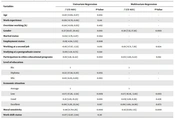
The results of the multivariate regression model showed that the most significant predictors of the quality of nursing care were moral sensitivity, gender, and economic situation, respectively. The quality of nursing care showed a positive association with moral sensitivity (β = 0.43, P < 0.001). Female nurses (β = 0.30, P < 0.001) reported higher quality nursing care compared with male counterparts. Furthermore, nurses with low economic status (β = -0.17, P = 0.003) reported lower quality of nursing care compared with those with average economic situation. Based on the results, the strongest predictor of nursing care quality was moral sensitivity (Table 3)
Table 3.
Predictors for the Quality of Nursing Care
| Variables | Univariate Regression | Multivariate Regression | ||
|---|---|---|---|---|
| β (CI: 95%) | P-Value | β (CI: 95%) | P-Value | |
| Age | -0.10 (-0.69, 0.07) | 0.104 | - | - |
| Work experience | -0.09 (-0.70, 0.09) | 0.141 | - | - |
| Overtime working (h) | -0.44 (-0.09, 0.05) | 0.492 | - | - |
| Gender | 0.37 (10.67, 20.45) | 0.001 | 0.30 (7.51, 17.36) | 0.000 |
| Marital status | 0.04 (-3.76, 6.87) | 0.564 | - | - |
| Employment status | 0.01(-4.94, 5.55) | 0.908 | - | - |
| Working at a second job | -0.16 (-17.97, -2.31) | 0.011 | 0.01 (-6.71, 7.39) | 0.924 |
| Studying at a postgraduate course | 0.09 (-1.81, 11.75) | 0.150 | ||
| Participation in ethics educational programs | 0.19 (3.18, 14.42) | 0.002 | 0.03 (-3.65, 6.22) | 0.192 |
| Level of education | ||||
| BSc | 1 | 1 | ||
| Diploma | -0.12 (-17.58, 0.20) | 0.055 | - | - |
| MSc | 0.01 (-8.03, 8.09) | 0.993 | - | - |
| Economic situation | ||||
| Average | 1 | 1 | ||
| Low | -0.17 (-17.26, -2.54) | 0.009 | -0.17 (-16.16, -3.49) | 0.003 |
| Good | 0.21 (3.95, 15.25) | 0.001 | 0.03(-3.89, 6.36) | 0.436 |
| Excellent | 0.08 (-5.26, 25.34) | 0.197 | 0.09 (-1.89, 24.96) | 0.073 |
| Moral sensitivity | 0.48 (0.79-1.26) | 0.000 | 0.43 (0.69, 1.15) | 0.000 |
| Work shift status | -0.07 (-12.87, 3.94) | 0.30 | ||
Abbreviations: β, standard regression coefficient; t, test statistics; SD, standard deviation; CI, confidence interval.
5. Discussion
The current study examined the role of moral sensitivity in predicting the quality of nursing care. According to the results of this study, most of the nurses studied reported moderate moral sensitivity and somewhat desirable quality of care. This study showed that there was a significant association between the moral sensitivity of nurses and the quality of patient care. Furthermore, gender and economic status were observed to be other predictors of the quality of nursing care.
The results of the present study revealed that the quality of nursing care was perceived as desirable by most of the nurses studied. Furthermore, the highest to lowest average scores of the quality of nursing care dimensions ranged from physical to communicational and psychosocial areas. In this regard, different results have been reported in the previous studies. For instance, Ebrahimi et al. (30) found that the quality of nursing care was moderate in the psychological dimension and favorable in other dimensions. Fatehi et al. (31), Gholjeh et al. (32), and Jamsahar et al. (20) found that the quality of care was optimal in all of these three dimensions. However, Akbari Kaji & Farmahani Farahani (33) reported that all three dimensions of nursing care quality had unsatisfactory low levels. These variabilities may be due to different research environments and socio-cultural differences of participants.
In the current study, economic status was a predictor of the quality of nursing care. Specifically, nurses with a low economic status were more likely to report poor quality of care. This finding was consistent with the report of Darawad et al. (22), who found that a desirable economic status significantly increased the quality of nursing care. Higher incomes and satisfactory economic status seem to be associated with better job performance and higher job satisfaction among nurses (34). In this regard, Farman et al. (35) and Dargahpour et al. (36) observed a direct association between job satisfaction and the quality of care delivered by nurses. Contrary to the findings of the present study, Ahmed et al. (23), in a study in the United Arab Emirates, could not find a statistically significant relationship between the economic status of nurses working in critical care units and their caring behaviors. This disparity can be related to differences in work conditions in special care units vs. general wards, as well as different incomes of Iranian nurses vs. those working in the United Arab Emirates.
The results of the present study showed that female nurses reported higher quality of care compared with male nurses. This was consistent with the results of similar domestic (20, 21) and overseas (11, 23) studies. Male nurses in Iran face cultural-religious and organizational challenges when providing care to female patients, which can affect the quality of nursing care. Furthermore, most male nurses are obliged to limit their abilities when providing care to female patients, prohibiting them from evoking their full professional capabilities (21). In Islamic countries such as Iran, religious beliefs are among the challenges faced by male nurses when caring for female patients (37). This may be correlated with the fact that female nurses are more compassionate and also the fact that the conflict between masculinity and kindheartedness can influence certain caring behaviors by male nurses (23). However, Mudallal et al. (38) reported that the quality of care was superior among male nurses. Furthermore, Afrasiabifar et al. (13) did not find a significant difference between female and male nurses regarding their caring behaviors. These differences may be related to the inherent variabilities of the concepts assessed, as well as due to the use of different instruments.
The results of the present study showed a moderate level of moral sensitivity among nurses. The highest moral sensitivity was related to the dimension of communication with the patient. Compared to other healthcare providers, nurses have more interactions with patients (39). Communication between the nurse and the patient, as the basis of nursing care, improves patients’ health levels and strengthens the feelings of security and trust in patients (40). Likewise, Lotfi et al. (41) reported a significant relationship between nurse-patient communication, patient satisfaction, and the quality of care. Inappropriate communication between the nurse and the patient compromises the quality of care and patient independence (42). Similarly, Taylan et al. (14) reported that maintaining patient autonomy was a predictor of desirable care behaviors.
The findings of this study indicated that moral sensitivity was a predictor of nursing care quality. Consistently, Afrasiabifar et al. (13) found a positive and significant correlation between nurses' caring behaviors and their moral sensitivity. Darzi‐Ramandi et al. reported that higher moral sensitivity was related to higher quality nursing care delivered to patients with COVID-19 (24). Moral sensitivity has been noted to increase nurses’ considerations for ethical principles, encouraging them to offer higher quality care to patients (26, 43). A high level of moral distress is experienced when providing nursing care requires making ethical decisions. Higher moral sensitivity can play an important role in boosting a nurse’s ability to make proper ethical decisions during patient care (44). In fact, the lack of moral sensitivity or inability to identify ethical challenges and make decisions about them may lead to undertaking undesirable care behaviors (22). However, the findings of Amiri et al. (5) indicated that there was an insignificant association between the moral sensitivity of nurses and the quality of nursing care reported by patients. This difference can be due to the different subjective nature of the concept of healthcare quality from the perspectives of patients and nurses.
4.1. Limitations and Strengths
This was the first study in Qazvin to investigate the association between moral sensitivity and quality of nursing care. Our results provided first-hand and important information about moral sensitivity in nurses and its association with the quality of patient care. One of the limitations of the present study was the use of a convenience sampling technique, which might restrict the generalizability of the results. Furthermore, the self-reporting procedure used for completing questionnaires raises the question that some nurses may not have given honest answers. By providing full explanations about the purposes of the study, we tried to resolve this limitation.
4.2. Conclusions
According to the viewpoints of most of the nurses participating in this study, the quality of patient care was at a desirable level. The quality of care was also better in the physical and communication dimensions. Furthermore, moral sensitivity, gender, and economic situation were found to be the most important predictors of the quality of nursing care. Our results have implications for planning, training, educating, rehearsing, managing, and developing moral sensitivity among nurses. It is therefore suggested that health policymakers provide the necessary training in universities and clinical environments to enhance moral sensitivity among nurses to improve the quality of care.