


1. Background
2. Objectives
3. Materials and Methods
3.1. Gene Expression
3.2. Western Blot Analysis Using His-tag Monoclonal Ab
3.3. Western Blot Using Human Serum to Cutaneous Leishmaniasis
3.4. Double Diffusion
4. Results
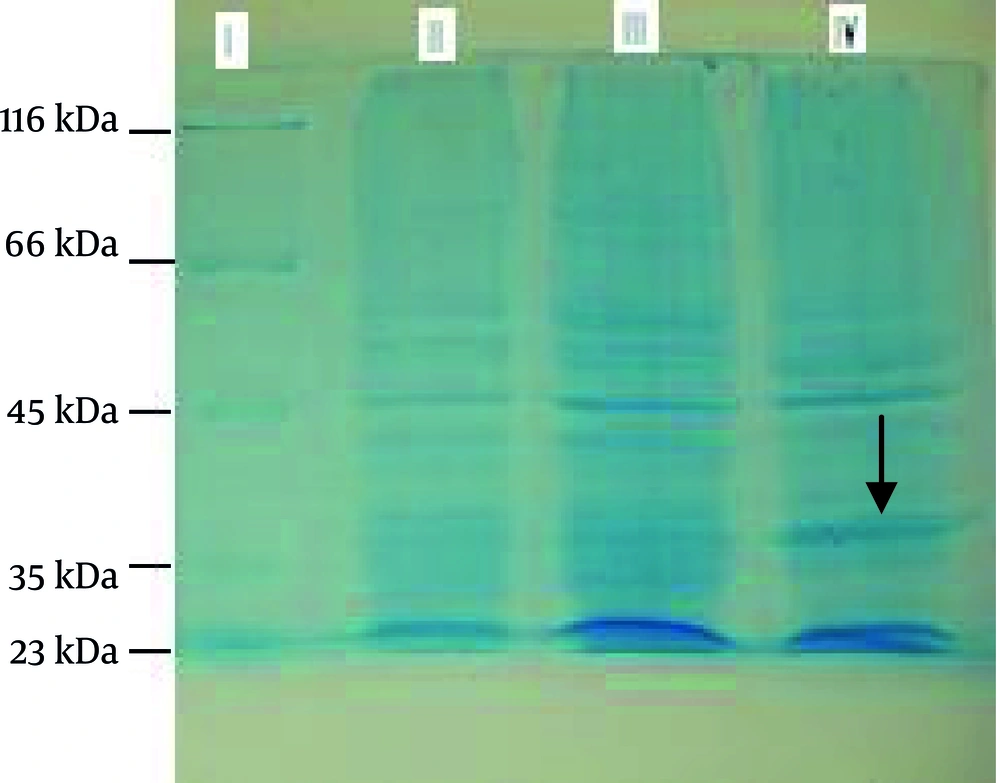
Lane I: Protein Marker (Fermentase), Lane II: Bacteria lysate (without plasmid), Lane III: Bacteria lysate containing intact plasmid (pQE-30), Lane IV: Bacteria lysate containing recombinant plasmid (pQE-30-4)
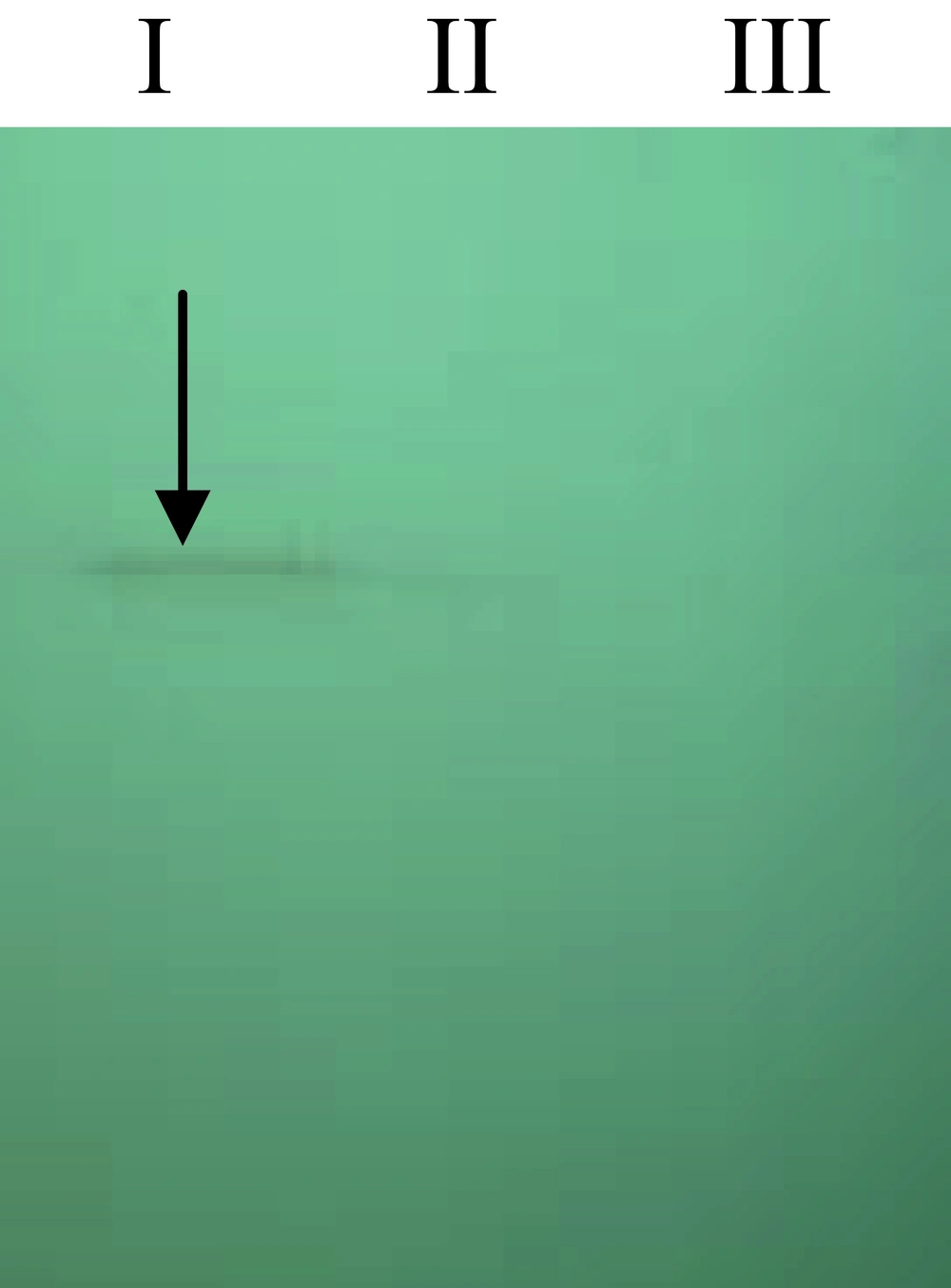
Lane I: Bacteria lysate containing recombinant plasmid (rpQE-30), Lane II: Bacteria lysate alone. Lane III: Bacteria lysate containing intact plasmid (pQE-30)
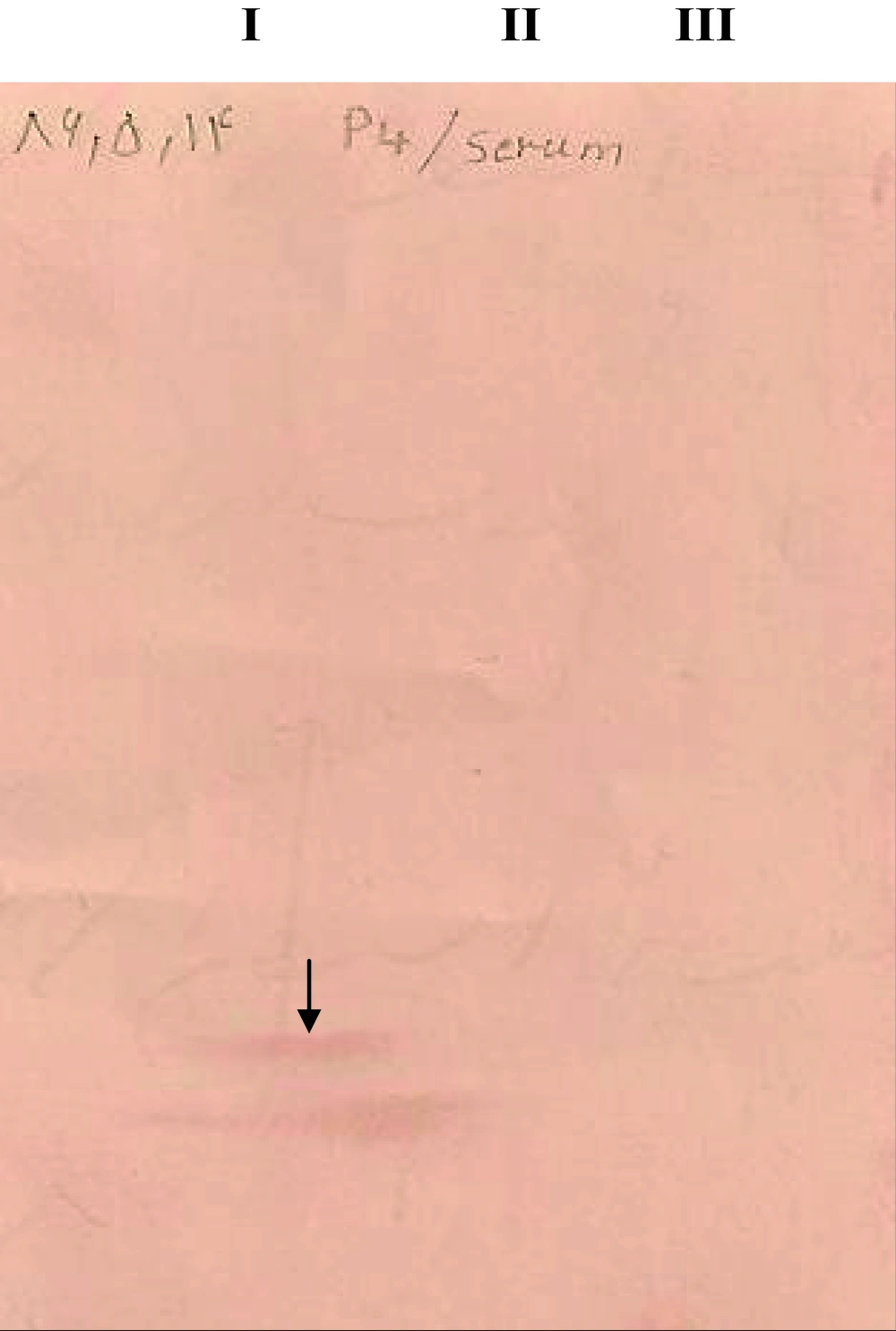
Lane I: Bacteria lysate containing recombinant plasmid (rpQE-30), Lane II: Bacteria lysate alone, Lane III: Bacteria lysate containing intact plasmid (pQE-30)
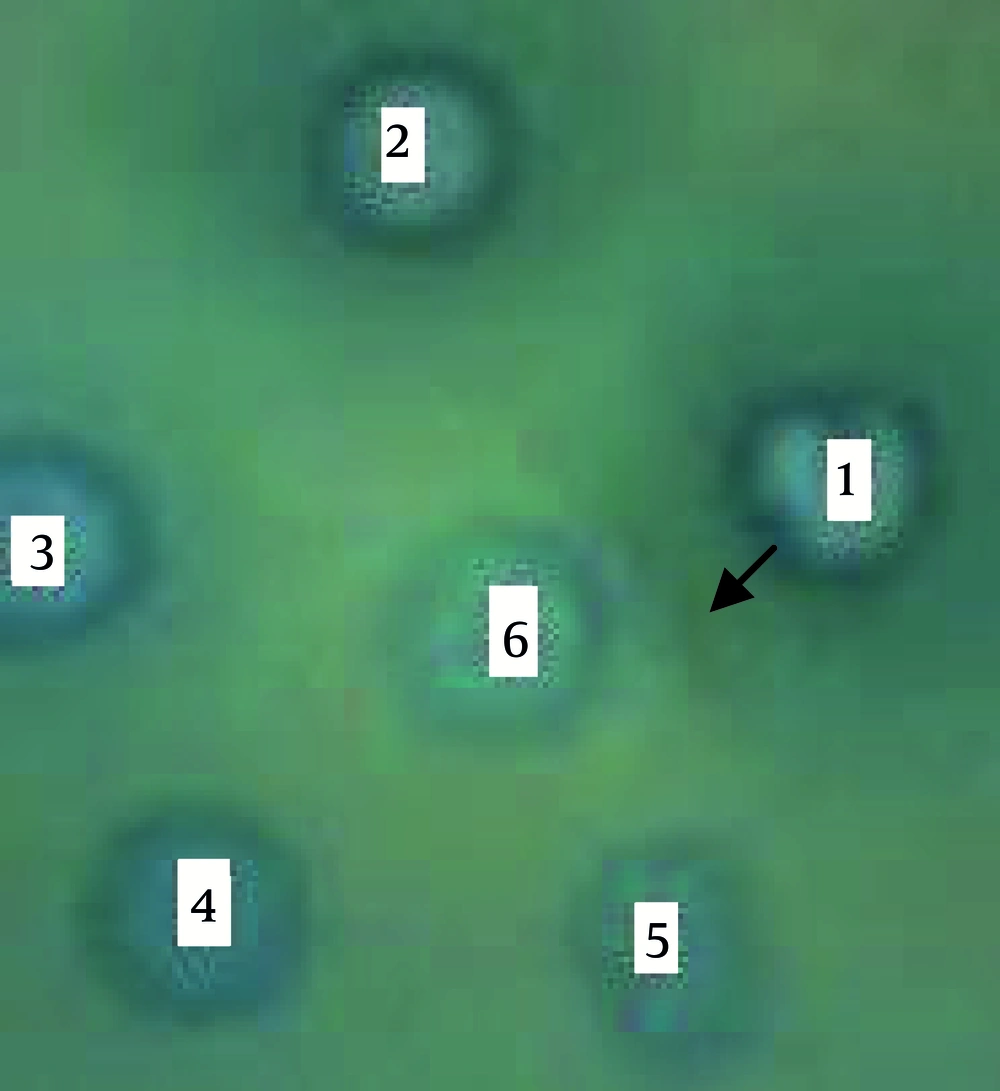
1: Bacteria lysate with the recombinant plasmid (rpQE-30), 5 h after induction, 2: Bacteria lysate with the recombinant plasmid (rpQE-30), overnight after induction, 3: Bacteria lysate with the recombinant plasmid (pQE-30-4), prior to induction, 4: Bacteria lysate alone 5: Bacteria lysate with the intact plasmid (pQE-30)
