
Image Credit:J Cell Mol Anesth
Outline
Predicting Patient Length of Stay in the Neurosurgical Intensive Care Unit of an Academic Medical Center: Predicting Patient Length of Stay in a Neurosurgical Intensive Care Unit
Authors
 1, Majid Mokhtari, Mohammadreza Hajiesmaeili2, Saeedeh Nateghinia2
Abstract
Background: The intensive care unit (ICU) has the highest mortality and admission rates compared to other wards. Therefore, to increase the performance of hospital services, it is very important to evaluate indicators such as mortality and length of stay of patients in ICU. The present study aimed to investigate the neural network analysis method and Particle Swarm Optimization - Support Vector Machine to predict the length of stay in the neurosurgical intensive care unit. Materials and Methods: This descriptive research deals with data mining and modeling of intensive care unit processes, leading to a practical example of the application of health systems engineering knowledge, using MATLAB software. Data of 1200 patients admitted during the years 2017 to 2019 in the intensive care unit of neurosurgery. Then we evaluated all data with SVM + PSA and NCA. Results: Identifying the important features and using them has gradually reduced the LOS prediction error from 40% to 7%. Using the NCA technique makes better results for predicting ICU LOS. Conclusion: PSO + SMV in addition to NCA is a good predictor of ICU LOS screening in patients after neurosurgery and can provide more accurate prognostic factors.
Highlights
References
- 1.References are in the PDF file of the article.
Copyright
© 2021, Author(s). This open-access article is available under the Creative Commons Attribution 4.0 (CC BY 4.0) International License (https://creativecommons.org/licenses/by/4.0/), which allows for unrestricted use, distribution, and reproduction in any medium, provided that the original work is properly cited.
Similar Articles
Efficiency of SOFA scoring system on predicting mortality rate and stay length in intensive care unit for patients of Al-Zahra hospital of Isfahan
mohammady M. Efficiency of SOFA scoring system on predicting mortality rate and stay length in intensive care unit for patients of Al-Zahra hospital of Isfahan. Med Surg Nurs J. 2013;1(2):e87468. doi:
Characteristics and Outcomes of Patients Admitted to Intensive Care Units in an Academic Hospital Northern Iran
Habibi MR, Kanafi Vahed L, Rimaz S, Shahnavazi S. Characteristics and Outcomes of Patients Admitted to Intensive Care Units in an Academic Hospital Northern Iran. Zahedan J Res Med Sci. 2024;26(4):e151648. doi: https://doi.org/10.5812/zjrms-151648
Investigation on Ensemble Models for Mortality Prediction in Intensive Care Unit Patients
Moosavi Kashani S, Nazarpourfard H, Zargar Balaye Jame S, Markazi Moghaddam N, Fathi M. Investigation on Ensemble Models for Mortality Prediction in Intensive Care Unit Patients. J Crit Care Excell. 2024;1(1):e138141. doi: https://doi.org/10.5812/jcce-138141
Comparison of Machine Learning Tools for the Prediction of ICU Admission in COVID-19 Hospitalized Patients
Shanbehzadeh M, Haghiri H, Afrash MR, Amraei M, Erfannia L, et al. Comparison of Machine Learning Tools for the Prediction of ICU Admission in COVID-19 Hospitalized Patients. Shiraz E-Med J. 2022;23(5):e117849. doi: https://doi.org/10.5812/semj.117849
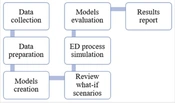
Optimizing Emergency Department Resource Allocation Using Discrete Event Simulation and Machine Learning Techniques
Moosavi Kashani S, Yavari E, Khatibi T. Optimizing Emergency Department Resource Allocation Using Discrete Event Simulation and Machine Learning Techniques. J Arch Mil Med. 2023;11(4):e140645. doi: https://doi.org/10.5812/jamm-140645
- Scopus by DOI: 0
Last Update: 1 month ago
- Scopus by Title: 0
Last Update: 1 month ago
- Scopus by Title (Ref): 0
Last Update: 1 month ago
- CrossRef: 0
Last Update: 6 days ago
- OpenAlex: 0
Last Update: 7 hours ago
- OpenCitations: 0
Last Update: 4 days ago
