1. Background
Visual impairment is a challenging barrier in children's education, as sight is probably the most important sense for humans to perceive and interact with their surrounding environment (1-3). Eye disorders negatively affect the child's physical, nervous, cognitive, and emotional development (3, 4). Furthermore, it has been determined that children who suffer from visual impairments have lower levels of oral health as compared to the general population, which can be attributed to the inability to see the plaque on dental surfaces and inadequacy of plaque removal, which ultimately leads to the development of caries and inflammatory diseases of the periodontium (1, 5).
Oral health education provides an explanation of oral hygiene goals and how to brush and clean dental areas, which are usually done using visual devices such as disclosing tablets and dental models. However, administration of such methods is not of high efficiency in visually impaired children (6). Compared to normal children, learning in visually impaired children is much more dependent on other senses, such as auditory and tactile sensations. Hence, while it is difficult to properly teach them using conventional methods, they can be well-trained using appropriate methods (7). Braille is a tactile writing and reading system developed for visually impaired people (3, 4, 7, 8). In addition, these tactile methods help those with visual problems to visualize things that they do not see (4, 8). Several studies investigated the provision of oral and dental health education to visually impaired children, including the use of self-learning manuals, audiotapes, and dental models (3-6), and some reported that a combination of auditory, tactile, and braille methods is a suitable method to teach oral health and promote the health and safety of visually impaired children (6, 8). In many developing countries, the oral and dental health status of visually impaired children has been reported to be poorer than normal children (1, 2, 5). Till now, to my knowledge, there has been no study on the health education of visually impaired children in Iran.
2. Objectives
The information gap in this field has led us to assess the effectiveness of different educational methods on the oral hygiene status of 7-13-year-old visually impaired children in Tehran.
3. Methods
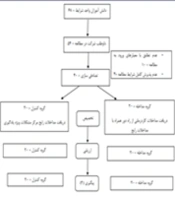
The research purpose and methodology of this clinical trial were subjected to scrutiny by the Ministry of Education and the Special Education Organization (ethical approval code: IRCT1397,004) and was given due approval. The sampling of this research was performed according to the census sampling method from all elementary schools of visually impaired children in Tehran, including three schools (Shahid Mohebi, Narjes, and Khazaeli). The study sample comprised of all 7-13-year-old Iranian children with visual impairment studying at elementary schools for the visually impaired children (n = 88) in Tehran.
Children with congenital visual impairment or visual acuity less than 3/10, without special mental and motor disabilities that can disrupt the use of a toothbrush or any history of background illnesses (diabetes mellitus, rheumatic fever, leukemia, etc.), who did not take any antibiotics or nonsteroidal anti-inflammatory drugs (NSAIDs) during the month before the study, who were not under orthodontic treatment and did not use any space maintainers and did not undergo in-office fluoride therapy or fissure sealant therapy in the past month were included in the study.
Written informed consent was obtained from parents of all participants before entering the study and after a comprehensive introduction to the study methodology. Then, they were asked to fill a questionnaire with items on background illnesses, dental conditions, and nutritional status of their children. All the participating children were well informed about the importance of oral hygiene and tooth brushing methods. Afterward, an empty room with adequate light, a table, and at least two seats, was selected at the school for examination. The participating children entered the room one by one and were involved in a conversation to make the connection and eliminate potential stress. In all eligible children, baseline plaque levels and gingival scores were assessed by Silness & Loe and Loe & Silness indices, respectively (9, 10). Examinations and training were carried out separately by two dental students who were previously trained by a pediatric dentist and a periodontist supervised by one of the school's instructors. It should be noted that the examiner was not aware of the group assignment.
Materials used in this study included fluoride-containing toothpaste (Bath-IRAN, 1000 ppm of fluoride) and child toothbrushes (Panberes-IRAN), which were distributed equally among children. Also, a dental mirror and dental probe were used to measure plaque and gingival indices. The method of tooth brushing was the Roll technique (11). Then, using simple random sampling, the children were randomized into four groups of verbal-tactile, verbal-braille, multisensory (verbal-tactile-braille), and control. The oral health instructions were presented as follows:
3.1. Verbal-tactile (The First Group)
The children and the trainer were in a comfortable and calm position such that the child could touch the large dental model. Each child touched the large dental model with the help of the educator; then, a toothbrush was placed in one hand, and the child was asked to touch the large model with the other hand. The proper way of placing the toothbrush on the teeth and its backward and forward movements were taught by the instructor. The child was also taught how to correctly use dental floss and then asked to brush and floss on the dental model, followed by doing the same on his/her own mouth.
3.2. Verbal-braille (The Second Group)
Children were provided with leaflets in which the principles of oral hygiene and how to brush and use dental floss were written in braille. They were asked to review and practice the instruction with the help of the dental student and their teacher to fully understand it.
3.3. Multi-sensory (The Third Group)
The children were trained by both braille and tactile methods with the large dental model. Initially, health education leaflets were provided to them in Braille, and their teacher helped them to read the leaflets. Next, they were taught how to properly brush their teeth and use dental floss on the large dental model with the help of the trainer. Afterward, they were asked to do the same on their mouth.
3.4. Controls (The Fourth Group)
Children in this group were considered as controls and just were well informed about the importance of oral hygiene and tooth brushing methods. Participants of this group received the necessary training at the end of the study.
One month after the first training date, each group received training in the same way as before. Two months after the initial examination, dental plaque and gingivitis were measured again by Silness & Loe and Loe & Silness indices, respectively.
The obtained data were analyzed by analysis of variance (ANOVA) to compare plaque and gingival indices in all four groups. To evaluate the intergroup differences, posthoc tests were used. Also, for comparing the changes in the indices of the groups during the follow-up period, paired t-test was used. Data analysis was administered using SPSS 20.0 (SPSS Inc., Chicago, IL, USA).
4. Results
A total of 88 visually impaired children (randomly allocated to four groups) in the elementary school participated in this study, with a mean age of 10 ± 2 years. The distribution of the subjects by the studied groups and according to individual characteristics is presented in Table 1. As shown in the table, there was no significant difference between the study groups concerning variables of gender, age, and educational stage (P > 0.05). Also, the study groups were not significantly different concerning the baseline plaque and gingival indices (P = 0.5 and 0.18, respectively).
Table 1.
Distribution of Subjects by the Studied Groups and According to Individual Characteristics and Baseline Periodontal Parameters
| Groups | Gender, No. (%) | Age (y) | Educational Stage | Baseline Plaque Index | Baseline Gingival Index | ||
|---|---|---|---|---|---|---|---|
| Girl | Boy | First-Third | Fourth-Seventh | ||||
| Group 1 (verbal-tactile) N = 20 | 7 (35) | 13 (65) | 10 ± 2 | 7 | 13 | 1.92 ± 0.35 | 1.00 ± 0.52 |
| Group 2 (verbal-braille) N = 21 | 7 (33) | 14 (66) | 10 ± 2 | 11 | 10 | 1.78 ± 0.37 | 0.90 ± 0.30 |
| Group 3 (verbal-tactile-braille) N = 24 | 6 (25) | 18 (75) | 11 ± 2 | 17 | 7 | 1.92 ± 0.32 | 0.69 ± 0.40 |
| Group 4 (control) N = 23 | 9 (39) | 14 (61) | 10 ± 2 | 11 | 12 | 1.93 ± 0.43 | 0.93 ± 0.30 |
| P-value | 0.771 | 0.554 | 0.354 | 0.5 | 0.18 | ||
The results of the evaluation of periodontal parameters (plaque and gingival indices) in the four groups and the studied time intervals (Table 2) indicated no significant difference in plaque index and gingival index (P = 0.5 and 0.18, respectively). However, after four months, there was a significant difference in plaque index and gingival index among the four groups (P < 0.05).
Table 2.
Distribution of Subjects by the Studied Groups and According to the Examined Periodontal Parameters
| Groups | Plaque Index | Gingival Index | ||
|---|---|---|---|---|
| Baseline | After Two Months | Baseline | After Two Months | |
| Group 1 (verbal-tactile) N = 24 | 1.92 ± 0.35 | 1.49 ± 0.34 | 1.00 ± 0.52 | 0.77 ± 0.42 |
| Group 2 (verbal-braille) N = 21 | 1.78 ± 0.37 | 1.59 ± 0.34 | 0.90 ± 0.30 | 0.70 ± 0.28 |
| Group 3 (verbal-tactile-braille) N = 20 | 1.92 ± 0.32 | 1.29 ± 0.37 | 0.69 ± 0.40 | 0.41 ± 0.27 |
| Group 4 (control) N = 23 | 1.93 ± 0.43 | 1.89 ± 0.36 | 0.93 ± 0.30 | 0.91 ± 0.29 |
| P-value | 0.5 | 0.0001 | 0.18 | 0.0001 |
All four groups showed a decrease in plaque and gingival indices after two months. The highest and lowest reductions were observed in the third group (ie, multi-sensory) and the second group (ie, Verbal-braille), respectively, compared to the control.
According to Bonferroni's supplementary test, there was no significant change in the plaque index of the first group compared to the second and the third groups after two months (P = 1 and 0.38, respectively), but the difference with the control group was statistically significant (P = 0.003). The second group showed statistically significant differences with the third group and the control (P = 0.035 and 0.04, respectively). Regarding the gingival index after two months, the first group did not show a significant difference with the third group or the control (P = 1 and 0.82, respectively), but the difference with the second group was statistically significant (P = 0.003). The second group had a significant difference with the third group (P = 0.02), but the difference with the control was not statistically significant (P = 0.17). Regarding both plaque & gingival indices, the p-value between multisensory & control was statistically significant (P = 0.0001).
5. Discussion
Oral hygiene is an important component of public health. However, unfortunately, it is often a neglected issue by the education system in many developing countries, including Iran. According to the evidence, the incidence of caries in visually impaired children is higher than the national average in Iran (6). In this study, educating children with visual problems through all three verbal-tactile, verbal-braille, and multisensory methods could reduce dental plaque and gingivitis after two months, and the changes were statistically significant relative to the baseline value in each of the study groups (P < 0.05). Regarding both plaque and gingival indices, the highest level of reduction was observed in the multisensory group; this point can be used to highlight the importance of the tactile sense in the perception ability of the visually impaired. Similar results are reported by Mudunuri et al., who compared the perception of 60 visually impaired children relative to three different methods of oral hygiene education in tooth brushing skills (12). At the end of the intervention, the tooth brushing skills of children in the tactile technique group were significantly improved than the other two groups (P < 0.05). The tactile methods help these people to visualize that do not see. O'Donnell and Crosswaite realized that visually impaired children are highly capable of translating audio instructions into practice, which confirms the benefits of auditory and tactile instructions (8). Krishnakumar et al. also emphasized this point in their comparative evaluation of audio and audio-tactile methods intended to improve oral hygiene status of visually impaired school children (7). In the present study, the verbal-tactile group was ranked as the second concerning observed improvements. Since conventional educational methods have not been highly efficient for visually impaired children, Sardana et al. investigated the effect of a preventive program with a specific design on the oral health of visually impaired children (13). In this program 148 visually impaired children were divided into two groups; the first group was trained using braille text and a plastic dental model, and the second one was trained by an audio story, which was provided as computer software to the teacher and the children. The plaque and gingival indices were measured before the intervention and after 3 and 6 months. According to the results of this study, tactile and auditory measures in the education and motivation of children with visual impairment are more effective concerning oral hygiene maintenance, which is in line with the results of the present study.
In general, it can be argued that education is one of the essential elements in the formulation and internalization of behavior in a child. Oral hygiene education is also necessary to prevent caries and gingival diseases and to create a healthy habit during a person's life. Visually impaired children are no exception to this rule, just their training needs to be focused on educational methods that are tailored to their abilities. In many studies, the importance of using a combination method in which the visually impaired child can take advantage of several senses is recommended. Ganapathi et al. conducted a comprehensive study to investigate the effects of different "sensory inputs" on health education in visually impaired children (4). The oral health education program was conducted in a 6-month interval for 200 boys and girls aged 8 - 14 years, who were randomly assigned to five groups. Data analysis showed a statistically significant increase in the rate of utilization and success of the multi-sensory method, which suggests the superiority of training with the use of all active senses in visually impaired children. Although the group that only used the braille text also showed an increase in children's awareness, this method had the least success rate compared to other tested methods. In another similar study, Chowdary et al. investigated the effect of audio texts, braille, and tactile education in visually impaired children (14). According to the results of this study, dental plaque and gingivitis were decreased in all groups, but the verbal-braille-tactile method group exhibited the most reduction in plaque, whereas the verbal method group showed the most reduction in gingival inflammation. The methodology and the results of this study are consistent with the findings of our research regarding plaque levels, but there is a contradiction in the amount of gingival inflammation. Another study recently conducted by Gautam et al., which aimed to investigate the effect of oral health education on the health status of visually impaired and partially-sighted children in Bhopal city, also reported similar results (8). In a study conducted by a similar method to our research methodology, all of which included the multi-sensory method, it is noted that, while the verbal-tactile-braille combination method is more difficult to operate and needs more time and specialized staff, considering the significant implications that it can have on the oral and dental health of blind children, it is a good method to pervade in the society so that training can have the maximum beneficial outcomes. Gautam et al. stressed the role of the combination technique of Braille and ATP (audio tactile performance) to help visually impaired children maintain an acceptable level of oral hygiene (15).
Another important point is that training should be accompanied by motivation and repetition to maximize the potential impact and retain ability in the mind of the child. In this regard, a study by Mahantesha et al. demonstrated the fundamental role of continuous motivation and repeated education using braille and audio to promote health and reduce the level of PHP of these children (3). In the present study, the emphasis was on repetition and retraining, so that at the end of the first session, after the training was provided, children in all groups were asked to brush their teeth in front of the educator to repeat the instructions if the child had not understood them well. Also, after one month, all groups received training again. A study by Debnath et al., aiming at examining a new perspective for improving oral hygiene education in children with visual impairment, has also re-emphasized the importance of this point (16).
5.1. Conclusions
This study demonstrated that the combination of verbal-tactile-braille methods is a suitable and efficient method with significantly more acceptable results.