
1. Background
Limping in childhood is a common clinical presentation that requires a meticulous diagnostic approach. It is defined as an abnormal gait pattern resulting from pain, mechanical dysfunction, or neurological deficits (1). The differential diagnosis is extensive, ranging from benign, self-limiting conditions to serious pathologies requiring urgent intervention. Etiologically, limping is categorized into infectious, traumatic, inflammatory, developmental, and neoplastic disorders (2).
In modern pediatric practice, distinguishing self-limiting conditions from severe etiologies, such as septic arthritis or osteomyelitis, remains paramount, as delayed diagnosis can lead to substantial long-term morbidity (3). Common diagnoses include transient synovitis, fractures, Legg-Calvé-Perthes disease, and slipped capital femoral epiphysis (4, 5). Furthermore, recent diagnostic algorithms emphasize integrating the clinical history and physical examination with selective paraclinical evaluation, including inflammatory markers when indicated, to avoid unnecessary investigations (1, 6). Figure 1 was developed by the authors based on a synthesis of the available literature and common diagnostic pathways for pediatric limping (1, 6).
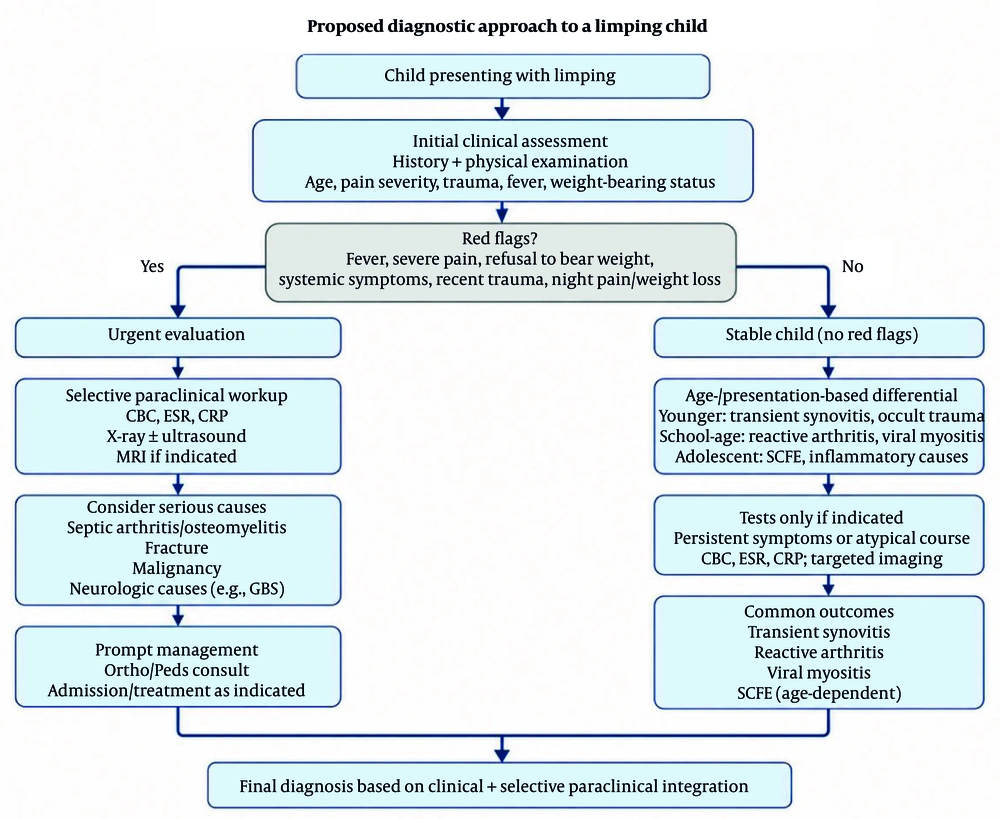
Figure 1.
Stepwise diagnostic approach to a child presenting with limping.
The pathway prioritizes clinical assessment and recognition of red flags, followed by selective paraclinical testing (e.g., CBC, ESR, CRP) and targeted imaging when indicated, to reduce over-investigation and facilitate early identification of urgent conditions. The algorithm is based on published approaches to evaluating the limping child and on the diagnostic utility of inflammatory markers in pediatric hip conditions (1, 6).
A systematic clinical assessment, combined with the judicious use of laboratory markers, such as C-reactive protein (CRP) and erythrocyte sedimentation rate (ESR), and imaging modalities, such as ultrasonography and magnetic resonance imaging (MRI), is essential for accurate diagnosis (6, 7). Despite these tools, the diagnostic pathway for hospitalized children remains complex, particularly in tertiary care settings where clinical presentations may be atypical.
2. Objectives
This 5-year retrospective study aimed to elucidate the clinical and paraclinical spectrum of limping in hospitalized children. By analyzing this cohort, we sought to provide updated insights into current diagnostic patterns and management outcomes that may serve as a valuable reference to support clinicians’ decision-making when managing this challenging pediatric presentation.
3. Methods
3.1. Patients and Setting
This single-center, retrospective, cross-sectional, descriptive study was conducted at 17 Shahrivar Hospital, a tertiary pediatric care center in Northern Iran. The study included all children aged 1 - 18 years who were admitted to the hospital with a chief complaint of limping between January 2018 and December 2022. Children with limping due to a chronic condition established before the study period and those who were not hospitalized were excluded.
3.2. Data Gathering
Data were retrospectively collected from the electronic medical records of eligible patients. The following information was extracted: demographic data, including age, sex, and place of residence; clinical history, including duration of limping, fever, pain characteristics, associated symptoms, medication history, unpasteurized dairy consumption, trauma history, and respiratory infection in the preceding 15 days; physical examination findings, including localized tenderness, swelling, erythema, joint effusion, range-of-motion limitation, gait abnormality, and temperature; laboratory investigations, including complete blood count (CBC) with white blood cell (WBC) count and differential, CRP, ESR, Wright test, Coombs Wright test, antinuclear antibody, C3, antistreptolysin O, and rheumatoid factor; imaging studies, including plain radiographs of the affected limb and pelvis, ultrasonography of the hip or affected joint, MRI of the affected area, and other imaging modalities when performed; final diagnosis, based on clinical findings, laboratory results, imaging, and response to treatment as recorded in the medical records; and final outcome, classified as complete recovery, incomplete recovery/outpatient follow-up, or complication.
A standardized data collection form was used to ensure consistency. Two independent reviewers extracted the data, and discrepancies were resolved by consensus or by consultation with a senior clinician.
3.3. Diagnostic Definitions and Adjudication
Transient synovitis was defined as acute-onset hip pain or limping with limited range of motion, the absence of systemic infection, and supportive ultrasonographic findings when available. Septic arthritis was defined as clinical suspicion accompanied by laboratory evidence of infection, including elevated inflammatory markers, and/or positive joint aspiration findings, together with the treating physician's final diagnosis. Reactive arthritis was defined as arthritis occurring after a recent infection, without evidence of septic arthritis, and diagnosed by the treating physician based on clinical and laboratory findings. Viral myositis was defined as acute muscle pain or gait disturbance associated with a recent viral illness and elevated muscle enzymes when available. Other diagnoses, including osteomyelitis, Guillain-Barré syndrome, cellulitis, brucellosis, juvenile idiopathic arthritis (JIA), and multisystem inflammatory syndrome in children (MIS-C), were recorded according to the final clinical diagnosis documented by the treating physicians in the hospital records.
3.4. Operational Definitions and Variable Categorization
To ensure clarity and reproducibility, clinical and laboratory variables were defined as follows. Fever was defined as a core body temperature ≥ 38.0°C. Leukocytosis was defined according to age-specific reference ranges (e.g., >15000/μL for infants, >12000/μL for toddlers, and > 10000/μL for older children). Elevated CRP was defined as values > 10 mg/L. Thrombocytosis was defined as a platelet count > 450000/μL. Abnormal ultrasonographic findings included signs of joint effusion, synovial thickening, or other structural abnormalities, as interpreted by the attending radiologist. Symptom duration (limping) was categorized as acute (≤7 days), subacute (>7 days to 4 weeks), and chronic (>4 weeks). Hospitalization outcomes were defined as follows: 1) complete recovery, defined as resolution of symptoms and return to baseline function at discharge; 2) incomplete recovery/outpatient follow-up, defined as ongoing pain or limping requiring further observation and follow-up visits due to unresolved mild symptoms; and 3) complication, defined as the development of secondary issues, such as abscess formation or local soft tissue infection, during or immediately after the hospital stay. These outcomes were based on the final clinical assessment documented by the primary team at discharge.
3.5. Statistical Analysis
Descriptive statistics were used to summarize demographic characteristics, clinical features, laboratory and imaging findings, and the distribution of final diagnoses. Continuous variables are expressed as mean ± standard deviation (SD), and categorical variables are presented as frequencies and percentages, with 95% confidence intervals (CIs) calculated for the prevalence of the main diagnostic categories to enhance reporting robustness. As the study was designed as a descriptive cross-sectional analysis, no formal inferential statistical comparisons, such as P-value comparisons between groups, were performed.
4. Results
A total of 166 children admitted with a limp between January 2018 and December 2022 were included in this study. The male-to-female ratio was approximately 1.6:1, with males comprising 61.4% (n = 102) of the study population. The mean age of the cohort was 6.1 ± 3.1 years (range, 1 - 14.5 years). The distribution of patients by age group was as follows: <3 years, 25.9% (n = 43); 4 - 7 years, 48.1% (n = 80); and 8 - 18 years, 25.9% (n = 43). Overall, 144 patients (86.7%) were urban residents and 22 (13.2%) were rural residents.
4.1. Etiology of Limping
The distribution of final diagnoses is presented in Table 1. Reactive arthritis and viral myositis were the most frequent diagnoses, accounting for 25.3% and 20.4% of cases, respectively. All patients received a final diagnosis at discharge. Notably, 14 cases (8.4%) did not meet the criteria for a specific pathological entity but were discharged after complete symptom resolution; these cases were classified as transient, self-limiting conditions. There were no cases with an undetermined diagnosis in this cohort.
Table 1.
Distribution of Final Diagnoses in Children Presenting with Limp a
| Final Diagnosis | No (%); 95% CI |
|---|---|
| Reactive arthritis | 42 (25.3); 18.9 - 32.6 |
| Viral myositis | 34 (20.4); 14.6 - 27.4 |
| Transient synovitis | 17 (10.2); 6.1 - 15.9 |
| Septic arthritis | 17 (10.2); 6.1 - 15.9 |
| Guillain-Barré syndrome | 11 (6.6); 3.6 - 11.6 |
| Cellulitis | 9 (5.4); 2.8 - 10.2 |
| New lesion b | 7 (4.2); 1.7 - 8.5 |
| Complication from underlying disease | 3 (1.8); 0.4 - 5.2 |
| Acute rheumatic fever | 3 (1.8); 0.4 - 5.2 |
| Brucellosis | 2 (1.2); 0.1 - 4.3 |
| Growing pain | 2 (1.2); 0.1 - 4.3 |
| Osteomyelitis | 2 (1.2); 0.1 - 4.3 |
| Multisystem inflammatory syndrome in children | 2 (1.2); 0.1 - 4.3 |
| Juvenile idiopathic arthritis | 1 (0.6); 0.02 - 3.3 |
| Transient, self-limiting conditions | 14 (8.4); 4.7 - 13.8 |
a Abbreviations: JIA, juvenile idiopathic arthritis; MIS-C, multisystem inflammatory syndrome in children.
b New bone-joint lesion during the course of an underlying disease included 4 cases of acute lymphocytic leukemia, 2 cases of Langerhans cell histiocytosis, and 1 case of primitive neuro-ectodermal tumor.
The most frequent final diagnoses were reactive arthritis in the < 3 and 4 - 7-year age groups (30.2% and 28.7%, respectively) and viral myositis in the 8 - 18-year age group (32.3%). Viral myositis was the most common diagnosis among males, whereas reactive arthritis was the most common diagnosis among females. The mean age for each final diagnosis, along with the frequency of diagnoses stratified by sex and age group, is presented in Table 2.
Table 2.
Mean Age and Distribution of Final Diagnoses by Age Group and Sex a
| Final Diagnosis | Male | Female | Age (y) | 1 - 3 (y) | 4 - 7 (y) | 8 - 18 (y) |
|---|---|---|---|---|---|---|
| Reactive arthritis (n = 42) | 22 (52.3) | 20 (47.6) | 2.7 ± 5.2 | 13 (30.9) | 23 (54.7) | 6 (14.2) |
| Viral myositis (n = 34) | 27 (79.4) | 7 (20.5) | 2.0 ± 6.5 | 3 (8.8) | 20 (58.8) | 11 (32.3) |
| Transient synovitis (n = 17) | 9 (52.9) | 8 (47.0) | 2.3 ± 4.6 | 7 (41.1) | 8 (47.0) | 2 (11.7) |
| Septic arthritis (n = 17) | 9 (52.9) | 8 (47.0) | 3.7 ± 6.1 | 6 (35.2) | 7 (41.1) | 4 (23.5) |
| Guillain-Barré syndrome (n = 11) | 9 (81.8) | 2 (18.1) | 4.2 ± 8.1 | 1 (9.0) | 5 (45.4) | 5 (45.5) |
| Cellulitis (n = 9) | 5 (55.5) | 4 (44.4) | 2.9 ± 5.2 | 3 (33.3) | 5 (55.5) | 1 (11.1) |
| New lesion (n = 7) | 5 (41.4) | 2 (28.5) | 3.1 ± 6.4 | 2 (28.5) | 2 (28.5) | 3 (42.8) |
a Values are expressed as No. (%) or mean ± SD.
4.2. Clinical Characteristics and Joint Involvement
Joint pain was the most common complaint (n = 102, 61.4%), primarily involving the hip (n = 66, 65%), knee (n = 39, 38%), and ankle (n = 11, 10.7%). Among these patients, 67 (65.6%) had monoarticular involvement, whereas 35 (34.3%) had polyarticular symptoms. Notably, 64 children (38.5%) could not localize the pain or reported it generally within the affected limb, largely because of their young age. Across all etiologies, monoarticular involvement was consistently more frequent than polyarticular involvement. Migratory joint pain occurred in 5 patients (4.9%): 3 diagnosed with reactive arthritis and 2 with transient, self-limiting conditions. Joint pain was present in all cases of transient synovitis and septic arthritis. Clinical characteristics and the distribution of joint involvement by final diagnosis are detailed in Tables 3 and 4, respectively.
Table 3.
Clinical Characteristics of Patients Stratified by Final Diagnosis a
| Final Diagnosis | Fever | Joint Pain | Lower Limb Pain | Joint Movement Limitation | Tenderness | Decreased Muscle Strength | Swelling | Limb Weakness |
|---|---|---|---|---|---|---|---|---|
| Reactive arthritis (n = 42) | 26 (61.9); 45.6 - 76.4 | 40 (95.2); 83.8 - 99.4 | 1 (2.3); 0.1 - 12.6 | 18 (42.8); 27.7 - 59.0 | 13 (30.9); 17.6 - 47.1 | 5 (11.9); 4.0 - 25.6 | 7 (16.6); 7.0 - 31.4 | 4 (9.5); 2.7 - 22.6 |
| Viral myositis (n = 34) | 15 (44.1); 27.2 - 62.1 | 1 (2.9); 0.1 - 15.3 | 30 (88.2); 72.5 - 96.7 | 0 (0); 0 - 10.3 | 7 (20.5); 8.7 - 37.9 | 7 (20.5); 8.7 - 37.9 | 0 (0); 0 - 10.3 | 3 (8.8); 1.9 - 23.7 |
| Transient synovitis (n = 17) | 5 (29.4); 10.3 - 56.0 | 17 (100); 80.5 - 100 | 0 (0); 0 - 19.5 | 8 (47.0); 23.0 - 72.2 | 6 (35.2); 14.2 - 61.7 | 0 (0); 0 - 19.5 | 2 (11.7); 1.5 - 36.4 | 0 (0); 0 - 19.5 |
| Septic arthritis (n = 17) | 14 (82.3); 56.6 - 96.2 | 17 (100); 80.5 - 100 | 0 (0); 0 - 19.5 | 10 (58.8); 32.9 - 81.6 | 6 (35.2); 14.2 - 61.7 | 0 (0); 0 - 19.5 | 6 (35.2); 14.2 - 61.7 | 0 (0); 0 - 19.5 |
| Guillain-Barré syndrome (n = 11) | 0 (0); 0 - 28.5 | 1 (9.0); 0.2 - 41.3 | 3 (27.2); 6.0 - 61.0 | 0 (0); 0 - 28.5 | 1 (9.0); 0.2 - 41.3 | 7 (63.6); 30.8 - 89.1 | 0 (0); 0 - 28.5 | 9 (81.8); 48.2 - 97.7 |
| Cellulitis (n = 9) | 3 (33.3); 7.5 - 70.1 | 1 (11.1); 0.3 - 48.2 | 7 (77.7); 40.0 - 97.2 | 0 (0); 0 - 33.6 | 4 (44.4); 13.7 - 78.8 | 0 (0); 0 - 33.6 | 8 (88.8); 51.8 - 99.7 | 0 (0); 0 - 33.6 |
| New lesion (n = 7) | 3 (42.9); 9.9 - 81.6 | 3 (42.9); 9.9 - 81.6 | 3 (42.9); 9.9 - 81.6 | 2 (28.6); 3.7 - 71.0 | 0 (0); 0 - 41.0 | 2 (28.6); 3.7 - 71.0 | 0 (0); 0 - 41.0 | 4 (57.1); 18.4 - 90.1 |
a Values are expressed as No (%); 95% CI.
Table 4.
Pattern of Joint Involvement Categorized by Final Diagnosis a
| Joint Involvement | Reactive Arthritis | Viral Myositis | Transient Synovitis | Septic Arthritis | Guillain-Barré Syndrome | Cellulitis | New Lesion |
|---|---|---|---|---|---|---|---|
| One joint | 23 (54.7) | 0 (0) | 13 (23.5) | 13 (23.5) | 1 (9.0) | 1 (11.1) | 2 (28.5) |
| More than one joint | 17 (40.4) | 1 (2.94) | 4 (23.5) | 4 (23.5) | 0 (0) | 0 (0) | 1 (14.2) |
a Values are expressed as No. (%).
The mean duration of symptoms before admission was 10.9 ± 4.7 days (range, 1 - 120 days). Most cases were acute (n = 95, 57.2%) or subacute (n = 69, 41.5%), whereas only 2 cases (1.2%) were chronic (osteomyelitis and systemic juvenile idiopathic arthritis). Subacute onset was more frequent in reactive and septic arthritis, whereas acute onset predominated in viral myositis and transient synovitis.
4.3. Patient History
Notable clinical histories included medication use (n = 93, 56.0%), recent upper respiratory infection (URI) (n = 81, 48.7%), trauma (n = 24, 14.4%), unpasteurized dairy consumption (n = 19, 11.4%), and diarrhea (n = 9, 5.4%). Recent URI was most strongly associated with viral myositis, Guillain-Barré syndrome, and transient synovitis. Trauma was primarily associated with cellulitis and septic arthritis. Notably, of the 19 patients who consumed unpasteurized dairy, only 2 were diagnosed with brucellosis, indicating that this history alone is insufficient for diagnosis. Patient history stratified by final diagnosis is summarized in Table 5.
Table 5.
Distribution of Patient History by Final Diagnosis a
| Final Diagnosis | History of Specific Medication | Diarrhea | Recent URI | Trauma | Unpasteurized Dairy Consumption |
|---|---|---|---|---|---|
| Reactive arthritis (n = 42) | 24 (55.8) | 5 (11.9) | 18 (42.8) | 4 (9.5) | 4 (9.5) |
| Viral myositis (n = 34) | 26 (76.4) | 0 (0) | 29 (85.2) | 0 (0) | 2 (5.8) |
| Transient synovitis (n = 17) | 5 (29.4) | 0 (0) | 10 (58.5) | 2 (11.7) | 4 (23.5) |
| Septic arthritis (n = 17) | 9 (52.9) | 1 (5.8) | 4 (23.5) | 5 (29.4) | 4 (23.5) |
| Guillain-Barré syndrome (n = 11) | 5 (45.4) | 2 (18.1) | 7 (63.6) | 2 (18.1) | 0 (0) |
| Cellulitis (n = 9) | 5 (55.5) | 0 (0) | 0 (0) | 6 (66.6) | 0 (0) |
| New lesion (n = 7) | 1 (14.2) | 0 (0) | 0 (0) | 2 (28.5) | 1 (14.2) |
aValues are expressed as No (%). Abbreviation: URI, upper respiratory infection.
Among the 93 patients with a prior medication history, antibiotics were the most frequently used medications (n = 65, 69.8%), predominantly cefixime, amoxicillin-clavulanate, and amoxicillin. Other commonly used medications included acetaminophen (n = 37, 39.7%), nonsteroidal anti-inflammatory drugs (NSAIDs), primarily ibuprofen (n = 30, 32.2%), and antihistamines, mainly diphenhydramine (n = 23, 24.7%). A history of prior medication use was most frequently associated with viral myositis and reactive arthritis.
4.4. Laboratory and Imaging Findings
The mean WBC count was 9,426/mm3, with age-adjusted leukocytosis observed in 46 cases (27.7%), most notably among patients with septic and reactive arthritis. Laboratory findings stratified by final diagnosis are presented in Table 6.
Table 6.
Laboratory Characteristics Stratified by Final Diagnosis a
| Final Diagnosis | WBC (per mm3) | Leukocytosis | ESR (mm/h) | Raised CRP (≥ 10 mg/dL) | Platelet (×1000/mm3) | Thrombocytosis (> 450000/mm3) |
|---|---|---|---|---|---|---|
| Reactive arthritis (n = 42) | 11500 ± 3422 | 18 (42.8) | 43.0 ± 30.5 | 25 (59.5) | 322.5 ± 79.4 | 5 (11.9) |
| Viral myositis (n = 34) | 5241 ± 3034 | 1 (2.9) | 20.5 ± 15.2 | 8 (23.5) | 190.8 ± 67.3 | 0 (0) |
| Transient synovitis (n = 17) | 9800 ± 2776 | 4 (23.5) | 21.5 ± 12 | 9 (52.9) | 293.2 ± 59.4 | 1 (5.8) |
| Septic arthritis (n = 17) | 11805 ± 5401 | 9 (52.9) | 55.4 ± 34.9 | 14 (82.3) | 298.1 ± 109.4 | 2 (11.7) |
| Guillain-Barré syndrome (n = 11) | 9390 ± 2659 | 3 (27.2) | 18.1 ± 11 | 2 (18.1) | 323 ± 86.2 | 3 (27.2) |
| Cellulitis (n = 9) | 10233 ± 3440 | 3 (33.3) | 20.2 ± 9.8 | 6 (66.6) | 276.4 ± 76.9 | 0 (0) |
aValues are expressed as No (%) or mean ± SD Abbreviations: CRP, C-reactive protein; ESR, erythrocyte sedimentation rate; WBC, white blood cell.
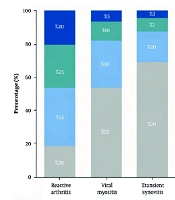
The distribution of ESR levels was stratified across all diagnostic groups to delineate their respective inflammatory profiles (Figure 2). Notably, patients with septic arthritis exhibited a broader distribution of elevated ESR levels, including a substantial proportion above 50 mm/h, whereas conditions such as transient synovitis and viral myositis were predominantly associated with lower ESR values (≤50 mm/h). This stratification underscores the clinical utility of ESR as a discriminative marker in the differential diagnosis of pediatric limping.
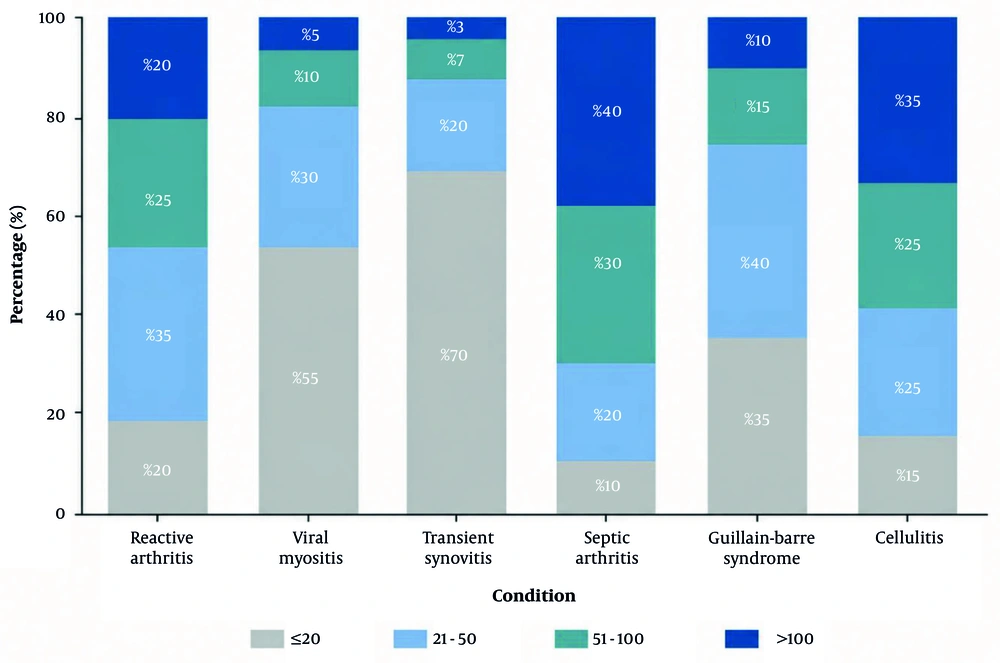
Figure 2.
Distribution of erythrocyte sedimentation rate (ESR) levels stratified by final diagnosis
The stacked bars represent the percentage of patients within each ESR category (mm/h): ≤20 (lightest shade), 21 - 50, 51 - 100, and > 100 (darkest shade). This visualization highlights the varied inflammatory profiles associated with different etiologies of pediatric limping.
Ultrasound was performed in 100 patients and revealed pathological findings in 55 (55%), most commonly joint effusion (n = 41, 74.5%) and synovial thickening (n = 22, 40%). Radiographic evaluation, available for 34 patients, showed abnormalities in 6 (17.6%). Bone scans were performed in 15 patients, with 7 showing inflammatory uptake. Both ultrasound and radiographic abnormalities were most frequent in septic arthritis.
The mean length of hospital stay for the entire cohort was 6.14 ± 4.3 days (range, 1 - 26 days). As illustrated in Figure 3, the duration of hospitalization varied notably across diagnostic groups. Patients with Guillain-Barré syndrome and septic arthritis had the longest hospital stays, whereas those with transient synovitis and viral myositis had shorter recovery periods. This variability in hospitalization duration reflects the underlying clinical complexity and management requirements of each diagnostic entity.
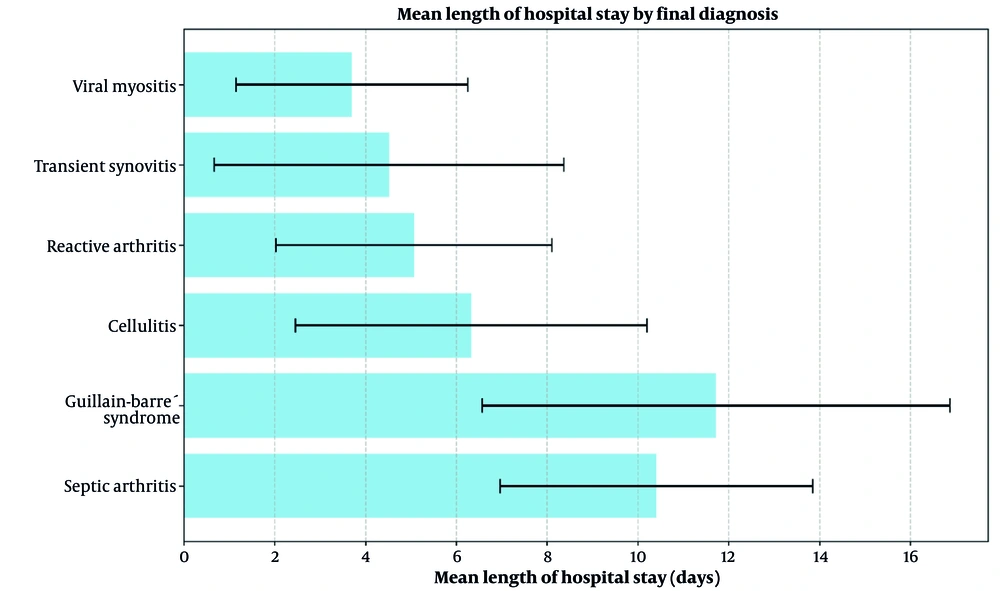
Figure 3.
Mean length of hospital stay (LOS) according to final diagnosis
Data are presented as mean ± standard deviation. Length of stay varied significantly across diagnostic groups, with Guillain-Barré syndrome and septic arthritis requiring the longest hospitalization duration. LOS values are expressed in days.
Complete recovery was achieved in 154 patients (92.7%). The remaining 12 patients (7.2%) required follow-up, primarily because of persistent symptoms, deferred diagnoses, or recurrence. Review of the medical records documented no serious complications during the follow-up period. Six patients required readmission because of persistent or recurrent limping; their final diagnoses were revised in several instances, notably shifting from initial suspected diagnoses, such as transient synovitis or reactive arthritis, to definitive chronic conditions such as JIA.
5. Discussion
Limping in children is a common pediatric presentation that poses a substantial diagnostic challenge. This 5-year retrospective study of 166 children at a tertiary center in Northern Iran provides a comprehensive analysis of the clinical, laboratory, and paraclinical landscape of this condition.
Our results indicate a higher prevalence of limping among males, consistent with the findings of Jowkar et al. (8) and Lázaro Carreño et al. (9). Although transient synovitis is frequently cited as the most common diagnosis in other series (8 - 10), our study identified reactive arthritis and viral myositis as the leading etiologies. This discrepancy is likely multifactorial. Although we observed this shift during the COVID-19 pandemic period, the retrospective nature of our study precludes establishing a definitive causal link between the pandemic and these diagnostic patterns. It is plausible, however, that pandemic-related changes in viral circulation and healthcare-seeking behaviors may have contributed to these findings; nonetheless, this observation warrants cautious interpretation and further investigation. Furthermore, differences in study design, specifically our focus on hospitalized patients compared with the emergency-only cohorts of other studies (8, 10), likely contributed to the higher frequency of more severe or subacute presentations in our population.
Clinical evaluation remains the cornerstone of management. We observed a high frequency of fever (49%) and elevated inflammatory markers in our cohort, particularly in cases of septic arthritis. This finding underscores the clinical utility of the Kocher criteria and markers such as WBC, ESR, and CRP in distinguishing septic etiologies from benign conditions. Our data reinforce the argument by Dubois-Ferrière et al. (11) that excessive, low-yield diagnostic testing can often be avoided. For instance, the high rate of nonspecific positive results in tests such as the Wright and antistreptolysin O tests in our cohort suggests that clinicians should be cautious not to misinterpret remote historical infections as current clinical explanations.
Management strategies also require careful consideration of patients’ pharmacological history. Because 32% of our patients had received NSAIDs before admission, clinicians should be aware that such therapy can potentially mask clinical signs and delay definitive diagnosis. Despite the diagnostic complexity, the favorable recovery rate (92.8%) observed in our study supports the effectiveness of current institutional management protocols.
5.1. Strengths and Limitations
The strengths of this study include its 5-year longitudinal dataset, the largest of its kind in Iran, which captures the nuances of limping across varied etiologies. However, the retrospective design carries inherent risks of recall bias and potential selection bias toward more severe cases admitted to a tertiary center. Although our results may not be fully generalizable, they provide a valuable framework for regional pediatric care.
5.2. Conclusions
Limping in children requires a systematic approach that balances vigilant assessment for septic arthritis with the rational use of diagnostic resources. We believe that integrating thorough history-taking with targeted imaging and laboratory investigations may allow our findings to serve as a useful reference for clinicians navigating this complex diagnostic spectrum, thereby minimizing unnecessary testing and improving patient outcomes. However, these findings reflect the clinical profile of patients admitted to a tertiary care center and may not be directly generalizable to primary care or outpatient settings.