
1. Background
Pyelonephritis is an important cause of urinary tract infection in children and involves an infectious inflammatory process affecting kidney tissue (1). The clinical presentation varies but commonly includes fever, abdominal discomfort, painful urination, and, in some cases, vomiting and dehydration. These manifestations may cause considerable discomfort and affect the overall condition of pediatric patients (2). Delayed diagnosis or inadequate treatment may increase the risk of long-term complications, such as renal scarring and hypertension, whereas progression to kidney failure is uncommon but possible in severe cases (3, 4).
Treatment of pediatric pyelonephritis primarily relies on appropriate antimicrobial therapy, with supportive care used to control associated symptoms (5). Fever and pain are important clinical manifestations that may require additional pharmacological management. Acetaminophen (paracetamol) and ibuprofen are widely used in children to reduce body temperature and relieve pain (6, 7). Although both agents are established options for symptomatic treatment, their relative benefits and potential risks in children with kidney infections warrant further investigation (8, 9).
Acetaminophen is commonly administered to children to manage fever and mild to moderate pain. Its analgesic and antipyretic effects are associated mainly with central mechanisms involving the modulation of prostaglandin synthesis (10). Ibuprofen, by comparison, belongs to the nonsteroidal anti-inflammatory drug (NSAID) class and provides analgesic, antipyretic, and anti-inflammatory effects through inhibition of cyclooxygenase activity. These properties may be beneficial in controlling symptoms associated with inflammation (11). Nevertheless, ibuprofen requires particular consideration in children with pyelonephritis because NSAIDs may adversely affect renal function, especially in the presence of dehydration or reduced renal perfusion (12).
Although acetaminophen and ibuprofen are frequently used in pediatric practice, direct comparative evidence regarding their effectiveness and safety in children with pyelonephritis remains limited. Existing research has investigated their roles in managing fever and pain in various clinical settings; however, these findings may not fully reflect the specific clinical context of kidney infections in children. A clearer understanding of their comparative effects could help inform clinical decisions about symptom control and medication selection in this population (13).
2. Objectives
This clinical trial aims to evaluate and compare acetaminophen and ibuprofen for managing clinical symptoms in children with pyelonephritis, focusing on fever reduction, pain relief, and the overall clinical response to symptomatic treatment. The findings may help clarify the relative benefits and safety considerations of these medications and inform evidence-informed treatment decisions in pediatric care.
3. Methods
3.1. Study Design and Population
This randomized clinical trial was conducted at Amir Kabir Hospital in Arak, Iran, to compare the effects of acetaminophen and ibuprofen on clinical symptoms in children aged 2 - 12 years with pyelonephritis. Participants were evaluated by a pediatric nephrologist, and eligibility was determined based on clinical assessments and laboratory findings documented in their medical records. Written informed consent was obtained from parents or legal guardians before enrollment.
Pyelonephritis was diagnosed based on the treating pediatrician’s assessment and available clinical and laboratory evidence. Children with suspected upper urinary tract infection were eligible, whereas those with exclusively lower urinary tract symptoms were excluded. Urinalysis, urine culture, bacterial identification, and imaging procedures were documented according to the available medical and laboratory records. Imaging was performed only when clinically indicated; undocumented diagnostic criteria or procedures were not assumed to have been performed.
3.2. Sample Size and Sampling Method
The required sample size was calculated using estimates from previous studies investigating the effects of acetaminophen and ibuprofen on clinical outcomes in children with pyelonephritis. With a two-sided significance level of 0.05, statistical power of 80%, and an effect size derived from previous research, the required sample was estimated to be 110 participants, with 55 participants per group.
A total of 110 children were initially enrolled or considered for participation. Sampling was conducted in 2019 - 2020, after ethics committee approval and clinical trial registration. Ten participants withdrew or declined further participation before randomization. The remaining 100 participants were allocated to the acetaminophen and ibuprofen groups, with 50 participants in each group.
The participant screening and allocation process should be reported in accordance with the original recruitment records. Figure 1 should distinguish children assessed for eligibility, exclusions before randomization, participants randomized to each group, participants who received the assigned intervention, losses to follow-up, and participants included in the final analysis. Reasons for exclusion should be reported individually wherever documented. Participants excluded before randomization should not be classified as randomized participants or as post-randomization losses to follow-up.
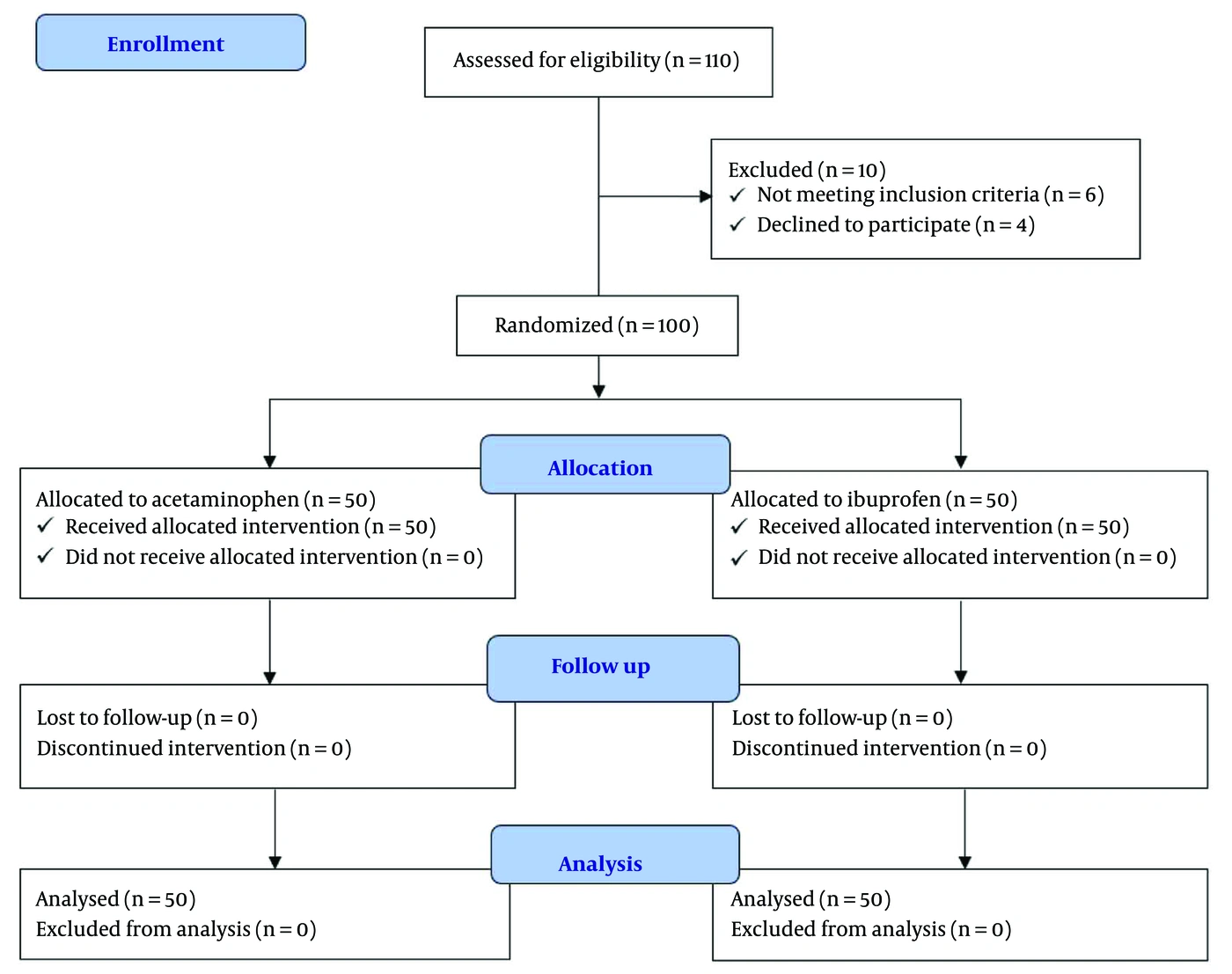
Figure 1.
CONSORT follow diagram of participant enrolment, allocation, follow up, and analysis
3.3. Random Sequence Generation and Allocation Concealment
Participants were randomized in a 1:1 ratio to receive acetaminophen or ibuprofen using a computer-generated sequence. Details regarding sequence generation, allocation concealment, and the personnel responsible for randomization should be verified against the original study records.
The trial used a single-blind design in which outcome assessors were blinded to treatment allocation, whereas patients and caregivers were aware of their assigned medication. Procedures used to maintain assessor blinding were documented according to the available study records.
3.4. Inclusion and Exclusion Criteria
Eligible participants were children aged 2 - 12 years with a clinical diagnosis of pyelonephritis whose parents or legal guardians provided written informed consent. Children with chronic health conditions, including renal failure or immune disorders, were excluded. Children who had previously received antibiotics or other medications that could interfere with the study outcomes were also excluded according to the original eligibility criteria. Children whose parents or guardians declined participation were not enrolled.
Eligibility criteria should be reported using the definitions applied during recruitment. Where available, the number of children excluded for each criterion should be presented in the participant flow diagram. Any eligibility requirement that cannot be verified from the original protocol or screening records should not be introduced retrospectively.
3.5. Intervention
Participants were assigned to one of two treatment groups. Children in the acetaminophen group received acetaminophen at a dose of 10 mg/kg every eight hours until the fever subsided. Children in the ibuprofen group received ibuprofen at a dose of 7 mg/kg every six hours while the fever persisted.
Both groups received standard antibiotic treatment for pyelonephritis, consisting of intravenous ceftriaxone at 75 mg/kg/day or oral cefixime at 8 mg/kg/day, according to the treatment setting and clinical indications. The two groups were matched in terms of the type of antibiotic used.
The antibiotic regimen, route of administration, treatment duration, and criteria for switching from intravenous to oral treatment should be clarified using the original records. The manuscript should also explain whether antibiotic management was comparable between groups and whether other concomitant treatments were permitted. The timing of the first study medication and the schedule for recording temperature and other symptoms should be reported because these details are necessary to interpret treatment response.
Clinical symptoms, including fever, abdominal pain, dysuria, and urinary urgency, were assessed at baseline and during the 14-day observation period according to the available study records.
3.6. Outcome Measures and Follow-Up Assessment
The primary outcome was time to fever resolution, defined as the interval between the first dose of study medication and the first documented temperature below 38 °C. Temperature measurement procedures and confirmation criteria should be specified according to the original protocol. If individual resolution times were unavailable, this outcome should not be inferred from follow-up symptom scores.
Secondary outcomes included abdominal pain, dysuria, urinary urgency, and other documented symptoms. Symptom assessment methods and scoring criteria should be reported according to the study records, with categorical or scale-based data analyzed appropriately. Baseline and follow-up comparisons were performed only when corresponding measurements were available.
Safety outcomes included gastrointestinal symptoms, allergic reactions, and acute kidney injury (AKI) during the 14-day observation period. The diagnostic criteria for AKI, renal function measurements, and timing of safety assessments should be reported based on the original protocol and medical records.
3.7. Safety Monitoring
Participants were monitored for adverse events throughout the observation period. Gastrointestinal symptoms and allergic reactions were recorded when reported or identified during clinical assessment. The occurrence of AKI was evaluated in both treatment groups.
The methods used to identify and classify adverse events, the criteria for determining their severity, and the procedures for assessing their relationship to the study medications should be described when these data are collected. Safety findings should be reported separately from efficacy outcomes.
3.8. Statistical Analysis
Statistical analyses were performed using SPSS version 23. Continuous variables were summarized as means and standard deviations, and categorical variables as frequencies and percentages. Between-group comparisons of continuous outcomes were conducted using independent-samples t tests when the assumptions were met. Categorical outcomes, including adverse events and symptom resolution, were compared using chi-square tests or appropriate alternatives when expected cell counts were insufficient. All statistical tests were two-sided, and a P < 0.05 was considered statistically significant.
3.9. Ethical Considerations
This study was conducted in accordance with the ethical principles outlined in the Declaration of Helsinki. Ethical approval was obtained from the Ethics Committee of Arak University of Medical Sciences (Ethical code: IR.ARAKMU.REC.1396.249). All patient information was kept confidential, and informed consent was obtained from the parents or guardians of all participants. The study was registered with the Iranian Clinical Trials Center (IRCT20130518013366N9), and sampling began one month after clinical trial approval.
4. Results
4.1. Baseline Characteristics of Participants
A total of 110 children were initially enrolled in the study. During the treatment period, 10 participants were lost to follow-up. Consequently, 100 participants (50 per group) completed the study and were included in the final statistical analysis.
There were no significant differences between the acetaminophen and ibuprofen groups in age (t(98) = –1.08, P = 0.28) or gender distribution (χ²(1, N = 100) = 0.00, P = 1.00), indicating that the groups were comparable before treatment (Table 1).
Table 1.
Baseline Demographic Characteristics of Participants in the Acetaminophen and Ibuprofen Groups (age in years) a
| Variables | Acetaminophen (n = 50) | Ibuprofen (n = 50) | Statistical Test | P Value |
|---|---|---|---|---|
| Age (y) | 3.3 ± 2.4 | 3.9 ± 2.9 | Independent t-test | 0.28 |
| Gender | Chi-square | 1.00 | ||
| Male | 9 (18) | 9 (18) | ||
| Female | 41 (82) | 41 (82) |
a Values are expressed as mean ± SD or No. (%).
Continuous variables are reported as mean ± standard deviation (SD), and categorical variables as frequency (percentage). The independent-samples t-test was used to compare age, and the chi-square test was used to compare gender distribution. P < 0.05 was considered statistically significant.
4.2. Comparison of Clinical Symptoms Between Groups
Clinical symptom severity scores at the 14-day follow-up were compared between the acetaminophen and ibuprofen groups using Welch’s independent-samples t-tests. As shown in Table 2, no statistically significant between-group differences were observed for fever (mean difference [MD] = −0.33, 95% CI: −1.025 to 0.365; P = 0.348), dysuria (MD = −0.24, 95% CI: −0.598 to 0.118; P = 0.185), abdominal pain (MD = 0.26, 95% CI: −0.220 to 0.740; P = 0.282), urinary urgency (MD = −0.18, 95% CI: −0.678 to 0.318; P = 0.474), or anorexia (MD = 0.32, 95% CI: −0.449 to 1.089; P = 0.410) (Figure 2).
Table 2.
Comparison of Key Clinical Symptoms Between Acetaminophen and Ibuprofen Groups a
| Symptom | Acetaminophen | Ibuprofen | Mean Difference | df | p |
|---|---|---|---|---|---|
| Fever | 3.12 ± 1.78 | 3.45 ± 1.72 | -0.33 (-1.025, 0.365) | 97.89 | 0.348 |
| Dysuria | 2.33 ± 1.16 | 2.57 ± 0.51 | -0.24 (-0.598, 0.118) | 67.26 | 0.185 |
| Abdominal pain | 2.55 ± 1.63 | 2.29 ± 0.46 | 0.26 (-0.220, 0.740) | 56.76 | 0.282 |
| Urinary urgency | 2.56 ± 1.54 | 2.74 ± 0.87 | -0.18 (-0.678, 0.318) | 77.39 | 0.474 |
| Chills | 2.06 ± 1.34 | 3.71 ± 2.05 | -1.65 (-2.339, -0.961) | 84.41 | <0.001 |
| Incontinence | 2.00 ± 0.82 | 4.78 ± 2.11 | -2.78 (-3.420, -2.140) | 63.47 | <0.001 |
| Diarrhea | 3.47 ± 2.04 | 2.00 ± 0.35 | 1.47 (0.883, 2.057) | 51.88 | <0.001 |
| Anorexia | 3.52 ± 2.24 | 3.20 ± 1.57 | 0.32 (-0.449, 1.089) | 87.78 | 0.410 |
a Values are expressed as mean ± SD or (95% CI). Mean difference values represent (acetaminophen – ibuprofen). Independent samples t-tests were used to compare symptom severity between groups. Statistically significant values are indicated by P < 0.05. Overall, ibuprofen demonstrated superior improvement in several clinical symptoms, particularly chills, incontinence, diarrhea, and abdominal pain.
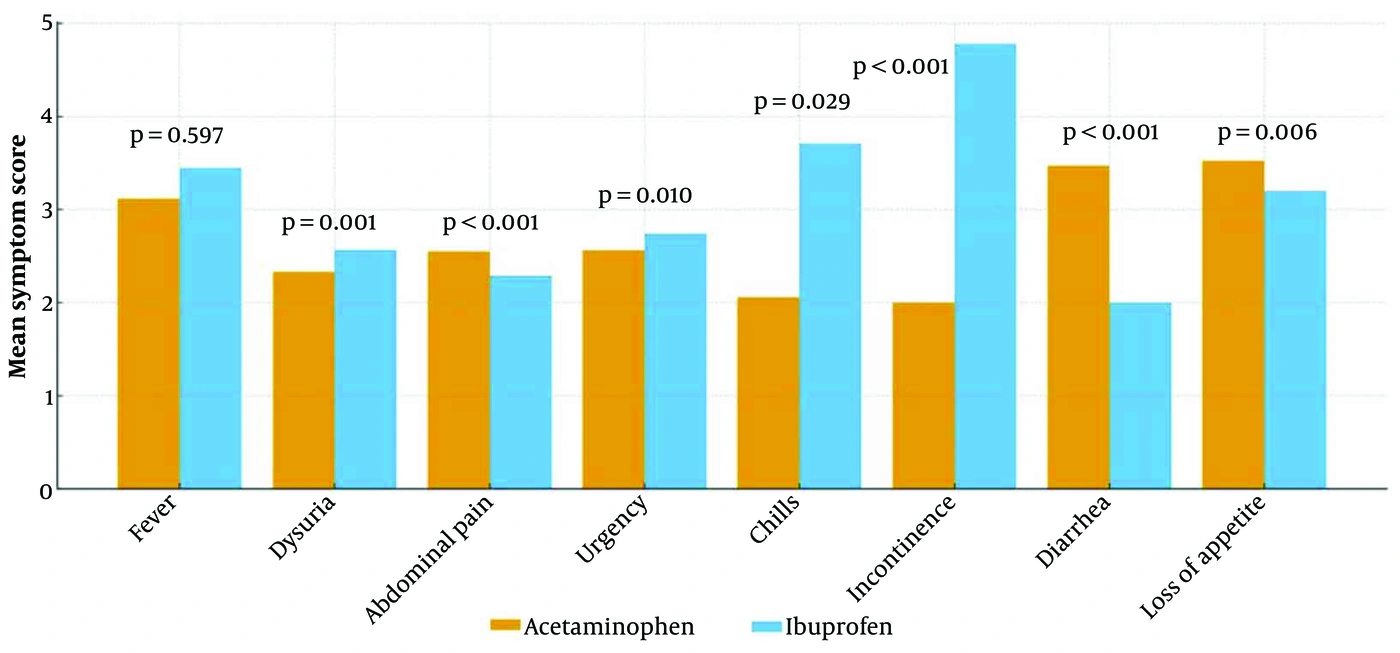
Figure 2.
Comparison of Key Clinical Symptoms Between Acetaminophen and Ibuprofen Groups
Statistically significant between-group differences were observed for chills (MD = −1.65, 95% CI: −2.339 to −0.961; P < 0.001), incontinence (MD = −2.78, 95% CI: −3.420 to −2.140; P < 0.001), and diarrhea (MD = 1.47, 95% CI: 0.883 to 2.057; P < 0.001). Because mean differences were calculated as acetaminophen minus ibuprofen, the negative estimates for chills and incontinence indicate higher mean scores in the ibuprofen group, whereas the positive estimate for diarrhea indicates a higher mean score in the acetaminophen group. The clinical interpretation of these differences depends on the direction of the symptom severity scale, with higher scores assumed to indicate greater severity.
These findings indicate that between-group differences varied across symptoms. However, because the analyses were based on follow-up scores without adjustment for baseline symptom severity, they should not be interpreted as definitive estimates of comparative treatment effects. In addition, multiple symptom comparisons were conducted; therefore, these findings should be considered exploratory, and the possibility of chance findings due to multiple testing should be acknowledged.
4.3. Adverse Events
Adverse events are presented in Table 3. Vomiting occurred in four participants (8.0%) receiving acetaminophen and none receiving ibuprofen (P = 0.117). Nausea, diarrhea, abdominal discomfort, and skin rash or allergic reactions showed no statistically significant between-group differences (all P ≥ 0.678). No gastrointestinal bleeding, acute kidney injury, elevated serum creatinine, or adverse event–related treatment discontinuation was reported. Although no serious adverse events were observed, the limited sample size and follow-up period preclude firm conclusions regarding comparative safety or rare adverse effects (Table 3).
Table 3.
Adverse Events Observed During the Study Period a
| Adverse event | Acetaminophen (n = 50) | Ibuprofen (n = 50) | Fisher’s Exact P Value |
|---|---|---|---|
| Vomiting | 4 (8.0) | 0 (0) | 0.117 |
| Nausea | 3 (6.0) | 2 (4.0) | 1.000 |
| Diarrhea | 2 (4.0) | 3 (6.0) | 1.000 |
| Abdominal discomfort | 2 (4.0) | 4 (8.0) | 0.678 |
| Skin rash/allergic reaction | 1 (2.0) | 1 (2.0) | 1.000 |
| Gastrointestinal bleeding | 0 (0) | 0 (0) | - |
| Acute kidney injury | 0 (0) | 0 (0) | - |
| Elevated serum creatinine | 0 (0) | 0 (0) | - |
| Study drug discontinuation due to adverse events | 0 (0) | 0 (0) | - |
a Values are expressed as No. (%). Comparisons between groups were performed using Chi-square test or Fisher’s exact test where appropriate. No serious adverse events were observed in either treatment group during the study period.
5. Discussion
This randomized clinical trial compared acetaminophen and ibuprofen for symptom management in children with pyelonephritis. Both medications reduced fever, whereas ibuprofen was associated with greater improvement in several symptoms, including dysuria, abdominal pain, urinary urgency, chills, incontinence, diarrhea, and loss of appetite. These findings suggest potential differences in their symptomatic effects.
Previous studies have compared acetaminophen and ibuprofen for fever and pain management in children. Perrott et al. reported that ibuprofen may provide greater short-term fever reduction, whereas evidence regarding comparative analgesic efficacy was less conclusive (14). Similarly, a systematic review by Tan et al. found that ibuprofen was associated with lower temperatures during the first 24 hours and greater pain reduction at 4 - 24 hours in children younger than two years (15). Although these findings broadly support the results of the present study, previous research was not specific to pediatric pyelonephritis. Therefore, the current trial provides additional evidence regarding the comparative effects of these medications on symptoms associated with this infection.
Previous systematic reviews have generally reported comparable fever-reducing effects for acetaminophen and ibuprofen in children, although ibuprofen may offer additional analgesic and anti-inflammatory benefits. The similar fever control observed in this study is consistent with this evidence, whereas the reported differences in other symptoms warrant further investigation.
This trial evaluated the medications individually and did not assess combined or alternating regimens. Such approaches may increase dosing complexity and the risk of medication errors. Therefore, the findings do not support the routine use of combined or alternating therapy. Further research is needed to confirm these results and assess their clinical significance in pediatric pyelonephritis.
Fever reduction did not differ significantly between the two treatment groups, indicating comparable antipyretic efficacy of acetaminophen and ibuprofen. This observation is consistent with previous studies in pediatric populations showing similar temperature-lowering effects for both drugs when administered at appropriate therapeutic doses (13). Because fever is a cardinal symptom of pyelonephritis and often a primary concern for caregivers, the comparable antipyretic response suggests that either agent can be used effectively to control fever in children with upper urinary tract infections.
Despite similar antipyretic effects, ibuprofen demonstrated superior efficacy in alleviating several non-febrile symptoms. This difference may be attributable to the pharmacological mechanisms of the two drugs. As a nonsteroidal anti-inflammatory drug, ibuprofen inhibits cyclooxygenase enzymes and reduces prostaglandin-mediated inflammation, which plays a central role in the pathogenesis of renal parenchymal infection and associated pain (16). In contrast, acetaminophen exerts primarily central analgesic and antipyretic effects, with minimal peripheral anti-inflammatory activity, which may limit its ability to relieve inflammation-driven symptoms such as dysuria and abdominal pain (16).
The greater improvement in urinary symptoms, including dysuria and urgency, among children receiving ibuprofen is clinically meaningful because these symptoms contribute substantially to discomfort and distress in pediatric pyelonephritis. Similar findings have been reported in studies evaluating NSAIDs for inflammatory pain conditions in children, in which ibuprofen demonstrated superior analgesic effects compared with acetaminophen (17, 18). Improved symptom relief may also explain the observed benefits in appetite and overall well-being in the ibuprofen group, as pain and systemic inflammation are known contributors to anorexia and malaise during acute infections (19, 20).
Gastrointestinal symptoms were generally mild in both groups, and no serious adverse effects were reported. Vomiting occurred only in the acetaminophen group, although the difference was not statistically analyzed because of its low frequency. Previous large-scale studies have shown that both acetaminophen and ibuprofen have favorable safety profiles in children when used short term and at recommended doses (21). Concerns regarding NSAID-associated renal adverse effects, particularly in the setting of dehydration or pre-existing renal disease, have been raised in earlier studies (8, 22). However, no evidence of renal complications was observed in the present study, likely because children with chronic kidney disease were excluded and participants were carefully monitored clinically.
The findings of this trial have potential implications for symptomatic management strategies in pediatric pyelonephritis. Improved symptom control may enhance patient comfort, reduce caregiver anxiety, and improve adherence to antibiotic regimens, thereby supporting recovery. The results suggest that ibuprofen may be a preferable option for children with prominent inflammatory or pain-related symptoms, provided that contraindications are absent.
The study's strengths include its randomized prospective design, direct comparison of two commonly used medications, and assessment of multiple clinically relevant symptoms. Comparable baseline characteristics between groups also supported the treatment comparisons.
Both acetaminophen and ibuprofen effectively reduced fever, whereas ibuprofen was associated with greater improvement in several additional symptoms. However, these findings should be interpreted cautiously in light of potential renal risks and the need for confirmation in larger studies.
Current pediatric pyelonephritis guidelines emphasize timely diagnosis, appropriate antibiotic therapy, hydration, and prevention of renal complications, with limited specific recommendations regarding the choice of antipyretic or analgesic. By directly comparing acetaminophen and ibuprofen, this study contributes preliminary evidence to an area requiring further investigation.
Overall, the results suggest that ibuprofen may offer additional symptomatic benefits in children with pyelonephritis. Nevertheless, treatment decisions should be individualized, particularly for children at risk of dehydration or impaired renal function. Further well-designed trials are needed to confirm these findings and establish evidence-based recommendations for symptomatic management.
The early diagnosis and proper treatment of pyelonephritis can prevent morbidity by children. Furthermore, overuse or misuse of analgesics in management of this issue could lead to increasing the complications by the primary care providers. A way to proper management of children with such disease is using guidelines and educating parents about the best use of analgesics. Furthermore, guidelines can be helping to physicians to proper management, as see in the precise antibiotic using in various infection disease.
5.1. Study Limitations
This study has several limitations. Its single-center design may restrict generalizability, whereas the single-blind design may have introduced reporting bias. Multiple secondary outcomes were analyzed without adjustment for multiple comparisons, increasing the risk of false-positive findings. The relatively small sample also limited the precision of treatment comparisons and safety assessments. Furthermore, the study evaluated short-term outcomes only and did not assess long-term renal complications or combined and alternating antipyretic regimens. Larger, multicenter, double-blind trials with appropriate statistical adjustments and extended follow-up are needed to confirm these findings and clarify the safety and efficacy of NSAIDs in children with pyelonephritis.
5.2. Conclusions
In this randomized clinical trial, both acetaminophen and ibuprofen effectively reduced fever in children with pyelonephritis. However, ibuprofen provided superior improvement in multiple clinically relevant symptoms, including dysuria, abdominal pain, urinary urgency, chills, incontinence, diarrhea, and appetite loss. These findings suggest that ibuprofen may be a more effective option for symptom management in pediatric pyelonephritis, particularly when inflammatory or pain-related symptoms predominate. Careful patient selection and monitoring remain essential to minimize potential adverse effects. Further multicenter studies with long-term follow-up are warranted to confirm these results and evaluate the impact of NSAID therapy on renal outcomes.