
1. Context
Arginine is a conditionally essential amino acid with important roles in nitrogen metabolism, protein synthesis, nitric oxide production, and the synthesis of compounds such as creatine and polyamines (1-4). Its physiological importance may increase during periods of rapid growth and in several pathological conditions associated with increased metabolic demand.
In recent years, arginine has received considerable attention on social media and in the supplement market, including through commercial products marketed to promote childhood growth. One of the principal biological arguments underlying these claims is that arginine, particularly when administered intravenously under controlled conditions, can stimulate growth hormone (GH) secretion (1, 5). Intravenous arginine is therefore used in some GH stimulation protocols. However, a transient increase in circulating GH should not automatically be interpreted as evidence of sustained activation of the GH–insulin-like growth factor-1 (GH–IGF-1) axis, persistent stimulation of the growth plate, increased height velocity, or increased adult height.
Longitudinal bone growth is a complex process involving the growth plate, GH–IGF-1 signaling, thyroid and sex hormones, nutritional and metabolic status, local growth-regulatory pathways, and genetic determinants (1, 2, 6). Growth of the long bones occurs primarily through endochondral ossification at the growth plate. The growth plate contains resting, proliferative, and hypertrophic zones, in which chondrocytes undergo coordinated proliferation, differentiation, hypertrophy, matrix mineralization, vascular invasion, and replacement of cartilage by bone (1, 2, 6, 7).
The GH–IGF-1 axis is one of the major systemic regulators of postnatal growth. Binding of GH to its receptor activates intracellular signaling pathways, particularly the Janus kinase 2/signal transducer and activator of transcription (JAK2/STAT) pathway, and promotes IGF-1 production and activity. IGF-1 subsequently influences downstream pathways, including phosphoinositide 3-kinase/protein kinase B (PI3K/AKT), mammalian target of rapamycin (mTOR), and mitogen-activated protein kinase/extracellular signal-regulated kinase (MAPK/ERK) (1, 5, 6).
Growth plate activity, however, cannot be attributed solely to the GH–IGF-1 axis. Local regulatory mechanisms involving parathyroid hormone-related protein/Indian hedgehog (PTHrP/IHH), fibroblast growth factor receptor 3 (FGFR3), C-type natriuretic peptide/natriuretic peptide receptor-B (CNP/NPR-B), Wnt/β-catenin, and bone morphogenetic proteins (BMPs) interact with systemic hormonal signals to regulate chondrocyte proliferation and differentiation (1, 2, 6-9). Thyroid hormones, sex steroids, insulin, nutritional status, energy and protein availability, calcium, phosphate, vitamin D, and chronic disease can also substantially modify growth velocity (1, 2, 10).
Therefore, an isolated, transient increase in the circulating concentration of one hormone cannot be considered equivalent to sustained stimulation of the growth plate. The clinically relevant indicators of an intervention's effect on growth are changes in height velocity and the longitudinal growth trajectory. In appropriately designed long-term studies, adult height is an even more definitive outcome (5, 10, 11).
This review aims to critically evaluate whether arginine's physiological ability to stimulate GH secretion translates into sustained activation of the GH–IGF-1 axis, increased growth velocity, or a clinically meaningful improvement in final height in children and adolescents.
2. Evidence Acquisition
This article was developed as a narrative review rather than a systematic review. Relevant literature was identified through iterative, targeted searches of PubMed and PubMed Central (PMC), supplemented by manual examination of the reference lists of relevant primary clinical studies, systematic reviews, and meta-analyses. Relevant pediatric and endocrine textbooks and international clinical guidelines were also consulted to provide background on arginine metabolism, growth hormone physiology, and growth plate biology.
A supplementary targeted search was conducted on October 30, 2026, and covered literature available from database inception through the search date. The main search terms included combinations of the following keywords: "arginine," "L-arginine supplementation," "linear growth," "height velocity," "body height," "children," "adolescents," "growth hormone," "GH secretion," "insulin-like growth factor-1," "IGF-1," "growth plate," and "somatotropic axis."
Evidence was selected based on its relevance to the biological mechanisms and clinical outcomes addressed in this review. Priority was given to clinical studies evaluating oral arginine supplementation and anthropometric growth outcomes, particularly height velocity and changes in stature in pediatric populations. Systematic reviews and meta-analyses evaluating arginine supplementation, GH secretion, IGF-1 concentrations, and linear growth were also considered. Mechanistic studies, endocrine guidelines, and pediatric textbooks were used to support the discussion of arginine metabolism, GH–IGF-1 signaling, and growth plate physiology. Particular attention was given to distinguishing acute hormonal responses and surrogate biochemical outcomes from clinically meaningful longitudinal growth outcomes. Individual clinical studies were interpreted in light of their design, population characteristics, intervention dose and duration, and methodological limitations. No formal systematic-review protocol, predefined systematic screening process, or quantitative meta-analysis was undertaken.
3. Results
3.1. Biological Relationship Between Arginine and Growth Hormone
Arginine can acutely increase GH secretion, partly by reducing somatostatin-mediated inhibition (1, 5). However, this response is transient and can vary according to the route of administration, dose, age, nutritional status, body composition, and metabolic state (1, 3, 5).
The proposed mechanisms underlying the acute stimulatory effect of arginine on GH secretion are illustrated in Figure 1.
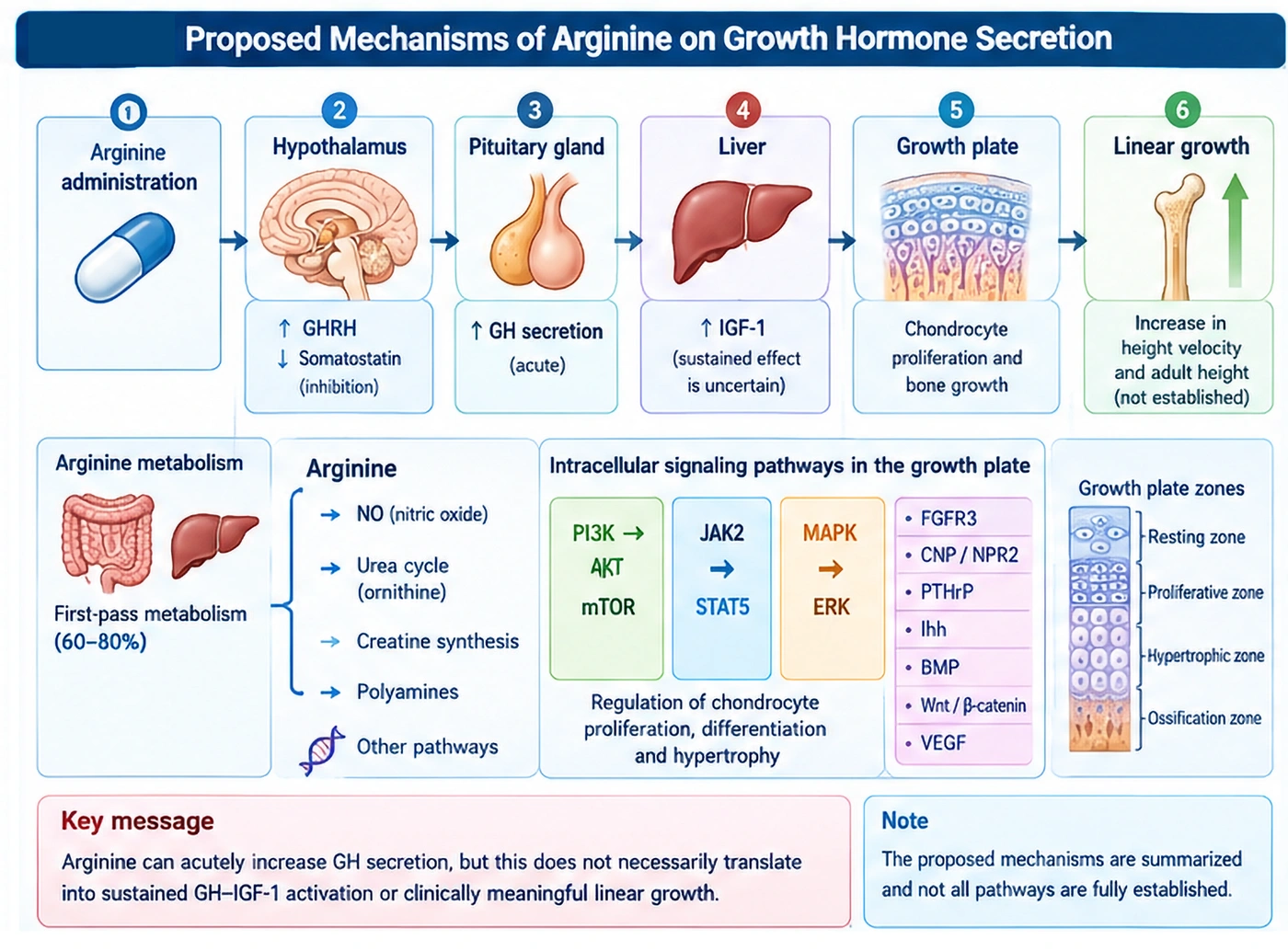
Figure 1.
Proposed mechanism of arginine on growth hormone secretion
An acute GH response does not demonstrate a sustained alteration in 24-hour GH secretion or persistent activation of the GH–IGF-1 axis. GH is physiologically secreted in pulses, and its secretion is influenced by sleep, age, puberty, nutrition, and metabolic status (1, 5).
This distinction is also illustrated by disorders of GH signaling. In Laron syndrome, impaired GH receptor signaling results in markedly reduced IGF-1 activity and severe postnatal growth impairment, despite the presence of circulating GH (1). Thus, the presence of a hormone is not equivalent to an effective biological response.
The same principle applies to arginine: its ability to transiently increase GH does not establish persistent stimulation of the growth plate.
3.2. Arginine and IGF-1
A 2023 systematic review and meta-analysis found no significant overall effect of acute or chronic arginine supplementation on IGF-1 concentrations (12). This finding is important because IGF-1 mediates GH action and provides a more relevant biological link to growth than a brief GH response alone.
Therefore, even when arginine produces an acute increase in GH, the available evidence does not demonstrate consistent and sustained activation of the GH–IGF-1 axis.
3.3. Evidence Concerning Linear Growth
The hypothesis that arginine might promote growth originated largely from the physiological observation that arginine can stimulate GH secretion under certain conditions (1, 5). Early investigations frequently focused on hormonal responses rather than longitudinal growth outcomes.
A pharmacological stimulus used during a GH stimulation test demonstrates that the pituitary can respond to an intervention under controlled conditions; it does not demonstrate that repeated oral administration will increase a child's height.
An important observational study addressing the relationship between habitual arginine intake and linear growth was conducted by van Vught et al. as part of the Copenhagen School Child Intervention Study. Using longitudinal data from children aged 7 – 13 years, the investigators found that, after adjustment for selected confounders, arginine intake in the third and fourth quintiles (2.5 – 2.8 and 2.8 – 3.2 g/day, respectively) was associated with greater growth velocity than intake in the lowest quintile (< 2.2 g/day). The largest reported difference in mean growth velocity was approximately 0.33 cm/year. However, this association was not observed uniformly across intake categories, and the study did not evaluate the efficacy of arginine supplementation as a therapeutic intervention. Because the participants were healthy, normally growing children and dietary arginine intake was assessed observationally, these findings cannot establish that oral arginine supplementation increases height in children with short stature. Nevertheless, the study provides relevant evidence that habitual dietary arginine intake may be associated with linear growth and should be considered when interpreting the broader evidence base. Importantly, the association between arginine intake and growth velocity was no longer statistically significant after adjustment for dietary protein intake excluding arginine. This finding limits the ability to attribute the observed association specifically to arginine rather than to overall protein intake (13).
More direct evidence concerning linear growth has recently become available. In 2026, Virú-Loza et al. published a systematic review and meta-analysis evaluating oral arginine as a treatment to improve height in prepubertal children with idiopathic short stature (14). The available studies were considered to provide low-quality evidence.
In pooled analyses of interventions lasting 6 or 12 months, an increase in height velocity was detected, corresponding to a re-expressed mean difference of approximately 0.59 cm/year (95% CI: 0.19 – 1.00) (14). However, the effect was small, and the result was not statistically significant when the analysis was restricted to 12-month interventions (14).
The appropriate interpretation is therefore not that arginine has no effect on growth. Rather, current evidence suggests that a small signal may be present in some analyses, but the certainty of the evidence is low, the magnitude of the effect is limited, and the durability and clinical importance of the observed effect remain uncertain (14).
The evolution of clinical evidence regarding arginine supplementation and linear growth is summarized in Figure 2.
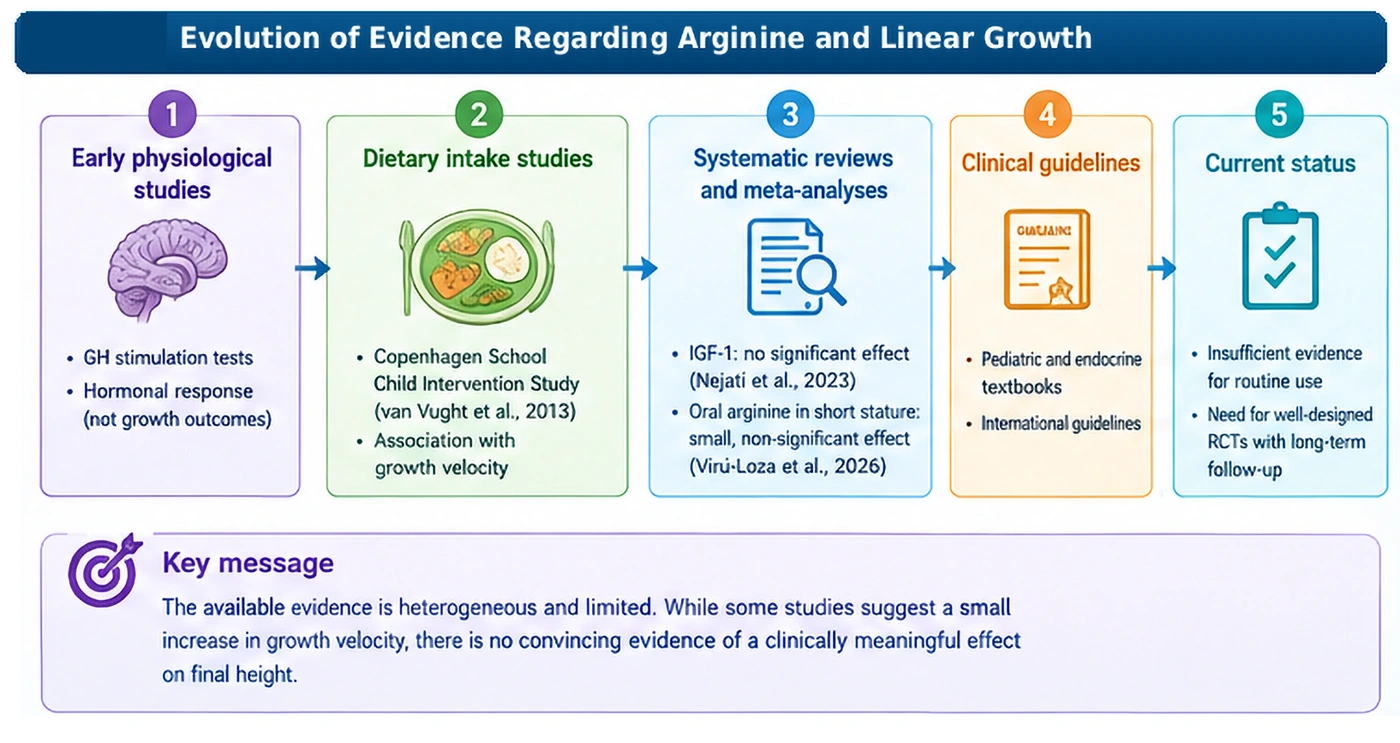
Figure 2.
Evolution of evidence regarding arginine and linear growth
3.4. Growth Plate Biology and the Relationship Between Hormonal Response and Height
The relationship between circulating GH concentrations and linear growth is neither simple nor linear. The biological effects of GH depend on GH receptor function, downstream signaling, IGF-1 production and activity, growth plate responsiveness, and the overall metabolic and nutritional environment (1, 5, 6).
At the growth plate, systemic hormonal signals interact with local pathways such as PTHrP/IHH, FGFR3, CNP/NPR-B, Wnt/β-catenin, and BMP signaling (1, 2, 6-9). Consequently, sustained longitudinal growth requires coordinated biological activity rather than a brief elevation of a single circulating hormone.
The physiological relationship between the GH–IGF-1 axis and growth plate activity, and the limitations of this pathway in determining linear growth, are illustrated in Figure 3.
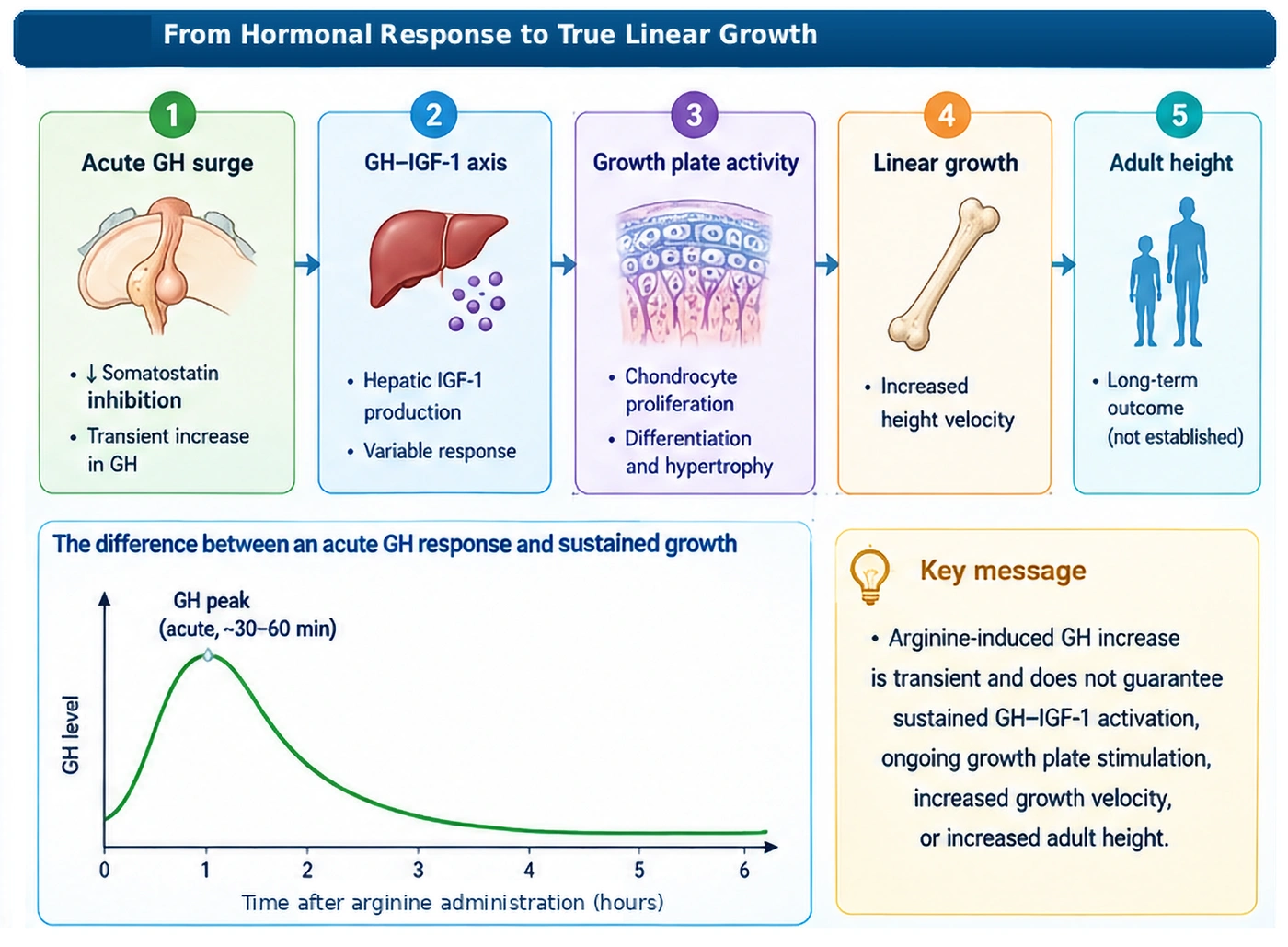
Figure 3.
From hormonal response to true linear growth
The biological sequence should therefore be interpreted as:
Acute GH increase ≠ sustained GH–IGF-1 activation ≠ persistent growth plate stimulation ≠ increased growth velocity ≠ increased adult height.
3.5. Factors That May Contribute to Perceived Benefit
A major reason for perceived benefit is the temporal coincidence between supplement use and normal growth. This is particularly relevant during puberty, when activation of the GH–IGF-1 axis and sex steroid signaling can substantially increase growth velocity (1, 5).
Regression to the mean is another potential explanation. A child referred because of a temporary reduction in growth velocity may subsequently experience spontaneous recovery or catch-up growth. If supplementation is initiated at the same time, this natural change may be incorrectly attributed to treatment.
Lifestyle changes may further complicate attribution. Families seeking a growth-promoting supplement may simultaneously improve dietary quality, sleep, physical activity, or medical follow-up. Without an appropriate control group, the independent contribution of arginine cannot be determined.
Commercial advertising may amplify these effects by emphasizing individual experiences and before-and-after observations while providing little information about children who experienced no measurable benefit. Such observations cannot establish causality.
Correction of a growth-limiting condition should also be distinguished from enhancement of growth beyond a child's biological trajectory. If poor nutrition or an underlying disease is impairing growth, correcting the underlying problem may improve growth without demonstrating a specific height-promoting effect of arginine (2, 10).
3.6. Characteristics of an Effective Growth-Promoting Therapy
Longitudinal growth is a chronic, multistage process that occurs within the growth plate. A clinically effective growth-promoting treatment should therefore produce a reproducible and sustained biological effect on pathways that regulate growth plate activity (1, 6).
An effective therapy should have a defined biological target, an appropriate pharmacokinetic and pharmacodynamic relationship with the relevant tissue, a sufficient duration of action, demonstrated effects on clinically meaningful growth outcomes, and an acceptable long-term safety profile.
Important pathways involved in growth plate physiology include GH–IGF-1, JAK2/STAT, PI3K/AKT, mTOR, MAPK/ERK, PTHrP/IHH, FGFR3, and CNP/NPR-B signaling (1, 5, 6).
Arginine is primarily relevant through its modulation of GH secretion, particularly by reducing somatostatin-mediated inhibition. A specific and established direct molecular target of arginine within the growth plate that could explain a sustained pharmacological increase in linear growth has not been established (3, 5, 12).
3.7. Emerging Targeted Approaches to Growth Promotion
Advances in growth plate biology have shifted attention from nonspecific stimulation of GH secretion toward more precise manipulation of the molecular pathways that regulate skeletal growth (1, 6).
A notable example is the CNP/NPR-B pathway and the development of vosoritide for children with achondroplasia. Vosoritide targets the CNP pathway and counteracts the growth-inhibitory effects associated with FGFR3 signaling. In a randomized, double-blind, placebo-controlled phase 3 trial, vosoritide increased growth velocity in children with achondroplasia (8, 9).
This example is conceptually important because it demonstrates that a growth-promoting treatment can act through a defined pathway within the growth plate rather than simply increasing circulating GH.
4. Discussion
The central finding of this narrative review is that the biological capacity of arginine to increase GH secretion should not be interpreted as evidence that oral arginine is an established height-promoting intervention. This distinction is important because the rationale for using arginine to promote growth is largely derived from its acute effects on GH secretion, whereas clinically meaningful growth requires sustained, coordinated activity at the growth plate.
The physiological effects of arginine provide a plausible mechanism for an acute hormonal response. Arginine can attenuate somatostatin-mediated inhibition of GH secretion, which explains its established role as a pharmacological stimulus in some GH stimulation tests (1, 5). However, a GH stimulation test assesses endocrine reserve rather than producing a therapeutic change in a child's growth trajectory. The pharmacological ability to provoke GH secretion therefore indicates endocrine responsiveness, not height gain.
Evidence concerning IGF-1 further weakens the assumption that an acute GH response necessarily translates into sustained biological activation. The 2023 systematic review and meta-analysis by Nejati et al. found no significant overall effect of arginine supplementation on IGF-1 concentrations (12). Because IGF-1 is an important mediator of GH action, the absence of a consistent effect on IGF-1 makes it difficult to infer a sustained downstream growth-promoting effect from transient GH elevation alone.
The most clinically relevant evidence comes from the more recent systematic review and meta-analysis evaluating oral arginine and height in prepubertal children with idiopathic short stature (14). Importantly, these findings should not be oversimplified. The pooled analyses suggested a small increase in height velocity when studies with 6- or 12-month interventions were considered together. The re-expressed mean difference of approximately 0.59 cm/year (95% CI: 0.19 – 1.00) indicates that a measurable signal may exist under some conditions. However, the evidence was rated low quality, and the result was not statistically significant when the analysis was restricted to 12-month interventions (14).
This pattern of findings has several implications. First, it does not justify the categorical statement that arginine can never influence growth. Second, it does not provide sufficient evidence to regard arginine as an established treatment for short stature. The observed signal is relatively small, the certainty of the evidence is low, and evidence demonstrating a sustained change in the growth trajectory or an improvement in adult height remains lacking.
The distinction between statistical and clinical significance is particularly important in growth research. Height velocity is a continuous biological variable that naturally changes with age, pubertal stage, nutritional status, and underlying disease. A small change observed over a limited period may not translate into a meaningful alteration in predicted or final adult height. Moreover, interventions intended to modify growth should ideally demonstrate reproducible effects in adequately powered randomized trials with standardized anthropometric outcomes and sufficiently long follow-up.
The potential for confounding is also substantial. Children with short stature may experience spontaneous changes in growth velocity, including catch-up growth or regression toward an individual's expected trajectory. Pubertal timing can produce major changes in growth velocity independently of supplementation. Improvements in nutrition, sleep, physical activity, or treatment of an underlying disease may also coincide with the initiation of a supplement. These factors can create the appearance of a treatment response in uncontrolled observations.
The biological complexity of the growth plate provides an additional explanation for why isolated hormonal stimulation may be insufficient. Linear growth depends on the coordinated activity of systemic endocrine signals and local growth-plate pathways, including GH–IGF-1, PTHrP/IHH, FGFR3, CNP/NPR-B, Wnt/β-catenin, BMP, and intracellular signaling networks such as JAK2/STAT, PI3K/AKT, mTOR, and MAPK/ERK (1, 5, 6). The growth-plate response is therefore determined not simply by the concentration of a circulating hormone but also by receptor function, downstream signaling, cellular responsiveness, nutritional status, and developmental context.
Laron syndrome illustrates this principle particularly clearly. Children with impaired GH receptor signaling can have circulating GH but markedly impaired IGF-1 activity and severe growth failure (1). Conversely, vosoritide demonstrates that meaningful pharmacological manipulation of growth can be achieved by targeting a specific molecular pathway within the growth plate in an appropriate disease context (8, 9). These examples emphasize the conceptual difference between increasing a circulating hormone and modifying the cellular machinery responsible for longitudinal bone growth.
Clinically, this distinction argues against approaching short stature primarily through the selection of supplements. The first step should be to confirm that abnormal growth is present by reviewing serial measurements and calculating growth velocity. The clinician should then consider familial growth pattern, parental heights, pubertal development, nutritional status, chronic disease, medication exposure, and other clinical features that may suggest an underlying disorder (1, 2, 10). Targeted laboratory testing and bone-age assessment should be guided by the clinical context rather than performed indiscriminately.
For children born small for gestational age (SGA), persistent short stature warrants appropriate longitudinal monitoring and diagnostic evaluation in accordance with international consensus recommendations (15).
For children with normal growth whose families are seeking additional height, the current evidence does not justify recommending oral arginine as a standard height-enhancing intervention. For children with genuine growth impairment, identifying and treating the underlying cause is substantially more important than empirically prescribing supplements. Familial short stature, constitutional delay of growth and puberty, endocrine disorders, malnutrition, chronic systemic disease, chromosomal disorders, and skeletal dysplasias require different approaches and cannot appropriately be managed with a nonspecific nutritional supplement (1, 2, 10).
The available evidence also highlights important research gaps. Future trials should include clearly defined pediatric populations, standardized arginine doses and formulations, appropriate control groups, and prespecified anthropometric outcomes. Growth velocity should be measured over sufficiently long periods, with careful adjustment for age, sex, pubertal status, baseline height standard deviation score, and underlying growth pattern. Whenever feasible, studies should also assess whether any observed changes persist over time and have meaningful implications for predicted or final adult height. Long-term safety should be assessed systematically, particularly if supplementation is proposed for otherwise healthy children.
Overall, the evidence supports a nuanced conclusion. Arginine has a well-established physiological role and can produce an acute GH response under appropriate conditions. However, current evidence does not demonstrate that this hormonal response reliably results in sustained, clinically meaningful improvements in linear growth or adult height. The distinction between biological plausibility and demonstrated clinical efficacy should therefore remain central when evaluating commercial claims concerning arginine and childhood growth.
Figure 4 presents an integrated summary of the proposed mechanisms, clinical evidence, and limitations of arginine supplementation as a height-enhancing intervention.
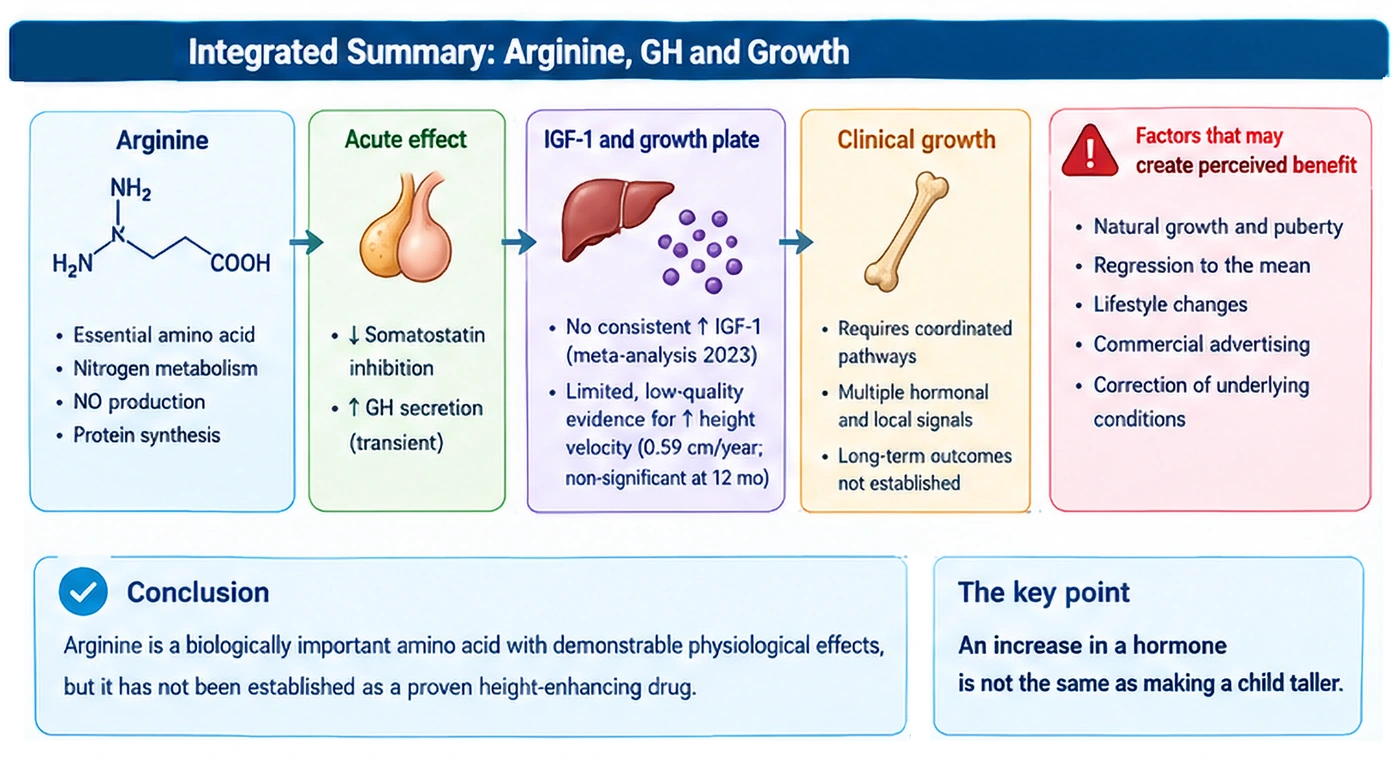
Figure 4.
Integrated summary: Arginine, GH and growth
5. Conclusions
Arginine is an important amino acid involved in nitrogen metabolism, nitric oxide production, protein synthesis, and several other physiological pathways (1, 3, 4). Under specific conditions, particularly when administered intravenously, it can acutely increase GH secretion and is consequently used in some GH stimulation tests (1, 5).
However, a transient increase in GH does not establish sustained activation of the GH–IGF-1 axis, persistent stimulation of the growth plate, increased growth velocity, or increased adult height. A 2023 systematic review and meta-analysis found no significant overall effect of arginine supplementation on IGF-1 concentrations (12).
More recent evidence on linear growth suggests that oral arginine may be associated with a small increase in growth velocity in some analyses of prepubertal children with idiopathic short stature. Nevertheless, the evidence is of low quality, the magnitude of the observed effect is limited, and the effect was not statistically significant in the analysis restricted to 12-month interventions (14).
Therefore, current evidence is insufficient to establish oral arginine as a standard therapy for increasing height in children and adolescents.
Linear growth results from a complex interaction among genetic determinants, the GH–IGF-1 axis, thyroid and sex hormones, nutrition, metabolic status, and multiple local signaling pathways within the growth plate (1, 2, 6). Contemporary research increasingly focuses on disease-specific, pathway-targeted interventions rather than nonspecific hormonal stimulation (6, 8, 9).
Clinically, children with short stature should first undergo an appropriate assessment of growth pattern, growth velocity, familial target height, pubertal status, nutritional status, and potential underlying disease. Treatment should then be directed toward the identified cause and supported by appropriate evidence.
In summary, arginine remains a biologically important amino acid with demonstrable physiological effects, but it has not been established as a proven height-enhancing drug. The appropriate standard for a growth-promoting intervention is a sustained and clinically meaningful change in the child's growth trajectory, supported by convincing evidence and acceptable long-term safety.
An increase in a hormone is not the same as making a child taller.