
1. Background
Diseases and major issues accompanying hospitalization are among the first crises children play against during their lifetime (1, 2). This age group is typically subjected in experiencing such emergency situations resulting from diseases due to changes in their natural health status as well as normal environmental conditions. Although much progress has been made in the domain of child care, the bulk of the medically-necessary health care services for treating diseases in children are assumed traumatic, distressing, and anxiety-provoking (3, 4). Based on the findings in the related literature, 40% - 60% of children undergoing anesthesia and surgical procedures are susceptible to go through significant levels of anxiety (5, 6).
In this respect, surgical anxiety responses in children can be induced from factors such as separation from parents, lack of control, as well as insufficient knowledge and improper understanding of general anesthesia procedures. Therefore, children’s fears can be demonstrated in the form of screaming, restlessness, deep breathing, tremor, and exacerbation of sympathetic neurological responses that are likely to intensify post-operative pains and consequently increase heart rate and blood pressure in children (7-9).
Stress can have a negative impact on maternal and child health (10). Physiological responses to anxiety can also include increased rate of metabolic activity and correspondingly, higher body temperature, increased output and contractility of the heart followed by high blood pressure and heart rate, sodium retention, bronchodilation, and higher respiratory rate (11). Anxiety can also stimulate the adrenal (suprarenal) glands and sympathetic nervous system and then increase blood pressure, breathing, and heart rate (12, 13). In fact; temperature, pulse, blood pressure, oxygen saturation level, and respiratory rate are the most common indicators measured by health care personnel that can be signs of the normal functioning of the circulatory, respiratory, nervous, and endocrine systems. Due to the importance of such indicators, the state of physiological response to physical, environmental, and psychological stressors are called vital signs, which may well reveal sudden changes in the existing situations as well as fluctuations progressively created over a period of time (14). These indicators can be naturally regulated through hemostatic mechanisms and set in a normal range. Likewise, changes in each vital sign can be manifestations of variations in health status (15).
In this regard, evidence has shown that children experiencing excessive anxiety and changes in hemodynamic stability after surgeries can grapple with recovery delay, sleep disorders, non-adaptive behaviors, as well as long-term hospitalization (5, 16, 17). Therefore, control and treatment of anxiety, as well as attention to post-operative vital signs in children is very essential. Accordingly, a variety of methods have been employed by nurses to provide relief and recovery in patients. In this respect, the use of medications for children has been assumed to bring about numerous complications (3). Currently, much more emphasis is put on non-pharmacological therapy and complementary and alternative medicine within health systems as mental factors aimed at creating relief in anxiety-provoking situations (11). In this vein, acupressure has been introduced as a type of massage therapy targeting acupuncture points used for mild-to-moderate pains (18, 19). In this domain, studies have suggested that acupressure can play an important role in controlling anxiety, moderating pain, treating various types of diseases, facilitating hormonal balance, and stabilizing vital signs in the body (13, 18, 20).
2. Objectives
Considering the role of nurses in improving the health of children (21, 22), and considering that investigations in to the effect of acupressure on physiological indicators of pain had been mostly performed in adults, the purpose of this study was to examine the effects of acupressure on physiological indicators of pain following tonsillectomy in children aged five to 12 years.
3. Methods
The present study was a single-blind clinical trial comprised of three groups. The study population included all children aged five to 12 years undergoing tonsillectomy and referred to the Amiralmomenin Hospital in the city of Rasht in 2017 - 2018. The sample size was determined by 48 individuals in each group and a total number of 144 patients based on the results of the study by Lin et al. (the final row in the data in Table 2), considering 95% confidence level and 80% power. The sampling started in early November 2017 and lasted until late April 2018. We used random blocks to assign children equally to each three groups. We used the Random List software and samples assigned in three groups with three in one block allocations (the so-called block size is three) that were generated by the computer software. The children and their parents in this study were not aware of their allocation to the three groups. As well, the type of surgery for all children was the same in terms of surgical techniques and general anesthesia procedures.
In this study, acupressure was considered as the independent variable, and the dependent variables included heart rate, respiratory rate, and levels of arterial oxygen saturation. The inclusion criteria in this study were children aged five to 12 years undergoing tonsillectomy, and the exclusion criteria included post-operative severe pain preventing children from participating in the study, the existence of coagulation disorders, as well as skin diseases or skin burns in the pressure points wherein acupressure could be applied. The data collection instruments in this study included (A) a demographic characteristics information form accompanied by a recording log for heart rate and levels of arterial oxygen saturation in children during three phases of intervention one hour, two to four hours, and six to eight hours following a tonsillectomy whose validity was determined through content (logical) validity; (B) a pulse oximetry (with the brand name of Nomentrix) manufactured in the United States with a child-specific probe to measure their heart rate and levels of arterial oxygen saturation; and (C) a chronometer watch branded as Orient made in Japan.
To determine the reliability of the given device, its confirmation and control were conducted by the manufacturer and the relevant engineer; moreover, the device was used for three consecutive times on a child and showed fixed numbers. Since changes are unlikely to be seen in electronic devices like digital pulse oximetry if they are not connected to multiple patients and considering the fact that two pulse oximetry were available in each hospital ward and the number of surgeries did not exceed two cases per shiftwork in the study context, the probe of the device was only connected from onset until the end of the work to one child and it was re-calibrated at the end of work, thereby its validity was confirmed.
To commence the study, first, we get permission from the hospital principal, matron, and Deputy of Research and Technology of Gilan University of Medical Sciences. Then, we visited the mother of the children, and full explanations were given to them, and their written informed consent was acquired.
In this study, acupressure intervention was performed in three phases (one hour, two to four hours, and six to eight hours after surgery).To this end, acupressure was applied to three points of LI4 (Hego) located at the interface between the thumb and the index finger of the hand, ST-44 (Neiting) located above the edge of the curtains between the second and third toes of the foot, and ST-36 (Zusanli) located at the width of the four toes under the knee joint and the width of one toe outside the lower edge of the tibia bone protuberance in the pediatric patients in the intervention group. Considering the placebo group, the pressure was solely applied to the pressure points in close proximity to the given acupressure points, but the main difference was that the pressures had no therapeutic effects and they were very superficial. The third group, as the control one, received no intervention and they were only provided with routine care services.
The heart rate, respiratory rate, and levels of arterial oxygen saturation were evaluated for three minutes before the intervention using the pulse oximetry for parents and children one, two to four, and six to eight hours after the tonsillectomy when the children were in their beds. To decrease anxiety and also to attract the children to cooperate, firstly, the researcher connected the pulse oximetry to her finger and that of mothers; then, she connected the probe of the device to the child’s finger after providing a complete description and winning their confidence. In the intervention (experimental) group receiving acupressure; heart rate, respiratory rate, and levels of arterial oxygen saturation were controlled and recorded using the pulse oximetry and a chronometer watch two minutes before the intervention. Immediately after the intervention, heart rate and levels of arterial oxygen saturation were measured and recorded. All the steps above were also followed in the placebo and control groups, except that acupressure was applied to sham acupressure points in the placebo group. Finally, the data collected were entered into the SPSS Statistics (version 21) and analyzed using descriptive and inferential tests (Wilcoxon signed-rank test, analysis of variance (ANOVA), and Kruskal-Wallis test). The significance level of the test was considered by P < 0.05. Furthermore, this study was approved by the Ethics Committee of Gilan (Shahid Beheshti) University of Medical Sciences (IR.GUMS.REC.1396.229) receiving the registration number from the Iranian Registry of Clinical Trials (IRCT2017100836651N1).
4. Results
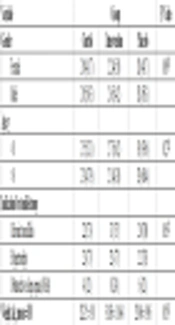
The demographic characteristic information of the samples was presented in Table 1. Using chi-square test, the results revealed no statistically significant relationship between the demographic characteristics of the samples and the physiological indicators of the pain (P > 0.05). However, analysis of the research findings using Kruskal-Wallis test showed a significant difference between the mean of heart rate in children before and after all three phases of intervention (P = 0.001); however, there was no statistically significant difference in the control and placebo groups (P = 0.62, P = 0.58). Besides, a statistically significant difference was observed between the mean of changes in respiratory rate before and after the intervention within time intervals of one hour, two to four hours, and six to eight hours following a tonsillectomy in the group undergoing acupressure (P = 0.003) while no significant changes were found in the control (P > 0.05) and the placebo ones (P > 0.05).
Table 1.
Demographic Characteristics of Study Participantsa
| Variable | Group | P Value | ||
|---|---|---|---|---|
| Gender | Control | Intervention | Placebo | |
| Female | 20 (41.7) | 22 (45.8) | 20 (41.7) | 0.89b |
| Male | 28 (58.3) | 26 (54.2) | 28 (58.3) | |
| Age, y | ||||
| < 8 | 25 (52.1) | 27 (56.2) | 19 (39.6) | 0.23b |
| > 8 | 23 (47.9) | 21 (43.8) | 29 (60.4) | |
| Indication for tonsillectomy | ||||
| Chronic tonsillitis | 22 (73) | 17 (57) | 20 (70) | 0.56b |
| Hypertrophy | 23 (77) | 23 (77) | 22 (73) | |
| Obstructive sleep apnea (OSA) | 4 (12) | 8 (24) | 6 (21) | |
| Weight, kg, mean ± SD | 28.25 ± 9.8 | 30.36 ± 10.64 | 29.06 ± 9.96 | 0.58c |
aValues are expressed as No. (%) unless otherwise indicated.
bChi-squared test.
cOne Way ANOVA.
There was similarly a statistically significant difference in the mean of the changes in levels of arterial oxygen saturation before and after the intervention; one hour, two to four hours, and six to eight hours after surgery in the group receiving acupressure (P = 0.002), while no significant changes were observed in both control (P > 0.05) and placebo (P > 0.05) groups. The mean of changes in heart rate, respiratory rate, as well as levels of arterial oxygen saturation were illustrated in Tables 2 - 4.
Table 2.
Determine and Compare Heart Rate Changes Before and After Interventions
| Time Before and After Intervention | Control | Acupressure | Placebo | |||
|---|---|---|---|---|---|---|
| Mean ± SD | P Valuea | Mean ± SD | P Valuea | Mean ± SD | P Valuea | |
| One hour after surgery | 59.89 ± 4.43 | - | 50.10 ± 2.44 | - | 52.38 ± 2.44 | - |
| 2 - 4 hours after surgery | 118.54 ± 6.76 | 0.001 | 120.34 ± 8.22 | 0.001 | 118.53 ± 4.61 | 0.001 |
| 6 - 8 hours after surgery | 46.7 ± 3.92 | 0.001 | 47.05 ± 6.78 | 0.001 | 46.59 ± 3.71 | 0.001 |
aComparison P compared to the month before the intervention.
Table 3.
Determine and Compare Respiratory Rate Changes Before and After Interventions
| Time Before and After Intervention | Control | Acupressure | Placebo | |||
|---|---|---|---|---|---|---|
| Mean ± SD | P Valuea | Mean ± SD | P Valuea | Mean ± SD | P Valuea | |
| One hours after surgery | 50.85 ± 3.43 | - | 50.28 ± 3.44 | - | 50.84 ± 3.45 | - |
| 2 - 4 hours after surgery | 117.15 ± 7.36 | 0.001 | 116.94 ± 7.21 | 0.001 | 117.16 ± 3.62 | 0.001 |
| 6 - 8 hours after surgery | 49.50 ± 2.92 | 0.001 | 50.28 ± 6.88 | 0.001 | 49.50 ± 3.61 | 0.001 |
aComparison P compared to the month before the intervention.
Table 4.
Determine and Compare Arterial Oxygen Saturation Changes Before and After Interventions
| Time Before and After Intervention | Control | Acupressure | Placebo | |||
|---|---|---|---|---|---|---|
| Mean ± SD | P Valuea | Mean ± SD | P Valuea | Mean ± SD | P Valuea | |
| One hour after surgery | 77.59 ± 2.43 | - | 77.67 ± 2.34 | - | 50.84 ± 3.48 | - |
| 2 - 4 hours after Surgery | 66.19 ± 6.01 | 0.04 | 70.89 ± 8.31 | 0.03 | 65.19 ± 2.62 | 0.02 |
| 6 - 8 hours after surgery | 73.72 ± 3.83 | 0.01 | 68.95 ± 7.78 | 0.01 | 75.29 ± 3.78 | 0.01 |
aComparison P compared to the month before the intervention.
5. Discussion
Pain has a lot of harmful effects on the patient (22-24) And anesthesia in patients creates problems (25). Tonsillectomy is known as one of the most common pediatric surgical procedures across the world (26-30). Pharmacological treatments for controlling post-operative pain can lead to numerous complications (3, 31). This study was the first one where the effects of acupressure on physiological indicators of pain after tonsillectomy in children aged five to 12 years were evaluated in the three groups of intervention, control, and placebo. The results of this study showed that acupressure applied to the pressure points of ST-36, Li-4, and ST-44 could have positive effects on the balance of physiological indicators of pain in children. With regard to the likely effect of inspiration concerning the effect of acupressure on physiological indicators of pain, a placebo group was also used. Since sham acupressure in the placebo group had no impacts on changes in physiological indicators of pain (P > 0.05), it was concluded that the positive effects of acupressure on the physiological indicators of pain were real and they were not assumed as inspiration. Unfortunately, no study had been conducted so far on the effects of acupressure on the physiological indicators of pain in children and previous investigations had been exclusively carried out in adult groups, although there were several studies targeting the influence of non-pharmacological methods such as distraction on physiological indicators of pain. According to the study by Vosoghi et al. investigating the effects of distraction of thought on physiological indicators of pain, the results revealed that this process had caused a balance in the physiological indicators of pain (4). Pain management is effective in non-pharmacological factors and the role of effective factors in pain is very important (32).
The findings of other investigations by Lal et al. (33) as well as Sajedi et al. (34) were also consistent with the results of the present study indicating that non-pharmacological techniques for pain control such as distraction could have effects on levels of arterial oxygen saturation so that children in the intervention group had better conditions in terms of levels of arterial oxygen saturation after painful interventions; a statistically significant difference was found between both study groups. According to the study by Wiederhold et al. targeting the use of the distraction of thought system within the virtual space to reduce anxiety, pain and physiological indicators of pain in dental procedures; it was found that the use of virtual-space distraction had led to moderated pain, lowered anxiety, and stabilized physiological indicators of pain such as blood pressure, respiratory rate, and heart rate in the intervention group (35). Based on the results of this study, along with the principles of traditional Chinese medicine, it was concluded that acupressure had brought about a sense of relief and prevented severe fluctuations in the physiological indicators of pain in children treated with this intervention.
5.1. Conclusions
As an appropriate non-pharmacological and alternative medicine technique, acupressure was suggested in this study as a treatment to stabilize physiological post-operative pain in children aged 5 - 12 years. This issue could also facilitate the widespread use of complementary and alternative medicine, especially acupressure both by pediatric nurses and parents. Considering the effectiveness of acupressure, nurses are suggested to use this type of intervention to provide physiological stability in post-tonsillectomy pains in children in the future ever since participating in training and re-training programs as well as strengthening and building skills necessary in this domain. For this purpose, an acupressure therapist can also be recruited in each healthcare center. Given that the present study merely shed light on the relieving effects of acupressure up to eight hours after surgery, further investigations are required to evaluate the long-term impacts of acupressure on relief and stability of physiological pains following tonsillectomy as well as post-discharge ones in children at home.
5.2. Limitations
In this study, the effects of acupressure on physiological indicators of pain up to eight hours after surgery were addressed; nonetheless, the long-term effectiveness of this alternative medicine technique on post-discharge pains was not investigated. Therefore, it was recommended to examine the long-term impacts of acupressure on physiological indicators of post-operative pain in children.