1. Background
Occupational injuries are more common among healthcare professionals compared to staff in other professions. Employees often experience needlestick / sharp injuries (NSIs) that cannot be ignored in a hospital setting (1). According to a November 2018 World Health Organization report, 2.5 percent of health workers worldwide infected with AIDS through occupational exposure and 40 percent with hepatitis B and C. Approximately one million accidents per year due to needle insertion in the hand or damage to objects also occur for health care workers (2-4). Among medical personnel, those who have more contact with sharp objects are at greater risk. As a result, operating room personnel are more likely to injure by sharp objects (5). Because the operating room is a unique environment for dealing with needle sticks Because surgeons, scrub nurses and operating room technicians exchange sharp, sharp, blood-contaminated equipment with the patient in a small space (6). On the other hand, the operating room environment is a closed work environment in which the people who work are often under pressure and stress, spend many of their working hours dealing with sharp and winning tools, and are prone to exposure to blood and infectious fluids (2).
However, the students’ underdeveloped technical skill sets may place them at a risk of injury greater than that faced by their senior colleagues. Needlestick injuries can result in chronic infection, social stigma, and long-term disability (7).
Although there is no article on students' awareness of post-needle stick measures, many studies have conducted to control infections. A 2014 study in Germany by Lauer et al., stated that such injuries would occur every year during intravenous interventions, surgical procedures and disposal of used equipment. Students are at high risk for such injuries, personal protective equipment and academic guidelines can prevent needle sticking, and student reporting of processes can be one of their teachings (8).
Bhattarai et al. (9) conducted another study. In this study, it stated that needle sticking and exposure to sharp objects occur frequently among students and medical staff. Among them, trainees are at higher risk, so they need protected against unnecessary risks with the hepatitis B vaccination program. In addition, strengthen their general knowledge of global precautionary measures (10).
In another study that conducted by Bernard et al, found that sharp encounters among orthopaedic surgeons and their interns it happens. Considerations need to increase safety among residents and medical students. It also emphasized that in the meantime, medical students pay less attention to the post-exposure protocol stages, and therefore, more should be done in this area based on training and training and repetition system (10).
Also in another study conducted by Hosseini Senjedak et al. have reached this conclusion that damage with sharp objects and needles occurs frequently among nursing students. Therefore, due to the prevalence of injuries caused by sharp objects in this study, it is necessary to adopt appropriate strategies to implement preventive measures. These strategies should focus specifically on the time after injections and before disposing of the needle (11).
According to a study conducted by Heidari and Shahbazi almost half of operating room staff face needle stick. Therefore, considering the complications and the possibility of contracting blood-borne diseases and the high rate of injuries in the operating room, it seems necessary to organize and hold training classes to prevent these problems (12).
2. Objectives
The importance of this issue has been neglecting. Knowing this issue, conducting the mentioned research can cause that according to the results of this project, if necessary, educational programs in this regard will be designing and implementing with the help of relevant officials.
3. Methods
This research is a cross-sectional descriptive study with a research community consisting of all surgical tech students of Kermanshah Paramedical School in two undergraduate and graduate courses that have been included in the study by census.
The data collection tool in this study is a researcher-made questionnaire that includes two parts of demographic information and questions related to the level of awareness, which has been extracting from valid sources according to the latest standard protocol. After approving the plan and doing the related work, Students who wished to participate in the study entered the study. The objectives of the study were explained to them and conscious consent was obtained from them then according to the classes related to each entrance, a questionnaire has been providing to them and after half an hour, the questionnaire has been collecting. Incomplete questionnaires were removed. The collected data were entering into SPSS software with version 21 and extracting and examining using the methods provided in the results analysis method and the p value was considering 0.05.
The Awareness Assessment Questionnaire consists of 16 items that in the Likert scale are 4 states from almost never to almost always with a score of 0 to 3. The overall score of the questionnaire, which measures students' knowledge, varies from zero to 48. Professors of the paramedical school have evaluated its validity. In order to evaluate the reliability of the questionnaire, the internal correlation coefficient and Cronbach's alpha were use, which also had the necessary reliability tools.
4. Results
This study performed among surgical technology students. Among the 122 subjects studied, 90 (73.8%) were female and 32 (26.2%) were male. There was no significant relationship between students and the incidence of contact with sharp and winning objects. All of these people have been selected from the undergraduate students in the field of operating room at the entrances from 2015 - 2017, whose average age is 29, the maximum and minimum age among the subjects are 34 and 19 years, respectively, among these in the statistics 31 people (25.4%) had a history of needle sticking and 79 people (64.75%) had no history of exposure. According to the results of this study, there is a relatively significant relationship between age and the incidence of needle stick (Table 1).
Table 1.
Relevance Between Needle Sticking and Population Demographic Information
| Demographic Characteristics of the Population | No. (%) | Standard Deviation | Significance Level |
|---|---|---|---|
| Gender | 120 | 0.262 | |
| Female | 90 (73.8) | ||
| Male | 32 (26.2) | ||
| Needle stick history | 108 | 0.432 | |
| Yes | 31 (25.4) | ||
| No | 79 (64.75) |
In the other hand, there is a relatively significant relationship between the amount of presence in the operating room and the incidence of needle stick.
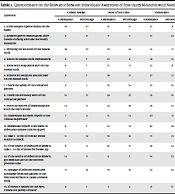
The points related to the measures after needle sticking asked in the form of a 16-question questionnaire from the statistical population, the results of which given in Table 2. According to the statistical results of this questionnaire, most students scrubbed despite open wounds. (66.9%) and in case of needle stick, immediately remove the contaminated gloves (60.5%) and wash the place with soap and water (69.2%), which in turn increases the side effects of exposure. A high percentage of students were unaware of rinsing their eyes if blood splashed into the eye from the inside out with plenty of water (73.0%). Also, during the results, many students do not check the safety level of the contacted person (63.1%) and have low information about the immediate report of the accident to the infectious disease control expert (6.6%), among other notable points obtained from this questionnaire not having enough information about taking 5 - 10 mL of contact source blood for examination (12.3%), if known source infection, taking 5 - 10 mL of blood for follow-up (0.9%) and if known Being the source of infection is being treated in the shortest time (11.5%) (Table 2).
Table 2.
Questionnaire on the Relevance Between Individuals' Awareness of Post-injury Measures with Needle Heads and Sharp Objects of the Target Population
| Question | Almost Always | Most of the Time | Sometimes | Almost Never | Total Number of Respondents | ||||
|---|---|---|---|---|---|---|---|---|---|
| Abundance | Percentage | Abundance | Percentage | Abundance | Percentage | Abundance | Percentage | ||
| 1. Scrub despite open wounds on the hand | 81 | 67 | 19 | 16 | 10 | 8 | 11 | 9 | 121 |
| 2. Remove gloves immediately after needle sticking and take necessary measures | 9 | 8 | 7 | 6 | 31 | 26 | 72 | 60 | 119 |
| 3. Pressing the location of the needle stick | 28 | 23 | 29 | 24 | 16 | 31 | 49 | 40 | 122 |
| 4. Rinse the needle stick immediately | 8 | 7 | 10 | 8 | 19 | 16 | 83 | 69 | 120 |
| 5. Rinse with soap and water on the needle stick | 8 | 7 | 13 | 11 | 32 | 27 | 64 | 55 | 117 |
| 6. Rinse with betadine and decoder on the needle stick | 9 | 7 | 38 | 31 | 27 | 21 | 48 | 39 | 122 |
| 7. Check the safety of the contacted person | 6 | 5 | 19 | 16 | 20 | 16 | 77 | 63 | 122 |
| 8. Check the antibody level of the contacted person | 16 | 13 | 28 | 23 | 19 | 16 | 58 | 48 | 121 |
| 9. Note the history of immunization with the HBC vaccine | 14 | 11 | 22 | 18 | 28 | 23 | 58 | 48 | 122 |
| 10. Immediate accident report to the clinical supervisor | 7 | 6 | 15 | 12 | 40 | 31 | 59 | 49 | 121 |
| 11. Immediate report of accident to infectious disease control expert | 8 | 7 | 14 | 12 | 46 | 38 | 53 | 44 | 121 |
| 12. Take 5 - 10 mL of contact blood source to check | 15 | 12 | 19 | 16 | 31 | 25 | 57 | 47 | 122 |
| 13. If the source of infection is known, take 5 - 10 mL of blood for follow-up | 11 | 9 | 20 | 17 | 28 | 23 | 63 | 52 | 122 |
| 14. If the source of infection is known, get medical care in the shortest possible time | 14 | 11 | 9 | 7 | 36 | 30 | 63 | 52 | 122 |
| 15. Spillage of infected blood and discharge from the patient to the mucosal surfaces is called a needle stick | 17 | 14 | 19 | 16 | 32 | 26 | 54 | 44 | 122 |
| 16. If blood is spilled on the eyes, rinse with plenty of water | 9 | 7 | 3 | 2 | 21 | 17 | 89 | 73 | 122 |
Another thought-provoking point is that a low percentage of students consider splitting blood and infected secretions of the patient to the mucosal surfaces as a needle stick (13.9%).
5. Discussion
This study conducted to assess the level of knowledge of operating room students about the measures after needle sticking. According to the results of this study, needle sticking did not occur only among operating room staff and since the students' educational environment was clinical work environment, there is exposure among operating room students (28.2%) that can be considered and planned because these students are the capital and workforce of the future. In the study of Reza Aghabeigi et al., consistent results are presented which show that 26% of the operating room staff of Ahwaz hospitals have been injured at least once a year while performing their job duties and more than half of the operating room staff of Ahwaz hospitals with Faced with needle stick (13). On the other hand, in a study by Shiao et al., It was shown that needle stick events were reported during the years of internship and about 61.9% among students (14). In a cohort study by Nawafleh et al., The results showed that two-thirds of nursing students faced needle sticks during their student years. This is due to the lack of knowledge about general precautionary guidelines and needle safety devices (15). Among the effective reasons for the above differences are: differences in educational structures and infrastructures in different centres, lack of homogeneity in the educational background of the study population, lack of active participation of lower grade students in scrubbing, etc.
According to the results of this study, we find that a small percentage of students have the necessary knowledge about the existing cases such as needle sticking and the majority of them do not consider spraying blood and patient discharge on mucous membranes and eyes as needle stick (44.3%) in this case in a study conducted by Rastegari and Mostafavian. In Mashhad, it found that the total number of job contacts of 630 personnel was the highest frequency related to blood spasms with 170 cases (26.69%) (16). As a result, we find that unfamiliarity between staff and students is one of the causes of the prevalence of needle stick, which has shown in the study of Dement et al. That unfamiliarity is one of the most common causes of injury (17).
The results show that with increasing age and experience, the incidence of needle sticks among students has decreased and this is due to the increase in the level of knowledge in them, so the importance of teaching this issue in the primary courses. In research by Suliman et al. concluded that nursing students in Jordan do not have a deep understanding of needle stick issues. This knowledge has improved over the years. However, needle exposure and non-reporting is a common problem (18). Dement et al., in their study, also emphasized the low age of damage to sharp objects (17).
In this study, no significant difference observed in the incidence of needle sticking between men and women. Students have not taught needle stick protocols because a study conducted by Aghabeigi et al. has shown that there is a significant relationship between gender and the incidence of needle stick (13).
In general, this study showed that operating room students received insufficient and incomplete information about the necessary measures after needle sticking, including taking a blood sample from the person and the contact person should check the antigen and antibodies of blood-borne diseases. Also effective measures in reducing the risk of infection transmission include removing contaminated gloves, washing the area, washing the eyes and mucous membranes with plenty of water and no pressure on the contact area, etc. In a similar study by Taghavi et al. that the frequency of occupational injuries caused by needle stick in one of Mashhad hospitals has studied the importance of training and knowledge of staff about needle stick and related diseases, as well as the importance and staffing of staff (19). Therefore, the importance of teaching protocols for controlling infections transmitted through needle sticking in courses or university courses for students in order to identify cases of needle sticking, taking the necessary measures to inform the authorities and not hiding the incident, testing the level of antibodies, and timely vaccination among students and staff of health centers is one of the cases obtained in this study because today's students are the staff of tomorrow's community, so by increasing the level of awareness of today's students, we can reduce high investment costs and incur high costs. Planned the loss of life and property to the individual in the future.
5.1. Conclusions
According to the results, we find that the level of students' awareness of the actions after the needle stick is in a low range, so that the need for corrective and educational measures is strongly needed to increase knowledge and awareness as theoretical and practical units in universities, and retraining courses based on the latest protocol reduce exposure pain or, if they do occur, reduce the risk of communicable diseases to a minimum.
5.2. Limiting Factors
Restrictive factors in this study include the low statistical population due to the limited number of students in the province, the lack of active participation of all students in scrubbing and the inaccuracy of individuals in answering questions.
5.3. Application of Findings
Using the results of the present study, administrators and education officials can examine the issues that improve the level of students' knowledge of the measures after the needle stick and provide a pamphlet of them in their educational planning in the form of training workshops. And include in the course topics provided.