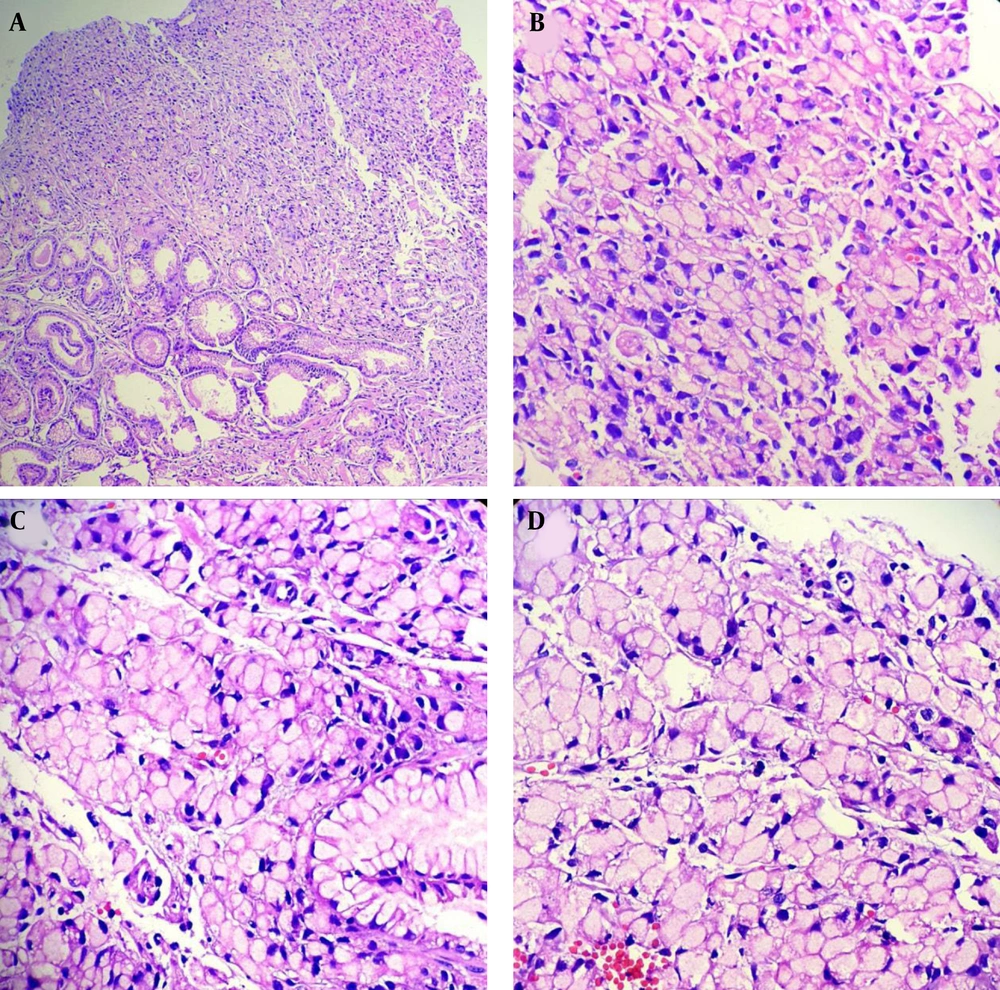
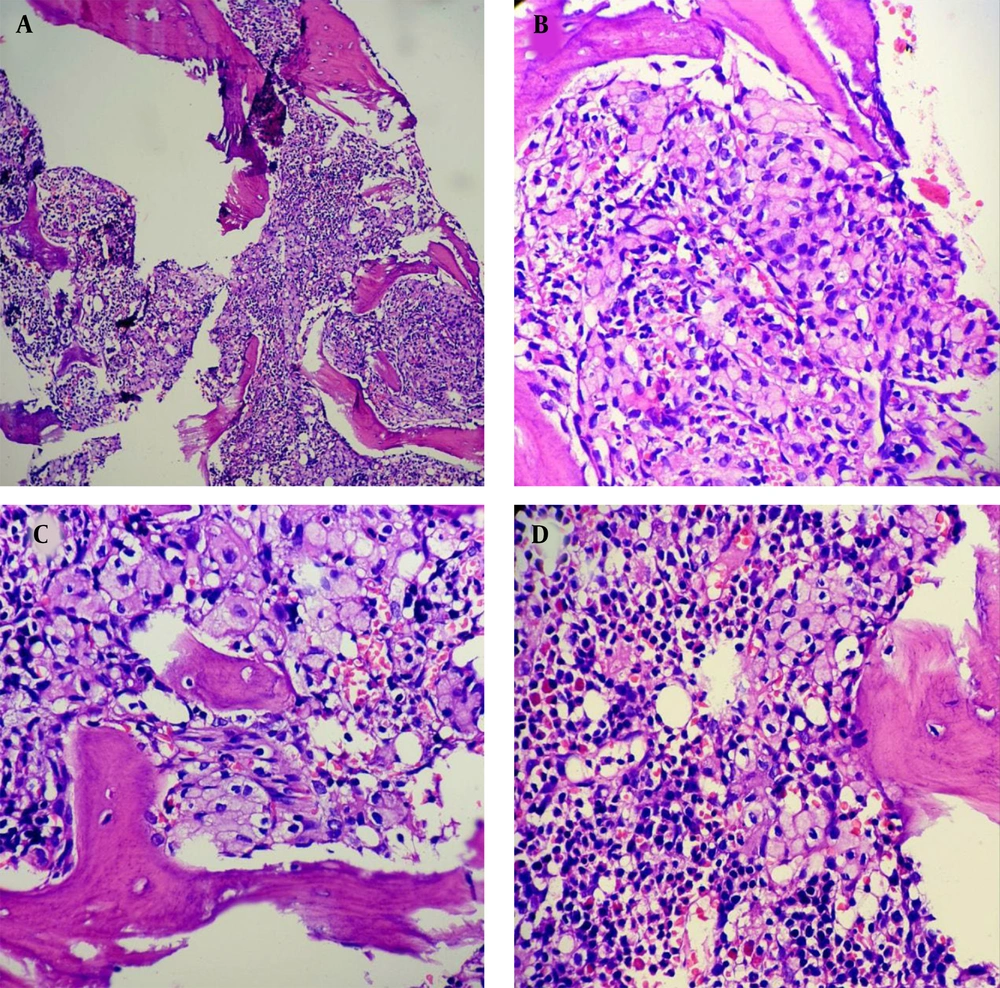
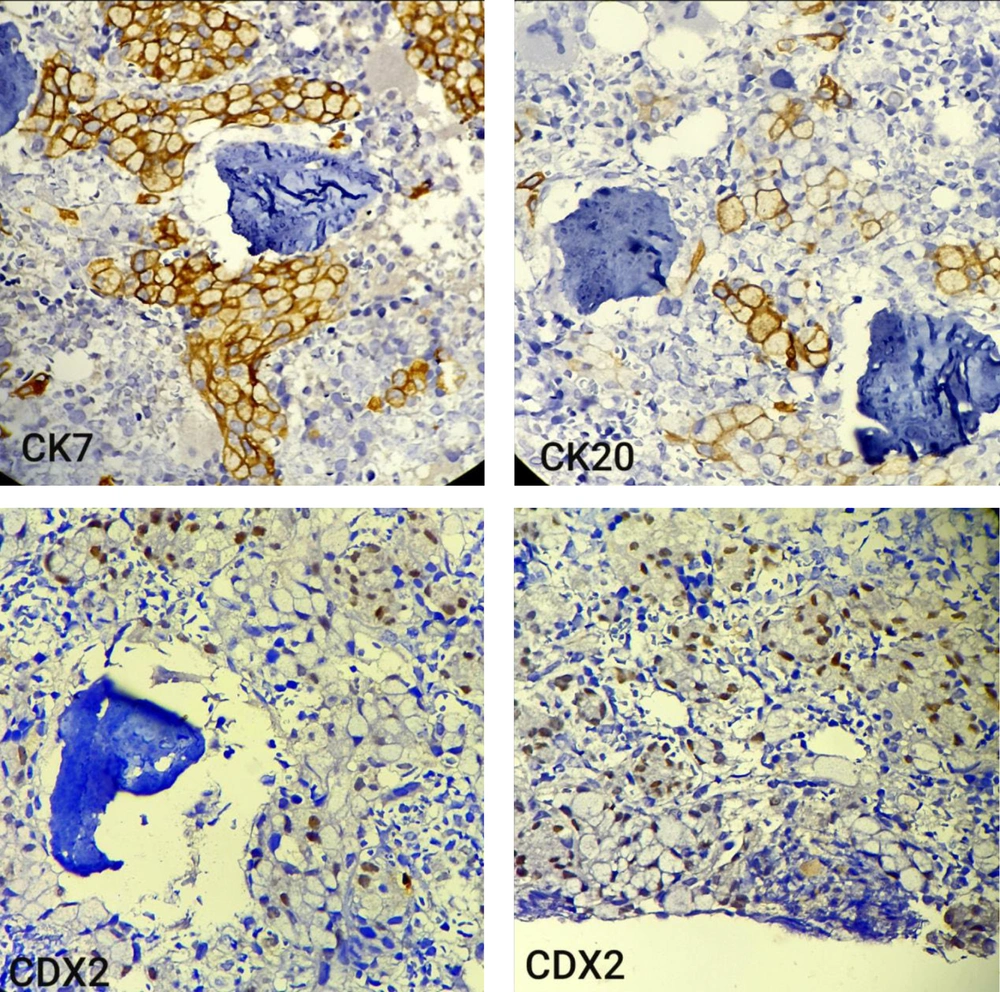
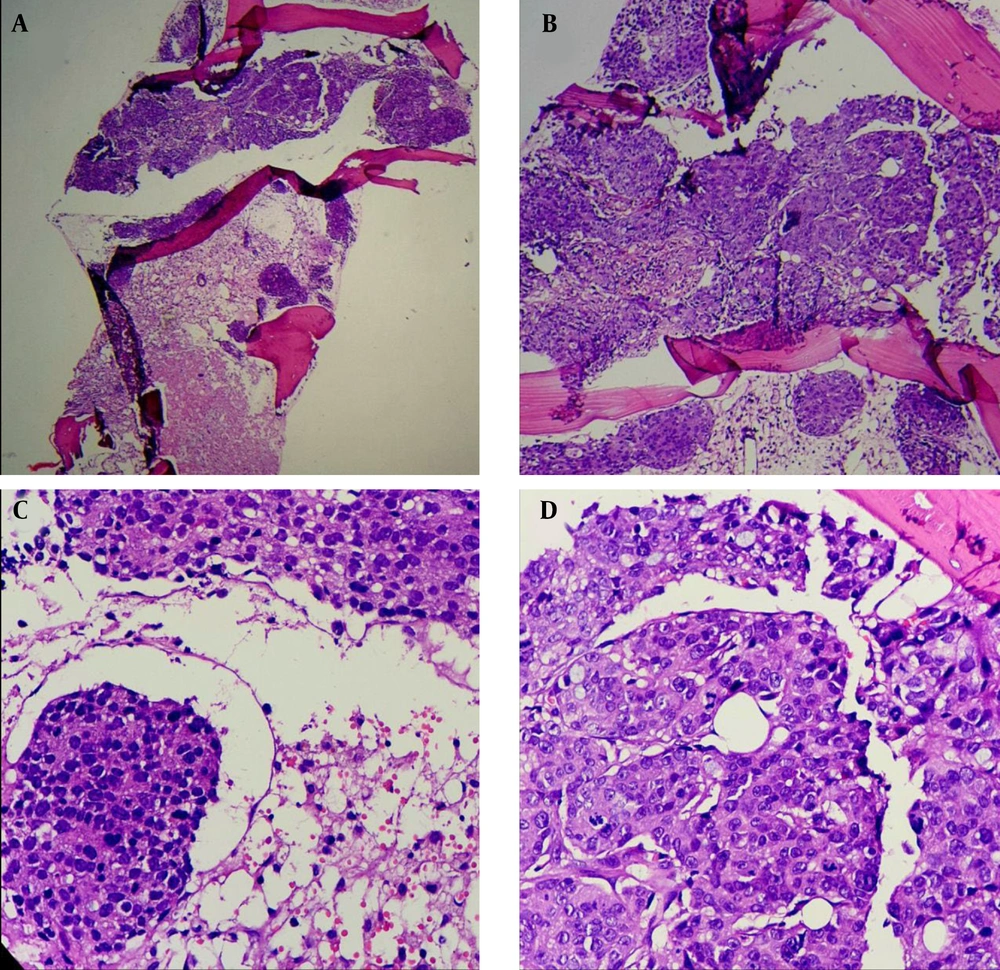
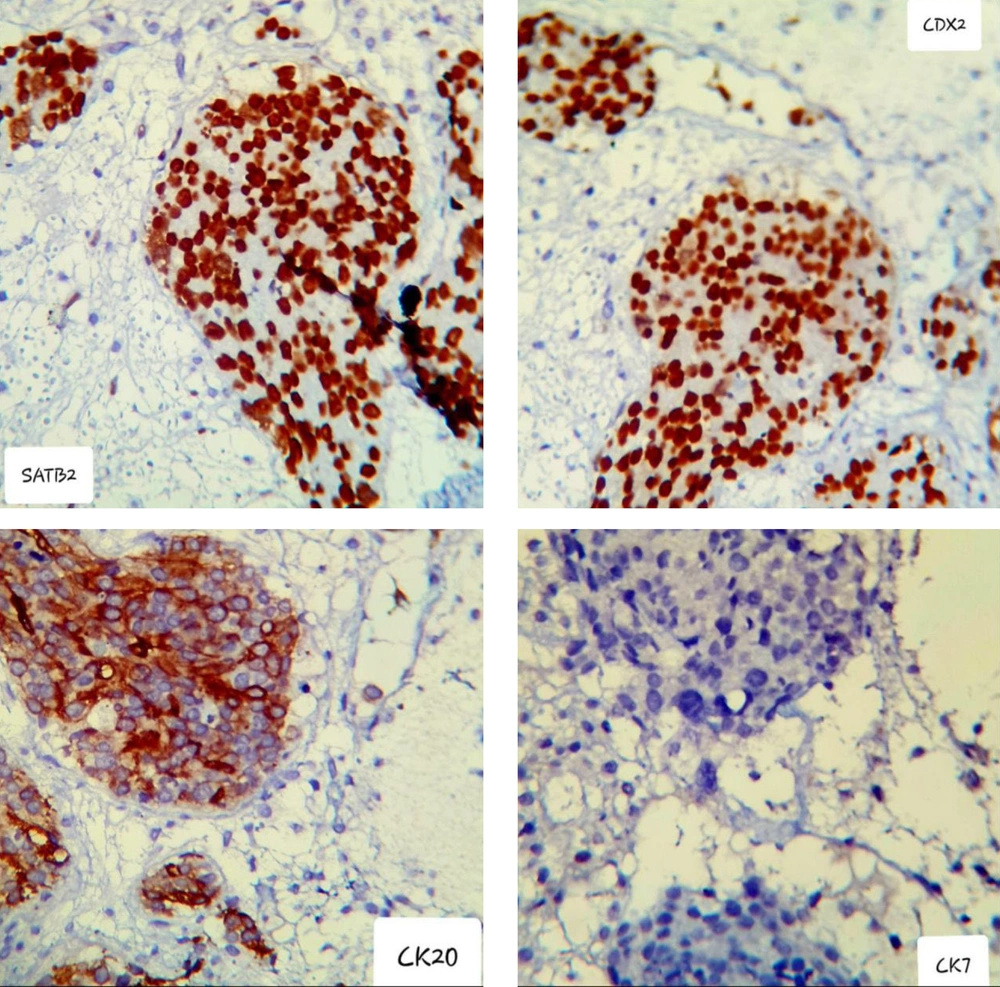
Gastric cancer is a life-threatening condition with unfavorable survival rates globally. The World Health Organization (WHO) classified gastric cancer histologic patterns into subtypes including papillary, tubular, mucinous, poorly cohesive (signet ring cell carcinoma), and mixed (
1,
2). In the early stages, most individuals may not display any particular symptoms, leading to a diagnosis in the advanced stages of the disease. Nonetheless, symptoms such as weight loss and weakness, which are commonly observed in most malignancies, as well as abdominal pain and dysphagia, are usually reported (
3). According to data from stage distribution of SEER incidence cases, 2012 - 2021, about 33.7% of cases with gastric cancer show distant metastasis involvement (
4). The liver is the most common site of metastases (48%) and the bone accounts for 12% of metastatic cases (
5).
Colorectal cancer is a malignancy that starts in the colon or rectum, which are part of the digestive system. It is the third most commonly diagnosed cancer and the second mortality cause with adenocarcinoma being the most prevalent type (
6,
7). Screening and treatment developments have improved survival rates for this malignancy in recent years. Unfortunately, metastatic cases still have a poor prognosis (
8). Approximately 20% of patients present distant metastasis, with a higher prevalence noted among younger individuals (
9). Bone marrow involvement is rare and usually brings survival under one year (
10).
Cytopenia is a condition characterized by a reduction in the quantity of blood cells, affecting one or multiple cell types. The effects of decreased cell types can manifest in various ways, including thrombocytopenia, anemia, neutropenia, or leukopenia (
11). The situation may arise from hematological or other factors; therefore, workup depends on the underlying condition (
12). When reduction is observed in two cellular elements, the condition is referred to as bicytopenia (
13). There are very few reports of patients with gastrointestinal (GI) cancers having bicytopenia as an initial manifestation (
14). We discuss 2 patients with gastric and colorectal cancer showing bicytopenia without any related GI symptoms. Diagnosis in these cases can be a challenge and requires a multidisciplinary approach.