
1. Background
Fatigue is common in sport and can impair athletic performance (1, 2). Its effects are not confined to competition; fatigue can also affect athletes’ training patterns, injury risk, and professional future (3). Decreased ATP and increased generation of reactive oxygen species (ROS) contribute to fatigue. The accumulation of ROS places the body in a state of oxidative stress and may damage cellular organelles, leading to physical fatigue (4). Intense exercise induces fatigue, during which force-producing capacity decreases. For example, recovery of force generation after quadriceps muscle fatigue may take up to 3 days. Consecutive training sessions under fatigued conditions may also lead to poor performance in professional athletes, although athletes sometimes have no choice but to maintain performance under such conditions (5). Volleyball involves repetitive, high-intensity movements combined with short rest periods (6, 7). It requires strength, power, and agility to perform repetitive skills, which can cause substantial fatigue (6). Vertical jump and agility are key factors in volleyball (8). Coaches and sports physicians play an important role in managing athletes’ fatigue and accelerating recovery (3). Therefore, methods to minimize the effects of fatigue on athletic performance are of interest to coaches and professional athletes.
The use of natural supplements has attracted the attention of athletes at different competitive levels (5). Green tea undergoes minimal oxidation, and its beneficial properties are attributable to its polyphenol content (4). Polyphenols account for 90% of the compounds in green tea (9). The most abundant polyphenol in green tea is epigallocatechin-3-gallate (EGCG), which has antioxidant properties (4, 9). In animal studies, specifically in mice, EGCG has demonstrated potential antifatigue effects. EGCG facilitates recovery and reduces oxidative damage caused by intense exercise (4). Therefore, the effectiveness of green tea in improving performance under fatigue may have important practical applications.
Improving lower-extremity muscle strength is also essential for increasing athletic performance (10). TheraBand is used in therapy, fitness, and resistance training. The popularity of elastic bands is related to their accessibility, low cost, and safety (11). Previous studies have shown that resistance band training can enhance lower-limb strength in athletes (11, 12).
2. Objectives
Professional athletes may have insufficient time to recover after fatiguing activity. Therefore, low-risk interventions, such as green tea consumption with or without strengthening exercises, may be beneficial if they are effective. However, research on this topic is limited. Accordingly, the present investigation sought to address the following question: Can green tea consumption and TheraBand exercises, alone or in combination, delay time to exhaustion and improve athletic performance following muscle fatigue in elite male volleyball players?
3. Methods
3.1. Study Design and Participants
A controlled quasi-experimental design with randomized group allocation was used. The study was conducted at the University of Sistan and Baluchestan between May and July 2023 and included a control group and three experimental intervention groups. Study procedures complied with ethical standards and were approved by the Ethics Committee of the University of Sistan and Baluchestan before participant recruitment (approval ID: IR.USB.REC.1400.075). This investigation was conducted without prior registration in a clinical trial database because it involved a healthy, nonclinical population and minimal-risk interventions.
Forty elite male volleyball players aged 19.27 ± 1.88 years from volleyball clubs in Zahedan, with at least 1 year of playing experience in the country's top leagues, participated in this study. Participants were recruited voluntarily according to the inclusion and exclusion criteria. The inclusion criteria were general health; being male volleyball players aged 17 to 25 years; at least 1 year of playing experience in the country's top leagues; and participation in regular volleyball training at least 3 times per week. The exclusion criteria were consumption of dietary or herbal supplements, caffeine-containing products, energy drinks, or alcohol, and participation in any additional training program.
3.2. Sample Size Determination
An a priori power analysis was performed in G*Power to estimate the required number of participants, assuming an effect size of 0.56 (effect size for vertical jump in the study by Joy et al.) (13), a 5% significance threshold, and 80% statistical power. Although the calculated sample size was 39, the final recruitment target was set at 40 participants.
3.3. Randomization and Allocation
A controlled quasi-experimental design was used, with 40 participants allocated to four groups using Random Number Generation Software. The study included four groups: three experimental groups, TheraBand (n = 10), green tea (n = 10), and combined TheraBand and green tea (n = 10), and one control group (n = 10). Each participant was randomly assigned a number from 1 to 40, written on separate cards. Only the participant was aware of the assigned number, which was concealed from the researcher. Subsequently, 10 nonrepeating random numbers between 1 and 40, generated using Random Number Generation Software, were assigned to group 1. The next 10 random numbers were assigned to group 2, the following 10 random numbers to group 3, and the subsequent 10 random numbers to group 4. Group assignments were based solely on the generated random numbers, with no preference given to any group (Figure 1).
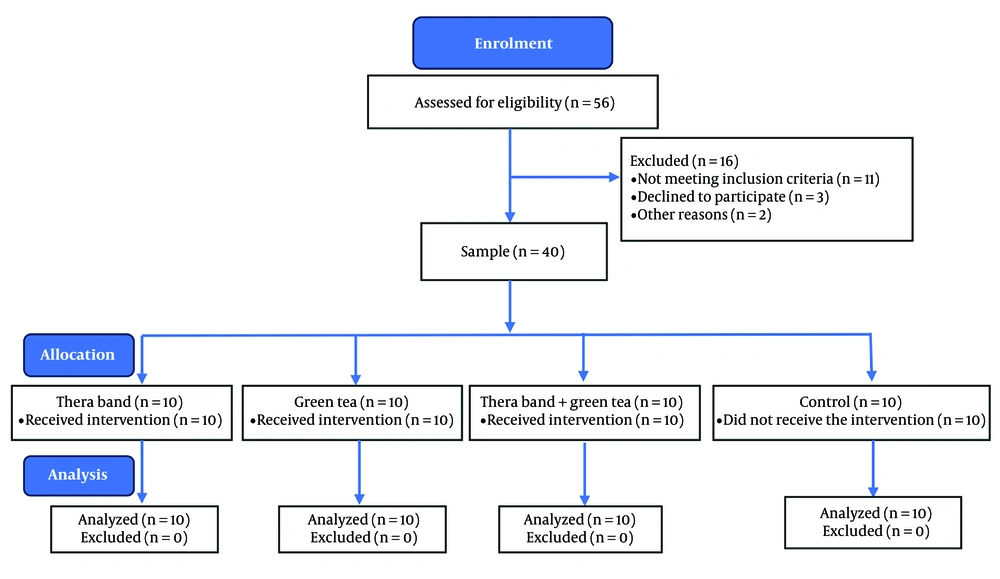
Figure 1.
CONSORT flowchart of the study
3.4. Experimental Procedure
Participation required written informed consent. The fatigue protocol was performed on days 1 and 2, and on the third day, during the pretest, time to exhaustion, agility, and vertical jump were measured. A 6-week intervention consisting of TheraBand exercises and green tea consumption was then implemented according to each experimental group. The TheraBand group completed TheraBand training. The green tea group received green tea supplementation. The combined TheraBand and green tea group completed TheraBand training and received green tea supplementation. After the final intervention session, the fatigue protocol was implemented immediately for 2 days, and the posttest was administered the next day. Throughout the study, participants were asked to continue their usual volleyball training while avoiding dietary or herbal supplements, caffeinated products, and energy drinks. Participants in the supplementation groups were permitted to consume only the prescribed green tea supplement. Participants assigned to the control group received neither an exercise intervention nor supplementation. Because participants were habitual black tea consumers, they were instructed to maintain their usual black tea consumption pattern throughout the study. The TheraBand training groups were asked to restrict their physical activity to the prescribed training program and avoid any additional exercise.
The outcome assessor was blinded to group allocation and participants' intervention status. The principal investigator was blinded during randomization and group allocation; however, because participant follow-up and direct monitoring of the exercise and green tea consumption protocols were necessary, blinding of the principal investigator was not feasible during the intervention period. To minimize bias, validated performance tests with standardized protocols were used to assess vertical jump and agility. In addition, a treadmill equipped with a heart rate sensor was used to measure time to exhaustion.
3.4.1. Fatigue-Inducing Protocol
The fatigue protocol was implemented by inducing repeated knee extension contractions in the seated knee extensor muscles through multiple sets (5). In the first set, participants performed repetitive knee extensions at a cadence of 20 repetitions per minute against a resistance equal to 50% of their body weight. The set was performed until volitional fatigue was reached, at which point participants could no longer execute the movement. The total number of successful knee extensions performed in the first set was recorded.
After a 30-second recovery period, participants performed subsequent sets at 75% of the repetition count achieved in the first set. The protocol continued until performance declined to below 50% of the initial set's repetitions (Figure 2). Participants were also familiarized with the fatigue protocol during a session.
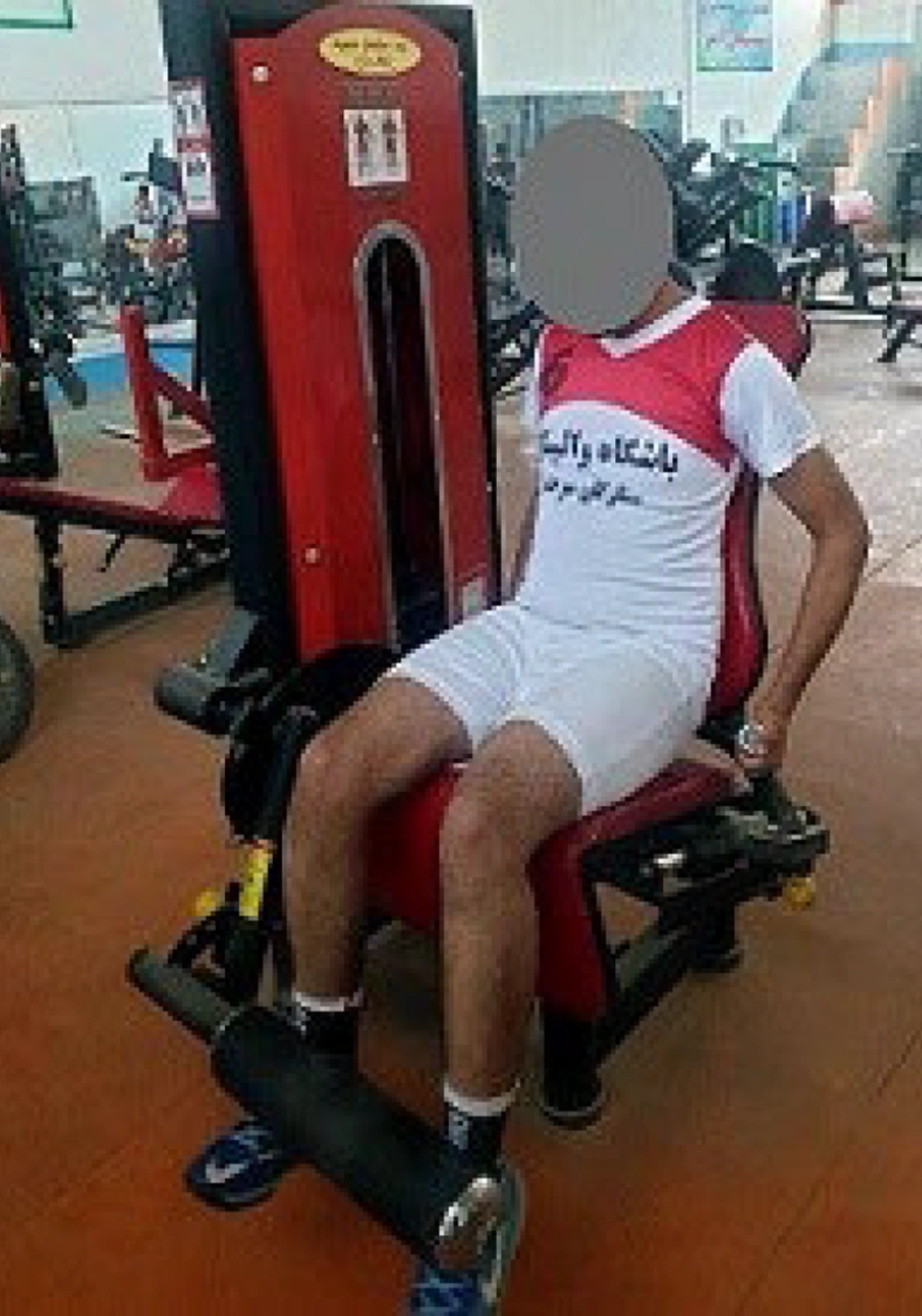
Figure 2.
Fatigue induction procedure in the participants.
3.4.2. Intervention Protocols
3.4.2.1. Exercise Protocol
The TheraBand-based intervention was designed to improve lower-extremity strength (10, 11, 14). TheraBand exercises were performed for 6 weeks, 3 sessions per week, in the combined TheraBand and green tea group and the TheraBand group. Exercise sessions were structured as 60-minute sessions, with 10 minutes allocated to warm-up, 40 minutes to TheraBand exercises, and 10 minutes to cool-down activities. Table 1 shows the gradual progression of exercises. TheraBand exercises included hip extension in a standing position; hip flexion while sitting on a chair; squat; standing hip abduction while maintaining full knee extension; standing hip adduction with a straight knee; supine knee extension without hip extension; and knee and hip extension in the supine position. Exercise intensity was controlled through the prescribed number of repetitions and the selection of TheraBand resistance levels (TheraBand color). Participants received detailed instructions and guidance on proper exercise execution. TheraBand exercises were implemented under the direct supervision of the researcher. Absence from 2 consecutive sessions or 3 nonconsecutive sessions was established as the criterion for exclusion from the study. Participants were committed to following the TheraBand exercise protocol, and if, in rare cases, a participant did not attend a training session, the missed session was made up under the supervision of the researcher. In this study, no participants missed any exercise intervention sessions.
Table 1.
TheraBand Exercise Protocol
| TheraBand color | Weeks | Week 1 | Week 2 | Week 3 | Week 4 | Week 5 | Week 6 |
|---|---|---|---|---|---|---|---|
| Purple | Set and repetition (n) | 3 × 10 | 3 × 12 | 3 × 14 | - | - | - |
| Black | Set and repetition (n) | - | - | - | 4 × 10 | 4 × 12 | 4 × 14 |
3.4.2.2. Supplementation Protocol
The green tea intervention included three green tea bags (Golestan Company, Iran) per day for 6 weeks, consumed in the morning, at noon, and at night. One green tea bag was steeped in 200 mL of boiling water for 6 to 8 minutes. Participants in the green tea group and the combined TheraBand and green tea group consumed the supplement. During the green tea supplementation phase, the researcher conducted daily follow-ups to ensure adherence to the correct dosage and proper consumption of green tea. In this study, no participants missed any green tea supplementation sessions during the study period.
3.5. Outcome Measures
3.5.1. Measurement of Vertical Jump Performance
The Sargent test was used to evaluate vertical jump performance. A reliability and validity coefficient of 0.93 has been reported for this test (15). The test was administered as follows: The participant stood sideways next to a tape measure mounted on the wall. He then placed one upper limb at his side and raised the other upper limb toward the tape measure. The contact point of the middle finger with the measuring tape was recorded. The participant returned to the starting position and then attempted to jump vertically to the highest possible point and touch the measuring tape. The vertical jump score was derived from the difference between standing reach and jump reach measurements and was expressed in cm. The highest jump height (cm) recorded across three Sargent test trials was included in the analysis.
3.5.2. Measurement of Agility Performance
Agility performance was measured using a T-test (16). The T-test is widely accepted as a valid tool for evaluating agility and demonstrates excellent reliability (17). Four cones were placed to form a T shape (Figure 3). The distance from the central cone to each lateral cone (left and right) was 5 m, and the distance from the starting cone to the central cone was 10 m. The participant stood at the starting point (base of the T line) and, upon the start signal, ran to the central cone and touched it. The participant then moved to the cone on the right and made contact with it, followed by a 10-m run to the cone on the far left, where he again touched the marker. After returning to the central cone and touching it again, the participant ran backward to the starting point. Crossing the starting point marked completion of the T-test. Each participant completed the T-test on two occasions, with a 3-minute recovery period between trials. For each participant, the assessor documented the fastest T-test completion time using a digital stopwatch with a precision of 0.01 seconds.
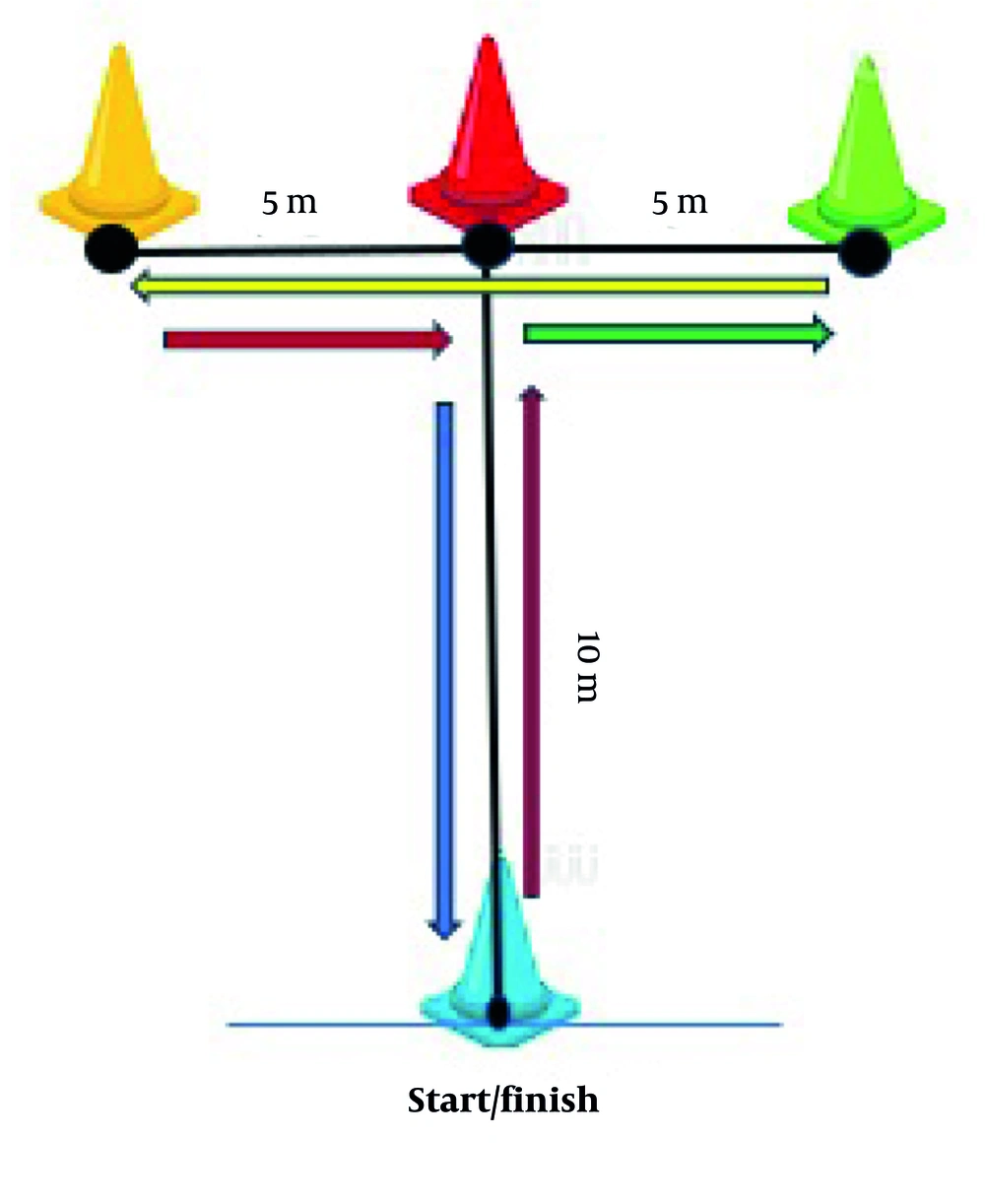
Figure 3.
Procedure for performing the T-test.
3.5.3. Measurement of Time to Exhaustion
Time to exhaustion was assessed using a treadmill (Ford Fitness; FA5000ac, China) running protocol, and participants ran on the treadmill until voluntary exhaustion. Each participant's maximum heart rate (HRmax) was estimated using the 220 − age equation. Next, the target running intensity for each participant was set at 80% of the estimated HRmax. The treadmill was set at a 0% incline. At the beginning of the test, participants placed their hands on the treadmill's heart rate sensors and began running at a speed of 3.5 km/h. Speed was progressively increased until 80% of the participant's maximum heart rate was achieved (18). Once this intensity was reached, treadmill speed was kept constant. The duration from this point until the participant could no longer continue running despite strong verbal encouragement was recorded as time to exhaustion. Time to exhaustion was recorded for each participant using a digital stopwatch with 0.01-second accuracy.
The Borg rating of perceived exertion (RPE) scale was used to confirm when participants reached exhaustion. The test was terminated when participants reported an RPE score of 18 or higher, accompanied by verbal statements indicating that they could no longer continue because of extreme fatigue. Each participant performed the test once. A familiarization session was conducted to introduce participants to the measurement protocol.
The Borg RPE scale ranges from 6 to 20 and quantifies an individual's perceived level of effort, strain, and fatigue during physical activity. Scores of 18 and above represent very heavy exertion, characterized by severe breathlessness, inability to sustain activity, and a strong desire to terminate exercise immediately (19).
3.6. Statistical Analysis
A mixed ANOVA with repeated measures was used, and post hoc comparisons were adjusted using the Bonferroni method. Effect sizes were presented as partial eta squared (ηp2). Four groups constituted the between-subjects factor, whereas time (preintervention and postintervention) served as the within-subjects factor. Assumptions of normality and homogeneity of variances were confirmed using the Shapiro-Wilk and Levene tests, respectively (P > 0.05). Statistical significance was established at P < 0.05. One-way ANOVA was used to evaluate baseline demographic differences across groups. All statistical analyses were conducted with IBM SPSS Statistics version 27.
4. Results
The 6-week intervention involving TheraBand exercises and green tea supplementation was implemented as scheduled. No injuries or adverse effects were reported by participants throughout the study. There were no dropouts, and all 40 participants were included in the posttest assessments and statistical analyses. Participant demographic characteristics for the four study groups are presented in Table 2. Age, height, weight, and BMI did not differ significantly among the groups (P > 0.05; Table 2).
Table 2.
Demographic Information a
| Variables | TheraBand (n = 10) | Green Tea (n = 10) | TheraBand + Green Tea (n = 10) | Control Group (n = 10) | P-Value |
|---|---|---|---|---|---|
| Age (y) | 18.60 ± 1.83 | 19.00 ± 1.70 | 19.70 ± 1.76 | 19.80 ± 2.20 | 0.43 |
| Height (cm) | 178.50 ± 6.24 | 179.40 ± 7.29 | 181.80 ± 6.47 | 180.00 ± 9.16 | 0.78 |
| Weight (kg) | 70.80 ± 7.84 | 74.50 ± 13.88 | 75.94 ± 11.35 | 81.30 ± 18.21 | 0.37 |
| BMI (kg/m2) | 22.16 ± 1.45 | 23.05 ± 3.53 | 22.86 ± 2.31 | 24.96 ± 5.10 | 0.30 |
a Values are expressed as mean ± SD.
A mixed repeated-measures ANOVA showed a significant time × group interaction for time to exhaustion (F (3, 36) = 32.733, P < 0.001, ηp2 = 0.73), indicating that the pattern of change over time differed significantly among the four groups. Significant main effects of time (F (1, 36) = 127.822, P < 0.001, ηp2 = 0.78) and group (F (3, 36) = 8.030, P < 0.001, ηp2 = 0.40) were also observed for time to exhaustion (Table 3).
Table 3.
Mixed Repeated-Measures ANOVA Results
| Variables | Time F | P-Value | ηp2 | Group F | P-Value | ηp2 | Time × Group F | P-Value | ηp2 |
|---|---|---|---|---|---|---|---|---|---|
| Time to exhaustion | 127.822 | < 0.001 a | 0.78 | 8.030 | < 0.001 a | 0.40 | 32.733 | < 0.001 a | 0.73 |
| Vertical jump | 32.004 | < 0.001 a | 0.47 | 1.724 | 0.179 | 0.12 | 8.791 | < 0.001 a | 0.42 |
| Agility | 23.352 | < 0.001 a | 0.39 | 0.687 | 0.566 | 0.05 | 12.172 | < 0.001 a | 0.50 |
a Indicates statistically significant findings for the main effects of time and group and for the time × group interaction (P < 0.05).
Bonferroni-adjusted pairwise within-group comparisons indicated that the largest significant increase in time to exhaustion occurred in the combined TheraBand and green tea group, followed by the TheraBand group (combined: mean difference = 1.82, 95% CI, -2.140 to -1.510; P < 0.001; TheraBand: mean difference = 1.43, 95% CI, -1.747 to -1.117; P < 0.001). The increase in time to exhaustion in the green tea supplementation group did not reach statistical significance (mean difference = 0.26, P > 0.05). No significant within-group changes were observed in the control group (P > 0.05) (Table 4).
Table 4.
Descriptive Statistics and Results of Within-Group Pairwise Comparisons
| Variables and Groups | Pretest | Posttest | Mean difference | 95% CI | P-Value |
|---|---|---|---|---|---|
| Vertical jump (cm) | |||||
| TheraBand | 55.70 ± 4.94 | 57.90 ± 4.48 | 2.20↑ | -3.240 to -1.160 | < 0.001 a |
| TheraBand + green tea | 55.40 ± 4.00 | 58.60 ± 3.37 | 3.20↑ | -4.240 to -2.160 | < 0.001 a |
| Green tea | 53.40 ± 3.94 | 53.90 ± 3.69 | 0.50↑ | -1.540 to 0.540 | 0.336 |
| Control | 54.10 ± 4.70 | 54.00 ± 5.22 | 0.10↓ | -0.940 to 1.140 | 0.846 |
| Agility (s) | |||||
| TheraBand | 10.16 ± 0.54 | 9.81 ± 0.53 | 0.35↓ | 0.192 to 0.516 | < 0.001 a |
| TheraBand + green tea | 10.11 ± 0.54 | 9.62 ± 0.50 | 0.49↓ | 0.329 to 0.653 | < 0.001 a |
| Green tea | 10.25 ± 1.08 | 10.21 ± 0.96 | 0.04↓ | -0.126 to 0.198 | 0.654 |
| Control | 10.19 ± 0.75 | 10.31 ± 0.71 | 0.11↑ | -0.273 to 0.051 | 0.172 |
| Time to exhaustion (min) | |||||
| TheraBand | 1.93 ± 0.78 | 3.36 ± 0.98 | 1.43↑ | -1.747 to -1.117 | < 0.001 a |
| TheraBand + green tea | 1.85 ± 0.57 | 3.67 ± 0.55 | 1.82↑ | -2.140 to -1.510 | < 0.001 a |
| Green tea | 1.79 ± 0.33 | 2.05 ± 0.50 | 0.26↑ | -0.570 to 0.060 | 0.109 |
| Control | 1.62 ± 0.71 | 1.62 ± 0.66 | 0.002↓ | -0.313 to 0.317 | 0.990 |
a Indicates statistically significant within-group comparisons (P < 0.05). Pairwise comparisons were adjusted using the Bonferroni correction.
Bonferroni-adjusted pairwise between-group comparisons showed that both the TheraBand group and the combined TheraBand and green tea group had a significantly greater increase in time to exhaustion than the control group (TheraBand: mean difference = 1.025, 95% CI, 0.252 to 1.798; P = 0.004; combined: mean difference = 1.139, 95% CI, 0.366 to 1.913; P = 0.001). In addition, the combined TheraBand and green tea group demonstrated a significantly greater increase in time to exhaustion than the green tea group (mean difference = 0.844, 95% CI, 0.071 to 1.617; P = 0.026). Compared with the green tea group, the TheraBand group showed a larger improvement in time to exhaustion; however, this difference was only near statistical significance (mean difference = 0.730, 95% CI, -0.044 to 1.503; P = 0.074) (Table 5).
Table 5.
Post Hoc Pairwise Comparisons Across the Four Groups a
| Comparison | Time to Exhaustion | Vertical Jump | Agility | |||
|---|---|---|---|---|---|---|
| Mean difference | P-Value | Mean difference | P-Value | Mean difference | P-Value | |
| Combined vs TheraBand | 0.114 | 1.000 | 0.200 | 1.000 | -0.120 | 1.000 |
| Combined vs Green tea | 0.844 | 0.026 b | 3.350 | 0.525 | -0.366 | 1.000 |
| Combined vs Control | 1.139 | 0.001 b | 2.950 | 0.783 | -0.388 | 1.000 |
| TheraBand vs Control | 1.025 | 0.004 b | 2.750 | 0.947 | -0.268 | 1.000 |
| TheraBand vs Green tea | 0.730 | 0.074 | 3.150 | 0.643 | -0.246 | 1.000 |
| Green tea vs Control | 0.295 | 1.000 | -0.400 | 1.000 | -0.022 | 1.000 |
a Abbreviation: Combined, combined TheraBand and green tea group.
b Indicates statistically significant between-group comparisons (P < 0.05). Pairwise comparisons were adjusted using the Bonferroni correction.
For both vertical jump (F (3, 36) = 8.791, P < 0.001, ηp2 = 0.42) and agility (F (3, 36) = 12.172, P < 0.001, ηp2 = 0.50), mixed ANOVA demonstrated a significant time × group interaction, indicating that the pattern of change over time differed significantly among the four groups. There were no significant main effects of group for vertical jump (F (3, 36) = 1.724, P = 0.179, ηp2 = 0.12) or agility (F (3, 36) = 0.687, P = 0.566, ηp2 = 0.05). In contrast, time showed a significant main effect on both vertical jump (F (1, 36) = 32.004, P < 0.001, ηp2 = 0.47) and agility (F (1, 36) = 23.352, P < 0.001, ηp2 = 0.39) (Table 3).
Bonferroni-adjusted pairwise within-group comparisons indicated that the largest significant improvements in vertical jump and agility occurred in the combined TheraBand and green tea group (vertical jump: mean difference = 3.20, 95% CI, -4.240 to -2.160; P < 0.001; agility: mean difference = 0.491, 95% CI, 0.329 to 0.653; P < 0.001), followed by the TheraBand group (vertical jump: mean difference = 2.20, 95% CI, -3.240 to -1.160; P < 0.001; agility: mean difference = 0.354, 95% CI, 0.192 to 0.516; P < 0.001). However, within-group improvements in vertical jump and agility in the green tea group were not statistically significant (P > 0.05). No significant changes were observed for either outcome in the control group (P > 0.05) (Table 4). After Bonferroni-adjusted pairwise comparisons, neither vertical jump nor agility differed significantly between groups (P > 0.05) (Table 4).
5. Discussion
This study examined the effects of green tea supplementation, TheraBand training, and the combination of green tea supplementation and TheraBand training on agility performance, vertical jump height, and time to exhaustion in elite volleyball players. Post hoc within-group comparisons demonstrated significant improvements in time to exhaustion, with the largest changes observed in the combined TheraBand and green tea group, followed by the TheraBand-only group. Comparable outcomes have been reported in previous investigations (5, 20-22). TheraBand strengthening exercises have been shown to increase quadriceps muscle strength. Strength gains from TheraBand exercises may be attributable to neural adaptation mechanisms. The level of neural activation in muscles is determined by factors such as increased motor unit recruitment, firing frequency, coordination of synergistic muscles, and inhibitory reflex control (23). A potential increase in lower-limb muscle strength after 6 weeks of TheraBand training may explain the increased time to exhaustion observed in this study.
Evidence also suggests that polyphenols, including EGCG, the primary polyphenol in green tea, have antifatigue properties. EGCG has been shown to increase swimming time in mice while reducing blood lactic acid. EGCG may aid recovery and reduce exercise-induced oxidative damage (4). The presence of a hydroxyl group at the 5-prime position enhances the potency of catechins in inhibiting free radicals (20). Machado et al. (22) found that green tea can maintain neuromuscular performance and training capacity by reducing oxidative stress associated with fatigue. During exercise, muscles require substantial amounts of energy, which can increase ROS generation (20). ROS readily induce oxidation and functional impairment of sarcoplasmic reticulum proteins, such as ryanodine receptors and calcium-dependent ATPase. Consequently, cytosolic calcium concentration remains elevated, inhibiting sustained muscle contraction and ultimately causing muscle fatigue (24). Given the high concentration of flavonoids in green tea, this plant may exert antioxidant effects and enhance free radical scavenging potential (20). Hadi et al. reported that green tea has a positive effect on oxidative stress in male athletes (25). Green tea may reduce oxidative stress in trained athletes while supporting neuromuscular function related to muscle activation and fatigue. Therefore, green tea consumption has been suggested as a means of facilitating recovery after exercise (5). Furthermore, Liu et al. reported that polyphenols can reduce serum lactic acid levels, improve endurance performance, and produce marked anti-inflammatory effects that may help protect against fatigue induced by intense exercise (21).
The Bonferroni post hoc tests and pairwise between-group comparisons showed that the combination of TheraBand training and green tea supplementation was significantly more effective than green tea supplementation alone in improving time to exhaustion in male volleyball players. The combination of green tea consumption and physical activity may confer greater benefits than green tea consumption alone in reducing or modulating oxidative stress (20). Green tea may also promote skeletal muscle adaptations to resistance training. In the initial phase of training, a higher proportion of motor units and muscle fibers are recruited to meet imposed demands. With continued training, structural adaptations occur, including muscle fiber hypertrophy and subsequent increases in overall muscle mass. Over time, these physiological changes translate into improvements in muscular strength. By attenuating fatigue, recovery processes may be enhanced, accelerating adaptive responses to training and ultimately leading to greater gains in muscle strength and hypertrophy (24).
Another finding of the present study was that, although no significant main effect of group was observed for vertical jump performance or agility and no significant between-group differences were found for either variable, a significant time × group interaction was detected, indicating distinct patterns of change over time across groups. Post hoc within-group comparisons demonstrated significant improvements in vertical jump performance and agility, with the largest changes observed in the combined TheraBand and green tea group, followed by the TheraBand-only group.
The mechanisms underlying these effects are likely multifactorial. Physical training combined with green tea consumption attenuates oxidative stress and inflammatory responses through modulation of calcium release and reduction of DNA/RNA damage, ultimately leading to improved performance (20). In addition, previous studies have reported improvements in jump (11, 14) and spike speed (14) in volleyball players following TheraBand training, which may be attributable to key adaptations induced by resistance band use, including muscular hypertrophy via increased neuromuscular activation (23) and the addition or storage of contractile elements and elastic energy recovery (11). Resistance bands provide elastic loading to the musculature, increasing muscle demand during both the concentric and eccentric phases of movement. TheraBand training can effectively improve muscle strength while maintaining a low risk of severe injury. Moreover, by enhancing muscle activation, TheraBand exercises can meaningfully improve athletic performance. These exercises recruit both type I and type II muscle fibers, contributing to physiological adaptations that enhance both explosive power and muscular endurance (26). After the TheraBand intervention, the likely increase in lower-limb explosive power may have contributed to improved vertical jump (11) and agility performance in volleyball athletes.
Another notable finding was that, despite improvements from baseline to postintervention in time to exhaustion, vertical jump performance, and agility after green tea supplementation alone, the observed within-group changes did not reach statistical significance in elite male volleyball players. In light of these findings, the observed adaptations were primarily driven by the training stimulus, whereas green tea supplementation may have served a supportive rather than independent role.
5.1. Study Limitations
This study had several limitations. Although participants received clear instructions to avoid interfering beverages and dietary supplements, along with appropriate nutritional recommendations, complete control of dietary intake outside the study environment was not possible. The sample consisted of 40 male volleyball players and did not include female volleyball players. Future studies are recommended to use larger sample sizes and investigate athletes from other sports disciplines, as well as female athletes. In addition, the relatively short intervention period of 6 weeks may not have been sufficient for the observed effects to fully develop. Therefore, future studies with longer intervention periods are warranted.
5.2. Conclusions
The observed outcomes suggest that the combination of TheraBand exercises with green tea supplementation, followed by TheraBand exercises alone, improved time to exhaustion, vertical jump performance, and agility in elite male volleyball athletes. In addition, combined TheraBand exercises and green tea supplementation significantly improved time to exhaustion compared with green tea supplementation alone. Green tea supplementation alone was associated with positive changes in all three outcome variables, although none of these changes were statistically significant. Overall, the results suggest that training was the primary driver of the observed adaptations, whereas green tea supplementation may have played a supportive rather than independent role.