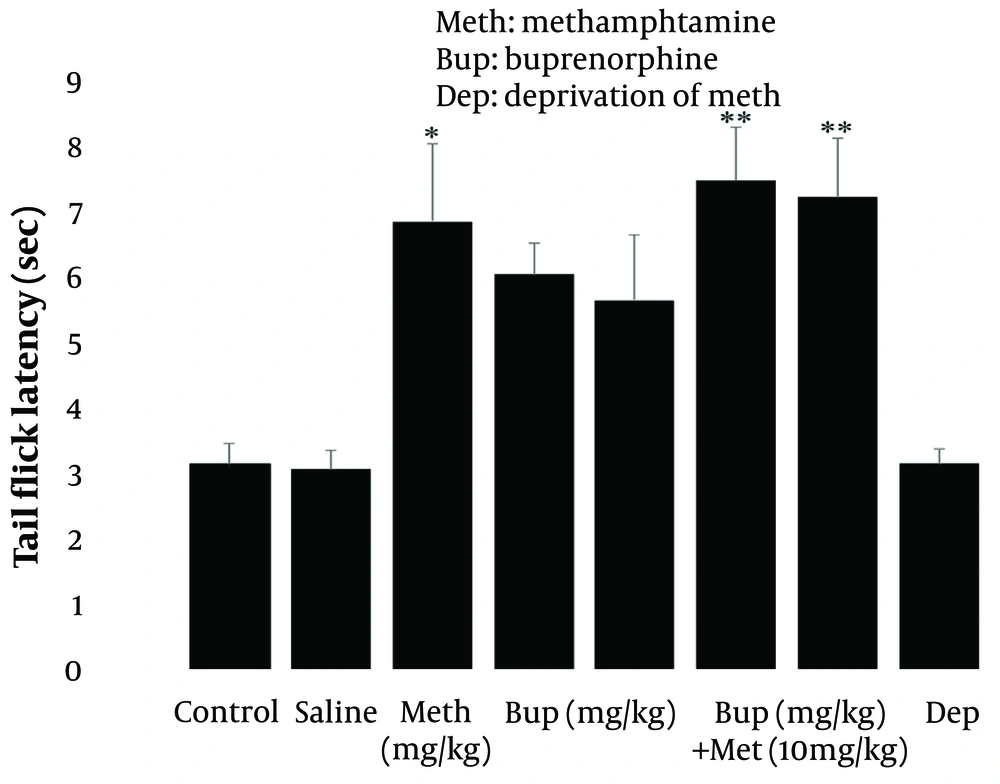
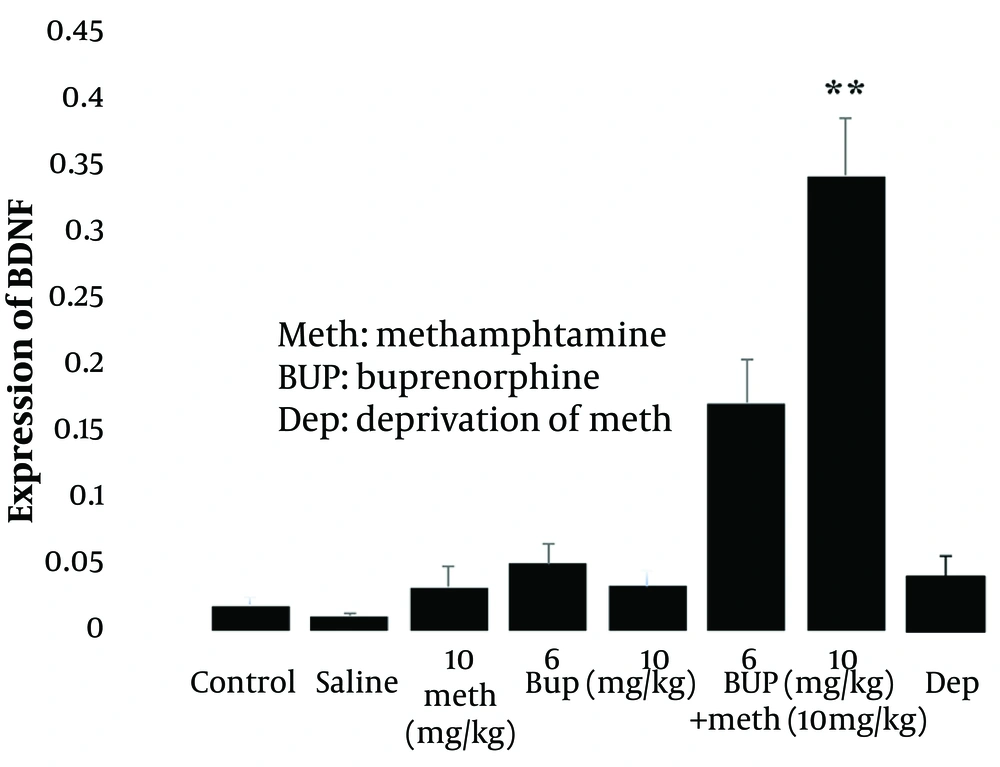
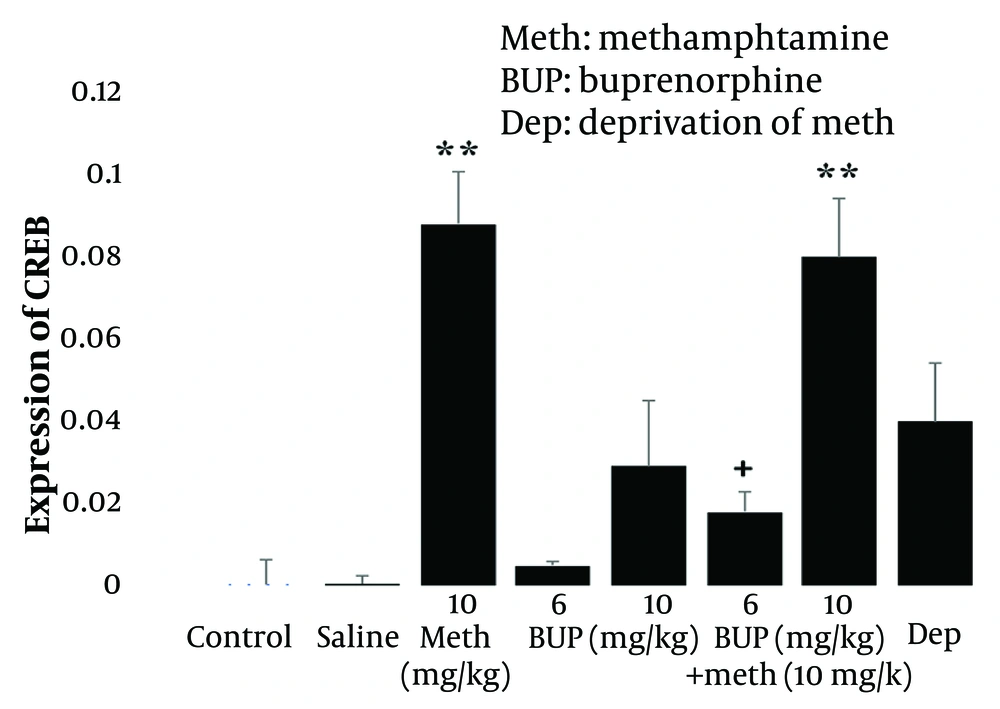
The present data showed that the injection of 10 mg/kg Meth (i.p.) for five consecutive days did not alter the expression of the BDNF gene, whereas it increased the expression of the CREB gene in the lumbar spinal cord and prolonged the Tail Flick latency in rats. Our findings are consistent with some previous studies but differ from others. Chronic Meth injections have been reported to induce antinociceptive effects in rats (
36). Meth has been shown to increase BDNF expression in the nucleus accumbens (NAc), improve memory, and reduce pain (
33). Additionally, BDNF expression in mesocorticolimbic areas has been found to increase following exposure to dopamine agonists, such as amphetamine (
37). However, other reports suggest that chronic use of opioid substances not only causes addiction and drug tolerance but also reduces BDNF expression and disrupts central and peripheral nervous system function (
38). For instance, heroin use has been associated with a decrease in BDNF serum levels (
21), while BDNF levels increase in the ventral tegmental area (VTA), accumbens, and amygdala after withdrawal from cocaine self-administration (
39).
It has been proposed that chronic Meth administration decreases BDNF, CREB (total and phosphorylated), Akt-1 protein expression, and GSK3 levels in the hippocampus, leading to nerve damage, cell apoptosis, inflammation, and oxidative stress (
40). The differences in BDNF gene expression observed in this study compared to others may be attributed to factors such as whether the drug was administered acutely or chronically, the dosage, the methods used, and the type of drug administered (
13,
41). Furthermore, repeated Meth administration has been shown to attenuate the inhibition of dopamine release from the NAc via presynaptic dynorphin-sensitive receptors (
42). Meth appears to depress the transmission of the monosynaptic reflex in the spinal cord through its effects on dopaminergic mechanisms (
13).
In this study, Meth administration for five days demonstrated only an antinociceptive effect, which aligns with previous research (
36,
43). Despite its effect on increasing CREB gene expression, Meth did not significantly alter BDNF gene expression, suggesting it may not have addictive or destructive effects on the nervous system at this dose. Consequently, Meth deprivation did not alter the expression of the CREB or BDNF genes, supporting our hypothesis that the dose of Meth used was not sufficient to cause addiction.
The present results also showed that the intraperitoneal injection of the applied doses of BUP did not affect Tail Flick latency or the expression of BDNF and CREB genes. However, previous research has indicated that BUP exhibits an analgesic effect (
7,
36). Prenatal exposure to BUP has been shown to increase the expression of BDNF, enhance BDNF/TrkB/PKA/CREB signaling, and promote neurogenesis (
44). It is possible that the doses of buprenorphine used in this study were insufficient to induce an analgesic effect, which aligns with the findings of previous studies. At an analgesic dose, buprenorphine has been reported to depress synaptic strength at spinal C-fibers through the activation of spinal opioid receptors. In contrast, at an ultra-low dose, buprenorphine has been shown to facilitate synaptic strength at C-fibers in the dorsal horn (
8).
Our results revealed that the applied doses of BUP, by modulating the expression of BDNF and CREB genes, could potentiate the analgesia induced by Meth administration. Specifically, treatment with 6 mg/kg of BUP reduced Meth’s influence on CREB gene expression and enhanced analgesia without affecting BDNF expression. In contrast, both the antinociceptive effect and the expression of BDNF and CREB genes were significantly increased in the Meth + high-dose BUP group compared to the control group. BUP not only alleviates withdrawal symptoms and acute pain in opioid addicts but also mitigates the behavioral damage caused by chronic Meth use (
45). Consistent with our findings, the administration of 10 mg/kg Meth with bupropion has been shown to increase CREB gene expression in the hippocampus of male rats (
46). It has been suggested that lithium may protect hippocampal neurons against Meth-induced oxidative stress, apoptosis, and inflammation by enhancing the expression of CREB (total and phosphorylated), BDNF, and Akt-1, although the mechanism is not yet fully understood (
40).
Increased levels of BDNF may enhance the neuroprotective potential against Meth-induced toxicity or play a crucial role in Meth uptake in the brain (
47). Meth-induced reductions in the size and dendritic structure of dopaminergic neurons in the VTA and NAc regions of the brain can be improved by BDNF administration (
48). Additionally, alterations in the dopaminergic response to Meth under BUP treatment suggest that BUP may be effective in treating Meth addiction (
49). Thioredoxin-1 (Trx-1) has been shown to protect the spinal cord from demyelination caused by Meth administration by suppressing ER stress and inflammation (
2). Based on our results and previous studies, the interactions between Meth and BUP on gene expression differ from the effects of each drug administered alone. While both Meth and BUP alone have been shown to have anxiolytic effects in rats, their co-administration resulted in anxiogenic effects (
43).
Both heroin and cocaine use have been associated with reduced serum levels of NGF, with heroin also linked to decreased BDNF levels (
21). Rats treated with both BUP and Meth exhibited significantly faster reaction times, suggesting antinociceptive properties. Furthermore, Meth amplified the antinociceptive effects of BUP. These synergistic effects may involve the adrenergic, serotonergic, and/or dopaminergic systems (
36). In summary, our results suggest that BUP may attenuate Meth's adverse effects in the spinal cord by influencing dopaminergic mechanisms (
13) and modulating the BDNF/CREB signaling pathway (
37,
39). Additionally, BUP enhances Meth's antinociceptive effects.
5.1. Conclusions
Taken together, BUP likely modulates Meth’s effects on CREB and BDNF gene expression and analgesia, providing protection against neuronal impairment in the spinal cord of rats. However, the effects of these drugs are dose-dependent.