
1. Background
The ongoing and severe global epidemic of Coronavirus disease 2019 (COVID-19), caused by SARS-CoV-2, has constituted a health emergency since December 2019 and, at the time of manuscript preparation, was responsible for more than 250 million confirmed cases and over 2.5 million deaths worldwide. Although some COVID-19 cases present no clinical manifestations (asymptomatic cases), most are associated with a range of clinical presentations, from mild (fatigue, fever, and cough) to severe (acute respiratory distress syndrome (ARDS), septic shock, and multi-systemic dysfunctions) manifestations (1-3).
Since its first appearance, considerable effort has been devoted to this field, and numerous studies have characterized the contributions of both innate and adaptive immune responses against the virus (4, 5). Adaptive immunity is the predominant host defense system against viral infections. Accordingly, researchers have focused on adaptive immunity to evaluate the roles of its two major branches, cellular (T cells) and humoral (B cells) immunity, in the course of COVID-19 (6). Assessing B-cell function and antibody (Ab) production during and after infection is essential for understanding humoral immune defense mechanisms against viral infection, as well as Ab longevity and the possibility of reinfection. SARS-CoV-2 is an enveloped RNA virus and induces the production of different immunoglobulins (Ig) (IgA, IgM, and IgG) against its diverse structural proteins (6). These structural proteins include the spike (S), membrane (M), envelope (E), and nucleocapsid (N) proteins, which exhibit varying immunogenicity (7). The S protein, which mediates viral entry by binding to the host angiotensin-converting enzyme 2 (ACE2) receptor, is cleaved by host proteases into the S1 and S2 subunits. The S1 protein encompasses a receptor-binding domain (RBD) responsible for receptor recognition, whereas the S2 protein facilitates fusion of the viral envelope with the host cell membrane (7, 8). Anti-spike and anti-nucleocapsid IgGs are the two most abundant Abs generated in COVID-19 (9). Numerous studies have assessed seroconversion rates and timing for various Abs in COVID-19 patients during and after infection. IgM and IgG are the most frequently evaluated immunoglobulins in COVID-19 patients (10). Anti-SARS-CoV-2 IgM primarily indicates recent exposure to SARS‐CoV‐2 at the early stage of infection, whereas IgG detection can indicate current or previous infection at late stages of the disease (11, 12). Systematic reviews and meta-analyses also indicated that IgG and IgM detectability rates increase gradually from roughly 10% at symptom onset to 98 - 100% by day 22. After this time, IgM declined and became negative from the 5th to 7th week, while IgG remained reliably detectable for at least five months after symptom onset, suggesting long-term immune functionality (13, 14). Moreover, the median seroconversion time for both IgG and IgM has been reported to be around 12 days post-symptom onset, ranging from 1 to 40 (13). Furthermore, an inverse correlation exists between antibody detectability and SARS-CoV-2 RNA (10, 15). Additionally, increased S-IgG is positively correlated with reduced C-reactive protein (CRP) levels in COVID-19 patients (16), whereas lower S-, RBD-, and N-specific IgG levels are associated with lower lymphocyte percentages and higher neutrophil percentages (16).
Moreover, several studies have elucidated associations between the antibody response and disease severity in COVID-19 patients. Patients with severe COVID-19 develop S-, RBD-, and N-specific IgG one week later than patients with mild manifestations (17, 18). Evidence suggests that severe SARS-CoV-2 infection results in elevated production of anti-SARS-CoV-2 IgG and IgM (16, 19). Furthermore, age and sex are other variables that can affect Ab production. Studies show that IgG and IgM levels are higher in older patients than in younger patients (6, 20). Conversely, another study reported that Ab titers are negatively associated with patients’ age at the time of admission. In addition, studies report different proportions of Abs in males and females (21).
However, the persistence of the immune response and the extent of immunity conferred by SARS-CoV-2 IgM and IgG antibodies remain incompletely characterized across populations. To date, numerous studies conducted across various regions—primarily China, the United States of America, and European countries—have evaluated the longevity and affinity of Abs against SARS-CoV-2; however, the dynamics of the humoral response, specifically in terms of antibody titer and functionality, as well as the risk of re-infection within the Iranian population, remain poorly understood.
2. Objectives
This study aimed to quantify serum titers of anti-SARS-CoV-2 IgM and IgG antibodies in patients with COVID-19 over a 9-month period.
3. Methods
3.1. Study Design
This longitudinal observational study was designed to evaluate the persistence of SARS-CoV-2-specific antibodies in patients with confirmed COVID-19 over a nine-month follow-up period, from June 2020 to March 2021. The study population consisted of patients with laboratory-confirmed COVID-19 who were registered within 2 months in the COVID-19 patient registry system at Imam Khomeini Hospital in Ardabil. Patients with a positive SARS-CoV-2 nasopharyngeal swab PCR test were registered in the database. Eligible patients were identified based on predefined inclusion and exclusion criteria. Each eligible patient was assigned a unique identification code, and simple random sampling was used to select patients (by computer-generated random numbers) from the registry database.
Based on previous studies investigating the persistence of anti-SARS-CoV-2 antibodies, and assuming a significant change in antibody levels between the 1-month and 9-month follow-up assessments, the required sample size was estimated using effect sizes and standard deviations reported in the literature. Sample size calculations were performed for repeated-measures analyses in a cohort design, assuming 80% power and a significance level of 0.05. The estimated required sample size ranged from 80 to 100 patients. Considering the longitudinal design of the study and the potential for patient attrition, 105 patients were initially recruited to ensure adequate statistical power at the end of the follow-up period. During the follow-up period, five patients were excluded due to incomplete serological data. Finally, 100 patients with complete antibody measurements at both assessment time points were included in the final analysis. The diagnosis of SARS-CoV-2 infection was confirmed by RT-PCR (One-step RT-PCR Kit, Pishtaz Teb, Tehran, Iran) after the collection of nasopharyngeal specimens from clinically suspected COVID-19 patients.
Inclusion criteria consisted of individuals aged 18 years or older with PCR-confirmed SARS-CoV-2 infection who agreed to participate by providing written informed consent. Patients with conditions that could potentially affect humoral immune responses, including organ transplant recipients, individuals receiving chemotherapy, patients with immunodeficiency disorders, dialysis patients, and pregnant women, were excluded. Individuals unable to provide informed consent were also excluded. Participants who failed to complete scheduled serological assessments were excluded from the final analysis.
Demographic, clinical, and laboratory data were collected for all participants. Information on disease symptoms, clinical manifestations, and hospitalization status (based on disease severity) was obtained using standardized data-collection forms. Participants were categorized into two job subgroups based on occupational exposure status. Individuals working in healthcare settings, including hospitals, clinics, and diagnostic laboratories, who had direct contact with patients or clinical specimens were classified as healthcare workers (HCWs). Individuals employed in administrative, technical, educational, industrial, or other occupations without direct patient contact were classified as non-healthcare workers (non-HCWs). To investigate age-related differences in antibody persistence, participants were categorized into three age groups: < 30 years, 30 - 59 years, and ≥ 60 years. According to the study definition of disease severity, all hospitalized patients were classified as having severe COVID-19. Therefore, hospitalization status was also used as an indicator of disease severity, with hospitalized patients representing severe cases and nonhospitalized patients representing mild-to-moderate cases. Disease severity was defined according to clinical criteria. Mild disease was defined as the presence of COVID-19-related symptoms (such as fever, cough, or sore throat) without dyspnea, clinical evidence of pneumonia, hypoxia, or abnormal chest imaging findings. Moderate disease was defined as evidence of lower respiratory tract involvement, including pneumonia, with peripheral oxygen saturation (SpO2) ≥ 94% on room air. Severe disease was defined by any of the following criteria in adults: SpO2 < 94%, respiratory rate > 30 breaths per minute, pulmonary involvement affecting more than 50% of the lungs on imaging, respiratory failure, ARDS, sepsis, septic shock, or multiple organ dysfunction requiring hospitalization. COVID-19 reinfection was defined as a subsequent positive SARS-CoV-2 RT-PCR test documented after the initial confirmed infection.
Serum IgM and IgG antibodies against SARS-CoV-2 were measured twice, during the early stage of the disease (14 - 21 days) and at 9 months after infection. The present study was approved by the Ardabil University of Medical Sciences ethics committee (IR.ARUMS.REC.1399.277), and all stated protocols were performed in accordance with the Declaration of Helsinki.
3.2. Sample Collection
Sample collection was performed in accordance with guidelines approved by the Ethics Committee of Ardabil University of Medical Sciences, after obtaining written informed consent from participants. Blood specimens were collected using serum separator tubes (SST). Serum was separated by centrifugation after blood clotting and stored at −80°C until further analysis.
3.3. Antibody Measurement
Anti-SARS-CoV-2 IgG and IgM antibodies were measured using a commercial ELISA kit (SARS-CoV-2 ELISA Kit; Pishtaz Teb Diagnostic, Tehran, Iran) according to the manufacturer’s instructions. The IgG assay was based on an indirect ELISA format, in which microplate wells were coated with recombinant SARS-CoV-2 nucleocapsid (N) antigen. Diluted serum samples were incubated in antigen-coated wells, followed by the addition of horseradish peroxidase (HRP)-conjugated anti-human IgG antibody. The IgM assay was based on a capture ELISA format, in which wells were coated with anti-human IgM antibodies, and detection was performed using HRP-conjugated SARS-CoV-2 nucleocapsid (N) and spike (S) antigens. After incubation and washing, the chromogen/substrate solution was added, and the reaction was stopped with the stop solution. Optical density (OD) was measured at 450 nm.
To assess the IgG level, the cut-off value was set as the mean OD of the negative controls plus 0.15, and for the IgM assay, it was set as the mean OD of the negative controls plus 0.20. A cut-off index (COI) was defined as the ratio of the sample OD to the cut-off value. Samples with COI > 1.1 were considered positive, and samples with COI < 0.9 were considered negative. Samples with COI values between 0.9 and 1.1 were considered borderline.
According to the manufacturer, the IgG assay demonstrated a sensitivity of 94.1% and a specificity of 98.3%, while the IgM assay demonstrated a specificity of 99.4% and sensitivities of 30.7%, 85.4%, and 78.4% for samples collected 0 - 6, 7 - 14, and > 15 days after symptom onset, respectively. According to the manufacturer, the intra-assay CVs for the IgG assay ranged from 2.7% to 8.1%, and the inter-assay CVs ranged from 2.8% to 9.1%. For the IgM assay, the intra-assay and inter-assay CVs ranged from 4.3% to 6.5% and from 6.5% to 8.3%, respectively.
All assays were performed following the manufacturer’s protocol and quality-control procedures. Samples were analyzed as single measurements, and baseline and 9-month follow-up specimens were analyzed in different assay runs according to the study timeline.
3.4. Statistical Analysis
All data were analyzed using SPSS version 22, using descriptive and analytical statistics. The Shapiro–Wilk test was used to assess the normality of continuous variables. Normally distributed variables were presented as mean ± standard deviation (SD). Non-normally distributed variables were summarized as median and interquartile range (IQR). Comparisons between two independent groups were performed using the independent-samples t-test for normally distributed variables and the Mann–Whitney U test for non-normally distributed variables. Comparisons among more than two groups were performed using the Kruskal–Wallis test or one-way ANOVA, as appropriate. Associations between categorical variables were assessed using the chi-square test or Fisher’s exact test. Changes in antibody levels between baseline and the 9-month follow-up were evaluated using the Wilcoxon signed-rank test. Because antibody levels were not normally distributed, IgG concentrations were natural log-transformed before regression analyses. Multivariable linear regression was then performed to assess factors associated with antibody persistence at 9 months after infection. Variables included age, sex, comorbidity status, healthcare worker status, hospitalization, and baseline IgG levels. Correlations between antibody levels and continuous clinical variables were examined using Spearman’s rank correlation. Statistical significance was defined as P < 0.05.
4. Results
4.1. Clinical Manifestations and Demographic Characteristics of Patients With COVID-19
The baseline demographic and clinical characteristics of the study participants are presented in Table 1. Among the 100 participants with complete antibody measurements, 43 were females (mean age = 43.6 ± 13.7 years; min: 18, max: 74 years), and 57 were males (mean age = 46.2 ± 13.2 years; min: 18, max: 71 years) (Table 1). Of the 100 eligible patients, 26% were HCWs and 74% were non-HCWs; 41 (41%) required hospitalization. The mean ages of hospitalized and nonhospitalized patients were 44.5 ± 11 and 46.2 ± 14 years, respectively, with no significant difference between the two groups (P = 0.52).
Table 1.
Demographic and Clinical Characteristics of the Study Groups a
| Variables and Categories | Total | Occupational Subgroup | ||
|---|---|---|---|---|
| HCWs (n = 26) | Non-HCWs (n = 74) | P-Value | ||
| Sex | 0.65 | |||
| Male | 57 (57) | 16 (61.5) | 41 (55.4) | |
| Female | 43 (43) | 10 (38.5) | 33 (44.6) | |
| Age | 0.42 | |||
| < 30 | 13 (13) | 5 (19.23) | 8 (10.81) | |
| 30 - 59 | 71 (71) | 20 (76.92) | 51 (68.91) | |
| ≥ 60 | 16 (16) | 1 (3.85) | 15 (20.28) | |
| Comorbidity | 0.04 | |||
| Yes | 27 (27) | 11 (42.3) | 16 (21.6) | |
| No | 73 (73) | 15 (57.7) | 58 (78.4) | |
| Drug history | 0.43 | |||
| Yes | 36 (36) | 11 (42.3) | 25 (33.8) | |
| No | 64 (64) | 15 (57.7) | 49 (66.2) | |
| Hospitalization | 0.87 | |||
| Yes | 41 (41) | 11 (42.3) | 30 (40.5) | |
| No | 59 (59) | 15 (57.7) | 44 (59.5) | |
| Underlying disease | 0.16 | |||
| Cardiovascular | 9 (9) | 4 (15.4) | 5 (6.8) | |
| Diabetes | 14 (14) | 6 (23.1) | 8 (10.8) | |
| Thyroid disease | 7 (7) | 1 (3.8) | 6 (8.1) | |
| None | 70 (70) | 15 (57.7) | 55 (74.3) | |
| Sign and symptoms (yes/no) | ||||
| Fever | 70/30 | 18 (69.2) | 52 (70.3) | 0.55 |
| Cough | 67/33 | 18 (69.2) | 49 (66.2) | 0.49 |
| Fatigue | 77/23 | 16 (61.5) | 61 (82.4) | 0.03 |
| Myalgia | 77/23 | 21 (80.8) | 56 (75.7) | 0.40 |
| Dyspnea | 63/37 | 18 (69.2) | 45 (60.8) | 0.30 |
| Rhinorrhea | 42/58 | 15 (57.7) | 27 (36.5) | 0.05 |
| Diarrhea | 35/65 | 9 (34.6) | 26 (35.1) | 0.58 |
| Vomiting | 16/84 | 4 (15.4) | 12 (16.2) | 0.59 |
| Abdominal pain | 37/63 | 8 (30.8) | 29 (39.2) | 0.30 |
| Anosmia | 60/40 | 17 (65.4) | 43 (58.1) | 0.34 |
| Ageusia | 25/75 | 7 (26.9) | 18 (24.3) | 0.49 |
| Hearing loss | 5/95 | 2 (7.7) | 3 (4.1) | 0.6 |
| Seizure | 3/97 | 1 (3.8) | 2 (2.7) | 0.59 |
| MI | 3/97 | 1 (3.8) | 2 (2.7) | 0.59 |
| Intubation | 39/61 | 11 (28.2) | 28 (71.8) | 0.16 |
a Values are expressed as No. (%) or yes/no. Among the 39 intubated patients, 11 (28.2%) were HCWs and 28 (71.8%) were non-HCWs. Abbreviations: HCWs, healthcare workers; non-HCWs, non-healthcare workers; MI, myocardial infarction.
Overall, 27% of the patients had at least one comorbid condition. Diabetes was the most common underlying disease, followed by cardiovascular and thyroid diseases. The distribution of underlying diseases differed not statistically significant between job subgroups.
The most common symptoms were myalgia (77%), fatigue (77%), fever (70%), and cough (67%). Fatigue was reported more frequently among non-HCWs than HCWs (82.4% vs. 61.5%, P = 0.03), and rhinorrhea tended to be more common among HCWs (57.7% vs. 36.5%, P = 0.05) (Table 1).
In the current study, 59% of the patients were classified as having mild/moderate COVID-19, whereas 41% were classified as having severe disease based on hospitalization history (Figure 1). Mild/moderate disease was observed in approximately 59% of patients across occupational categories, and no statistically significant differences in disease severity were identified between job subgroups (Table 1).
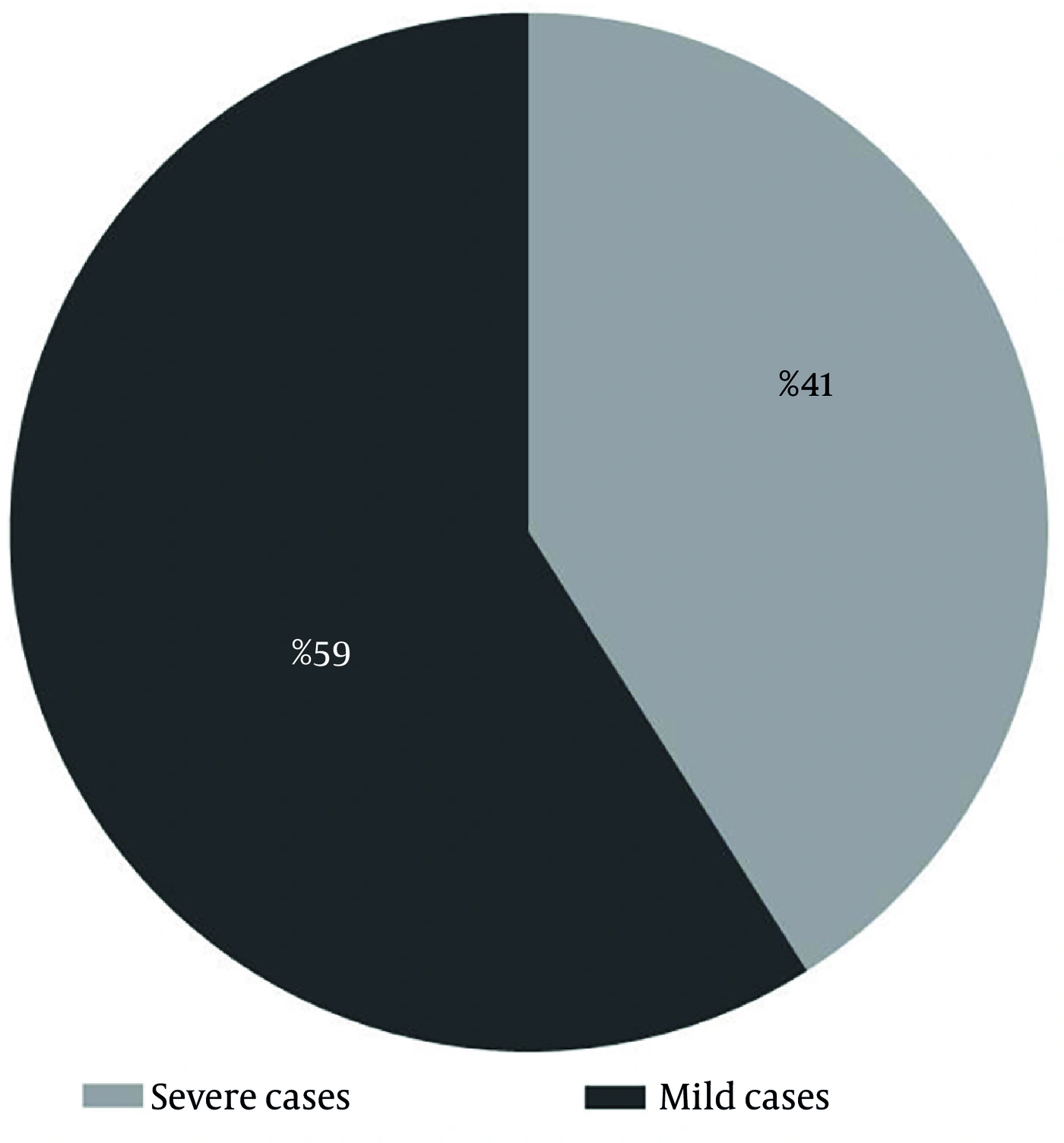
Figure 1.
Distribution of disease severity (mild vs severe) according to hospitalization status.
A comparison of age between HCWs and non-HCWs by disease severity showed that among patients with mild COVID-19 (nonhospitalized cases), HCWs were significantly older than non-HCWs (53.66 ± 12.32 vs. 43.65 ± 14.73 years; P = 0.01). In contrast, among hospitalized patients with severe disease, no significant difference in age was observed between HCWs and non-HCWs (43.45 ± 8.74 vs. 44.90 ± 12.53 years, respectively; P = 0.68).
4.2. Persistence of Anti-SARS-CoV-2 IgG Antibody Responses Over 9 Months
ELISA assays were performed to assess the antibody responses of SARS-CoV-2-infected individuals. Serum IgM and IgG levels were evaluated at 2 time points: the early stage of the disease and 9 months after infection. In this study, 100 of the 105 initially recruited patients (95.2%) had detectable SARS-CoV-2-specific antibody responses 21 days after a positive PCR test. Among all subjects, the median serum IgM, baseline IgG, and 9-month IgG titers were 3.5, 10, and 4.4 COI, with IQRs of 5, 11.6, and 5.9, respectively. Most patients (approximately 81%) remained seropositive after 9 months; however, the secondary IgG titer decreased from 10 to 4.4 COI relative to the primary IgG titer (Figure 2). After 9 months, 80.7% of males and 81.4% of females were seropositive. Our results indicated that 92.3% and 77% of HCWs and non-HCWs, respectively, remained seropositive over 9 months. Although HCWs showed a higher seropositivity rate, the difference was not statistically significant (P = 0.08). By age, antibody responses persisted for 9 months in 69.2% of patients < 30 years of age, 87.3% of those 30 to 59 years of age, and 62.5% of those ≥ 60 years of age; this difference was statistically significant (P = 0.03) (Table 2).
Table 2.
Percentage of Patients Seropositive for IgG Antibodies at 9-Month Follow-Up a
| Variables and Categories | Positive | Negative | P-Value |
|---|---|---|---|
| Sex | 0.93 | ||
| Male | 46 (80.7) | 11 (19.3) | |
| Female | 35 (81.4) | 8 (18.6) | |
| Age | 0.03 | ||
| < 30 | 9 (69.2) | 4 (30.8) | |
| 30 - 59 | 62 (87.3) | 9 (12.7) | |
| ≥ 60 | 10 (62.5) | 6 (37.5) | |
| Job | 0.08 | ||
| HCWs | 24 (92.3) | 2 (7.7) | |
| non-HCWs | 57 (77) | 17 (23) | |
| Comorbidity | 0.28 | ||
| Yes | 20 (74.1) | 7 (25.9) | |
| No | 61 (83.6) | 12 (16.4) | |
| Hospitalization | 0.68 | ||
| Yes | 34 (82.9) | 7 (17.1) | |
| No | 47 (79.7) | 12 (20.3) | |
| Intubation | 0.46 | ||
| Yes | 30 (76.9) | 9 (23.1) | |
| No | 51 (83.6) | 10 (16.4) |
a Abbreviations: HCWs, healthcare workers; non-HCWs, non-healthcare workers; IgG, immunoglobulin G.
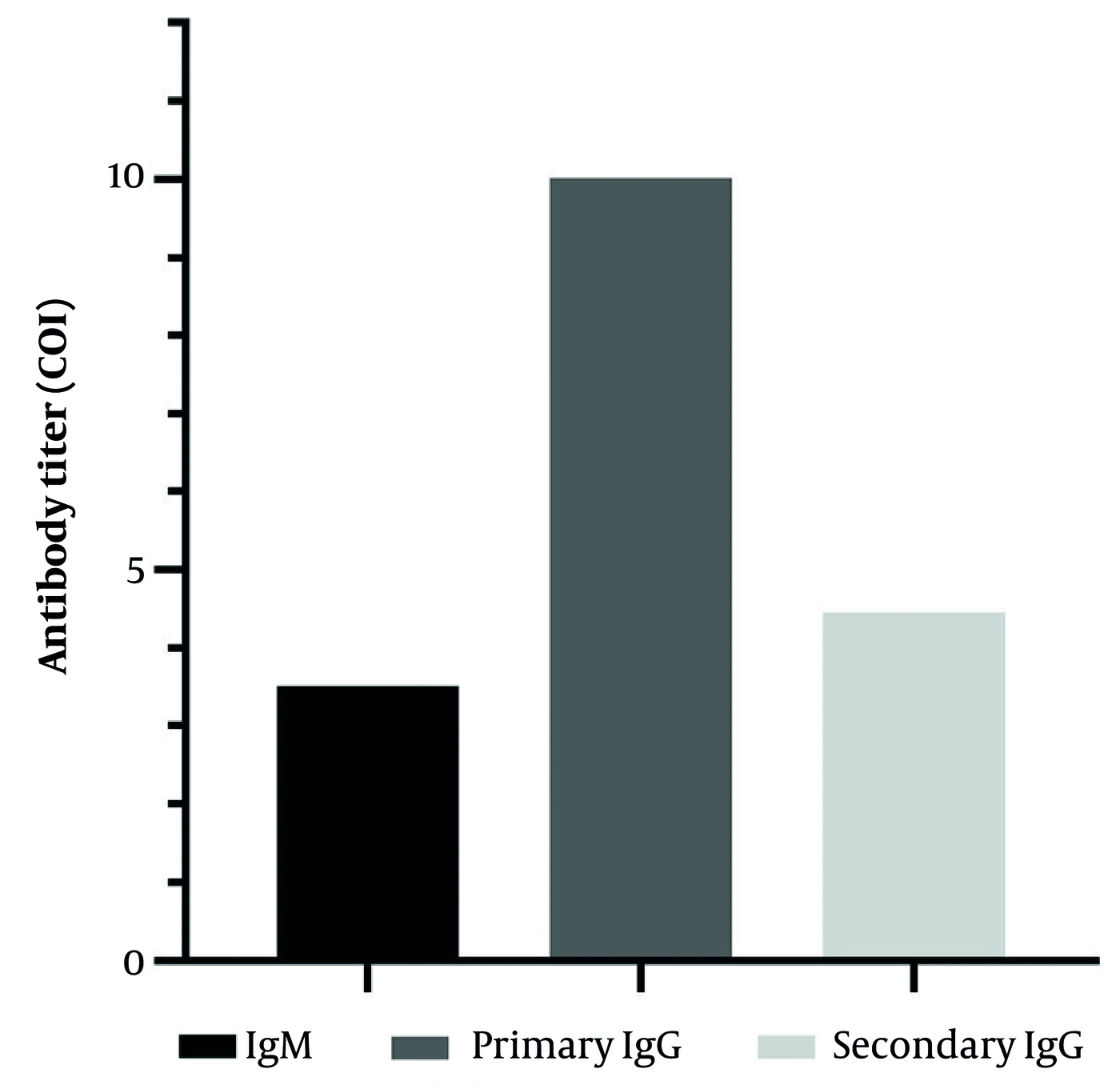
Figure 2.
SARS-CoV-2-specific IgM antibody levels at baseline and IgG antibody levels at baseline and 9-month follow-up. Abbreviations: COI, cut-off index; IgM, immunoglobulin M; IgG, immunoglobulin G.
Serum IgM, baseline IgG, and follow-up IgG titers varied according to patient characteristics, including occupational status; the complete results are presented in Table 3. Overall, IgG levels declined over the 9-month follow-up period while remaining detectable in most patients. The median serum IgM titer, primary IgG titer, and secondary IgG titer were 5.3, 10.9, and 4.5 in hospitalized patients, and 3, 9.29, and 4.4 in nonhospitalized patients, respectively. Hospitalized patients had significantly higher IgM titers than nonhospitalized patients (P = 0.006), whereas no significant differences were observed in primary or 9-month IgG levels (Table 3).
Table 3.
IgM, Baseline IgG, and 9-Month Follow-Up IgG Antibody Titers Stratified by Demographic and Clinical Characteristics a
| Variables and Categories | IgM | Primary IgG | Secondary IgG |
|---|---|---|---|
| Job | |||
| HCWs | 2.8 (6.19) | 7.35 (12.37) | 4.65 (2.71) |
| non-HCWs | 3.85 (4.82) | 10.65 (12.91) | 4.41 (7.66) |
| P-value | 0.23 | 0.09 | 0.91 |
| Sex | |||
| Male | 3.42 (5.42) | 9.46 (13.17) | 5.4 (7.90) |
| Female | 3.52 (3.99) | 10.05 (8.50) | 4.31 (3.84) |
| P-value | 0.7 | 0.91 | 0.13 |
| Age | |||
| < 30 | 5.6 (4.37) | 11.03 (9.9) | 3.9 (7.7) |
| 30 - 59 | 3.5 (5.57) | 10.4 (12) | 4.8 (6.9) |
| ≥ 60 | 3.0 (1.95) | 6.2 (6.9) | 4.0 (5.5) |
| P-value | 0.25 | 0.22 | 0.25 |
| Comorbidities | |||
| Yes | 3.0 (2.91) | 7.0 (12.48) | 4.4 (5.20) |
| No | 3.7 (5.24) | 10.9 (12.68) | 4.5 (7.49) |
| P-value | 0.2 | 0.1 | 0.36 |
| Intubation | |||
| Yes | 3.71 (5.27) | 10.24 (11.42) | 4.46 (5.63) |
| No | 3.01 (4.62) | 9.3 (11.90) | 4.37 (6.09) |
| P-value | 0.148 | 0.47 | 0.75 |
| Hospitalization | |||
| Yes | 5.3 (5.85) | 10.9 (10.33) | 4.5 (5.34) |
| No | 3.0 (3.25) | 9.29 (12.63) | 4.4 (6.28) |
| P-value | 0.006 | 0.27 | 0.86 |
a Values are expressed as Median (IQR). Abbreviations: HCWs, healthcare workers; non-HCWs, non-healthcare workers; IgM, immunoglobulin M; IgG, immunoglobulin G; IQR, interquartile range.
In the multivariable linear regression model with log-transformed IgG levels at 9 months as the dependent variable, higher primary IgG levels were independently associated with higher follow-up antibody concentrations (P < 0.001) (Table 4).
Table 4.
Multivariable Linear Regression Analysis of Factors Associated with SARS-CoV-2 IgG Antibody Levels at 9-Month Follow-Up a
| Variables | β Coefficient (B) | Standard Error (SE) | 95% Confidence Interval Lower / Upper | P-Value |
|---|---|---|---|---|
| Age | -0.003 | 0.007 | - 0.01 / 0.01 | 0.67 |
| Sex | -0.21 | 0.16 | - 0.53 / 0.11 | 0.19 |
| HCWs | -0.33 | 0.19 | - 0.71 / 0.04 | 0.08 |
| Comorbidity | 0.11 | 0.22 | - 0.33 / 0.55 | 0.61 |
| Hospitalization | -0.04 | 0.16 | - 0.38 / 0.29 | 0.79 |
| Primary IgG | 0.59 | 0.09 | 0.40 / 0.78 | < 0.001 |
a Abbreviations: HCWs, healthcare workers; IgG, immunoglobulin G; CI, confidence interval.
4.3. Associations of Serum IgM and IgG Levels with Patient Characteristics
The difference between the first and second IgG values, measured at the onset of infection and 9 months later, was calculated for all patients (Table 5). The associations of serum IgM and primary and secondary IgG levels with sex, age, occupation, and hospitalization were assessed. A significant association was observed between job and age, with a subsequent decrease in antibody titer.
Table 5.
Differences in IgG Antibody Titers Between Baseline and 9-Month Follow-Up According to Demographic and Clinical Characteristics a
| Variables and Categories | IgG Titer Difference | P-Value |
|---|---|---|
| Sex | 0.91 | |
| Male | 3.1 (8.22) | |
| Female | 5.1 (7.59) | |
| Job | 0.028 | |
| HCWs | 0.85 (9.14) | |
| non-HCWs | 4.24 (7.66) | |
| Comorbidity | 0.1 | |
| Yes | 2.52 (7.10) | |
| No | 3.96 (8.59) | |
| Intubation | 0.47 | |
| Yes | 3.25 (7.6) | |
| No | 4.17 (9.1) | |
| Hospitalization | 0.27 | |
| Yes | 3.7 (8.07) | |
| No | 2.8 (8) | |
| Drug history | 0.495 | |
| Yes | 3.75 (8.56) | |
| No | 3.49 (8.27) |
a Values are expressed as median (IQR). Change in IgG titer was calculated as baseline minus 9-month follow-up IgG levels. Abbreviations: HCWs, healthcare workers; non-HCWs, non-healthcare workers; IQR, interquartile range.
Serum IgM and IgG levels were evaluated across age groups (< 30, 30 - 59, and ≥ 60 years). We found a statistically significant association between age and the differences in primary and secondary IgG levels in the studied groups. The difference in IgG levels between the first and second values by age group (< 30, 30 - 59, and ≥ 60 years) was 7.35, 3.74, and 2.71, respectively. Evaluation of the difference in IgG levels between the first and second values indicated that patients < 30 years had higher initial antibody levels than those aged 30 - 59 or ≥ 60 years. However, patients aged < 30 years showed a higher reduction rate in antibody titer than those aged 30 - 59 and ≥ 60 years; this difference was statistically significant (P = 0.038, P = 0.03) (Figure 3C).
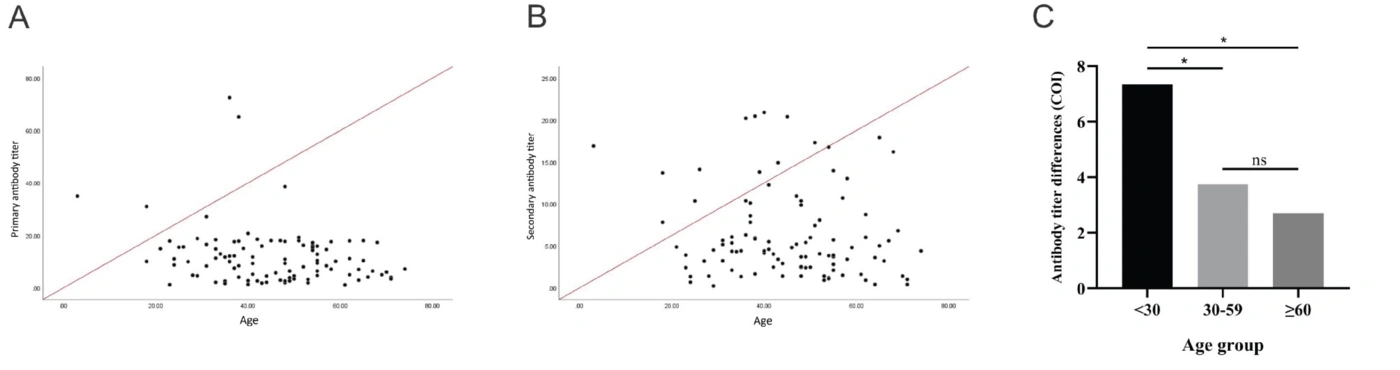
Figure 3.
Association between age and SARS-CoV-2 IgG antibody levels: A, correlation between age and baseline IgG titers; B, correlation between age and 9-month follow-up IgG titers; and C, comparison of changes in IgG titers among age groups (< 30, 30 - 59, and ≥ 60 years). Abbreviations: COI, cut-off index; IgG, immunoglobulin G.
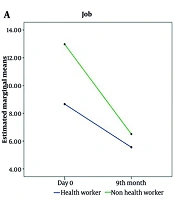
Over the 9-month follow-up period, antibody titers declined noticeably among the study patients. Although this downward trend was observed across all subgroups, the extent of decline was not uniform, and a lower reduction in antibody levels was observed in certain occupational groups (P = 0.028) (Figure 4A). Despite declining antibody titers over time, most patients remained seropositive at the end of follow-up. The magnitude of this decrease was also higher in cases with a history of hospitalization than in patients without a history of hospitalization at the second stage of measurement (Figure 4B). Furthermore, the rate of reduction in IgG titer was higher in infected individuals without a history of intubation than in the intubation group (Figure 4C). In addition, the decrease in IgG titer in patients without comorbidity was greater than that in the comorbid group (Figure 4D and Table 5), although these differences were not statistically significant in the last three cases (Table 6).
Table 6.
Magnitude of Decrease in IgG Antibody Titers According to Underlying Comorbidities a
| Underlying Disease | Titer Differences | Minimum | Maximum | P-Value |
|---|---|---|---|---|
| Cardiovascular | 5.14 (10.94) | -0.80 | 14.23 | 0.35 |
| Diabetes | 1.75 (6.51) | -7.52 | 10.17 | 0.35 |
| Thyroid disease | 3.60 (7.14) | -1.80 | 11.36 | 0.35 |
| None | 3.64 (8.34) | -4.50 | 52.30 | 0.35 |
a Values are expressed as median (IQR).
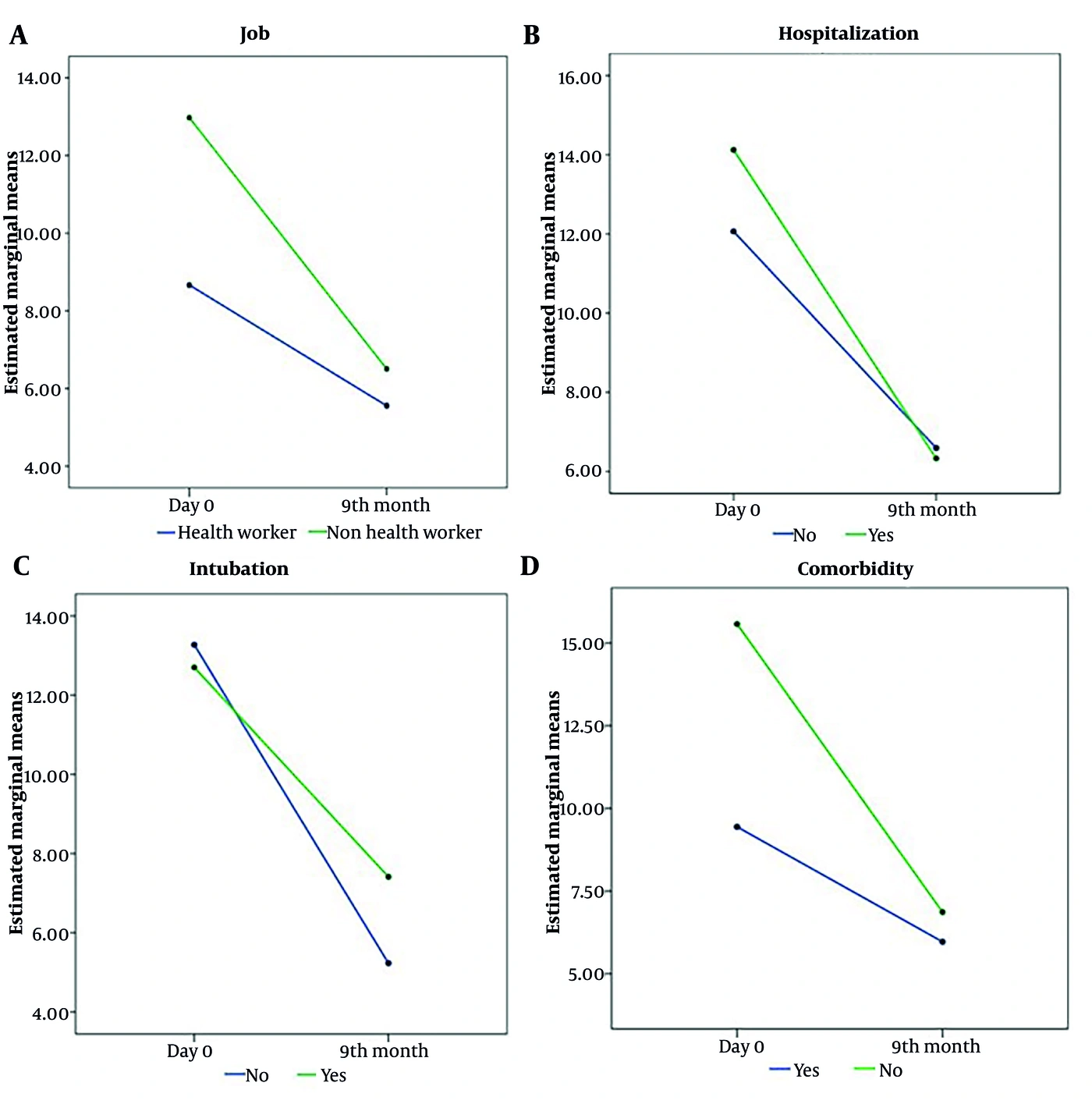
Figure 4.
Changes in IgG antibody titers between baseline and 9-month follow-up according to A, occupation (HCWs vs non-HCWs); B, hospitalization status; C, intubation status; and D, presence of comorbidities. IgG: immunoglobulin G.
4.4. COVID-19 Reinfection
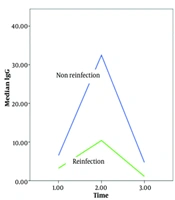
Of the enrolled patients, only two were re-infected. Eight months after the onset of symptoms from the primary infection and recovery from the disease, these patients developed COVID-19 symptoms, and the PCR test was positive.
5. Discussion
Gaining insight into the magnitude, quality, and duration of humoral responses during SARS-CoV-2 infection and the convalescent period is important for predicting protection against COVID-19. For MERS-CoV and SARS-CoV, antibodies have been shown to persist for at least 2 years after infection (22-26). In this regard, evaluation of the level of neutralizing antibodies (NAbs) that block viral entry into mucosal epithelial cells could be a key factor in defining SARS-CoV-2, and convalescent plasma therapies have been considered a strategy for COVID-19 treatment. Understanding the relationships among neutralizing antibody responses, disease severity, and underlying diseases is fundamental to our understanding of COVID-19 infection and its treatment (27-29). Here, we assessed SARS-CoV-2-specific antibody responses and their stability in patients up to 9 months after the onset of COVID-19 infection. It was found that approximately 95.2% of COVID-19 patients who tested positive by PCR were seropositive for SARS-CoV-2-specific antibody responses after 21 days. However, the level of SARS-CoV-2-specific antibodies declined markedly after 9 months, and approximately 81% of patients remained seropositive at 9 months after infection.
A large study conducted by Pollán et al. in Spain reported a seroprevalence of approximately 90% at fourteen days following a positive PCR test (30), which is consistent with recently published reports on confirmed COVID-19 cases, in which 99% have an antibody response (31). Based on monitoring of specific anti-SARS-CoV-2 antibodies, serological tests appear to be comparably useful methods to detect infected patients and, consequently, to study the clinical course, diagnosis, and treatment in both the general group and those working in high-risk conditions, such as HCWs (32).
More importantly, measurable differences in the humoral response may account for reactivation and induction of the immune system following re-exposure to the virus in both the general population and HCWs. Serum COVID-19 antibody titers and persistent immunity are not currently known. Serological assessment and analysis of antibody levels can provide data on infection status, which is essential for treatment, prevention, and restriction of consequences and for safety in the population (33, 34). A report by Tian et al. revealed that robust antibody responses to SARS-CoV-2 infection varied between 154 and 193 days in more than 480 recovered cases, and approximately 90% of recovered cases showed a positive response of virus-specific spike glycoprotein IgG (s-IgG), although the percentage of positive spike glycoprotein IgM (s-IgM) was reported as 63% (35).
A cohort study of 214 patients with COVID-19 revealed that approximately 68% and 70% of cases were positive for rN-specific IgM and IgG, respectively, and that 77% and 74% were positive for rS-specific IgM and IgG, respectively. This study reported that recognition of rS-Specific-IgM is considerably more sensitive than rN-specific IgM because of the probable higher immunogenicity potency of the S protein than the N protein (36). Fotouhi et al. confirmed that IgG assessment was positive in more than 80% of their infected cases and that this antibody persisted in nearly all patients for 6 months. This IgG profiling is remarkably useful for clinical detection, vaccine design and production, and re-infection issues (37).
A further study of 343 North American COVID-19 cases indicated that antibody responses to the virus’s spike (S) protein can persist for more than 120 days after symptom onset. The average time to detect seroconversion was reported as 12 days in this study. Although the antibodies (IgA and IgM) against RBD were relatively short-lived, the anti-RBD IgG response gradually declined over 90 days. The study showed that the generated IgG antibodies against the SARS-CoV-2 RBD are strongly associated with anti-S neutralizing antibody titers. It was also verified that this antibody can persist for 270 days in more than 80% of cases, although its level decreased markedly over that timeframe. A growing number of research studies using more specific tests have elucidated different presentations and immune system interactions with SARS-CoV-2; however, variations and sampling patterns in populations remain unclear and require further study (38).
In our study, the decline in IgG levels over time appeared to be less pronounced among HCWs than among non-HCWs. One possible explanation for this observation is repeated occupational exposure to SARS-CoV-2 or related viral antigens, which may help maintain antibody responses. However, exposure intensity, asymptomatic interim infections, and re-exposure events were not directly measured in the present study. Therefore, this interpretation should be considered speculative and hypothesis-generating rather than evidence of a causal mechanism.
Moreover, evaluation of the primary IgG/secondary IgG ratio in different age groups showed a change in the ratio from 2.75 in the age group < 30 to 1.5 in the age group ≥ 60, indicating a higher level of primary immune response in patients aged < 30 years than in patients aged 30 - 59 and ≥ 60 years.
As reported by Hu et al., the symptoms of HCWs were the same as those recorded in the general population; fever, cough, fatigue, and dyspnea were reported in more than 80%, 65%, 40%, and 20%, respectively (39). In this study, cough, and myalgia were more common among HCWs than among non-HCWs. The overall condition of COVID-19 was good in this study, and most HCWs had mild symptoms of infection. It is clear that broader research on the persistence and seroconversion of IgG antibodies is required to provide a reliable evaluation scale (40 - 42). Although studies indicate that IgG antibodies can remain and persist for over 9 months, this does not mean that they have the same protective capacity over this time (43, 44).
Our study identified only two cases of suspected reinfection during the follow-up period. Although anti-SARS-CoV-2 IgG antibodies remained detectable in a substantial proportion of patients up to 9 months after infection, the present study did not assess neutralizing antibody activity or clinical protection against subsequent infection. Therefore, persistence of detectable IgG antibodies should not be interpreted as direct evidence of protective immunity. Nevertheless, the observed durability of the antibody response provides valuable information about the longitudinal immune response following SARS-CoV-2 infection and may inform future studies investigating correlates of protection and long-term immune memory.
This study has several limitations that should be considered when interpreting the findings. First, patients were recruited from a single-center COVID-19 registry in Ardabil, Iran, which may limit the generalizability of the results to other populations and geographic regions. Second, the relatively modest sample size may have reduced the statistical power for subgroup analyses, particularly for reinfection events. Third, healthcare worker status was determined by occupational category rather than by direct measurement of individual exposure risk, which may have resulted in exposure misclassification. Fourth, antibody levels were measured at only two time points, preventing a more detailed evaluation of antibody kinetics during the follow-up period. Another limitation is that information regarding COVID-19 vaccination during the follow-up period was not systematically collected. Therefore, the potential impact of vaccination on the persistence of antibody responses could not be assessed. Moreover, asymptomatic interim infections may have occurred but were not systematically investigated. Therefore, the factors contributing to the persistence of antibody responses over time could not be fully determined. Finally, antibody measurements were limited to serological assays and did not assess neutralizing antibody activity or cellular immune responses. In addition, viral genomic sequencing was not available to confirm reinfection events. Although multivariable analyses were performed to account for potential confounding factors, residual confounding cannot be completely excluded in this observational study.
5.1. Conclusions
In conclusion, this study demonstrated that anti-SARS-CoV-2 antibodies remained detectable in most patients 9 months after infection, providing insight into the persistence of antibody responses following COVID-19. Nevertheless, a significant decline in antibody levels was observed over time. Although differences in antibody decline were noted across patient subgroups, baseline IgG level was the only independent predictor of antibody persistence at 9 months in multivariable analysis. Overall, our findings suggest that declining antibody titers are a common characteristic of COVID-19 infection and underscore the importance of continued vaccination strategies and adherence to preventive public health measures.