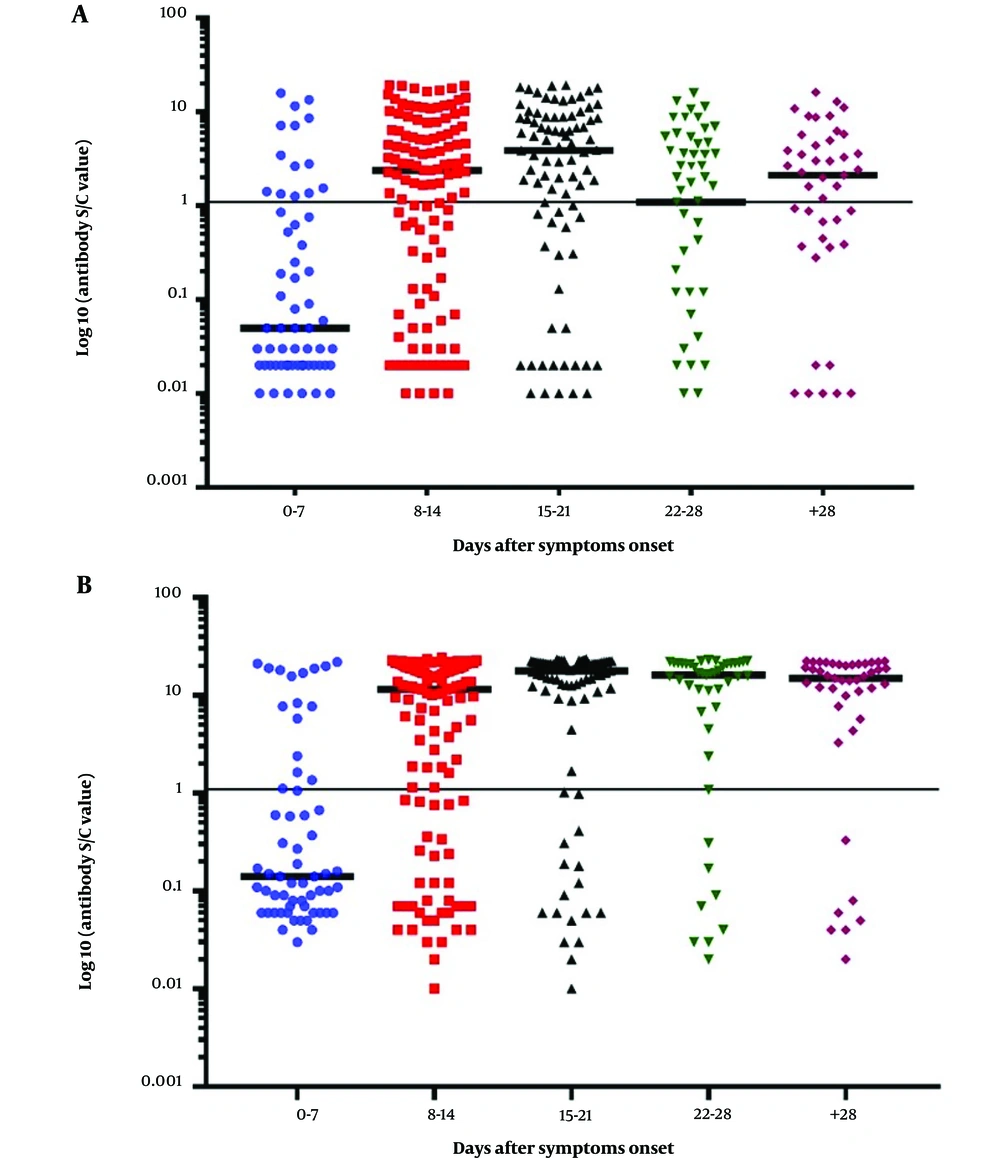
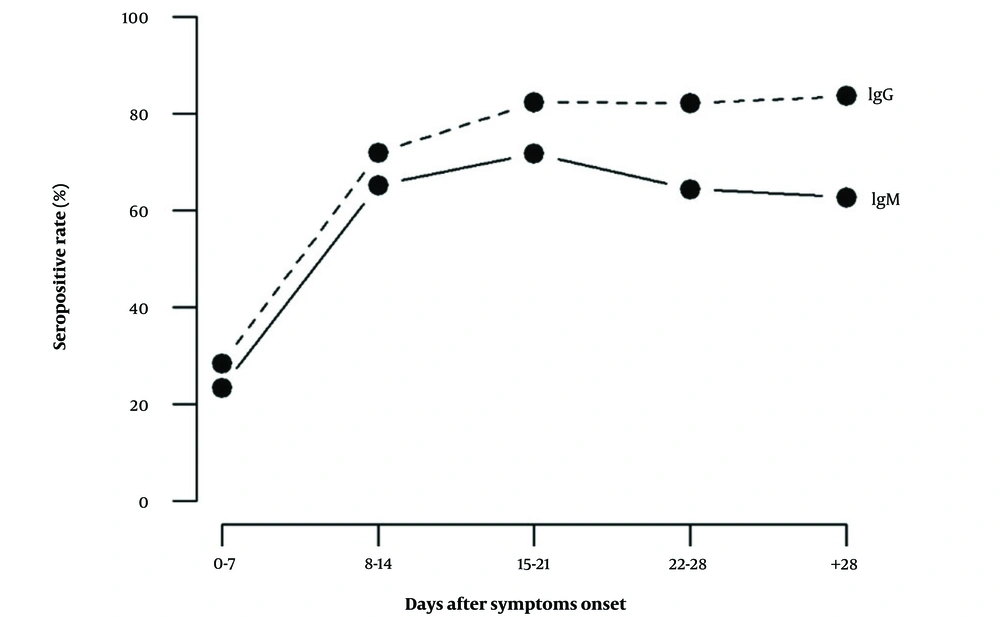
The primary objective of this current cohort study was to investigate the antibody profiles of nucleocapsid, spike, and RBD proteins, as well as SARS-CoV-2 neutralizing antibodies (NAs) in Iranian COVID-19 patients and vaccine recipients. The kinetics of serum antibodies in COVID-19 patients indicated that the IgM titer increased until 15 - 21 days after symptom onset and then started to decline. Conversely, the IgG titer increased during the 15 - 21 day interval and remained stable until the last time point. Overall, the observed profiles of IgM and IgG antibodies align with findings from other studies (
14,
15).
Additionally, the kinetics of anti-SARS-CoV-2 IgM and IgG responses revealed that seroconversion of IgG occurred prior to IgM in 11.9% of patients. Furthermore, 30.59% of COVID-19 patients simultaneously developed IgG and IgM antibodies at the first sampling time after symptom onset. In contrast to our results, several studies have reported synchronous seroconversion profiles of anti-SARS-CoV-2 IgG and IgM, or that IgM seroconversion occurs relatively earlier (
6,
16-
19). However, in line with our findings, some studies have reported earlier IgG responses than IgM (
14,
19,
20). This discrepancy may be due to cross-immunity to SARS-CoV-2 (
21), possibly arising from amino acid sequence homology between SARS-CoV-2 spike and nucleocapsid proteins and those of other Coronaviridae members (
19,
22).
The RT-PCR test exhibited the highest sensitivity in hospitalized COVID-19 patients within the first 7 days of symptom onset, with a sensitivity of 76.1%. In contrast, seroconversion was positive in only 23.3% and 28.3% of patient sera for IgM and IgG, respectively, during the same time frame. Consistent with other studies (
6,
23,
24), as the disease progressed, the sensitivity of serological tests increased, while the sensitivity of RT-PCR gradually declined to zero on the 36th day after sampling. This inconsistency is attributed to the initial lack of expansion of antibody responses in the early stages of infection (
23). Our recent cross-sectional study on COVID-19 patients also demonstrated that the sensitivity of serological assays improved over time, with IgM and IgG test sensitivities increasing from 28.0% and 34.0% within 7 days of symptom onset to 51.3% and 61.5% beyond 7 days, respectively (
25).
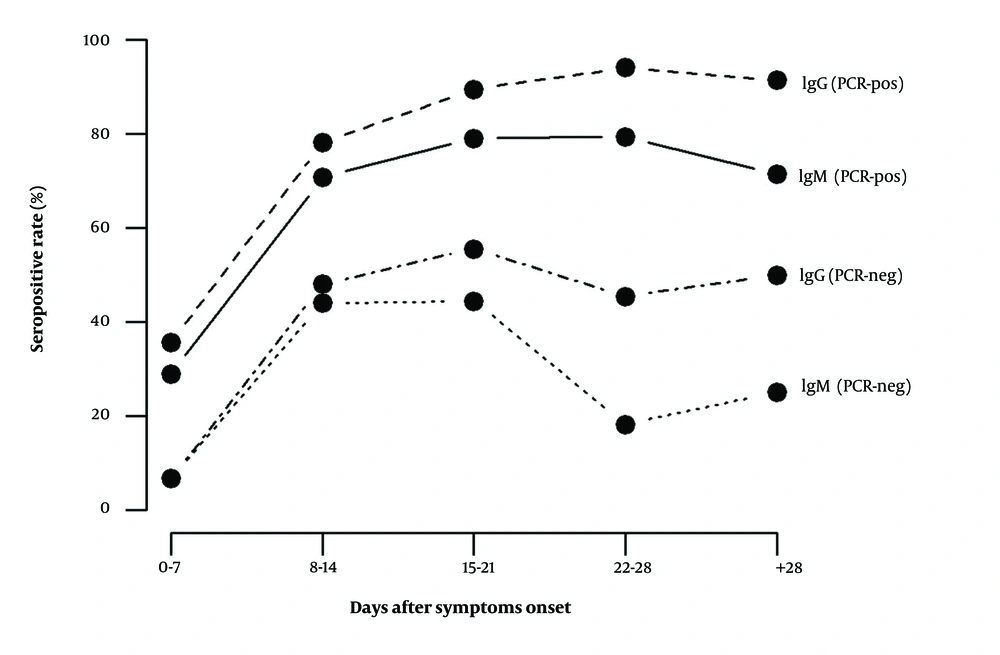
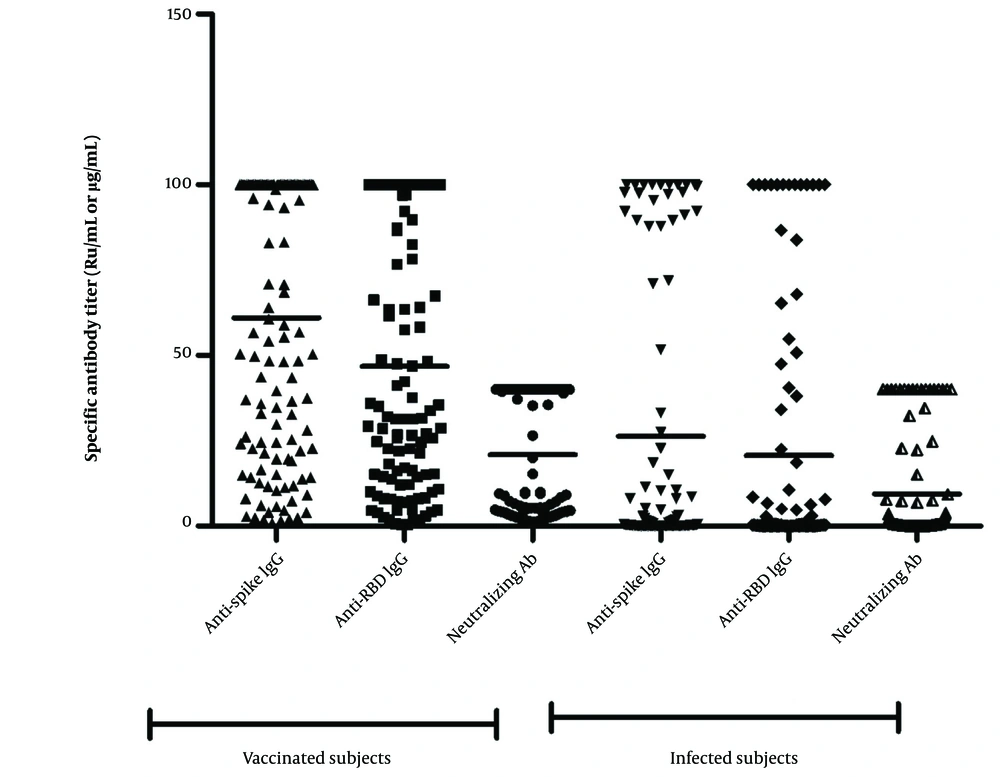
Given the varying sensitivity of these two tests at different stages of the disease, combining serological and molecular assays could enhance the diagnosis of SARS-CoV-2, particularly in RT-PCR negative cases. In line with our findings, the percentage of IgM and IgG seropositive patients was higher in RT-PCR-confirmed cases at all time intervals, with serum titers peaking at 15-21 days after symptom onset (
26-
28). Among RT-PCR-negative patients, who were admitted based on CT imaging and clinical signs and symptoms, SARS-CoV-2-specific IgM and IgG were detected in only 6.7% (1/15) of cases one-week post-symptom onset. Due to their negative molecular and serological results, we could not classify these individuals as COVID-19 cases, highlighting the importance of serological assays for more accurate assessments of COVID-19 cases (
29). Additionally, antibody detection could be used alongside RT-PCR testing for diagnosing cases with negative RT-PCR results (
19). In our study, we also assessed the titers of anti-spike and anti-RBD IgGs in both vaccinees and COVID-19 infected patients. A limitation of our study is the absence of anti-spike IgG and anti-RBD IgG testing in all cohort samples, which would have provided a clearer picture of antibody profile changes, enabling a more effective comparison between the COVID-19 infected and vaccinated groups. The mean levels of anti-spike and anti-RBD IgGs and NAs were significantly lower in infected patients compared to vaccines. Therefore, anti-SARS-CoV-2 IgGs were produced more efficiently in healthy vaccinees than through natural immunity to SARS-CoV-2 antigens in infected patients. This difference might be explained by the disparity in innate and adaptive immune cell activity in infected patients, impacting their ability to mount a humoral response to SARS-CoV-2. Lymphopenia and alterations in the functional commitment of T follicular helper cells (Tfh) (
30) occur in COVID-19, potentially hindering the generation of an appropriate antibody response to SARS-CoV-2 antigens. However, the exact reasons for the difference in IgG response between infection and vaccination warrant further investigation.
Interestingly, mean concentrations of anti-spike and anti-RBD IgGs were higher in vaccinated individuals with a history of prior COVID-19 infection compared to those without previous infection. This aligns with the findings of Angyal et al., who investigated T cell and anti-spike IgG antibody responses in previously infected and SARS-CoV-2-naive healthcare workers who received a single dose of the BNT162b2 vaccine. They found that one vaccine dose elicited higher anti-spike IgG titers in individuals with previous SARS-CoV-2 infection than in SARS-CoV-2-naive individuals (
31). Additionally, Buonfrate et al. reported that the median anti-RBD IgG titer following the first dose of the BNT162b2 mRNA COVID-19 vaccine was significantly higher in healthcare workers with a confirmed previous SARS-CoV-2 infection compared to those without prior infection (
32).
Neutralizing antibodies (NAs) can directly inhibit SARS-CoV-2 from entering target cells (
33). Accordingly, producing functional NAs at effective levels is a crucial component of protective immunity. Consistent with anti-spike and anti-RBD IgG findings, NAs were more abundant in vaccine recipients compared to COVID-19 infected patients. Vaccine recipients with a history of COVID-19 generated NAs more effectively than those with no prior infection. This is consistent with other studies reporting lower NAs in individuals vaccinated with CoronaVac who were naive to SARS-CoV-2 compared to vaccine recipients with a history of COVID-19 (
34,
35). Early studies on mRNA vaccines also suggested that a single dose may be sufficient for individuals with a history of COVID-19, as strong antibody responses were observed after the first dose.
These studies have demonstrated robust antibody responses to the first dose of the vaccine in individuals who have recovered from COVID-19 (
36-
39). Therefore, vaccination can enhance memory B-cell responses specific to SARS-CoV-2 that were generated during a COVID-19 infection. In this regard, 94.1% of seronegative vaccine recipients for neutralizing antibodies (NAs) had no prior COVID-19 infection. Furthermore, 9 out of 17 individuals seronegative for NAs were also seronegative for anti-RBD and anti-spike IgG; all of these individuals had no history of COVID-19 infection. It is important to note that the genetic diversity among individuals, particularly in different allelic versions of HLA genes and other genetic loci, may account for the observed variations in antibody and T-cell responses across different studies (
40,
41). Neither anti-RBD nor anti-spike antibodies were detected in 7.1% of the vaccinated samples, among which 3 individuals had received two doses of the Sinopharm vaccine.
Additionally, within the vaccinated subgroups, 6.1% (4 out of 66) and 37.5% (3 out of 8) were seronegative for neutralizing antibodies (NAs) after receiving two doses of the Sinopharm and COVAXIN vaccines, respectively. This result may be attributed to the limited efficacy of inactivated virus vaccines in activating SARS-CoV-2-specific T-cell responses, which are crucial for generating IgG specific to spike and RBD proteins, as well as NAs (
8). It is evident that none of the available vaccines for SARS-CoV-2 are 100% effective and do not provide immediate protection post-vaccination.
5.1. Conclusions
In conclusion, the antibody profiles of IgM and IgG to SARS-CoV-2 demonstrated that the passage of time after symptom onset improves the sensitivity of serological assays, enhancing the diagnosis of COVID-19. The pattern of IgM and IgG detection suggests that in most patients, IgM and IgG can be detected simultaneously. Vaccine recipients displayed higher titers of anti-spike and anti-RBD IgGs and NAs compared to COVID-19 patients. Most seronegative vaccine recipients for NAs had no previous COVID-19 infection. Thus, vaccination appears to boost the immune response to prior SARS-CoV-2 infection.