
1. Context
First described by Paul Ehrlich in 1878 on the basis of their distinctive granule-filled (“fattened”) cytoplasm, mast cells represent an ancient and versatile immune cell lineage (1, 2). For more than a century, they were viewed predominantly in the context of allergy, chiefly because of their role in IgE-mediated anaphylaxis and hypersensitivity (2). Contemporary research has substantially expanded this view, revealing mast cells as multifunctional sentinel cells and key regulators of physiological and pathological processes, ranging from innate immunity to tissue remodeling (3, 4).
Located at host-environment interfaces, including the skin, mucosal barriers, and perivascular spaces, mast cells are among the first responders to pathogens, injury, and other immunological insults (4, 5). Their longevity and relative stability in tissues enable them to exert sustained effects on their microenvironment, and their numbers increase through hyperplasia in chronic inflammatory, fibrotic, and autoimmune conditions (3). Mast cells originate from hematopoietic stem cells in the bone marrow and complete their differentiation in peripheral tissues under the influence of local cytokines, particularly stem cell factor, which is essential for their survival and function (4, 6).
The broad functional repertoire of mast cells reflects their diverse activation pathways and potent mediator release. Although the high-affinity IgE receptor (FcεRI) is the best-characterized activation pathway, mast cells can also be activated through Toll-like receptors, complement components, neuropeptides, and cytokine receptors (7). Activation initiates a rapid, two-phase response: 1) the immediate release of preformed granule mediators, including histamine, proteases such as tryptase and chymase, heparin, and presynthesized TNF-α; and 2) the subsequent de novo synthesis and release of lipid mediators, including leukotrienes and prostaglandins, as well as cytokines, chemokines, and growth factors such as VEGF and TGF-β (6, 8, 9). These mediators enable mast cells to regulate vascular permeability, leukocyte recruitment, smooth muscle contraction, fibrosis, and angiogenesis (9, 10).
Disruption of the finely regulated balance of the immune system, manifested as the loss of self-tolerance and an attack on host tissues, leads to autoimmune diseases such as rheumatoid arthritis (RA), systemic lupus erythematosus (SLE), and multiple sclerosis (MS) (4, 11). Recent findings indicate that gut microbiota-mediated inflammatory processes contribute to the induction and persistence of autoimmunity, thereby adding to the network of immune dysregulation in which mast cells participate (12). Increasing evidence implicates mast cells in the pathogenesis of these conditions (13, 14). Infection-related immune dysregulation is also increasingly recognized as a relevant context for mast cell activation in autoimmune diseases, because infectious agents can impair self-tolerance and promote inflammatory pathways involving mast cell mediators (15). Mast cell numbers are elevated in affected tissues, including the salivary glands of patients with Sjögren's syndrome, the synovium of patients with RA, and the skin of patients with lupus. Their inflammatory mediators, such as tryptase, are present at high levels in the synovial fluid of patients with RA and SLE and in the cerebrospinal fluid of patients with MS, suggesting an active role rather than a bystander role (13).
This review aims to synthesize current knowledge about the multifaceted roles of mast cells in autoimmune diseases. We examine their activation by autoantibodies and self-antigens, the release of mediators that exacerbate inflammation and tissue damage, and their bidirectional interactions with T cells, B cells, and dendritic cells that amplify autoimmune responses. By elucidating these mechanisms, we seek to characterize mast cells as central orchestrators of autoimmunity and identify potential therapeutic approaches for these complex diseases. Targeting mast cell activation, specific mediators, or interactions with other cells may help interrupt the core pathophysiology of autoimmune disorders and extend treatment beyond symptomatic relief.
2. Evidence Acquisition
This article is a narrative review. A comprehensive literature search was conducted to identify studies addressing the role of mast cells in autoimmune and inflammatory diseases, with particular emphasis on neuroinflammation and therapeutic targeting. PubMed/MEDLINE, Scopus, Web of Science, Embase, the Cochrane Library, and Google Scholar were systematically searched for papers published between June 1997 and July 2026. The search combined controlled vocabulary (MeSH and Emtree) and free-text terms. The core search string was as follows: ("mast cell" OR "mastocyte" OR "mast cells (MC)") AND ("autoimmun" OR "autoimmune disease" OR "rheumatoid arthritis" OR "systemic lupus erythematosus" OR "lupus" OR "multiple sclerosis" OR "Sjogren" OR "juvenile dermatomyositis") AND ("neuroinflammation" OR "Alzheimer" OR "neurodegener" OR "blood-brain barrier" OR "MRGPRX2" OR "FcεRI" OR "IgE" OR "bruton's tyrosine kinase (BTK) inhibitor" OR "cytokine" OR "therapeutic target" OR "treatment"). Additional searches for therapeutic strategies used terms such as "mast cell stabilizer", "mast cell depletion", "nanoparticle", "nanotherapy", "biologic", "omalizumab", "ligelizumab", and "quilizumab".
Studies were eligible if they were peer-reviewed original research, clinical trials, meta-analyses, systematic reviews, or preclinical studies, including in vitro studies and animal models, and were published in English. Eligible studies addressed mast cell biology, activation pathways, mediator release, interactions with immune cells, or therapeutic modulation in autoimmune, inflammatory, or neurodegenerative conditions. Non-English publications, conference abstracts without full text, editorials, letters without original data, duplicate records, and studies not directly relevant to mast cells in autoimmunity or neuroinflammation were excluded. Narrative reviews were included only when they provided comprehensive mechanistic insights unavailable in primary research.
Two reviewers independently screened titles and abstracts. The full texts of potentially eligible records were then assessed against the inclusion criteria, and disagreements were resolved through discussion. Data were extracted on study design, disease model or population, mast cell source and phenotype, activation pathways, mediators, therapeutic interventions, and main outcomes. Findings were synthesized narratively because of methodological and clinical heterogeneity.
The methodological quality of included studies was critically appraised according to study design. Randomized controlled trials were assessed using the Cochrane risk-of-bias tool, whereas preclinical studies were evaluated for reporting of randomization, blinding, and sample size. Given the narrative nature of this review, no quantitative meta-analysis was performed.
3. Results
3.1. The Pivotal Role of Mast Cells in Autoimmune Pathogenesis
Beyond their established role in allergy, MCs are increasingly recognized as contributors to the initiation and progression of a broad range of autoimmune diseases. Their location at barrier surfaces and in connective tissues, together with their extensive repertoire of preformed and newly synthesized mediators, enables them to coordinate inflammatory responses, disrupt tissue integrity, and modulate adaptive immunity. This section describes the mechanisms through which MCs contribute to pathology in key autoimmune conditions. Table 1 summarizes the main evidence and mechanisms.
Table 1.
Mast Cell Involvement in Autoimmune and Inflammatory Diseases: Key Evidence and Mechanisms a
| Diseases | Histopathological Evidence | Mechanisms of Mast Cell-Driven Pathogenesis | Notable Mediators and Pathways | Clinical Implications | References |
|---|---|---|---|---|---|
| Multiple Sclerosis (MS)/ Experimental Autoimmune Encephalomyelitis (EAE) | ↑MCs in plaques and meninges; ↑Tryptase in CSF | 1. BBB disruption 2. Direct demyelination and axonal injury 3. Th17 polarization and Treg suppression | Histamine, VEGF, Tryptase, Chymase, TNF-α, IL-6 | Exacerbates demyelination and neuronal oxidative stress; dual pro-/anti-inflammatory roles in EAE models | (16-18) |
| Rheumatoid Arthritis | ↑Activated MCs in synovium | 1. Synovitis via pro-inflammatory cytokines 2. Cartilage degradation and pannus formation 3. Pain induction via PAR-2 activation | TNF-α, IL-1β, IL-6, IL-17, Tryptase, Chymase | Joint destruction, cartilage degradation, systemic inflammation | (6, 22-30) |
| Cutaneous Lupus (DLE/SCLE) | ↑MCTC and MCT subtypes in lesional skin | 1. Neutrophil chemotaxis 2. Vasodilation and edema 3. IgE autoantibody-mediated activation | Histamine, Chemokines (e.g., for neutrophils) | Cutaneous lesions, renal involvement, systemic organ damage | (30, 32, 33) |
| Bullous Pemphigoid and Pemphigus Vulgaris | ↑MC density in lesional skin | 1. Proteolytic cleavage of BM proteins (e.g., BP180) 2. Neutrophil recruitment 3. Vascular leakage and edema | Tryptase, Chymase, TNF-α, IL-8, Histamine | Mucocutaneous erosions, non-itchy lesions | (34-36) |
| Type 1 Diabetes (T1D) | ↑MC infiltration in islets and pancreatic tissue | 1. β-cell toxicity and dysfunction 2. Recruitment of autoreactive T cells 3. Potential regulatory role (context-dependent) | TNF-α, IL-6, Chemokines | Hyperglycemia, insulitis, diabetic complications | (39-41) |
| Guillain-Barré Syndrome | (Potential role based on biology) | 1. Direct nerve damage via proteases 2. Blood-nerve barrier disruption 3. Molecular mimicry-driven activation | Tryptase, Chymase, Histamine, VEGF | Ascending paralysis, respiratory failure | (42, 43) |
| Graves' Ophthalmopathy | Pronounced MC infiltration in orbit | 1. Fibrosis and tissue remodeling (GAG deposition) 2. Inflammation and pain | Tryptase, TNF-α, IL-1β, Histamine | Ophthalmopathy, eyelid swelling, vision loss | (44, 45) |
| Sjögren’s Syndrome | MCs in glands, near nerves/ducts | 1. Glandular dysfunction 2. Chronic inflammation maintenance 3. Disruption of neural secretion signals | Histamine, Proteases, IL-1, IL-6, TNF-α | Dry eyes/mouth, systemic fatigue | (46, 47) |
| Inflammatory Bowel Disease | Mucosal MCs; ↑Mediators in stool | 1. Epithelial barrier disruption 2. Visceral pain and motility changes (PAR-2) 3. Innate immune amplification (e.g., via P2X7) | Tryptase, Histamine, IL-6, ATP | Diarrhea, abdominal pain, weight loss | (36, 49-52) |
| Psoriasis | Perivascular MC accumulation (early) | 1. Vascular activation and leukocyte recruitment 2. Amplification of IL-23/Th17 axis 3. Suppression of Treg function | TNF-α, VEGF, IL-22, IL-17A | Erythematous plaques, Koebner phenomenon | (53-55) |
| Systemic Vasculitides | ↑MCs and degranulation in vessel walls | 1. Neutrophil recruitment 2. Vessel wall destabilization 3. Amplification of inflammation | Tryptase, Chymase, IL-8, LTB4, Histamine, TNF-α | Organ ischemia, cutaneous lesions, glomerulonephritis | (56-59) |
| Inflammatory Myopathies (PM/DM) | ↑MCs in muscle and skin lesions | 1. Direct myofiber damage 2. Pruritus (e.g., via IL-31 in JDM) 3. Recruitment of cytotoxic T cells | Proteases, IL-31, Chemokines, TNF-α | Proximal weakness, dermatomyositis rashes | (60-63) |
| Alzheimer’s Disease | ↑MCs in brain early in pathology | 1. BBB disruption 2. Amyloid-β-induced neuroinflammation 3. Synaptic dysfunction (PAR-2) | TNF-α, IL-6, IL-1β, Tryptase | Cognitive decline, neurofibrillary tangles | (68, 69) |
a Abbreviations: MC, Mast Cell; MCTC, Tryptase+/Chymase+ MC; MCT, Tryptase+ MC; BBB, Blood-Brain Barrier; CSF, Cerebrospinal Fluid; Treg, Regulatory T Cell; PAR-2, Protease-Activated Receptor 2; DLE, Discoid Lupus Erythematosus; SCLE, Subacute Cutaneous Lupus Erythematosus; BM, Basement Membrane; GAG, Glycosaminoglycan; JDM, Juvenile Dermatomyositis.
3.1.1. Multiple Sclerosis and Experimental Autoimmune Encephalomyelitis
Multiple sclerosis is a chronic autoimmune disorder of the central nervous system, characterized by demyelination, axonal damage, and neuroinflammation driven by autoreactive T cells and other immune mediators (16). Mast cell numbers are elevated in MS plaques and the meninges. Levels of the MC-specific protease tryptase, a biomarker of MC activation, are significantly increased in the cerebrospinal fluid of patients with MS (16, 17). Mast cells contribute to MS pathogenesis through several mechanisms. Upon activation, MC-derived histamine, VEGF, and proteases, including tryptase and chymase, disrupt the blood-brain barrier (BBB), increase vascular permeability, and facilitate leukocyte entry into the central nervous system parenchyma (17). Mast cell proteases can also directly induce demyelination, degrade myelin, and cause axonal injury and neuronal apoptosis. In addition, MCs present myelin antigens to T cells and release cytokines, such as TNF-α and IL-6, that polarize T cells toward a proinflammatory Th17 phenotype while suppressing regulatory T cell (Treg) function (17, 18). Evidence from experimental autoimmune encephalomyelitis (EAE) models is more nuanced: although MC deficiency often ameliorates disease, some studies show exacerbated symptoms. These findings suggest that MCs may also have immunoregulatory functions, potentially through the release of IL-10 or other anti-inflammatory mediators during later disease stages (19). This dual role underscores the context-dependent nature of MC function.
3.1.2. Rheumatoid Arthritis
Rheumatoid arthritis is a systemic autoimmune disease characterized by chronic inflammatory synovitis that leads to joint destruction and disability (20). The inflamed synovium contains numerous innate and adaptive immune cells (21), including a significantly expanded population of activated MCs (6, 22-24). In RA, MCs are activated by diverse stimuli, including immune complexes acting through Fcγ receptors, IL-33, complement anaphylatoxins such as C5a, and neuropeptides (25-27). Activated synovial MCs are a major source of proinflammatory cytokines, including TNF-α, IL-1β, IL-6, and IL-17, which drive synovitis and activate fibroblasts (6, 25, 26, 28). Tryptase and chymase also contribute directly to cartilage degradation and activate synovial fibroblasts, promoting pannus formation (25, 29, 30). Mast cell tryptase activates protease-activated receptor-2 (PAR-2) on sensory neurons, contributing to RA-associated pain (26, 29). Consistent with this mechanism, studies of pain sensitization in inflammatory conditions and pediatric populations support the importance of neuroimmune interactions in maintaining inflammatory pain (31). The MC-stabilizing drug cromolyn sodium ameliorates disease severity and protects against bone erosion in animal models of RA. Its efficacy is enhanced when combined with anti-IL-17A therapy, highlighting the potential of targeting multiple pathways (25, 26).
3.1.3. Systemic Lupus Erythematosus
Systemic lupus erythematosus is a multisystem autoimmune disease characterized by loss of tolerance, autoantibody production, and immune complex deposition. Mast cell involvement is most clearly documented in cutaneous lupus. Quantitative histology shows significantly increased numbers of both tryptase (MCTC) (tryptase+/chymase+) and MCT (tryptase+) subtypes in the skin of patients with discoid lupus erythematosus and subacute cutaneous lupus erythematosus, compared with patients with SLE or healthy controls (32). Mast cells contribute to skin inflammation through chemotaxis, vasodilation, increased vascular permeability, and interactions with autoantibodies. They release chemokines that recruit neutrophils and other inflammatory cells to sites of lesion formation (30). Histamine release contributes to erythema and edema, while IgE autoantibodies may trigger MC degranulation, linking adaptive and innate immunity in lupus skin pathology (33).
3.1.4. Pemphigus Vulgaris and Bullous Pemphigoid
Pemphigus vulgaris and bullous pemphigoid (BP) are autoimmune blistering diseases characterized by autoantibodies against skin adhesion proteins, including desmogleins in pemphigus vulgaris and BP180/BP230 in BP, leading to acantholysis and blister formation. Both diseases show significantly increased MC density in lesional skin, as demonstrated by toluidine blue staining (34). Mast cells actively contribute to pathology and blister formation. Their proteases can directly cleave hemidesmosomal proteins, such as BP180, and desmosomal components, thereby weakening dermal-epidermal adhesion and acting synergistically with autoantibodies (35). They amplify inflammation by releasing TNF-α and IL-8, which recruit neutrophils, the key effector cells in BP blister formation (36). Although MCs drive inflammation, their products, including chymase, also contribute to wound repair. This may help explain the chronic, cyclical pattern of blister healing and recurrence in these diseases (37).
3.1.5. Type 1 Diabetes
Type 1 diabetes (T1D) is an autoimmune disorder resulting in the selective destruction of insulin-producing pancreatic β-cells. Mast cells participate in the inflammatory milieu of the islets of Langerhans, termed insulitis, during disease progression (38). Histopathological studies show significant MC infiltration in pancreatic islets, pancreatic lymph nodes, and peripancreatic adipose tissue in individuals with T1D and in nonobese diabetic mouse models. This finding is less prominent in other forms of diabetes (39, 40).
Mast cells may contribute to β-cell damage through several pathways. The MC-derived proinflammatory cytokines TNF-α and IL-6 can exert direct toxic effects on β-cells and promote the differentiation and activation of autoreactive CD4+ and CD8+ T cells, shifting the balance away from Tregs (39, 41). Mast cells also release chemokines that recruit other leukocytes, amplify insulitis, and facilitate β-cell destruction. However, their role in T1D is complex. Some evidence suggests a regulatory function in which MCs support local Treg responses and restrain autoimmune attack, potentially explaining conflicting results in interventional studies (41). This context-dependent duality highlights the need to define the timing and signals that determine MC function in T1D.
3.1.6. Guillain-Barré Syndrome
Guillain-Barré syndrome is an acute autoimmune neuropathy, often triggered by a preceding infection, that causes demyelination and axonal damage in the peripheral nervous system. Although direct human histopathological evidence is less abundant than for other diseases, the known biology of MCs suggests a potential contribution to GBS pathogenesis (42). Mast cell proteases, including tryptase and chymase, can directly damage the myelin sheath and impair nerve conduction. As with their effects on the BBB, MC mediators such as histamine and VEGF can increase blood-nerve barrier permeability, allowing antibodies and inflammatory cells to access peripheral nerves. Following infection, MCs may be activated by antibodies against pathogens that share epitopes with nerve components, such as gangliosides. This cross-reactivity may lead to degranulation and localized inflammation targeting nerves (43).
3.1.7. Graves' Disease and Ophthalmopathy
Graves' disease is an autoimmune disorder driven by antibodies against the thyrotropin receptor (TSHR), resulting in hyperthyroidism. Its most common extrathyroidal manifestation is Graves' ophthalmopathy, which involves inflammation and remodeling of orbital tissues. Pronounced MC infiltration is a hallmark of active Graves' ophthalmopathy, with abundant MCs in retro-orbital connective tissue and extraocular muscles. Mast cells are activated in the orbital microenvironment, likely by IgG antibodies and local cytokines. Mast cell tryptase acts as a potent fibrogenic factor, activating orbital fibroblasts and promoting glycosaminoglycan (GAG) deposition, which contributes to the characteristic tissue swelling, proptosis, and remodeling. The release of TNF-α and IL-1β contributes to edema and immune cell recruitment, perpetuating the inflammatory cycle (44, 45).
3.1.8. Sjögren's Syndrome
Sjögren's syndrome is a systemic autoimmune disease that targets the lacrimal and salivary glands and causes sicca symptoms, including dry eyes and mouth. Affected glandular tissue exhibits substantial lymphocytic infiltration and local inflammation. Mast cells are frequently found in inflammatory foci in affected salivary and lacrimal glands, often close to nerves and ducts. Histamine and proteases can directly impair acinar and ductal cell function, contributing to glandular dysfunction and reduced fluid secretion. Mast cells also release proinflammatory cytokines, including IL-1, IL-6, and TNF-α, that maintain the inflammatory microenvironment and support B and T cell activation. In addition, MCs engage in bidirectional interactions with cholinergic nerves, potentially disrupting the neural signals that normally stimulate saliva and tear production (46, 47).
3.1.9. Inflammatory Bowel Disease
Inflammatory bowel disease (IBD), encompassing Crohn's disease and ulcerative colitis, is characterized by chronic, relapsing inflammation of the gastrointestinal tract (48). Mucosal MC numbers are significantly increased in patients with IBD, and levels of their mediators, including tryptase and histamine, are elevated in the mucosa and stool and correlate with disease activity (36). Intestinal MCs exacerbate inflammation through several pathways. Their proteases cleave and disrupt epithelial tight junction proteins, such as zonula occludens-1, increasing intestinal permeability and allowing access to luminal antigens (49).
Activation of PAR-2 on visceral sensory neurons by MC tryptase is a key mechanism underlying abdominal pain and altered motility in IBD (50). Mast cells sense extracellular ATP, a danger signal released by damaged cells, through P2X7 receptors, triggering further degranulation and amplifying the inflammatory cascade (51). They also produce cytokines such as IL-6 that promote the differentiation of proinflammatory Th17 cells, a key cell population in IBD pathogenesis (52).
3.1.10. Psoriasis
Psoriasis is a chronic autoimmune skin disorder driven by the IL-23/Th17 axis and characterized by keratinocyte hyperproliferation and a complex inflammatory infiltrate. Mast cells are important initiators and amplifiers of the psoriatic inflammatory cascade (53, 54). Perivascular MC accumulation and degranulation around postcapillary venules are hallmarks of developing psoriatic plaques and precede the full clinical manifestation of lesions (53). Mast cell-derived TNF-α and VEGF activate the dermal endothelium and upregulate adhesion molecules, including VCAM-1 and ICAM-1, facilitating the recruitment of neutrophils, T cells, and other leukocytes. Mast cells are also an important source of IL-22 and can sequester extracellular IL-17A through receptor-mediated endocytosis, storing it for rapid release to amplify this key cytokine pathway (53, 55). Through OX40/OX40 L interactions, activated MCs can suppress Treg function and promote pathogenic Th17 cell differentiation, thereby sustaining inflammation. Studies showing that chymase inhibitors reduce inflammation and promote a more regulatory cytokine profile highlight the role of MC proteases and identify MCs as a potential therapeutic target in psoriasis (55).
3.1.11. Systemic Vasculitides
Vasculitides are a heterogeneous group of diseases characterized by immune-mediated inflammation of blood vessels. Mast cells reside in perivascular locations throughout the body and are positioned to orchestrate this inflammation (56). Increased MC density and evidence of degranulation have been documented across several vasculitides. In necrotizing glomerulonephritis associated with ANCA-associated vasculitis, these findings correlate with disease severity (57). Mast cells localize to inflamed coronary arteries in Kawasaki disease and temporal arteries in giant cell arteritis (56). Degranulation is also a feature of small-vessel inflammation in cutaneous leukocytoclastic vasculitis (58). Mast cells contribute through the release of chemoattractants, such as IL-8 and LTB4, that recruit neutrophils, the primary effector cells in AAV. Proteases such as tryptase and chymase can degrade and destabilize the basement membrane and extracellular matrix, weakening vessel walls and promoting aneurysm formation or rupture. Histamine increases vascular permeability, whereas TNF-α amplifies vessel-wall inflammation. Animal models suggest that MC stabilization can ameliorate disease, supporting a proinflammatory role. However, the release of mediators such as heparin also suggests context-dependent protective functions in regulating thrombosis (56, 59).
3.1.12. Autoimmune Inflammatory Myopathies
Autoimmune inflammatory myopathies, including polymyositis (PM) and dermatomyositis (DM), involve chronic skeletal muscle inflammation. Mast cells infiltrate affected muscle bundles and skin, contributing to weakness and pathology (60, 61). Their numbers are elevated in muscle biopsies from patients with PM and DM and in the characteristic skin rashes of DM (60, 62). Mast cell proteases can directly damage myofibers, contributing to muscle injury and necrosis. In juvenile dermatomyositis, MCs are implicated in debilitating pruritus, potentially through IL-31 release, making them a potential target for antipruritic therapy. Mast cells also release cytokines and chemokines that recruit cytotoxic T cells and neutrophils to muscle, thereby amplifying autoimmune attack on myocytes (62, 63). The hypothesis that inhibiting MC degranulation could mitigate muscle damage remains a promising but underexplored approach to adjunctive therapy (62).
3.1.13. Alzheimer's Disease: A Role in Neuroinflammation
Although Alzheimer's disease (AD) is not a classic autoimmune disease (64), it is characterized by chronic neuroinflammation (65, 66), in which MCs may play a significant role (67, 68). Mast cell numbers increase in the hippocampus and cortex early in AD, even before substantial plaque deposition, suggesting that these cells may sense initial pathological changes (68, 69). Mast cell-derived cytokines, including TNF-α and IL-6, and proteases can disrupt tight junctions, increase BBB permeability, and permit peripheral inflammatory cells to enter the brain (68). Amyloid-β (Aβ) peptides can activate MCs, triggering a feed-forward loop of inflammatory mediator release, including IL-1β and IL-6, that exacerbates neuritic damage and accelerates plaque pathology (68, 69). Tryptase activates PAR-2 on neurons and microglia, potentially contributing to synaptic dysfunction and neuroinflammation. The cognitive benefits observed with masitinib, a tyrosine kinase inhibitor that targets MC survival and activation through c-Kit, provide clinical evidence supporting MC involvement in AD pathogenesis and suggest a potential therapeutic strategy (69).
3.2. Therapeutic Targeting of Mast Cells in Autoimmunity: Established Concepts and Novel Paradigms
3.2.1. Rationale for Mast Cell-Targeted Therapy
Mast cells contribute to the pathogenesis of a broad range of autoimmune diseases by initiating inflammation, disrupting vascular integrity, and coordinating immune cell recruitment. Their location at host–environment interfaces and extensive repertoire of preformed and newly synthesized mediators make them attractive but complex therapeutic targets. Emerging approaches aim to modulate MC activity precisely, disrupting autoimmune pathways while preserving essential homeostatic functions. Although the mechanisms that activate MCs in autoimmunity remain incompletely defined, accumulating evidence supports their potential as therapeutic targets (30). This section describes current and investigational pharmacological strategies for suppressing pathological MC signaling and explores emerging approaches to therapeutic targeting.
3.2.2. Established and Repurposed Pharmacological Approaches
3.2.2.1. Attenuating Proximal Activation Signals
3.2.2.1.1. Anti-IgE Monoclonal Antibodies
Omalizumab: Diseases involving IgE-mediated autoimmunity include SLE, BP, and chronic spontaneous urticaria (CSU). In SLE, autoantibodies against dsDNA or Smith antigen may be of the IgE isotype. These antibodies activate basophils or plasmacytoid dendritic cells, leading to type I interferon production and increased tissue damage.
Omalizumab (Xolair) is a humanized monoclonal antibody that targets human IgE. It binds to the IgE Cε3 domain, which mediates IgE binding to FcεRI and FcεRII/CD23, and reduces circulating free IgE by more than 95%. Omalizumab does not bind to IgE already bound to receptors on MCs and basophils. Reduced free IgE leads to downregulation of FcεRI on MCs, basophils, and dendritic cells, thereby reducing their responsiveness. Anti-IgE therapy has been validated in numerous trials involving children and adults with moderate-to-severe allergic asthma (70). Its established efficacy in CSU, an MC-driven disease, supports investigation in other autoimmune conditions involving IgE, although its utility in purely nonallergic contexts remains under investigation (71). IgE is a potent immune mediator subject to strict regulation. Failure of this regulation because of genetic or environmental factors may lead to serious autoimmune disorders. The success of omalizumab supports this concept and encourages the development of drugs with high-affinity or multitargeted approaches (70).
Ligelizumab: Ligelizumab (QGE031), a high-affinity monoclonal antibody targeting IgE, was derived from the earlier antibody TNX90. It is a recombinant humanized IgG1κ monoclonal antibody specific for IgE. Binding of ligelizumab prevents the resulting antibody-IgE complex from engaging the high-affinity IgE receptor FcεRIα on MCs and basophils. This blocks effector-cell activation and the release of mediators responsible for clinical symptoms. in vitro comparisons indicate that ligelizumab binds human IgE with approximately 50-fold greater affinity than omalizumab and more potently suppresses IgE-mediated MC degranulation (72).
Ligelizumab is an investigational therapy being developed exclusively for CSU. The first phase 2b randomized controlled trial reported that it was safe and effective (73). Molecular studies have identified mechanistic and functional differences between ligelizumab and omalizumab. Differences in their IgE-binding epitopes appear to confer distinct abilities to interfere with IgE association with low- and high-affinity receptors. Omalizumab primarily impairs IgE binding to the low-affinity receptor CD23, whereas ligelizumab more effectively inhibits binding to FcεRI. Laboratory and early clinical findings suggest that ligelizumab suppresses free IgE for longer than omalizumab. Ligelizumab also decreased IgE synthesis in peripheral blood mononuclear cell cultures, potentially through interactions with IgE:CD23 complexes on B cell surfaces (71).
Quilizumab is an investigational afucosylated humanized IgG1 monoclonal antibody targeting the M1′ region of membrane-anchored IgE on B lymphocytes, a site absent from free IgE. Animal experiments showed that quilizumab eliminated IgE class-switched B cells through antibody-dependent cellular cytotoxicity (74). In healthy participants and individuals with allergic rhinitis or mild asthma, quilizumab reduced serum total and allergen-specific IgE concentrations for at least six months after the final dose. These findings suggest an effect on the long-lived IgE memory pool, potentially offering a more durable therapeutic effect than omalizumab. Quilizumab does not recognize IgE bound to FcεRI but, unlike omalizumab, can engage IgE associated with CD23. It has been proposed that quilizumab, like omalizumab, neutralizes IgE without inducing MC or basophil activation. It may also share the ability of an anti-CD23 monoclonal antibody to cross-link CD23 on B cells and thereby suppress IgE production (71).
3.2.2.1.2. Bruton's Tyrosine Kinase Inhibitors
BTK is a critical component of FcεRI signaling in MCs. BTK inhibitors, including remibrutinib, can suppress MC activation and have been investigated in CSU and autoimmune diseases such as RA, offering a more targeted approach than broad immunosuppression (75, 76, 77). Bruton's tyrosine kinase regulates PLCγ phosphorylation, calcium mobilization, degranulation, and proinflammatory cytokine production downstream of FcεRI cross-linking. Genetic or pharmacological BTK ablation impairs MC degranulation and reduces the secretion of cytokines such as TNF-α, IL-6, and IL-2 (78). BTK inhibition also suppresses MRGPRX2-mediated MC activation, indicating activity across IgE-dependent and IgE-independent pathways. This dual mechanism, affecting both MC effector function and B cell autoantibody production, distinguishes BTK inhibition from therapies targeting IgE alone (76, 78).
In the pivotal phase 3 REMIX-1 and REMIX-2 trials in CSU, remibrutinib significantly reduced UAS7 at week 12 compared with placebo, with improvements sustained through week 52. Mechanistic analyses showed reduced serum autoantibodies against FcεRI and thyroid antigens in patients with a positive Chronic Urticaria Index, consistent with a potential disease-modifying effect on MC-driven autoimmunity (79).
Fenebrutinib, a second-generation reversible BTK inhibitor, blocks IgE-mediated histamine release from MCs in vitro and has demonstrated efficacy in antihistamine-refractory CSU (76). Nevertheless, challenges remain, including resistance mutations such as C481S, the need for validated biomarkers, and long-term safety requirements. Future studies should determine whether BTK inhibition produces durable disease control by concurrently targeting FcεRI-dependent MC activation and B cell autoimmunity (76, 78).
3.2.2.2. Antagonizing Key Mediators
Nonsedating H1-antihistamines and leukotriene receptor antagonists alleviate symptoms by blocking the effects of histamine and leukotrienes released from activated MCs (80). Nonsedating H1-antihistamines remain the most frequently prescribed agents targeting the MC mediator pathway in chronic urticaria (CU). However, efficacy varies substantially among patients, with approximately half failing to achieve a meaningful response (81). Adjunctive agents, such as H2 receptor antagonists and leukotriene receptor antagonists, are therefore commonly added (82). Although these agents provide symptomatic relief, their value as monotherapy for systemic autoimmune diseases is often limited, emphasizing the need for combination regimens that target upstream activation events (80).
3.2.2.3. Mast Cell Depletion Strategies
KIT receptor-targeting agents include the small-molecule inhibitors imatinib, midostaurin, and avapritinib, as well as the investigational anti-KIT monoclonal antibody barzolvolimab. Targeting KIT, which is essential for MC survival, proliferation, and function, can reduce MC populations. Small-molecule KIT inhibitors are used in aggressive systemic mastocytosis. Their potential repurposing for severe MC-driven autoimmune conditions is limited by off-target effects and toxicity, including myelosuppression, and therefore requires careful assessment of benefits and risks (83).
Mast cell depletion aims to suppress overall MC function rather than individual effector targets, potentially providing a broader therapeutic approach. KIT (CD117), a receptor tyrosine kinase, regulates MC differentiation, tissue migration, adhesion, maturation, survival, and activation (84). Blocking KIT reduces MC burden independently of the activating trigger. However, because KIT is also expressed on hematopoietic stem cells, melanocytes, and germ cells, its inhibition can cause hair depigmentation, myelosuppression, impaired erythroid and myeloid progenitor function, and impaired spermatogenesis (85). Imatinib mesylate, avapritinib, and midostaurin are small-molecule KIT inhibitors approved for aggressive systemic mastocytosis; MC-depleting agents for CU are described here as investigational. A phase 2 study of barzolvolimab in CSU demonstrated sustained improvement in the mean urticaria control test (UCT7) score and depletion of cutaneous MCs. Other investigational KIT inhibitors include nilotinib and bezuclastinib, which are reported to be in phase 1/2 trials for systemic mastocytosis (83).
3.2.3. Novel and Emerging Therapeutic Strategies
3.2.3.1. Targeting the MRGPRX2 Axis to Disrupt Neurogenic Inflammation
The Mas-related G protein-coupled receptor-X2 (MRGPRX2) is a key mediator of IgE-independent MC activation in response to neuropeptides, host defense peptides, and certain drugs. This pathway is implicated in neurogenic inflammation in conditions such as CU, psoriasis, and atopic dermatitis.
Specific MRGPRX2 antagonists, including INCB000262 and EVO756, offer an approach to inhibiting this pathological pathway without interfering with adaptive IgE-mediated immunity. Small-molecule antagonists, such as compound C9, have demonstrated the druggability of this target in preclinical models (77, 86, 87).
Future directions: Research should focus on optimizing the pharmacokinetic properties of lead compounds, developing effective topical formulations for cutaneous diseases, and initiating phase I/II clinical trials to establish safety and proof-of-concept efficacy in humans.
3.2.3.2. Harnessing Intrinsic Inhibitory Receptors: The CD300a Checkpoint
Engaging natural inhibitory receptors offers an approach to raising the MC activation threshold without depleting these cells. CD300a delivers a potent intracellular inhibitory signal that suppresses MC degranulation and cytokine release. Strategies such as a recombinant CD300a-Ig fusion protein have demonstrated efficacy in preclinical models, illustrating an approach based on immune modulation rather than suppression (88, 89).
Future directions: Key steps include comprehensive in vivo toxicology and efficacy studies in autoimmune models, evaluation of effects on other CD300a-expressing immune cells, and exploration of the potential for treating systemic diseases such as RA and MS.
3.2.3.3. Improving Delivery Through Nanoengineered Targeted Therapies
The clinical utility of conventional MC stabilizers, including cromolyn sodium and ketotifen, is limited by poor bioavailability and nonspecific distribution. Encapsulation of these drugs or novel inhibitors in nanoparticle-based systems, such as lipid or PLGA nanoparticles, can enhance bioavailability, enable sustained release, and facilitate targeting to inflammatory sites (90, 91).
Future directions: Priorities include designing nanocarriers for specific administration routes, such as dissolving microneedles for dermal delivery in psoriasis and encapsulated formulations for gastrointestinal (GI) targeting in IBD; conducting rigorous biodistribution studies; and evaluating nanoformulated drugs in humanized disease models. Table 2 summarizes established, repurposed, and emerging therapeutic strategies.
Table 2.
Overview of Mast Cell-Targeting Therapeutic Strategies in Autoimmune Diseases a
| Therapeutic Strategy | Mechanism of Action | Example Agents | Potential Autoimmune Indications | Development Stage / Considerations | References |
|---|---|---|---|---|---|
| ANTAGONIZING ACTIVATION | |||||
| Anti-IgE Therapy | Binds circulating IgE, downregulates FcεRI expression on MCs | Omalizumab; Ligelizumab; Quilizumab | Chronic Spontaneous Urticaria (CSU), Potential in IgE-associated SLE subsets | Omalizumab is approved for CSU; ligelizumab and quilizumab are investigational in the described context. Efficacy in nonallergic autoimmunity requires further study. | (70-74) |
| BTK Inhibition | Inhibits Bruton's tyrosine kinase, a key signal transducer in FcεRI pathway | Remibrutinib; Fenebrutinib | RA, SLE, CSU | Remibrutinib: 52-week phase III CSU results reported. Other agents and autoimmune indications remain under investigation; dual blockade of MC effector function and B cell autoantibody production. | (75-79) |
| MRGPRX2 Antagonism | Blocks IgE-independent MC activation induced by neuropeptides and drugs | INCB000262, EVO756, Compound C9 | Chronic Urticaria, Psoriasis, Atopic Dermatitis, Rosacea | Preclinical to Phase II; A novel pathway with high specificity. | (77, 86, 87) |
| BLOCKING MEDIATORS | |||||
| H1-Antihistamines | Antagonizes histamine (H1) receptors to alleviate symptoms | Bilastine, Fexofenadine | CSU, Symptomatic relief in RA, SLE | Widely used; limited efficacy as monotherapy in systemic disease | (80-82) |
| Leukotriene Inhibition | Antagonizes cysteinyl leukotriene receptors (CysLT1) | Montelukast, Zafirlukast | Often used in combination with antihistamines for CSU. | Adjunct therapy; similar limitations to antihistamines. | (80-82) |
| MC STABILIZATION | |||||
| Classic Stabilizers | Prevents degranulation by blocking chloride channels or unclear mechanisms | Cromolyn Sodium, Ketotifen | Off-label for systemic mastocytosis symptoms; GI disorders. | Limited by poor oral bioavailability. | (3, 90, 91) |
| Nano-Engineered Stabilizers | Enhances bioavailability and enables tissue-specific targeting of stabilizers | Nano-formulated Cromolyn/Ketotifen | Psoriasis (dermal delivery), IBD (GI targeting) | Preclinical development; a promising approach to revitalize old drugs. | (90, 91) |
| ENGAGING INHIBITION | |||||
| CD300a Agonism | Ligation of inhibitory receptor raises MC activation threshold | CD300a-Ig fusion protein | RA, Multiple Sclerosis, Broad potential | Preclinical; aims to "calm" MCs without depletion | (88, 89) |
| DEPLETION STRATEGIES | |||||
| KIT Inhibition | Targets the KIT receptor, which is essential for MC survival and proliferation | Imatinib; Midostaurin; Avapritinib; Barzolvolimab | Aggressive Systemic Mastocytosis, Severe MC-driven pathologies | Imatinib, midostaurin, and avapritinib are approved for ASM; barzolvolimab is an investigational anti-KIT antibody studied in phase II CSU trials. Small-molecule KIT inhibitors have significant off-target toxicity, including myelosuppression. | (83-85) |
| COMBINATION & FUTURE DIRECTIONS | |||||
| Nano-Combination Therapy | Co-delivery of multiple targeted agents (e.g., antagonist + inhibitor) to target complementary pathways | MRGPRX2 Antag. + CD300a agonist in a nanocarrier | Severe, treatment-resistant autoimmune diseases | Conceptual/preclinical; aims to achieve synergistic effects with precision | (90, 91) |
| Biomarker-Driven Therapy | Patient stratification based on MC activation pathways (e.g., IgE vs. MRGPRX2 high) | N/A | All indications | A critical future direction for improving clinical trial success and personalized medicine. | (76-83) |
a Abbreviations: MC, Mast Cell; BTK, Bruton's Tyrosine Kinase; RA, Rheumatoid Arthritis; SLE, Systemic Lupus Erythematosus; IBD, Inflammatory Bowel Disease; GI, Gastrointestinal; ASM, Aggressive Systemic Mastocytosis; CSU, Chronic Spontaneous Urticaria; MRGPRX2, Mas-related G protein-coupled receptor-X2; FcεRI, High-affinity IgE receptor; N/A, not applicable.
3.2.4. Future Perspectives and Translational Challenges
Translating MC-targeted therapies from mechanistic concepts into clinical practice depends on addressing several key challenges.
Functional and disease heterogeneity: The roles of MCs in both pathology and homeostasis require a precision medicine approach. Future strategies should selectively inhibit pathogenic MC functions while preserving protective functions. This requires a better understanding of context-dependent MC phenotypes and the development of biomarkers, such as MC-specific mediator profiles and genetic signatures, for patient stratification. A therapy targeting the IgE pathway will be ineffective for a patient whose disease is driven by MRGPRX2 or IL-33.
Rational combination therapies: The complexity of autoimmune networks supports the development of multitargeted approaches. For example, a nanocarrier could be coloaded with an MRGPRX2 antagonist to block one activation pathway and a CD300a-engaging agent to lower overall reactivity. Such an approach could produce synergistic effects in severe, treatment-resistant disease.
Clinical evidence: Rigorously designed, biomarker-stratified clinical trials are needed to move beyond proof of concept and demonstrate superiority over standard care. Defining meaningful clinical endpoints and establishing long-term safety will be essential, particularly for strategies involving depletion or sustained inhibition.
4. Conclusions
This review highlights a shift in the understanding of MC biology, from viewing MCs primarily as histaminergic effectors of allergic responses to recognizing them as central orchestrators of immune dysregulation in autoimmunity and chronic inflammation. Located at host-environment interfaces and immune-privileged sites, MCs detect danger signals and respond through IgE-dependent and IgE-independent pathways. They release preformed mediators and newly synthesized cytokines, chemokines, lipid mediators, and growth factors that increase vascular permeability, leukocyte recruitment, tissue remodeling, and neuroinflammation.
In autoimmune conditions, MCs breach immune-privileged sites, interact bidirectionally with B and T cells to promote autoantibody production, and contribute to diseases including RA, SLE, and juvenile dermatomyositis, particularly through MRGPRX2-mediated pathways. In AD, they compromise the BBB, facilitate leukocyte infiltration, and connect peripheral activation to neurodegeneration. Together, these roles characterize MCs as dynamic cellular rheostats that actively shape disease rather than acting as passive bystanders.
These findings position MCs as potential therapeutic targets in refractory autoimmune and inflammatory conditions. Emerging strategies include targeting FcεRI signaling with BTK inhibitors, engaging inhibitory checkpoints such as CD300a, antagonizing MRGPRX2, stabilizing MCs, depleting pathological populations, and using nanotherapeutic delivery systems. These approaches offer the potential to interrupt self-amplifying inflammatory loops and extend treatment beyond symptomatic relief.
Mast cells also play essential roles in host defense, wound healing, and tissue homeostasis. Therapies targeting them must therefore be precise, disease-specific, spatially restricted, and temporally controlled to preserve these functions. Biomarkers of MC activation and patient stratification will be important for identifying patients most likely to benefit and monitoring their responses. Combining targeted agents with existing immunomodulators could improve efficacy, permit lower doses, and reduce the toxicity of conventional immunosuppression.
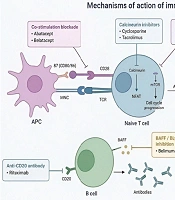
Future research should define disease-specific MC phenotypes, identify optimal therapeutic windows, validate combination regimens in humanized models, and advance promising candidates into early-phase clinical trials. Emerging tools, including siRNA, mRNA, CRISPR-based editing, and antibody-drug conjugates, may enable precise modulation of MC function. Progress will require collaboration among immunologists, pharmaceutical scientists, bioengineers, and clinicians to translate these insights into mechanism-based, patient-tailored interventions for refractory autoimmune and inflammatory diseases. The context-dependent protective and pathogenic roles of MCs in autoimmune diseases, together with potential therapeutic targets, are summarized in Figure 1.
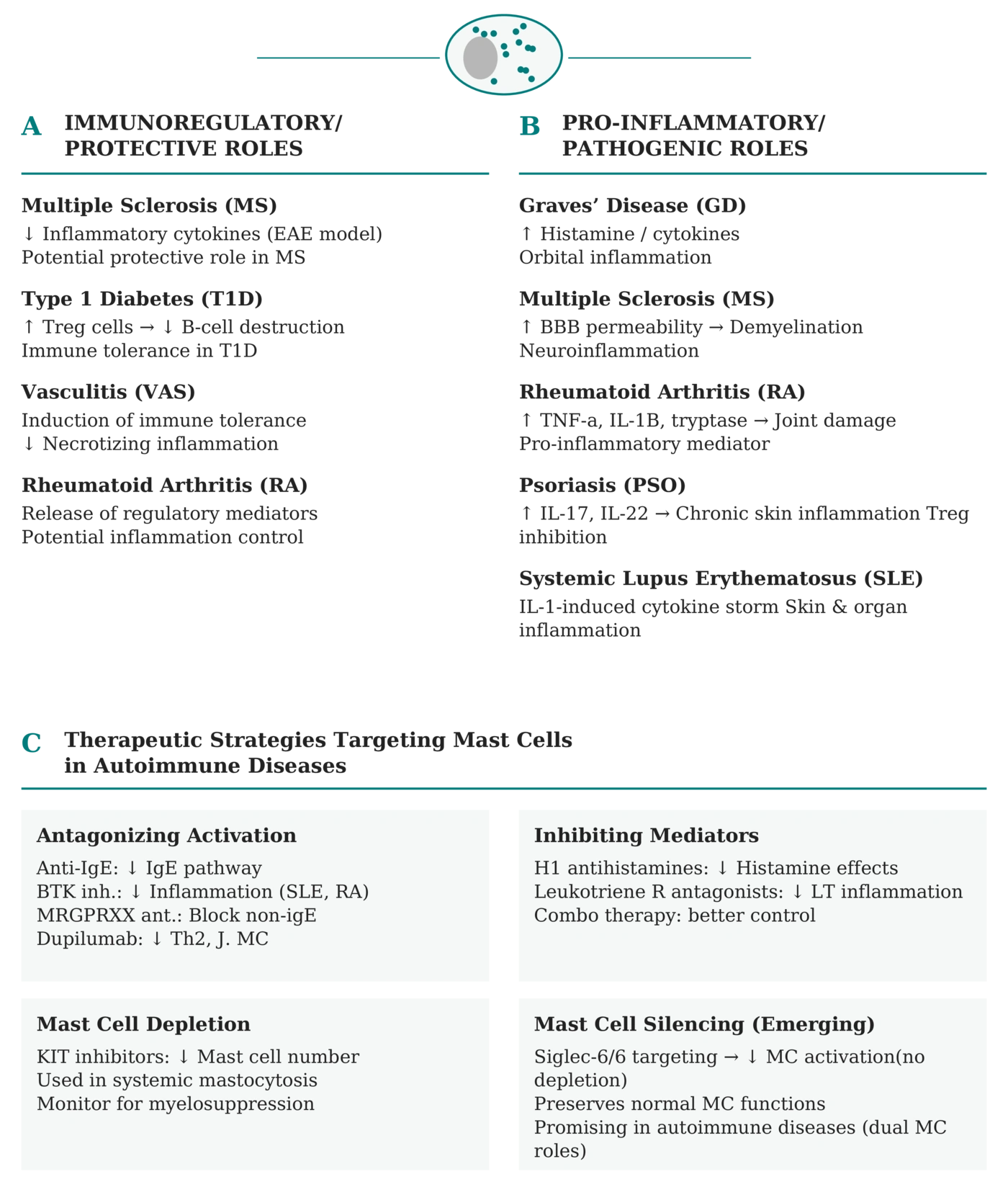
Figure 1.
Protective and pathogenic roles of mast cells in autoimmune diseases and potential therapeutic targets.