
1. Context
Leukemia ranks among the most prevalent cancers in children, imposing substantial psychological and physical challenges on both patients and their families (1). Within clinical environments, the spiritual component of care is frequently overlooked, despite its importance for children confronting significant life events such as serious illnesses (2). The consequences of leukemia for children are extensive and multifaceted, encompassing not only the physical difficulties associated with the disease and its intensive treatments but also profound psychological, social, and spiritual issues (3). Due to their distinct cognitive, emotional, and developmental characteristics, adolescents are particularly susceptible to the pressures brought on by illness and its management. Enhancing the quality of life for these individuals necessitates a holistic approach that integrates spiritual considerations into routine care (4).
Spiritual care focuses on supporting individuals in discovering meaning, purpose, inner peace, and a sense of connection, whether with themselves, others, or a greater entity. Engaging with these aspects can alleviate anxiety and depression, foster self-worth, encourage acceptance of illness, and improve overall psychosocial health (5). Essential elements of spiritual care include engaging in meaningful dialogue, assisting with existential concerns, fostering hope, providing compassionate support during crises, and facilitating access to spiritual resources regardless of religious affiliation (6).
Quality of life itself is a multidimensional construct shaped by the interplay of physical, psychological, social, and spiritual domains. There is a growing acknowledgment within healthcare of the significance of spirituality, particularly in supporting patients as they navigate chronic or life-limiting conditions during critical developmental periods (7). Spiritual care involves specific strategies aimed at recognizing and addressing the spiritual needs of patients within medical settings. For children with leukemia, these interventions are crucial for enhancing quality of life by deepening existential insight, altering perceptions of illness, promoting acceptance, and mitigating psychological distress. Additionally, forming supportive relationships with spiritual counselors or healthcare providers can strengthen feelings of belonging, security, and emotional well-being among adolescent patients (8).
Despite considerable theoretical and empirical evidence highlighting the benefits of spiritual care for cancer patients’ quality of life, this dimension remains insufficiently addressed in many healthcare settings, particularly those serving child populations (9). Consequently, a notable disparity exists between the spiritual needs of patients and the services available to them. This research was therefore undertaken to investigate the association between spiritual care and quality of life in adolescents diagnosed with leukemia (10). The findings may clarify the crucial role of spiritual elements in improving patient experiences and guide the development of more holistic care strategies within healthcare systems. This systematic review has been registered in PROSPERO CRD420251140128.
2. Objectives
This study investigates various facets of quality of life, including psychological, social, physical, and spiritual components, to assess how spiritual interventions may improve well-being among adolescent leukemia patients. The outcomes may contribute to designing effective approaches for delivering integrated care that addresses the spiritual requirements of this population.
3. Methods
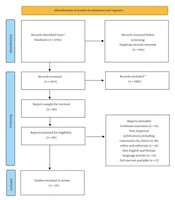
From the initial search that yielded 2,854 records, 99 articles were selected for full-text screening after removing duplicates and reviewing the title/abstract, of which 13 met the inclusion criteria between January 2010 and March 2025.
3.1. Data Sources
A thorough literature search was carried out across five well-established databases: PubMed, Scopus, Web of Science, Google Scholar, and SID. These sources were selected due to their broad and reliable coverage of health sciences, medicine, and social research.
3.2. Search Strategy
The search employed a combination of predefined terms: (“Spiritual care” OR “Hospice Care”) AND (“Leukemia” OR “Cancer”) AND (“Children” OR “Pediatrics”) AND (“Quality of life” OR “Life Style”). Boolean operators were applied to refine the results, and the reference lists of included studies were manually screened to identify any additional relevant articles.
3.3. Eligibility Criteria
Studies were eligible for inclusion if they investigated how spiritual care enhances quality of life in children with leukemia. Additionally, research addressing broader quality of life enhancements in children with leukemia was considered when it offered relevant insights. Exclusion criteria: Studies lacking original data or a clear methodological framework, such as commentaries, editorials, or letters, were excluded unless they presented structured empirical findings. Publications in languages other than English or Persian, or those without sufficient outcome information, were also excluded.
3.4. Study Design
Both quantitative and qualitative study designs were included, covering experimental trials, observational studies, systematic reviews, and case reports.
3.5. Outcomes of Interest
To qualify, studies had to report on at least one of the following domains: Spiritual care, quality of life, or issues connected to adolescents with leukemia.
3.6. Time Frame and Language
Only studies published between January 2010 and March 2025, and written in either English or Persian, were included.
3.7. Data Extraction and Management
Data extraction was conducted independently by two reviewers using a standardized template. Collected information included authorship, year of publication, study design, sample size, and study setting, as well as details regarding psychosocial and spiritual issues, including their type, duration, and frequency. Extracted data were first organized in Google Sheets and later managed in EndNote to remove duplicates and ensure accurate referencing.
3.8. Quality Appraisal
Given the methodological diversity of the included studies, we used different validated tools based on study design to ensure appropriate and rigorous assessment: For randomized controlled trials (RCTs), we applied the Cochrane risk of bias 2 (RoB 2) tool. For observational studies, the Newcastle-Ottawa Scale (NOS) was used. For qualitative studies, we applied the critical appraisal skills programme (CASP) checklist. This stratified approach allowed us to assess each study with the most appropriate and design-specific tool, enhancing the precision and relevance of our quality assessment. All reviewers followed standardized scoring rubrics and discussed discrepancies collaboratively to ensure consistency. Studies were not excluded based on their risk of bias ratings. However, the assessments informed the narrative synthesis, and findings from studies rated as moderate or high risk were interpreted with appropriate caution during analysis. More information is provided in Table 1.
Table 1.
Characteristics and Thematic Classification of Included Studies a
| Years | Authors | Study Type | Sampling Method | Participate | Conclusion | Risk of Bias Tool | Bias Level |
|---|---|---|---|---|---|---|---|
| 2014 | Musarezaie et al. (11) | Clinical trial | Randomized | 64 | The provision of spiritual care has been associated with reduced levels of depression in individuals diagnosed with leukemia. | Cochrane RoB 2 | Moderate |
| 2024 | Torabi et al. (12) | Clinical trial | Randomized | 94 | Integrating spiritual support into the comprehensive care of leukemia patients is recommended for nursing practice. | Cochrane RoB 2 | Moderate |
| 2015 | Musarezaie et al. (13) | Clinical trial | Randomized | 64 | Nurses are advised to adopt a holistic care framework that emphasizes spirituality-centered interventions. | Cochrane RoB 2 | Moderate |
| 2020 | Mansurifard et al. (14) | Pre-experimental | Convenient | 35 | Incorporating spiritual care into nursing plans is encouraged, as it represents a simple, accessible, safe, and cost-effective method to promote patients’ spiritual well-being. | ROB 2 | Moderate |
| 2018 | Torabi et al. (15) | Quasi-experimental | Convenient | 32 | Nurse-led programs focusing on spirituality have shown positive outcomes in improving adolescents’ coping abilities when facing cancer, thereby strengthening their overall resilience. | ROB 2 | Moderate |
| 2024 | Yaghoobi Beglar et al. (16) | Clinical trial | Randomized | 60 | Spiritual support can play a vital role in enhancing the well-being of those nearing end of life by providing comfort and helping them find deeper meaning and purpose. | ROB 2 | Moderate |
| 2018 | Abdulah and Abdulla (17) | Clinical trial | Randomized | 60 | Engagement in art therapy, such as painting and crafts, has been found to improve health-related quality of life in children with cancer. | Cochrane RoB 2 | Moderate |
| 2017 | Baljani et al. (18) | Clinical trial | Randomized | 76 | It is essential for nurses to address the spiritual needs of patients by taking into account each individual’s unique situation and preferences. | ROB 2 | Moderate |
| 2021 | Sun et al. (19) | Clinical trial | Purpose | 100 | Spiritual care for individuals with advanced cancer has been demonstrated to improve both spiritual well-being and overall quality of life, while also reducing negative mental health symptoms. | Cochrane RoB 2 | Low to moderate |
| 2017 | Sankhe et al. (20) | Cohort | Non- randomized | 107 | The use of the MATCH framework in spiritual care has resulted in improved spiritual well-being and quality of life for patients and their primary caregivers. | ROB 2 | Moderate |
| 2022 | Khezri et al. (21) | Controlled clinical trial | Consecutive | 72 | Implementing a supportive, spiritually oriented nursing care model has been effective in increasing hope among breast cancer patients. | Cochrane RoB 2 | Moderate |
| 2022 | Karimi et al. (22) | Quasi-experimental | Convenience | 64 | The spiritual care intervention evaluated in this study proved beneficial in raising self-esteem among individuals with cancer. | ROB 2 | Moderate |
| 2021 | Afrasiabifar et al. (23) | Controlled trial | Randomized | 74 | Overall, spiritual interventions have been shown to foster greater hope and enhance spiritual well-being in cancer patients. | Cochrane RoB 2 | Low to moderate |
Abbreviation: RoB 2, risk of bias 2.
a This table presents the key features of the 13 studies included in the review, alongside their thematic classifications as determined during the synthesis process.
3.9. Data Analysis
A thematic synthesis approach was employed to integrate findings across studies. Following Braun and Clarke’s six-phase framework — familiarization, coding, theme generation, review, definition, and reporting — two reviewers independently coded the data using an inductive method. Discrepancies were resolved through discussion or consultation with a third reviewer. This approach allowed for the consolidation of recurring concepts into well-defined thematic categories.
3.10. Limitations
The review faced several limitations: (1) Variability in study design, sample sizes, and outcome measures prevented a meta-analysis; (2) the quality of evidence varied, with some studies presenting moderate to high risk of bias; (3) geographic and technological constraints limited the applicability of certain interventions; and (4) relatively few studies directly addressed parental psychosocial issues. While this represents a methodological gap, it also emphasizes the need for further dedicated research in this area.
4. Results
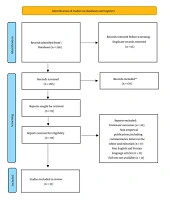
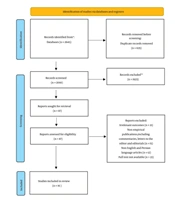
In total, thirteen studies met the eligibility criteria and were included in this review following a rigorous screening process. The initial database search yielded a large number of records exploring how spiritual care enhances quality of life in children with leukemia. The study selection pathway is illustrated in Figure 1, which presents a PRISMA-compliant flow diagram showing the number of records identified, screened, assessed for eligibility, and finally included, along with reasons for exclusion at each stage. Detailed characteristics of the included studies are summarized in Table 1.
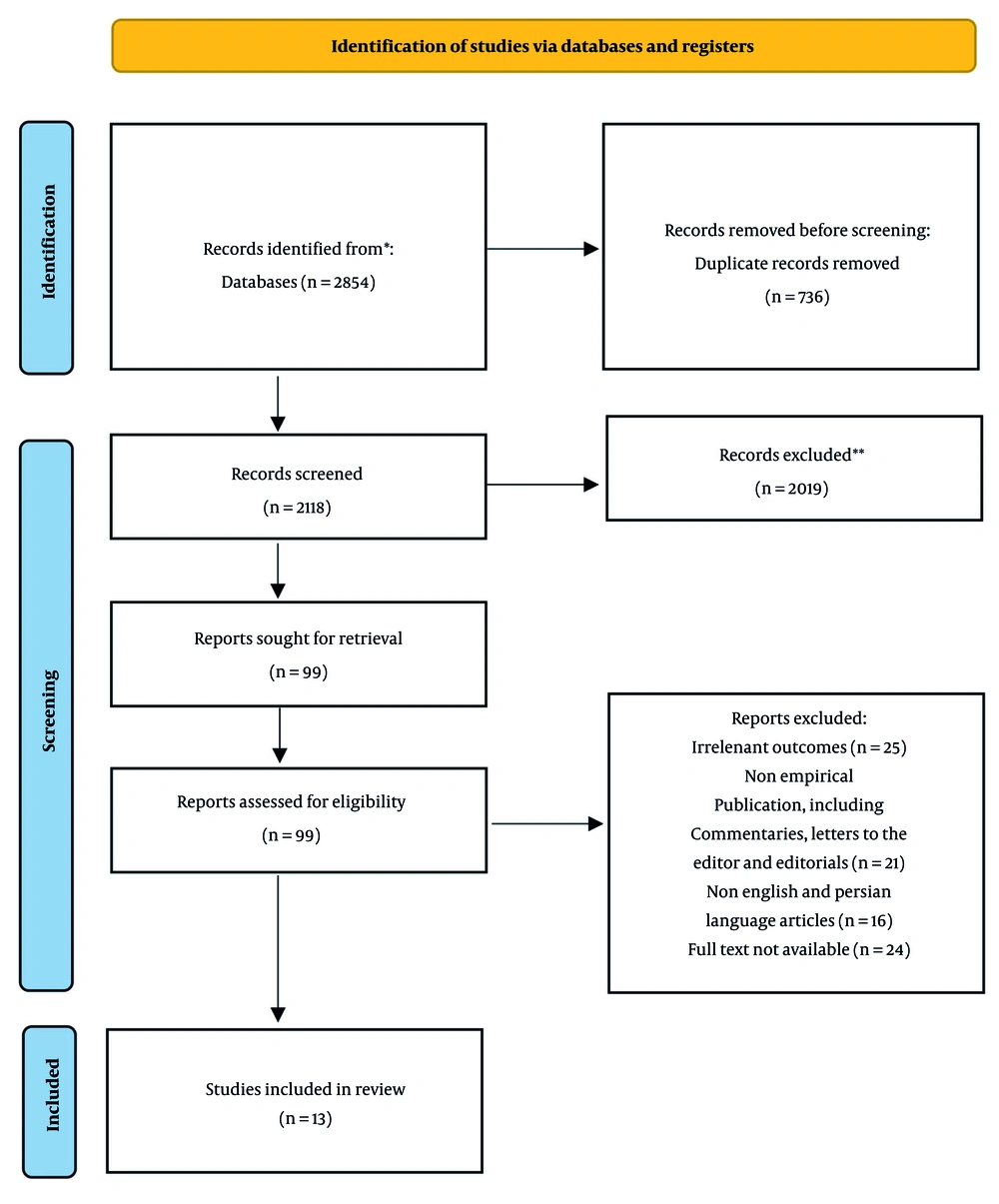
Figure 1.
PRISMA flow diagram (24)
4.1. Summary of Results
This systematic review provides compelling evidence that spiritual care positively influences multiple aspects of quality of life in children with leukemia. Beyond reducing psychological distress, spiritual care supports the reconstruction of spiritual identity, fosters hope, encourages the search for meaning within the illness experience, and enhances interpersonal relationships.
5. Discussion
Spiritual health is characterized by two central components: Religious health, which relates to an individual’s connection with a higher power, and existential health, which concerns personal adaptation to life circumstances, social engagement, and the management of psychosocial difficulties (25). The adjustment process following a cancer diagnosis is gradual and requires changes in daily routines as well as thoughtful planning. These plans must address shifting life contexts and help patients cultivate effective coping mechanisms (26). Integrating spirituality into care can support individuals in managing their illness, especially as it progresses (27). Although spiritual care plays a vital role in supporting recovery, enhancing spiritual well-being, and alleviating symptoms of anxiety and depression, patients’ spiritual needs are frequently neglected during treatment. Engagement in spiritual practices can help individuals manage stress and illness more effectively by fostering a sense of meaning, purpose, and connection to a higher power or greater reality (28). Therefore, addressing spiritual needs is a crucial component of care for children with cancer, as it promotes the development of adaptive coping strategies (29). Recognizing the importance of spirituality is fundamental to delivering effective spiritual care (30). Nurses with a solid understanding of spiritual principles are better equipped to provide comprehensive support. To strengthen this aspect of care, nurses should expand their knowledge of spiritual issues, integrate these insights into clinical practice, and improve communication with both patients and their families (31). Recent studies have further highlighted the positive impact of spiritual care on the quality of life of adolescents with leukemia, particularly in psychological, social, and existential domains (32). For instance, Rossato et al. (2021) reported that adolescents who engaged in spiritual interventions demonstrated improved social and emotional functioning, as well as better overall mental health. Spirituality was also associated with the development of psychological resources such as resilience, hope, and a sense of meaning, all of which contributed to enhanced quality of life (33). Similarly, Alvarenga et al. (2021) found a positive correlation between spiritual well-being and increased happiness, life satisfaction, and general quality of life in this population. These findings underscore the importance of integrating spiritual care as a fundamental component of holistic patient management (34). Systematic identification and continuous support of spiritual needs should be incorporated as standard practice in the care of adolescents with leukemia (35). Beyond improving the patient experience, such care provides essential support to families during difficult periods (36). By addressing spiritual dimensions, children are able to view their illness not solely from a medical perspective but as an opportunity for personal growth, self-reflection, and deeper connections (37). This approach fosters disease acceptance and strengthens their ability to cope with related challenges (38).
The involvement of family members, support networks, and healthcare professionals is crucial. Spiritual interventions achieve optimal outcomes when they engage parents, nurses, counselors, and palliative care teams (39). Incorporating a spiritual nurse or religious counselor into the care process can strengthen patient-provider relationships while also supporting psychological well-being. Evidence demonstrates that spirituality plays a key role in enhancing quality of life and is linked to reduced levels of anxiety and depression among individuals with cancer (40). Since spiritual well-being is often grounded in personal religious beliefs and values, integrating spiritual dimensions into the management of chronic illnesses may help lower the prevalence of anxiety disorders in adolescents (41). Furthermore, research highlights that spiritual care can mitigate symptoms such as anxiety, depression, loneliness, and fear of death in young patients undergoing cancer treatment (42). Spiritual interventions, including discussions on spirituality, meditation, prayer, and self-reflection, foster adaptive coping strategies such as hope, finding meaning in adversity, and strengthening faith (43). Nonetheless, several barriers hinder the effective provision of spiritual care, most notably the limited availability of specialized training for healthcare professionals in this field (44). Evidence further indicates that spiritual care can meaningfully improve the quality of life for patients with advanced-stage leukemia (45). In light of these findings, integrating spiritual care as a core component of comprehensive treatment for adolescents with leukemia is strongly recommended. Such an approach should include targeted training for healthcare providers, routine assessment of patients’ spiritual needs, and the provision of continuous support throughout the course of treatment.
5.1. Conclusions
Providing spiritual support has been shown to play a vital role in improving the overall quality of life for children living with leukemia. When spiritual and emotional needs are addressed in parallel with medical treatment, outcomes include reduced levels of anxiety and depression, greater satisfaction with care, enhanced resilience, and, in some cases, improved survival prospects. Children dealing with chronic illnesses such as leukemia often face a combination of physical, psychological, and spiritual challenges; thus, incorporating spirituality into their care can assist them in coping more effectively and foster stronger connections with healthcare providers and their surroundings. Therefore, it is essential to establish spiritual care as an integral part of comprehensive treatment protocols, particularly within pediatric and adolescent healthcare contexts. Moreover, healthcare practitioners, including nurses, psychologists, social workers, and physicians, should receive dedicated training to better recognize and address the spiritual needs of patients, while considering individual cultural backgrounds, values, and circumstances. Adopting this holistic model not only enhances patient well-being but also ensures a more empathetic and humane treatment experience.
5.2. Limitations of the Study
This review was targeted at studies in Persian and English, so some influential and high-quality studies may have been missed.