
1. Introduction
Febrile seizures are the most common neurological disorder in early childhood and account for a substantial proportion of pediatric emergency presentations worldwide. They are defined as seizures occurring in children aged 6 - 60 months in association with fever (≥ 38 °C), without evidence of central nervous system infection, metabolic disturbance, or prior afebrile seizures (1, 2). Contemporary epidemiological data estimate a lifetime prevalence of approximately 2 - 5% in Europe and North America, with higher rates reported in some Asian populations, reaching up to 8 - 10% in selected cohorts. Despite their generally benign prognosis, febrile seizures remain clinically significant because of parental distress, the risk of recurrence, and their potential association with later epilepsy in a subset of patients (3).
The pathophysiology of febrile seizures is increasingly recognized as multifactorial, involving interactions among genetic susceptibility, neurodevelopmental immaturity, and fever-induced neuroinflammatory responses (4). Experimental and translational evidence has highlighted the role of proinflammatory cytokines, particularly interleukin-1β, interleukin-6, and tumor necrosis factor-α, in lowering the seizure threshold during febrile episodes. In parallel, disturbances in the balance between excitatory and inhibitory neuronal networks during early brain development further contribute to increased seizure susceptibility in this age group (5).
Among the proposed determinants of febrile seizure susceptibility, biological sex has emerged as a potentially important but insufficiently characterized factor. Sex-related differences in immune system activity, hormonal regulation, and neurodevelopmental trajectories have been documented across multiple pediatric neurological conditions. In early life, sex-specific modulation of inflammatory signaling pathways and neuronal excitability may influence vulnerability to fever-induced seizures. However, sex is often treated as a secondary covariate in clinical studies rather than as a primary exposure of interest, limiting the depth of sex-stratified analyses (6).
Epidemiological evidence regarding sex differences in febrile seizure risk remains inconsistent. Several large observational studies and reviews have reported a higher incidence in males, suggesting possible male predominance in susceptibility. In contrast, other population-based studies have found no statistically significant differences between boys and girls, indicating that sex-related variation may be population-specific or confounded by unmeasured clinical and environmental factors (7). These discrepancies may reflect heterogeneity in study design, diagnostic criteria, age distribution, and regional infectious burden (8).
Recent epidemiological investigations have continued to yield inconsistent findings regarding the association between biological sex and febrile seizure risk. Although several studies suggest a modest male predominance, others have reported no significant sex-related differences after accounting for potential confounders. These discrepancies may be attributable to heterogeneity in study populations, variations in case ascertainment, differences in adjustment strategies, and the fact that sex has rarely been examined as a primary exposure variable. Consequently, effect estimates remain imprecise and difficult to compare across cohorts (9).
Despite substantial advances in understanding the epidemiology and clinical characteristics of febrile seizures, the reported sex distribution among affected children remains variable across studies. Although many observational studies have described differences in the proportions of boys and girls with febrile seizures, the reported patterns are not entirely consistent across populations and clinical settings. Recent research has predominantly focused on seizure recurrence, prognosis, genetic factors, and clinical management, whereas a comprehensive synthesis of sex distribution and related epidemiological characteristics has received comparatively less attention. Febrile seizures are usually acute and self-limited, but some children, particularly those with complex seizures or relevant familial and neurodevelopmental risk factors, may have a higher risk of developing epilepsy. Therefore, understanding epidemiological characteristics, including sex distribution, may help identify children who require closer long-term neurological follow-up (3, 10).
To the best of our knowledge, no previous systematic review has comprehensively synthesized the available evidence on sex distribution and epidemiological patterns among children with febrile seizures. Addressing this gap may enhance understanding of demographic and epidemiological variation across populations and provide an evidence base for future epidemiological studies and healthcare planning. Accordingly, this systematic review aimed to synthesize the available evidence on sex distribution and epidemiological patterns among children with febrile seizures, describe variations in the distribution of febrile seizures between boys and girls, and summarize the demographic and epidemiological characteristics reported across diverse study populations.
2. Methods
This systematic review was conducted to synthesize the available evidence on sex distribution and epidemiological patterns among children with febrile seizures. The review was performed in accordance with the PRISMA 2020 guidelines. The primary objective was to systematically identify, critically appraise, and synthesize evidence from studies available from database inception to January 2026 that reported sex distribution and epidemiological characteristics of pediatric febrile seizures. Particular emphasis was placed on differences in the distribution of febrile seizures between boys and girls and on demographic and clinical characteristics reported across different populations.
The search period from database inception to January 2026 was selected to capture the available evidence on sex distribution and clinical features. This systematic review was prospectively registered in PROSPERO (CRD420261422646) and conducted in accordance with the PRISMA 2020 Statement (11). Eligibility criteria, study selection procedures, data extraction methods, quality assessment, and evidence synthesis were predefined and are reported in detail to support methodological transparency, reproducibility, and scientific rigor.
2.1. Information Sources
To identify relevant studies, a comprehensive systematic search was conducted across five major electronic databases: PubMed, Scopus, Web of Science, the Cochrane Library, and Embase. This multidatabase strategy was used to ensure broad retrieval of potentially relevant studies and to minimize the risk of publication bias.
2.2. Search Strategy
A comprehensive search was conducted in PubMed, Scopus, Web of Science, Embase, and the Cochrane Library from database inception to January 2026. Controlled vocabulary (MeSH) and free-text terms related to febrile seizures, sex, gender, and epidemiological characteristics were combined using Boolean operators. The search strategy was tailored to each database, and the reference lists of eligible studies were manually screened to identify additional relevant articles (Table 1).
Table 1.
Search Terms
| Data Base | Search Strategy |
|---|---|
| PubMed | ("Febrile Seizures"[Mesh] OR "febrile seizure*" OR "fever-induced seizure*" OR "febrile convulsion*" OR "fever convulsion*") AND ("Sex"[Mesh] OR sex OR gender OR male* OR female* OR boy* OR girl*) AND ("Epidemiology"[Mesh] OR epidemiology OR "sex distribution" OR prevalence OR incidence) |
| Scopus | TITLE-ABS-KEY("febrile seizure*" OR "febrile convulsion*" OR "fever-induced seizure*" OR "fever convulsion*") AND TITLE-ABS-KEY(sex OR gender OR male* OR female* OR boy* OR girl*) AND TITLE-ABS-KEY(epidemiolog* OR "sex distribution" OR prevalence OR incidence) |
| Web of Science | TS=("febrile seizure*" OR "febrile convulsion*" OR "fever-induced seizure*" OR "fever convulsion*") AND TS=(sex OR gender OR male* OR female* OR boy* OR girl*) AND TS=(epidemiolog* OR "sex distribution" OR prevalence OR incidence) |
| Embase | ('febrile seizure'/exp OR 'febrile seizure*':ti,ab OR 'febrile convulsion*':ti,ab OR 'fever-induced seizure*':ti,ab OR 'fever convulsion*':ti,ab) AND ('sex'/exp OR 'gender'/exp OR sex:ti,ab OR gender:ti,ab OR male*:ti,ab OR female*:ti,ab OR boy*:ti,ab OR girl*:ti,ab) AND ('epidemiology'/exp OR epidemiolog*:ti,ab OR 'sex distribution':ti,ab OR prevalence:ti,ab OR incidence:ti,ab) |
| Cochrane Library | ("febrile seizure*" OR "febrile convulsion*" OR "fever-induced seizure*" OR "fever convulsion*") AND (sex OR gender OR male* OR female* OR boy* OR girl*) AND (epidemiolog* OR "sex distribution" OR prevalence OR incidence) |
Studies were included if they met the predefined eligibility criteria: 1) they reported the sex distribution or epidemiological characteristics of febrile seizures in children, including demographic or clinical findings presented according to sex; 2) they were observational studies (cohort, case-control, or cross-sectional) or other original clinical studies providing relevant data on pediatric febrile seizures; 3) they reported at least one outcome related to sex distribution, male-to-female ratio, incidence, prevalence, age at presentation, recurrence, or other epidemiological characteristics of febrile seizures; 4) they were available from database inception to January 2026; and 5) they were published in English. Studies lacking sex-specific data or involving nonpediatric populations were excluded.
2.3. Data Extraction and Management
Data extraction was performed independently by two reviewers using a standardized, prepiloted form to ensure consistency and minimize bias. Key information included study characteristics (author, year, design, sample size, and setting) and clinical and epidemiological variables related to febrile seizures, with an emphasis on sex-disaggregated data, including male-to-female distribution, effect estimates, and reported associations between sex and seizure risk. When available, age distribution, clinical features, family history, fever severity, statistical approaches, and adjustment for confounders in sex-based analyses were also recorded. Data were initially organized in Google Sheets and managed in EndNote for reference tracking and deduplication. The search strategy, developed by the lead author and refined with senior researchers, underwent internal review to enhance comprehensiveness despite the absence of a formal librarian. Discrepancies during screening and extraction were resolved through discussion or consultation with a third reviewer.
2.4. Quality Assessment
To address methodological diversity across the included studies, study quality and risk of bias were assessed using validated tools tailored to each research design. Randomized controlled trials were evaluated using the Cochrane RoB 2 tool, observational studies using the Newcastle-Ottawa Scale (scores of 7 - 9 were considered high quality, 5 - 6 moderate quality, and 0 - 4 low quality), and qualitative studies using the CASP checklist (each item was assessed as "Yes," "No," or "Can't tell"). Quality assessments were performed independently by reviewers using standardized criteria, with disagreements resolved by consensus. No study was excluded on the basis of quality assessment alone; however, risk-of-bias findings were integrated into the narrative synthesis, and evidence from studies with a moderate or high risk of bias was interpreted with greater caution when drawing overall conclusions.
2.5. Data Synthesis
Given the substantial heterogeneity in study designs and outcome measures, a narrative synthesis was conducted to integrate the available evidence systematically. Using an inductive thematic approach, studies were independently reviewed and coded by two researchers, with emerging patterns refined through iterative discussion and consensus. This process identified key themes related to sex differences in febrile seizure risk, including epidemiological variations between boys and girls, potential biological and genetic mechanisms underlying sex-specific susceptibility, and sex-related differences in clinical characteristics and associated risk factors. The synthesis also highlighted methodological challenges, including inconsistent sex-stratified reporting, variability in diagnostic criteria, and differences in controlling for confounding factors. Overall, the narrative analysis integrated both consistent and conflicting findings while considering the methodological and contextual diversity of the included studies.
3. Results
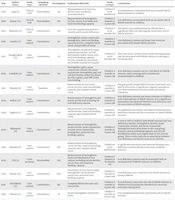
The database search initially identified 2854 records. After removal of 736 duplicate records, 2118 unique studies remained for title and abstract screening. After exclusion of 2023 records that did not meet the eligibility criteria, 95 full-text articles were assessed for eligibility. Of these, 80 articles were excluded for predefined reasons, including inappropriate study design, insufficient data, irrelevant outcomes, or failure to meet the inclusion criteria. Ultimately, 15 studies were included in the qualitative synthesis. The complete study-selection process is presented in the PRISMA 2020 flow diagram (Figure 1 and Table 2).
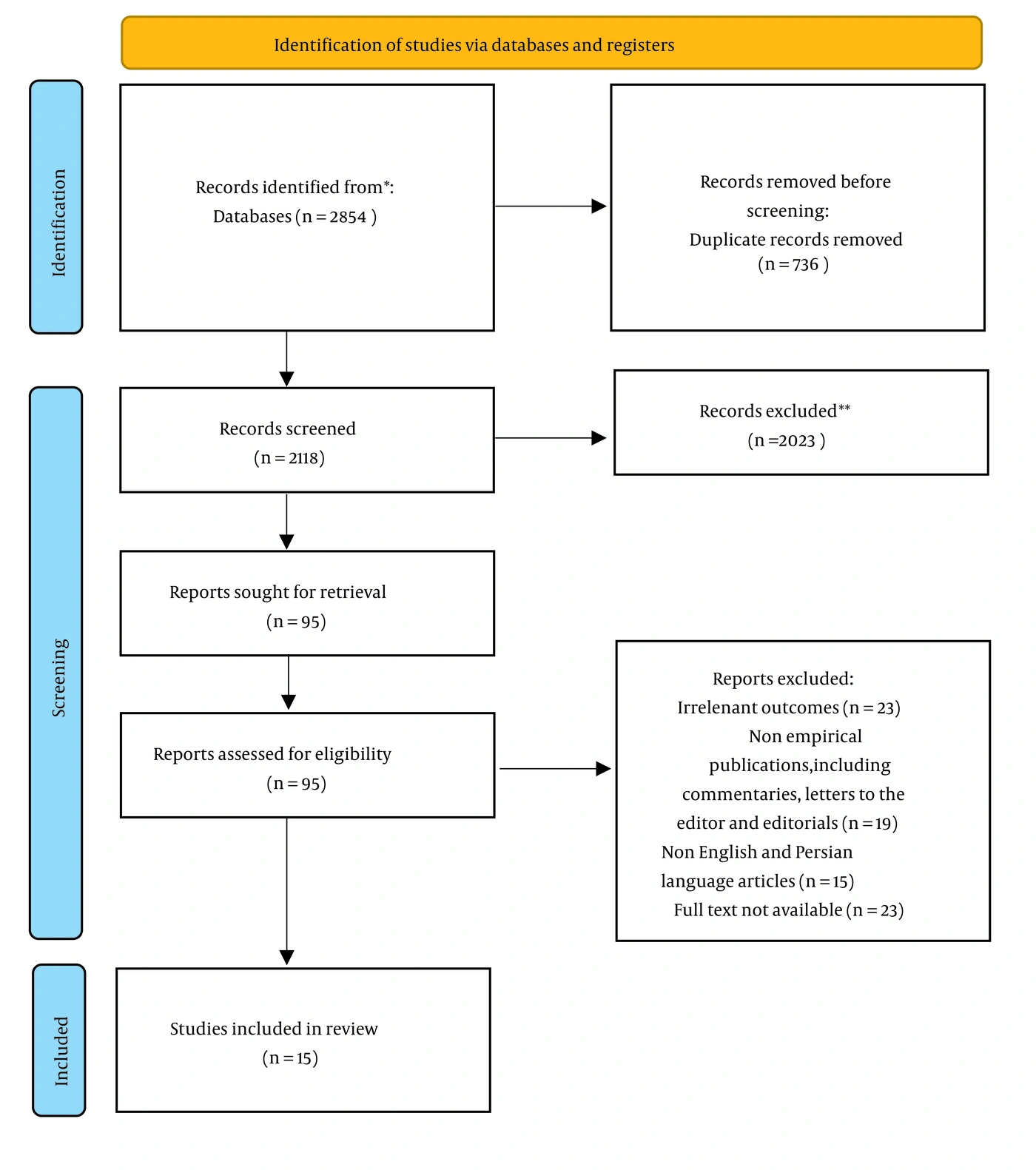
Figure 1.
PRISMA flow diagram
Table 2.
Characteristics and Thematic Classification of Included Studies
| Author/Year | Study Design | Population | Risk Factors Evaluated | Main Findings | Risk of Bias |
|---|---|---|---|---|---|
| Heydarian et al., 2024 / (19) | Clinical study | 220 febrile children aged 6 - 60 months (110 with febrile seizures and 110 febrile controls) in Iran | Sex, serum zinc, sodium, potassium, calcium, magnesium, BMI, age, clinical characteristics | Male sex emerged as a significant predictor of complex febrile seizures, suggesting a greater susceptibility to severe seizure presentations rather than to febrile seizures overall | Moderate |
| Yalçın et al., 2025 / (14) | Prospective cohort | 124 children with febrile seizures and 93 febrile controls | Sex, perinatal factors, biochemical markers (sodium, vitamin D, zinc, ferritin), genetic variants | No significant association was found between sex and febrile seizure susceptibility; biochemical factors appeared to have a stronger influence on seizure risk | Low |
| Jongruk et al., 2022 / (20) | Retrospective cohort | Children with complex febrile seizures followed for subsequent epilepsy development | Sex, age at seizure onset, family history of epilepsy, neurodevelopmental status, seizure duration, seizure focality, recurrence within 24 hours, EEG findings, neuroimaging abnormalities | Sex was not significantly associated with later epilepsy. The strongest predictors were neurodevelopmental abnormalities, abnormal EEG findings, and the presence of multiple complex febrile seizure features | Moderate |
| Tarhani et al., 2022 / (15) | Observational study | 77 children with febrile seizures | Sex, family history, seizure recurrence, seizure type, fever characteristics, laboratory parameters | Sex was not significantly associated with most clinical or laboratory characteristics of febrile seizures. Recurrence and family history showed stronger associations with disease course and management outcomes than gender | Moderate |
| Sharawat et al., 2016 / (21) | Analytical observational study | 140 children aged 6 months – 5 years (70 with first febrile seizure and 70 febrile controls) | Sex, family history of febrile seizures/epilepsy, peak temperature, cause of fever, antenatal and perinatal complications, hemoglobin and RBC indices, serum sodium, calcium, and blood glucose | Male sex was associated with an increased risk of a first febrile seizure. Family history of febrile seizures, high fever, antenatal complications, and metabolic abnormalities (low sodium, calcium, and blood glucose) were also identified as important risk factors. | Low |
| Kumari et al., 2022 / (22) | Case-control study | Children aged 6 months – 5 years with first-episode simple febrile seizure and age-matched febrile controls | Sex, family history of febrile seizures, family history of epilepsy, peak temperature, iron deficiency anemia, serum zinc levels, perinatal factors, nutritional status | Male sex was associated with a higher likelihood of first-episode simple febrile seizures. A positive family history of febrile seizures and micronutrient deficiencies, particularly iron and zinc deficiency, were also significant contributors to seizure risk. | Moderate |
| Renda et al., 2020 / (23) | Descriptive analytical study | Children diagnosed with febrile seizures | Sex, age at onset, family history, seizure type, recurrence, neurodevelopmental status, treatment characteristics | Male sex was not identified as a major determinant of recurrence or prognosis. Recurrence was more strongly associated with younger age at first seizure, family history of febrile seizures, and complex seizure characteristics | Moderate |
| Civan et al., 2022 / (24) | Cohort study | 300 children with febrile seizures followed for at least 24 months | Sex, age at first seizure, family history, seizure type, seizure duration, fever characteristics, neurodevelopmental status, EEG findings, recurrence | Sex was not significantly associated with seizure recurrence or subsequent epilepsy. Recurrence was mainly linked to younger age at onset, complex febrile seizures, and neurodevelopmental delay, while epilepsy risk was strongly associated with abnormal EEG findings and neurodevelopmental impairment | Low |
| Duan et al., 2023 / (25) | Retrospective cohort | 168 children with complex febrile seizures | Sex, family history of epilepsy, seizure type, seizure frequency, seizure duration, EEG abnormalities, timing of seizure after fever onset | Sex was not associated with secondary epilepsy. Family history of epilepsy, generalized seizures, frequent seizure episodes, and prolonged seizure duration were independent predictors of epilepsy development | Low |
| Muthaffar et al., 2024 / (16) | Retrospective study | 173 children with febrile seizures at King Abdulaziz University Hospital, Saudi Arabia | Sex, developmental delay, family history, vaccination status, daycare attendance, gestational age, neonatal stay, consanguinity, fever characteristics, EEG findings | A higher proportion of febrile seizure cases occurred in boys, but sex was not significantly associated with seizure type or other clinical characteristics. Generalized seizures predominated, while developmental delay and respiratory infections were frequently observed among affected children. | Moderate |
| Gontko-Romanowska et al., 2017 / (26) | Observational study | Children with febrile seizures compared with febrile controls | Sex, family history of febrile seizures/epilepsy, peak temperature, iron deficiency anemia, serum electrolytes, perinatal history, age | Male sex was associated with a higher likelihood of febrile seizures. Stronger associations were observed for positive family history, higher fever, and metabolic abnormalities such as iron deficiency and electrolyte imbalance. | Moderate |
| Ahmed et al., 2019 / (27) | Case-control study | 80 children aged 6 - 72 months (40 cases with febrile seizures, 40 febrile controls), Iraq | Sex, age, infection type, hemoglobin, serum iron, ferritin, total iron-binding capacity, calcium | Children with febrile seizures had significantly lower hemoglobin, serum iron, and ferritin levels compared with controls. Iron deficiency anemia was strongly associated with febrile seizures, while respiratory infections were the most common trigger. No strong independent role of sex was demonstrated compared with metabolic factors | Moderate |
| Sadık et al., 2026 / (28) | Cohort study | 150 children (6 - 23 months) with first febrile seizure | Sex, age, family history of febrile seizures/epilepsy, seizure type (simple vs complex), EEG findings, number of affected relatives | Male sex was not significantly associated with seizure recurrence. Recurrence was mainly linked to complex febrile seizures, family history of febrile seizures/epilepsy, and greater familial burden, while no independent effect of sex was observed | Low |
| Salleh et al., 2023 / (29) | Observational study | 649 children (< 12 years) with COVID-19 across three pandemic waves in Brunei | Age, sex (implicitly via demographic comparison), family history of febrile seizures, previous febrile seizures, fever severity, symptom burden | Febrile seizures occurred only in the Omicron wave (13% prevalence). Significant predictors included the typical febrile seizure age group, family history of febrile seizures, and fewer presenting symptoms. Male sex was not identified as an independent risk factor. | Low |
| Perdani et al., 2025 / (30) | Case-control study | 72 febrile children aged 6 - 60 months at Abdul Moeloek Regional Hospital, Indonesia (36 febrile seizure cases, 36 febrile controls) | Body temperature (> 39 °C vs 38 - 39 °C), fever duration (≤ 24 h vs > 24 h), sex, age, family history of seizures, birth weight, anemia | Male children had a higher risk of febrile seizures compared with female children, indicating a consistent male predominance across the included studies. | Moderate |
3.1. Sex-Based Distribution of Febrile Seizures
Across the included studies, boys generally accounted for a higher proportion of children with febrile seizures than girls. The reported male-to-female ratio varied across study populations, with most studies reporting ratios ranging from approximately 1.2:1 to 2:1. However, the magnitude of this difference was not uniform and varied by study population, age group, geographic region, and clinical setting, reflecting the heterogeneity of the available epidemiological evidence (12).
3.2. Consistency and Heterogeneity of Findings
Although many studies reported a higher proportion of boys with febrile seizures, substantial heterogeneity was observed across the included studies. Differences in diagnostic criteria, age ranges, study settings, and methodological approaches likely contributed to variation in the reported sex distribution and epidemiological findings. Population-based cohort studies generally demonstrated more consistent epidemiological patterns, whereas hospital-based and retrospective studies showed greater variability in the distribution of cases between boys and girls (13).
3.3. Potential Modifiers and Clinical Correlates
Several studies reported that differences in the sex distribution of febrile seizures were accompanied by variation in demographic and clinical characteristics. Age at first febrile seizure, a family history of febrile seizures or epilepsy, and the underlying cause of fever were among the most frequently described factors. However, these findings were not reported consistently, and considerable heterogeneity was observed across study populations and methodologies. This variability underscores the need for standardized epidemiological reporting to facilitate more reliable comparisons across future studies (1, 12).
3.4. Summary of Evidence
Current evidence indicates that febrile seizures are reported more frequently among boys than girls in many study populations. However, the magnitude of this difference varies considerably across geographic regions and study settings, reflecting substantial epidemiological heterogeneity. The available literature primarily describes differences in sex distribution rather than establishing a consistent biological pattern. Variations in demographic characteristics, family history, clinical presentation, and population-specific factors may contribute to the epidemiological diversity observed across studies. Overall, these findings highlight the multifactorial nature of febrile seizures and emphasize the importance of interpreting sex distribution within the broader epidemiological context.
4. Discussion
4.1. Principal Findings
This systematic review indicates that febrile seizures are more frequently reported in boys than in girls across many study populations. However, the magnitude of this difference varied considerably among the included studies, reflecting heterogeneity in population characteristics, study design, and geographic setting. Overall, the available evidence primarily describes sex distribution rather than demonstrating a consistent biological pattern across pediatric populations.
An important finding of this review is that differences in sex distribution should be interpreted within the broader epidemiological context of febrile seizures. In addition to sex, several studies reported variations in age at presentation, family history, recurrence patterns, and other clinical characteristics, suggesting that the epidemiology of febrile seizures is influenced by multiple interacting factors. The variability observed across studies highlights the need for standardized reporting and well-designed epidemiological investigations to better characterize sex distribution and related demographic patterns in different populations (14, 15, 16).
4.2. Potential Biological Mechanisms
From a neurodevelopmental perspective, differences in the reported sex distribution of febrile seizures may be associated with developmental variations during early childhood; however, the current evidence remains insufficient to draw definitive conclusions regarding the underlying mechanisms (4). Febrile seizures occur during a critical period of early brain development, when ongoing maturation of neuronal networks is associated with increased vulnerability to fever-related seizures. Developmental processes during infancy and early childhood have been proposed as one of several factors that may contribute to epidemiological variation across pediatric populations. Although differences in sex distribution have been reported in many studies, the biological mechanisms underlying these observations remain incompletely understood, and the available evidence does not permit definitive conclusions regarding sex-specific neurodevelopmental pathways (4, 6).
An additional consideration is the potential contribution of neuroinflammatory processes to the clinical and epidemiological variability of febrile seizures. Emerging evidence suggests that inflammatory responses, particularly cytokine-mediated pathways, may play a role in the occurrence of febrile seizures. Proinflammatory mediators, including interleukin-1β, interleukin-6, tumor necrosis factor-α, and high-mobility group box 1 (HMGB1), have been investigated in relation to febrile seizures; however, their contribution to observed differences in sex distribution remains unclear. Further studies integrating epidemiological findings with biological markers are needed to better understand the mechanisms underlying variability across populations (17, 18).
Sex-related differences in immune responses have also been proposed as a factor contributing to variability in the epidemiology of febrile seizures. Previous studies have suggested that innate and adaptive immune responses differ between boys and girls from early childhood, which may influence the clinical presentation of febrile illnesses. However, the extent to which these biological differences contribute to the reported variation in sex distribution remains uncertain. The heterogeneity across the included studies may also reflect differences in circulating infectious agents, vaccination coverage, environmental exposures, healthcare settings, and population characteristics. Therefore, observed differences in sex distribution are likely to result from interactions among multiple epidemiological and biological factors rather than from a single underlying mechanism (31, 32).
4.3. Comparison With Previous Studies
The findings of this review also highlight the need to further investigate the potential contribution of genetic factors to observed epidemiological patterns of febrile seizures. Previous studies have identified several genes involved in neuronal excitability and synaptic function; however, evidence regarding their relationship with sex distribution remains limited. Few studies have examined whether genetic and developmental factors contribute to variations in sex distribution across different populations. Future epidemiological studies integrating demographic, clinical, and genetic data may provide a more comprehensive understanding of the variability observed in febrile seizures (33, 34). Such factors may help explain the heterogeneity in sex distribution among studies conducted in different populations and epidemiological settings (35).
Another factor contributing to the heterogeneity of the published evidence is inconsistent classification of febrile seizures. Simple febrile seizures, complex febrile seizures, and febrile status epilepticus differ in their clinical characteristics and prognosis; however, many studies analyzed these phenotypes as a single group. This approach may have contributed to variability in reported epidemiological patterns. Furthermore, inconsistent reporting of sex-specific data prevented meaningful subgroup analyses by seizure subtype. Future studies should apply standardized classifications and report epidemiological findings separately for each seizure subtype to improve comparability and enhance understanding of sex distribution across different clinical phenotypes (3, 6, 36).
4.4. Clinical Implications and Future Directions
The observed heterogeneity likely reflects differences in study populations, geographic settings, research designs, healthcare contexts, and reporting methods. These factors may contribute to variations in sex distribution across populations. Therefore, standardized methodologies and consistent reporting are needed to improve the comparability of future studies (31).
Overall, febrile seizures were more commonly reported in boys, although the extent of this difference varied across studies and populations. These findings suggest that sex distribution should be interpreted alongside demographic and clinical factors. Future multicenter studies with standardized methods and integration of clinical and biological data are needed to better understand these epidemiological differences.
4.5. Strengths and Limitations
Most included studies were observational and varied substantially in design, populations, and outcome definitions, limiting comparability. In addition, sex was often treated as a secondary factor, with inconsistent control of confounders and limited sex-specific analyses. Differences in febrile seizure classification also restricted detailed comparisons. Future prospective studies with standardized methods are needed to clarify the role of sex in febrile seizure susceptibility.
4.6. Conclusions
This systematic review indicates that febrile seizures are more frequently reported in boys than in girls across many study populations; however, the magnitude of this difference varies considerably among studies and geographic regions. The available evidence primarily describes sex distribution and epidemiological characteristics rather than establishing a consistent biological association. Variations in age at presentation, recurrence patterns, family history, and other clinical characteristics further highlight the heterogeneous nature of febrile seizures across pediatric populations.
Overall, these findings suggest that sex distribution should be interpreted within the broader epidemiological context of febrile seizures rather than as an isolated characteristic. Future well-designed, multicenter epidemiological studies using standardized reporting methods are needed to better characterize sex distribution and clarify demographic and clinical variations across different populations.