
1. Context
Febrile seizures are among the most common neurological disorders of early childhood, affecting approximately 2% to 5% of otherwise healthy children. These seizures generally occur as brief, generalized episodes associated with fever and without an underlying neurological disorder (1). Although febrile seizures are considered benign, recurrence can cause substantial parental anxiety. Therefore, understanding the factors that predispose children to these seizures is clinically important (2).
Recent research has identified iron deficiency as a potential factor associated with increased susceptibility to febrile seizures. Iron is an essential nutrient that plays a critical role in the synthesis and metabolism of key neurotransmitters, including dopamine, serotonin, and gamma-aminobutyric acid. Insufficient iron can disrupt neural signaling, lower the threshold for neuronal excitability, and increase susceptibility to seizures.
Iron deficiency, even without overt anemia, may independently increase the risk of febrile seizures. Reduced iron levels in children can alter the brain’s response to fever and increase the sensitivity of neural circuits during febrile episodes (3). Iron deficiency affects neural energy metabolism, impairs enzyme function, and interferes with neurotransmission, all of which can lower the seizure threshold (4).
Iron deficiency may also affect immune function and body temperature regulation, potentially influencing the severity and duration of fever. Longer or more severe febrile episodes may further increase the risk of febrile seizures (5). The complex relationship among iron status, the febrile response, and neuroexcitability underscores the need to consider iron deficiency in the prevention and management of febrile seizures (6).
Understanding the association between iron deficiency and febrile seizures could help identify high-risk children and provide a scientific basis for targeted nutritional and clinical interventions (7). This review aimed to determine whether lower iron levels and depleted iron stores increase susceptibility to febrile seizures in children and to assess the extent to which iron deficiency may serve as a modifiable risk factor for these convulsions.
This systematic review was registered in PROSPERO under registration number CRD420251175806.
2. Evidence Acquisition
2.1. Study Design
This systematic review was conducted to examine the association between iron deficiency and febrile convulsions in children. The review followed the Preferred Reporting Items for Systematic Reviews and Meta-Analyses (PRISMA) guidelines to ensure methodological rigor, transparency, and reproducibility.
2.2. Search Strategy
The search strategy combined keywords and MeSH terms related to iron deficiency, fever, and convulsions: ("iron deficiency" OR "iron deficiency anemia" OR "anemia") AND ("febrile seizure" OR "febrile convulsion") AND ("children" OR "pediatric" OR "infant").
Only studies published between January 2010 and March 2025 were included. The search was limited to English-language publications.
2.3. Eligibility Criteria
2.3.1. Population
Eligible studies included children aged 6 months to 6 years, of both genders, with or without a history of febrile convulsions. Studies were excluded if they included children with known neurological disorders unrelated to febrile seizures, such as epilepsy or cerebral palsy, chronic systemic diseases, or metabolic disorders.
2.3.2. Intervention or Exposure
The exposure of interest was iron deficiency, diagnosed using laboratory markers such as hemoglobin levels, serum ferritin, transferrin saturation, and mean corpuscular volume. Studies of iron deficiency with anemia and iron deficiency without anemia were included.
2.3.3. Comparison
The comparison group included children with normal iron status or without iron deficiency. Studies without a direct comparison group were also included if they reported the prevalence of, or an association between, iron deficiency and febrile convulsions.
2.3.4. Outcome
The primary outcome was the occurrence of febrile convulsions, either simple or complex, defined as convulsions associated with fever of 38°C or higher, without evidence of a central nervous system infection or other acute neurological causes. Secondary outcomes, when reported, included recurrence of febrile convulsions and seizure severity and duration.
2.3.5. Study Types
Eligible studies included observational studies, including cohort, case-control, and cross-sectional studies, as well as clinical trials assessing iron supplementation in relation to febrile convulsions. Reviews, editorials, animal studies, adult or adolescent studies, and case reports without primary data were excluded.
2.4. Study Selection and Data Extraction
Given the methodological heterogeneity among the included studies, study selection was performed in two stages. First, titles and abstracts were screened for relevance. Subsequently, full-text articles were assessed against the inclusion and exclusion criteria. Two independent reviewers conducted the selection process, and disagreements were resolved through discussion or consultation with a third reviewer.
2.5. Quality Assessment
Given the methodological heterogeneity of the included studies, established appraisal tools appropriate to each study design were used. Randomized controlled trials were evaluated using the Cochrane Risk of Bias 2 tool, observational studies were assessed using the Newcastle-Ottawa Scale, and qualitative studies were examined using the Critical Appraisal Skills Programme checklist. This multilevel evaluation approach ensured that each study was assessed using the most appropriate framework, thereby enhancing the rigor and relevance of the quality assessment. All reviewers followed standardized rating protocols, and disagreements were resolved through collaborative discussion to maintain consistency. Although studies were included regardless of their assessed risk of bias, appraisal outcomes informed the narrative synthesis. Therefore, findings from studies with moderate or high risk of bias were interpreted with caution throughout the analysis.
2.6. Data Analysis
A thematic synthesis approach was used to synthesize and interpret the findings of the included studies. The thematic analysis followed the six-phase framework described by Braun and Clarke (2006): 1) familiarization with the data, 2) generation of initial codes, 3) searching for themes, 4) reviewing themes, 5) defining and naming themes, and 6) producing the report. Disagreements were resolved through discussion or consultation with a third reviewer. This approach enabled recurring concepts to be aggregated into clear and coherent thematic categories, providing a comprehensive understanding of patterns, relationships, and key concepts.
3. Results
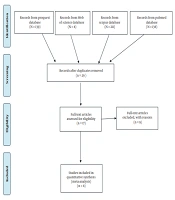
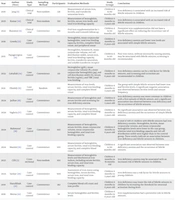
A total of 2854 studies were identified, and 16 met the eligibility criteria and were included in this review after a comprehensive screening process. The initial database search yielded numerous records related to the impact of iron deficiency on febrile seizures in children. The study selection process is shown in Figure 1, a PRISMA-compliant flow diagram illustrating the numbers of records identified, screened, assessed for eligibility, and ultimately included, along with reasons for exclusion at each stage. The key characteristics of the included studies are summarized in Table 1.
Table 1.
| Year | Author (First) | Study Type | Sampling Method | Participants | Evaluation Methods | Study Groups | Conclusion |
|---|---|---|---|---|---|---|---|
| 2019 | Jang (9) | Clinical trial | Non-random | 128 | Measurement of serum iron, ferritin, and transferrin saturation levels | Children 6 to 60 months old | Iron deficiency is associated with an increased risk of febrile seizures in children. |
| 2025 | Kumar (10) | Clinical trial | Non-random | 150 | Measurement of hemoglobin, ferritin, serum iron levels, and total iron-binding capacity | Children 6 months to 5 years old | Iron deficiency is associated with an increased risk of febrile seizures in children. |
| 2022 | Sharawat (11) | Clinical trial | Convenience | 150 | Oral iron supplementation for 3 months and 6-month follow-up | Children 6 to 60 months old | Preventive iron supplementation did not have a significant effect on reducing the recurrence rate of febrile seizures. |
| 2018 | Gowda (12) | Case-control | Convenience | 112 | Hemoglobin, mean corpuscular hemoglobin, total iron-binding capacity, ferritin, complete blood count, and peripheral smear | Children 6 months to 6 years old | Iron deficiency anemia and lower iron levels are associated with simple febrile seizures. |
| 2015 | Papageorgiou (13) | Case-control | Convenience | 50 | Hemoglobin, hematocrit, mean corpuscular volume, red cell distribution width, serum iron, total iron-binding capacity, ferritin, transferrin saturation, and soluble transferrin receptor | Children 6 to 60 months old | Poor iron status, without necessarily causing anemia, may be associated with febrile seizures; screening is recommended. |
| 2022 | Gaballah (14) | Case-control | Convenience | 110 | Hemoglobin (g/dL), mean corpuscular volume (fL), mean corpuscular hemoglobin (pg), red cell distribution width (%), serum ferritin (ng/mL), and TIBC (total iron binding | Children 6 months to 6 years old | Iron deficiency anemia can be a risk factor for febrile seizures, and screening and correction are recommended in children. |
| 2021 | Elkafafy (15) | Case-control | Random | 100 | Measurement of iron levels, serum ferritin, total iron-binding capacity, and complete blood count | Children 6 months to 5 years old | The group with simple febrile seizures had lower iron and ferritin levels. A significant negative association was observed between ferritin levels and seizure frequency. |
| 2024 | Jadhav (16) | Case-control | Convenience | 130 | Measurement of hemoglobin and serum ferritin and screening for iron deficiency anemia | Children 6 months to 5 years old | Iron deficiency anemia was more common in children with a first episode of febrile seizure, and a significant association was observed between iron deficiency and the occurrence of febrile seizures. |
| 2020 | Vaghela (17) | Case-control | Convenience | 100 | Measurement of hemoglobin, serum ferritin, total iron-binding capacity, and complete blood count | Children 6 months to 5 years old | No significant association was observed between iron deficiency anemia and the occurrence of simple febrile seizures. |
| 2024 | Mahmoud (18) | Case-control | Convenience | 100 | Measurement of hemoglobin, serum ferritin, mean corpuscular volume, mean corpuscular hemoglobin, and total iron-binding capacity | Children 6 months to 6 years old | A total of 56% of children with febrile seizures had iron deficiency anemia. Hemoglobin, ferritin, mean corpuscular volume, and mean corpuscular hemoglobin levels were lower in the case group, whereas total iron-binding capacity and red cell distribution width were higher than in the control group. These results indicate an association between iron deficiency and febrile seizures in children. |
| 2024 | Mandal (19) | Case-control | Convenience | 100 | Measurement of hemoglobin, serum ferritin, total iron-binding capacity, and complete blood count | Children 6 to 60 months old | A significant association was observed between iron deficiency anemia and the occurrence of febrile seizures. |
| 2023 | Cilli (3) | Cross-sectional | Non-random | 100 | Measurement of hemoglobin levels and biochemical iron indices, including serum ferritin, serum iron, and total iron-binding capacity | Children 6 months to 78 months old | Iron deficiency anemia may be associated with an increased risk of febrile seizures in children. |
| 2024 | Sankar (20) | Case-control | Convenience | 600 | Assessment of iron status using hemoglobin, serum ferritin, serum iron, and total iron-binding capacity | Children 6 months to 5 years old | Iron deficiency was a risk factor for febrile seizures in young children. |
| 2014 | Sharafkhah (21) | Case-control | Convenience | 382 | Complete blood cell count and iron profile | Children 6 months to 6 years old | Iron deficiency may lower the risk of febrile seizures in children by increasing the threshold for neuronal activation during fever. |
| 2016 | Meena (22) | Case-control | Convenience | 50 | Serum hemoglobin and ferritin levels | Children 6 months to 6 years old | Iron supplementation had a preventive role in febrile seizures. |
a This table presents the key characteristics of the 16 studies included in this review, along with their subject classifications determined during the synthesis process.
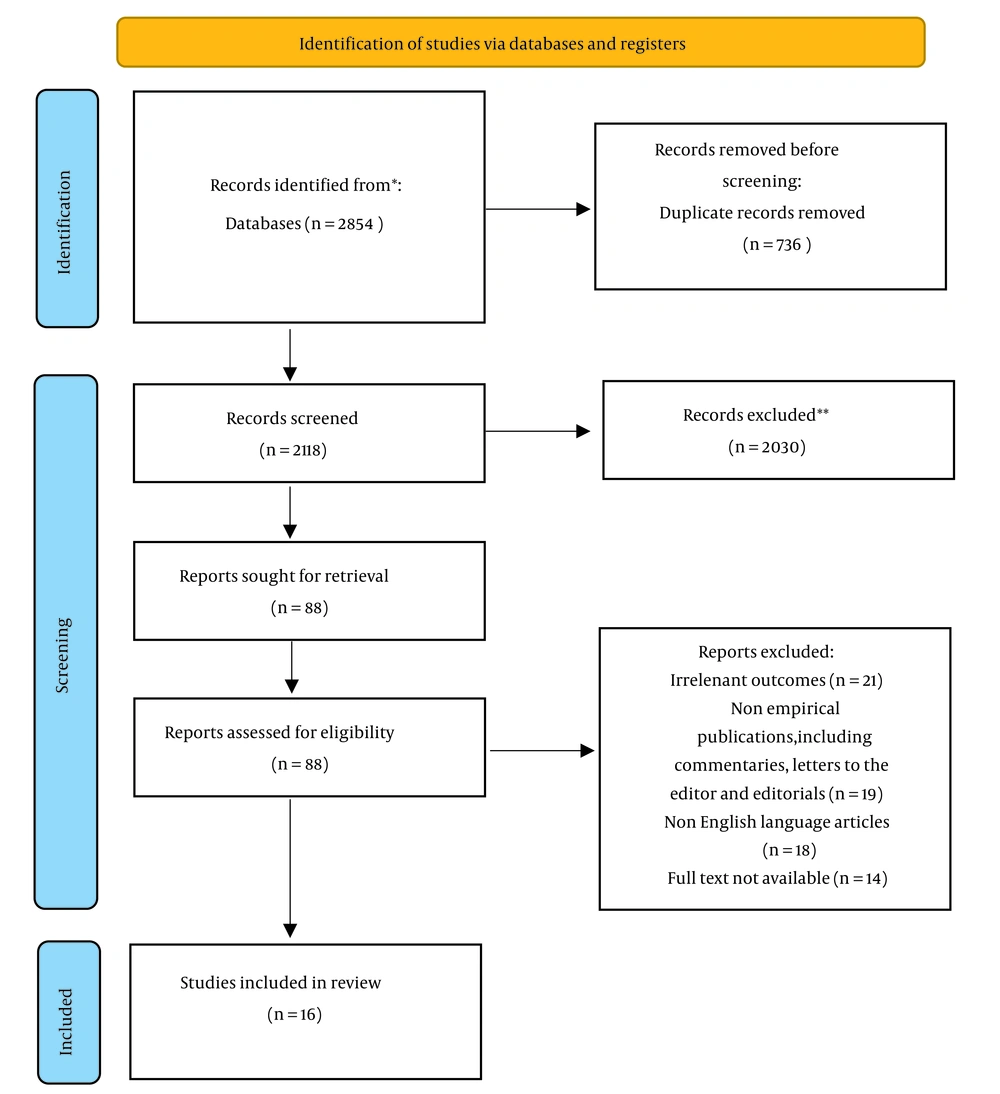
Figure 1.
PRISMA flow diagram (8)
3.1. Narrative Synthesis
This systematic review evaluated the association between iron deficiency anemia and an increased risk of febrile seizures in children. Over the past five years, numerous studies from different countries, particularly in areas where iron deficiency is prevalent, have examined this relationship (23). For example, a study from Pakistan that included 30 children with febrile seizures and 30 control children without seizures found that iron deficiency anemia may increase the risk of febrile seizures. The study suggested that addressing and preventing iron deficiency anemia could help reduce the occurrence of these seizures (24).
Fallah et al. (25) examined 150 children divided equally into three groups: febrile seizures, non-febrile seizures, and a control group. They concluded that assessment of iron status is recommended in children experiencing their first episode of febrile or non-febrile seizures. In a prospective case-control study of 128 febrile children, Jang et al. (9) found that children with seizures had significantly lower serum iron, ferritin, and transferrin saturation levels than febrile children without seizures. Iron deficiency, defined as ferritin < 30 ng/mL, was more common among seizure cases than controls (49.2% vs 16.9%), and both low serum iron and low ferritin were independently associated with a higher risk of febrile seizures, highlighting the importance of iron status in these patients (9).
Findings from multiple studies support a potential role for iron status in the development of febrile seizures in children. From a physiological perspective, several mechanisms may explain the observed association between iron deficiency and febrile seizures. Iron is essential for the development and function of the central nervous system (26).
First, iron is necessary for the production of inhibitory neurotransmitters, including gamma-aminobutyric acid, and is also involved in the metabolism of dopamine and serotonin. Iron deficiency can reduce gamma-aminobutyric acid synthesis and increase neuronal excitability, thereby lowering the threshold for seizure occurrence (10). Second, iron is essential for neuronal energy production. Insufficient iron can compromise adenosine triphosphate production and increase oxidative stress, both of which may increase neuronal excitability, especially during febrile illness (27). Third, iron plays an important role in myelination. Iron deficiency in early life can slow nerve conduction and contribute to electrophysiological instability. Together, these neurological, metabolic, and structural abnormalities may explain why iron-deficient children are more prone to seizures during febrile episodes (28).
Research conducted in Egypt showed that children younger than 2 years with low ferritin and mean corpuscular volume were at higher risk of developing febrile seizures than older children (14). This finding is consistent with neurodevelopmental considerations, as early childhood is a period of peak iron demand for processes such as myelination and synapse formation. Emerging studies also suggest that iron status may be associated not only with seizure occurrence but also with seizure type (29). A study conducted in Lahore reported that children with complex seizures were significantly more likely to have iron deficiency anemia than children with simple seizures. These findings suggest that iron deficiency may affect both seizure susceptibility and clinical manifestations (30).
Despite general agreement among studies, substantial heterogeneity in study design and methodology complicates interpretation of the findings (31). Some studies relied solely on low hemoglobin levels, whereas others used a combination of measures, including ferritin, serum iron, total iron-binding capacity, and mean corpuscular volume (32). Conclusions based solely on ferritin levels should be interpreted with caution. In addition, many studies did not adequately control for confounding factors such as overall nutritional status, socioeconomic status, recurrent infections, and genetic background (33). Variations in findings across countries may be partly explained by epidemiological and nutritional differences. In countries such as Pakistan, India, and Iran, where iron deficiency is highly prevalent, studies have generally reported a stronger association between iron deficiency anemia and febrile seizures (34). In contrast, research from industrialized countries with generally better nutritional status, such as South Korea, has sometimes found no significant association. These discrepancies likely reflect differences in baseline iron levels, dietary patterns, and genetic factors influencing iron metabolism (9).
Recent evidence highlights the importance of assessing iron status in children presenting with febrile seizures, even when there are no obvious signs of anemia. Low levels of ferritin, serum iron, or mean corpuscular volume may indicate an increased risk of febrile seizures or recurrence. However, current evidence is insufficient to support definitive conclusions regarding the effectiveness of iron supplementation in reducing seizure risk (35). A 2022 review noted that only a limited number of interventional studies have been conducted, with mixed outcomes. Although some trials reported that iron supplementation decreased recurrence of febrile seizures in children with iron deficiency, others found no significant benefit. These findings underscore the need for large-scale randomized controlled trials to clarify the role of iron therapy in preventing febrile seizures (11).
Future research should examine the influence of inflammatory factors on iron status. Measuring ferritin alongside inflammatory markers, such as C-reactive protein or procalcitonin, may help account for the confounding effects of inflammation (13). Emerging iron biomarkers, including hepcidin and soluble transferrin receptor, should also be incorporated into future studies to improve the precision of iron status assessment. Furthermore, neurophysiological investigations and functional imaging techniques, such as functional magnetic resonance imaging and positron emission tomography, could provide more detailed insights into how iron deficiency affects brain function during febrile episodes (36).
Evidence from the past five years suggests that iron deficiency is a significant and potentially modifiable risk factor for febrile seizures in children. This association is supported by biological, clinical, and epidemiological data, although a definitive causal relationship has not yet been established. Therefore, assessing iron status in children with febrile seizures is important not only for the early detection of anemia but also as a potential preventive strategy in clinical management (37).
3.2. Limitations
This review had several limitations. First, differences in study designs, sample sizes, and outcome measures made a meta-analysis unfeasible. Second, the quality of evidence was inconsistent, with some studies showing a moderate to high risk of bias. Third, geographic and methodological limitations restricted the generalizability of some findings. Fourth, only a limited number of studies specifically examined the impact of iron deficiency on febrile seizures in children. These gaps highlight methodological shortcomings and the need for further focused research in this field.
Most included studies were conducted in specific geographic settings, which may limit the generalizability of the findings. There was also considerable variation in study design, sample characteristics, and measurement tools, making direct comparisons and data synthesis challenging. Differences in methodological quality and the possibility of publication bias may have further affected the reliability of the results. In addition, some studies involved small or narrowly defined samples, reducing the strength and broader applicability of the conclusions.
3.3. Conclusions
The reviewed studies show that iron deficiency is associated not only with increased frequency and severity of febrile seizures but also with longer seizure duration. Because iron plays an important role in central nervous system function and neurotransmitter regulation, inadequate iron levels may increase the brain’s sensitivity to febrile stimuli. Given the importance of preventing and managing febrile seizures and the potential impact of iron deficiency on neurological health, assessing iron status and implementing appropriate nutritional interventions may help reduce risk and improve the quality of life of children. Accordingly, health policies should address the comprehensive prevention and management of iron deficiency.
Such policies could include regular screening of iron status in children, especially between 6 months and 5 years of age, iron supplementation programs, and promotion of a balanced diet in areas with a high prevalence of iron deficiency. Educating parents and caregivers about the importance of iron for neurological development could further support preventive efforts.
Integrated health care approaches, including growth monitoring, neurological assessment, and nutritional assessment, along with longitudinal research to track the effects of iron deficiency, can strengthen evidence-based decision-making and improve policy effectiveness. Implementing these strategies may prevent complications related to iron deficiency and reduce the risk of febrile seizures in children. Finally, future research using longitudinal designs and larger sample sizes is needed to clarify causal relationships and assess the therapeutic benefits of iron supplementation.