
1. Introduction
Diabetic retinopathy (DR) is a leading cause of preventable blindness among working-age adults worldwide, and its burden is increasing with the rising prevalence of diabetes mellitus (1). Regular retinal screening is an effective secondary prevention strategy that enables the early detection and treatment of DR before symptoms develop, reducing the risk of severe vision loss by more than 90% (2). As most diabetes care is delivered in community settings, primary care plays a pivotal role in promoting screening through continuity of care, routine monitoring, and referral pathways (3).
Despite established screening guidelines and demonstrated effectiveness, screening uptake remains below public health targets (4). Quantitative studies have identified factors associated with non-attendance, including socioeconomic disadvantage, diabetes duration, and treatment characteristics (5-7). However, these studies often fail to capture the complex psychological, cultural, and healthcare-system factors that influence patients’ screening decisions (8).
Although previous reviews have examined barriers and facilitators to DR screening, they have generally combined evidence from diverse settings, including ophthalmology clinics, national screening programs, and primary care services (9-11). This approach may overlook challenges specific to primary care, such as competing clinical priorities, unclear responsibilities between primary care providers and eye-care specialists, and fragmented patient tracking systems (12, 13). Notably, these primary care challenges are not unique to DR screening and have also been documented in other preventive care contexts (9-11). In addition, qualitative evidence remains dispersed across geographical and healthcare contexts, limiting its applicability for primary care improvement.
To address this gap, we conducted a systematic review and meta-synthesis of qualitative studies exploring factors influencing DR screening uptake in primary care settings. By integrating patient-, provider-, and system-level perspectives, this review aims to develop a comprehensive understanding of screening behavior and provide evidence to inform interventions, strengthen primary care pathways, and improve equitable access to DR screening.
2. Methods
2.1. Study Design
This study employed a systematic review and meta-synthesis of qualitative evidence. The review was conducted and reported in accordance with the Preferred Reporting Items for Systematic Reviews and Meta-Analyses (PRISMA) guidelines (14) and the Enhancing Transparency in Reporting the Synthesis of Qualitative Research (ENTREQ) statement (15). The review protocol was registered on the International Prospective Register of Systematic Reviews (CRD420261423675).
2.2. Eligibility Criteria
Study eligibility was determined using the SPIDER framework (Sample, Phenomenon of Interest, Design, Evaluation, Research type) (16). Eligible studies included adults with type 1 or type 2 diabetes, primary care or community-based healthcare professionals, or both, and explored factors influencing DR screening attendance, referral, or uptake in primary care settings. Only studies employing qualitative methods (e.g., interviews, focus groups, ethnography, or qualitative content analysis) and reporting original empirical data on participants’ experiences, perspectives, or behaviors related to DR screening were included.
For the purpose of this review, a study was considered to have a "primary care component" if: (a) the setting was an ambulatory, first-contact, or community-based general practice; (b) a primary care provider (e.g., GP, community nurse) played a role in screening, referral, or education; or (c) the study explored patients’ journey from a primary care entry point for diabetes care. Studies conducted exclusively in specialist or hospital settings, such as ophthalmology tertiary referral centers, without any primary care link were excluded. Studies that used exclusively quantitative designs, focused only on biological or clinical outcomes without experiential data, were published in languages other than English, or were published before January 2000, were excluded. Grey literature was excluded unless sufficient methodological information was available for quality appraisal.
2.3. Search Strategy
A comprehensive literature search was conducted in seven databases—MEDLINE, EMBASE, CINAHL, PsycINFO, Scopus, Web of Science, and the Cochrane Library—from inception to April 2026. A representative search strategy for MEDLINE (Ovid) was: ("Diabetic Retinopathy"[MeSH] OR "diabetic retinopathy"[tiab] OR "retinal screening"[tiab]) AND ("Primary Health Care"[MeSH] OR "primary care"[tiab] OR "General Practice"[MeSH] OR "community health"[tiab]) AND ("Qualitative Research"[MeSH] OR "qualitative"[tiab] OR "interview"[tiab] OR "focus group"[tiab] OR "barriers"[tiab] OR "facilitators"[tiab]). Complete search strategies for all databases are provided in Supplementary S2. Additional studies were identified through manual reference-list screening, citation tracking, and targeted searches of relevant primary care, diabetes, and ophthalmology journals.
2.4. Study Selection
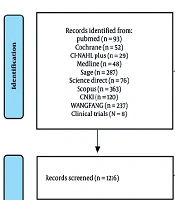
All retrieved records were imported into Rayyan (17), and duplicates were removed. Two reviewers independently screened titles and abstracts, followed by full-text assessment of potentially eligible studies. Disagreements were resolved through discussion or consultation with a third reviewer. Reasons for full-text exclusions were documented and reported in the PRISMA flow diagram (Figure 1).
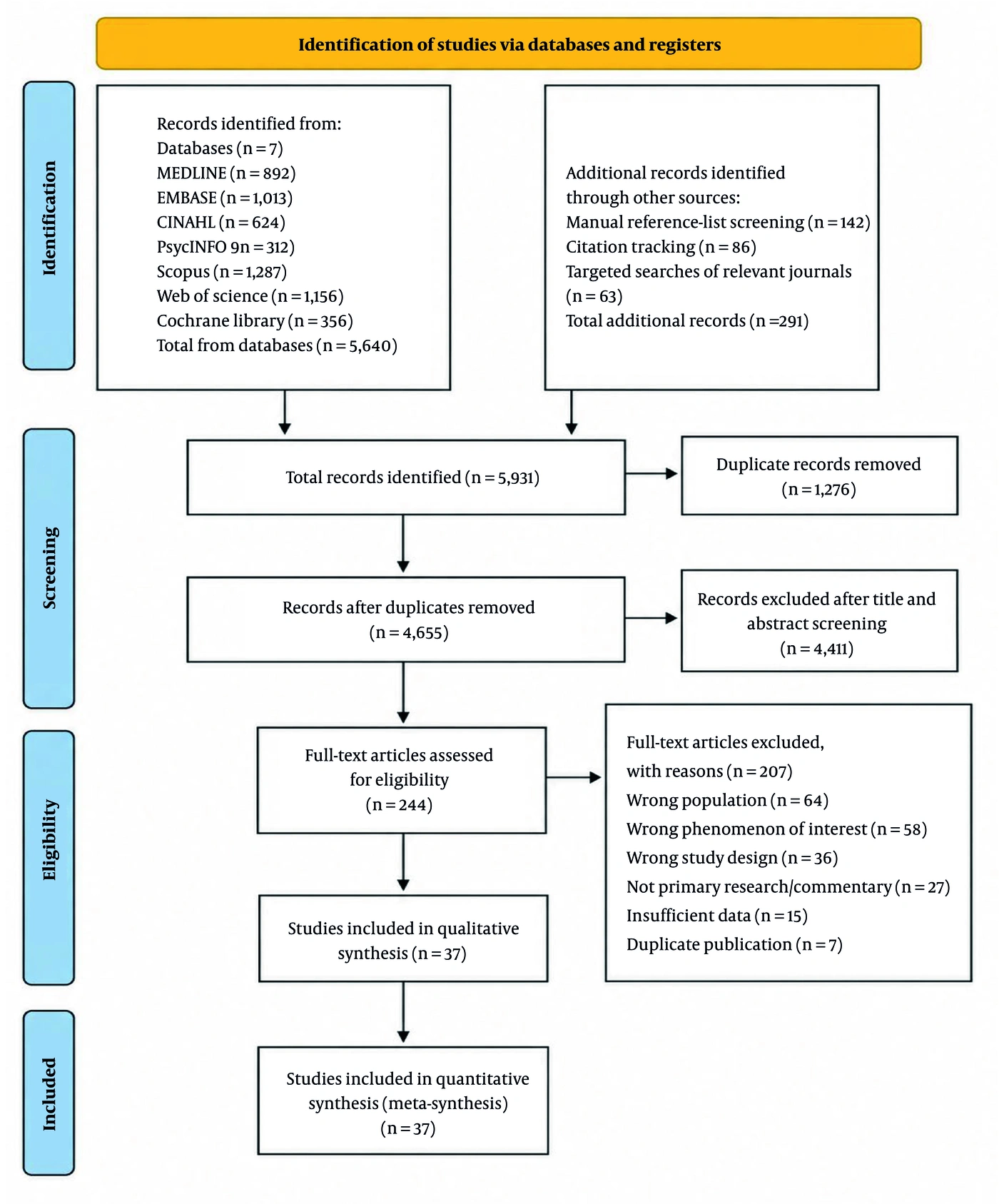
Figure 1.
PRISMA flow diagram
2.5. Quality Assessment
Methodological quality was independently assessed by two reviewers using the Critical Appraisal Skills Programme (CASP) Qualitative Checklist (18). Disagreements were resolved through consensus. The appraisal informed confidence in the synthesized findings rather than study exclusion. All studies, regardless of quality, were included in the main synthesis. A sensitivity analysis was conducted to determine whether the themes or their sub-components were substantively altered when findings from studies assessed as having ‘major’ methodological limitations were excluded. Detailed quality assessment results are provided in Supplementary S3.
2.6. Data Extraction
A standardized, piloted extraction form was used to collect data on study characteristics, participants, setting, methodology, and key findings related to DR screening uptake. Participant quotations, author interpretations, and contextual information were extracted to preserve the integrity of the original data. To calculate the total number of participants, we extracted the sample size reported for each unique study. When a study did not report an exact number for a subgroup, participants were counted under the largest relevant stakeholder category. We ensured that participants from multiple reports of the same study were counted only once. All extracted information was cross-checked by a second reviewer and managed in a structured database.
2.7. Data Synthesis
Qualitative findings were synthesized using the thematic synthesis approach of Thomas and Harden (19), which was the primary synthesis method. The process involved:
1) Inductive line-by-line coding of relevant data (participant quotations and author interpretations) using NVivo 14. Two reviewers (MS, AR) independently coded all 37 studies. They met regularly to compare codes, resolve disagreements through discussion, and iteratively develop a shared codebook. Disconfirming evidence and contradictions were actively coded and subsequently discussed to ensure their incorporation into theme development.
2) Development of descriptive themes by grouping related codes based on similarities and differences across studies.
3) Generation of higher-order analytical themes through iterative interpretation and comparison, moving beyond description of the data to answer the review question. The term "line-of-argument synthesis" was initially used informally; however, we clarify that the methodology was thematic synthesis, which ultimately yields higher-level analytical themes. A detailed audit trail, showing the progression from representative first-order data (participant quotes) and second-order constructs (author interpretations) to descriptive and analytical themes, is provided in Supplementary S6. Regular team discussions and reflexive review enhanced analytical rigor and credibility.
2.8. Confidence in Findings
Confidence in each synthesized theme was assessed using the GRADE-CERQual framework (20), which evaluates methodological limitations, coherence, adequacy of data, and relevance. Based on these domains, each theme was assigned a confidence rating of high, moderate, low, or very low. Detailed CERQual assessments and justifications are provided in Supplementary S4.
3. Results
3.1. Characteristics of Included Studies
The systematic review and meta-synthesis integrated qualitative evidence from 37 unique studies exploring factors influencing DR screening uptake in primary care settings. Methodologically, the included literature represents a global landscape spanning 11 countries with diverse economic and geographic contexts. The United Kingdom contributed the largest volume of literature, with 11 studies, followed by Australia with 9 studies and the United States with 6 studies. The remaining research was distributed across Ireland (2 studies) and South Africa (2 studies), while China, India, Thailand, Sri Lanka, Nigeria, and Iran each contributed 1 study to the synthesis. These 37 papers included a total of 1,117 participants, comprising 1,024 individuals living with diabetes mellitus and 93 healthcare professionals providing front-line primary or ophthalmic care. Overall characteristics of the included studies are provided in Supplementary S5.
3.2. Meta-Synthesis Findings
A total of 128 initial codes were generated through line-by-line coding. These were grouped into 14 descriptive themes and further abstracted into five overarching analytical themes: (1) Knowledge, Risk Perception, and Health Beliefs; (2) Psychological and Emotional Determinants; (3) Social and Cultural Influences; (4) Structural, Logistical, and Economic Barriers; and (5) Health System and Primary Care Organizational Factors. Collectively, these themes highlight the multi-layered and frequently intersecting factors that shape DR screening uptake across diverse primary care settings and geographic contexts. The GRADE-CERQual confidence ratings for each theme are presented with the theme descriptions below and summarized in Supplementary S4. The audit trail in Supplementary S6 details the linkage between representative quotations, initial codes, and the final analytical themes.
3.2.1. Theme 1: Knowledge, Risk Perception, and Health Beliefs
Across the 37 included studies, inadequate knowledge and distorted health beliefs regarding DR and its sequelae were among the most consistently identified barriers to screening uptake. Findings converged on three principal dimensions: deficits in disease-specific knowledge, symptom-driven health-seeking behavior, and belief systems—including fatalism and low perceived susceptibility—that undermined engagement with preventive care.
3.2.1.1. Inadequate Knowledge of Diabetic Retinopathy and Screening Purpose
A pervasive, cross-contextual finding was that patients with diabetes harboured substantial gaps in their understanding of both the pathophysiology of DR and the rationale for asymptomatic screening. Across studies conducted in low-, middle-, and high-income countries, many participants demonstrated only rudimentary awareness that diabetes could affect ocular structures. In several studies, patients conflated DR with other ophthalmic conditions, such as glaucoma or cataracts, or erroneously believed that subjectively adequate vision precluded underlying retinal pathology (21).
"I did not know at all that diabetes can have ocular complications. I did not know that eye problems were linked to diabetes." (21)
Patients also frequently demonstrated an imprecise conceptual understanding of disease mechanisms. One participant described DR as involving blood vessels that become 'clogged up' and that 'create new channels in the eye' (22), illustrating how superficial or inaccurate knowledge may fail to motivate consistent preventive behavior.
3.2.1.2. Symptom-Driven Health-Seeking Behavior and Low Perceived Risk
The asymptomatic natural history of early-stage DR posed a profound and recurrent challenge to screening participation across the included literature. Patients consistently articulated a reactive, symptom-led orientation to eye care, deferring attendance until vision changes became perceptible. This pattern was observed across diverse settings, including high-income countries with established national screening programmes (23).
"I did not pay so much attention to that because I have 20/20 vision…I was not rushed or worried to go back to the treatment, because like I said, I did not understand how bad my eye was." (24)
This symptom-contingent approach to care seeking was reinforced by a broader tendency to view preventive health behaviors as unnecessary in the absence of a tangible clinical complaint. Many patients reported no perceived urgency to attend DR screening appointments given their subjective sense of visual wellness (24-26).
3.2.1.3. Health Beliefs: Fatalism, Self-Reliance, and Alternative Explanatory Models
Beyond knowledge deficits, a constellation of health beliefs—including religious and cultural fatalism, self-reliance, and recourse to alternative or traditional medicine—influenced patients' orientations toward DR screening. Fatalistic attributions, in which illness outcomes were perceived as divinely ordained or predetermined, were documented across studies conducted in South Asian, Latin American, Middle Eastern, and Sub-Saharan African contexts and diminished the perceived utility of preventive action.
"I said, 'No, I don't want to go [to the doctor], I already struggled… God is giving me what I have.'" (27)
"The truth of the matter. It all boils down to what you put in your mouth. But. [diabetes] is going to deteriorate things in your body no matter how well you stick to the rules." (28)
3.2.2. Theme 2: Psychological and Emotional Determinants
Emotional and psychological factors constituted a distinct and cross-cutting domain influencing DR screening uptake. These included fear and denial, competing life demands and psychological burden, and the emotional valence of in-clinic encounters. These determinants frequently interacted with cognitive factors and were not reducible to knowledge deficits alone.
3.2.2.1. Fear, Denial, and Avoidance Behavior
Fear emerged as a paradoxical and bidirectional force across the included studies. Although fear of vision loss facilitated screening engagement for some participants (25, 27, 31, 32), it simultaneously acted as a barrier for others, who avoided attendance because they feared receiving adverse diagnostic news. This ostrich-like avoidance was identified by healthcare providers and patients alike as a significant contributor to non-attendance.
"I hadn't been to the eye doctor in over like seven years or more. I was just scared to go, I don't know. I don't know why. I guess I didn't want to know what was going on with my eye." (24)
3.2.2.2. Psychological Burden of Chronic Disease and Mental Health Impact
The psychological burden of living with a chronic, progressive disease exerted a pervasive influence on DR screening behaviour across the included literature. In studies exploring experiences of advanced DR, patients described profound existential distress associated with vision loss, including loss of autonomy, occupational incapacity, social isolation, and deterioration of self-worth (21).
"I can't see when I walk, or when I take things. The world is dark, and I feel like I want to die." (21)
3.2.2.3. Motivation, Self-Efficacy, and Internal Drive
Despite the barriers described above, several studies identified internally generated motivation as an important facilitator of screening engagement. Participants frequently cited the prospect of blindness and its consequences for their roles as parents, grandparents, and breadwinners as drivers of health-seeking behavior.
"I have a family. I have kids. I want to see them grow up, get married, and maybe have grandchildren. Therefore, I want to see that that future becomes a reality. I think the only thing I can do is to be healthy." (35)
Self-efficacy, defined as the belief in one's capacity to undertake health-protective behaviors, was identified as a facilitating construct in several studies. Patients who felt empowered in diabetes self-management more generally showed greater engagement with screening (22, 32). Conversely, patients with low self-efficacy expressed fatalistic disengagement from all aspects of diabetes care.
3.2.3. Theme 3: Social and Cultural Influences
Social networks, interpersonal relationships, and broader cultural frameworks functioned as both facilitators and barriers to DR screening uptake. This theme encompasses the influence of healthcare provider relationships, family and peer support, social norms, and culturally specific belief systems.
3.2.3.1. Healthcare Provider Influence and Referral Behavior
The role of primary care and specialist healthcare providers in initiating, recommending, and reinforcing DR screening attendance emerged as one of the most consistently and strongly documented determinants of uptake across the included studies. Across diverse cultural contexts, patients attributed their engagement with DR screening primarily to direct recommendation or referral by their general practitioner, endocrinologist, or diabetes specialist nurse (25, 36).
"I do just [about] everything [my doctor] asks of me. He just hasn't asked me to go get an eye exam, so I haven't done it…If he does ask, I will do it." (27)
The corollary was equally notable: the absence of a professional recommendation was frequently cited as a primary reason for non-attendance. Patients who had not received an explicit prompt or referral from their primary care provider often attributed their non-engagement to a perceived lack of clinical urgency (22, 26, 29).
3.2.3.2. Family, Peer, and Social Network Support
Family members and close social networks were a crucial source of both instrumental and informational support for DR screening attendance in the included studies. This was particularly evident in populations with language barriers, limited mobility, or cognitive impairment, for whom family members facilitated access by arranging transport, accompanying patients to appointments, and providing reminders.
"I cannot go by myself, I cannot communicate well. My kids look after me." (25)
Vicarious learning through the experiences of family members and peers with diabetes also emerged as a significant determinant of health behavior. Patients who had witnessed diabetic complications, including blindness, in relatives described heightened motivation to attend screening (24, 26, 27, 34).
3.2.3.3. Gender Norms and Socio-Cultural Role Constraints
Gender emerged as a significant moderating variable across several studies, particularly those conducted in South and Southeast Asian and Middle Eastern contexts. Female participants frequently described an unwillingness to be perceived as a 'burden' on family members by requiring an escort or transport to appointments (37, 38).
"Though I have an appointment date [to check eyes], I was not able to go due to some reason, mainly problems at home. … suddenly children get ill … or children say there is a parents' meeting at school." (37)
In several low- and middle-income country contexts, women were observed to have lower levels of health literacy and limited exposure to reliable health information, reflecting broader patterns of educational inequality (23, 27, 29). Cultural and linguistic isolation, including among migrant communities in high-income settings, compounded these barriers (27, 39, 40).
3.2.3.4. Stigma, Social Isolation, and Disability Identity
Stigma associated with visual impairment, diabetes, and the use of glasses or assistive devices was identified as a barrier to DR screening in several studies across diverse cultural contexts. Patients reported reluctance to disclose their diabetes diagnosis to employers, peers, or within community settings, which in some cases extended to avoidance of health-seeking behaviors that might make the condition visible (21, 32, 41).
"I am afraid of wearing glasses, even though I need them to read, because my kids would make fun of them." (41)
Social isolation resulting from advanced visual impairment further entrenched disengagement from care, as affected individuals described withdrawal from social activities due to embarrassment and fear of others' reactions (21).
3.2.4. Theme 4: Structural, Logistical, and Economic Barriers
Structural and material barriers constituted a prominent and multidimensional domain influencing DR screening uptake. These included financial constraints and insurance status, geographic access and transportation challenges, and pragmatic logistical obstacles, including time costs, appointment flexibility, and side effects associated with screening procedures.
3.2.4.1. Financial Constraints and Insurance Coverage
Economic barriers were among the most frequently and emphatically described obstacles to DR screening engagement across the included studies, particularly in settings where patients lacked adequate coverage. Uninsured or underinsured patients reported substantial financial disincentives to attendance, including consultation fees, costs of fundal photography, and transport expenditure.
"It's very expensive to go to the doctor. [For diabetic eye screening, it was] around $120. and I had no insurance. I'm looking for another way [to get it done]." (27)
In China, the direct cost of fundal imaging, reported as approximately USD 18 per eye, in addition to endocrinology consultation fees, deterred patients with otherwise normal visual acuity from attending (42). In low- and middle-income country contexts, the financial burden of lifelong diabetes medication further depleted resources available for preventive eye examinations (30, 43).
3.2.4.2. Geographical Distance and Transportation
Geographic access to DR screening services was a major structural barrier in studies conducted in rural, remote, and geographically dispersed settings. Distance to specialist eye care facilities was identified as a fundamental impediment to screening uptake. The concentration of retinal imaging equipment and specialist ophthalmology services in secondary and tertiary facilities required patients to travel considerable distances for what might otherwise be a brief, non-invasive procedure.
"Long travel distances to obtain health services. Between 65 and 70 miles." (34)
3.2.4.3. Time Constraints, Appointment Flexibility, and Competing Demands
Time was a pervasive structural barrier to DR screening across all settings. Patients described competing demands from employment, childcare, and caregiving responsibilities as directly displacing planned screening attendance. This was particularly pronounced among working-age adults in paid employment, for whom clinic hours did not align with occupational schedules (32).
"I'm a stay-home mom, so my main job is my kids. I have a 10-year-old and a 4-year-old, and I have to work with their schedule." (32)
The time required for the full screening procedure was also burdensome. Several studies reported that appointments lasting several hours were experienced as disproportionately burdensome in the context of everyday life, particularly when screening was provided at locations remote from home or work (31, 32, 44).
3.2.5. Theme 5: Health System and Primary Care Organizational Factors
Organizational characteristics of primary care and the broader health system substantially influenced DR screening implementation and uptake. This theme includes systematic recall and reminder mechanisms, workforce capacity and competency, and referral pathway integrity.
3.2.5.1. Systematic Recall, Reminder Mechanisms, and Appointment Management
Systematic recall and reminder systems emerged as some of the most actionable and consistently evidenced facilitators of DR screening uptake across the included studies. Formal invitation letters, automated patient portal messages, and telephone reminders served as effective cues to action.
"[The message is] there reminding me, you really have to get this done. This is not something you can let slide and go ok I'll forget about it." (45)
3.2.5.2. Workforce Capacity, Staff Training, and the Role of Champions
The competency, confidence, and commitment of primary care staff were identified across multiple studies as critical determinants of whether DR screening was consistently offered, effectively implemented, and actively promoted. A recurring, cross-contextual finding was that dedicated, skilled, and motivated staff, particularly the presence of a clinical 'champion' within the practice, were associated with markedly higher screening rates (47).
"She's the one that makes sure that they're done to the best of their abilities and that people are doing [the TDRS exams] right. […] She made it her mission and went above and beyond for it." (48)
Studies examining DR screening implementation in general practice identified GP competency in retinal image acquisition and interpretation as a significant barrier. Many GPs expressed uncertainty regarding their technical proficiency in fundoscopy and fundal photography and indicated reluctance to perform screening without additional training (49, 50, 51).
3.2.5.3. Integration With Routine Diabetes Care
The extent to which DR screening was embedded within routine diabetes management was identified as a key operational variable. Integrating retinal screening with glycemic reviews, flu vaccination clinics, and annual diabetes care plans was described as particularly effective (40, 47).
"They have to have eye drops put into their eyes and so they usually have a nurse available so that they can have the flu injection and their eye drops put in at the same time, it's like a conveyor belt really." (40)
3.2.5.4. Referral Pathways, Communication, and Care Coordination
Deficiencies in inter-professional communication and referral pathway integrity emerged as significant structural barriers to DR screening uptake and follow-up. Problems were identified at multiple stages of the screening pathway: From primary care to screening services, from screening to ophthalmology, and in the feedback of results to referring practitioners and patients.
"How you make a referral is the more challenging part.don't have resources to be tracking every referral." (47)
3.2.5.5. Technology, Artificial Intelligence, and Teleophthalmology
The potential for technology to transform DR screening delivery in primary care was a prominent theme across studies examining implementation in both high-income and resource-limited settings. Non-mydriatic fundal cameras, teleophthalmology platforms, and artificial intelligence (AI)-assisted image analysis were identified as promising mechanisms to expand screening access, reduce procedure-related discomfort, and alleviate workforce bottlenecks (51, 52).
"If an algorithm [AI] could tell me whether there is diabetic retinopathy or not, I could refer them straight to an ophthalmologist." (51)
3.2.5.6. Financial Sustainability and Reimbursement Structures
Financial viability and reimbursement structures at the health system level were identified as critical determinants of the sustainability of primary care DR screening programmes. In studies examining GP perspectives in Australia, Germany, and the United States, inadequate reimbursement was identified as a major disincentive to adopting and maintaining DR screening capacity in general practice (51).
"Time limitation is GP's greatest enemy along with the cost of technology." (39)
The high capital costs of retinal cameras, combined with limited patient throughput in small or rural practices, rendered the financial case for camera acquisition commercially unviable in the absence of supplementary governmental subsidy (49, 51).
Table 1 presents a consolidated overview of the five themes, their constituent sub-themes, and the studies from which the relevant evidence was synthesized.
Table 1.
Summary of Meta-Synthesis Themes, Sub-Themes, and Supporting Studies Across the 37 Included Qualitative Studies
| Themes and Sub-Themes | Supporting Studies |
|---|---|
| Theme 1. Knowledge, Risk Perception & Health Beliefs | |
| 1.1. Inadequate knowledge of DR and screening purpose | (21-26, 29, 32, 36-38, 41, 42, 45, 46, 52) |
| 1.2. Symptom-driven health-seeking and low perceived risk | (21, 22, 24-26, 29, 31, 36, 39-41, 44, 48, 53) |
| 1.3. Fatalism, alternative beliefs, and vicarious learning | (21, 24-30, 34, 37, 41-43, 53) |
| Theme 2. Psychological & Emotional Determinants | |
| 2.1. Fear, denial, and procedural avoidance | (21, 24, 26, 27, 29, 31, 32, 34, 36, 38, 42, 44, 45, 46, 52) |
| 2.2. Psychological burden of chronic disease | (21, 24, 27, 29-31, 33, 34, 39, 43) |
| 2.3. Internal motivation and self-efficacy | (22, 24-27, 31, 32, 35, 36, 45) |
| Theme 3. Social & Cultural Influences | |
| 3.1. Healthcare provider influence and referral behavior | (22-27, 31, 39, 40, 45, 46, 48, 49, 51, 52, 54) |
| 3.2. Family and social network support | (24, 25, 28, 29, 31, 33, 34, 36, 37, 41, 43, 46, 53) |
| 3.3. Gender norms and socio-cultural role constraints | (23, 27, 29, 34, 37, 40, 41, 53) |
| 3.4. Stigma and social isolation | (21, 29, 32, 35, 41) |
| Theme 4. Structural, Logistical & Economic Barriers | |
| 4.1. Financial constraints and insurance coverage | (23-25, 29, 30, 34, 37, 39, 41-43, 47, 48, 51, 55) |
| 4.2. Geographical distance and transportation | (23, 24, 32, 37, 40-42, 44, 53, 55, 56) |
| 4.3. Time constraints, appointment flexibility, competing demands | (24, 26, 27, 31, 32, 38, 39, 41, 44, 45, 47, 48, 50, 51) |
| Theme 5. Health System & Primary Care Organizational Factors | |
| 5.1. Recall systems and reminder mechanisms | (25, 27, 31, 32, 38, 40, 45-47, 52, 54, 55, 57) |
| 5.2. Workforce capacity, training, and champions | (32, 35, 47-51, 55, 56) |
| 5.3. Integration with routine diabetes care | (31, 40, 45, 47, 48, 51, 52, 54) |
| 5.4. Referral pathways, communication, and care coordination | (32, 38, 40, 42, 45, 47-52, 56) |
| 5.5. Technology, AI, and teleophthalmology | (47-52, 55, 56) |
| 5.6. Financial sustainability and reimbursement | (41, 42, 47-49, 51, 55, 58) |
3.3. Conceptual Model
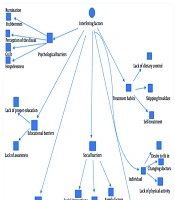
Based on the meta-synthesis findings, the DR screening ecosystem in primary care can be conceptualized as a multi-layered framework in which patient-level behavioural outcomes are governed by dynamic interactions among cognitive, psychological, socio-cultural, structural, and health system factors. At the core, uptake is shaped by Knowledge, Risk Perception, and Health Beliefs (such as misconceptions related to asymptomatic disease or fatalism), which interact strongly with Psychological and Emotional Determinants, wherein fear of vision loss and chronic disease burnout can drive avoidance behaviours or internal motivation. These individual-level factors are substantially moderated by Social and Cultural Influences, particularly the authoritative influence of healthcare provider recommendations and reliance on family support networks. However, these behavioural dynamics do not operate in a vacuum; they are constrained or enabled by Structural, Logistical, and Economic Barriers, including financial costs, transportation, and time-related appointment burdens. Ultimately, these domains are embedded within Health System and Primary Care Organizational Factors, which provide the overarching architecture. At this system level, optimized recall mechanisms, integrated care pathways, clinical champions, and emerging technologies such as teleophthalmology and artificial intelligence represent critical facilitators that can mitigate patient-level barriers and streamline the trajectory toward sustained screening adherence.
The model was iteratively developed by the research team following the thematic synthesis. It was constructed by visually mapping the relationships between the five analytical themes and their sub-themes, based on the synthesis's findings, to provide a higher-level interpretation of the data (Figure 2).
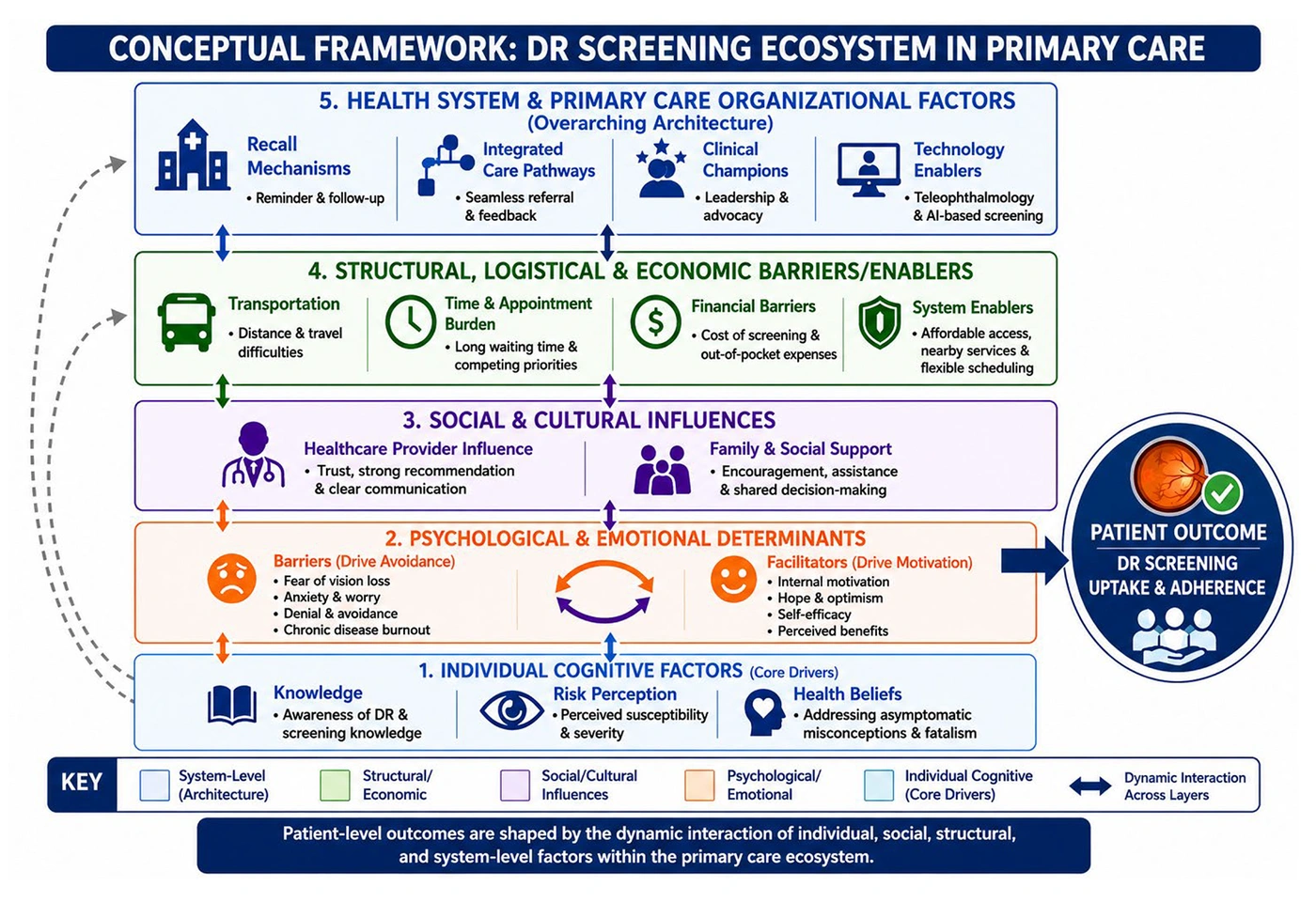
Figure 2.
Conceptual Model
3.4. Sensitivity Analysis
A sensitivity analysis was conducted by re-examining the themes after temporarily excluding data from the three studies assessed as having the greatest methodological limitations. This process did not lead to the removal or substantive alteration of any of the five analytical themes. The core concepts within each theme remained robust, as they were supported by multiple studies across different contexts.
4. Discussion
This systematic review and meta-synthesis integrated qualitative evidence from 37 studies conducted in 11 countries and including 1,117 participants to synthesize the multi-layered factors governing DR screening uptake in primary care settings. Five overarching analytical themes were identified: Knowledge, Risk Perception, and Health Beliefs; Psychological and Emotional Determinants; Social and Cultural Influences; Structural, Logistical, and Economic Barriers; and Health System and Primary Care Organizational Factors. Collectively, these themes indicate that DR screening uptake is not merely a product of individual patient choice, but an emergent outcome of dynamic cognitive, emotional, social, structural, and systemic processes.
The Health Belief Model (HBM) was not prespecified as a framework for the synthesis but was introduced post hoc during the discussion phase as an interpretive lens to contextualize the inductively derived findings. The model posits that an individual’s likelihood of engaging in a health-protective behavior—such as attending a DR screening appointment—is governed by a constellation of interacting perceptual constructs: perceived susceptibility to the health condition; perceived severity of its consequences; perceived benefits of the protective action; perceived barriers to undertaking it; cues to action that prompt health-seeking; and self-efficacy in executing the behavior.
However, it is important to acknowledge that several findings extend beyond the individual-level focus of the HBM. Specifically, Theme 5 (Health System and Primary Care Organizational Factors), which includes recall systems, care integration, referral pathways, financial sustainability, and technology implementation, is not adequately explained by an individual-level behavioral model. These systemic factors are better understood through frameworks such as the Consolidated Framework for Implementation Research (CFIR) or the Socio-Ecological Model. These organizational and structural elements constitute the overarching context or architecture within which individual-level perceptions and behaviors operate. Therefore, while the HBM provides a useful lens for interpreting patient-level cognitive and emotional determinants, it is insufficient on its own to explain the full breadth of the synthesized findings. Our synthesis suggests that effective intervention requires a multi-level approach that addresses both individual beliefs and the systemic context.
The pervasive knowledge deficits and distorted risk perceptions identified in this review are broadly consistent with prior systematic reviews on DR screening barriers. A systematic review encompassing both qualitative and quantitative data identified inadequate knowledge of DR and its asymptomatic natural history as among the most prevalent barriers to screening attendance, a finding corroborated across diverse geographic and healthcare contexts (10). Another study similarly found that patient-level knowledge deficits constituted a central and cross-contextual impediment to DR screening access across low-, middle-, and high-income settings, with participants frequently conflating DR with more symptomatically overt ocular conditions (59). The present meta-synthesis extends and deepens these findings by elucidating the nature and behavioral implications of these knowledge gaps.
Conversely, this review documents an important and underappreciated countervailing force: vicarious learning through the diabetic complications of family members and peers, which emerged as a powerful facilitator of screening motivation. This mechanism aligns with Bandura’s Social Cognitive Theory (60), in which observational learning through the experiences of socially proximate others activates personal risk perception and behavioral intention.
The paradoxical role of fear as both a barrier to and a facilitator of DR screening—the phenomenon of ostrich-like avoidance, in which the prospect of adverse diagnostic news deters attendance—is among the more nuanced and clinically significant findings of this synthesis. This bidirectional dynamic is consistent with the broader health psychology literature on avoidance coping and engagement coping in chronic illness. The present findings align with prior qualitative literature describing patients reporting “attitudes of anguish” in the context of DR screening, including active avoidance precipitated by fear of diagnosis, as well as procedural anxiety related to mydriatic eye drops (61). The identification of mydriasis as a recurrent and specifically deterrent procedural element has not received adequate attention in policy discourse and is partially inconsistent with other studies, suggesting that the procedural experience of screening may be more variable and setting-dependent than previously recognized (62, 63).
The psychological burden of living with chronic diabetes as a compounding determinant of screening disengagement extends beyond DR-specific literature into the broader chronic disease self-management evidence base. The present synthesis illuminates how this burden becomes specifically manifested in the context of DR screening, where the absence of symptoms renders the perceived benefit of attendance less immediately tangible than, for example, glucose monitoring or medication adherence.
The powerful and cross-contextually consistent influence of direct healthcare provider recommendation on DR screening attendance is arguably the most actionable finding of this meta-synthesis and is strongly supported across prior qualitative and quantitative studies. The present synthesis corroborates and strengthens this finding by demonstrating cross-cultural robustness: the authority of the primary care provider as a cue to action appears to transcend cultural, geographic, and linguistic contexts.
The role of clinical “champions”—dedicated, motivated staff who assume active stewardship of DR screening implementation within their practice—has strong parallels in the implementation science literature on quality improvement in primary care. An implementation science framework identifies the presence of a skilled, committed internal champion as a critical driver of the fidelity and sustainability of evidence-based intervention implementation (64).
4.1. Limitations
The findings of this meta-synthesis should be interpreted in light of several limitations. Because the review was based solely on qualitative studies, it provides rich insights into patient experiences and perceptions but cannot determine the prevalence or relative strength of the identified barriers and facilitators across populations. Variation in study methodologies, analytical approaches, and theoretical frameworks introduced interpretive complexity, although this was addressed through rigorous quality appraisal and thematic synthesis methods. The review was limited to English-language publications, introducing substantial language and potential publication bias, as relevant studies from non-English-speaking settings may have been excluded. Furthermore, as is common in qualitative systematic reviews, publication bias may be present, whereby studies reporting clear, novel, or positive findings are more likely to be published than those with null or ambiguous results. Although all included studies focused primarily on primary care, some involved overlapping community or specialist care contexts. This was operationalized by including only studies with a clear primary care component; however, the influence of specialist settings on participants’ perspectives cannot be entirely ruled out. A sensitivity analysis excluding studies with major methodological limitations did not fundamentally alter the five themes, suggesting that the synthesis is robust.
4.2. Implications
This meta-synthesis highlights the central role of primary care providers in improving DR screening uptake. For primary care clinicians, the most impactful action is to provide a clear, direct, and personalized recommendation for retinal screening during routine diabetes consultations. This should be paired with simple, culturally sensitive education that emphasizes the asymptomatic nature of early DR and its treatability. For primary care practices, integrating DR screening into routine diabetes care workflows—for example, by co-locating retinal imaging with annual check-ups or flu clinics—can reduce logistical barriers. Adopting non-mydriatic imaging can mitigate common procedure-related anxieties. For health policymakers and program managers, the findings support investment in systematic recall infrastructure and integrated electronic health records to improve care coordination. The use of teleophthalmology and AI-assisted screening shows promise as a strategy to improve access and efficiency, but these should be viewed as implementation options requiring context-specific evaluation, clinician training, and clear reimbursement pathways to ensure sustainability. Ultimately, improving DR screening requires a multi-level strategy that addresses individual beliefs and patient-level barriers while simultaneously strengthening the organizational capacity of primary care systems to deliver integrated, accessible, and patient-centered preventive care.
4.3. Conclusion
This systematic review and meta-synthesis demonstrates that DR screening uptake in primary care is shaped by a complex interplay of cognitive, psychological, social, structural, and health system factors. Across 37 qualitative studies involving 1,117 participants from 11 countries, five interconnected themes were identified: knowledge, risk perception and health beliefs; psychological and emotional determinants; social and cultural influences; structural, logistical and economic barriers; and health system and primary care organizational factors. The findings highlight that screening behavior is not solely an individual choice but is strongly influenced by provider recommendations, family support, healthcare accessibility, financial constraints, and the organization of primary care services. Confidence in these synthesized findings is generally moderate to high, providing a robust evidence base for the implications. System-level facilitators, including systematic recall systems, integrated diabetes care pathways, teleophthalmology, artificial intelligence-assisted screening, and the presence of clinical champions, emerged as particularly promising strategies for overcoming barriers and improving screening coverage.