
1. Introduction
According to the International Diabetes Federation, the global prevalence of diabetes among adults aged 20 - 79 years reached 10.5% in 2021, affecting an estimated 537 million individuals worldwide. This number is projected to rise to 643 million by 2030 and to 783 million by 2045 (1). As the number of people with diabetes increases, the population affected by diabetes-related complications is also growing (2). Diabetic kidney disease (DKD) is a diabetes-related chronic kidney condition and one of the most prevalent microvascular complications of diabetes. The American Diabetes Association reported that 20%-40% of people with diabetes develop DKD (3). Diabetes is widely recognized as the leading cause of chronic kidney disease, contributing to approximately 50% of all cases. Once DKD progresses to end-stage renal disease (ESRD), patients must rely on kidney replacement therapy, imposing a substantial economic burden on countries and individuals (1). The all-cause mortality rate for DKD is reported to be 50.3 per 1000 person-years, with cardiovascular disease mortality at 8.0 and ESRD mortality at 6.9, posing a severe threat to the lives of individuals with DKD (4).
Previous studies have identified factors influencing DKD in patients with T2DM, including sociodemographic factors, lifestyle factors, and clinical indicators (5,-9). These factors can be categorized as nonmodifiable or modifiable. Nonmodifiable factors, such as age, ethnicity, genetic susceptibility, and the presence of retinopathy, cannot be altered. In contrast, modifiable factors, including glycemia, hypertension, smoking, dyslipidemia, and obesity, can be addressed through patient self-management. Empowering individuals with diabetes to actively manage these modifiable factors is crucial for minimizing the risk and progression of DKD (10).
Self-management refers to an individual's ability to take an active role in their own care and well-being, make informed decisions, and adopt behaviors that promote health and manage chronic conditions (11). It has become an essential approach for the treatment of chronic diseases. The American Diabetes Association Professional Practice Committee emphasizes the crucial role of self-management education for patients with diabetes in establishing positive health behaviors and maintaining mental well-being (12). In recent years, systematic reviews have evaluated the effectiveness of diabetes self-management education among adults with T2DM, demonstrating benefits in glycemic control, cardiovascular risk factors, self-management behaviors, self-efficacy, and psychological outcomes (13-15). However, these reviews mainly focused on diabetes-related outcomes in the general T2DM population rather than renal outcomes. Few reviews have specifically examined individuals at high risk of DKD, and the effects of self-management interventions on kidney function indicators remain unclear.
Although several primary studies have investigated self-management interventions related to DKD progression (16-20), their findings remain heterogeneous across different stages of DKD. Therefore, this systematic review aimed to synthesize the available evidence on the effects of self-management interventions on DKD progression in patients with T2DM. This review may provide scientific evidence to support future intervention development and offer practical guidance for the comprehensive management of patients with DKD or those at high risk of DKD.
2. Methods
2.1. Research Objective
This review aimed to assess the effectiveness of self-management interventions on DKD progression and related health behaviors among patients with T2DM.
2.2. Study Design and Registration
This review followed the PRISMA (Preferred Reporting Items for Systematic Reviews and Meta-Analyses) statement and was prospectively registered in PROSPERO (CRD42024505345). No deviations from the registered protocol were made during the review process.
2.3. Eligibility Criteria
The inclusion criteria were as follows: 1) patients were diagnosed with T2DM and were older than 18 years; 2) patients had DKD or were at high risk of DKD, regardless of stage. High risk of DKD was defined as T2DM with established risk factors for DKD progression, including long diabetes duration, microalbuminuria, hypertension, obesity, or poor glycemic control (21); 3) only quantitative studies, including randomized controlled trials (RCTs), quasi-experimental studies, or pre-post intervention studies, were eligible; 4) eligible self-management interventions included diabetes self-management education and at least one structured component, such as self-monitoring, behavioral change, lifestyle modification, dietary management, medication adherence support, family participation, or digital support; 5) outcome measures included, but were not limited to, clinical indicators and self-management behaviors; 6) only studies published in English or Chinese were included; 7) full-text articles published in peer-reviewed journals were eligible; and 8) the search was limited to articles published from inception to August 2025.
The exclusion criteria were clinical drug trials, pharmacological treatment studies, and unpublished articles.
2.4. Information Sources
This systematic review was conducted using nine computerized databases and one trial register: PubMed, Cochrane, CINAHL Plus with Full Text (EBSCOhost), MEDLINE Complete, Sage Journals, ScienceDirect, Scopus, CNKI (China National Knowledge Infrastructure), Wan Fang Database, and ClinicalTrials.gov (https://www.clinicaltrials.gov/).
2.5. Search Strategy
The search strategy was developed using the PICO framework. The population comprised patients with DKD or those at high risk of DKD. The intervention was a self-management intervention. The comparator was standard or usual care. The outcomes were self-management behaviors or related outcomes and clinical outcomes.
The literature search used the following keywords: ("Diabetic Nephropathies" OR "Nephropathies, Diabetic" OR "Nephropathy, Diabetic" OR "Diabetic Nephropathy" OR "Diabetic Kidney Disease" OR "Diabetic Kidney Diseases" OR "Kidney Disease, Diabetic" OR "Kidney Diseases, Diabetic" OR "Diabetic Glomerulosclerosis" OR "Glomerulosclerosis, Diabetic" OR "Intracapillary Glomerulosclerosis" OR "Nodular Glomerulosclerosis" OR "Glomerulosclerosis, Nodular" OR "Kimmelstiel-Wilson Syndrome" OR "Kimmelstiel Wilson Syndrome" OR "Syndrome, Kimmelstiel-Wilson" OR "Kimmelstiel-Wilson Disease" OR "Diabetic Renal Disease") AND ("Self-Management" OR "Self Management" OR "Management, Self" OR "Self Care" OR "Care, Self" OR "Self-Care").
2.6. Study Records
2.6.1. Data Collection Process
Search results were exported to EndNote, and after duplicate removal, records were transferred to Excel. Two reviewers (CDM and LBY) independently screened the titles, abstracts, and full texts of all retrieved studies according to the predefined eligibility criteria. Studies that did not meet the inclusion criteria were excluded. Disagreements regarding study selection were resolved through discussion with a senior reviewer (SJ). In addition, the reference lists of eligible studies were manually checked to identify potentially relevant articles. The selection process is presented in a PRISMA flow diagram (Figure 1).
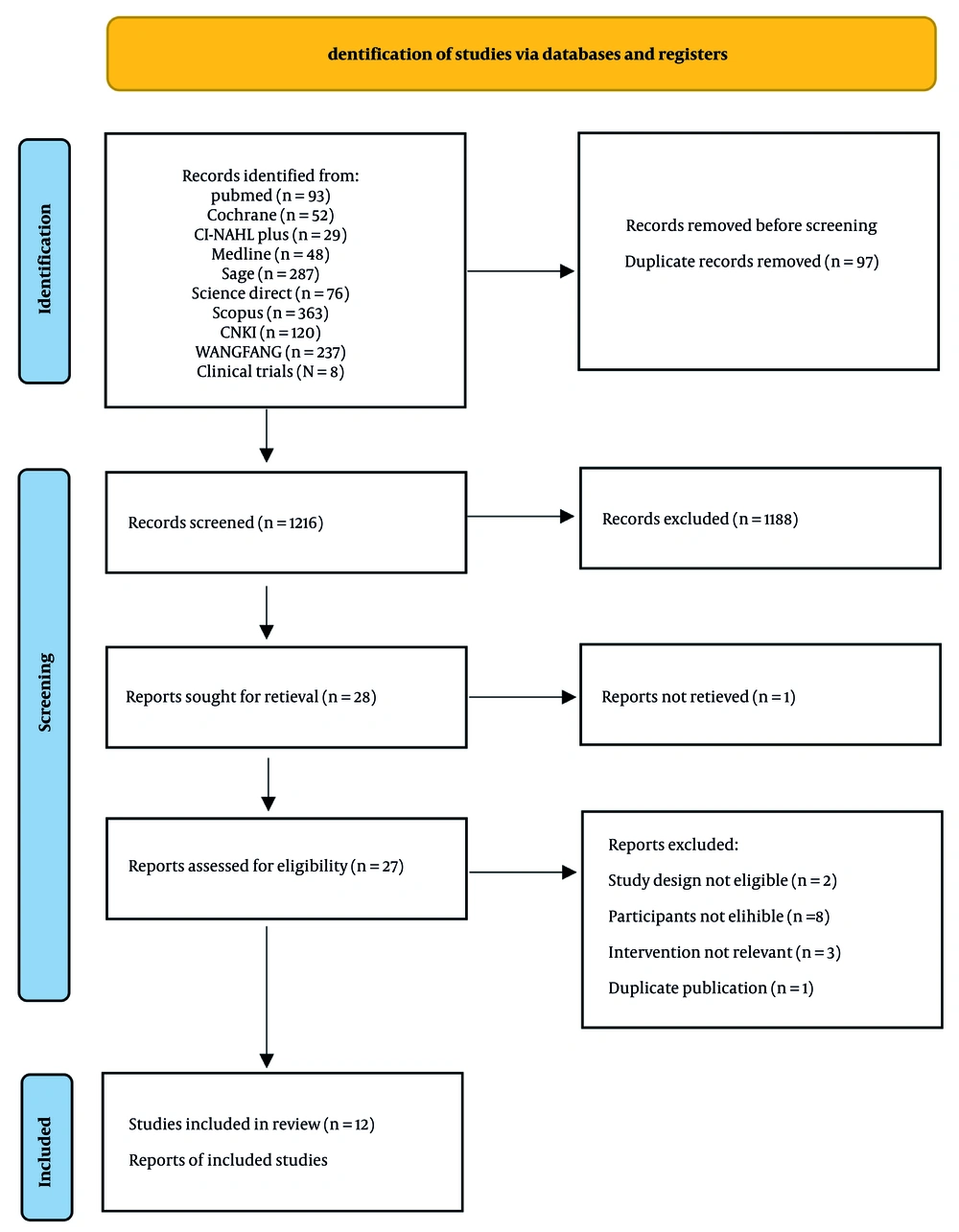
Figure 1.
PRISMA flow diagram
Data extraction was performed independently by two reviewers (CDM and LBY) using a standardized data extraction form developed in accordance with the Cochrane Handbook for Systematic Reviews of Interventions version 6.4. Extracted data included study design, participant characteristics, intervention and comparator details, intervention duration and follow-up, outcome measures, and reported findings. Disagreements were resolved through discussion with a senior reviewer (SJ).
2.6.2. Critical Appraisal
Two reviewers (CDM and LBY) independently appraised the included studies. According to the Cochrane Handbook for Systematic Reviews of Interventions (22), the risk-of-bias tool for randomized trials (RoB) was used to assess randomized controlled trials of interventions, and the Risk of Bias in Non-Randomized Studies of Interventions (ROBINS-I) tool was applied to non-randomized studies of interventions. The overall judgment has four levels: low, moderate, serious, or critical risk of bias. The RoB tool includes random sequence generation, allocation concealment, blinding of participants and personnel, blinding of outcome assessment, incomplete outcome data, selective reporting, and other bias; each study was assessed as having a low, high, or unclear risk of bias. ROBINS-I includes seven bias domains: bias due to confounding, bias in selection of participants into the study, bias in classification of interventions, bias due to deviations from intended interventions, bias due to missing data, bias in measurement of the outcome, and bias in selection of the reported result (22). Discrepancies between reviewers were resolved by a third researcher. ROBINS-I assessments were conducted across pre-intervention, at-intervention, and post-intervention domains according to Cochrane Handbook guidance.
2.6.3. Data Synthesis
Given substantial heterogeneity in study designs, populations, intervention characteristics, outcome measures, and follow-up duration, a meta-analysis was not considered appropriate. Therefore, a structured narrative synthesis approach was adopted. The included studies were synthesized according to study design, participant characteristics, intervention characteristics, follow-up duration, outcome domains, and the direction of reported effects. The synthesis primarily focused on the clinical relevance of outcomes, consistency of findings across studies, and the reported direction of effects rather than quantitative pooling.
Findings were grouped into clinical outcomes and behavioral and psychological outcomes. Intervention characteristics, including duration, frequency, delivery format, and follow-up strategies, were also summarized narratively to support interpretation of the findings.
3. Results
3.1. Search Outcomes
A total of 1324 records were initially identified from English and Chinese databases. After duplicate removal, the remaining articles underwent title and abstract screening. Dissertations, conference abstracts, reviews, case reports, observational studies, and studies involving irrelevant populations were excluded. Twenty-eight articles were selected for full-text review; however, one article could not be retrieved. Consequently, 27 full-text studies were assessed for eligibility. Studies were excluded because of inappropriate study design, inclusion of non-T2DM populations or populations not meeting the eligibility criteria, irrelevant interventions, duplicate publications, or retracted articles. Ultimately, 12 studies were retained for the final review. The detailed study selection procedure is presented in Figure 1.
3.2. Critical Appraisal
Among the 12 included studies, two were randomized controlled trials, and the remaining ten were non-randomized controlled trials. Regarding risk of bias, four studies had a low risk of bias (16, 18-20), six had a moderate risk of bias (17, 23-27), one had a high risk of bias (28), and one had a serious risk of bias (29), as shown in Tables 1 and 2. Self-management interventions typically require participants to actively engage, learn, and practice specific skills or strategies. Even if participants are unaware of their group allocation at enrollment, they may become aware of it after the intervention, making full blinding nearly impossible. However, objective indicators can be used to reduce outcome bias resulting from insufficient blinding. Of the 12 included studies, one non-RCT had a serious risk of bias, and one RCT had a high risk of bias. Although some studies carry a risk of bias, they still provide valuable insights into the impact of self-management on the progression of DKD complications.
Table 1.
Risk of Bias for Randomized Controlled Trials a
| No. | Study (Author, Year) | Random Sequence Generation | Allocation Concealment | Blinding of Participants and Personnel | Blinding of Outcome Assessment | Incomplete Outcome data | Selective Reporting | Other Bias | Overall Judgement |
|---|---|---|---|---|---|---|---|---|---|
| 1 | Waki K et al., 2024 (20) | Low | Low | Low | Low | Low | Low | Low | Low |
| 2 | Kazawa et al., 2020 (28) | Unclear | Unclear | Unclear | Low | Low | Low | High | High |
a Low indicates low risk of bias across domains. Unclear indicates insufficient methodological information reported in the original study. High indicates high risk of bias in at least one domain.
Table 2.
Risk of Bias for Non-Randomized Controlled Trials a
| No. | Study (Author, Year) | Bias due to Confounding | Bias in Selection of Participants into the Study | Bias in Classification of Interventions | Bias due to Deviations from Intended interventions | Bias due to Missing data | Bias in Measurement of the Outcome | Bias in Selection of the Reported result | Overall Judgement |
|---|---|---|---|---|---|---|---|---|---|
| 3 | Helou et al., 2020 (16) | Low | Low | Low | Low | Low | Low | Low | Low |
| 4 | Kazawa and Moriyama, 2013 (23) | NI | Low | NI | Low | Low | NI | Low | Moderate |
| 5 | Pagels et al., 2015 (17) | Moderate | Low | Moderate | NI | Low | Low | Low | Moderate |
| 6 | Thojampa, 2017 (24) | NI | Low | Low | Low | Low | Moderate | Low | Moderate |
| 7 | Hui et al., 2018 (25) | Low | Low | Moderate | NI | Low | Low | Low | Moderate |
| 8 | Limin et al., 2020 (19) | Low | Low | Low | Low | Low | Low | Low | Low |
| 9 | Qian and Lizhi, 2021 (29) | Low | Low | Low | NI | Low | Serious | Moderate | Serious |
| 10 | Qinghua et al., 2013 (26) | Low | Low | Low | NI | Low | Moderate | Moderate | Moderate |
| 11 | Wencui et al., 2021 (18) | Low | Low | Low | Low | Low | Low | Low | Low |
| 12 | Xiaojie and Binghui 2016 (27) | NI | Low | Low | NI | Low | NI | Low | Moderate |
a Low indicates low risk of bias across domains. Moderate indicates that the study provides sound evidence but is not comparable to a well-performed randomized trial. Serious indicates important methodological problems in one or more domains. NI, no information available for judgment according to the ROBINS-I tool.
3.3. Study Characteristics
Due to heterogeneity among the included study populations, particularly differences in disease stage, quantitative synthesis (meta-analysis) was not appropriate. Therefore, all 12 studies were included in the qualitative analysis, as shown in Table 3. Only two studies were RCTs (20, 28), seven were quasi-experimental studies (18, 19, 24-27, 29), two used a one-group pre- and post-test design (17, 23), and one used a crossover design (16). Six studies were conducted in China (18, 19, 25, 26, 27, 29), one in Thailand (24), one in Switzerland (16), three in Japan (20, 23, 28), and one in Sweden (17). Participants were patients with DKD. One study enrolled participants who had been diagnosed with T2DM for at least five years and were at high risk of DKD (24). One study enrolled patients newly diagnosed with T2DM with moderately increased albuminuria (20). Intervention duration ranged from 2 weeks to 18 months. Outcomes included clinical indicators, such as blood glucose, blood pressure (BP), body mass index (BMI), waist circumference (WC), blood lipid profiles, serum creatinine (SCr), urinary albumin-to-creatinine ratio (UACR), and estimated glomerular filtration rate (eGFR), as well as psychological and behavioral outcomes, including treatment adherence, self-management behaviors, self-efficacy, depression, anxiety, and quality of life (QOL).
Table 3.
Characteristics of Selected Studies on Self-Management Interventions for DKD Progression and Health Behaviors in Patients with T2DM a
| No. | Study (Author, Year) | Study Design | Participants | Sample Size | Intervention | Duration | Frequency | Format | Follow-up (Duration or Frequency) | Data Collection Timepoint | Outcomes Assessed | Significant Findings |
|---|---|---|---|---|---|---|---|---|---|---|---|---|
| 1 | Waki K et al., 2024 (20) | RCT | T2DM with moderately increased albuminuria:30 - 299 mg/g | 126 | DialBetesPlus smartphone application | 18 months | Continuous | Remote monitoring | Y | Baseline, month 12,and month 18 | BMI, HbA1c, BP, UACR, eGFR, FBG, LDL-C, HDL-C, SDSCA, QOL. | UACR and HbA1c were significantly improved. |
| 2 | Helou et al., 2020 (16) | Crossover design | DKD, eGFR < 60 mL/min or ACR > 30 mg/mmol | 32 | Multidisciplinary Self- Management Support Program | 12 months | Every two weeks | Telephone contact | Y (3 months) | Baseline, and after each follow-up period of 3 months, totally 4 times | QOL, Self-care activities, HbA1c and Scr, UACR and eGFR | The intervention improved the QOL demonstrating higher mean rank as compared to usual care and three self-care activities, general diet habits, diabetes diet habits, and blood sugar testing. |
| 3 | Kazawa and Moriyama, 2013 (23) | A one group pre- and post-test design | DKD, eGFR between 15 to 59 mL/min/1.73m^2, UACR ≥ 300 mg/g Cr, and between 20 to 74 years of age. | 30 | Self-management skills-acquisition program | 6 months | The first to fourth sessions were every two weeks. The fifth and sixth sessions were once a month. | Face-to-face meetings, telephone or e-mail | Y (every month) | Baseline, three months and six months after intervention | Self-efficacy, QOL HbA1c, Scr, eGFR, BUN, HbA1c, TP, albumin, K, Pi, TG, LDL-c, and HDL-c, BP and BMI | 1.Self-efficacy and self-management behaviors improved due to educational intervention. 2.HbA1c levels were reduced after the intervention,no changes in renal function were observed. |
| 4 | Kazawa et al., 2020 (28) | RCT | T2DM and having a proteinuria of ≥ 2+ or a proteinuria of 1+ and HbA1c ≥ 7.0% (or FBS ≥ 130 mg/dL) and aged 40 years or older. | 40 | Telecommunication-device-based remote self-management education and intermittent telephone calls | 6 months | Once a month | Tablet computer | Y (Biweekly, total nine) | Baseline and six months | Self-management behaviors, Clinical indicators: eGFR, HbA1c, SBP, DBP, BMI, Psychological indicators: Self-Efficacy and QOL | 1.Both groups showed similar behavioral changes, and the participants verified the feasibility of the remote interviews. 2.The degree of behavioral change regarding self-monitoring was lower than that shown by the control group. |
| 5 | Pagels et al., 2015 (17) | Uncontrolled before and after | DKD and with eGFR ≥ 30 mL/min | 58 | A group-based, multidisciplinary and multidimensional support program | 6 months | Three consecutive days | Sessions | N | Baseline and post-intervention | HbA1c, blood lipids, UACR, eGFR, Weight, BMI, WC, BP, PA, Tobacco habits | HbA1c was significantly improved after intervention. There was no significant difference between baseline and follow-up in BP, BMI, WC, UACR or eGFR. |
| 6 | Thojampa, 2017 (24) | Quasi-experimental study | Diagnosed T2DM for at least five years and 20 years or older | 50 | Self-management support and family participation enhancing program | 12 weeks | weekly | Face-to-face sessions and group discussion | N | 1. Clinical outcome on week 1 and week 12.2. Psychology Measures on week 1, and week 8 and week 12 after intervention. | GFR, Creatinine, BP, HbA1c; Self-management activities, Self-efficacy. | Self-management support and family participation enhancing program improved self-management activities and self-efficacy, decreased HbA1c, Creatinine, SBP, DBP, increased eGFR. |
| 7 | Hui et al., 2018 (25) | Quasi-experimental study | DKD and UAER < 300 mg/24h | 92 | WeChat Health Education Based on the Information-Motivation-Behavior (IMB) Model | 6 months | Once a week | WeChat group | Y (6 months) | pre-intervention and 6-month post-intervention | Treatment Adherence Behavior,Self-Efficacy, QOL | The intervention can enhance patients' self-efficacy levels, improve treatment adherence, and enhance the overall quality of life. |
| 8 | Limin et al., 2020 (19) | Quasi-experimental study | Patients in stage III of DKD | 94 | Comprehensive nursing intervention, collaborative outpatient follow-up management by multidisciplinary medical and nursing staff | 1 year | Three times a week | Y (every three months) | Baseline and post-intervention | Adherence to treatment, Irritability, Depression, and Anxiety Scale, Control Rate of Early Risk Factors for DKD (BMI, HbA1c, BP, LDL-C, TG, UACR and GFR, QOL | Comprehensive nursing intervention can alleviate negative emotions in early-stage DKD patients. After intervention, the observation group achieved a better control rate of DKD risk factors and the improvement of the quality of life compared to the control group. | |
| 9 | Qian and Lizhi, 2021 (29) | Quasi-experimental study | DKD | 60 | Video education combined with feedback method | 2 weeks | Not clear | Video | N | Pre- and post- intervention | FBG, 2hPG, HbA1c, Psychological state, Self-management behavior | After intervention, patients in the observation group had lower anxiety and depression scores compared to the control group, the observation group exhibited significantly better blood glucose and higher score of self-management behavior compared to the control group. |
| 10 | Qinghua et al., 2013 (26) | Quasi-experimental study | DKD III stage | 110 | Continued self-management education | 18 months | Not clear | Sessions | Y (at the end of each month) | Urinary microalbumin is collected only at 12 months and 18 months. Other indicators are collected four times: upon admission, 6 months, 12 months and 18 months after discharge. | Diabetes risk factor control rate (FBG, 2hPG, BP, HbA1c, TG, TC, BW, UMA), Knowledge awareness and preventive behaviors related to the disease. | The continued self-management education contributes to improving patients' knowledge about the disease and enhances patients' ability to achieve the targeted control rates for DKD risk factors. |
| 11 | Wencui et al., 2021 (18) | Quasi-experimental study | DKD III stage and ≥ 60 years old | 60 | Multidisciplinary and staged management | 3 months | Five times per week | Session and WeChat public account | once every two weeks | Baseline and after the intervention | FBG, 2hPG, HbA1c,UACR, GFR; Self-management ability; Social support; Depression; QOL | After intervention, FBG, 2hPG, HbA1c, UACR, GFR and the scores of self-management ability, QOL and social support were significantly better, whereas the score of depression was significantly lower in the intervention group compared with the control group. |
| 12 | Xiaojie and Binghui, 2016 (27) | Quasi-experimental study | Early stage of DKD | 70 | Information-Motivation-Behavior Health education model | 6 months | Every 3 weeks | Lecture | N | Pre- and post-intervention | FBG, 2hPG, HbA1c, UACR; Diabetes related knowledge, Self-management behaviors | After the intervention, there were statistically significant differences observed in knowledge scores, self-management behavior scores, and DKD indicators between experimental group and control group. |
a Abbreviations: 2hPG, 2-hour postprandial glucose; BMI, body mass index; BP, blood pressure; BUN, blood urea nitrogen; BW, body weight; DBP, diastolic blood pressure; FBG, fasting blood glucose; GFR, glomerular filtration rate; HbA1c, glycated hemoglobin; HDL-C, high-density lipoprotein cholesterol; K, potassium; LDL-C, low-density lipoprotein cholesterol; PA, physical activity; Pi, inorganic phosphate; QOL, quality of life; SBP, systolic blood pressure; SDSCA, Summary of Diabetes Self-Care Activities; SCr, serum creatinine; TC, total cholesterol; TG, triglycerides; TP, total protein; UACR, urinary albumin-to-creatinine ratio; UMA, urinary microalbumin; Y, yes; N, no.
Table 3 summarizes the characteristics of self-management interventions, including duration, frequency, format, and follow-up. Duration refers to the overall length of the intervention period, which ranged from short-term programs lasting a few weeks to long-term initiatives extending over several months or years. Frequency refers to how often the interventions were delivered, whether daily, weekly, or at other regular intervals. Format refers to the delivery mode, including one-on-one sessions, group meetings, telephone support, and digital platforms. Follow-up refers to strategies used to check in with participants after the initial intervention phase.
3.4. Effects of Self-Management Interventions on Outcomes
3.4.1. Clinical Outcomes
Several studies reported improvements in glycemic indicators following self-management interventions, including fasting blood glucose (FBG), 2-hour postprandial glucose (2hPG), and glycated hemoglobin A1c (HbA1c) (17, 20, 23, 24). However, findings were not entirely consistent across studies, and some evidence was derived from studies with a moderate to serious risk of bias. In three studies, the observation group exhibited significantly better blood glucose indicators (FBG, 2hPG, and HbA1c) than the control group (18, 27, 29). Two studies reported better FBG, 2hPG, and HbA1c in the intervention group than in the control group after the intervention (19, 26). However, one study reported similar glycemic control between the intervention and usual-care groups (16).
Four studies reported that self-management may improve renal function, decrease creatinine, and increase eGFR (18, 20, 24, 27). In two other studies, better UACR and GFR control rates were observed in the intervention group than in the control group (19, 26). Several studies reported no significant improvements in renal function indicators (16, 17, 23).
Self-management interventions were also effective for other clinical indicators. One study reported decreases in both SBP and DBP following self-management interventions (24). Another study observed that the control rates of BP, triglycerides, total cholesterol, and body weight were significantly better in the intervention group than in the control group (26). Moreover, one study reported that, after the intervention, the observation group achieved superior control rates for BMI, BP, LDL-C, and triglycerides compared with the control group (19). These findings suggest that self-management interventions can contribute to improvements in, and control of, various clinical indicators.
3.4.2. Behavioral and Psychological Outcomes
Self-management interventions demonstrated notable effectiveness in enhancing several aspects of self-care activities. One study reported improvements in three self-care activities, including general diet habits, diabetes-specific dietary practices, and blood glucose testing (16). Another study reported positive changes in overall self-management behaviors (23). However, one study reported a lower degree of behavioral change in self-monitoring than in the control group (28). Other studies supported the efficacy of self-management interventions for improving general self-management activities (18, 24, 27, 29).
Self-management interventions had a positive impact on patients' self-efficacy (23-25). In addition, evidence indicated that self-management interventions improved treatment adherence (25). Self-management interventions were also associated with improved overall quality of life (16, 18, 19, 25).
Self-management interventions also had a positive impact on mental health and could alleviate negative emotions, including anxiety and depression (18, 19, 29). In addition, self-management interventions had social effects, with evidence suggesting significantly improved social support scores (18). Collectively, these findings underscore the multifaceted benefits of self-management interventions for patients.
4. Discussion
This systematic review assessed the effectiveness of self-management interventions on clinical indicators and health behavioral outcomes related to DKD progression. The results showed that 9 of the 12 studies reported that self-management interventions may improve patients’ blood glucose levels. Our findings are consistent with previous systematic reviews of diabetes self-management education, which reported significant improvements in glycemic control among adults with T2DM (30, 31). The consistency of these findings suggests that self-management interventions remain effective in improving blood glucose levels, even among patients with DKD or those at high risk of DKD. Many studies have confirmed that blood glucose is a key risk factor for the development of DKD in patients with T2DM (32, 33) and is also a crucial factor in DKD progression (34, 35). The mechanisms by which blood glucose affects DKD are complex. Current research has shown that high blood glucose levels lead to thickening of the basement membrane in the microvasculature, which alters capillary permeability and affects blood flow and material exchange, ultimately resulting in hypoxia and damage to kidney tissue (36-38). In addition, oxidative stress and inflammatory responses induced by high blood glucose levels promote apoptosis of kidney cells. This increased apoptosis leads to structural damage and functional loss in kidney tissue, further exacerbating DKD (39-42). Therefore, stringent control of blood glucose levels is crucial for preventing and delaying DKD progression.
Four of the 12 studies reported that self-management interventions may improve renal function, decrease creatinine, and increase eGFR. Compared with previous systematic reviews conducted in general T2DM populations, evidence regarding renal outcomes remains limited. Although glycemic outcomes are frequently reported, renal indicators such as eGFR and UACR are evaluated less often. This may explain why evidence for the renal benefits of self-management interventions remains limited and inconclusive. eGFR and UACR are used to evaluate and diagnose kidney disease in clinical guidelines, and their combined use helps assess kidney function and determine the severity of kidney damage (10).
Three of the 12 studies reported that self-management interventions may reduce blood pressure, whereas two of the 12 studies reported potential improvements in blood lipid profiles. Blood pressure and lipid abnormalities are also risk factors for DKD progression (5, 43, 44). One study found that intensive blood pressure and lipid control can significantly reduce the onset and progression of DKD in patients with T2DM (45). Similarly, previous systematic reviews have demonstrated that diabetes self-management education can significantly improve blood pressure control and may contribute to favorable changes in certain lipid parameters, further supporting the role of self-management interventions in reducing cardiovascular risk factors associated with DKD progression (30, 31).
In addition, three of the 12 studies reported that self-management interventions improved self-efficacy. Self-efficacy may directly influence patients’ self-management behaviors, including blood glucose monitoring, medication adherence, dietary control, and physical activity. It can also enhance patients’ self-management ability, empower proactive engagement, and ultimately affect their behaviors (46). Similar findings have been reported in previous systematic reviews, which identified self-efficacy as a key mediator linking self-management education to behavioral change and improved clinical outcomes (30).
Four of the 12 studies reported that self-management interventions may improve patients’ quality of life. Diabetes is a chronic disease that requires patients to adhere to treatment plans and control their diet, necessitating substantial lifestyle changes that greatly affect quality of life. Moreover, patients with kidney disease complications experience even lower quality of life (47). Furthermore, two of the 12 studies found that self-management interventions may have positive effects on patients’ psychological status by reducing anxiety and depression. This finding is consistent with a recent systematic review and meta-analysis conducted in low- and middle-income countries, which reported that diabetes self-management education was associated with improvements in psychological well-being among adults with T2DM (48). Research has shown that patients with DKD have a high prevalence of depression and anxiety, and the severity of these psychological symptoms is closely related to deterioration in kidney function and quality of life (49). Therefore, psychological status is an essential factor in DKD management and should not be overlooked.
The 12 included studies demonstrated substantial heterogeneity in intervention strategies. First, intervention duration ranged from 2 weeks to 18 months. Self-management is a process in which individuals achieve desired goals by changing their behaviors, abilities, and motivations (50). Therefore, adjusting and changing established behavioral habits takes time before the impact of an intervention can be observed. Previous systematic reviews have confirmed that short-term self-management programs (< 12 weeks) can change dietary habits and physical activity in patients with chronic diseases (51). However, one study found that the initial effects of the intervention faded six months after it ended (52). Therefore, the National Standards for Diabetes Self-Management Education and Support recommend continued follow-up and ongoing support using remote digital health technologies after the intervention to ensure that patients maintain long-term self-management (53).
Self-management interventions vary in delivery methods, including individual or group meetings, telephone contact, face-to-face sessions, and digital platforms. With advances in technology and the widespread use of social media, these interventions increasingly use mHealth technologies. Platforms such as WeChat enable knowledge delivery through public accounts and group discussions, allowing for richer and more engaging educational experiences for patients.
Previous studies have shown that self-management education provided by multidisciplinary teams has a significant impact on health outcomes (54, 55). One study used a multidisciplinary staged management approach for the intervention (18). A team including one diabetes specialist, one nephrology expert, one clinical nutritionist, one psychosomatic medicine professional, and three nephrology nurses conducted thorough assessments of patients and collaboratively developed personalized intervention plans. In interventional studies on the progression of kidney complications in patients with diabetes, nephrologist guidance on kidney health is essential. This provides a more comprehensive assessment and consideration than that provided by endocrinologists alone.
This systematic review found that most interventional studies on DKD progression focused on the early stages of disease, with fewer interventions targeting the pre-DKD population. Only one study selected patients with T2DM for more than five years as a high-risk group for DKD to observe the effects of interventions on kidney disease complications in this population (24). A diabetes duration of more than five years is a confirmed risk factor for developing DKD. Given the irreversibility of DKD, selecting patients with T2DM at high risk for DKD as study subjects is more clinically meaningful, as recommended by guidelines (56).
4.1. Study Limitations
This review has several limitations. First, only 12 studies met the inclusion criteria, which may limit the comprehensiveness of the available evidence. Second, substantial heterogeneity in study designs, intervention characteristics, and outcome measures precluded quantitative synthesis through meta-analysis. Therefore, a narrative synthesis was conducted. Despite these limitations, this review provides a valuable synthesis of the current evidence.
4.2. Conclusions
Self-management interventions may provide benefits for patients with T2DM and DKD or those at high risk of DKD, particularly by improving glycemic control, self-management behaviors, and selected clinical and psychological outcomes. However, substantial heterogeneity across study designs, intervention characteristics, and outcome measures precluded quantitative synthesis. Nevertheless, the included studies provided clinically relevant evidence regarding intervention components, delivery strategies, and commonly used outcome indicators. These findings may help inform the design and implementation of future nursing-led self-management interventions and support the selection of appropriate outcome measures in clinical and research settings.