
1. Background
Brain injuries caused by trauma are among the leading causes of mortality and morbidity worldwide. Assessing the level of consciousness is essential because it guides prognosis, medical treatment, and nursing care (1). Determining the level of consciousness and monitoring changes over time are among the most sensitive neurological indicators for evaluating disease severity and predicting patient outcomes (2).
The Glasgow Coma Scale (GCS), developed in 1974, is one of the most widely used and standardized tools for assessing and recording changes in patients’ level of consciousness (3).
Changes in the level of consciousness are closely associated with physiological indicators (4). One study reported that patients with hypoxic-ischemic encephalopathy experience fluctuations in consciousness in response to environmental and physiological challenges. For example, a decrease in body temperature can affect prognosis and the level of consciousness in these patients (5).
Patients in intensive care units (ICUs), because of reduced levels of consciousness and critical illness, are highly dependent on nursing care (6). Nurses are in continuous contact with patients and play a key role in improving health outcomes and achieving optimal treatment results (7).
For example, a study found that incorporating family members’ voices into daily nursing care increased the level of consciousness in comatose patients (8).
Improving the quality of care in ICUs requires changes in educational planning to better prepare nurses and strengthen their clinical skills (9). One approach to improving clinical readiness is the use of standardized, theory-based nursing care models.
The Roy Adaptation Model, a nursing framework, focuses on assessing stimuli, identifying maladaptive behaviors, and promoting adaptive responses, and may play a significant role in improving patient health (10).
According to the Roy Adaptation Model, patient adaptation is achieved through four dimensions, particularly the physiological dimension, which includes fluid and electrolyte balance, nutrition, sleep and rest, activity and mobility, elimination, oxygenation, circulation, endocrine function, and other bodily processes (11).
Previous studies have shown that care based on the Roy Adaptation Model positively affects physiological adaptation in patients with brain injuries (12). It is also considered a low-cost, noninvasive nursing intervention that can improve daily functioning in patients undergoing hemodialysis (13). Additionally, soft music as a stimulus has been shown to positively affect physiological indicators in ICU patients with brain injuries (14).
Overall, achieving adaptive behavior depends on various patient- and environment-related factors, and nursing care based on the Roy Adaptation Model helps identify key stimuli and promote adaptive responses.
The level of consciousness in ICU patients is influenced by multiple physiological and environmental factors. Recent evidence from systematic reviews and meta-analyses suggests that structured sensory stimulation interventions may improve the level of consciousness in ICU patients and individuals with disorders of consciousness, although the optimal components and implementation strategies remain uncertain. Recent meta-analyses have reported improvements in consciousness-related outcomes with sensory and nursing interventions in ICU patients and patients with disorders of consciousness (10).
Within this framework, the level of consciousness was selected as the primary outcome because it is an important clinical indicator of neurological status and changes in patients’ condition over time. The GCS is a widely used standardized tool for assessing and monitoring changes in the level of consciousness. Accordingly, repeated assessment of GCS scores may provide a clinically measurable outcome for evaluating changes in patients’ responses during the implementation of a Roy Adaptation Model-based care program.
Previous studies have reported beneficial effects of Roy Adaptation Model-based interventions on physiological adaptation and other health-related outcomes. However, based on the literature reviewed for the present study, evidence regarding the effect of a comprehensive Roy Adaptation Model-based nursing care program on the level of consciousness among ICU patients remains limited. In particular, it is unclear whether systematic assessment and modification of physiological stimuli across multiple adaptive dimensions are associated with improvement in GCS scores in critically ill patients. This gap provided the rationale for the present study.
2. Objectives
Therefore, this study aimed to examine the association between Roy Adaptation Model-based nursing care, focusing on the physiological mode, and changes in the level of consciousness in ICU patients. We hypothesized that patients receiving Roy Adaptation Model-based nursing care would show greater improvement in GCS scores over time than those receiving standard routine care.
3. Methods
3.1. Study Design and Participants
This quasi-experimental study with a nonrandomized, two-group design was conducted in 2026 among ICU patients admitted to a teaching hospital affiliated with the University of Lahore, Pakistan. Two comparable ICU wards were selected. One ward served as the intervention ward, and the other served as the control ward. The wards were not randomly assigned to the study groups, and individual patients were not randomly allocated. Patients received care according to the ward to which they were admitted. Thus, the unit of allocation was the ICU ward rather than the individual patient. No random allocation sequence was generated. Participants were recruited using consecutive sampling, and all eligible patients admitted to each study ward during the recruitment period were enrolled consecutively until the required sample size was reached.
The inclusion criteria were age > 18 years, a GCS score > 7, and the absence of known psychiatric disorders. Patients who died during the study period, were transferred to another ward within 24 hours, or withdrew from the study were excluded.
3.2. Sample Size
The sample size was calculated using G*Power software (version 3.1) based on the primary outcome, namely the GCS score. The calculation was performed for a two-sided independent-samples t-test comparing mean GCS scores between the intervention and control groups. A standardized mean difference (Cohen's d) of 0.60 was assumed based on the expected between-group difference reported in previous related studies. The significance level (α) was set at 0.05, and statistical power (1 − β) was set at 80%. Assuming equal allocation between the two groups (allocation ratio = 1:1), the required minimum sample size was approximately 45 participants per group. To allow for an anticipated attrition rate of 10%, the sample size was increased to 50 participants per group, yielding a total target sample of 100 participants.
A standardized effect size was used for the sample size calculation; therefore, the calculation did not require specification of a separate variance value. The assumed effect size of Cohen's d = 0.60 represents the expected difference between group means relative to the pooled standard deviation. The final sample size was considered sufficient to provide 80% power to detect a moderate-to-large between-group difference in the primary outcome at a two-sided alpha level of 0.05.
3.3. Intervention and Standardization of Care
Before implementation of the intervention, nurses working in the intervention ward participated in four training sessions on the principles and clinical application of the Roy Adaptation Model. The training focused on systematic assessment of physiological stimuli, identification of maladaptive responses, selection of appropriate nursing interventions, and completion of a standardized care checklist. A written intervention protocol and checklist were developed before the study to standardize the delivery of care.
The intervention was based on the physiological mode of the Roy Adaptation Model. Assessment and intervention were organized across seven physiological dimensions: activity and mobility; sleep and rest; nutrition; elimination; fluid and electrolyte balance; oxygenation and circulatory status; and endocrine function. The role function, self-concept, and interdependence modes were not included because the GCS scores, complete dependence on care, and physical limitations of the study population made systematic assessment of these modes impractical.
For each patient, nurses conducted a structured assessment during each nursing shift throughout the seven-day study period using the standardized checklist. The assessment focused on identifying maladaptive behaviors and potentially relevant focal, contextual, or residual stimuli within each physiological dimension. Selection of intervention components was based on the patient’s identified problems, clinical condition, and tolerance, using predefined intervention options included in the written protocol. Thus, the intervention was individualized according to patients’ assessed needs within a standardized assessment and decision-making framework. Not every patient received every intervention component, and components were modified in response to changes in the patient’s clinical condition and assessed needs.
The standardized intervention components were as follows:
Activity and Mobility: Activity level, mobility, muscle tone, and evidence of muscle atrophy were assessed during nursing shifts. When clinically indicated and tolerated, isotonic or isometric exercises and limb physiotherapy were provided according to the patient’s physical condition and clinical tolerance.
Sleep and Rest: Sleep and rest patterns and potentially disruptive environmental or physiological stimuli were assessed during each shift. When relevant problems were identified, modifiable stimuli were addressed. Massage, music therapy, non-pharmacological relaxation techniques, and therapeutic touch were used when clinically appropriate to promote rest and reduce restlessness.
Nutrition: Nutritional status and related problems were assessed by considering the feeding method, underlying condition, and nutritional requirements. Nutritional support, including gavage feeding, total parenteral nutrition, or other balanced nutritional support, was provided according to the patient’s clinical needs and routine medical orders.
Elimination: Urinary retention, incontinence, diarrhea, constipation, and other elimination-related problems were assessed during each shift. Appropriate nursing measures were selected according to the identified problem and the patient’s clinical condition.
Fluid and Electrolyte Balance: Patients were assessed for dehydration, edema, and clinical evidence of fluid or electrolyte imbalance. Nursing measures were implemented when clinically indicated and were coordinated with routine medical management.
Oxygenation and Circulatory Status: Oxygenation, respiratory rate and depth, pulse, blood pressure, and overall hemodynamic status were assessed during each shift. Potentially modifiable factors affecting physiological stability were identified, and appropriate nursing measures were implemented according to the patient’s assessed condition and the standardized protocol.
Endocrine Function: Body temperature and other clinical manifestations potentially related to endocrine or metabolic dysfunction were monitored during nursing shifts. Appropriate nursing measures were provided according to the patient’s clinical condition and routine medical management.
The intervention was delivered by nurses working in the intervention ward. Structured assessments were performed during each nursing shift, and selected intervention components were implemented throughout the seven-day intervention period according to patients’ assessed needs and clinical tolerance. Because the intervention was individualized, a uniform frequency or duration was not predefined for each component; instead, the timing and continuation of each component depended on the patient’s condition and the findings from repeated structured assessments.
To monitor intervention fidelity, the standardized checklist documented the physiological dimensions assessed, identified maladaptive responses or relevant stimuli, and the intervention components selected for each patient. The researcher or a designated responsible person reviewed completed checklists and observed implementation during each shift. Any incomplete checklist items or deviations from the protocol were addressed through feedback to the responsible nursing staff. Adherence was monitored through this checklist and observation process; however, adherence was not formally quantified, and the number or proportion of protocol deviations was not available.
Patients in the control ward received routine ICU care according to the ward’s usual clinical practices and medical orders. They did not receive the Roy Adaptation Model-based structured assessment, the standardized intervention checklist, or the intervention protocol used in the intervention ward. To reduce contamination, the Roy Adaptation Model training sessions, written protocol, and standardized checklist were implemented only in the intervention ward. Because some components of routine ICU care may have overlapped with individual components of the intervention, the principal distinction between the groups was the use of a systematic Roy Adaptation Model-based assessment and decision-making framework to identify maladaptive responses and relevant stimuli and to guide individualized nursing care.
The intervention was therefore a multicomponent, individualized nursing care program guided by a standardized Roy Adaptation Model-based assessment and decision-making framework. It was not designed to evaluate the independent effect of each component. Accordingly, the study cannot determine which specific intervention component contributed to changes in GCS scores; the findings pertain to the overall care program as implemented.
3.4. Outcome Measurement
The primary outcome was the level of consciousness, assessed using the GCS. A baseline GCS assessment was performed after enrollment and before initiation of the intervention or the corresponding observation period in the control group. The baseline assessment was used to describe and compare the level of consciousness between the groups before implementation of study procedures and was not included as one of the repeated outcome measurements.
After the baseline assessment, the intervention was initiated in the intervention ward, and patients in the control ward continued to receive standard routine ICU care. GCS was subsequently assessed twice daily for seven consecutive days, resulting in 14 repeated outcome measurements. The first repeated assessment (Day 1 Morning) was conducted at the first scheduled morning assessment after the baseline evaluation. Morning assessments were conducted between 06:00 and 09:00, and evening assessments between 18:00 and 21:00. GCS scores ranged from 3 to 15, with higher scores indicating a higher level of consciousness. All subsequent repeated assessments were performed according to the same standardized schedule.
GCS assessments were performed by trained ICU nurses responsible for patient assessment during the scheduled morning and evening assessment periods. Before data collection, the nurses involved in outcome assessment received standardized instruction on the use and scoring of the Glasgow Coma Scale to promote consistency in assessment procedures. Inter-rater reliability was not formally evaluated. Because the intervention was implemented at the ward level, outcome assessors were aware of the ward in which patients were receiving care and were not blinded to group assignment. Therefore, assessor-related measurement bias cannot be excluded.
For intubated patients, the verbal component of the GCS was recorded as not testable (NT), and the total GCS score was documented according to the standardized ICU assessment procedure used in the study. For patients receiving sedative medications, GCS assessment was performed at the scheduled assessment times, and sedative use was recorded as a clinical variable. Sedation status was considered when interpreting GCS scores because sedative exposure could temporarily influence the level of consciousness.
3.5. Potential Confounding Variables
Because the level of consciousness in critically ill patients may be influenced by multiple clinical factors, several potential confounders were assessed at baseline. These included age, underlying disease, baseline GCS score, severity of illness measured using the Acute Physiology and Chronic Health Evaluation II (APACHE II) score and Sequential Organ Failure Assessment (SOFA) score, mechanical ventilation status, principal ICU diagnosis, presence and type of brain injury, use and type of sedative medication, and surgical procedures performed during admission.
Baseline characteristics were compared between the intervention and control groups using appropriate statistical tests. No statistically significant between-group differences were observed in the measured demographic and clinical variables. In particular, the groups were comparable with respect to baseline GCS score, APACHE II score, SOFA score, mechanical ventilation status, principal ICU diagnosis, sedative medication use, presence and type of brain injury, and surgical procedures.
Because of the nonrandomized, ward-based design and the limited sample size, multivariable adjustment for all potential confounders was not performed. Therefore, the repeated-measures analysis primarily evaluated differences in GCS trajectories between the two study groups without estimating an independent intervention effect after adjustment for all clinical covariates. Although measured baseline characteristics were comparable, residual confounding cannot be excluded.
Other potentially important factors affecting the level of consciousness, including the dose, timing, and duration of sedative and analgesic medications, detailed metabolic and electrolyte abnormalities, infection status, episodes of hypoxia, and other concurrent treatments, were not systematically measured throughout the study period and were therefore not included as time-varying covariates in the statistical analysis. Consequently, these factors may have influenced changes in GCS scores and should be considered when interpreting the findings.
3.6. Statistical Analysis
Data were analyzed using SPSS version 27 (IBM Corp., Armonk, NY, USA). Descriptive statistics were used to summarize participants’ demographic and clinical characteristics. Continuous variables were presented as means and standard deviations (SDs), whereas categorical variables were presented as frequencies and percentages. Baseline characteristics were compared between the intervention and control groups using independent-samples t-tests for continuous variables and chi-square or Fisher’s exact tests for categorical variables, as appropriate.
GCS scores were assessed at 14 time points, twice daily over seven consecutive days. Changes in GCS scores were analyzed using a mixed-design repeated-measures analysis of variance (ANOVA), with time (14 assessment time points) specified as the within-subject factor and study group (intervention vs. control) specified as the between-subject factor. The analysis examined the main effects of time and group, as well as the time × group interaction. Because the assumption of sphericity was violated, Greenhouse–Geisser-corrected degrees of freedom were used for the within-subject effect of time and the time × group interaction. For each effect, the degrees of freedom, F statistic, p value, and partial eta squared (partial η2) are reported in Table 1.
Table 1.
Results of Mixed-Design Repeated-Measures ANOVA for Changes in GCS Scores Over Time a
| Effect | df | F | P-Value | Partial η2 |
|---|---|---|---|---|
| Time | 8.62, 844.76 | 42.18 | < 0.001 | 0.301 |
| Group | 1, 98 | 18.64 | < 0.001 | 0.160 |
| Time × Group | 8.62, 844.76 | 15.27 | < 0.001 | 0.135 |
a Greenhouse–Geisser-corrected degrees of freedom are reported for the Time and Time × Group effects. Abbreviations: GCS, Glasgow Coma Scale; df, degrees of freedom; F, F statistic; partial η2, partial eta squared.
All enrolled participants with complete outcome data were included in the analysis. Because no participants were lost during follow-up and no outcome measurements were missing, the final analysis included all 100 enrolled participants (50 in each group). The analysis therefore corresponded to a complete-case analysis, which was identical to the analysis of the enrolled sample given the observed absence of attrition.
No covariate-adjusted analysis was performed. Given the limited sample size and implementation of the intervention in only one ICU ward per study group, reliable adjustment for multiple baseline prognostic factors was not feasible. Baseline clinical variables were therefore compared descriptively between the two groups.
Between-group comparisons at each of the 14 assessment time points were performed using independent-samples t-tests. To control for multiple comparisons, p values were adjusted using the Holm sequential Bonferroni procedure. Unadjusted and Holm-adjusted p values, together with mean differences, 95% confidence intervals (CIs), Cohen's d effect sizes, and t statistics, are reported in Table 2. A two-sided p value of < 0.05 was considered statistically significant.
Table 2.
Comparison of GCS Scores Between the Intervention and Control Groups at Each Assessment Time Point a
| Day | Time | Control | Intervention | Mean Difference | 95% CI | Cohen's d | t | Unadjusted P | Holm-adjusted P |
|---|---|---|---|---|---|---|---|---|---|
| 1 | Morning | 10.37 ± 3.00 | 10.68 ± 2.85 | 0.31 | −0.85 to 1.47 | 0.11 | 0.53 | 0.597 | 1.000 |
| 1 | Evening | 10.36 ± 3.01 | 10.71 ± 2.88 | 0.35 | −0.82 to 1.52 | 0.12 | 0.59 | 0.554 | 1.000 |
| 2 | Morning | 10.25 ± 2.08 | 10.60 ± 2.16 | 0.35 | −0.49 to 1.19 | 0.17 | 0.83 | 0.411 | 1.000 |
| 2 | Evening | 10.21 ± 2.07 | 10.66 ± 2.14 | 0.45 | −0.39 to 1.29 | 0.21 | 1.07 | 0.288 | 1.000 |
| 3 | Morning | 10.34 ± 2.08 | 10.78 ± 2.15 | 0.44 | −0.40 to 1.28 | 0.21 | 1.04 | 0.301 | 1.000 |
| 3 | Evening | 10.29 ± 2.08 | 10.82 ± 2.14 | 0.53 | −0.31 to 1.37 | 0.25 | 1.26 | 0.212 | 1.000 |
| 4 | Morning | 10.69 ± 2.09 | 11.92 ± 2.21 | 1.23 | 0.38 to 2.08 | 0.57 | 2.86 | 0.005 | 0.050 |
| 4 | Evening | 10.71 ± 2.09 | 12.08 ± 2.23 | 1.37 | 0.51 to 2.23 | 0.63 | 3.17 | 0.002 | 0.026 |
| 5 | Morning | 11.38 ± 2.17 | 12.52 ± 2.24 | 1.14 | 0.26 to 2.02 | 0.52 | 2.58 | 0.011 | 0.077 |
| 5 | Evening | 11.43 ± 2.08 | 12.68 ± 2.21 | 1.25 | 0.40 to 2.10 | 0.58 | 2.91 | 0.004 | 0.044 |
| 6 | Morning | 11.76 ± 2.18 | 13.02 ± 2.32 | 1.26 | 0.37 to 2.15 | 0.56 | 2.80 | 0.006 | 0.054 |
| 6 | Evening | 11.68 ± 2.19 | 12.86 ± 2.22 | 1.18 | 0.30 to 2.06 | 0.54 | 2.68 | 0.009 | 0.072 |
| 7 | Morning | 11.04 ± 2.16 | 12.73 ± 2.22 | 1.69 | 0.82 to 2.56 | 0.77 | 3.86 | < 0.001 | < 0.014 |
| 7 | Evening | 11.52 ± 2.17 | 12.88 ± 2.22 | 1.36 | 0.49 to 2.23 | 0.62 | 3.10 | 0.003 | 0.036 |
a Values are expressed as mean ± SD unless otherwise indicated. Between-group comparisons were performed using independent-samples t-tests at each assessment time point. Positive t-values indicate higher mean GCS scores in the intervention group. Mean difference was calculated as Intervention group − Control group. The 95% confidence intervals (CIs) were calculated for the mean difference assuming equal group sizes (n = 50 per group). Cohen's d was calculated using the pooled standard deviation. Positive mean differences and Cohen's d values indicate higher GCS scores in the intervention group. P values were adjusted for the 14 time-point-specific comparisons using the Holm–Bonferroni procedure.
Because the intervention was implemented in one ICU ward and the control condition in one separate ICU ward, study group was completely confounded with ward membership. With only one ward per study condition, ward-level clustering or a separate ward effect could not be statistically estimated. Therefore, no cluster-adjusted analysis was performed, and the findings should be interpreted cautiously because unmeasured ward-level differences may have contributed to the observed group differences.
3.7. Ethical Considerations
The study was conducted in accordance with ethical guidelines for research involving human participants. Before enrollment, each patient’s capacity to provide informed consent was assessed by the research team in consultation with the responsible clinical staff. Written informed consent was obtained directly from patients who were considered capable of understanding the study information and making an informed decision regarding participation. For patients unable to provide informed consent because of impaired consciousness or insufficient decision-making capacity, written informed consent was obtained from their legally authorized representative. All patients and/or their legally authorized representatives received an explanation of the study objectives, procedures, potential benefits, and possible risks before providing consent. Participation was voluntary, and patients or their representatives could withdraw from the study at any time without affecting the patient’s routine care. Patient confidentiality was rigorously maintained, and all data were used exclusively for research purposes. The study protocol was approved by the Institutional Research Ethics Board of the University of Lahore (UOL/IREB/26/17/03/04).
4. Results
The two groups were similar across all assessed variables, including underlying diseases, mechanical ventilation, and level of consciousness, with no significant differences (P > 0.05) (Table 3). Baseline GCS was assessed after enrollment and before initiation of the intervention. This baseline assessment was separate from the 14 scheduled postbaseline GCS measurements and was not included in the repeated-measures analysis. The intervention and control groups had comparable baseline GCS scores, with no statistically significant between-group difference (Figure 1).
Table 3.
Baseline Demographic and Clinical Characteristics of the Study Participants a
| Variables | Intervention | Control | P-Value |
|---|---|---|---|
| Age (y) | 55.2 ± 12.3 | 54.7 ± 11.8 | 0.84 |
| Gender | |||
| Male | 28 (56.0) | 27 (54.0) | 0.84 |
| Female | 22 (44.0) | 23 (46.0) | 0.84 |
| Marital status | |||
| Married | 38 (76.0) | 36 (72.0) | 0.65 |
| Single | 12 (24.0) | 14 (28.0) | 0.65 |
| Mechanical ventilation | |||
| Yes | 30 (60.0) | 32 (64.0) | 0.68 |
| No | 20 (40.0) | 18 (36.0) | 0.68 |
| GCS at baseline | 12.4 ± 2.1 | 12.1 ± 2.3 | 0.50 |
| APACHE II score | 15.8 ± 5.1 | 16.4 ± 5.4 | 0.57 |
| SOFA score | 7.2 ± 2.8 | 7.5 ± 2.6 | 0.58 |
| Principal ICU Diagnosis | |||
| Traumatic brain injury | 16 (32.0) | 15 (30.0) | 1.00 |
| Stroke/cerebrovascular event | 12 (24.0) | 13 (26.0) | 1.00 |
| Postoperative neurological/surgical condition | 9 (18.0) | 8 (16.0) | 1.00 |
| Respiratory failure | 7 (14.0) | 8 (16.0) | 1.00 |
| Other critical medical conditions | 6 (12.0) | 6 (12.0) | 1.00 |
| Sedative medication use | |||
| Yes | 29 (58.0) | 31 (62.0) | 0.68 |
| No | 21 (42.0) | 19 (38.0) | 0.68 |
| Primary sedative b | |||
| Midazolam | 17 (58.6) | 18 (58.1) | 0.99 |
| Propofol | 8 (27.6) | 9 (29.0) | 0.99 |
| Other sedatives | 4 (13.8) | 4 (12.9) | 0.99 |
| Brain injury | |||
| Yes | 27 (54.0) | 29 (58.0) | 0.69 |
| No | 23 (46.0) | 21 (42.0) | 0.69 |
| Type of brain injury c | |||
| Traumatic | 17 (63.0) | 18 (62.1) | 0.94 |
| Non-traumatic | 10 (37.0) | 11 (37.9) | 0.94 |
| Surgical procedure during admission | |||
| Yes | 18 (36.0) | 20 (40.0) | 0.68 |
| No | 32 (64.0) | 30 (60.0) |
a Values are expressed as mean ± SD or No. (%).
b Calculated among participants who received sedative medications.
c Calculated among participants with brain injury.
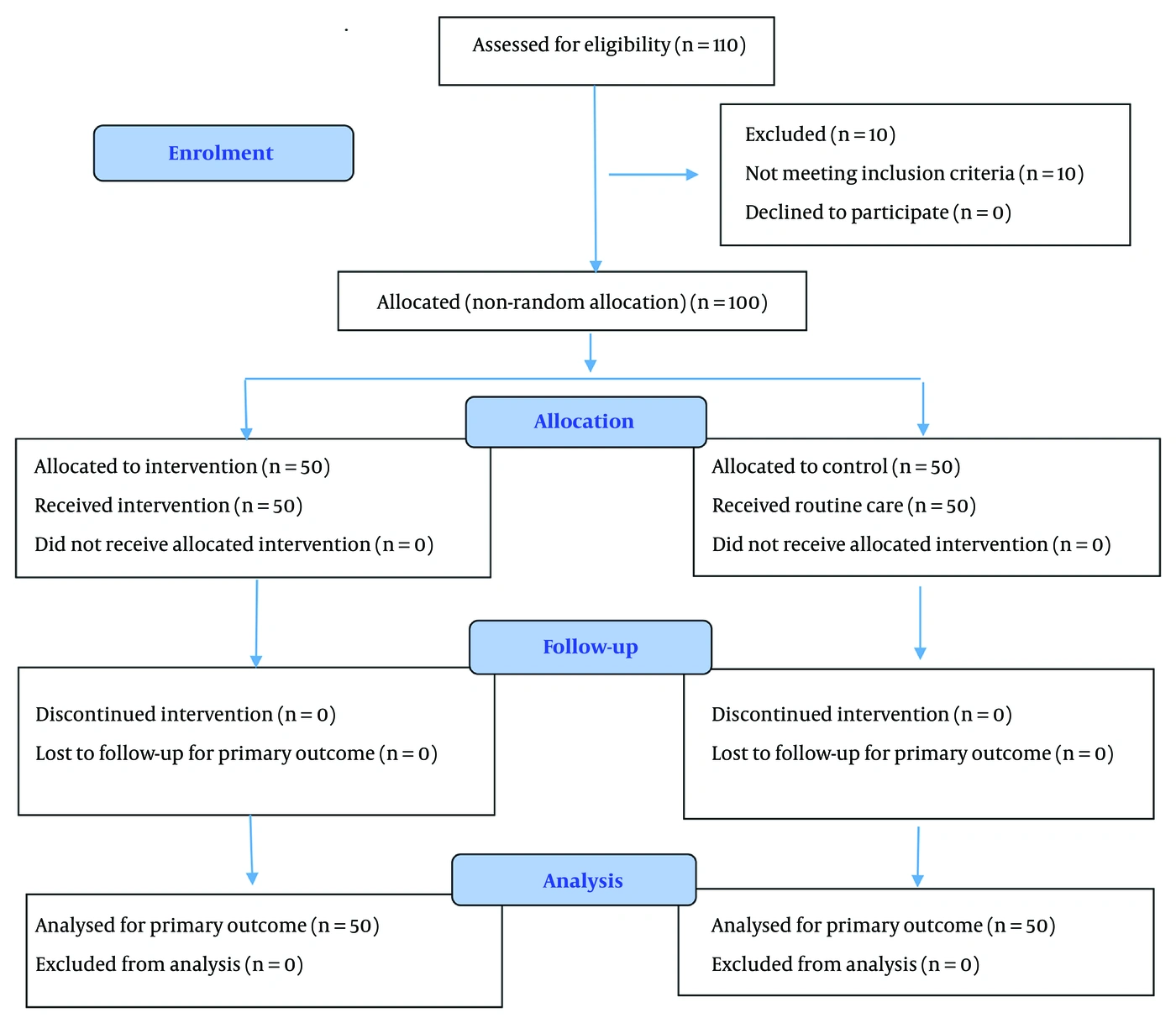
Figure 1.
Participant flow diagram
A total of 100 eligible patients were enrolled and allocated according to their ICU ward, with 50 patients in the intervention group and 50 patients in the control group. All enrolled participants completed the seven-day follow-up period. No participants were withdrawn, transferred, lost to follow-up, or excluded from the final analysis. Therefore, data from all 100 participants, including 50 patients in each group, were included in the final analysis.
The groups were also comparable with respect to baseline GCS, APACHE II score, SOFA score, principal ICU diagnosis/cause of impaired consciousness, brain injury status and type, mechanical ventilation, sedative medication use, primary sedative, and surgical procedures during admission (all P > 0.05).
Repeated-measures ANOVA demonstrated a significant main effect of time on GCS scores, F (13, 1274) = 34.05, P < 0.001, partial η2 = 0.258, indicating that the level of consciousness changed significantly across the 14 assessment time points. A significant time-by-group interaction was also observed, F (13, 1274) = 7.88, P < 0.001, partial η2 = 0.074, indicating that the pattern of change in GCS scores over time differed significantly between the intervention and control groups. The assumption of sphericity was assessed using Mauchly's test and was not violated; therefore, uncorrected degrees of freedom are reported. The partial η2 values indicated a large effect of time and a moderate time-by-group interaction effect. No GCS observations were missing during the seven-day follow-up; therefore, all 100 participants were included in the repeated-measures analysis, with complete data across all 14 assessment time points (Table 1).
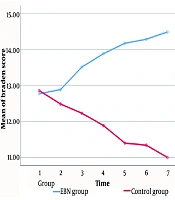
As shown in Table 2, there were no statistically significant differences in GCS scores between the intervention and control groups during the first three days of the study (all unadjusted P > 0.05). Based on the unadjusted comparisons, the intervention group demonstrated significantly higher GCS scores than the control group from the morning assessment on day 4 onward. For example, on the morning of day 4, the mean GCS score was 11.92 ± 2.21 in the intervention group compared with 10.69 ± 2.09 in the control group (t = 2.86, unadjusted P = 0.005). On the evening of day 7, the corresponding mean scores were 12.88 ± 2.22 and 11.52 ± 2.17, respectively (t = 3.10, unadjusted P = 0.003). Overall, these findings indicate greater improvement in GCS scores over time in the intervention group. In addition to statistical significance, effect sizes increased from small during the first three days (Cohen's d = 0.11 - 0.25) to moderate-to-large from day 4 onward (Cohen's d = 0.52 - 0.77), indicating a progressively greater difference in GCS scores between the intervention and control groups. The 95% confidence intervals for the mean differences included zero during the first three days but excluded zero from the morning of day 4 onward. After adjustment for multiple comparisons using the Holm–Bonferroni procedure, statistically significant between-group differences remained at selected assessment time points, including the evening of day 4, the evening of day 5, and day 7. The morning of day 4 comparison was at the threshold of statistical significance after adjustment (Figure 2).
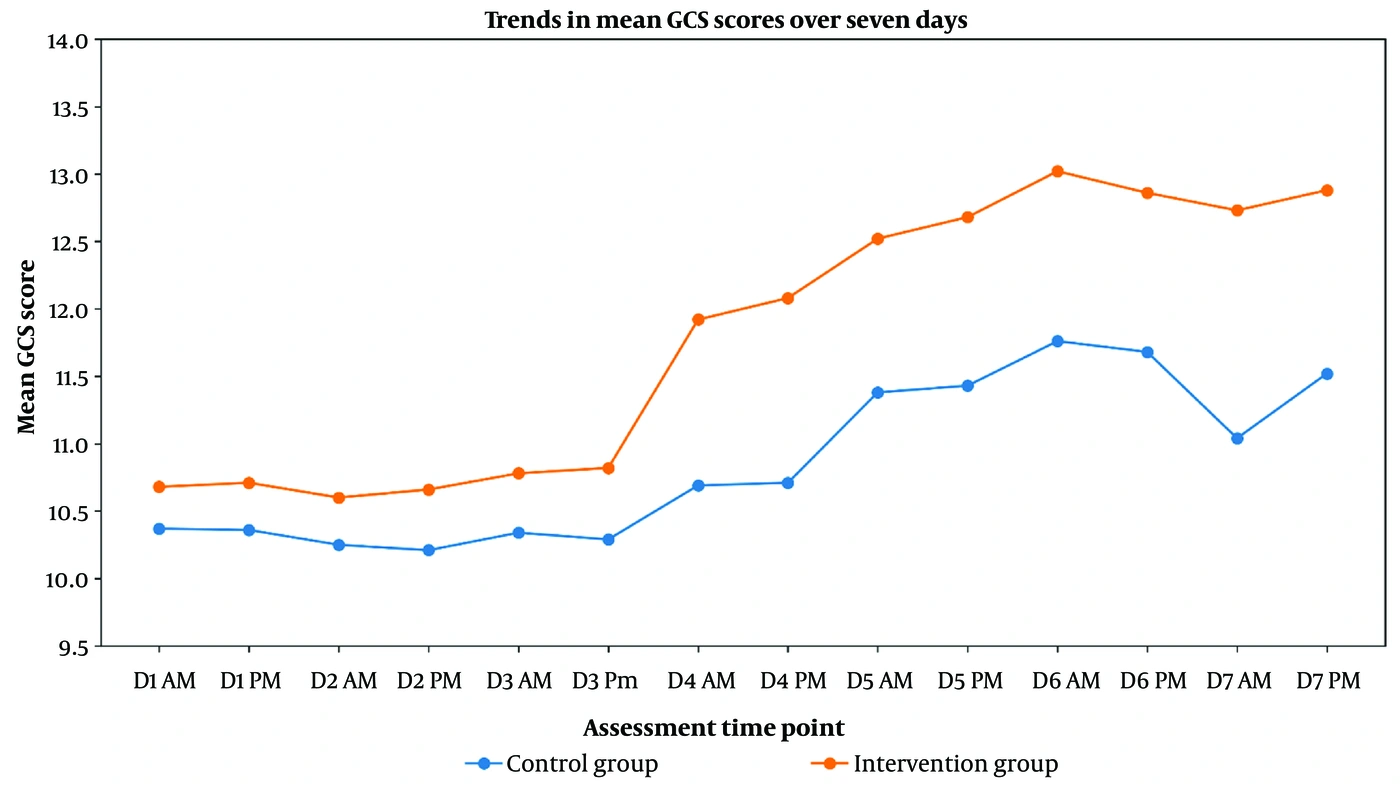
Figure 2.
Trends in Mean GCS scores in the intervention and control groups across the seven-day study period.
5. Discussion
The present study found that patients who received nursing care based on the physiological mode of the Roy Adaptation Model demonstrated greater improvement in GCS scores over time than those who received standard routine care. The between-group difference became statistically significant from the fourth day of the intervention onward. Rather than indicating that the model directly improves consciousness, these findings may suggest that a structured approach to identifying and modifying physiological stimuli is associated with more favorable changes in the level of consciousness among ICU patients.
A potential explanation for these findings is the comprehensive focus of the intervention on physiological factors that may influence neurological function. The Roy Adaptation Model provides a systematic framework for identifying maladaptive responses and addressing relevant stimuli across multiple physiological domains. In the present study, the intervention addressed oxygenation and circulatory status, fluid and electrolyte balance, nutrition, sleep and rest, activity and mobility, elimination, and endocrine function. Disturbances in these physiological domains may adversely affect overall physiological stability and neurological function. Therefore, the simultaneous and systematic assessment of these factors may have helped create conditions more favorable for neurological recovery and improvement in GCS scores. Importantly, this explanation reflects a potential clinical mechanism rather than a directly established causal pathway.
Previous studies of adaptation-oriented nursing approaches have reported improvements in physiological stability and adaptive responses in clinical populations (15). Other studies have shown that Roy Adaptation Model-based interventions can improve adaptive behaviors, self-management, and physiological functioning (16). Similarly, Roy Adaptation Model-based education has been associated with improvements in psychosocial adaptation and self-care behaviors and reductions in maladaptive responses (17). Although these studies did not directly evaluate GCS or the level of consciousness, they support the broader premise that a theory-based, systematic approach to identifying and modifying patient-related stimuli may improve adaptive responses. Therefore, these findings provide indirect theoretical support for the approach used in the present study but should not be considered direct evidence of an effect on consciousness.
More direct comparisons can be made with studies evaluating interventions targeting neurological responsiveness or the level of consciousness. A previous study reported a significant increase in GCS scores within seven days following implementation of a coma induction program in patients with brain injury (18). Similarly, auditory sensory stimulation has been associated with improvement in GCS scores among patients with traumatic coma during the intervention period (19). Family participation in sensory stimulation has also been proposed as a potential approach to support responsiveness and recovery of consciousness in critically ill patients, although its effectiveness requires confirmation from completed clinical trials (20). These interventions differ substantially from the comprehensive Roy Adaptation Model-based care used in the present study. Nevertheless, these findings support the clinical plausibility that systematic nursing interventions directed at factors or stimuli related to neurological responsiveness may be associated with improvement in consciousness-related outcomes.
Recent systematic reviews and meta-analyses have also provided higher-level evidence supporting the potential benefit of structured sensory stimulation on consciousness-related outcomes. These reviews, including randomized controlled trials involving ICU patients, have reported improvements in GCS scores and other measures of consciousness; however, considerable heterogeneity in patient populations and intervention protocols should be considered when comparing these findings with the comprehensive Roy Adaptation Model-based intervention used in the present study (21-23).
However, previous findings have not been entirely consistent. Some studies have reported no significant effects of sensory stimulation on the level of consciousness (24). These differences may reflect variation in patient characteristics, severity and cause of neurological impairment, intervention content, intervention frequency and duration, and continuity of care. In the present study, the intervention differed from sensory stimulation programs in that it addressed multiple physiological domains rather than a single type of stimulus. The broader and more comprehensive nature of the intervention may partly explain the pattern of improvement observed over the seven-day study period. However, because the present study did not directly examine the mechanisms responsible for changes in GCS, this interpretation remains hypothetical.
The findings should be interpreted in light of potential clinical confounding. Although the intervention and control groups were comparable at baseline with respect to age, baseline GCS score, illness severity as assessed by APACHE II and SOFA scores, mechanical ventilation status, principal ICU diagnosis, sedative medication use, brain injury characteristics, and surgical procedures, comparability of measured baseline variables does not eliminate the possibility of residual confounding. In particular, detailed information on the dose, timing, and duration of sedative and analgesic medications, metabolic and electrolyte abnormalities, infection status, episodes of hypoxia, and changes in concurrent treatments during the seven-day follow-up was not systematically collected or incorporated as time-varying covariates in the analysis. These factors may have influenced the trajectory of consciousness independently of the ward-based care program. Therefore, the observed differences in GCS trajectories cannot be attributed exclusively to the intervention.
In addition, the use of two separate ICU wards for the intervention and control groups may have introduced ward-level differences unrelated to the Roy Adaptation Model-based intervention. Differences in routine nursing practices, staffing patterns, nurses' clinical experience, monitoring intensity, communication among healthcare professionals, or other aspects of usual care could have influenced patient outcomes. Consequently, some of the observed between-group differences in GCS scores may have been attributable, at least in part, to differences in the care environment rather than exclusively to the intervention itself.
The quasi-experimental, nonrandomized design represents another important limitation. Because individual patients were not randomly allocated to the intervention and control groups, a definitive causal relationship between Roy Adaptation Model-based care and improved consciousness cannot be established. In addition, the relatively small sample size, single-center setting, and short follow-up period may limit the generalizability of the findings and preclude evaluation of longer-term outcomes. Therefore, the observed association should be interpreted cautiously.
Overall, the present findings suggest that a comprehensive nursing care approach based on the physiological mode of the Roy Adaptation Model may be associated with greater improvement in GCS scores among ICU patients. A possible explanation is that systematic identification and management of multiple physiological stimuli may support overall physiological stability and create conditions favorable for neurological recovery. However, this interpretation should remain cautious because of potential residual confounding, possible ward-level differences in routine care, and the nonrandomized quasi-experimental design. Future studies with larger samples, multiple centers, randomized allocation where feasible, standardized monitoring of intervention fidelity, and more comprehensive control of clinical confounding variables are needed to determine whether this approach has an independent effect on the level of consciousness.
5.1. Study Limitations
This study has several limitations. The relatively small sample size and single-center design may limit the generalizability of the findings. In addition, the quasi-experimental, nonrandomized design precludes a definitive causal interpretation and may be associated with selection bias and residual confounding. Important factors influencing consciousness, including disease severity, causes of impaired consciousness, sedative medication use, brain injury severity, surgical procedures, and concurrent treatments, were not fully controlled. Outcome assessors were not fully blinded, and measurement bias cannot be excluded. The use of separate ICU wards may also have introduced differences in routine care, nursing performance, staffing, and other ward-level factors, while contamination between groups could not be completely ruled out. Although a standardized protocol was used, intervention adherence was not formally quantified, and no sensitivity analyses were performed. The short follow-up period also prevented assessment of long-term outcomes. Therefore, the findings should be interpreted cautiously, and larger, multicenter studies with more rigorous designs, blinded assessment, better control of confounding variables, and formal monitoring of intervention fidelity are needed.
5.2. Conclusions
The findings of this quasi-experimental study suggest that Roy Adaptation Model-based nursing care was associated with greater improvement in the level of consciousness among ICU patients compared with standard routine care. The observed differences in GCS scores over time indicate that a care program focused on modifying physiological stimuli may contribute to improved consciousness outcomes. However, given the quasi-experimental design, limited control of potential confounding variables, and the possibility of residual bias, a definitive causal relationship cannot be established. Therefore, the findings should be interpreted with caution and should not be considered sufficient to support the widespread implementation of Roy Adaptation Model-based care in ICU settings. Further well-designed studies, particularly multicenter randomized controlled trials with adequate control of important clinical confounders and standardized monitoring of intervention fidelity, are needed to confirm these findings and determine the effectiveness of this approach on the level of consciousness.