1. Background
In the past, kidney disease was considered to be a simple health condition; however, it is currently a global threat to health.
Chronic renal failure is a condition that affects quality of life due to its continuous nature, characterized by drastic changes in the lifestyles, general health conditions, and social roles of patients (1).
Chronic renal disease is defined as an irreversible renal dysfunction, which lasts more than 3 months and is a consequence of diseases such as diabetes, hypertension, thrombosis, congenital or adventitious cystic disorders, and urinary infections. In 2004, 400’000 people were diagnosed with chronic renal disease in the United States. In Iran, the incidence of the renal failure increased from 49 per million in 2000, to 63 per million in 2006, showing a 26-percent increase during this 6-year period. In 2011, this number was reported to be 242 per million (2).
The survival of patients suffering from chronic renal failure depends on renal replacement treatments including hemodialysis, peritoneal dialysis, and kidney transplantation.
Hemodialysis treatment reduces the symptoms and signs of chronic renal failure.
However, it does not ultimately alter the natural progression of the disease, and does not serve as a kidney replacement.
The patients may therefore experience side effects including arterial hypertension, anemia, digestive disorders, fatigue, musculoskeletal disorders, sexual disorders such as sexual impotence, nocturnal erection impotence, lack of orgasm, and infertility prevalent in men, and menstrual disorders or complete cessation, sexual impotence, and infertility prevalent in women (3).
According to studies conducted in Italy by Citak, 84% of women and 59% of men undergoing dialysis are afflicted with sexual dysfunction. This percentage was reported to be up to 80% among patients undergoing hemodialysis treatment in developing countries (4).
Studies carried out on Iranian hemodialysis patients showed that the incidence of sexual impotence is 92.5%, of which 61.5% is severe type, 70.2% with premature ejaculation, and 5.4% with delayed ejaculation (5).
Sexual dysfunction is therefore one of the biggest problems with widespread implications among hemodialysis patients making it an important intervention field among these patients (6).
Sexual dysfunction has a negative effect on self-perspective, sexual satisfaction, quality of life, and self-image, which collectively serve as factors towards depression and mental stress. In consequence, patients feel a lack of sexual attraction, as well as a drop in their performance and social interactions. It is therefore imperative to alleviate this problem (7).
Nowadays, one of the continuous control methods implemented to avoid this consequence in patients is to emphasize the reinforcement of self-care behavior and use of modern technologies related to this malady, including the introduction of alterations in lifestyles of patients. Lifestyle is an individual pattern of properties, behaviors, and habits displayed by each individual that can impose health risks if detrimental. According to research conducted in the USA, 53% of mortalities are lifestyle associated, whereas 21% are environmental, 16% genetic, and 10% due to quality of healthcare services. Individuals choose specific diets and quit smoking for leading a healthier lifestyle in order to enhance their overall health and reduce risk factors for diseases (8).
2. Objectives
Sexual dysfunction is a frequently observed problem among patients undergoing dialysis treatment. This problem contributes negatively towards the patients’ mental health, which in turn affects their families’ stability. Due to the negative implications of sexual dysfunction in the quality of life for patients undergoing hemodialysis, and a lack of sufficient research concerning the relationship between lifestyle altering effects of sexual function on these patients in Iran, the present study aimed at investigating the effects of lifestyle alterations on the sexual function of patients undergoing dialysis in Shoushtar Khatam-ol-Anbia hospital, Khuzestan, Iran in 2015.
3. Patients and Methods
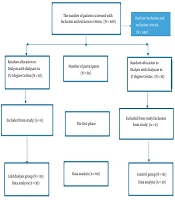
We conducted a quasi-experimental mono group study on 37 hemodialysis patients referred to Khatam-ol-Anbia hospital in Shoushtar, Khouzestan, Iran in 2015.
Khatam-ol-Anbia hospital is a General-Special State hospital, which owns 110 beds with sections including surgery, internal, pediatrics, cardiac care unit, immediate care unit, laboratory, radiology, sonography, urgent care, hemodialysis and surgery.
Patients were selected using convenient sampling among both male and female patients in the hemodialysis ward of Khatam-al Anbia hospital of Shoushtar city in 2015.
We planned a study to assess the difference in a continuous response variable among matched pairs of study subjects. Previous data indicate that the difference in the response of matched pairs is normally distributed with a standard deviation of 10. If the true difference in the mean response of matched pairs was 5, we would need to study 37 pairs of subjects to be able to reject the null hypothesis that this response difference is zero with probability (power) 0.8. The type I error probability associated with the test of null hypothesis is 0.05.
The study inclusion criteria included being married, having healthy hearing and visual functions, being under 60 years of age for men and being in pre-menopausal age for women. Exclusion criteria included patient request to delay involvement, death of a spouse, death of the patient, kidney transplantation, release from the dialysis ward, or willingness to quit the study.
The data collection tools included a demographic properties questionnaire, international index of erectile function inventory (IIEF), and Female sexual function index Inventory (FSFI).The inventories were completed by the same researcher during interviews with patients before interventions were prescribed.
Following the completion of questionnaires based on the interviews, patients were individually advised at the bedside for a duration of 20 minutes on the alterations they were advised to make to their lifestyles concerning their diet, cessation of their smoking habits, and exercising.
In the follow-up visits by the patients, patients were assessed based on how well they followed the instructions. If the patients had failed to keep up with the instructions, the circumstances were analyzed with the help of the patients to detect the problems, offer solutions, and answer the patients’ questions.
Patients followed the prescribed changes for a period of 8 weeks at the end of which sexual function inventories were completed again using verbal interviews.
The patients were asked to rate their sexual activities as none, very little, little, mediocre, high, or very high.
In the FSFI, the lowest value was 0 and the highest value was 5. This inventory assessed the libido, mental stimulation, wetness, orgasm, satiation, and sexual pain of the patient.
The reliability of the inventory was reported to be 95%, 85%, and 88%, respectively, in the studies by Wiegel (9), Cappelleri et al. (10), and Rush et al. (11) using Cronbach’s Alpha test.
Six separate areas resulted from score summation. The highest score for each dimention was 6 and the scores for all the scales are 36. International Index of Erectile Function Inventory scoring for men was mild impotence (21-25), average impotence (16-20), advanced impotence (10-15) and severe impotence (5-10).
In the research conducted by Hassan Zadeh et al. the reliability of the inventory was determined to be 92.5% using Cronbach’s Alpha test (12). In the study by Shiri et al. (13) and Cappelleri et al. (10), it was reported to be 84%.
In the current study, Cronbach’s Alpha test was utilized in order to determine the reliability of the inventory. The coefficient of Cronbach’s Alpha for the total scale score for women and men were 82% and 79%, respectively.
In this study, the validity of the sexual function inventory was approved by ten faculty members of Isfahan Nursing University.
3.1. Research Limitations
As most of the patients were Arab, in order to better convey the issue to the patients, the researcher required help from Arab speaking partners to complete the questionnaires.
According to Iranian culture, male patients were questioned by a male researcher for completing the questionnaire.
Because of the traditional context in the region, researcher had to persuade patients and their company on diet, exercise, and smoking cessation.
As people of this district do not adhere to the recommendations and health education, the researcher could largely solve the problem during training sessions arranged three times per week.
3.2. Moral Considerations
The present study was conducted having obtained the ethnical code of ajums.REC.2014.336 from Jundishapur University of Ahvaz.
The researcher obtained permission from the authorities of the research field through submitting a written reference from Nursing and Midwifery College.
She explained the purpose of the study to each subject and obtained written consent from them.
The subjects were selected from the patients who agreed to be included in the test. The researcher pledged confidentiality of the research and observed this throughout the research period. All the scientific materials used were presented with their references.
At the end of the research, oral acknowledgement was given to the subjects and the authorities of the research field. All the data collected remained confidential and were analyzed by the SPSS (ver. 21), paired t-test, and descriptive statistics (mean and frequency percentage) after the data had been collected and scored.
4. Results
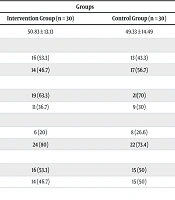
The present study evaluated 37 patients undergoing hemodialysis Results of this study showed that 43.2% of female participants and 55.4% were male. 62.5% of women and 42.9% of men age 50 and 37.5% of women and 57.1% of men over the age of 50 years 18.7% of women and 76.2% of men working and 81.3% of women and 23.8 % of men were unemployed (Table 1).
Table 1.
Frequency and Percentage of Demographics Variable in Men and Womena
| Group demographics Samples | Women | Men | Total |
|---|---|---|---|
| The total number of hemodialysis patients | 33 (44.6) | 41 (55.4) | 74 (100) |
| The number of patients in the sample | 16 (43.2) | 21 (46.8) | 37 (100) |
| Level diploma Zyrdyplm | 8 (50) | 8 (38.1) | 16 (100) |
| College education | 8 (50) | 13 (61.9) | 21 (100) |
| Under 50 years | 10 (62.5) | 9 (42.9) | 19 (100) |
| 50 years | 6 (37.5) | 12 (57.1) | 18 (100) |
| Employment status of workers | 3 (18.7) | 16 (76.2) | 19 (100) |
| Unemployed | 13 (81.3) | 5 (23.8) | 18 (100) |
aData are presented as No. (%).
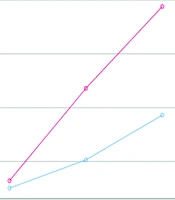
The average male sexual performance before and after the intervention is summarized in Table 2. The average score of sexual function in men was 45.88 with 16.42 standard deviation before intervention and 65.11 with 4.93 standard deviation after the intervention. In addition to controlling the symptoms of the disease, improvement of the quality of life and sexual function is important in patients with chronic renal failure.
Table 2.
Comparison of the Mean Scores for Male Sexual Function Domains Before and After the Intervention
| Variable/Phase | Quantity | Averagea | T | Free Level | P Value |
|---|---|---|---|---|---|
| Erectile function | 4.45 | 20 | 0.01 | ||
| Pre-test | 21 | 19.55 ± 6.14 | |||
| After-test | 21 | 27.66 ± 3.12 | |||
| Climax function | 2.07 | 20 | 0.01 | ||
| Pre-test | 21 | 6.88 ± 2.97 | |||
| After-test | 21 | 9 ± 1.41 | |||
| Sexual desire | 2.92 | 20 | 0.01 | ||
| Pre-test | 21 | 5.33 ± 2.06 | |||
| After-test | 21 | 7.55 ± 1.13 | |||
| Total satisfaction | 2.95 | 20 | 0.01 | ||
| Pre-test | 21 | 8.44 ± 3.64 | |||
| After-test | 21 | 12 ± 0.70 | |||
| Satisfaction | 3.06 | 20 | 0.01 | ||
| Pre-test | 21 | 5.66 ± 0.91 | |||
| After-test | 21 | 8.88 ± 0.26 |
aData are presented as mean ± SD.
Table 3.
| Variable/Phase | Quantity | Averagea | T | Free level | P Value |
|---|---|---|---|---|---|
| Sexual desire | 3.21 | 15 | 0.01 | ||
| Pre-test | 16 | 5.5 ± 1.41 | |||
| After-test | 16 | 7.75 ± 0.70 | |||
| Mental stimulation | 3.3 | 15 | 0.01 | ||
| Pre-test | 16 | 10.87 ± 2.53 | |||
| After-test | 16 | 16 ± 2.5 | |||
| Wetness | 1 | 15 | 0.35 | ||
| Pre-test | 16 | 8.5 ± 1.19 | |||
| After-test | 16 | 9.12 ± 1.24 | |||
| Orgasm | 4.02 | 15 | 0.01 | ||
| Pre-test | 16 | 7.62 ± 1.59 | |||
| After-test | 16 | 9.87 ± 0.83 | |||
| Sexual pain | 5.22 | 15 | 0.01 | ||
| Pre-test | 16 | 7.87 ± 1.88 | |||
| After-test | 16 | 12.5 ± 1.69 | |||
| Satisfaction | 3.25 | 15 | 0.01 | ||
| Pre-test | 16 | 5.75 ± 1.83 | |||
| After-test | 16 | 3.75 ± 0.51 |
aThe average female sexual function before treatment was 46.12 with a standard deviation of 25.04 whereas it was 58.62 with a standard deviation of 5.04 after treatment. Paired t-test with P < 0.05 showed that sexual function scores in all domain of sexual function except wetness, before and after the intervention had significant difference.
bData are presented as mean ± SD.
5. Discussion
This study was performed in order to survey the effects of lifestyle changes on sexual function in patients undergoing hemodialysis treatment.
The results obtained from this study show that patients’ sexual functions are impaired before intervention.
A significantly improved sexual function was observed in patients who followed the training instructions and participated in the 8-week intervention.
This study shows that 82% of male and 79% of female patients participating in the study had impaired sexual function, which indicates a high prevalence among patients undergoing hemodialysis.
Medical problems such as hormonal changes are common among these patients. Combination of these factors can effectively play a role in the changes of sexual function.
A high rate of sexual dysfunction can be painful for these patients, which places an emphasis on the education of patients alongside the medical treatment.
Our results are in agreement with the study of Rivalta et al. indicating that 82% of patients treated with hemodialysis are suffering from sexual dysfunction (14).
The results of this study also indicate that the average score for male sexual function significantly increased after intervention with changes in lifestyle, compared to before the intervention.
These results is in line with the results of Bottari et al. study with the aim of evaluating sexual dysfunction in male patients with systolic heart failure, which showed the rate of 80 percent sexual dysfunction in men with heart failure (3).
Decreased sexual function, hormonal changes and decreased muscle mass, increased risk of osteoporosis, increased insulin resistance, changes in lipid metabolism and cardiovascular risk factors decrease the quality of life. Exercise and lifestyle changes effectively improve the quality of life. Nursing education is recommended to improve patient response.
It appears that information on the cultural status of families of patients and their spouses is required for training on a large scale (15).
The nicotine in cigarettes and other substances, which are produced by burning cigarette paper causes sexual dysfunction and can cause narrowing of the genitalia arteries (16, 17).
Moreover, the nicotine in cigarettes causes a decrease in ovarian follicles, reduces the movements of cilia of uterus, reduces testosterone and causes premature menopause (18).
Our study also examined the effect of quitting smoking on sexual function. We showed that sexual function increased in patients who quit smoking, in agreement with the study of Yazici et al. (19).
Exercise increases blood circulation, which results in increased transfer of hormones. During exercise, sex hormones reach their maximum plasma levels that improve sexual performance.
Exercise helps male sexual health through reduction of mental stress and anxiety. It is known that sedentary or immobile men experience higher levels of stress compared to active men.
Stress affects brain's hypothalamus and pituitary gland which results in the reduction of testosterone production and sexual dysfunction in men (20).
Mora et al. showed that exercise and weight loss improves sexual function, metabolism, and activity of the gonads (8).
On the other hand, poor nutrition affects the endocrine glands, including the pituitary gland. Impaired secretion by these glands can lead to penile defects, premature menopause in women and impotence in men.
Adrenal gland has an important role in the secretion of sex hormones albeit in small quantities. Hypothyroidism can lead to sexual dysfunction or lack of libido. In consequence, proper nutrition plays an important role in healthy functioning of the adrenal gland (10).
This study shows that introducing lifestyle changes improves sexual function in female patients undergoing hemodialysis.
In addition, regular exercise increases the release of endorphins, which in turn increases the sexual satisfaction of the patient.
Moreover, regular exercise increases cardiovascular and muscular endurance, which in turn strengthens marriage relationship and makes the person less likely to suffer from fatigue. The study results of Zahariou et al. are consistent with the present study (21).
Chronic diseases, the cost of treatment, disease states such as physical changes and reduction of physical attractiveness, cause socio-mental problems.
Patients and their families experience multiple pressures including depression, fear of job loss, health problems, financial problems, and family problems.
The combination of education and medical care, and the financial and social support of patients not only increases their longevity, but also facilitates the acceptance of the disease and alleviates the concerns of patients.
Chronic renal failure and decreased sexual function have negative impacts on mental health of patients and their families like any other chronic disease.
These kinds of problems may affect the family of the patient and the healthcare system.
In this regard, lifestyle changes can be useful in preventing complications associated with decreased renal function (2).
5.1. Conclusion
The main philosophy of controlling chronic diseases focuses on empowering and involving patients in decision making.
Although the health care team in hemodialysis patients, health plan offers. The decisions made by the patients and their families play a more impactful role in the improvement of the overall health and quality of life of the patients compared to doctors and healthcare workers (9).
Therefore, educating patients and their families play an important role in the treatment of this disease and the size of the other components of the treatment regime (10).
Because of the nature of chronic renal failure, patients need time to adapt to lifestyle changes and they have to develop a constant self- monitoring ability (11).
Hemodialysis patients hold the responsibility of self-care both for themselves and their families, and they should be strengthened to accept this responsibility.