1. Introduction
Nowadays, chronic diseases are a serious problem all over the world (1). According to the world health organization (WHO) statistics, chronic diseases accounted for 46% of the global burden of disease in 2001, and it is expected for this rate to reach 75% in 2020 (2). These changes will affect both developed and developing countries (3).
Chronic diseases are caused by complex factors (4). The risk factors underlying chronic diseases are related to an individual’s lifestyle and, thus are preventable.
In the recent years, the simultaneous presence of more than one chronic disease in individuals and the expected increase in the rate of chronic diseases have been known as challenges to public healthcare in modern societies (5-10).
Cancer and cardiovascular diseases constitute the second and third cause of mortality among females. However, little attention has been paid to female’s needs in terms of early prevention of chronic diseases except for routine screening for cancer (11, 12). The results of Yano’s study on female’s health priorities in the mental health domain include stress, depression, anxiety and addiction (12). These results also include chronic diseases in the domain of physical health with particular focus on diabetes, osteoporosis, arthritis, chronic pains and autoimmune diseases (13). Females are the managers of families, and therefore their health forms the basis of family health and is a prerequisite for development (14). Neglecting female’s health can cause long-term consequences in the lifestyle and health of future generations (15). Females play a crucial role in caring for themselves, their children, and the elderly and the sick at home, and their active participation in health-related activities is of great importance in community’s health success and the healthcare system in the domain of public health (16, 17). Females are responsible for the health of other family members, and their own health depends to a large degree on their success in fulfilling this responsibility (18). Several studies have shown that women constitute 75% of all family caregivers (19). Furthermore, family caregiving is on the rise as a consequence of increased life expectancy among the present population and the rise in incidence of delayed childbearing (20). Contributing to the population aging process (21), increased life expectancy in turn raises the demand for informal healthcare (22, 23). Informal caregiving is defined as unpaid care given voluntarily to ill or disabled individuals, and requires a lot of time and energy (24). A group of informal caregivers are known as “sandwich generation” caregivers. Compared to other groups of informal caregivers, these caregivers are more vulnerable financially, physically and emotionally because of their involvement in caregiving activities (25). Multigenerational caregiving is a phenomenon in which an individual becomes responsible for the simultaneous care of their own child/children and at least one adult person (sometimes aged) during a short or long period of time (26). Although the majority of the sandwich generation simultaneously provides care to their own children or stepchildren and their own parents or those of their spouse, they may care for their grandchildren, grandparents, aunts, uncles, family friends, or members of their support system as well (27). Caring for dependent adults in addition to dependent children is a relatively new experience (28).
The sandwich generation is exposed to various types of objective and subjective burdens. The subjective or internal burden is concerned with stress-related components of the caregiving experience (29). The objective burden includes lack of leisure time, bedtime exhaustion, and being overwhelmed by caregiving activities (30). The reduced leisure time increases stress and undermines the immune system; thus, it increases the risk of stress-related diseases, including cardiovascular diseases, high blood pressure, and accumulation of high levels of insulin in the body (30). Some of the symptoms often experienced by caregivers include sleep disruption, back, shoulders and neck pain, muscular spasm, headache, gastrointestinal disorders, weight fluctuation, hair loss, excessive fatigue, high blood pressure, arrhythmia, palpitation, skin disorders, oral problems, infertility and its associated disorders, weakness of the immune system, higher frequency of cold, flu and infectious diseases, and sexual disorders (31). Vitaliano et al. (2003) (30) scrutinized the physical risk factors associated with informal caregiving, weighting other life stressors caused by those factors. Physical health problems were repeatedly cited throughout their study, including chronic diseases, metabolic disorders, and cardiovascular problems coinciding with an increase in inappropriate and harmful health practices (32). According to some other studies, however, caring for one’s grandchildren is positively correlated with more life satisfaction and a reduced risk of depression among multigenerational caregivers (33). Furthermore, it was shown that females, who properly fulfill their caring responsibilities, might play a more constructive role from a mental health perspective (34).
There are currently no studies on chronic diseases among sandwich generation females in Iran. Whereas the number of such women increases nowadays. In addition these women need more attention about their health and have serious problems about their responsibilities. Subsequently, given the lack of a comprehensive study on the health of such caregivers, the aim of the current study was to explore the relationship between family caregiving and chronic diseases amongst sandwich generation females.
2. Patients and Methods
This is an epidemiological case-control study conducted at a number of healthcare centers in Ahvaz. The research sample consisted of all females, who had used the services provided by these centers. The inclusion criterion for multi-generational caregivers included caring for one or more family members besides caring for their own child/children at home with duration of care of at least 21 hours per week and at least six months prior to the beginning of the study. Moreover, inclusion criteria for the caregivers of one generation included caring for at least one child at home. Exclusion criteria included having special diseases requiring special care such as cancer, physical or mental disability requiring care, caregivers’ pregnancy, and caregiving for people other than family members outside one’s home.
For the sampling process, several healthcare centers across the city of Ahvaz were randomly selected through the randomized clustered sampling method. Healthcare centers number 1, 4 and 7 in the east of Ahvaz and centers number 3, 9 and 5 in the west of Ahvaz were selected in order to provide similar distribution of population.
In each center case group was enrolled purposefully and control group was selected by matching age, number of children and socioeconomic status. The researcher visited the healthcare centers on a daily basis duration six months and selected qualified participants through asking them questions in the demographic questionnaire. Prior to participation, the participants were ensured of their anonymity and provided informed written consent. The participants were then divided to two groups, namely one-generation caregivers (i.e. those who cared only for their own child/children) and the sandwich generation (i.e. those who cared for other people such as their parents or parents-in-law, grandchildren, other relatives and/or friends). The two groups’ status in terms of the presence or absence of chronic diseases, were compared. Furthermore, the two groups were homogenized in terms of their age, number of children they took care of, and their socioeconomic status. The participants were classified to three age groups of younger than 30, between 30 and 50, and older than 50 years old. They were also divided to three groups based on the number of children they took care of (i.e. caregivers with one child, two to four children, and more than four children). The participants’ socioeconomic status was also divided to two groups of favorable and unfavorable. The sample size was calculated as 179 members for each group with a power of 90%. Finally, 180 participants were assigned to each group.
The data collection tools used in this study consisted of demographic and socioeconomic status questionnaires. The demographic status questionnaire was compiled by the researcher and included 23 questions concerning the participants’ personal information including age, marital status, occupational status, educational level, number of children under care, the presence or absence of a person receiving care except their child/children, information and conditions of people under care, duration of care, number of hours spent on multigenerational caregiving per week, the presence or absence of a chronic disease, and the presence or absence of an assistant for the caregiver. The socioeconomic status questionnaire consisted of six questions about the head of the household’s personal information, his/her spouse’s personal information, their housing status, the price of their place of residence, their amenities and leisure time, and finally whether or not they owned a car and/or a personal computer. The maximum score in this questionnaire was set at 48, with 16 being the cutting point for dividing the participants based on their socioeconomic status (35). The validity and reliability of the socioeconomic status questionnaire were verified by Garmaroodi and Moradi in 2010. First, the content validity and then the construct validity by using factor analysis were examined. The reliability (Cronbach’s alpha = 0.06) was also determined for each domain (35). This study was approved by the Ethics Committee of Ahvaz Jundishapur University of Medical Sciences (IR.AJUMS.REC.1394.278) on 25.7.2015.
2.1. Data Analysis
The data were entered in the SPSS v. 22 software. Descriptive statistics was used to calculate the frequency, percentage, mean and standard deviation of the data. The Kolmogorov-Smirnov test indicated that the distribution of data was not normal. The chi-square and Mann-Whitney tests were used to analyze the data and examine possible correlations. The values of P < 0.05 were considered significant. The sample size with power of 90% and α = 0.01 was calculated through the following formula and determined to be 180 for each group:
3. Results
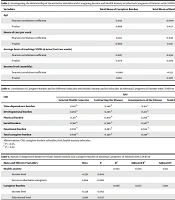
As shown in Table 1, there was a statistically significant difference between the case group and control group in terms of the presence of chronic diseases (P = 0.001). Furthermore, the rate of chronic diseases was higher among the sandwich generation group compared to the other group.
As indicated by Table 2, there was a significant correlation between the rate of chronic diseases and the number of children receiving care (P = 0.03). Furthermore, the frequency of chronic diseases among caregivers with more than four children was larger than the others. There was also a significant correlation between the occurrence of chronic diseases and the caregiver’s socioeconomic status in both groups (P = 0.014); thus, the presence of chronic diseases was more common among caregivers with unfavorable socioeconomic status. There was a significant correlation between the occurrence of chronic diseases and the caregiver’s level of education (P = 0.001). Therefore, the presence of chronic diseases was more common among caregivers with under diploma level of education.
Table 1.
The Frequency and Percentage of Chronic Diseases Amongst the Participants (n = 360)
| Groups | Variables | ||
|---|---|---|---|
| With Chronic Diseases No. (%) | Without Chronic Diseases No. (%) | Total No. (%) | |
| Sandwiched generation caregivers | 110 (61.1) | 70 (38.9) | 180 (100) |
| Non-Sandwiched generation caregivers | 79 (43.9) | 101 (56.1) | 180 (100) |
| Chi2 | P = 0.001 | ||
Table 2.
The Relationship Between Chronic Diseases and Demographic Characteristics of the Participants (n = 360)
| Groups | Variables | |||||
|---|---|---|---|---|---|---|
| With Chronic Diseases No. (%) | Without Chronic Diseases No. (%) | Total No. (%) | P Value | |||
| Age group | Case | Under 30 | 10 (9.1) | 22 (31.4) | 32 (17.8) | 0.004 |
| 30-50 | 62 (56.4) | 38 (54.3) | 100 (55.6) | |||
| More than 50 | 38 (34.5) | 10 (14.3) | 48 (26.7) | |||
| Total | 110 (100) | 70 (100) | 180 (100) | |||
| Control | Under 30 | 8 (10.1) | 24 (23.8) | 32 (17.8) | ||
| 30-50 | 44 (55.7) | 56 (55.4) | 100 (55.6) | |||
| More than 50 | 27 (34.2) | 21 (20.8) | 48 (26.7) | |||
| Total | 79 (100) | 101 (100) | 180 (100) | |||
| No. of children under care | Case | 1 | 24 (46.2) | 28 (53.8) | 52 (100) | 0.031 |
| 2-4 | 81 (66.9) | 40 (33.1) | 121 (100) | |||
| More than 4 | 5 (71.4) | 2 (28.6) | 7 (100) | |||
| Total | 110 (61.1) | 70 (38.9) | 180 (100) | |||
| Control | 1 | 16 (20.3) | 36 (35.6) | 52 (100) | ||
| 2-4 | 60 (75.9) | 61 (60.4) | 121 (100) | |||
| More than 4 | 3 (3.8) | 4 (4) | 7 (100) | |||
| Total | 79 (100) | 101 (100) | 180 (100) | |||
| Socioeconomic status | Case | Favorable | 68 (61.8) | 53 (75.7) | 121 (67.2) | 0.014 |
| Unfavorable | 42 (38.2) | 17 (24.3) | 59 (32.8) | |||
| Total | 110 (100) | 70 (100) | 180 (100) | |||
| Control | Favorable | 47 (59.9) | 72 (71.3) | 121 (67.2) | ||
| Unfavorable | 32 (40.5) | 29 (28.7) | 59 (32.8) | |||
| Total | 79 (100) | 101 (100) | 180 (100) | |||
| Marital status | Case | Married | 106 (96.4) | 69 (98.5%) | 175 (97.2) | 0.927 |
| Divorced | 3 (2.7) | 1 (1.4%) | 4 (2.2) | |||
| Widow | 1 (0.9) | 0 (0%) | 1 (0.6) | |||
| Total | 110 (100) | 70 (100%) | 180 (100) | |||
| Control | Married | 75 (94.9) | 95 (94.05%) | 171 (95) | ||
| Divorced | 2 (2.5) | 3 (2.9%) | 5 (2.8) | |||
| Widow | 2 (2.5) | 2 (1.9%) | 4 (2.2) | |||
| Total | 79 (100) | 101 (100) | 180 (100) | |||
| Occupational status | Case | Employed | 98 (89.1) | 57 (81.4) | 155 (86.1) | 0.001 |
| Unemployed | 10 (9.1) | 13 (18.6) | 23 (12/8) | |||
| Retired | 2 (1.8) | 0 (0) | 2 (1.1) | |||
| Total | 110 (100) | 70 (100) | 180 (100) | |||
| Control | Employed | 64 (81) | 65 (64.4) | 129 (71.1) | ||
| Unemployed | 12 (15.2) | 34 (33.7) | 46 (25.6) | |||
| Retired | 3 (3.8) | 2 (2) | 5 (2.8) | |||
| Total | 79 (100) | 101 (100) | 180 (100) | |||
| Educational status | Case | Illiterate | 27 (24.5) | 5 (7.1) | 32 (17.8) | 0.000 |
| Under Diploma | 54 (49.1) | 28 (40) | 82 (45.6) | |||
| Diploma | 22 (20) | 25 (35.7) | 47 (26.1) | |||
| Academic | 7 (6.4) | 12 (17.1) | 19 (10.6) | |||
| Total | 110 (100) | 70 (100) | 180 (100) | |||
| Control | Illiterate | 7 (8.9) | 5 (5) | 12 (6.7) | ||
| Under Diploma | 42 (53.2) | 33 (32.7) | 75 (41.7) | |||
| Diploma | 20 (25.3) | 27 (26.7) | 47 (26.1) | |||
| Academic | 10 (12.7) | 36 (35.6) | 46 (25.6) | |||
| Total | 79 (100) | 101 (100) | 180 (100) | |||
As shown in Table 3, there was a significant correlation between the occurrence of chronic diseases and the number of individuals receiving care except the caregiver’s children (including grandchildren, adults, or both) (P = 0.004). Furthermore, chronic diseases were more prevalent among participants caring for their grandchildren.
Table 3.
The Relationship Between Chronic Diseases and the Number of Patients Receiving Care Except Caregiver’s Children (n = 180)
| Groups | Variables | ||
|---|---|---|---|
| With chronic diseases No. (%) | Without chronic diseases No. (%) | Total No. (%) | |
| People under care except caregiver’s child/children | |||
| Grandchild | 39 (81.3) | 9 (18.8) | 48 (26.6) |
| Adult | 63 (53.8) | 54 (46.2) | 117 (65) |
| Three-generation | 8 (53.3) | 7 (46.7) | 15 (8.3) |
| Total | 110 (61.1) | 70 (38.9) | 180 (100) |
| Chi2 | P = 0.004 | ||
As shown in Table 4, there was no significant correlation between the occurrence of chronic diseases and the number of hours spent on caregiving per week (P > 0.05), yet there was a significant correlation between the occurrence of chronic diseases and the duration of caregiving per month (P = 0.005).
Table 4.
The Relationship Between Chronic Diseases and the Care Hours Per Week and Care Duration Per Month in Sandwich Generation Caregivers (n = 180)
| Groups | Variables | |
|---|---|---|
| With chronic diseases | Without chronic diseases | |
| Care hours per week | Mean (Min-Max) | Mean (Min-Max) |
| 147 (21-168) | 168 (21-168) | |
| Mann-Whitney | P = 0.318 | |
| Care duration per month | Mean (Min-Max) | Mean (Min-Max) |
| 84 (6-480) | 48 (6-252) | |
| Mann-Whitney | P = 0.006 | |
4. Discussion
The present study attempted to examine the relationship between family caregiving and chronic diseases among multigenerational female caregivers. As the findings revealed, the presence of such diseases among multigenerational caregivers was significantly higher than one-generation caregivers. Hoffman (2012) found significant differences between caregivers and non-caregivers in terms of health status and level of psychological distress (34), thus the findings of his study had similarities with the current study. Bastani et al. (2010) found that caring for elderly people with Alzheimer was positively correlated with higher risk of physical and psychological diseases of their caregivers (36); the present study was in line with this study. Vitaliano (2003) suggested that physical health problems among multigenerational caregivers included chronic diseases and metabolic and cardiovascular problems (30); thus, the results of his study were similar to the findings of the present research. Musil (2013) found that caregiving grandmothers, who cared for their grandchildren, experienced significant levels of family conflicts and thus stronger depression symptoms compared to non-caregiving grandmothers (37), so the results of his study were in the vein of this research. On the other hand, Ku (2013) discovered that caregiving grandparents reported less depression symptoms compared to non-caregiving participants (38).
This study showed a significant correlation between the presence of chronic diseases among caregivers and their level of education. Chronic diseases in non-educated females were reported to be higher than others with other levels of education. Musil (2009), however, found that older married caregiving grandmothers with a post-high school education reported fewer depression symptoms (39); thus, it can be asserted that the findings of his study were similar to the present study.
Furthermore, the results indicated that there was no significant correlation between chronic diseases and the number of multigenerational caregiving hours per week, but there was a significant correlation between chronic diseases and caregiving duration per month. By contrast, Hoffman (2012) found a significant positive correlation between both extra caregiving hours per week and extra caregiving months and the consequences of health behaviors (34).
This study showed a positive correlation between the occurrence of chronic diseases and the number of children receiving care. Caregivers with two to four children had more chronic diseases than others. Rubin (2009) found that having at least one child at home made family caregivers feel overwhelmed with their caregiving tasks with higher levels of subjective and objective burdens. However, she did not explain the relationship between the number of children and these variables (28). Do (2014) found that the greater number of children receiving care increased the correlation between caregiving and poor health status. She also noted a difference between the caregiving group, whose members had no children under 18 years of age at home and the group with at least one child under 18 years of age at home in terms of health status, and this difference became more pronounced as the number of children increased (40). Hence, it can be concluded that the findings of the present study are in line with those of these studies.
The present study also showed a significant positive correlation between chronic diseases and the caregivers’ socioeconomic status. Participants with unfavorable socioeconomic status were more likely to have chronic diseases. Bastani (2010) found a statistically significant correlation between general health and economic status, so the general health of the participants with unfavorable economic status was moderate and undesirable and participants with favorable economic status had moderate and good general health (36). It is worth noting that the findings of this study were similar to the results of her study.
5. Conclusion
The current study explored the relationship between family caregiving and chronic diseases among sandwich generation females. Health status in females with multiple duties is very important because they are responsible for their family and people with disabilities or children, and they must have the best possible health status to perform their responsibilities. The present study indicated that the prevalence of chronic diseases was higher among female multigenerational caregivers. These females whose number is on the rise in today’s societies face debilitating conditions making it difficult for them to perform their caregiving tasks and affecting the quality of care they provide. Given the importance of informal caregiving due to its economic, psychological and emotional benefits, paying particular attention to female caregiver’s health and providing them with the necessary training in the domain of lifestyle improvement to empower them to play their role, would be of crucial significance. It is hoped that the present study could make a small contribution to this worthy issue.
The current study was the first investigation to scrutinize the chronic disease status in multigenerational female caregivers in Iran, so it has limitations that must be considered. First, we cannot ensure the multigenerational caregiving impacts of chronic diseases, so more longitudinal studies are necessary. Second, all of the interventional factors of chronic diseases in sandwich generation females were not manageable in the current study. Third, children and adults have different demands, so individuals caring for children and adults have different health status; thus, similar studies with separate groups of caregivers, caring for different generations (such as grandchildren, adults or elderly people), are needed to explore chronic diseases in specific groups of sandwich generation females. Forth, according to the design of the current study, the samples do not represent the whole community, so greater number of participants is needed for this purpose in the future.
Despite all the limitations of this study, by using three homogenizing factors between one-generation and multi-generation caregivers and randomized selection of participants, we tried to avoid any possible biases. Furthermore, we are confident about the truthfulness of participants’ answers because the researcher asked the questions and then wrote answers on the questionnaire.