



1. Context
1.1. Sickle Cell Disease
Sickle cell disease (SCD) is one of the most common genetic haemoglobin disorders in the world (1). According to statistics, SCD has affected 100,000 African-Americans (2). In Iran, SCD is found in the country’s southern provinces (Sistan and Baluchistan, Hormozgan, Bushehr, Fars, and Khuzestan in particular). However, some sporadic cases can be seen in northern Iran (3).
Although some symptoms of this disease can be severe and life-threatening (4), the crisis of chronic and unforeseen pain is the most common side effect reported by patients (5). These patients require repeated visits to the emergency and hospital for medical care (6, 7). Therefore, SCD significantly affects the performance status (6) and quality of life in all dimensions (8) and can lead to reduced self-confidence, feelings of frustration, depression, anxiety, and stress (9, 10). In addition, the pain leads to high consumption of narcotic drugs (11), which are the most used treatments for these patients (12). However, this can only relieve physical pain while chronic pain also affects the emotional, cognitive, and behavioural dimensions of patients (13). Furthermore, the side effects of these drugs in the long term and their risk of abuse have created some concerns (14). In addition, inadequate pain relief can be as harmful as the disease itself (15). On the other hand, a combination of pharmacological and non-drug treatments is suggested to manage pain in patients with SCD (6). Non-drug treatments proposed by the National Institute of Health in 2014 include massage therapy, relaxation techniques, and hypnosis (16).
1.2. Massage Therapy
Massage therapy is an ancient, traditional treatment dating back 5,000 years (17). It is one of the most effective and commonly used complementary treatments throughout the world (18) and is considered safe and without side effects (19). Massage therapy is a systematic manipulation of the body’s soft tissues with stroke-like rhythmic pressure, which is performed in order to develop, maintain, reconstruct, and improve physical performance, or to relieve pain (20). This method can be done manually or by using a manual mechanical device and includes different techniques such as Swedish massage, shiatsu (Japanese massage), reflexology, and Thai massage performed by professionals (4, 19, 21).
Massage therapy improves blood circulation and lymph flow, causing positive feelings and physical and mental relaxation by increasing the oxygen supply to the tissues and improving the nutritional status of cells (22, 23). This method is the oldest method used for pain relief (24). According to the gate control theory of pain, the irritation from the massage reaches the brain at a faster rate than the irritation caused by pain, and the pain gate is closed (25). A review of studies has shown that massage can play a role in reducing lumbar chronic pain (19), cancer pain (26), pain after surgery (27), musculoskeletal (20), osteoarthritis (28), and fibromyalgia pain (29), pain due to high blood pressure (17), and shoulder pain (24).
1.3. Massage Therapy for Patients with Sickle Cell Disease
Massage therapy is the third most common non-drug treatment among SCD patients (30). However, studies on the effectiveness of massage therapy to reduce pain in these patients are very limited and sparse; clinical trials in this area, especially, are so limited that there is no correct information for evidence-based practice. Hence, it seems to be essential to review the studies in the field. In fact, this study aimed to answer the question: ‘Is the use of massage therapy effective in reducing pain in patients with sickle cell disease?’
2. Evidence Acquisition
This study is a literature review of the use of massage aiming at determining the effectiveness of massage therapy as a complementary medicine for reducing pain in patients with sickle cell.
2.1. Data Source and Study Selection
The national (Iranmedex, SID, Magiran) and international (Medline, Cochrane Library, ProQuest, Ovid, Web of Knowledge, and Barakat) databases were searched in Persian and English languages between January 1990 and January 2016. The search included the following keywords: “Massage”, “Therapy”, “Zone”, “Rolfing”, “Reflexology”, “Body work”, ‘Touch”, “Complementary”, “Acupressure”, “Pain “, “Management”,” Painful “, “crisis”, “Patient “, “Sickle Cell “, “Disease”, “Disorder “, “Anaemia”, “People”, “Client”, “Ill person”. The keywords were used separately and in combination forms in the searching process.
2.1.1. Inclusion and Exclusion Criteria
The inclusion criteria were: 1) Studies that reported results concerning massage therapy and its effect on the control and management of pain in SCD, 2) Studies published from 1990 to 2016, and 3) Studies published in English and Persian languages. In addition, the search results were restricted to contain these keywords in titles of the articles. Exclusion criteria were: 1) non-research articles (all types of letters, comments, and editorial), and 2) abstracts published in congresses and professional articles, books and studies in the field of massage therapy and its effect on pain control and management conducted in non-sickle cell patients.
3. Results
The initial search strategies yielded 42 references for all the mentioned keywords and databases. Twenty articles remained after applying the inclusion and exclusion criteria, including both abstracts and full texts. After removing duplicated articles, 14 articles were deemed eligible entering the review process (Figure 1). However, just five studies had examined the effect of massage on reducing pain in patients with sickle cell experimentally (31-35); the other 9 studies had just evaluated the rate of use of massage as a complementary medicine by patients (4, 30, 36-42).
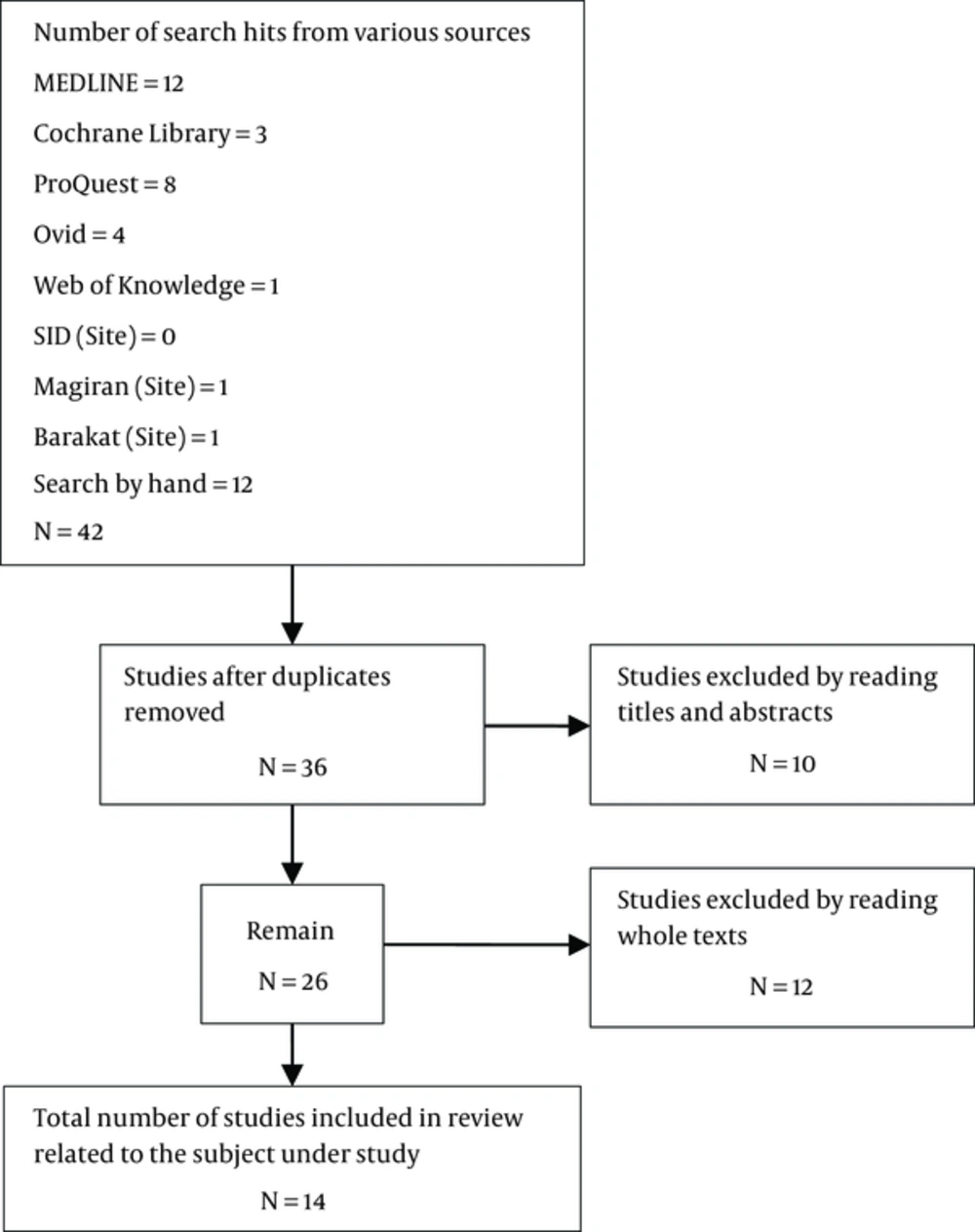
Figure 1.
Flow Diagram for Literature Review
The samples in this study included adults (six studies), children (one study), children and adults (one study), caregivers (three studies), and children and their caregivers (three studies). Twelve studies had been conducted in the United States, one in Nigeria, and one in Iran. Nine studies were cross-sectional, 4 were clinical trials, and one was a single group before-and-after study without a control group.
The studies were mainly descriptive aiming at determining how to manage pain in patients with sickle cell and the use of a variety of complementary medicine by patients. In experimental studies, the effect of massage on these patients was evaluated; in the study by Jamshidpour (2015), the slow-stroke massage technique was used (35), Thomas (2013) used the healing touch technique (34), Bodhise (2004) used neuromuscular deep tissue massage technique with deep pressure (33), and Lemanek (2009) used the massage protocol provided by the field in 2001 (32). In the study by Myers (1990), the name of the technique applied for the massage was not available (31). In the study of Lemanek et al. (2009), massage therapy was taught to the caregivers and conducted by them (32). In the study of Bodhise et al. (2004), there was no report about the massage therapists (33), and in the other three studies (31, 34, 35), massage was done by trained and professional individuals. In the cross-sectional studies, there was also no report about those who did the massage. Overall, 9 studies applied complementary medicine to patients with sickle cell disease (See Table 1).
Table 1.Summary of Reviewed Articles on the Use of Massage on Pain Management for Sickle Cell Patients
| Author (Year) Country | Title | Design | N/Population | Use of Massage Measures | Outline of Study | Databases |
|---|---|---|---|---|---|---|
| YOON (2006) Florida | Comprehensive, integrative management of pain for patients With sickle-cell disease | A cross-sectional descriptive study | 63/caregivers of children with SCD | A researcher- made questionnaire ( 16 complementary therapies listed in the questionnaire) | One of the most common types of CAM was massage (79.4%), | Medline |
| Sanchez 2015 Mississippi | Complementary and alternative medicine use in pediatric hematology/oncology patients at the University of Mississippi medical center | A cross-sectional descriptive study | 40/caregivers | CAM Use Questionnaire | Use of massage therapy was 7.5% in patients with sickle cell disease. | Medline |
| Ikefuna 2009 Nigeria | Clinical profile and home management of sickle cell-related pain: the Enugu (Nigeria) experience | A cross-sectional descriptive study | 108/children or caregivers. | A researcher- made questionnaire | Use of analgesics/hydration/ massage (52.8%). | Medline |
| Oliver-Carpenter 2011 USA | Disease management, coping, and functional disability in pediatric sickle cell disease | A cross-sectional descriptive study | 47/children and their caregivers. | Coping Strategies Questionnaire-Revised (CSQ-R) | Specifically, parents reported that youth used heat/cold massage (M = 3.74, SD = 1.63). | Medline |
| Majumdar 2013 USA | The use and effectiveness of complementary and alternative medicine for pain in sickle cell anemia | A cross-sectional descriptive study. | 22/adults | The survey consisted of sixteen questions (demographics, frequency of pain, and the effectiveness of CAM therapy) | One of the three most common types of CAM was massage (35%). | Medline |
| Thompson 2014 USA | Pain control in sickle cell disease patients: use of complementary and alternative medicine | A cross-sectional descriptive study | 227/adults | An investigator made questionnaire to examine the use of CAM for managing pain | Use of massage therapy was 14%. | ProQuest |
| Sanders 2010 USA | Pain, coping and health care utilization in younger and older adults with sickle cell disease | A cross-sectional descriptive study | 70/adults | Coping strategies questionnaire for SCD (CSQ-SCD) | Results indicated significant effects for heat/cold/massage between younger and older patients. Younger patients were more likely to cope by using heat, cold, or massage. | Medline |
| Sibinga 2006 USA | Pediatric patients with sickle cell disease: use of complementary and alternative therapies | A cross-sectional descriptive study. | 57/parents of pediatric SCD patients | An SCD severity scale | Use of massage therapy was 5%. | Medline |
| Dampier 2002 USA | Characteristics of pain managed at home in children and adolescents with sickle cell disease by using diary self-reports | A cross-sectional descriptive study | 39/children | Pain diaries | Use of massage therapy was 19.5%. | Medline |
These studies reported the rate of use of massage in the range between 5% and 79%. The results of the experimental studies indicate the effectiveness of massage therapy in reducing pain in patients with SCD. However, only four studies (31-33, 35) showed that massage therapy significantly contributes to the reduction of pain in patients with SCD. Other beneficial effects such as increasing daily performance (32, 33), reducing the consumption of analgesic (33, 35), reducing depression, anxiety, and stress and improving mood (32-34) and reducing the duration of hospital stay (33) have also been reported by these studies (Table 2).
Table 2.Summary of Reviewed Articles on the Effectiveness of Massage in Pain Control in Sickle Cell Patients
| Author (Year) Country | Title | Design | N/Population | Pain Measures | Outline of Study | Databases |
|---|---|---|---|---|---|---|
| Myers 1999 Florida | Adjunctive approaches for sickle cell chronic pain | Clinical trial study | 16/adults | McGill pain questionnaire and visual analogue scale | Treatment by the interventions was associated with a short-term reduction in both sensory (P = 0.001) and affective (P = 0.002) dimensions of pain, and longer-term reduction in both sensory (P = 0.01) and affective (P = 0.02) dimensions of pain. | Cochrane Library |
| Bodhise 2004 USA | Non-pharmacologic management of sickle cell pain | One group pre-post test/no control | 4/children (1) and adults (3) | Numeric Pain Index (NPI) scales | The pain score (NPI) showed significant improvements after completion of massage therapy (P < 0.001). | Medline, Web of Knowledge |
| Lemanek 2009 USA | A randomized controlled trial of massage therapy in children with sickle cell disease | Clinical trial study | 34/children and their primary caregivers | Paediatric pain scale | Youth in the intervention group showed higher levels of functional status, and lower levels of pain (P < 0.05). | Medline, Cochrane Library |
| Thomas 2013 USA | The effect of healing touch on anxiety, stress, pain, pain medication usage, and physiological measures in hospitalized sickle cell disease adults experiencing a vaso-occlusive pain episode | Clinical trial study | 17/adults | 0-10 Numerical Pain Scale | The pre- to post-intervention reductions in present pain were greater in the Healing Touch group across all four days, but the only statistically significant within-group findings were in the Healing Touch group (P < 0.01) on Day 1. | Medline, Cochrane Library, Ovid, ProQuest |
| Jamshidifar 2015 Iran | Effectiveness of light pressure stroking massage on pain severity and requirement for analgesia in patients with sickle-cell anemia | Clinical trial study | 30/adults | Visual analogue scale of pain | 1. After the intervention, pain severity was significantly lower in the intervention group compared to the control group at all assessed times (P < 0.001). 2. On the fourth day, need for analgesics was significantly higher in the control group than in intervention group (P < 0.05). | Magiran, Barakat |
4. Discussion
This study aimed to evaluate the rate of use of massage therapy and its effectiveness in patients with SCD. The results of the review have shown that patients with sickle cell use massage as a complementary method of relieving pain. However, the rate of use of massage has been reported differently (by different studies).
Based on Yoon et al. (2006) results, using massage therapy after praying (79.4%) was one of the most common complementary medicines used by parents for pain relief of these children (36). In this regard, Majumdar et al. (2013) reported that massage therapy (35%) is the third most commonly used complementary medicine for these patients, after praying and relaxation techniques. Participants in this study reported mild to moderate effects of massage on pain relief (30).
Moreover, the study results of Ikefuna et al. (2009) showed that 52.8% of patients with sickle cell used painkillers, hydrotherapy, and massage as a way to deal with the pain (37). In the study of Dampier et al. (2002), patients reported the mean of their pain duration as three to six days and 20% of patients used massage as the method of pain relief (38).
Carpenter et al. (2011) study reported resting, praying, hoping, and massaging as four common methods used to combat the pain of their children (42). In addition, Sanders et al. (2010) showed that younger people use massage therapy more significantly (P = 0.02) to relieve their pain (39).
Unlike previous studies, 92% of patients participating in the Thompson and Eriator (2014) study reported that they had experienced pain lasting from six months to more than two years, and 91.6% reported the use of at least one type of complementary medicine; however, only 14% of patients had used massage therapy (4).
The results of other studies showed that parents knew that the use of complementary medicine was effective in reducing pain and improving the life quality of their children. These studies reported the rate of using massage as 5% and 7.5%, respectively. In addition, they mentioned massage as one of the three methods commonly used by parents; however, both studies reported the use of massage at a low level (40, 41).
There is no accurate and credible information in any of the studies in this literature review about whether massage therapy was done by the patient or family members or by a trained therapist. The low use of massage therapy in some of these studies is probably due to the unfamiliarity of patients with massage therapy as a complementary medicine and its application by patients or non-professionals, leading to a low effectiveness of massage. These studies also show that factors such as age, sex, marital status, education level, and income influence the use of complementary medicine; this should not be overlooked.
Another purpose of this literature review was to determine the effectiveness of massage in reducing the pain of patients with SCD. Although a small number of studies have found results in line with this objective, the results of the experimental studies indicate that the use of massage reduced the pain in SCD patients.
The results of Myers et al. (1990) study showed that both massage therapy and relaxation techniques lead to reduced sensory and emotional pains in SCD patients. However, there was no significant difference between massage therapy and relaxation (31).
In this regard, the study by Bodhise et al. (2004) revealed that the neuromuscular deep tissue massage could be effective in reducing pain. Besides, a significant improvement in mood was observed after a treatment period with massage therapy. The study also showed that the stay of patients in a hospital or emergency care significantly reduced in duration. In addition, it showed that the consumption of narcotic drugs up to 24 hours after massage therapy significantly reduced and the daily activities of patients improved from 24 to 48 hours after massage therapy. However, the method of massage therapy was not reported in this study (33).
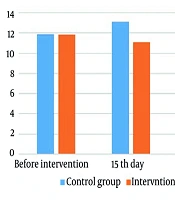
These findings are consistent with the findings of the study by Lemanek et al. (2009), which reported the improved performance and reduced pain, depression, and anxiety in patients; however, the ratio of benefiting from health services and treatment did not change after the intervention (32).
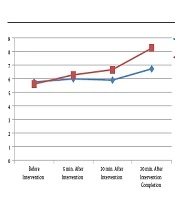
Jamshidpour et al. (2015) in a clinical trial study in Iran determined the effectiveness of slow-stroke massage in the intensity of pain and the rate of using narcotic drugs by hospitalized adult patients with sickle cell (35), which was consistent with the study of Bodhise et al. (2004) (33).
Unlike the above studies, Thomas et al. (2013) conducted a study to determine the effect of therapeutic touch on pain, anxiety, stress, and use of narcotic drugs compared to music therapy in adult patients with sickle cell. The results showed that despite the reduced pain in the therapeutic touch group, this difference was not significant (34).
Perhaps the difference between the results of Thomas et al. and those of other studies is due to the small sample size and the type of intervention, which was a kind of massage along with energy healing requiring a skilled therapist. However, the authors of this study mentioned other limitations such as the time at which interventions were carried out; these interventions should be performed in a quiet environment and this was not practically possible as they were carried out in hospital. They also mentioned a failure to observe the proper timing between medicinal and therapeutic interventions and carrying out these techniques (therapeutic touch and music therapy) as factors that affected the results of their research. They suggested conducting this study on a larger sample in compliance with standard techniques and using a proper time for intervention (34).
Although the results of these studies show the effectiveness of massage therapy in reducing pain in SCD patients, it is not clear whether massage as a complementary method can be effective in relieving the pain of these patients, because there are limited studies in this field and the sample sizes seem too small. On the other hand, most of these studies were carried out in a short time; intervention over a short time cannot prove the effectiveness because the nature of SCD is that there are fluctuations in the intensity of pain. These fluctuations, which take the forms of increased and decreased pain, may occur after massage therapy and they may be considered as the effect of the intervention. Hence, it seems to be essential to perform studies over a longer period of time as well as measure pain at different times in order to evaluate the long-term effects of massage and determine the effectiveness of massage therapy.
Furthermore, there are gaps in these studies; for example, it is essential to mention the type of massage, the method of doing intervention, the amount of pressure, the massage areas, the quantity and frequency of massage, the duration of massage, the time of massage, and intervals between the onset of pain and the therapeutic intervention. However, while some studies have detailed the above factors, the cases submitted are not enough to make decisions about evidence-based practice.
4.1. Conclusions
The results of the reviewed studies show that massage therapy is one of the most common types of complementary medicine among SCD patients. However, in most of these studies, the rate of using massage therapy in these patients was reported at a moderate level; a number of studies reported that only a small percentage of patients used this method (Table 1). There have been limited studies on evaluating the effectiveness of massage therapy in reducing pain among patients with sickle cell; however, reviewing these studies has shown that massage therapy could be effective in reducing pain in these patients. More extensive studies are needed in this area.
4.2. Recommendations
The results of this literature review showed that there are limited and sparse studies, especially clinical trials, on evaluating the rate of using massage therapy and reviewing the effect of this method on improving pain in SCD. There is no correct information about the effectiveness or non-effectiveness of this therapeutic method in reducing pain and improving life quality for evidence-based performance. Hence, it is recommended that further studies be carried out on the rate and causes of use or non-use of any kind of complementary medicine, including massage therapy, and clinical trials should be carried out with a crossover design, adequate sample size, and proper timing in order to assess the effectiveness of massage therapy; this may provide more conclusive results.
Moreover, given the existence of a variety of therapeutic massages that can be done in numerous ways, it is advised to conduct studies comparing these methods to determine their effectiveness in patients with sickle cell. In addition, given that the goal of this technique is to help patients manage their pain at home, there should be studies that teach massage therapy to patients and their caregivers and determine its effectiveness when it is carried out by patients or their caregivers. Just one of the reviewed studies (Lemanek et al. 2009) (32) conducted this, which is not enough.