


1. Background
2. Objectives
3. Methods
3.1. Isolation of Lactobacilli
3.2. Supernatant Preparation
3.3. Identification of Lactobacilli
3.4. Cell Analysis
4. Results
4.1. Isolation of Lactobacilli Results
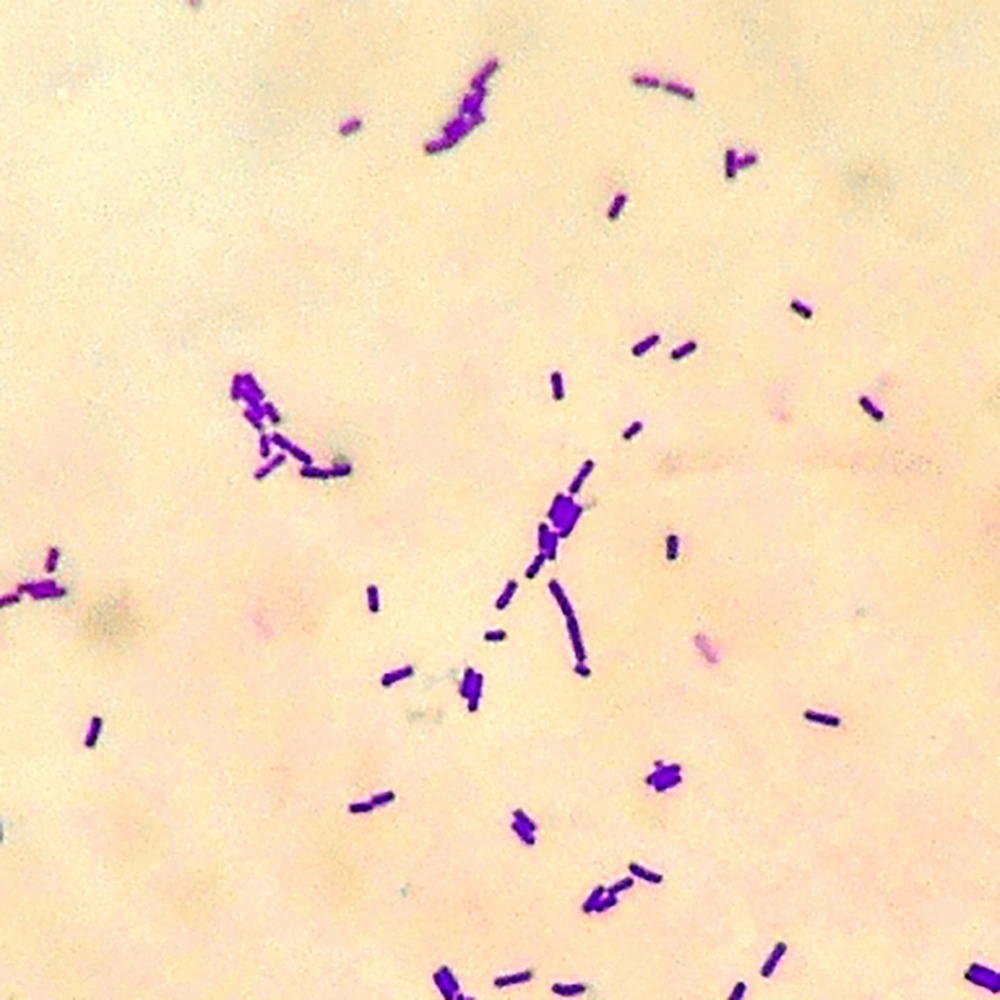
Gram stain results of Lactobacillus sp. ST1 strain.
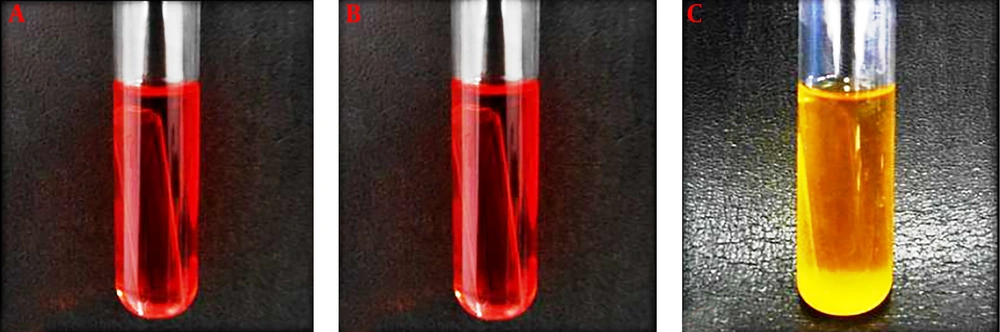
The results of the carbohydrate fermentation test of Lactobacillus sp. ST1 strain (A: control, B: negative, C: positive).
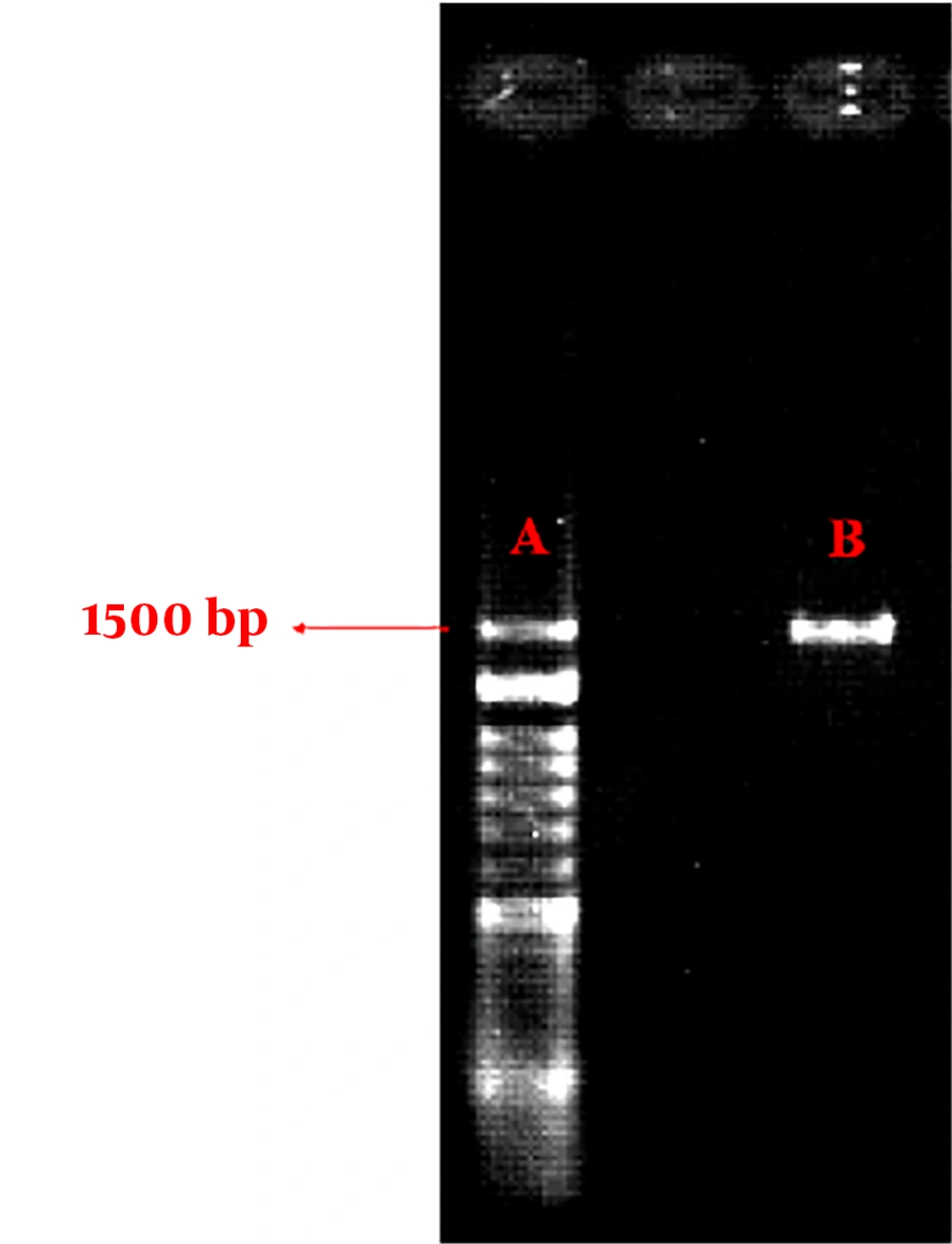
The bands corresponding to the amplified sequences in the PCR reaction (A: DNA ladder: 50 bp, B: band of ST1 sample, about 1500 bp. The first band of DNA ladder belongs to the 1500 bp fragment).
| Characteristics | Value |
|---|---|
| Gram | + |
| Catalase | - |
| V-P | - |
| Arginine Dehydrolysis | + |
| Growth in 15 and 45ºC | +, + |
| Variable | Value |
|---|---|
| Glucose | + |
| Galactose | + |
| Lactose | - |
| Arabinose | + |
| Maltose | + |
| Mannitol | + |
| Sorbitol | + |
| Sucrose | - |
| Xylose | + |
| Melibiose | + |
| Raffinose | - |
| Trehalose | + |
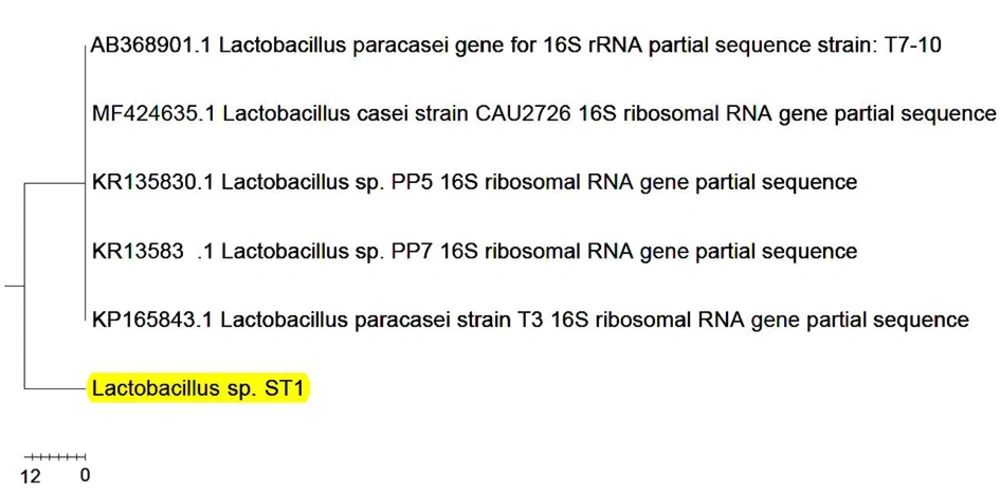
Dendrogram of the isolated strain. The genetic difference between the reference Lactobacillus strains and the studied strain is observed.
4.2. Cell Analysis Results
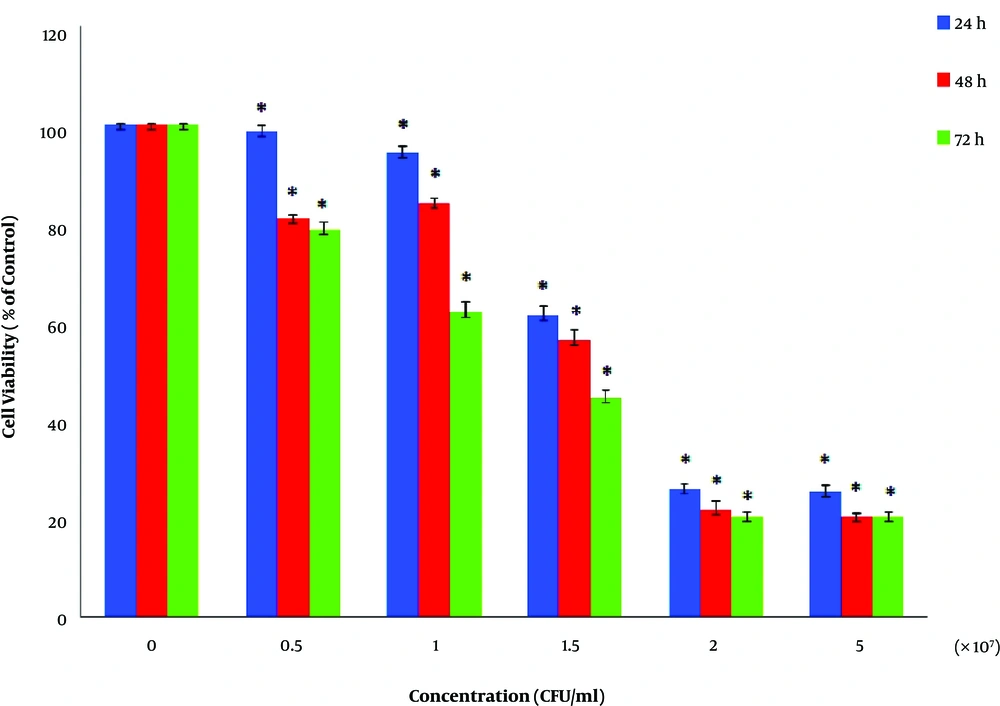
The MTT assay results; the anti-proliferative effects of the Lactobacillus sp. ST1 strain’s supernatant on the HCT116 cells for 24, 48, and 72 hours are shown. As can be seen, the inhibition of cell survival increases dose- and time-dependently (*P < 0.05).
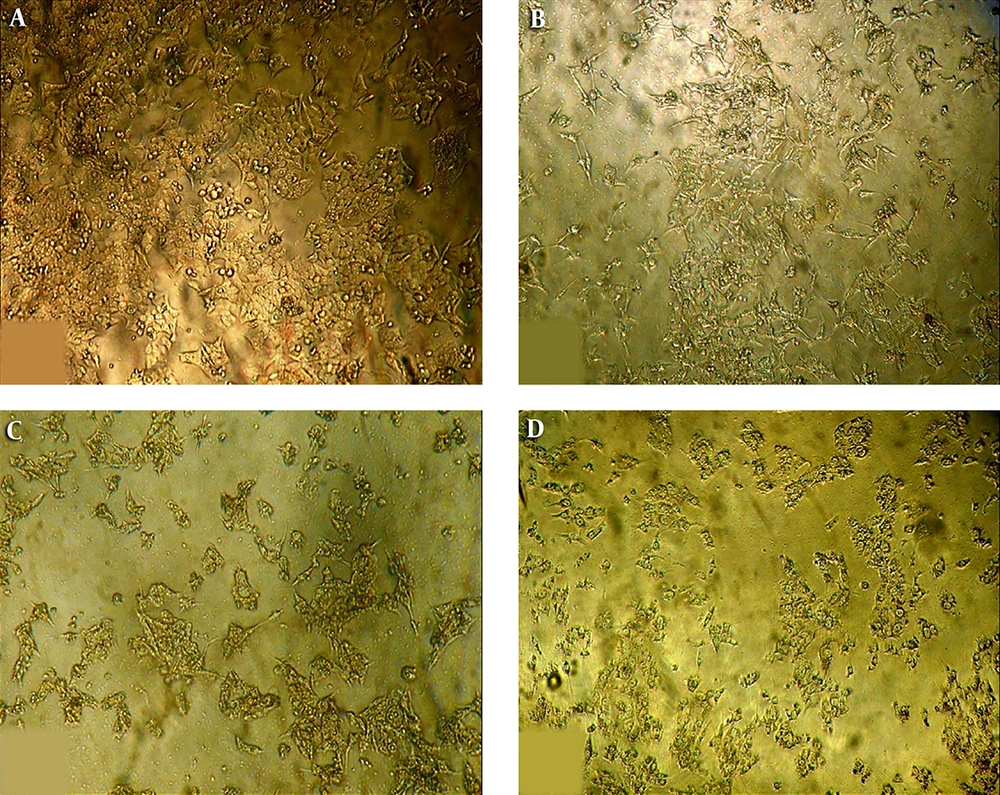
Effects of the Lactobacillus sp. ST1 strain’s supernatant on the morphology of the treated cells whit the IC50 value (1.35 × 10⁷ CFU/mL) (A: Untreated cells (negative control), B: 24-hour treated cells, C: 48-hour treated cells, and D: 72-hour treated cells).
