


1. Background
2. Objectives
3. Methods
3.1. Cell Lines/Culture Condition
3.2. HOTAIR siRNA Transfection
3.3. RNA Extraction and Real-Time Polymerase Chain Reaction
| Target Gene | Sequence Primer | Amplicon Length |
|---|---|---|
| HOTAIR | F':AGGCCCTGCCTTCTGCCT | 147 bp |
| R:TGCTCTCTTACCCCCACGGA | ||
| BAX | F':TTCATCCAGGATCGAGCAGG | 103 bp |
| R:TGAGACACTCGCTCAGCTTC | ||
| BCL2 | F:GAGGATTGTGGCCTTCTTTG | 143 bp |
| R:CGTTATCCTGGATCCAGGTG | ||
| GAPDH | F:GTGAACCATGAGAAGTATGACAAC | 123bp |
| R:CATGAGTCCTTCCACGATACC |
3.4. Statistical Analyses
4. Results
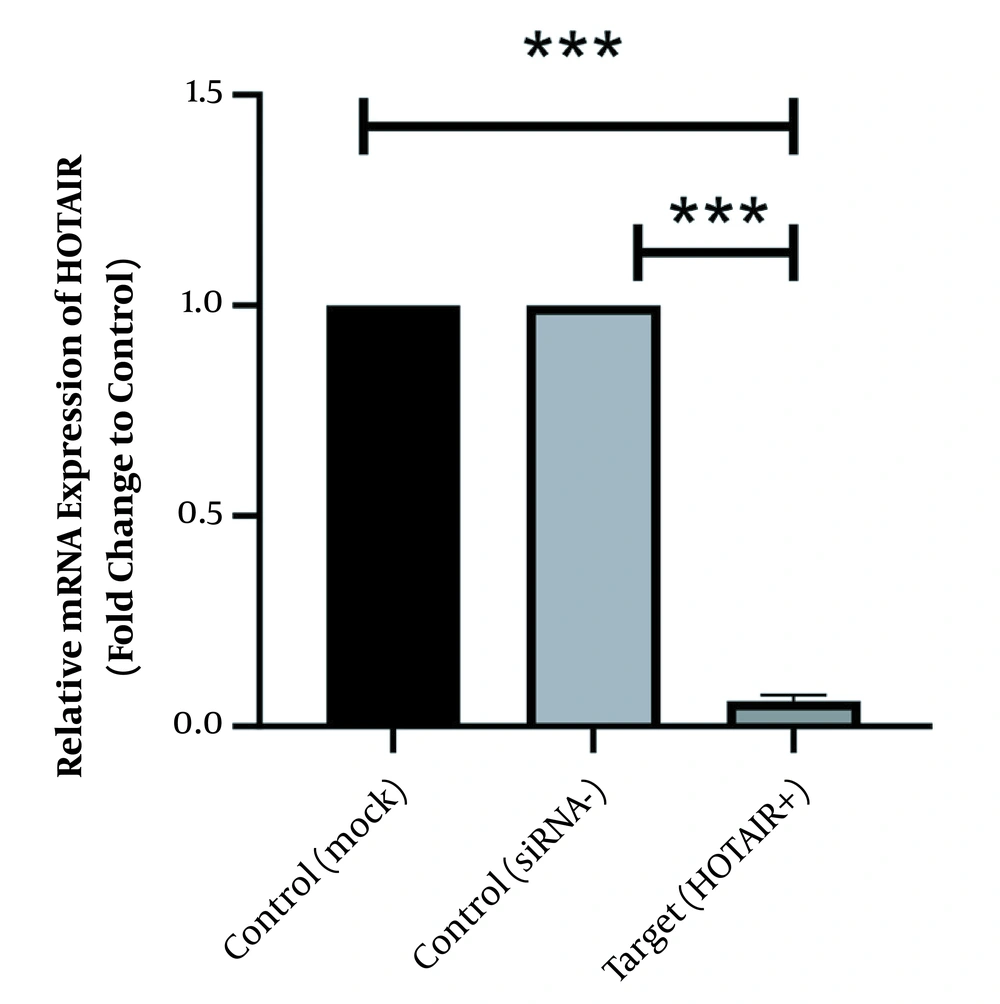
Effects of HOTAIR specific siRNA on suppressing HOTAIR transcript after treatment with 50 ng siRNA after 48 hours of treatment. Data expressed as mean ± standard deviation (the stars *** show the P-value less than 0.001 compared to the control group).
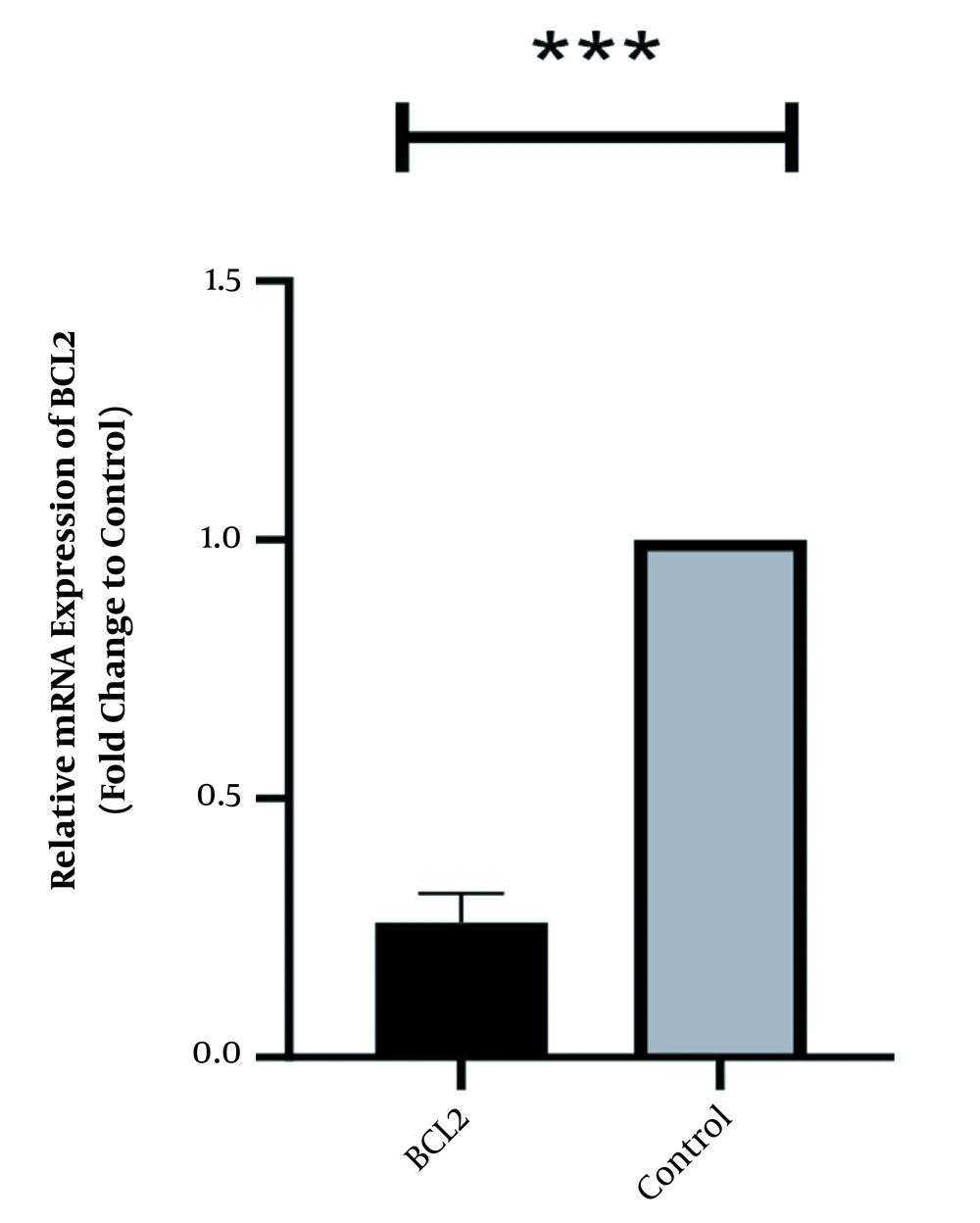
HOTAIR specific siRNA effects on suppressing Bcl2 transcript after treatment with 50 ng HOTAIR-siRNA after 48 hours of treatment. Data expressed as mean ± standard deviation (the stars *** show the P-value less than 0.001 compared to the control group).
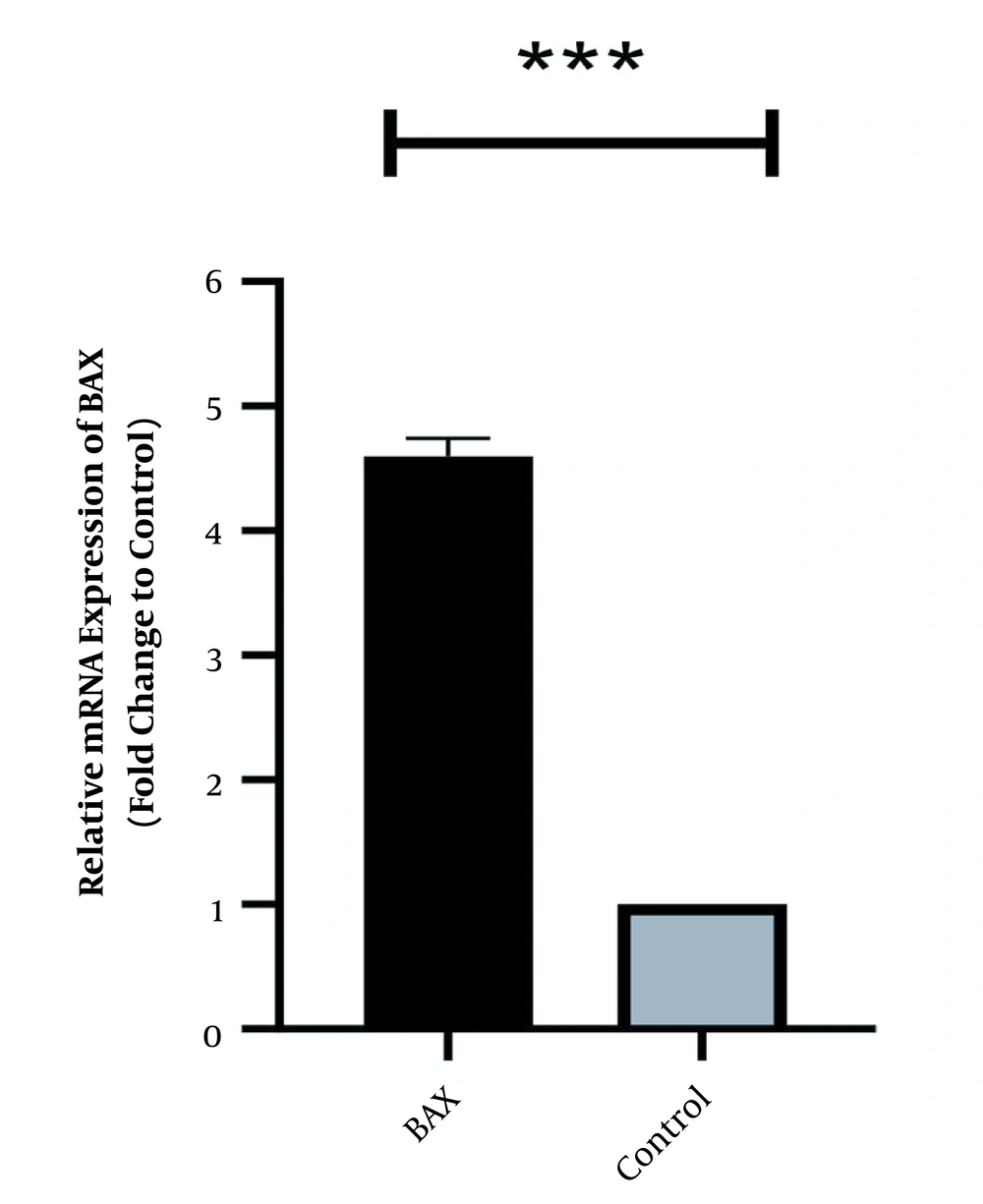
HOTAIR specific siRNA effects on suppressing Bax transcript after treatment with 50 ng HOTAIR-siRNA after 48 hours of treatment. Data expressed as mean ± standard deviation (*** P < 0.001 compared to control; the stars *** show the P-value less than 0.001 compared to the control group).
