




1. Background
2. Objectives
3. Methods
3.1. Plant Aquos Extract Preparation
3.2. Cell Culture
3.3. Cell Viability
3.4. mRNA Extraction
3.5. Reverse Transcription (RT) PCR
3.6. Real-Time PCR Assay
| Gene | Reverse | Forward |
|---|---|---|
| βActin | 5'-CTAGAAGCATTTGCGGTGGA-3' | 5'-GGAGTCCTGTGGCATCCACG-3' |
| BAX | 5'- GCCACGTGGGCGGTCCCAAAGT -3' | 5'- GGCCCACCAGCTCTGAGCAGA-3' |
| BAD | 5'-TCCAGCTAGGATGATAGGAC-3' | 5'-CAGTGATCTGCTCCACATTC-3' |
3.7. Data Analysis
4. Results
4.1. MTT Assay Results
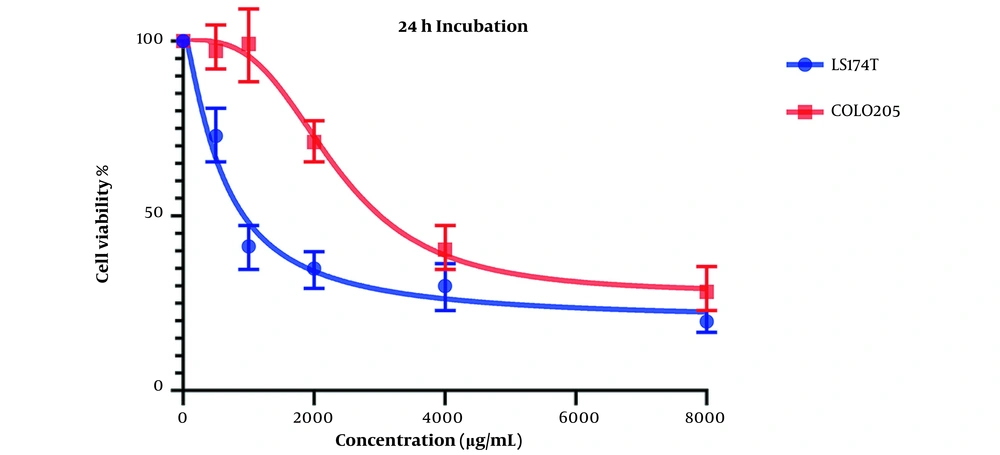
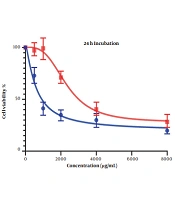
The methyl thiazol tetrazolium (MTT) results after 24 h of incubation for LS174T and COLO205 cells; both cell lines demonstrate a substantial decrease in live cell counts after treatment with different concentrations of Ocimum basillicum (OB) extract.
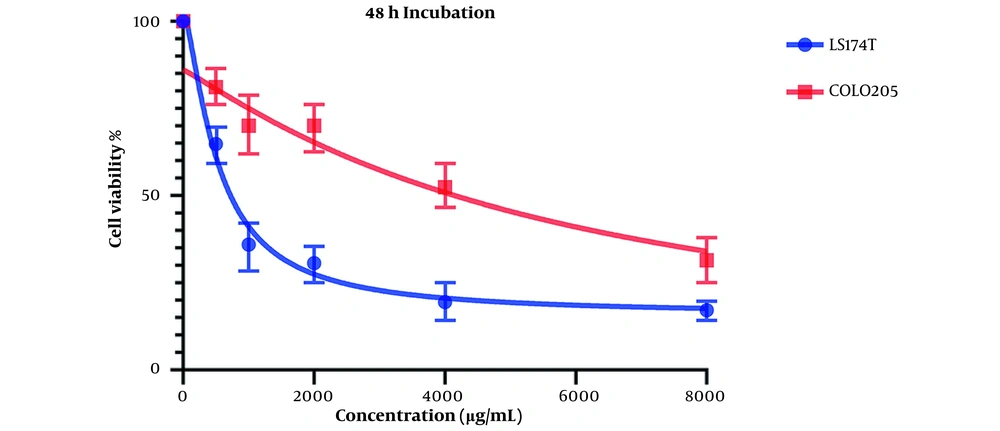
The methyl thiazol tetrazolium (MTT) results after 48 h of incubation for LS174T and COLO205 cells, both cell lines demonstrate a substantial decrease in live cell counts after treatment with different concentrations of Ocimum basillicum (OB) extract.
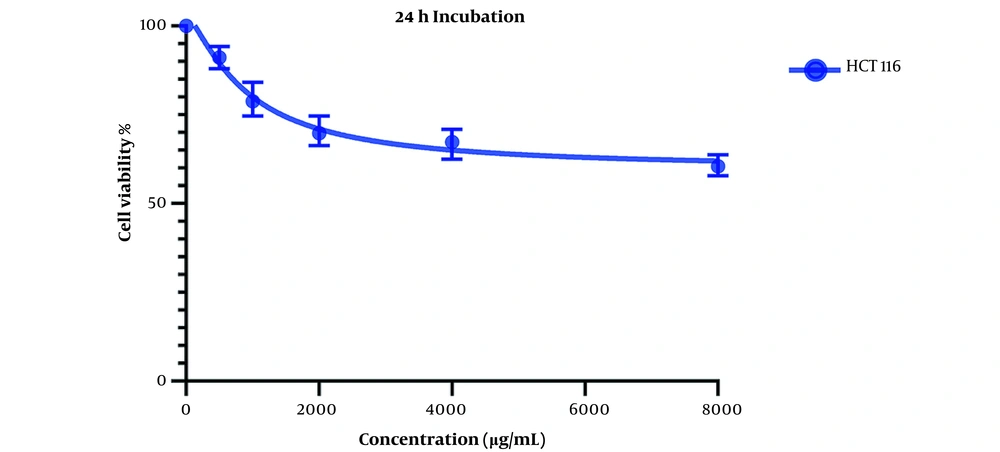
The methyl thiazol tetrazolium (MTT) results after 24 h of incubation for HCT116 cells, HCT116 normal cell count does not demonstrate a drastic decrease after treatment with different concentrations of Ocimum basillicum (OB) extract.
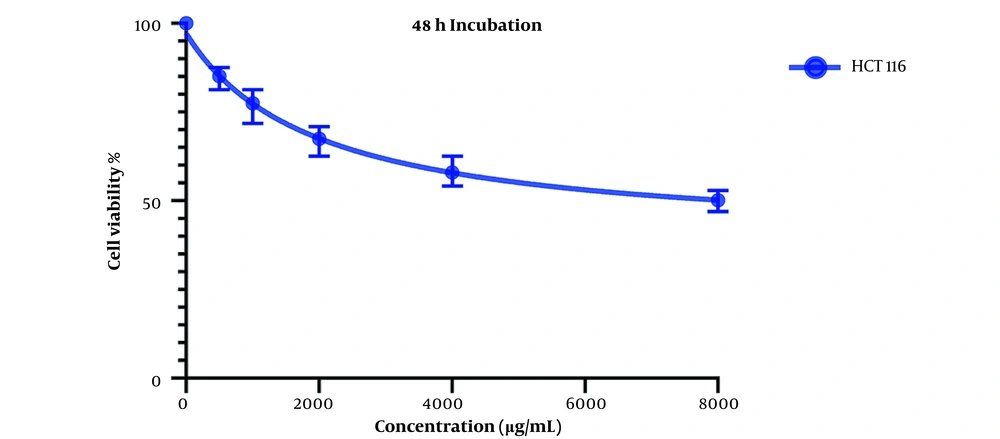
The methyl thiazol tetrazolium (MTT) results after 48 h of incubation for HCT116 cells, HCT116 normal cell count does not demonstrate a drastic decrease after treatment with different concentrations of Ocimum basillicum (OB) extract.
4.2. Real-Time PCR Results
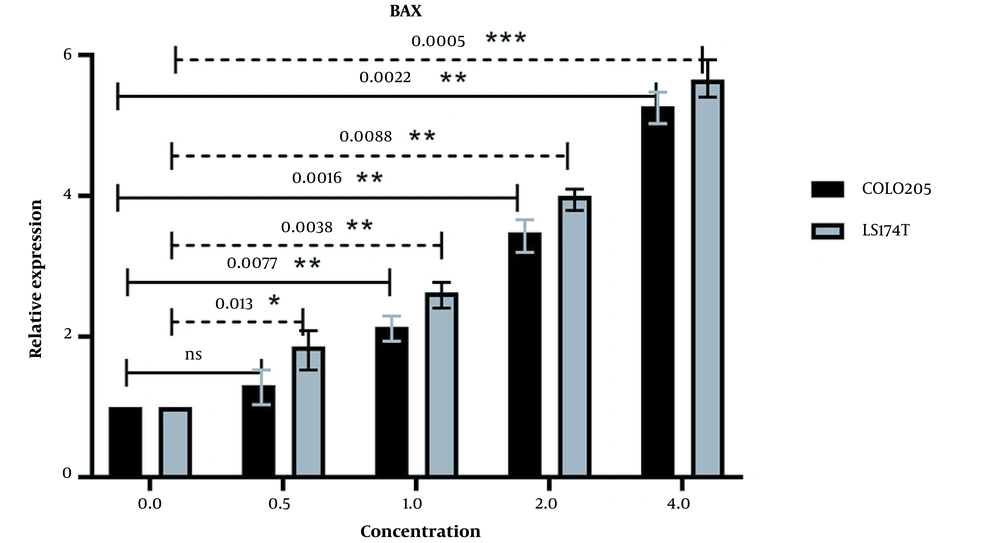
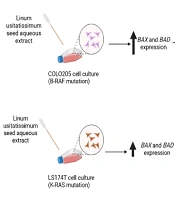
The relative expression of BAX in LS174T and COLO205 cells after treatment: The expression of BAX increased after treatment with different concentrations of Ocimum basillicum (OB) extract, and the increase in the concentration of OB extract was positively correlated with the increase of BAX expression.
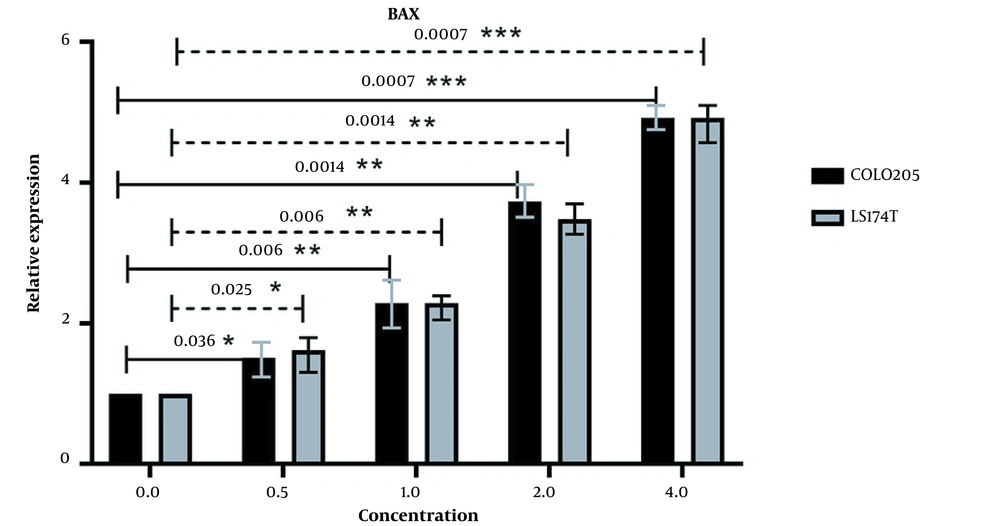
The relative expression of BAD in LS174T and COLO205 cells after treatment: The expression of BAD increased after treatment with different concentrations of Ocimum basillicum (OB) extract, and the increase in the concentration of OB extract was positively correlated with the increase of BAD expression.
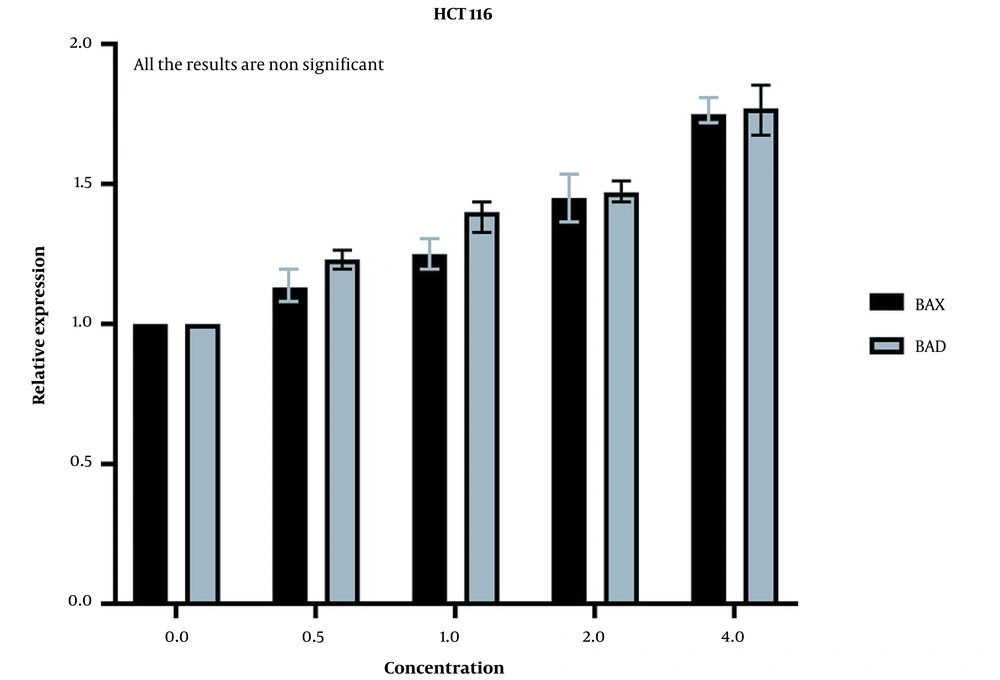
The relative expression of BAX and BAD in HCT116 cells: The expression of BAD and BAX slightly increased in HCT116 cells after treatment, but the results are not significant.