Fungi have a high capacity for metal ion absorption and accumulation, which can lead to the formation of metal nanoparticles (
10). According to the literature, ureolytic fungi are great candidates for metal carbonate synthesis. There have been reports of fungus creating metal carbonate. Li and Gadd (
14) successfully synthesized copper bicarbonate by interacting with the supernatants of ureolytic fungus
Pestalotiopsis sp.,
Myrothecium gramineum, and
Neurospora crassa at optimal temperature, pH, and copper ion concentration. Using the supernatant of ureolytic fungal cultures, Liu et al. (
13) investigated the relationship and involvement of fungal proteins in the formation of copper carbonate nanoparticles and concluded that triose phosphate isomerase (TPI) plays an important role in the synthesis and morphology of copper carbonate nanoparticles. In this study, the ability of the aquatic fungus
Alternaria sp. strain ccf7 to create copper carbonate nanoparticles was investigated using a CFE approach. The findings demonstrated that
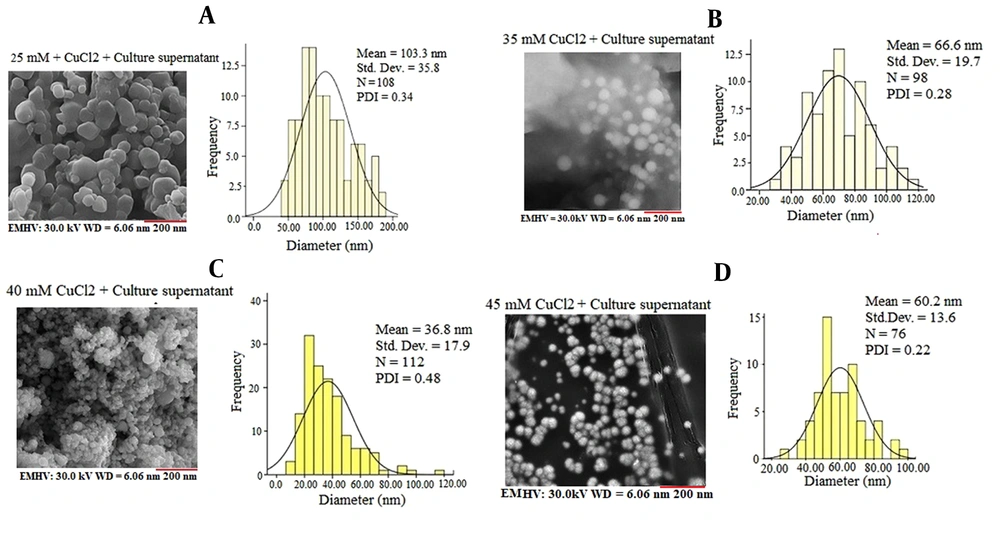
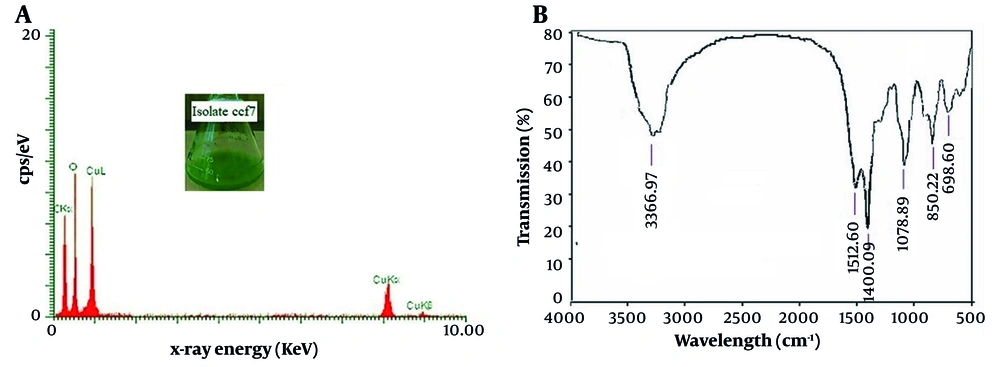
Alternaria sp. strain ccf7 was capable of generating spherical copper carbonate nanoparticles within 24 hours after incubation at 25°C and a shaking rate of 100 rpm at an optimal concentration of 45 mM copper chloride. Extracellular synthesis of metal nanoparticles using the approach of CFE is preferable to other ways because it is faster and removes processes such as cell lysis and filtering in purification and extraction stages. On the other hand, because it does not require additional and complex procedures (such as the use of ultrasonic waves to prepare and perfect nanoparticles) and is less expensive, it will be more efficient for nanoparticle production (
18,
19). The
Alternaria fungus isolated in this study is one of the aquatic fungi. In recent years, aquatic fungi have been identified as prospective biofactories for the production of ecologically benign and low-cost metal nanoparticles (
20). These fungi can accumulate and detoxify metals via various enzyme reduction pathways and transform metal salts into metal nanoparticles (
21). Several aquatic fungi can generate inorganic crystals, nanostructures, and metal nanoparticles with chemical-like characteristics while maintaining perfect control over the particle size and shape (
22).
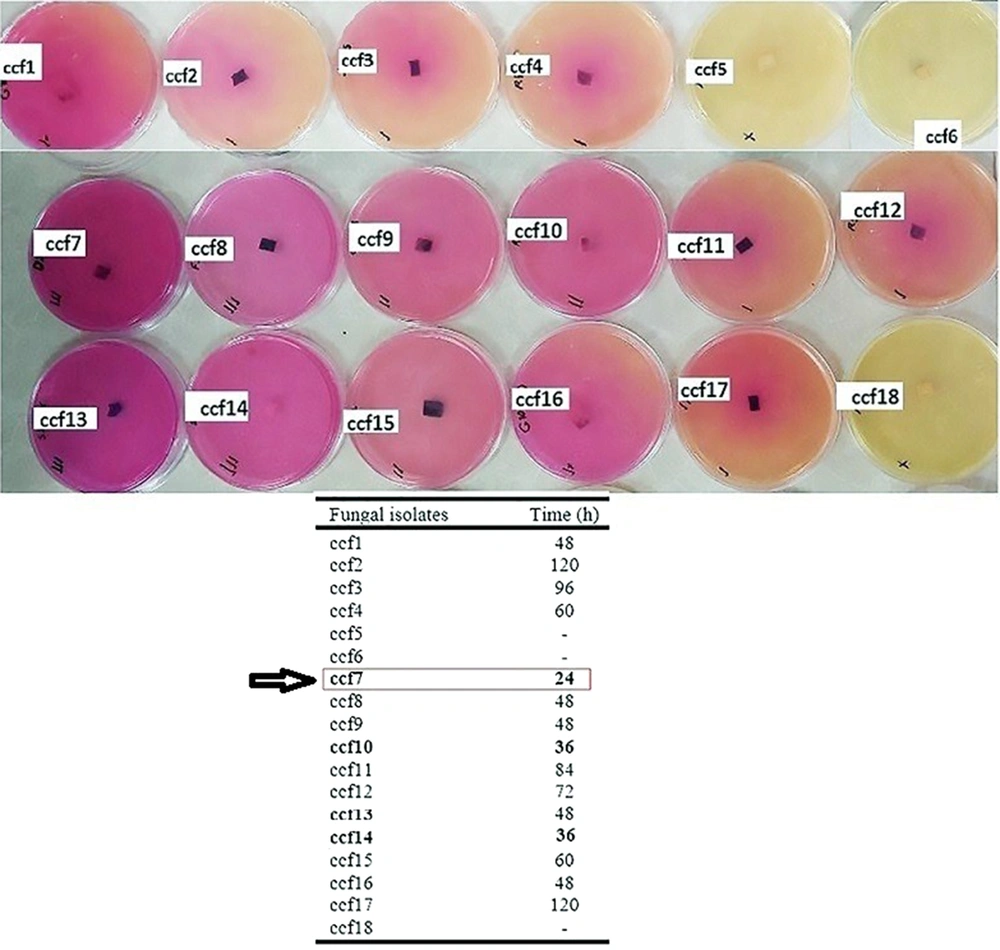
Alternaria sp. strain ccf7 was a urease-positive fungus that could adjust the pH of the medium and turn it pink. Urease (EC 3.5.1.5) is a nickel-containing enzyme that converts urea to ammonia and carbamate. Urease may be created in response to a microorganism’s stress to cope with the low pH of the environment (
9). The morphology and size of biologically generated nanoparticles are affected by a variety of physical and chemical parameters, such as metal ion concentration, reaction temperature, incubation duration, and pH. The researchers have concluded that raising the precursor solution concentration promotes nanoparticle creation and affects nanoparticle morphology (
23). Several concentrations of copper chloride salt were explored in this study to achieve the optimal concentration of copper chloride, and
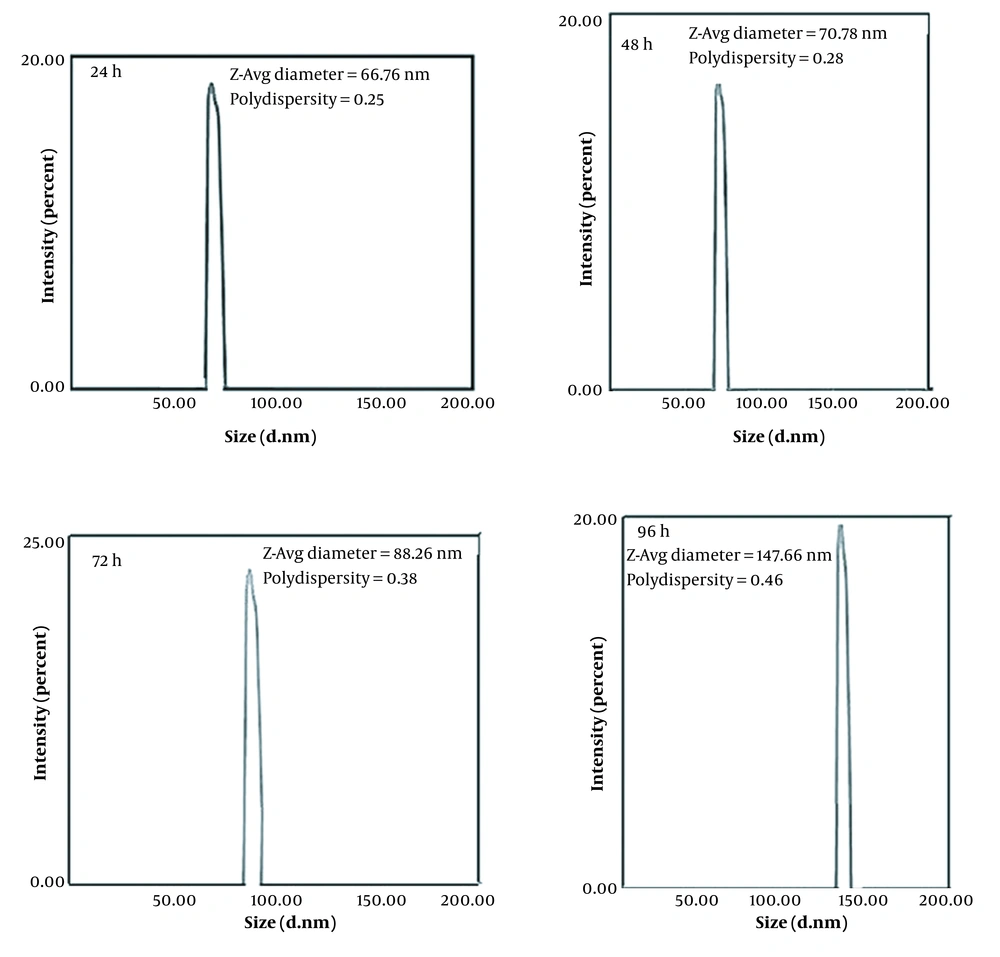
Alternaria sp. strain ccf7 showed the best result at a concentration of 45 mM. The incubation time has a considerable influence on the size, shape, and rate of synthesis of nanoparticles by microorganisms (
24). We studied the influence of the incubation period at 24, 48, 72, and 96 hours. After 24 hours, the average size of the particles in the reaction was calculated to be 66.7 nm, indicating that the produced nanoparticles have an appropriate distribution based on the PDI of 0.25. Since the development of nanotechnology, it has been possible to use nanoparticles to overcome therapeutic constraints. Then, by lowering the dosage of medications, drug resistance, and its side effects can be decreased (
25). Metal nanoparticles have attracted attention due to their wide range of applications and have opened up a new field in medical science. Nanotechnology has shown that increasing particle size from micrometers to nanometers improves reactivity and creates an antimicrobial effect. The bactericidal reaction of copper nanoparticles is initiated by releasing Cu2+ ions. These positively charged ions are absorbed by the carboxylic groups found in the lipoproteins of the bacterial cell wall, resulting in the formation of reactive oxygen species (ROS), which causes oxidative stress in the bacterial cell, enzyme dysfunction, DNA damage, and subsequently bacterial death (
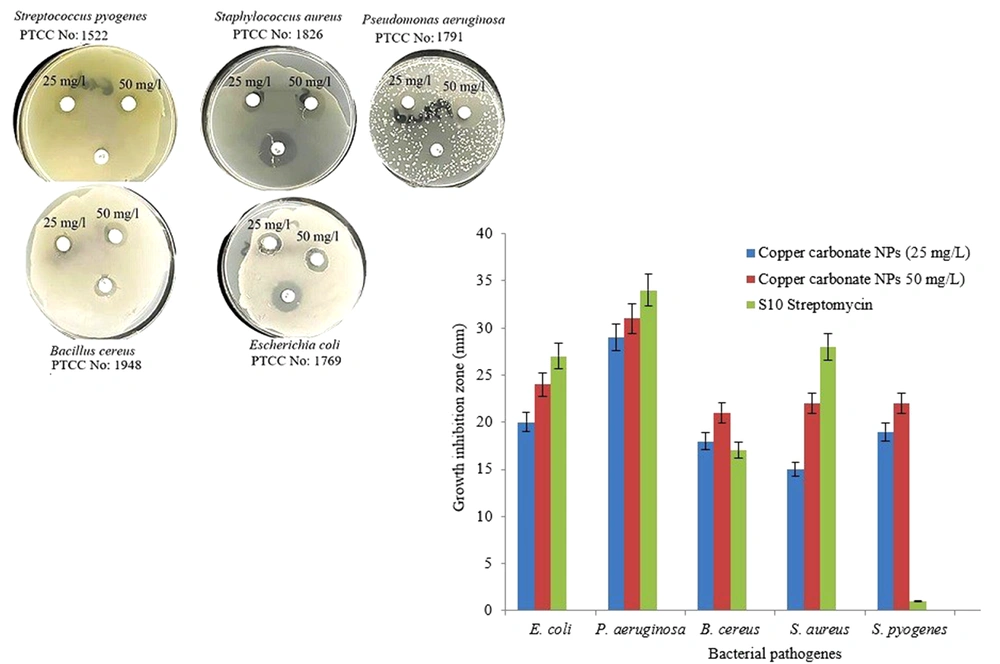
26). The antibacterial activities of copper carbonate nanoparticles formed by the CFE of
Alternaria sp. strain ccf7 on human pathogens were examined in this research. According to the findings, the nanoparticles had a greater inhibitory impact on gram-negative bacteria (
P. aeruginosa and
E. coli) than on gram-positive bacteria (
S. pyogenes,
B. cereus, and
S. aureus).