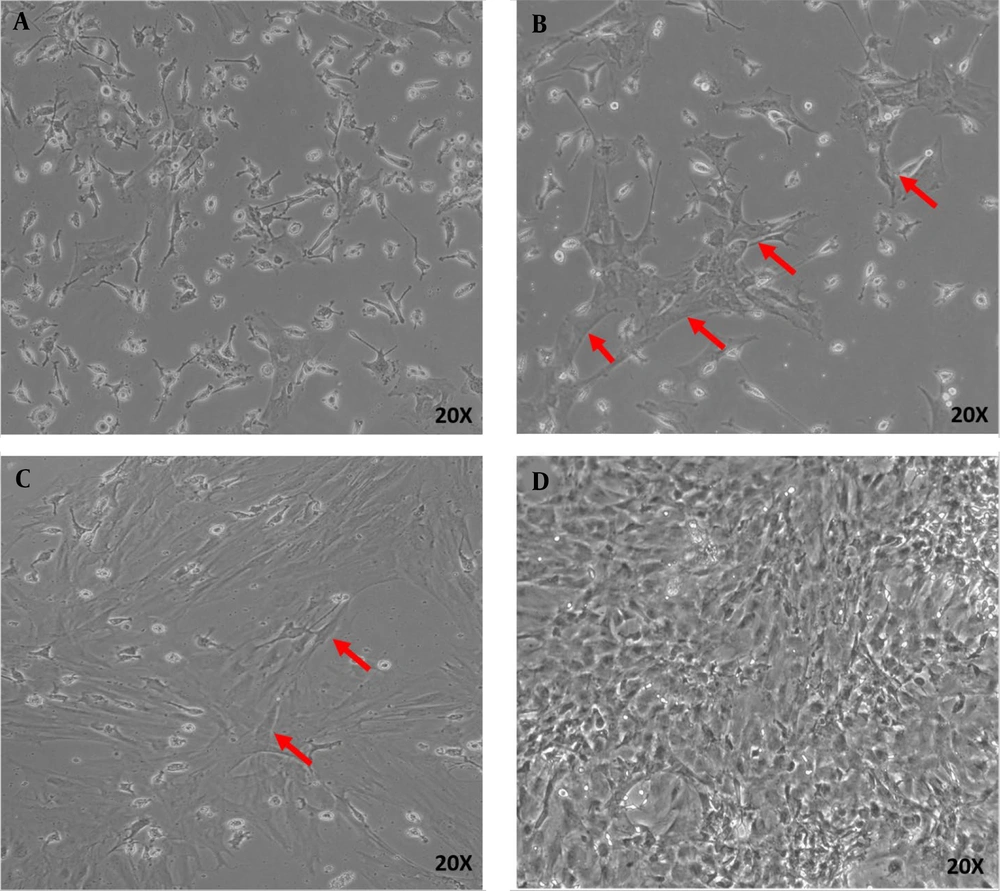
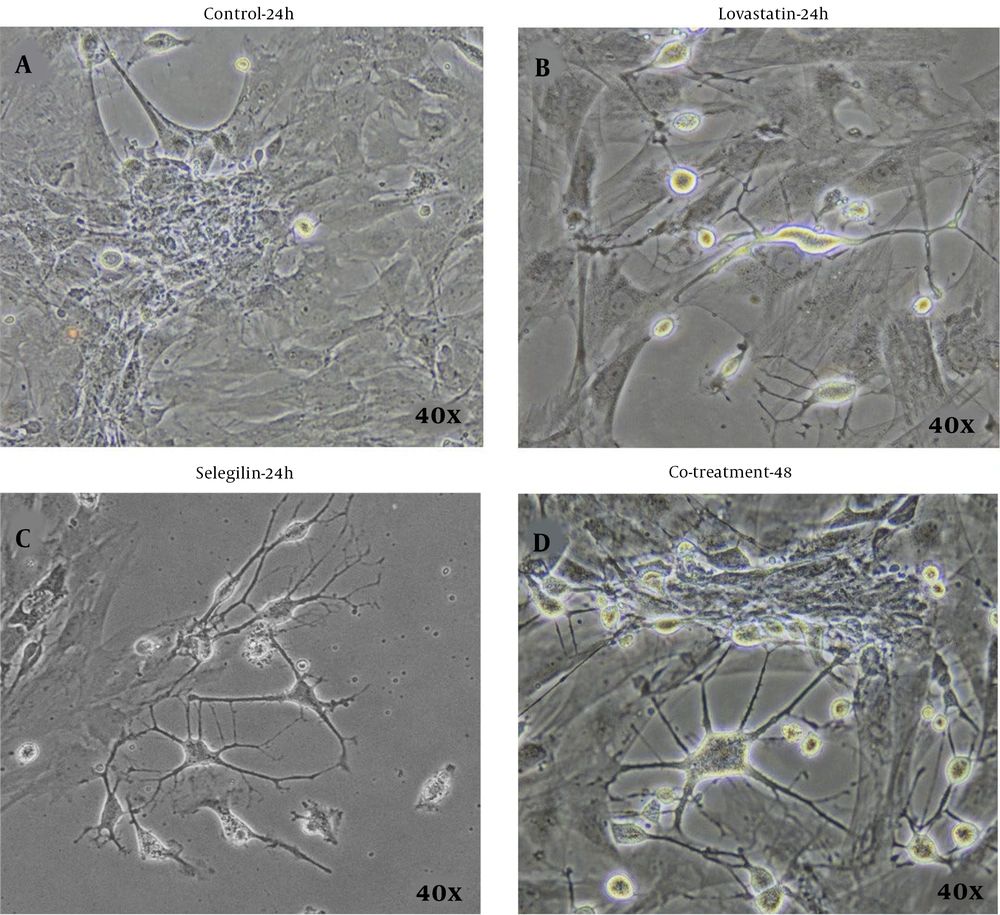
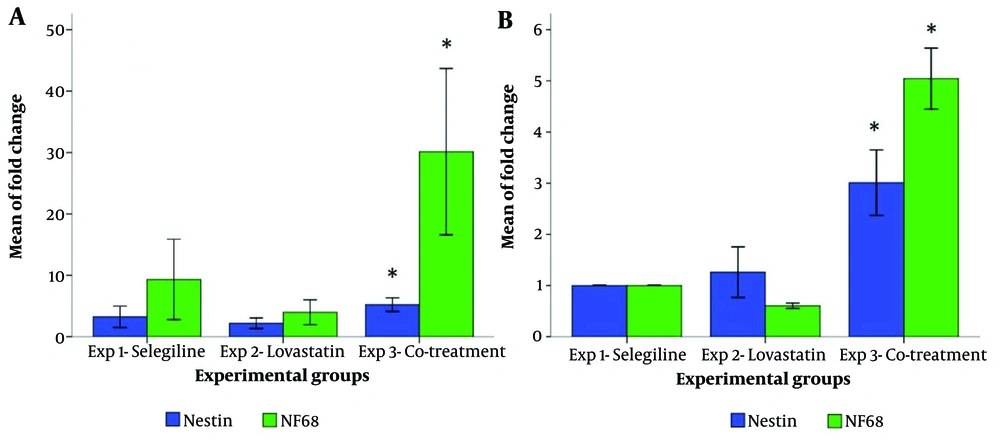
The results of this study showed that biphasic induction of bone marrow stem cells by selegiline and lovastatin significantly increased
nestin and
NF-68 gene expression. A differentiated neuronal phenotype also occurs in the presence of selegiline. Mesenchymal stem cells are an attractive source of regenerative therapies due to their ability to perform immunomodulatory, anti-inflammatory, and non-tumorogenic functions (
20). Recently, cell and molecular studies revealed interesting properties of selegiline, opening new possibilities for neuroprotective mechanisms and a disease-modifying effect of MAO-B inhibitors (
21). Neurofilaments (NFs) are major components of the axonal cytoskeleton and are composed of three subunits: NF light chain (NFL), medium chain, and heavy chain. When axons are injured, NFs are released into the extracellular space and ultimately into the CSF and blood. Elevated levels of them can be used as a biomarker of nerve damage (
22). Bone marrow mesenchymal cells are an attractive source of cell therapy, and their healing properties have been confirmed in animal models of neurological diseases such as stroke, Parkinson’s disease, and spinal cord injury (
23,
24). Methods that stimulate the differentiation of BMSCs into functional neurons need to be developed. Bone marrow mesenchymal cells can be easily obtained and expanded in culture and promote modest functional recovery after transplantation into animal models with injured or degenerative CNS (
25). The use of pharmacological agents that are less toxic but more effective in the cell culture environment is a very important point in the differentiation of stem cells into neural progenitor cells. According to studies on the effects of statins on the protection and repair of damage to the nervous system, the use of statins in a culture medium together with the active substance selegiline suggests a potentially improved mechanism.
According to in vitro and in vivo studies, selegiline prevents MAO-B and improves the synthesis of neurotrophic factors (
26,
27). It is also an anti-Parkinson’s drug with antioxidant and antiapoptotic properties (
28). However, its cytoprotective mechanism is still not fully understood (
29). The results obtained from this study indicate a potential strategy for optimizing the use of stem cells in the treatment of nervous system injuries, including spinal cord injuries. As an irreversible MAO-B inhibitor, selegiline has antiapoptotic and neuroprotective effects (
30). It also induces stem cells into neuronal and glial lineages by altering gene expression (
7). Reports have shown that when used as a cell inducer, selegiline increases cell survival compared to other inducers, such as dimethyl sulfoxide. It also induces cells with morphological changes and expresses nestin genes as markers of neural progenitor cells (
31). The results of this study showed that selegiline-induced BMSCs induced
nestin and
NF-68 gene expression. Other studies have also shown that selegiline, as a neuroprotective drug, can induce neuron-like cells that express
NF-68,
synapsin-1, and nerve growth factors (
32). During the last few years, the Neurofilament-light chain (NF-L) has been shown to be a valuable biomarker for several neurodegenerative diseases (
33). The neurofilament light chain is a neurofilament subunit highly expressed in axons and dendrites, where it contributes to structural stability in neurons. Neuroaxonal damage due to inflammatory, neurodegenerative, traumatic, or vascular injury results in the release of large amounts of NfL (
33).
In addition, Mardani et al. showed that treatment of adipose stem cells with selegiline can induce these cells in neural progenitor cells expressing
nestin and
NF-68 (
34).
Nestin develops as neuronal progenitors in neuroepithelial cells and immature astrocytes of the central nervous system. In the adult brain,
nestin is expressed in neurons and progenitor cells and can be expressed in reactive astrocytes under pathophysiological conditions. In this study, these markers were used to identify neuron-like cells (
35). Statins are drugs approved by the Food and Drug Administration (FDA) to lower cholesterol and are widely used in clinical practice. Recently, statins have been recognized to have a variety of effects, including anti-inflammatory, antioxidant, and neuroprotective (
36). In vivo experiments have shown that statin treatment after brain injury increases synaptogenesis and neurogenesis without changing blood cholesterol levels. Statins are also thought to induce neuroprotection by releasing neurotrophic factors and inducing gene expression (
37,
38). Previous studies have reported that statins (atorvastatin) reduce inflammation and neuronal apoptosis after spinal cord injury and significantly improve motor recovery in rats (
39,
40). It has also been reported that treatment of rat hippocampal neural stem cells with lovastatin results in increased
NGF expression (
41). In this study, we used selegiline as a pre-inducer and lovastatin as an inducer to differentiate BMSCs into neuronal cells expressing the
NF-68 gene. Experimental data from numerous animal and cell culture studies have shown that selegiline protects against various neurotoxins, reduces oxidative stress, and has neurotrophic and anti-apoptotic effects. All of these properties may contribute to its neuroprotective activity (
42)
Both drugs are safe and used in medical clinics for therapeutic purposes. In this study, considering the role of neurofilament light (NFL) in the maturation and structural support of neurons, the increased expression of this gene may indicate the role of the synergistic effect of selegiline and lovastatin in the induction of neuronal stem cells. NFL has emerged as an important filamentous protein in neurodegenerative diseases. NFL is a structural protein that forms neurofilaments, fills the axonal cytoplasm, and regulates synaptic transmission and organelle transport (
43). Reported that developing mouse motor neurons express high levels of NFL (
44). Studies have shown that this type of filament plays an important role in postsynaptic termination and influences nerve transmission, contributing to normal synaptic function and neuropsychiatric disorders (
22). Therefore, the results of this study may make the use of lovastatin promising in clinical trials for the treatment of neurodegenerative diseases.
5.1. Conclusions
Based on the increased expression of nestin and NF-68 genes, the presence of lovastatin has a synergistic effect on neuronal differentiation and optimization of stem cell therapy approaches.