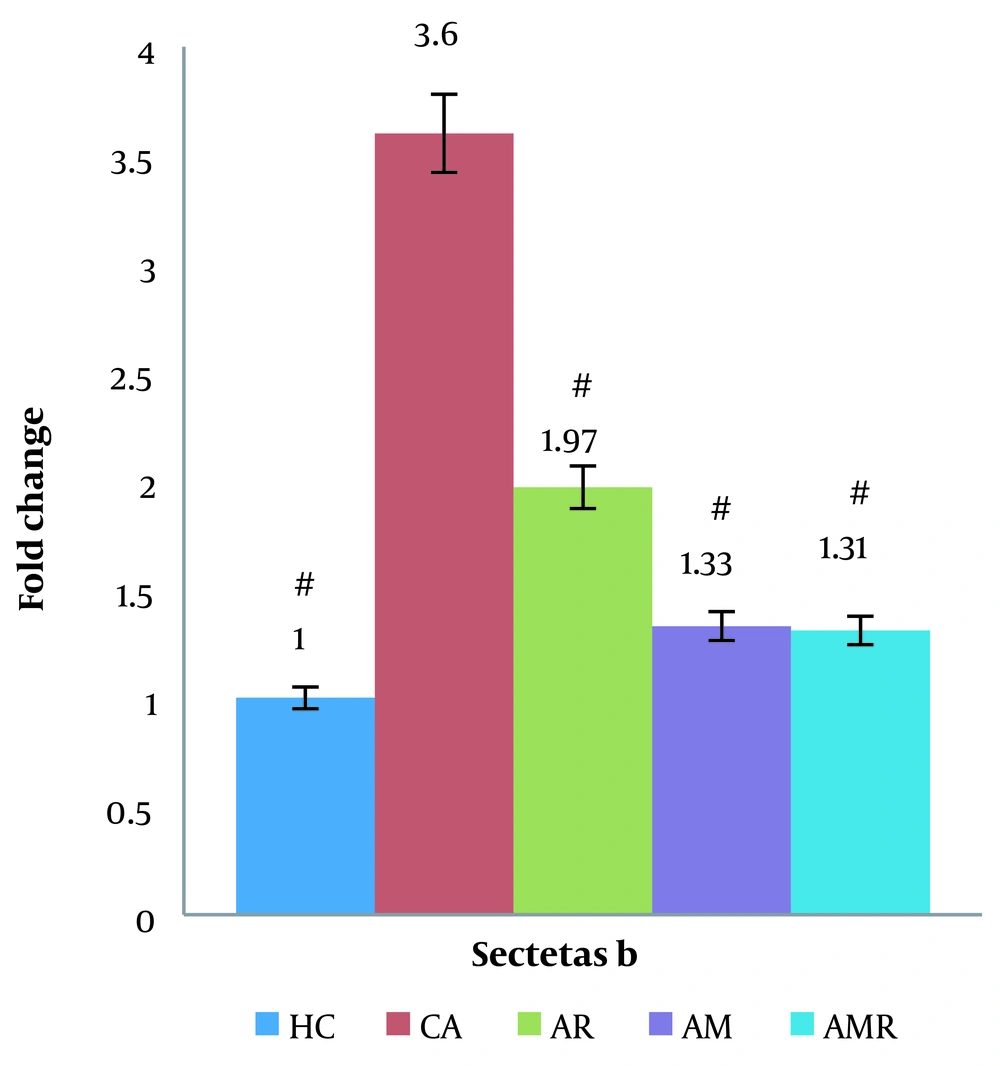
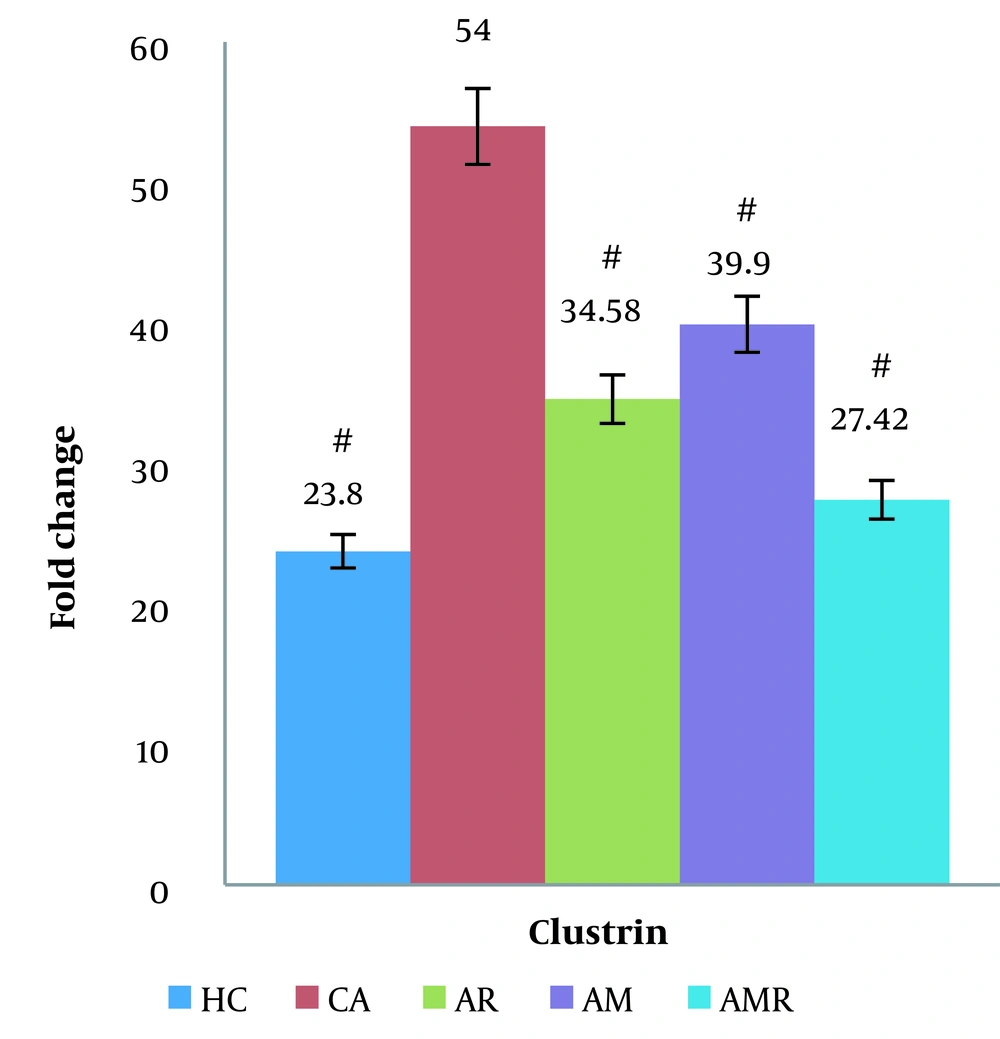
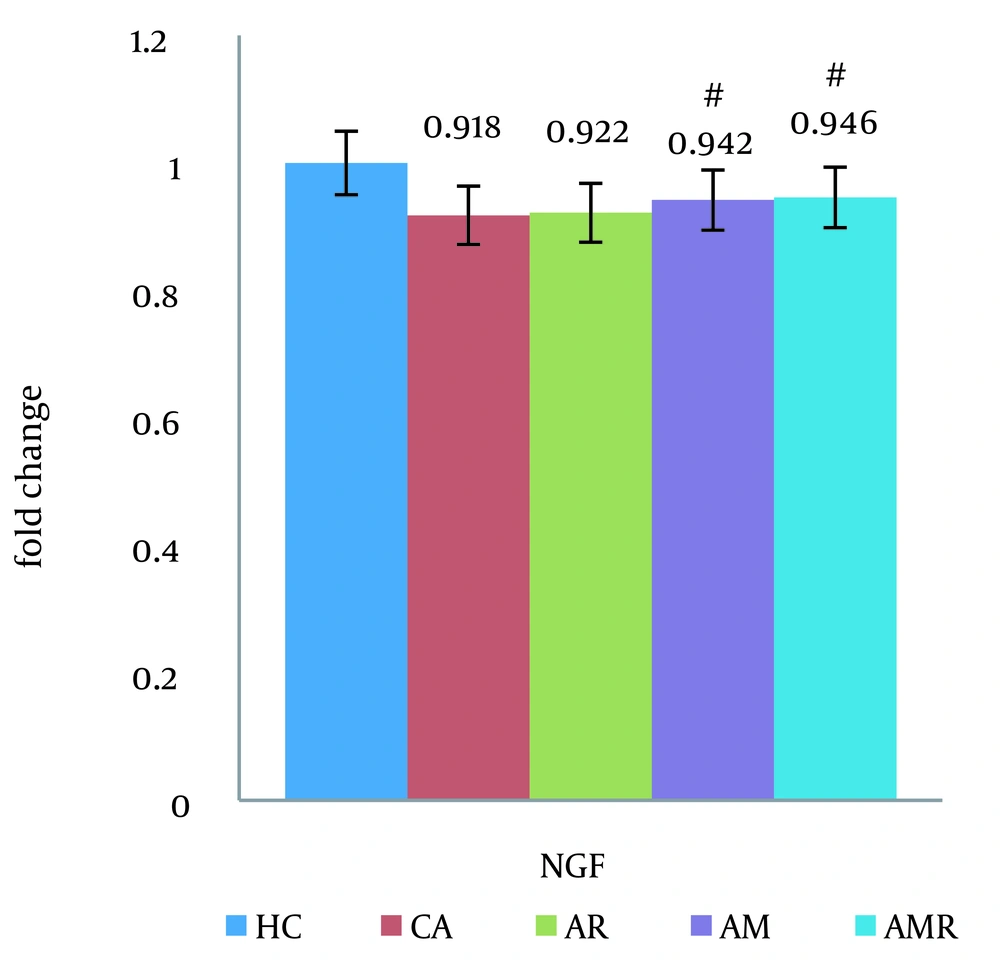
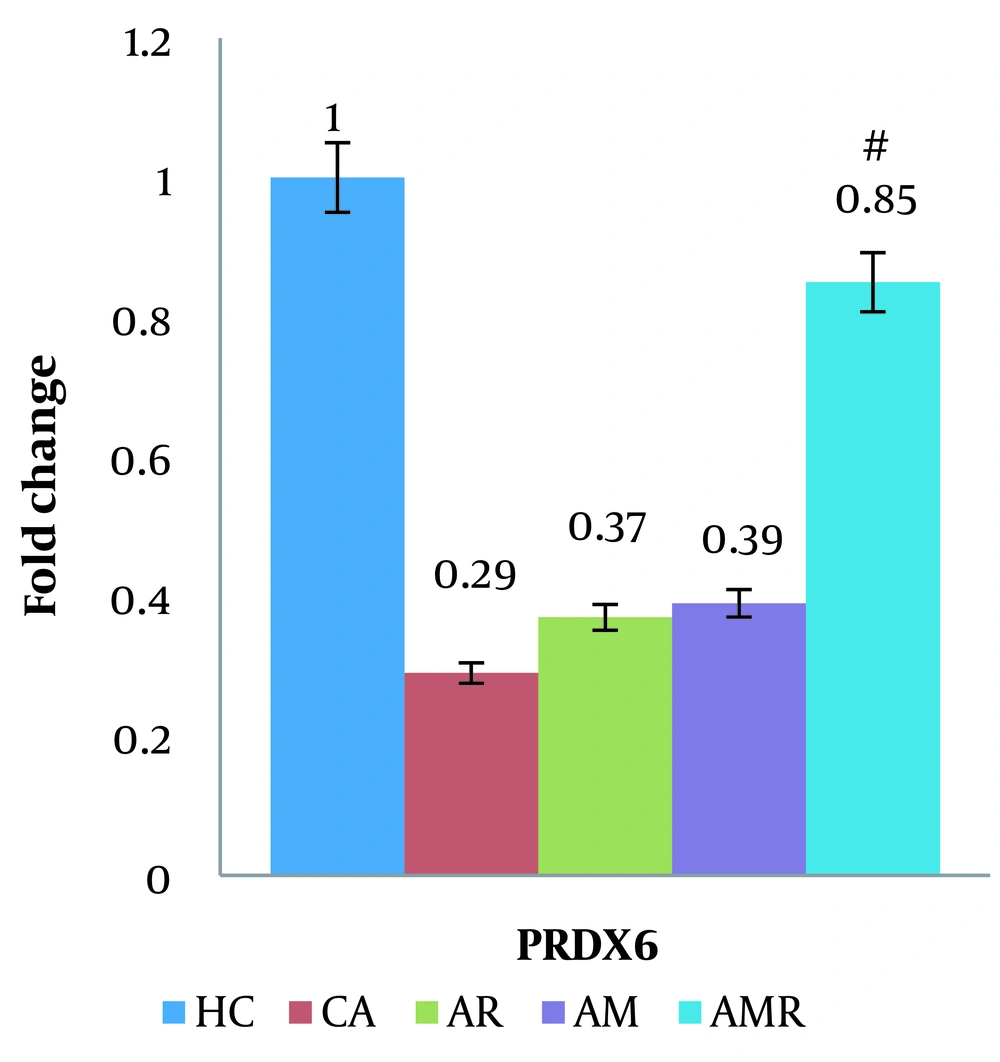
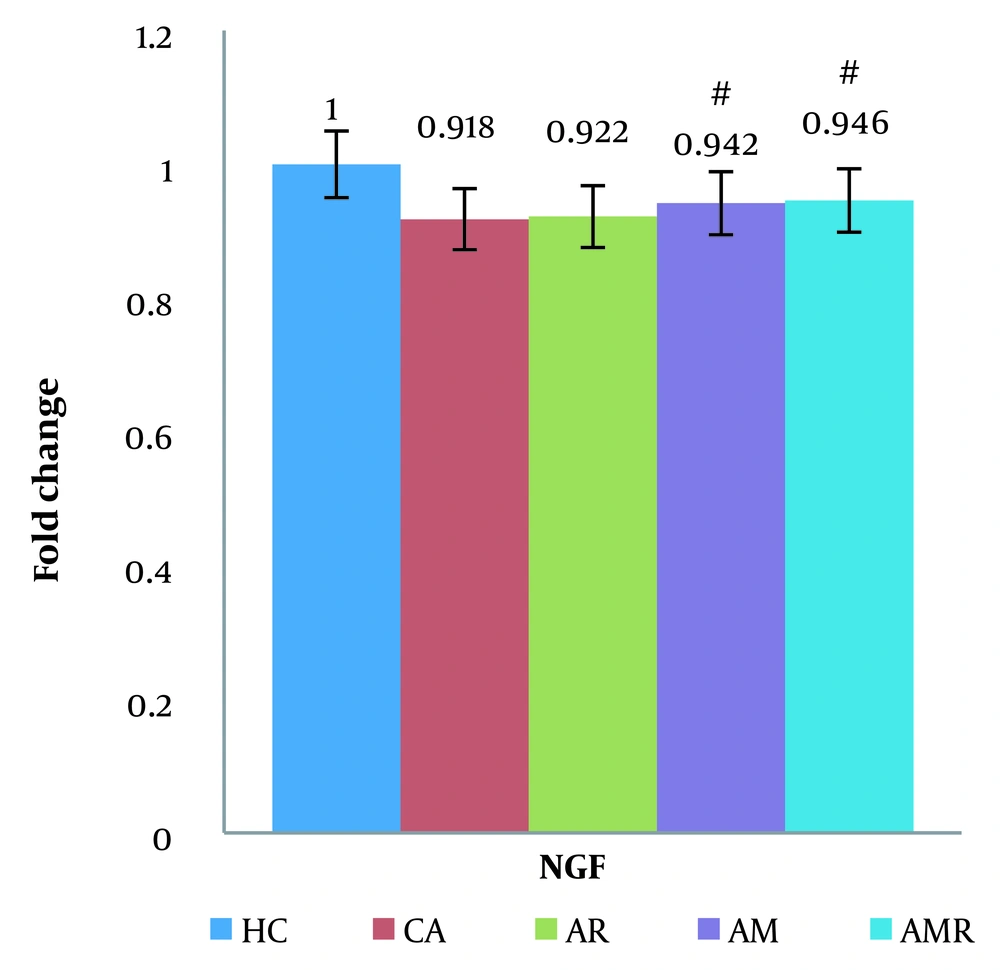
The results of this research indicated that the gene expression levels of clusterin in testicular tissue and beta-secretase in hippocampal tissue decreased, while the expression levels of BDNF in hippocampal tissue increased. Additionally, the expression of NGF, PRDX6, and KAT2B in hippocampal tissue also increased in the exercise and melilotus groups. These findings align with the studies conducted by He et al., Kishi et al., Meng et al., and Jaberi and Fahnestock (
18-
21), but contradict the results of Malik et al. and Gray et al. (
22,
23).
It appears that exercise can reduce the level of Aβ in AD, and the reduction in beta-secretase levels leads to the breakdown of amyloid precursor proteins. Alizadeh et al. also demonstrated that regular physical activity and a healthy lifestyle are crucial for CNS adaptation in the hippocampus (
24). Changes in the clusterin gene can impact brain biochemical pathways, and resistance exercise has been shown to enhance brain pathways that produce neurotrophic factors.
Melilotus extract provides antioxidant compounds, which reduce oxidative stress and clusterin inflammation through cellular protective signaling cascades (
18). Various disease states, such as neurodegeneration, are associated with clusterin secretion and its cellular protective or anti-apoptotic functions. The increased clusterin level observed in the presence of toxic protein aggregates is a common pathological feature. Foster et al. reported an increase in clusterin in hypoxia-ischemia mice, implicating its role in underlying pathogenic processes and AD. Thus, in the training groups, these conditions were not present to increase clusterin levels, suggesting that training effectively improved blood circulation (
6).
Melilotus contains various bioactive compounds, including coumarins, flavonoids, and phenolic acids, which exhibit anti-inflammatory, antioxidant, and neuroprotective properties. These compounds likely improve brain function by reducing nerve damage, increasing the expression and activity of antioxidant enzymes, lowering inflammatory marker levels, and enhancing apoptosis. Additionally, melilotus strengthens the regeneration of nerve cells in the hippocampus and cerebral cortex, prevents beta-amyloid plaque deposition and tau protein hyperphosphorylation, and activates the Nrf2 and Akt signaling pathways, as observed in this research.
The reduction of BDNF is probably related to the dose and duration of melilotus extract administration, the type and intensity of resistance training, and possibly the excessive muscle stress caused by reduced BDNF levels. Brain-Derived neurotrophic factor likely activates intracellular signaling pathways, stimulates dendritic growth, and promotes synaptic connections and neurogenesis in brain tissue by binding to TrkB receptors on neurons. Another possible mechanism is that resistance training, through mechanical muscle stretching and increased blood flow to the brain tissue, has led to nerve stimulation and the release of nerve growth factors and BDNF. It is also possible that the phenolic and antioxidant compounds in melilotus extract did not effectively induce the intracellular signaling pathways needed to synergize BDNF gene expression (
25,
26).
Regarding NGF neurotrophin levels, there is evidence that dysregulation of neurotrophins affects cholinergic synapses and synaptic plasticity. Therefore, exercise and melilotus consumption may have contributed to the temporal regulation of NGF neurotrophins. Meng et al. reported that blood flow, hippocampus volume, and neurogenesis improvement were increased in AD patients who had long-term exercise interventions, which aligns with the findings of this research. Compared to drugs, exercise has fewer side effects (
20). Strength training may impact vascular physiology, hippocampal volume, and neurogenesis. For the early stages of AD and the overall prevention of dementia, exercise appears to be an effective treatment and preventive measure (
27).
Melilotus extract contains antioxidant compounds that can activate the Nrf2 signaling pathway. Activation of Nrf2 leads to increased expression of antioxidant genes, which can protect cells from oxidative damage. Hase et al. confirmed the activation of the Nrf2/ARE antioxidant pathway by investigating the potential neuroprotective mechanisms of plant extracts. Studies on long-term strength training have shown the activation of SIRT1 and Nrf2 pathways in brain tissue. Strength training induces the Nrf2 pathway by causing metabolic stress (
28). Therefore, melilotus plant extract combined with strength training has a synergistic effect on activating Nrf2 in Alzheimer's rats. This synergistic effect may reduce oxidative and inflammatory damage in the brain by regulating the body's antioxidant defense system, and the combination of plant extracts and exercise provides a useful strategy to combat Alzheimer's symptoms in an animal model (
29).
However, Gray et al. provided conflicting evidence about the effects of melilotus extract and exercise training on Nrf2 signaling in AD models, finding no significant effect on the expression of Nrf2 target genes in Alzheimer's rats (
23). It should be noted that some research used older rats and endurance training methods (
19).
Peroxiredoxin 6 is an antioxidant that plays a critical role in protecting cells from oxidative stress, while KAT2B is an acetyltransferase enzyme involved in regulating gene transcription. Resistance training and melilotus extract increased the expression of PRDX6 and KAT2B in the hippocampus. The induction of these two proteins had a beneficial effect on tissue health by enhancing antioxidant defense and reducing inflammation. Resistance exercise induced epigenetic changes and upregulated KAT2B gene expression, along with increasing neurotrophic factors and PRDX6. Jaberi and Fahnestock have also confirmed these findings. Additionally, reducing inflammation, improving brain blood flow, and enhancing mitochondrial health have influenced the expression of these genes (
21). Other possible factors include increasing the production of NGF and antioxidant enzymes, stimulating angiogenesis, improving cerebral blood flow and neuron nutrition, creating epigenetic changes, regulating gene expression through effects on DNA methylation and histones, and modulating the activity of signaling pathways involved in neuron proliferation (
30).
However, De la Rosa et al. showed that endurance training in old rats had no significant effect on the expression of PRDX6 and KAT2B proteins in brain tissue. The difference may be due to the chronicity of the exercises, the advanced age of the mice, and the severity of the brain injuries (
31). Improta-Caria et al. also reported that endurance training in aged rats does not affect the expression levels of PRDX6 and KAT2B in the cerebral cortex (
32). The potential mechanisms of melilotus's effects on AD emphasize its anti-inflammatory and antioxidant properties (
33). However, limitations such as the small number of research samples, lack of laboratory tools, inadequate animal facilities, and difficulties in obtaining kits and laboratory materials due to the general embargo on Iran may prevent the full display of the study's results, capabilities, and potential.
5.1. Conclusions
In conclusion, this study has demonstrated for the first time the effectiveness of simultaneous exercise and supplementation with melilotus extract as a novel mechanism for controlling, modulating, and potentially halting the progression of AD. Given the significant impact of these independent variables on the dependent variables, a new mechanism is proposed that is both cost-effective and free from side effects.