


1. Background
2. Objectives
3. Methods
3.1. Experimental Animals and Groups
3.2. Exercise Protocol
a 5 minute warm-up + 30 - 60 minute core workout + 5 minute cool-down per workout.
b 5 minute warm-up + 10 - 25 minute core workout + 10 minute cool-down per workout.
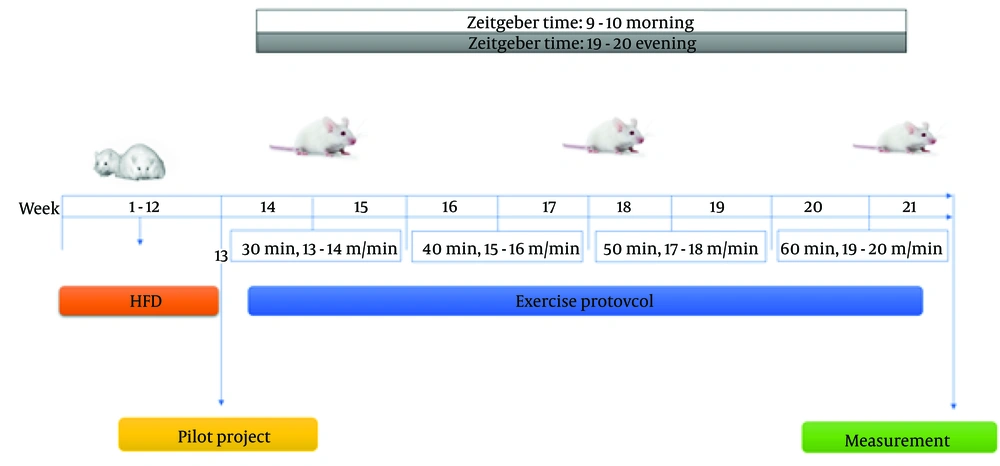
Research design flowchart
3.3. Serum Biochemical Analysis
3.4. Western Blot Analysis
| Target | Company | Catalog Number |
|---|---|---|
| HMGCR | Novus Biological | NB-100125 |
| Aβ-42 | Cell signaling | Sc-271583 |
| CYP46A1 | Santa Cruz Biotechnology | Sc-515647 |
| ABCA1 | Santa Cruz Biotechnology | Sc-74465 |
| SREBP2 | Cell signaling | 1F-8 |
| LDLR | Santa Cruz Biotechnology | Sc-376938 |
| GAPDH | Cell signaling | #5174 |
Abbreviation: Aβ-42, amyloid-beta.
3.5. Quantitative Reverse Transcription-Polymerase Chain Reaction Analysis of Endoplasmic Reticulum Stress-Associated Genes
| Gene Name | Sequence | Size (bp) | Accession No. |
|---|---|---|---|
| ATF6 | 138 | NM-001081304 | |
| ATF6-mice-F | GTCCAAAGCGAAGAGCTGTCTG | ||
| ATF6-mice-R | AGAGATGCCTCCTCTGATTGGC | ||
| GAPDH | 150 | NM-008084 | |
| GAPDH-mice-F | CATCACTGCCACCCAGAAGACTG | ||
| GAPDH-mice-R | ATGCCAGTGAGCTTCCCGTTCAG | ||
| GRP78 | 121 | NM-022310 | |
| GRP78-mice-F | TGTCTTCTCAGCATCAAGCAAGG | ||
| GRP78-mice-R | CCAACACTTCCTGGACAGGCTT | ||
| PERK | 115 | NM-010121 | |
| PERK-mice-F | CCGATGTCAGTGACAACAGCTG | ||
| PERK-mice-R | AAGACAACGCCAAAGCCACCAC |
3.6. Methods of Use for Cholesterol and Triglycerides
3.7. Data Analysis Method
4. Results
4.1. Lipid Profile Modulation in Diabetic Mice with Exercise
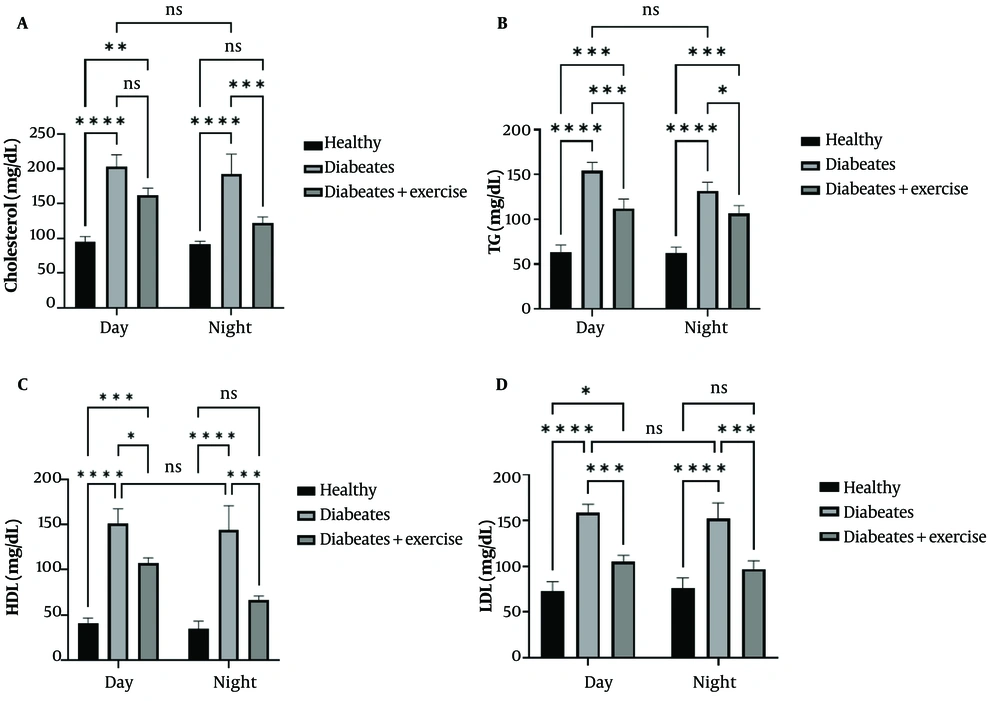
Effect of continuous training in the morning and evening on cholesterol, triglycerides (TG), high-density lipoprotein (HDL) and low-density lipoprotein (LDL) levels in different groups during the day and night. Samples were analyzed twice a day and night 48 hours after the final training. In rats with metabolic syndrome (MetS) (results are presented as mean ± standard deviation (number = 2/each group). Statistically significant differences between groups are denoted as follows: * P < 0.05, ** P < 0.01, *** P < 0.001, **** P < 0.0001.
4.2. Exercise Effects on Brain Cholesterol-Related Proteins in Metabolic Syndrome Mice
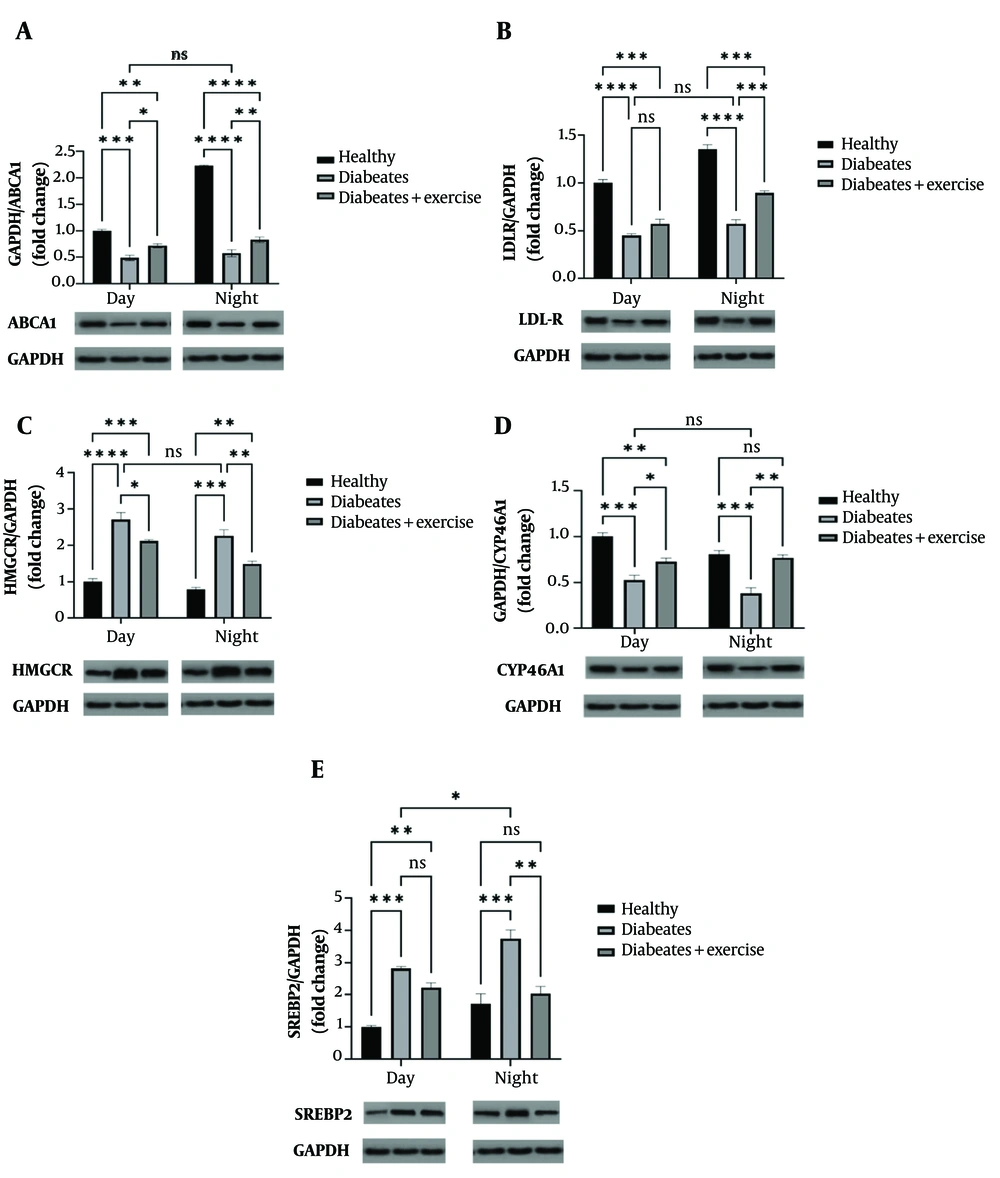
Effect of morning and evening continuous exercise on brain cholesterol-related protein expression (ABCA1, LDLR, HMGCoA, CYP46A1, and SREBP2) in a mouse model of metabolic syndrome (MetS). Protein expression levels were quantified by Western blot analysis in groups subjected to exercise at different times of day. Representative cropped blot images are shown, with GAPDH used as a loading control. Tissue samples were collected 48 hours after the final exercise session, conducted either in the morning or evening. Data are presented as mean ± standard deviation, per group. Statistically significant differences between groups are denoted as follows: * P < 0.05, ** P < 0.01, *** P < 0.001, **** P < 0.0001.
4.3. Chronobiological Effects of Exercise on Amyloid-beta
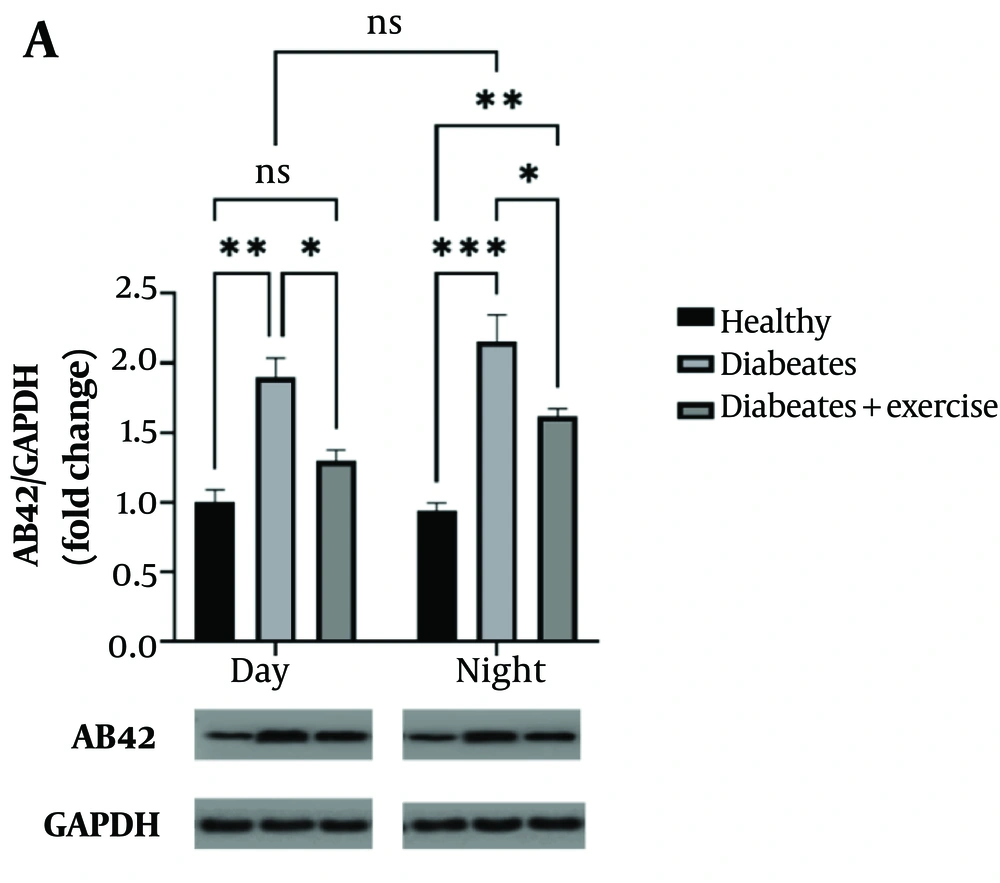
This study examines the effect of continuous exercise in the morning and evening on amyloid-beta (Aβ-42) protein expression in mice with metabolic syndrome (MetS). Amyloid-beta protein levels were assessed using Western blot analysis, with GAPDH serving as a loading control. The samples were collected 48 hours after the final exercise session. The results show significant differences in Aβ-42 expression between the exercise groups, with statistical significance indicated by asterisks corresponding to P-values of * P < 0.05, ** P < 0.01, *** P < 0.001, **** P < 0.0001. These findings highlight the influence of exercise timing on Aβ-42 levels in the context of MetS.
4.4. Chronobiological Effects of Exercise on Endoplasmic Reticulum Stress-Related Genes in Metabolic Syndrome Mice
![This figure illustrates the effect of continuous morning and evening exercise on the expression of endoplasmic reticulum (ER) stress-related genes [activating transcription factor 6 (ATF6), glucose-regulated protein 78 (GRP78), and protein kinase RNA-like endoplasmic reticulum kinase (PERK)] in mice with metabolic syndrome (MetS). The gene expression levels were measured using quantitative real-time PCR. The results show the mean expression levels with their standard deviation for each experimental group, and statistical significance is denoted by asterisks (* P < 0.05, ** P < 0.01, *** P < 0.001, **** P < 0.0001). Notably, the ATF6 gene expression was assessed in hippocampal tissue at both daytime and nighttime intervals, reflecting the impact of exercise timing on ER stress regulation.](https://brieflands.com/journals/jjcmb/articles/162429/figures/jjcmb-16-2-162429-i005-preview.webp "This figure illustrates the effect of continuous morning and evening exercise on the expression of endoplasmic reticulum (ER) stress-related genes [activating transcription factor 6 (ATF6), glucose-regulated protein 78 (GRP78), and protein kinase RNA-like endoplasmic reticulum kinase (PERK)] in mice with metabolic syndrome (MetS). The gene expression levels were measured using quantitative real-time PCR. The results show the mean expression levels with their standard deviation for each experimental group, and statistical significance is denoted by asterisks (* P < 0.05, ** P < 0.01, *** P < 0.001, **** P < 0.0001). Notably, the ATF6 gene expression was assessed in hippocampal tissue at both daytime and nighttime intervals, reflecting the impact of exercise timing on ER stress regulation.")
This figure illustrates the effect of continuous morning and evening exercise on the expression of endoplasmic reticulum (ER) stress-related genes [activating transcription factor 6 (ATF6), glucose-regulated protein 78 (GRP78), and protein kinase RNA-like endoplasmic reticulum kinase (PERK)] in mice with metabolic syndrome (MetS). The gene expression levels were measured using quantitative real-time PCR. The results show the mean expression levels with their standard deviation for each experimental group, and statistical significance is denoted by asterisks (* P < 0.05, ** P < 0.01, *** P < 0.001, **** P < 0.0001). Notably, the ATF6 gene expression was assessed in hippocampal tissue at both daytime and nighttime intervals, reflecting the impact of exercise timing on ER stress regulation.


