Cover image of the article: The Prevalence of Persister Cells and Heteroresistance Subpopulations in Candida albicans Isolates from HIV-Positive Patients with Oral Candidiasis: Emerging Challenges in Treatment

Image Credit:Jundishapur J Microbiol

The Prevalence of Persister Cells and Heteroresistance Subpopulations in Candida albicans Isolates from HIV-Positive Patients with Oral Candidiasis: Emerging Challenges in Treatment

Authors

Sahar KhodashenasSahar Khodashenas ORCID1, 2, Elham AboualigalehdariElham Aboualigalehdari ORCID3, Mehdi SafdarianMehdi Safdarian ORCID1, Ali Rezaei-MatehkolaeiAli Rezaei-Matehkolaei ORCID4, Mojtaba DidehdarMojtaba Didehdar ORCID5, Mahnaz FatahiniaMahnaz Fatahinia ORCID1, 2,*
1Nanotechnology Research Center, Medical Basic Sciences Research Institute, Ahvaz Jundishapur University of Medical Sciences, Ahvaz, Iran
2Department of Medical Mycology, School of Medicine, Ahvaz Jundishapur University of Medical Sciences, Ahvaz, Iran
3Department of Parasitology and Mycology, Faculty of Paramedical Science, Ilam University of Medical Sciences, Ilam, Iran, Ilam, Iran
4Infectious and Tropical Diseases Research Center, Health Research Institute, Ahvaz Jundishapur University of Medical Sciences, Ahvaz, Iran
5Department of Parasitology and Mycology, Arak University of Medical Sciences, Arak, Iran
*Corresponding Author: Department of Medical Mycology, School of Medicine, Ahvaz Jundishapur University of Medical Sciences, Ahvaz, Iran. Email: fatahinia@yahoo.com

Jundishapur Journal of Microbiology:Vol. 19, issue 5; e168836
Published online:May 31, 2026
Article type:Research Article
Received:Dec 07, 2025
Accepted:May 08, 2026
How to Cite:Khodashenas S, Aboualigalehdari E, Safdarian M, Rezaei-Matehkolaei A, Didehdar M, et al. The Prevalence of Persister Cells and Heteroresistance Subpopulations in Candida albicans Isolates from HIV-Positive Patients with Oral Candidiasis: Emerging Challenges in Treatment. Jundishapur J Microbiol. 2026;19(5):e168836. doi: https://doi.org/10.5812/jjm-168836

Abstract

Background:

Oral candidiasis remains a major challenge in managing HIV-infected patients, particularly in tropical regions such as Ahvaz. In addition to classical resistance, nonclassical mechanisms, including persister cells and heteroresistance, may contribute to antifungal treatment failure.

Objectives:

This study aimed to determine the prevalence of persister cells and heteroresistance in Candida albicans isolates recovered from HIV-positive patients with oral candidiasis in Ahvaz, and to evaluate their potential associations with clinical and immunological parameters.

Methods:

In this cross-sectional study, 101 clinical isolates of C. albicans were recovered from oral samples of HIV-positive patients with oral candidiasis who were referred to the Behavioral Diseases Counseling Center in Ahvaz, southwestern Iran. After obtaining written informed consent, comprehensive medical histories, including prior antifungal use, were collected. Oral samples were cultured on CHROMagar™ Candida, and species identification was performed using PCR-RFLP with the MspI enzyme. Antifungal susceptibility testing was performed according to the clinical and Laboratory Standards Institute (CLSI) M27-A3 and M27-S4 microdilution guidelines. Persister cells were identified by exposure to high-dose amphotericin B followed by regrowth analysis. Heteroresistant cells were assessed using population analysis profiling and area under the curve (AUC) calculations, with high heteroresistance defined as AUC ≥ 25.76 (75th percentile). Host immunological parameters (CD4 counts and viral loads) and antifungal susceptibility profiles (minimum inhibitory concentrations (MICs) of amphotericin B and fluconazole) were documented to evaluate potential clinical correlates.

Results:

Among 101 patients, persister-cell phenotypes were distributed as follows: high persister, 1% (n = 1); low persister, 95% (n = 96); and non-persister, 4% (n = 4). Amphotericin B MIC values were higher in the low-persister group than in the non-persister group; however, the difference was not statistically significant (P = 0.131). Heteroresistance profiling identified high heteroresistance (AUC ≥ 25.76) in 21.78% (n = 22), low heteroresistance in 64.35% (n = 65), and no heteroresistance in 13.86% (n = 14). CD4 counts differed significantly among the heteroresistance groups (P = 0.014), and Bonferroni-adjusted pairwise comparisons showed a significant difference between the non-heteroresistance and low-heteroresistance groups. Fluconazole MIC and viral load did not differ significantly among the heteroresistance groups.

Conclusions:

Persister cells and heteroresistant subpopulations were prevalent among C. albicans isolates from HIV-positive patients with oral candidiasis. The heteroresistance phenotype was significantly associated with the CD4 count; however, this cross-sectional association should be interpreted with caution. These findings support rigorous detection and monitoring of these resistant phenotypes, as well as continued viral-load surveillance, to improve clinical management.

1. Background

Fungal infections, particularly oral candidiasis caused primarily by Candida albicans, represent a substantial public health challenge in immunocompromised individuals (1-3). Oral candidiasis is a common mucosal infection reported in more than 90% of HIV-infected patients, particularly during the early and advanced stages of HIV infection (4). The risk may be exacerbated in regions with climatic conditions, such as those in Ahvaz, that favor fungal persistence and colonization (5). HIV compromises the immune system by targeting CD4 T-helper cells and impairing infection control. Consequently, HIV-infected individuals are vulnerable to opportunistic infections, including oral candidiasis (6, 7). Although azoles, particularly fluconazole, are widely used to manage oral candidiasis in HIV-positive patients, the emergence of resistant strains has become a major clinical concern. Recent surveillance data from Iranian HIV-infected populations indicate resistance rates to azoles, including fluconazole (32%), ketoconazole (28%), and clotrimazole (14%) (8). Antifungal resistance is therefore an important concern in this population (9), particularly because heteroresistance and persister cells may contribute to treatment failure and persistent or recurrent infection (10, 11).
Persister cells are a dormant fungal subpopulation that survives antifungal treatment through metabolic inactivity and drug tolerance (12-14). They may remain viable during therapy and reactivate after treatment cessation, leading to recurrence of infection (15). This mechanism is clinically relevant in HIV-infected individuals, whose compromised immunity and frequent antifungal exposure may favor persistence and recurrent disease (16). Heteroresistance refers to the survival of a minority subpopulation during antimicrobial exposure, while most of the population remains susceptible (17, 18). In C. albicans, small heteroresistant subpopulations may survive azole exposure and contribute to recurrent oral candidiasis and potential treatment failure in immunocompromised patients (19). Such phenotypes may arise from genetic alterations or environmental pressures during drug exposure (11, 20) and may reduce the effectiveness of standard antifungal therapy, thereby contributing to treatment failure, relapse, and disease progression (21, 22).

2. Objectives

This study aimed to investigate the prevalence and characteristics of persister and heteroresistant cell populations in C. albicans isolates obtained from HIV-positive patients with oral candidiasis in Ahvaz and to assess their associations with clinical and immunological parameters. We hypothesized that these phenotypes would be associated with treatment-related measures and immune status. To our knowledge, this is the first study to report the prevalence and clinical correlates of both persister cells and heteroresistant subpopulations of C. albicans in HIV-positive patients with oral candidiasis.

3. Methods

3.1. Study Design and Participants

In this cross-sectional study, 101 clinical isolates of C. albicans were recovered from oral samples of HIV-positive patients with oral candidiasis who were referred to the Behavioral Diseases Counseling Center in Ahvaz, southwestern Iran. Comprehensive medical records were reviewed, with emphasis on prior antifungal treatment history.

3.2. Inclusion Criteria

Individuals with symptoms suggestive of oral candidiasis were eligible, including altered taste perception, xerostomia, and inflamed lesions of the oral mucosa or tongue characterized by red crusts, oral pseudomembranes or creamy-to-white plaques, chronic hyperplastic candidiasis, and erythematous candidiasis. Following culture on CHROMagar™ Candida, samples with ≥ 10 colonies were considered colonized and were included (23). C. albicans isolates were confirmed by macroscopic and molecular identification. To investigate the target resistance mechanisms, the study specifically included amphotericin B-susceptible isolates (MIC ≤ 1 μg/mL) for persister-cell analysis (12) and fluconazole-susceptible isolates (MIC ≤ 2 μg/mL) for heteroresistance characterization (24).

3.3. DNA Extraction and Molecular Identification

Genomic DNA from each strain was isolated using the boiling method (4, 25). The extracted DNA was amplified using the universal fungal primers ITS1 (5'-TCC GTA GGT GAA CCT GCG G-3') and ITS4 (5'-TCC TCC GCT TAT TGA TAT GC-3') (26). The resulting PCR products were analyzed using the restriction enzyme MspI (Thermo Fisher Scientific, Waltham, MA, USA) in a PCR-RFLP protocol (27, 28).

3.4. Antifungal Susceptibility Assay

Because the persister-cell and heteroresistance assays required amphotericin B (AMB)- and fluconazole (FLU)-susceptible strains, antifungal susceptibility testing was first performed on all 101 C. albicans isolates in accordance with Clinical and Laboratory Standards Institute documents M27-A3 and M27-S4 (29-31). C. albicans ATCC 10231 was used as the reference strain for quality control (32). The final concentration ranges tested were 0.016 - 8 μg/mL for AMB and 0.016 - 32 μg/mL for FLU (33).

3.5. Persister-Cell Assay

Isolates were initially cultured on Sabouraud dextrose agar at 35°C for 24 h. Single colonies were inoculated into 1000 µL of Sabouraud dextrose broth and incubated in a shaking incubator at 30°C and 100 rpm for 24 h. The cultures were centrifuged at 3000 rpm and 4°C for 3 min, washed twice with sterile phosphate-buffered saline (PBS), and resuspended in PBS to a final concentration of 106 CFU/mL. Next, 100 µL of this suspension was mixed with 100 µL of RPMI 1640 in a 96-well flat-bottom microplate and incubated at 35°C for 24 h. After incubation, the medium was removed, and 200 µL of amphotericin B (Sigma-Aldrich, USA) diluted in RPMI 1640 to 100 mg/mL was added to each well. The plates were incubated at 35°C for 48 h (12, 34, 35). The wells were then washed once with 100 µL of PBS, and an additional 100 µL of PBS was added. The well bottoms were gently scraped with a pipette tip to ensure homogeneity. A 20-µL aliquot from each well was diluted 1:10 in PBS (180 µL PBS + 20 µL sample). From this dilution, 50 µL was plated on yeast peptone dextrose agar and incubated at 35°C for 48 - 72 h. Based on colony counts, samples were classified as high persister, low persister, or non-persister (29, 35, 36). For persister isolates, the amphotericin B MIC was determined according to Clinical and Laboratory Standards Institute M27-S4 guidelines using RPMI 1640 medium at 35°C for 24 - 48 h. Persister isolates were defined as those with an MIC < 2 µg/mL (37, 38).

3.6. Population Analysis Profiling Assay

Although no standardized method exists for detecting heteroresistance, the population analysis profiling (PAP) assay is considered one of the most reliable techniques for identifying heteroresistant subpopulations in Candida species (39). C. albicans isolates were subcultured on Sabouraud dextrose agar or yeast peptone dextrose agar at 35°C for 24 h. A single colony was then inoculated into 1000 µL of Sabouraud dextrose broth and incubated at 30°C with shaking at 100 rpm for 24 h. Cells were washed twice with PBS and resuspended in PBS to a density of 106 CFU/mL. Only fluconazole-susceptible isolates, as confirmed by prior susceptibility testing, were used. Based on the experimental design requiring concentrations 10 times the MIC50 of fluconazole, three concentrations were tested: 32, 64, and 128 µg/mL. From the 106 CFU/mL suspension, four serial 10-fold dilutions (105 to 102 CFU/mL) were prepared in PBS. Then, 5 µL of each dilution was spotted onto agar plates containing each fluconazole concentration and onto drug-free control plates. All plates were incubated at 30°C and examined at 24 and 48 h (24, 30, 40). All experiments, including antifungal susceptibility testing, persister-cell assays, and PAP, were performed in duplicate to assess reproducibility.

3.7. Statistical Analysis

Statistical analyses were performed using R software (version 4.3.3) and SPSS (version 26). The normality of continuous variables was assessed using the Kolmogorov-Smirnov test, which indicated nonnormal distributions (P < 0.05); therefore, data are presented as medians with interquartile ranges. Comparisons among the three heteroresistance groups were performed using the Kruskal-Wallis test followed by Bonferroni-corrected pairwise comparisons for post hoc analysis. The Mann-Whitney U test was used to compare quantitative variables between the low-persister and non-persister groups. Data visualization was performed in R using ggplot2. Histograms were generated to examine the distribution of area under the curve (AUC) values, and line plots illustrated changes in mean colony counts across increasing antifungal concentrations. Associations between persister and heteroresistance phenotypes were evaluated using Fisher's exact test.

4. Results

A total of 101 C. albicans isolates were analyzed for persister-cell formation. Four isolates were classified as non-persisters, 96 as low persisters, and 1 as a high persister. Because the high-persister group included only 1 isolate, statistical comparisons were performed only between the non-persister and low-persister groups. The median AMB MIC was higher in the low-persister group (0.25 [0.12 - 0.25] µg/mL) than in the non-persister group (0.07 [0.03 - 0.21] µg/mL), although this difference was not statistically significant (P = 0.131). CD4 count (P = 0.356) and viral load (P = 0.289) also did not differ significantly between the non-persister and low-persister groups (Table 1).
Table 1.
Comparison of MIC-AMB, CD4 Count, and Viral Load Measurements Between Non-Persister and Low-Persister Candida Isolates From HIV-Positive Individuals a
VariablesNon-persister (n = 4)Low-persister (n = 96)P-Value
Minimum inhibitory concentration of amphotericin B (µg/mL)0.07 (0.03 - 0.21)0.25 (0.12 - 0.25)0.131
CD4 (cells/mm3)412.00 (319.75 - 667.75)324.50 (153.75 - 534.25)0.356
VL (copies/mL)25.20 (0.00 - 102.60)97.40 (0.00 - 18767.40)0.289
a Values are expressed as median (interquartile range). P-values were calculated using the Mann-Whitney U test.
Heteroresistance patterns were evaluated by recording colony counts at fluconazole concentrations of 32, 64, and 128 µg/mL. The AUC was calculated using the trapezoidal rule across the concentration gradient. The 75th percentile (Q3 = 25.76) served as the threshold. Isolates were classified as non-heteroresistant (AUC = 0), low heteroresistance (0 < AUC < 25.76), or high heteroresistance (AUC ≥ 25.76). Cutoff points for individual drug concentrations were 0.47 at 32 μg/mL, 0.30 at 64 μg/mL, and 0.13 at 128 μg/mL.
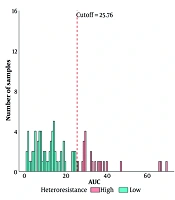
Figure 1 presents the AUC distribution and changes in mean colony counts across increasing antifungal concentrations. Most isolates (n = 65) showed low heteroresistance (0 < AUC < 25.76), whereas 22 showed high heteroresistance (AUC ≥ 25.76) and 14 showed no heteroresistance.
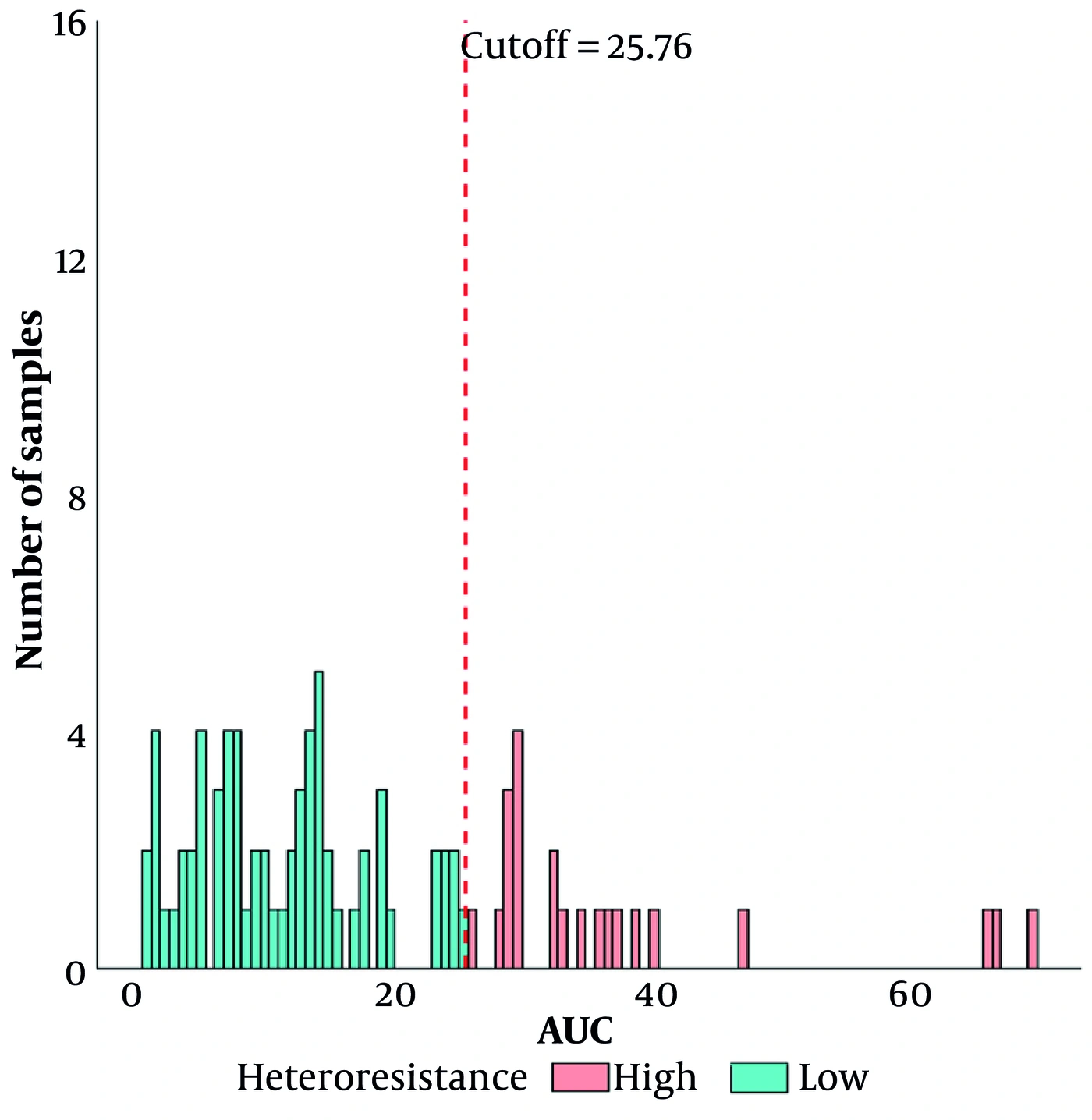
AUC Distribution of Heteroresistance in <i>Candida</i> Isolates. The red dashed line indicates the cutoff of 25.76 used to classify isolates into the low-heteroresistance group (0 &lt; AUC &lt; 25.76; n = 65) and high-heteroresistance group (AUC ≥ 25.76; n = 22).
Figure 1.
AUC Distribution of Heteroresistance in Candida Isolates. The red dashed line indicates the cutoff of 25.76 used to classify isolates into the low-heteroresistance group (0 < AUC < 25.76; n = 65) and high-heteroresistance group (AUC ≥ 25.76; n = 22).
Figure 2 compares mean colony counts between the high- and low-heteroresistance groups across the three tested fluconazole concentrations. In both groups, colony growth declined progressively as the drug concentration increased.
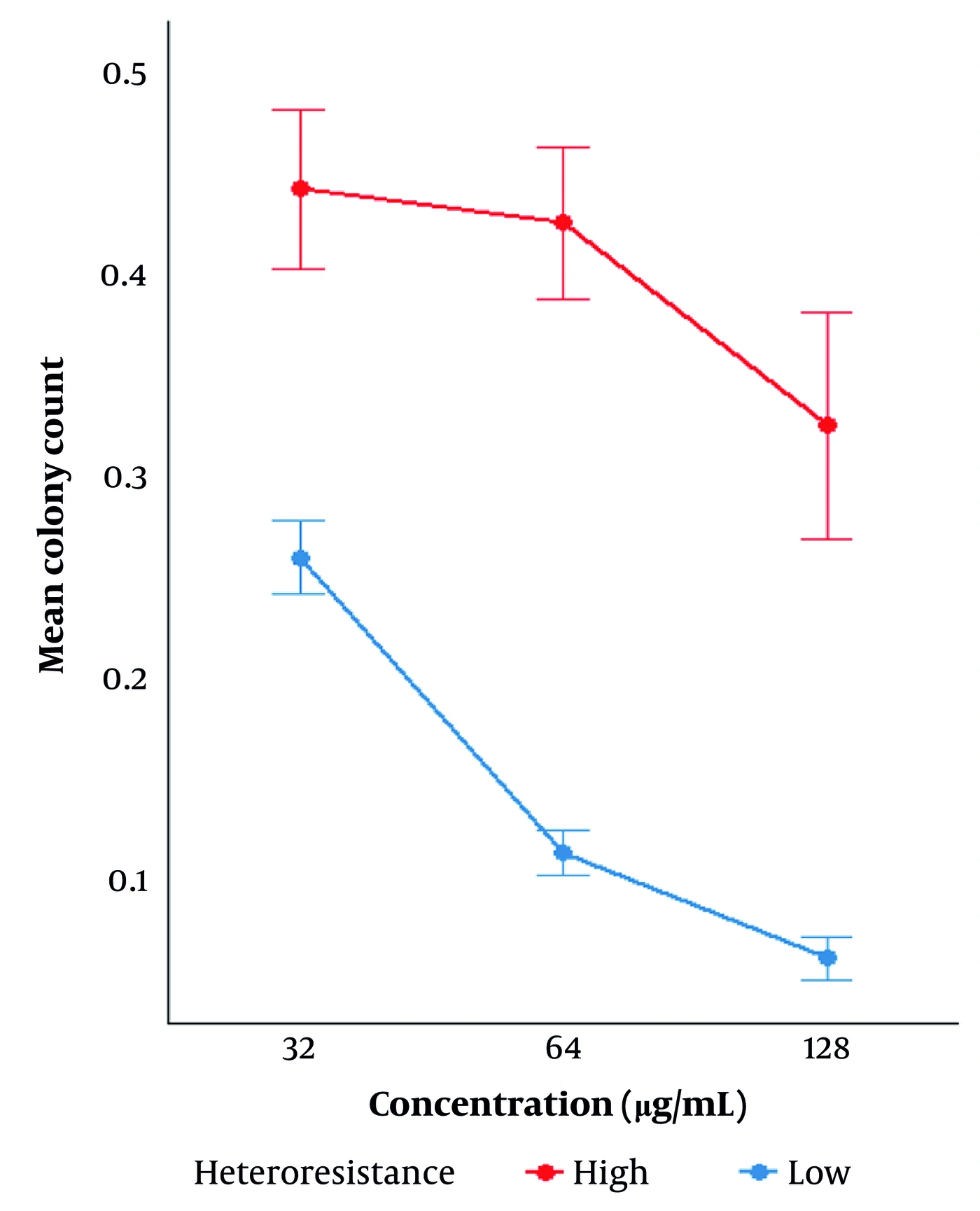
Colony Counts by Heteroresistance Group and Drug Concentration. Error bars represent the mean ± standard error of the mean (SEM).
Figure 2.
Colony Counts by Heteroresistance Group and Drug Concentration. Error bars represent the mean ± standard error of the mean (SEM).
A total of 101 isolates were classified as non-heteroresistant (n = 14), low heteroresistance (n = 65), or high heteroresistance (n = 22). MIC-FLU (P = 0.452) and viral load (P = 0.384) did not differ significantly among the groups. CD4 counts differed significantly among the three groups (P = 0.014), and Bonferroni-adjusted pairwise comparisons showed a significant difference between the non-heteroresistance and low-heteroresistance groups (Table 2).
Table 2.
Distribution of MIC-FLU, CD4 Count, and Viral Load Measurements Among Non-Heteroresistant, Low-Heteroresistant, and High-Heteroresistant Candida Isolates From HIV-Positive Individuals a
VariablesNon-heteroresistance (n = 14)Low-heteroresistance (n = 65)High-heteroresistance (n = 22)P-Value
Minimum inhibitory concentration of fluconazole (µg/mL)0.25 (0.25 - 0.50)0.25 (0.25 - 0.50)0.25 (0.25 - 0.31)0.452
CD4 (cells/mm3)534.50 (208.75 - 601.25)786.00 (458.00 - 1094.50)580.50 (337.50 - 970.75)0.014 b
VL (copies/mL)166.50 (0.00 - 864898.20)50.40 (0.00 - 657.65)318.00 (0.00 - 126375.52)0.384
a Values are expressed as median (interquartile range). P values were calculated using the Kruskal-Wallis test.
b Bonferroni-adjusted comparisons showed a significant difference between the non-heteroresistance and low-heteroresistance groups.
The distribution of persister and heteroresistance phenotypes among individuals with HIV is shown in Table 3.
Table 3.
Distribution of Persister and Heteroresistance Phenotypes Among HIV-Positive Individuals a
Persister phenotypeNon-heteroresistanceLow heteroresistanceHigh heteroresistanceP Value
Non-persister0.0 (0.0)2.0 (3.1)2.0 (9.1)0.217
Low persister14.0 (100.0)63.0 (96.9)19.0 (86.4)
High persister0.0 (0.0)0.0 (0.0)1.0 (4.5)
a Values are expressed as No. (%). P values were calculated using Fisher's exact test.

5. Discussion

Persister cells and heteroresistance in C. albicans may reduce antifungal efficacy and contribute to treatment failure and recurrence. These concerns are particularly relevant in HIV-infected individuals, who are at increased risk for opportunistic oral candidiasis. This study assessed the prevalence of persister cells and heteroresistance among C. albicans isolates from HIV-positive patients with oral candidiasis in Ahvaz and examined their associations with clinical and immunological parameters.

5.1. Prevalence of Persister Cells

Persister cells may remain latent within biofilms despite apparent drug susceptibility on minimum inhibitory concentration testing and may contribute to treatment failure, relapse, and chronic infection (35, 41). According to the classifications used by LaFleur et al. and Aboualigalehdari et al., isolates with a survival rate > 6% were classified as high persisters, those with a survival rate < 6% as low persisters, and those with no survival as non-persisters. In this study, cells were exposed to a lethal concentration of amphotericin B (100 times the MIC), and viable cells were counted after 48 h. One C. albicans isolate was classified as a high persister, 96 as low persisters, and 4 as non-persisters, consistent with previous reports (12, 42).
Cohen et al. (36) described microbial persistence as an important form of non-genetic drug tolerance. Unlike genetically resistant cells, persister cells do not necessarily exhibit specific resistance-associated genotypic alterations; rather, their survival may reflect dormancy, reduced metabolic activity, and the inactivation of cellular processes targeted by antimicrobial agents (36, 43). In immunocompromised individuals such as HIV-positive patients, prolonged fungal exposure may be associated with a higher prevalence of persister cells and treatment nonresponse (44).
The MICs of persister isolates may not differ substantially from those of the primary population; however, persister cells can survive lethal drug exposure and may subsequently contribute to recurrence (45). Aboualigalehdari et al. (7) reported Candida colonization and associated factors among HIV-infected patients in southwestern Iran. In the present study, the persister phenotype was not significantly associated with CD4 count or viral load (P > 0.05). Larger cohorts are needed to determine whether clinically meaningful associations exist.
Quantitative assessment of survival after lethal drug exposure is necessary to identify persister subpopulations. Documenting persister levels together with MIC results may help characterize antifungal tolerance in specialized laboratory settings. Additional clinical studies are needed before such measurements can be incorporated into routine treatment decisions.

5.2. Prevalence of Heteroresistance

Heteroresistance, a mechanism that enables a resistant subpopulation to survive antifungal exposure, has attracted increasing attention. The present findings indicate that this phenotype is common among HIV-positive patients with oral candidiasis in Ahvaz (46, 47). Ben-Ami et al. (30) described fluconazole heteroresistance in C. glabrata as a continuously distributed phenotype rather than a binary trait. In that study, area under the curve ratio (AUCR) values ranged from 0.00012 to 13.74, higher heteroresistance levels were associated with elevated AUCR values, heteroresistance was reported in 57.6% of isolates, and the ATP-dependent efflux rate correlated with AUCR (r2 = 0.68, P < 0.0021).
Gautier et al. (24) highlighted limitations of conventional methods for detecting heteroresistance and emphasized single-cell approaches and PAP for more accurate characterization. Posteraro et al. (48) reported that heteroresistance-related phenotypes in Cryptococcus may involve antifungal-resistance genes such as ERG11 and AFR1 and increased efflux-pump expression. Sionov et al. (49) analyzed more than 130 Cryptococcus neoformans isolates and reported intrinsic fluconazole heteroresistance, with resistance levels ranging from 4 to 128 μg/mL and resistant-subpopulation frequencies of 0.3%-10%.
Increasing heteroresistance has also been associated with increased virulence in animal models, and repeated fluconazole exposure may select for higher heteroresistance levels (49). Ferreira et al. (50) reported intrinsic itraconazole heteroresistance among Cryptococcus gattii isolates, with greater heteroresistance associated with lower animal survival and increased virulence. Zhai et al. (51) reported that heteroresistant C. parapsilosis isolates were associated with prophylaxis failure and breakthrough infection among transplant recipients.
Heteroresistance may influence antifungal treatment outcomes and the risk of recurrence or progression even when conventional susceptibility testing indicates susceptibility (24, 30, 52). In the present study, 21.78% of isolates were classified as highly heteroresistant (AUC ≥ 25.76). These findings support further investigation of heteroresistance screening as a complementary approach to conventional susceptibility testing. Because heteroresistance exists on a continuum, quantitative measures such as AUC may help characterize its magnitude; however, the clinical utility of these measures requires further validation (49, 53).

5.3. Generalizability and Limitations

Because this study included HIV-positive individuals attending medical centers in Ahvaz, caution is warranted when generalizing the findings to other populations. Host characteristics, regional epidemiology, and antifungal-use patterns may influence the prevalence and intensity of persister and heteroresistance phenotypes (30, 35). Multicenter studies involving more diverse populations are needed to assess external validity.
The association between CD4 count and heteroresistance should also be interpreted cautiously. Because the study was cross-sectional, it cannot establish whether immune status directly influences heteroresistance. One possible explanation is that patients with better immune recovery had longer treatment histories and greater antifungal exposure, potentially selecting for heteroresistant subpopulations; however, this hypothesis requires longitudinal validation. Other limitations include reliance on in vitro assays that may not fully reflect in vivo dynamics, the single-center setting, and retrospectively collected prior-antifungal-exposure data that may be incomplete. Longitudinal and multicenter studies are needed to validate these findings.

5.4. Conclusions

Persister cells and heteroresistant subpopulations were common among C. albicans isolates from HIV-positive individuals with oral candidiasis. Amphotericin B MICs were higher in low-persister than in non-persister isolates, although the difference was not statistically significant. The heteroresistance phenotype was associated with CD4 count, with a significant post hoc difference observed between the non-heteroresistance and low-heteroresistance groups. These findings support further investigation of persister and heteroresistance phenotypes, their molecular mechanisms, and their potential clinical relevance in antifungal treatment. Future longitudinal and multicenter studies should evaluate whether detection of these phenotypes improves therapeutic decision-making or patient outcomes.
Acknowledgments

Footnotes

  • AI Use Disclosure:The authors declare that no generative AI tools were used in the creation of this article.

  • Authors' Contribution:Study Design, Data Interpretation, and Final Manuscript Editing: M. F.; Experimental Work, Clinical Sample Collection and Preparation, Data Analysis, and Initial Manuscript Drafting: S. K.; Data Analysis and Interpretation: E. A. and M. S.; Study Sampling Design and Clinical Sample Collection and Preparation: A. R. and M. D.

  • Conflict of Interests Statement:The authors declare no competing interests.

  • Data Availability:The datasets generated and analyzed during the current study are available from the corresponding author upon reasonable request.

  • Ethical Approval:The research protocol was reviewed and approved on September 25, 2024 by the Research Ethics Committee of Ahvaz Jundishapur University of Medical Sciences (Ethical Code: IR.AJUMS.REC.1403.034).

  • Funding/Support:This study was supported in part by grant N-0312 from Nanotechnology Research Center, Medical Basic Sciences Research Institute, Ahvaz Jundishapur University of Medical Sciences, Ahvaz, Iran.

  • Informed Consent:Informed consent was obtained from all participants.

References

  • 1.
    Lomelí-Martínez SM, González-Hernández LA, Ruiz-Anaya ADJ, Lomelí-Martínez MA, Martínez-Salazar SY, Mercado González AE, et al. Oral manifestations associated with HIV/AIDS patients. Medicina. 2022;58(9):1214. [PubMed ID: 36143891]. [PubMed Central ID: PMC9504409]. https://doi.org/10.3390/medicina58091214.
  • 2.
    Lopes JP, Lionakis MS. Pathogenesis and virulence of Candida albicans. Virulence. 2022;13(1):89-121. [PubMed ID: 34964702]. [PubMed Central ID: PMC9728475]. https://doi.org/10.1080/21505594.2021.2019950.
  • 3.
    Talapko J, Juzbašić M, Matijević T, Pustijanac E, Bekić S, Kotris I, et al. Candida albicans-the virulence factors and clinical manifestations of infection. Journal of Fungi. 2021;7(2):79. [PubMed ID: 33499276]. [PubMed Central ID: PMC7912069]. https://doi.org/10.3390/jof7020079.
  • 4.
    Erfaninejad M, Zarei Mahmoudabadi A, Maraghi E, Hashemzadeh M, Fatahinia M. Epidemiology, prevalence, and associated factors of oral candidiasis in HIV patients from southwest Iran in post-highly active antiretroviral therapy era. Frontiers in microbiology. 2022;13. 983348. [PubMed ID: 36118210]. [PubMed Central ID: PMC9478364]. https://doi.org/10.3389/fmicb.2022.983348.
  • 5.
    Taverne-Ghadwal L, Kuhns M, Buhl T, Schulze MH, Mbaitolum WJ, Kersch L, et al. Epidemiology and prevalence of oral candidiasis in HIV patients from chad in the post-HAART era. Frontiers in Microbiology. 2022;13. 844069. [PubMed ID: 35250957]. [PubMed Central ID: PMC8891798]. https://doi.org/10.3389/fmicb.2022.844069.
  • 6.
    Rafat Z, Sasani E, Salimi Y, Hajimohammadi S, Shenagari M, Roostaei D. The prevalence, etiological agents, clinical features, treatment, and diagnosis of HIV-associated oral candidiasis in pediatrics across the world: a systematic review and meta-analysis. Frontiers in pediatrics. 2021;9. 805527. [PubMed ID: 35004551]. [PubMed Central ID: PMC8740125]. https://doi.org/10.3389/fped.2021.805527.
  • 7.
    Aboualigalehdari E, Tahmasebi Birgani M, fatahinia M, hosseinzadeh M. Oral colonization by Candida species and associated factors in HIV-infected patients in Ahvaz, southwest Iran. Epidemiology and Health. 2020;42:e2020033. [PubMed ID: 32512666]. [PubMed Central ID: PMC7644944]. https://doi.org/10.4178/epih.e2020033.
  • 8.
    Fakhri‐Demeshghieh A, Yousefipour A, Bolouki Y, Bigdeli MS, Zamani E, Farajkhoda A, et al. Antifungal Resistance of Candida spp. Isolates From HIV/AIDS Patients in Iran 1999 - 2024: A Systematic Review and Meta‐Analysis. Journal of Clinical Laboratory Analysis. 2025;39(21). e70101. [PubMed ID: 41133871]. [PubMed Central ID: PMC12618181]. https://doi.org/10.1002/jcla.70101.
  • 9.
    Vila T, Sultan AS, Montelongo-Jauregui D, Jabra-Rizk MA. Oral candidiasis: A disease of opportunity. Journal of fungi. 2020;6(1):15. [PubMed ID: 31963180]. [PubMed Central ID: PMC7151112]. https://doi.org/10.3390/jof6010015.
  • 10.
    Kaur J, Nobile CJ. Antifungal drug-resistance mechanisms in Candida biofilms. Current opinion in microbiology. 2023;71. 102237. [PubMed ID: 36436326]. [PubMed Central ID: PMC11569868]. https://doi.org/10.1016/j.mib.2022.102237.
  • 11.
    Su Y, Li Y, Yi Q, Xu Y, Sun T, Li Y. Insight into the Mechanisms and Clinical Relevance of Antifungal Heteroresistance. Journal of Fungi. 2025;11(2):143. [PubMed ID: 39997437]. [PubMed Central ID: PMC11856953]. https://doi.org/10.3390/jof11020143.
  • 12.
    Aboualigalehdari E, Tahmasebi Birgani M, Fatahinia M, Hosseinzadeh M. Transcription factors of CAT1, EFG1, and BCR1 are effective in persister cells of Candida albicans-associated HIV-positive and chemotherapy patients. Frontiers in Microbiology. 2021;12. 651221. [PubMed ID: 34512562]. [PubMed Central ID: PMC8425484]. https://doi.org/10.3389/fmicb.2021.651221.
  • 13.
    Galdiero E, de Alteriis E, De Natale A, D’Alterio A, Siciliano A, Guida M, et al. Eradication of Candida albicans persister cell biofilm by the membranotropic peptide gH625. Scientific Reports. 2020;10(1). 5780. [PubMed ID: 32238858]. [PubMed Central ID: PMC7113253]. https://doi.org/10.1038/s41598-020-62746-w.
  • 14.
    Zou P, Liu J, Li P, Luan Q. Antifungal activity, synergism with fluconazole or amphotericin B and potential mechanism of direct current against Candida albicans biofilms and persisters. Antibiotics. 2024;13(6):521. [PubMed ID: 38927187]. [PubMed Central ID: PMC11200915]. https://doi.org/10.3390/antibiotics13060521.
  • 15.
    Muzny CA, Schwebke JR. Biofilms: an underappreciated mechanism of treatment failure and recurrence in vaginal infections. Clinical Infectious Diseases. 2015;61(4):601-6. [PubMed ID: 25935553]. [PubMed Central ID: PMC4607736]. https://doi.org/10.1093/cid/civ353.
  • 16.
    Chen L, Zhang L, Xie Y, Wang Y, Tian X, Fang W, et al. Confronting antifungal resistance, tolerance, and persistence: Advances in drug target discovery and delivery systems. Advanced Drug Delivery Reviews. 2023;200. 115007. [PubMed ID: 37437715]. https://doi.org/10.1016/j.addr.2023.115007.
  • 17.
    Manrique PD, López CA, Gnanakaran S, Rybenkov VV, Zgurskaya HI. New understanding of multidrug efflux and permeation in antibiotic resistance, persistence, and heteroresistance. Annals of the New York Academy of Sciences. 2023;1519(1):46-62. [PubMed ID: 36344198]. [PubMed Central ID: PMC9839546]. https://doi.org/10.1111/nyas.14921.
  • 18.
    Band VI, Weiss DS. Heteroresistance: a cause of unexplained antibiotic treatment failure? PLoS pathogens. PLOS Pathogens. 2019;15(6). e1007726. [PubMed ID: 31170271]. [PubMed Central ID: PMC6553791]. https://doi.org/10.1371/journal.ppat.1007726.
  • 19.
    Li Y, Hind C, Furner-Pardoe J, Sutton JM, Rahman KM. Understanding the mechanisms of resistance to azole antifungals in Candida species. JAC-Antimicrobial Resistance. 2025;7(3). dlaf106. [PubMed ID: 40583995]. [PubMed Central ID: PMC12205959]. https://doi.org/10.1093/jacamr/dlaf106.
  • 20.
    El-Halfawy OM, Valvano MA. Antimicrobial heteroresistance: an emerging field in need of clarity. Clinical microbiology reviews. 2015;28(1):191-207. [PubMed ID: 25567227]. [PubMed Central ID: PMC4284305]. https://doi.org/10.1128/CMR.00058-14.
  • 21.
    Keyvanfar A, Najafiarab H, Talebian N, Tafti MF, Adeli G, Ghasemi Z, et al. Drug-resistant oral candidiasis in patients with HIV infection: a systematic review and meta-analysis. BMC infectious diseases. 2024;24(1). 546. [PubMed ID: 38822256]. [PubMed Central ID: PMC11143751]. https://doi.org/10.1186/s12879-024-09442-6.
  • 22.
    Berman J, Krysan DJ. Drug resistance and tolerance in fungi. Nature Reviews Microbiology. 2020;18(6):319-31. [PubMed ID: 32047294]. [PubMed Central ID: PMC7231573]. https://doi.org/10.1038/s41579-019-0322-2.
  • 23.
    Erköse G, Erturan Z. Oral Candida colonization of human immunodeficiency virus infected subjects in Turkey and its relation with viral load and CD4+ T‐lymphocyte count. Mycoses. 2007;50(6):485-90. [PubMed ID: 17944711]. https://doi.org/10.1111/j.1439-0507.2007.01393.x.
  • 24.
    Gautier C, Maciel EI, Ene IV. Approaches for identifying and measuring heteroresistance in azole-susceptible Candida isolates. Microbiology Spectrum. 2024;12(4). e04041 - 23. [PubMed ID: 38483474]. [PubMed Central ID: PMC10986555]. https://doi.org/10.1128/spectrum.04041-23.
  • 25.
    Silva GAD, Bernardi TL, Schaker PDC, Menegotto M, Valente P. Rapid yeast DNA extraction by boiling and freeze-thawing without using chemical reagents and DNA purification. Brazilian Archives of Biology and technology. 2012;55(2):319-27. https://doi.org/10.1590/S1516-89132012000200020.
  • 26.
    Mirhendi H, Makimura K, Khoramizadeh M, Yamaguchi H. A one-enzyme PCR-RFLP assay for identification of six medically important Candida species. Nippon Ishinkin Gakkai Zasshi. 2006;47(3):225-9. [PubMed ID: 16940958]. https://doi.org/10.3314/jjmm.47.225.
  • 27.
    Abraham SB, al Marzooq F, Himratul-Aznita WH, Ahmed HMA, Samaranayake LP. Prevalence, virulence and antifungal activity of C. albicans isolated from infected root canals. BMC Oral Health. 2020;20(1). 347. [PubMed ID: 33256696]. [PubMed Central ID: PMC7708210]. https://doi.org/10.1186/s12903-020-01347-5.
  • 28.
    Deák R, Bodai L, Aarts HJM, Maráz A. Development of a novel, simple and rapid molecular identification system for clinical Candida species. Medical mycology. 2004;42(4):311-8. [PubMed ID: 15473355]. https://doi.org/10.1080/13693780310001624574.
  • 29.
    De Brucker K, De Cremer K, Cammue BPA, Thevissen K. Protocol for determination of the persister subpopulation in Candida albicans biofilms. Bacterial Persistence: Methods and Protocols. 2016;1333:67-72. [PubMed ID: 26468100]. https://doi.org/10.1007/978-1-4939-2854-5_6.
  • 30.
    Ben-Ami R, Zimmerman O, Finn T, Amit S, Novikov A, Wertheimer N, et al. Heteroresistance to fluconazole is a continuously distributed phenotype among Candida glabrata clinical strains associated with in vivo persistence. MBio. 2016;7(4):10. [PubMed ID: 27486188]. [PubMed Central ID: PMC4981708]. https://doi.org/10.1128/mbio.
  • 31.
    NCCLS. . Wayne, PA: NCCLS; 2002.
  • 32.
    Kuśka-Kiełbratowska A, Wiench R, Mertas A, Bobela E, Kiełbratowski M, Lukomska-Szymanska M, et al. Evaluation of the Sensitivity of Selected Candida Strains to Ozonated Water-An in vitro Study. Medicina. 2022;58(12):1731. [PubMed ID: 36556933]. [PubMed Central ID: PMC9784337]. https://doi.org/10.3390/medicina58121731.
  • 33.
    Clinical and Laboratory Standards Institute. . Wayne, PA: Clinical and Laboratory Standards Institute; 2011.
  • 34.
    Alonso GC, Pavarina AC, Sousa TV, Klein MI. A quest to find good primers for gene expression analysis of Candida albicans from clinical samples. Journal of Microbiological Methods. 2018;147:1-13. [PubMed ID: 29454005]. https://doi.org/10.1016/j.mimet.2018.02.010.
  • 35.
    LaFleur MD, Kumamoto CA, Lewis K. Candida albicans biofilms produce antifungal-tolerant persister cells. Antimicrobial agents and chemotherapy. 2006;50(11):3839-46. [PubMed ID: 16923951]. [PubMed Central ID: PMC1635216]. https://doi.org/10.1128/AAC.00684-06.
  • 36.
    Cohen NR, Lobritz MA, Collins JJ. Microbial persistence and the road to drug resistance. Cell host & microbe. 2013;13(6):632-42. [PubMed ID: 23768488]. [PubMed Central ID: PMC3695397]. https://doi.org/10.1016/j.chom.2013.05.009.
  • 37.
    Altinbaş R, Bariş A, Şen S, Öztürk R, Ki̇raz N. Comparison of the Sensititre YeastOne antifungal method with the CLSI M27-A3reference method to determine the activity of antifungal agents against clinical isolatesof Candida spp. Turkish Journal of Medical Sciences. 2020;50(8):2024-31. [PubMed ID: 32659879]. [PubMed Central ID: PMC7775692]. https://doi.org/10.3906/sag-1909-97.
  • 38.
    Maheronnaghsh M, Fatahinia M, Dehghan P, Teimoori A. Identification of Candida species and antifungal susceptibility in cancer patients with oral lesions in Ahvaz, Southern West of Iran. Advanced Biomedical Research. 2020;9(1):50. [PubMed ID: 33457333]. [PubMed Central ID: PMC7792871]. https://doi.org/10.4103/abr.abr_214_19.
  • 39.
    Zhai B, Liao C, Jaggavarapu S, Tang Y, Rolling T, Ning Y, et al. Antifungal heteroresistance causes prophylaxis failure and facilitates breakthrough Candida parapsilosis infections. Nature Medicine. 2024;30(11):3163-3172. [PubMed ID: 39095599]. [PubMed Central ID: PMC11840754]. https://doi.org/10.1038/s41591-024-03183-4.
  • 40.
    Huang Y, Zhang Y, Yang S, Lu H, Yu H, Wang X, et al. Epidemiology of cryptococcal meningitis and fluconazole heteroresistance in Cryptococcus neoformans isolates from a teaching hospital in southwestern China. Microbiology Spectrum. 2024;12(8). e00725 - 24. [PubMed ID: 39007718]. [PubMed Central ID: PMC11302267]. https://doi.org/10.1128/spectrum.00725-24.
  • 41.
    Al-Dhaheri RS, Douglas LJ. Absence of amphotericin B-tolerant persister cells in biofilms of some Candida species. Antimicrobial agents and chemotherapy. 2008;52(5):1884-7. [PubMed ID: 18285487]. [PubMed Central ID: PMC2346666]. https://doi.org/10.1128/AAC.01473-07.
  • 42.
    LaFleur MD, Qi Q, Lewis K. Patients with long-term oral carriage harbor high-persister mutants of Candida albicans. Antimicrobial agents and chemotherapy. 2010;54(1):39-44. [PubMed ID: 19841146]. [PubMed Central ID: PMC2798516]. https://doi.org/10.1128/AAC.00860-09.
  • 43.
    Hayden HS, Lim R, Brittnacher MJ, Sims EH, Ramage ER, Fong C, et al. Evolution of Burkholderia pseudomallei in recurrent melioidosis. PloS one. 2012;7(5). e36507. [PubMed ID: 22615773]. [PubMed Central ID: PMC3352902]. https://doi.org/10.1371/journal.pone.0036507.
  • 44.
    Lewis K. Persister cells. Annual review of microbiology. 2010;64(1):357-72. [PubMed ID: 20528688]. [PubMed Central ID: PMC10917681]. https://doi.org/10.1146/annurev.micro.112408.134306.
  • 45.
    Kucharíková S, Gerits E, De Brucker K, Braem A, Ceh K, Majdič G, et al. Covalent immobilization of antimicrobial agents on titanium prevents Staphylococcus aureus and Candida albicans colonization and biofilm formation. Journal of Antimicrobial Chemotherapy. 2016;71(4):936-45. [PubMed ID: 26702917]. https://doi.org/10.1093/jac/dkv437.
  • 46.
    Levy SF, Ziv N, Siegal ML. Bet hedging in yeast by heterogeneous, age-correlated expression of a stress protectant. PLoS biology. 2012;10(5). e1001325. [PubMed ID: 22589700]. [PubMed Central ID: PMC3348152]. https://doi.org/10.1371/journal.pbio.1001325.
  • 47.
    Pfaller MA, Diekema DJ, Gibbs DL, Newell VA, Barton R, Bijie H, et al. Geographic variation in the frequency of isolation and fluconazole and voriconazole susceptibilities of Candida glabrata: an assessment from the ARTEMIS DISK Global Antifungal Surveillance Program. Diagnostic microbiology and infectious disease. 2010;67(2):162-71. [PubMed ID: 20338711]. https://doi.org/10.1016/j.diagmicrobio.2010.01.002.
  • 48.
    Posteraro B, Sanguinetti M, Sanglard D, La Sorda M, Boccia S, Romano L, et al. Identification and characterization of a Cryptococcus neoformans ATP binding cassette (ABC) transporter-encoding gene, CnAFR1, involved in the resistance to fluconazole. Molecular microbiology. 2003;47(2):357-71. [PubMed ID: 12519188]. https://doi.org/10.1046/j.1365-2958.2003.03281.x.
  • 49.
    Sionov E, Chang YC, Garraffo HM, Kwon-Chung KJ. Heteroresistance to fluconazole in Cryptococcus neoformans is intrinsic and associated with virulence. Antimicrobial agents and chemotherapy. 2009;53(7):2804-15. [PubMed ID: 19414582]. [PubMed Central ID: PMC2704677]. https://doi.org/10.1128/AAC.00295-09.
  • 50.
    Ferreira GF, Santos JRA, Costa MCD, Holanda RAD, Denadai ÂML, Freitas GJCD, et al. Heteroresistance to itraconazole alters the morphology and increases the virulence of Cryptococcus gattii. Antimicrobial agents and chemotherapy. 2015;59(8):4600-9. [PubMed ID: 26014951]. [PubMed Central ID: PMC4505268]. https://doi.org/10.1128/AAC.00466-15.
  • 51.
    Zhai B, Liao C, Jaggavarapu S, Tang Y, Rolling T, Ning Y, et al. Echinocandin heteroresistance causes prophylaxis failure and facilitates breakthrough Candida parapsilosis infection. Medrxiv. 2022. https://doi.org/10.1101/2022.05.29.22275734.
  • 52.
    Sionov E, Lee H, Chang YC, Kwon-Chung KJ. Cryptococcus neoformans overcomes stress of azole drugs by formation of disomy in specific multiple chromosomes. PLoS pathogens. 2010;6(4). e1000848. [PubMed ID: 20368972]. [PubMed Central ID: PMC2848560]. https://doi.org/10.1371/journal.ppat.1000848.
  • 53.
    Arendrup MC, Friberg N, Mares M, Kahlmeter G, Meletiadis J, Guinea J, et al. How to interpret MICs of antifungal compounds according to the revised clinical breakpoints v. 10.0 European committee on antimicrobial susceptibility testing (EUCAST). Clinical Microbiology and Infection. 2020;26(11):1464-72. [PubMed ID: 32562861]. https://doi.org/10.1016/j.cmi.2020.06.007.

Copyright

Copyright © 2026, Khodashenas et al. This open-access article is available under the Creative Commons Attribution 4.0 (CC BY 4.0) International License (https://creativecommons.org/licenses/by/4.0/), which allows for unrestricted use, distribution, and reproduction in any medium, provided that the original work is properly cited.

Similar Articles

6
Oct
2020
Oral Candidiasis in Hematological Malignancy Patients: Identification and Antifungal Susceptibility Patterns of Isolates

Oral Candidiasis in Hematological Malignancy Patients: Identification and Antifungal Susceptibility Patterns of Isolates

Masoud Mardani,
Sara Abolghasemi,
David Darvishnia,
Ensieh Lotfali,
Reza Ghasemi,
Mohammad Mahdi Rabiei
,et al.

Mardani M, Abolghasemi S, Darvishnia D, Lotfali E, Ghasemi R, et al. Oral Candidiasis in Hematological Malignancy Patients: Identification and Antifungal Susceptibility Patterns of Isolates. Jundishapur J Microbiol. 2020;13(8):e103290. doi: https://doi.org/10.5812/jjm.103290

13
Nov
2022
Azole Resistance in Candida albicans Isolates from Oropharyngeal Candidiasis is Associated with ERG11 Mutation and Efflux Overexpression

Azole Resistance in Candida albicans Isolates from Oropharyngeal Candidiasis is Associated with ERG11 Mutation and Efflux Overexpression

Zahra Jahanshiri,
Soheila Manifar,
Fatemeh Arastehnazar,
Farahnaz Hatami,
Ensieh Lotfali

Jahanshiri Z, Manifar S, Arastehnazar F, Hatami F, Lotfali E. Azole Resistance in Candida albicans Isolates from Oropharyngeal Candidiasis is Associated with ERG11 Mutation and Efflux Overexpression. Jundishapur J Microbiol. 2022;15(9):e131046. doi: https://doi.org/10.5812/jjm-131046

17
Feb
2016
Plasma Levels of IFN-γ, IL-4, IL-6 and IL-17 in HIV-Positive Patients With Oral Candidiasis

Plasma Levels of IFN-γ, IL-4, IL-6 and IL-17 in HIV-Positive Patients With Oral Candidiasis

Seyyed Amin Ayatollahi Mousavi,
Gholamreza Asadikaram,
Nouzar Nakhaee,
Alireza Izadi

Ayatollahi Mousavi SA, Asadikaram G, Nakhaee N, Izadi A. Plasma Levels of IFN-γ, IL-4, IL-6 and IL-17 in HIV-Positive Patients With Oral Candidiasis. Jundishapur J Microbiol. 2016;9(2):e32021. doi: https://doi.org/10.5812/jjm.32021

9
Aug
2026
Molecular Characterization and Antifungal Susceptibility of Oral Candida Biome in Children

Molecular Characterization and Antifungal Susceptibility of Oral Candida Biome in Children

Shervin Masoumzadeh,
Firoozeh Kermani,
Mohsen Mohammadi,
Saeid Mahdavi Omran,
Hanieh Esfandiar,
Hamideh Babajani Kherdoni

Masoumzadeh S, Kermani F, Mohammadi M, Mahdavi Omran S, Esfandiar H, et al. Molecular Characterization and Antifungal Susceptibility of Oral Candida Biome in Children. Arch Pediatr Infect Dis. 2027;15(1):e169227. doi: https://doi.org/10.5812/apid-169227

31
Dec
2011
In vitro antifungal susceptibility of Candida species isolated from oropharyngeal lesions of patients with cancer to some antifungal agents

In vitro antifungal susceptibility of Candida species isolated from oropharyngeal lesions of patients with cancer to some antifungal agents

Tahereh Shokohi,
Zainab Bandalizadeh,
Mohmmad Taghi Hedayati,
Sabah Mayahi

Shokohi T, Bandalizadeh Z, Taghi Hedayati M, Mayahi S. In vitro antifungal susceptibility of Candida species isolated from oropharyngeal lesions of patients with cancer to some antifungal agents. Jundishapur J Microbiol. 2011;4(Suppl):. doi:

More by these authors

Sahar KhodashenasPubMedScholar
Elham AboualigalehdariPubMedScholar
Mehdi SafdarianPubMedScholar
Ali Rezaei-MatehkolaeiPubMedScholar
Mojtaba DidehdarPubMedScholar
Mahnaz FatahiniaPubMedScholar
Share
Cited by
Metrics