
1. Background
The use of antiretroviral therapy (ART) has transformed the management of human immunodeficiency virus (HIV)/AIDS and has substantially reduced associated mortality. ART has saved millions of lives; in 2021, 28.7 million of the 38.4 million people living with HIV (PLHIV) worldwide were receiving ART. Despite these advances, viral rebound remains common in many patients, emphasizing the need for improved strategies to control HIV (1).
HIV belongs to the Retroviridae family and is categorized within the Lentivirus genus. It was first isolated and identified in 1983 (2). Since its discovery, an estimated 84.2 million individuals have been infected with HIV, resulting in approximately 40.1 million deaths due to AIDS-related diseases (3, 4). The virus severely compromises the immune system by targeting CD4+ helper T cells (5), rendering individuals susceptible to opportunistic infections and death (6). HIV also infects macrophages, dendritic cells, and several T-cell subsets. These cells can act as viral reservoirs carrying transcriptionally inactive proviruses, enabling persistent infection while evading both immune responses and treatment (7-9). Therefore, effective treatment is essential, and ART has revolutionized HIV care.
Antiretroviral drugs include several major classes, such as NRTIs, NNRTIs, protease inhibitors (PIs), and integrase strand transfer inhibitors (INSTIs). The efficacy of different ART classes strongly influences treatment recommendations and susceptibility to resistance mechanisms. Zidovudine (AZT) was first used between 1985 and 1987, paving the way for subsequent approvals of additional NRTIs during the early 1990s (10, 11). Subsequent research led to highly active antiretroviral therapy (HAART), which combines 3 drugs and has reduced HIV-related deaths and hospitalizations by 60% to 80% (12). However, some HAART regimens are associated with adverse effects and a risk of drug resistance, which may limit long-term effectiveness in some patients (13).
Initial ART regimens are classified as preferred or alternative (14). Because the prevalence of primary resistance to NNRTIs, such as efavirenz and nevirapine, exceeds 10%, NNRTI-based regimens are not recommended when drug resistance testing is unavailable (15). Therefore, INSTI-based regimens are preferred as initial therapy in Iran. The antiretroviral drugs available in Iran are listed in Table 1. The use of alternative regimens requires strong justification; otherwise, the preferred regimen should be used. Most patients currently receive a 3-drug combination. Depending on patient characteristics and drug availability, regimens such as 2NRTI + INSTI (preferred), 2NRTI + PI, and 2NRTI + NNRTI (alternative) are selected.
Table 1.
Antiretroviral Drugs Available in Iran a
| NRTIs | NNRTIs | PIs | INSTIs | Combined forms of drugs |
|---|---|---|---|---|
| ABC | EFV | ATV/r | DTG | TDF + FTC + EFV |
| FTC | DRV | TDF + FTC | ||
| 3TC | ||||
| TDF | NVP | LPV/r | RAL | TAF + FTC |
| TAF | RTV | ZDV + 3TC | ||
| ZDV |
a Abbreviations: ABC, abacavir; ATV/r, atazanavir/ritonavir; DTG, dolutegravir; DRV, darunavir; EFV, efavirenz; FTC, emtricitabine; 3TC, lamivudine; LPV/r, lopinavir/ritonavir; NRTIs, nucleoside reverse transcriptase inhibitors; NNRTIs, non-nucleoside reverse transcriptase inhibitors; NVP, nevirapine; PIs, protease inhibitors; RAL, raltegravir; RTV, ritonavir; TAF, tenofovir alafenamide; TDF, tenofovir disoproxil fumarate; ZDV, zidovudine.
Virological response plays a pivotal role in assessing ART efficacy. Achieving viral suppression to an undetectable level in the blood is the primary goal of ART because it substantially reduces the risk of drug resistance (16, 17). Virological response is generally expected within 6 months of ART initiation, although individuals with high baseline viral loads may experience slower suppression (18). The ultimate goal is to reduce the viral load to an undetectable level and thereby minimize the risk of emerging drug resistance (17). Viral load is a key biomarker for evaluating clinical status, monitoring disease progression, and assessing ART regimen effectiveness (19). Viral suppression is also important for reducing inflammation and immune hyperactivation, which may contribute to cardiovascular and organ damage in chronic untreated HIV infection (20).
From an immunological standpoint, the CD4+ T-cell count is an important indicator of immune function in patients with HIV. It predicts disease progression and the emergence of opportunistic infections (21). Variability in CD4+ counts, which may be influenced by testing techniques or timing, reflects the dynamic nature of HIV infection (22). A substantial increase in CD4+ counts during the first year of treatment indicates a positive immunological response. However, this expected increase may not occur in individuals with very low baseline CD4+ counts or in older patients, highlighting the complexity of achieving immunological recovery (23). Immunological failure is characterized by a decrease in CD4+ counts to baseline levels or persistent counts below 100 cells/mm3. In such cases, immediate viral load testing is necessary. Persistent viral suppression does not justify drug changes or additions (21, 23).
From a clinical perspective, the first months of treatment are critical for therapeutic success. Regular medication use is expected to improve clinical and immunological outcomes and achieve viral suppression. However, patients with markedly low CD4+ counts are at risk of opportunistic infections and immune reconstitution inflammatory syndrome (IRIS) during the first quarter of treatment (24). They may also experience drug-related adverse effects or hypersensitivity reactions. Clinical failure occurs when stage 4 clinical conditions recur after at least 6 months of ART, according to the World Health Organization (WHO) clinical classification of HIV disease. This requires viral load testing and underscores the complexity of ART management.
Viral dynamics, adherence patterns, and pharmacokinetics interact in complex ways to determine the emergence of drug resistance during HIV therapy. The high replication rate of the virus, frequent mutations in the reverse transcriptase enzyme, and genomic recombination all contribute to virological response and resistance development. Adherence is essential for ART success because drug toxicity, treatment cost, and medication accessibility can affect treatment persistence. Pharmacokinetic factors, including drug interactions and complications such as diarrhea and vomiting, must be carefully managed, and treatment may need to be adjusted to prevent resistance (25).
Although ART has achieved substantial success in HIV/AIDS treatment, treatment failure remains a major challenge. Extensive research has addressed the clinical effectiveness of specific ART regimens, the biochemical mechanisms of drug resistance, and immediate factors affecting treatment failure, such as adherence. However, less is known about the broader context in which treatment failure occurs, including sociodemographic determinants of access to care and their interaction with socioeconomic conditions. In particular, few studies have examined how factors such as incarceration, educational attainment, and local drug availability affect ART outcomes, especially in high-burden and resource-limited settings.
Globally, studies have provided useful information on treatment failure trends, but few have examined localized experiences shaped by cultural and health-system contexts. This is particularly important in Khorramabad, Iran, where local conditions may influence outcomes differently from national or global patterns. Therefore, the present study investigated predictors of ART failure among patients in Khorramabad based on clinical and sociodemographic factors. The study also examined virological failure among HIV/AIDS patients receiving different ART regimens, including PI-, NNRTI-, NRTI-, and INSTI-based regimens, during 2011 - 2021 in Khorramabad.
2. Objectives
This study aimed to determine the prevalence and determinants of ART failure among HIV/AIDS patients in Khorramabad, including demographic characteristics, medication adherence, baseline treatment regimens, and clinical markers. By examining patient characteristics at behavioral disease counseling centers, this research may help improve the implementation of HIV care and treatment programs.
3. Methods
3.1. Study Setting and Population
This study was conducted in Khorramabad, the capital city of Lorestan province, Iran. Participants were eligible if they had a confirmed HIV diagnosis and were receiving ART. The study aimed to examine trends and predictors of ART failure in this population.
3.2. Study Design
This retrospective cross-sectional study included individuals with HIV who were diagnosed by serological testing and had received ART containing PIs, NNRTIs, NRTIs, or INSTIs. Patients referred to behavioral disease counseling centers in Khorramabad, Lorestan province, Iran, from 2011 to 2021 were included. The study protocol was approved by the relevant ethics committee (Ethics Code: IR.LUMS.REC.1402.156).
3.3. Data Collection
Data were collected through a systematic chart review of patient medical records. Key data included demographic characteristics (age, sex, education level, and incarceration history), duration of medication use, possible transmission routes (sexual contact, injection drug use, mother-to-child transmission, or unknown), the presence of viral coinfections based on hepatitis B surface antigen (HBsAg) and hepatitis C virus antibody (HCV-Ab) markers, baseline CD4+ count measured by flow cytometry and reported as cells/μL of blood, medication adherence, and the type of initial ART regimen.
This retrospective cross-sectional design enabled the use of historical data without influencing patient care. This approach provides insight into treatment patterns within a defined time frame and population and may inform future interventional and research priorities in HIV treatment management.
3.4. Inclusion and Exclusion Criteria
Patients were eligible for inclusion if they met the following criteria: a confirmed diagnosis of HIV/AIDS according to national and WHO guidelines; age ≥ 18 years at enrollment; receipt of ART for at least 12 months before evaluation; availability of complete medical records, including baseline demographic data, ART regimen details, and follow-up laboratory results for CD4+ count and viral load; and regular attendance at behavioral disease counseling centers in Khorramabad during 2011 - 2021. Patients were excluded if they had incomplete medical records, were lost to follow-up before 12 months of ART, or were concurrently participating in other interventional studies.
3.5. Statistical Analysis
Data were entered into SPSS version 21 for analysis. Descriptive statistics were used to summarize the data by calculating ratios and measures of central tendency and dispersion. Chi-square tests were used to compare categorical variables. Independent t-tests or Mann-Whitney U tests were applied for continuous variables, depending on data distribution.
Multiple logistic regression was used to explore associations between independent variables, including demographic characteristics, transmission routes, coinfections, adherence levels, and drug resistance outcomes. The model was adjusted for potential confounders to identify significant predictors of ART failure. A P value ≤ 0.05 was considered statistically significant.
4. Results
4.1. Patient Demographics and Treatment Characteristics
This study analyzed demographic characteristics and initial ART regimens among 279 patients with HIV. Demographic variables included age, sex, education level, and incarceration history. Data on initial ART regimens provided a comprehensive overview of treatment patterns and treatment duration in the study population.
4.1.1. Demographic Variables
The study included data from 1078 patients registered since the early 2000s, of whom 317 were receiving treatment at the time of assessment. After applying the inclusion and exclusion criteria, 279 patients were selected for analysis. The study population comprised 133 women (47.7%) and 146 men (52.3%). Age ranged from 18 to 80 years, with a mean of 42.7 ± 8.51 years. Inclusion required adults older than 18 years with a confirmed serological diagnosis of HIV and a documented history of ART use for at least 12 months. Patients were excluded if their files were incomplete, if they had died, or if they had emigrated from the study area.
Educational levels varied: 5.4% were uneducated, 21.5% had a guidance-school education, 30.8% had a high-school education, 35.8% had a diploma-level education, and 6.5% had higher education. Regarding incarceration history, 33.3% had a history of imprisonment and 66.7% did not. These sociodemographic and clinical characteristics are summarized in Table 2.
Table 2.
Sociodemographic Characteristics of Patients
| Variables | No. (%) |
|---|---|
| Gender | |
| Female | 133 (47.7) |
| Male | 146 (52.3) |
| Age (y) | |
| 18 - 29 | 9 (3.2) |
| 30 - 50 | 231 (82.8) |
| 51 - 65 | 36 (12.9) |
| > 65 | 3 (1.1) |
| Education level | |
| Uneducated | 15 (5.4) |
| Guidance school | 60 (21.5) |
| High school | 86 (30.8) |
| Diploma | 100 (35.8) |
| Higher education | 18 (6.5) |
| Prison history | |
| Yes | 186 (66.7) |
| No | 93 (33.3) |
4.1.2. Initial Antiretroviral Regimens
Most patients (233; 83.5%) initiated ART with a 2NRTI + NNRTI regimen. Specifically, 152 patients (54.5%) received tenofovir disoproxil fumarate (TDF), emtricitabine (FTC), and efavirenz (EFV), whereas 81 patients (29%) received a regimen containing 3TC. Fewer patients initiated treatment with a 2NRTI + PI regimen (10; 3.6%) or a 2NRTI + INSTI regimen (36; 12.9%) (Table 3). The minimum duration of medication use was 12 months, and the maximum duration was 149 months. The mean duration of medication use was 75.72 ± 40.91 months.
Table 3.
Frequency Distribution of the First Drug Regimen Received by the Studied Patients a
| Drug regimen | Medicinal composition | No. (%) |
|---|---|---|
| 2NRTI + NNRTI | ||
| Without 3TC | TDF + FTC + EFV | 152 (54.5) |
| With 3TC | AZT + 3TC + EFV; AZT + 3TC + NVP; 3TC + TDF + EFV | 81 (29) |
| Total | 233 (83.5) | |
| 2NRTI + PI | 10 (3.6) | |
| 2NRTI + INSTI | 36 (12.9) |
a Abbreviations: AZT, zidovudine; EFV, efavirenz; FTC, emtricitabine; INSTIs, integrase strand transfer inhibitors; 3TC, lamivudine; NNRTIs, non-nucleoside reverse transcriptase inhibitors; NRTIs, nucleoside reverse transcriptase inhibitors; NVP, nevirapine; PIs, protease inhibitors; TDF, tenofovir disoproxil fumarate.
4.2. Clinical Outcomes and Disease Markers
This study examined key aspects of HIV management, including transmission routes, virological failure, hepatitis B and C coinfections, drug adherence, immunological status based on CD4+ cell count, and the prevalence of resistance mutations. Data on transmission routes were available for 240 of 279 participants. The most common route was sexual transmission (51.3%), followed by injection drug use (33.3%) and mother-to-child transmission (1.4%). The route was unclear in 14% of cases, indicating possible gaps in patient history collection or unidentified transmission pathways requiring further investigation.
Among the 279 patients, 66 (23.7%) experienced virological failure. This finding highlights the ongoing challenge of achieving viral suppression in this population and underscores the importance of drug adherence, resistance mutations, and individualized treatment regimens. Most patients (268; 96.1%) had suitable drug adherence; however, 11 patients (3.9%) had unsuitable adherence, without subsequent changes to their medication regimen. The discrepancy between documented adherence and virological failure requires further examination. Possible contributing factors include inaccurate self-reporting of adherence, drug interactions, or the emergence of drug resistance.
Baseline CD4+ counts at ART initiation indicated a wide range of immune function. Although 33% had CD4+ counts above 500 cells/μL, a notable proportion had advanced immunosuppression: 9% had CD4+ counts ≤ 50 cells/μL, and 26.5% had counts of 51 - 250 cells/μL. These findings emphasize the importance of earlier HIV diagnosis and timely linkage to care, as delayed treatment initiation can lead to severe immune compromise and an increased risk of opportunistic infections.
This study also evaluated the prevalence of hepatitis B and C coinfections at treatment initiation. Viral marker testing showed a prevalence of 2.9% for hepatitis B and 5.7% for hepatitis C in the study population. Coinfection with hepatitis B or C can complicate HIV treatment and is associated with higher morbidity and mortality. These findings highlight the need for regular screening and comprehensive management of viral coinfections in HIV care settings (Table 4).
Table 4.
Clinical Outcomes and Disease Markers of Patients
| Variables | No. (%) |
|---|---|
| Possible transmission route | |
| Unknown | 39 (14) |
| Sexual contact | 143 (51.3) |
| Injection addiction | 93 (33.3) |
| Mother to child | 4 (1.4) |
| Virological failure | |
| Yes | 66 (23.7) |
| No | 213 (76.3) |
| Suitable drug compliance | |
| Yes | 268 (96.1) |
| No | 11 (3.9) |
| First CD4+ count, cells/μL | |
| ≤ 50 | 25 (9) |
| 51 - 250 | 74 (26.5) |
| 251 - 500 | 88 (31.5) |
| > 500 | 92 (33) |
| First HBsAg+ | |
| Positive | 271 (97.1) |
| Negative | 8 (2.9) |
| First HCV-Ab+ | |
| Positive | 263 (94.3) |
| Negative | 16 (5.7) |
4.3. Drug Resistance Analysis
This study investigated the association between patient characteristics and drug resistance to identify potential predictors of treatment failure and to guide personalized treatment strategies. Among patients with drug resistance, 34 (51.5%) were men and 32 (48.5%) were women. Educational levels were guidance school in 22 patients (33.3%), high school in 24 (36.4%), and diploma in 20 (30.3%). Chi-square testing showed no significant association between sex and drug resistance (P = 0.899) or between prison history and drug resistance (P = 0.1). However, the Mann-Whitney U test showed a significant difference in education level between patients with and without resistance, according to the initial drug regimen (P = 0.033).
The mean age of patients with drug resistance was 41.8 ± 12.27 years, compared with 43.8 ± 15.6 years among those without resistance. The mean duration of medication use was 88.36 ± 36.57 months in patients with resistance and 71.41 ± 8.47 months in those without resistance. The independent t-test showed a significant difference in age between patients with and without drug resistance (P = 0.011). Duration of medication use was also significantly longer in resistant than in nonresistant patients (P = 0.002). This association suggests that suboptimal adherence or the accumulation of resistance mutations over time may contribute to treatment failure (Table 5).
Table 5.
Demographic Variables of Studied Patients According to Drug Resistance a
| Variables | Drug Resistance (Yes) | Drug Resistance (No) | P-Value |
|---|---|---|---|
| Gender | 0.899 | ||
| Male | 34 (51.5) | 112 (52.6) | |
| Female | 32 (48.5) | 101 (47.4) | |
| Prison history | 0.1 | ||
| Yes | 28 (42.4) | 65 (30.5) | |
| No | 38 (57.6) | 148 (69.5) | |
| Education level | 0.033 | ||
| Higher education | 0 | 18 (8.5) | |
| Diploma | 20 (30.3) | 80 (37.6) | |
| High school | 24 (36.4) | 62 (29.1) | |
| Guidance school | 22 (33.3) | 38 (17.8) | |
| Uneducated | 0 | 15 (7) | |
| Age (y) | 41.8 ± 12.27 | 43.8 ± 15.6 | 0.011 |
| Duration of receiving the drug (mo) | 88.36 ± 36.57 | 71.41 ± 8.47 | 0.002 |
a Values are expressed as No. (%) or mean ± SD.
4.3.1. Impact of Possible Transmission Route and Immunological Markers on Resistance
Among patients with drug resistance, 31 (47.0%) were infected through sexual contact, and 26 (39.4%) were infected through contaminated syringes related to injection drug use. No significant association was found between possible route of HIV transmission and drug resistance prevalence (P = 0.689). The chi-square test also showed no statistically significant association between possible transmission route and drug resistance prevalence, suggesting that drug resistance is complex and likely shaped by factors beyond the original transmission route.
Baseline CD4+ count was not significantly associated with drug resistance (P = 0.311). Although patients with lower baseline CD4+ counts may have more complex clinical presentations, this finding suggests that baseline immune status alone may not be a strong predictor of drug resistance. Among 8 patients with positive HBsAg results, 5 had drug resistance (7.6%). Among 16 patients with positive HCV-Ab results, 3 had drug resistance (4.5%). Chi-square testing showed a statistically significant association between positive HBsAg status and drug resistance prevalence (P = 0.02). However, no statistically significant association was found between positive HCV-Ab status and drug resistance prevalence (P = 0.77) (Table 6).
Table 6.
Clinical Correlations with Drug Resistance a
| Variables | Drug Resistance (Yes) | Drug Resistance (No) | P-Value |
|---|---|---|---|
| Possible transmission route | 0.689 | ||
| Uncertain | 8 (12.1) | 31 (14.6) | |
| Sex | 31 (47) | 112 (52.5) | |
| Injection addiction | 26 (39.4) | 67 (31.5) | |
| Mother to baby | 1 (1.5) | 3 (1.4) | |
| First CD4+ count, cells/μL | 0.311 | ||
| ≤ 50 | 6 (9.1) | 19 (8.9) | |
| 51 - 250 | 13 (19.7) | 61 (28.7) | |
| 251 - 500 | 23 (34.8) | 65 (30.5) | |
| > 500 | 24 (36.4) | 68 (31.9) | |
| First HBsAg+ | 0.02 | ||
| Positive | 5 (7.6) | 3 (1.4) | |
| Negative | 61 (92.4) | 210 (98.6) | |
| First HCV-Ab+ | 0.77 | ||
| Positive | 3 (4.5) | 13 (6.1) | |
| Negative | 63 (95.5) | 200 (93.9) | |
| Initial antiretroviral regimen | |||
| 2NRTI + NNRTI | 64 (97) | 169 (79.3) | 0.001 |
| 2NRTI + PI | 2 (3) | 8 (3.7) | > 0.05 |
| 2NRTI + INSTI | 0 (0) | 36 (17) | > 0.05 |
| 2NRTI + NNRTI | > 0.05 | ||
| With 3TC (3TC + TDF + EFV; 3TC + AZT + NVP; 3TC + AZT + EFV) | 26 (40.6) | 55 (32.5) | |
| Without 3TC (TDF + FTC + EFV) | 38 (59.4) | 114 (67.5) |
a Values are expressed as No. (%).
4.3.2. Drug Resistance According to Antiretroviral Regimen
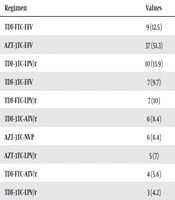
This study assessed whether the initial ART regimen was associated with drug resistance. No patient developed drug resistance while receiving the 2NRTI + INSTI regimen, specifically TDF + FTC + DTG. Among 66 patients with drug resistance, 64 (97%) had received the 2NRTI + NNRTI regimen, and 2 (3%) had received the 2NRTI + PI regimen, including 3TC + TDF + LPV/r and 3TC + AZT + LPV/r. Chi-square analysis showed a significant association between the initial treatment regimen and drug resistance (P = 0.001). Pairwise comparisons with Bonferroni adjustment showed that pretreatment drug resistance was significantly more common in the 2NRTI + NNRTI regimen than in the other 2 regimens (P > 0.05). Among patients who initiated a 2NRTI + NNRTI regimen and developed resistance, 38 (59.4%) had received regimens without 3TC, and 26 (40.6%) had received 3TC-containing regimens. Chi-square analysis showed no statistically significant difference in drug resistance frequency between the different 2NRTI + NNRTI regimen combinations (P > 0.05) (Figure 1).
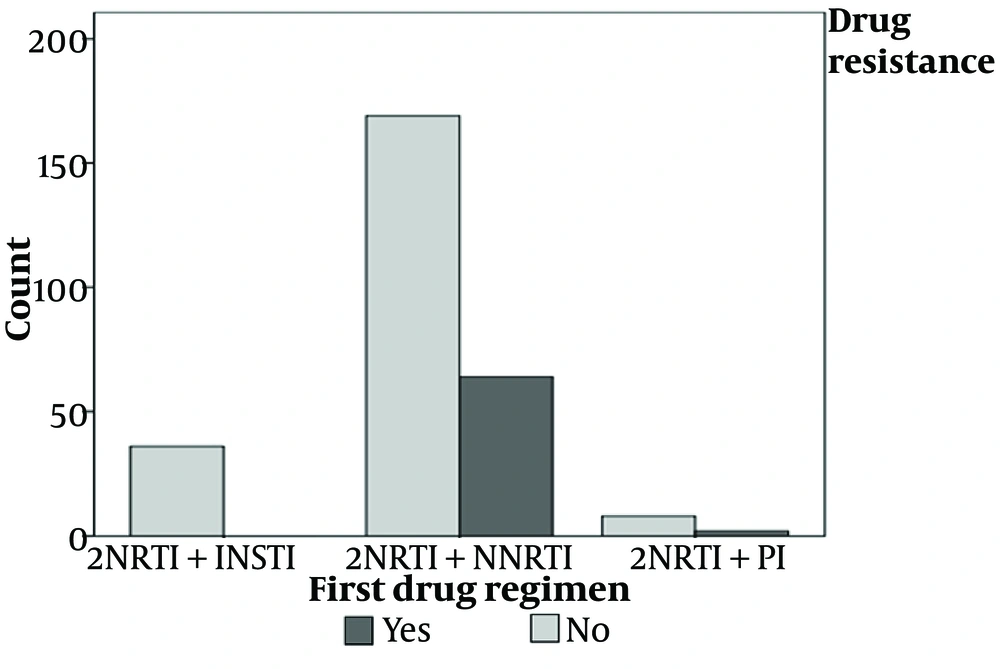
Figure 1.
Drug resistance according to the type of the first drug regimen
Overall, 233 patients (83.5%) were treated with the 2NRTI + NNRTI regimen, 10 (3.6%) were treated with the 2NRTI + PI regimen, and 36 (12.9%) were treated with the 2NRTI + INSTI regimen. Among the 233 patients receiving 2NRTI + NNRTI, 64 (27.4%) developed resistance. Among the 10 patients receiving 2NRTI + PI, 2 (20%) developed resistance. Importantly, no resistance was observed among the 36 patients treated with the 2NRTI + INSTI regimen. Chi-square analysis showed a significant association between initial regimen type and drug resistance rate (P = 0.008) (Table 7).
Table 7.
Frequency Distribution of Resistant Patients According to Drug Regimen a
| Drug Regimen | Recipient Patients | Resistant Patients | P-Value |
|---|---|---|---|
| 2NRTI + NNRTI | 233 (83.5) | 64 (27.4) | 0.008 |
| 2NRTI + PI | 10 (3.6) | 2 (20) | |
| 2NRTI + INSTI | 36 (12.9) | 0 (0) |
a Values are expressed as No. (%).
4.3.3. Resistance Testing for ART Drugs
Of the 66 patients who experienced virological failure, 11 underwent drug resistance testing. Resistance testing showed consistent resistance to the NNRTI drug class, including EFV and NVP, in all 11 patients. Among NRTIs, resistance was most commonly observed for 3TC and FTC, followed by TDF and ABC. No resistance to PIs or INSTIs was detected (Figure 2).
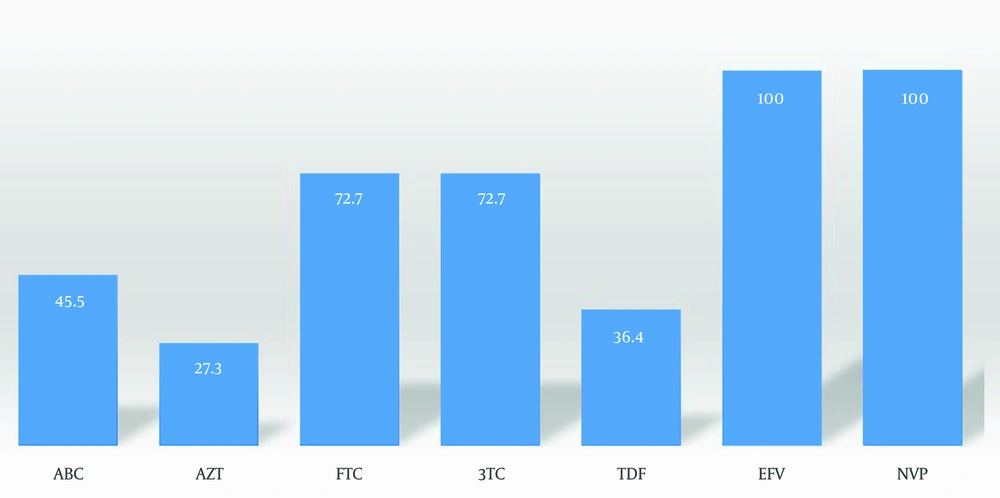
Figure 2.
Resistance test results for different ART drugs
5. Discussion
Since HIV was first recognized in 1981, the global epidemic has caused nearly 40.1 million deaths, with an estimated 84.2 million individuals infected to date. By 2021, approximately 38.4 million people were living with HIV globally, with 1.5 million new cases and 650000 AIDS-related deaths reported by WHO. UNAIDS modeling estimated that approximately 59000 people were living with HIV in Iran in 2019, with around 4100 new infections and 2500 AIDS-related deaths annually (27). Lorestan province, located in western Iran, particularly its capital, Khorramabad, is considered an important area for HIV surveillance in Iran because of its disproportionate burden of infection. National data from the Iranian Ministry of Health indicate that, by the end of 2019, 41494 individuals had been diagnosed with HIV across the country, of whom approximately 19164 had died of HIV-related diseases. Lorestan accounted for 1293 documented cases, underscoring its importance in the national epidemiology of HIV/AIDS (26).
The present findings reveal a critical public health concern in Khorramabad: a substantial gap between the number of diagnosed HIV-positive individuals (n = 1078) and those actively engaged in ART (n = 317). This gap of 761 individuals not receiving ART suggests systemic challenges in patient retention, follow-up care, and treatment initiation. Potential barriers include social stigma, insufficient awareness of treatment benefits, economic limitations, and a lack of targeted interventions for vulnerable populations. This untreated population faces increased individual morbidity and mortality and may also contribute to ongoing HIV transmission. Further research is urgently needed to identify the determinants of treatment abandonment and to develop effective outreach strategies to reengage this population. Public health initiatives should also address stigma and emphasize the long-term benefits of ART to improve individual outcomes and reduce the overall HIV viral load in the city.
Drug resistance remains a major challenge to the long-term effectiveness of HIV/AIDS treatment. In this study, we analyzed demographic, clinical, and virological factors associated with resistance among patients receiving ART in Khorramabad. Education level was identified as a factor associated with drug resistance. Individuals with lower educational levels had higher rates of drug resistance, possibly because of reduced health literacy and difficulties adhering to complex medication regimens. This observation is consistent with global research linking education to treatment adherence and virological response, highlighting the need to integrate literacy-sensitive counseling and support services into standard HIV care. In the demographic analysis, no significant association was observed between sex, incarceration history, and drug resistance.
Previous findings have shown that women with HIV are 10 to 20 times more likely to be illiterate than men with HIV. Additional research indicates that two-thirds of women living with HIV are illiterate, whereas the majority, 94%, have received only primary education (32). Because much HIV-related information is disseminated through media channels, these women may not have sufficient information about treatment. Some women may also resort to prostitution for survival, increasing the risk of continued exposure to HIV infection. Considering the high level of poverty in Khorramabad and negative attitudes toward women, further research and targeted programs are needed for women living with HIV and for effective HIV/AIDS control.
Classifying and managing HIV-infected patients requires mapping the sociodemographic and clinical determinants of drug resistance to optimize patient management and treatment outcomes. In contrast to some studies, we found no statistically significant correlation between baseline CD4+ count and virological failure. Although a higher percentage of patients with CD4+ counts above 250 cells/μL showed trends toward treatment success, suggesting a protective role of early diagnosis and ART initiation, the expected inverse relationship between low CD4+ counts and resistance was not statistically confirmed in this population.
Higher CD4+ levels were associated with greater drug resistance, but this correlation was not statistically significant. In contrast to the findings of Biset Ayalew et al. (28), our results indicated that patients with baseline CD4+ counts below 50 cells/μL and those with counts between 50 and 100 cells/μL had 16.7-fold and 9.1-fold higher risks of treatment failure, respectively. Substantial immunological failure was observed in patients who experienced treatment failure, probably because of low baseline CD4+ counts and impaired immune function (28). Similarly, a baseline CD4+ count ≤ 100 cells/μL was identified as a significant predictor of immunological failure in a study conducted in Ethiopia (29). The discrepancy between the present findings and those of other studies may be related to differences in sample size, particularly among patients with lower CD4+ counts. It may also reflect limited representation of severely immunocompromised patients or methodological differences in outcome definitions. Further research with more diverse cohorts is warranted to clarify immunological determinants of treatment response in this setting.
The hepatic biotransformation of ART and potential drug interactions make hepatitis B and C virus coinfection an important therapeutic consideration in people living with HIV. This study identified a significant association between drug resistance and HBsAg-positive status. However, no significant association was found between specific HIV treatment regimens and hepatitis coinfection, and no association was found between positive HCV-Ab status and HIV drug resistance. These findings are consistent with a cohort study by Tamandjou Tchuem et al. (30), which reported ART resistance in children who were HBV DNA positive, a status similar to HBsAg positivity. Soriano et al. (31) concluded that hepatic impairment may alter ART pharmacokinetics, potentially leading to subtherapeutic drug levels and the emergence of resistance. Therefore, the relationship between HBsAg/HCV-Ab seropositivity and ART resistance requires further investigation to clarify the underlying mechanisms.
HIV transmission patterns in Khorramabad were dominated by sexual contact and injection drug use. The number of patients with HIV who had a history of incarceration was almost 2 times higher than that of people living with HIV who had no prison history. This may reflect poor health and addiction management in prisons or may indicate that formerly incarcerated individuals are at higher risk. Further investigation is needed to explore the association between incarceration history and HIV infection and to determine whether prisons play a significant source of HIV transmission.
The lack of resistance to PIs and INSTIs in this cohort, despite the widespread use of NNRTI-based regimens, may reflect both the relatively recent introduction of PI and INSTI regimens in Iran and the robust genetic barrier of drugs such as dolutegravir (DTG). Nevertheless, the small number of patients receiving these newer regimens limits definitive conclusions, highlighting the need for longitudinal resistance surveillance as treatment guidelines evolve. Similar to the findings of Grant (33), a significant association was detected between drug exposure duration and the emergence of drug resistance, suggesting that longer exposure increases the probability of resistance development.
Regimen-specific resistance patterns were pronounced. Among 233 patients receiving standard 2NRTI + NNRTI therapy, 27.4% developed resistance, and all 11 patients who underwent resistance testing showed resistance to EFV and NVP. In contrast, no resistance mutations were detected in patients receiving 2NRTI + INSTI regimens, although this may be influenced by the limited sample size and the more recent adoption of INSTIs in clinical practice. The findings are consistent with global trends showing increasing NNRTI resistance and support a strategic shift toward higher-barrier regimens, particularly 2NRTI + INSTI combinations, as first-line therapy to preserve long-term treatment efficacy (34-36).
Several limitations should be acknowledged. Fragmented medical records, irregular follow-up, and intermittent ART stockouts may have introduced bias in resistance classification and outcome ascertainment. In addition, the relatively recent availability of genotypic resistance testing in Iran limits historical comparability and requires cautious interpretation of temporal trends. Despite these constraints, this study provides a detailed characterization of virological failure and resistance determinants in western Iran.
5.1. Conclusions
Drug resistance was significantly prevalent among patients with HIV/AIDS receiving treatment, especially among those treated with NNRTI-based regimens. The findings highlight the importance of careful ART resistance surveillance, with 97% of drug-resistant cases associated with NNRTI-based regimens and no significant effect of 3TC inclusion. These results also underscore the need to address factors such as patient adherence, treatment duration, and hepatitis B and C coinfections in relation to resistance patterns and virological failure. Individualized treatment strategies and resistance analysis are essential for optimizing patient outcomes and improving the long-term effectiveness of ART in HIV/AIDS management. To reduce onward transmission and improve individual outcomes, a multifaceted approach is needed, including strengthening retention strategies for patients lost to follow-up, implementing education-adapted adherence support, expanding access to resistance testing and high-genetic-barrier regimens, addressing the intersection of incarceration and HIV risk, and integrating hepatitis B and C screening and management into routine HIV care.