
1. Context
Vaginitis is a general term for vaginal disorders caused by infection, inflammation, or changes in the normal flora of the vagina. It is one of the women’s most common causes of referring to physicians (1). Vaginitis can occur at any age and affect almost any woman at some point in her life. Approximately 75% of all women suffered this infection once in their lifetime, and 45% twice or more. Vaginitis causes foul-odor discharge, dysuria, itching, inflammation of the external genitalia, dysuria, dyspareunia, and so on. Some of the pathogens involved in vaginitis can also be transmitted to a sexual partner or cause complications in the infant. Vaginitis can be infectious or atrophic. The three most common vaginal infections in women are fungal, bacterial, and Trichomonas vaginitis (2). Vaginal infections can cause problems such as depression, low self-esteem, dissatisfaction with life, high stress and decreased sexual intercourse, and infertility, so effective treatments are needed to eliminate these infections (3). A variety of chemical drugs are used to treat vaginitis in conventional medicine. For example, in candidial vaginitis, topical azole compounds and clotrimazole are the most available treatments. Azoles have several side effects, such as dizziness, nausea, vomiting, abdominal pain, diarrhea, and headache, and women are at higher risk of these complications during pregnancy and breastfeeding (4). Bacterial vaginitis is another common infection in women, whose treatment varies depending on its agents. To treat this infection, various antibiotics, of which metronidazole is the most effective, are recommended (5, 6). Trichomonas vaginalis is the most common non-viral sexually transmitted disease, affecting more than 200 million people annually around the world (7, 8). Given the persistent symptoms of this vaginitis, drugs such as metronidazole, tinidazole, and secnidazole are used to treat it.
However, the potential carcinogenic effects of metronidazole and the presence of side effects such as headache, tongue inflammation, dizziness, drowsiness, hallucinations and delusions, abdominal pain and cramps, nausea, vomiting, disulfiram-like reaction, dryness, and metallic taste in the mouth, observation of teratogenic effects on the fetus and the T. vaginalis resistance to metronidazole highlight the need to use complementary drugs for this selective treatment (10). In Iranian medicine, vaginitis has been discussed under the title of “Sayalan-e Rahem” with a comprehensive view, and various treatments, including dietary and medicinal measures, such as various herbal medicines, have been recommended for its treatment (6). Since uncontrolled use of antibiotics causes drug resistance in most microbes and leads to side and unwanted effects, finding new antimicrobial compounds with lower side effects seems essential (11). The World Health Organization (2008) has also reported that 65 - 80% of people in the world prefer to use natural or herbal products to treat diseases (12), and developed countries also follow this rule so that about one-third to one-half of all medicinal products in the United States are produced from plants or herbs at the present time. Also, in developing countries, herbal medicines are planted, and fewer pollutants enter the environment during the production and consumption of these drugs (13). Several studies have examined the effect of some herbal medicines on gynecological infections. For example, in a study conducted by Saffari et al., pot marigold vaginal cream was effective in treating vaginal candidiasis infection; however, its effect occurred with a delay compared with clotrimazole and probably had a more prolonged effect than clotrimazole (14). A study conducted by Roozbahani et al. showed that Myrtus oral capsule had favorable therapeutic effects on candidiasis vaginitis (15). Thus, various properties of this plant can be used to relieve and improve some of the signs and symptoms associated with fungal vulvovaginitis infections with a duration similar to azole group antifungal drugs, including clotrimazole (15). Bonyayeian Boroujani et al. showed that Teucrium polium extract inhibits the growth of Candida albinos and may be effective in treating vaginitis caused by this fungus (16). A study conducted on 80 women with vulvovaginitis showed that the amount of discharge, vaginal itching, and dysuria in women using a Clotrimazole-Satureja bachtiarica vaginal cream significantly improved (17). Teucrium polium is one of the plants that effectively treat various infections and diseases and can be used as a natural and complementary product in the healing of vaginitis. The present study attempted to investigate the antioxidant, antifungal, antibacterial, and anti-inflammatory effects of T. polium. on common pathogens in vaginitis based on the studies available in databases.
2. Methods
This review evaluated the therapeutic effects of the T. polium on vaginitis in women. The databases of PubMed, Scopus, Google Scholar, SID, and Magiran were searched in this regard. The period of time selected for the search was October 1984 to June 2019. The keywords of T. polium, herbal plants, herbal medicines, vaginal infection, abnormal discharge, vaginitis, and complementary medicine were used to review the articles. Both English and Persian languages were used to search for articles. In the initial search of the databases, 88 articles were found and reviewed based on their title, abstract, and full text. In this step, after the critical reviews done by two authors, the articles whose subject and aim were unrelated were excluded from the study. Finally, 58 articles were selected for the final review.
3. Results and Discussion
Teucrium polium (Teucrium polium L.; English name: Felty Germander) is a perennial wild flowering plant widely distributed in North Africa, Europe, and South-Western Asia.
It is a plant belonging to the Lamiaceae family, and is used in folk medicine. In terms of plant morphology, it is an herbaceous plant with many branches at heights of 10 to 35 cm and has a white cotton appearance. The branches of this plant are round and often seen in reddish-purple color. The flowers of T. polium are relatively large, and are arranged in clusters of one to six in the upper leaf axis and are white, yellowish white, yellow or even purple in color (Figure 1).
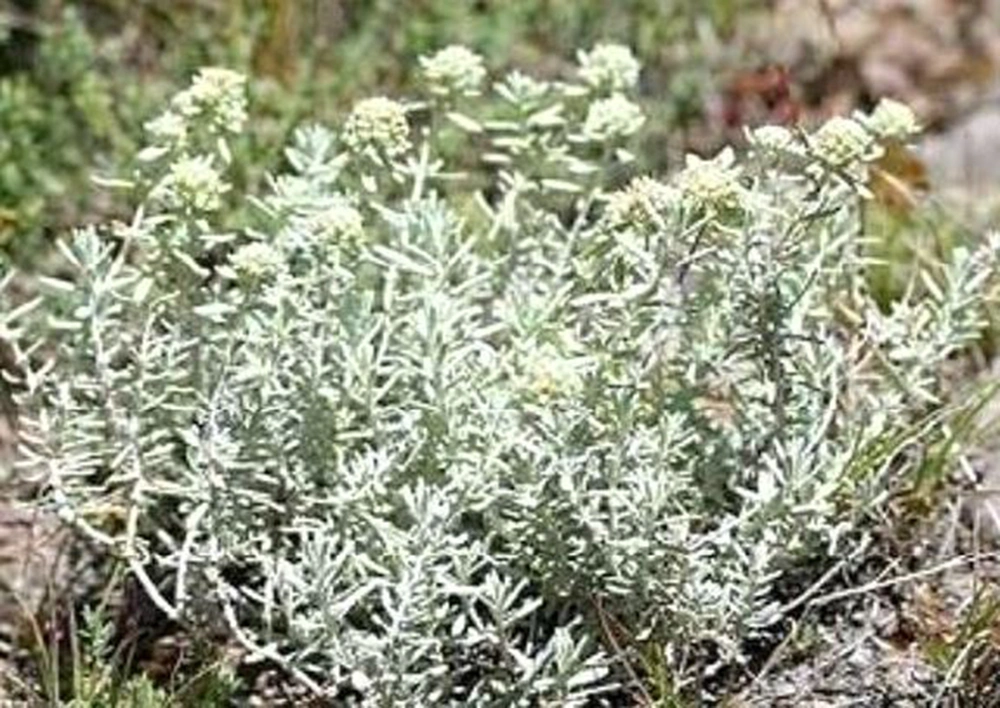
Figure 1.
Teucrium polium plant
This plant is mainly found in barren areas, rocky beaches, and sand fields. Regarding geographical distribution, T. polium has a pluriregional distribution and grows in Europe, Asia, North Africa, and some parts of Asia. In Iran, it is widely distributed in different regions of the north, south, west, and center. Due to the diverse geographical distribution and availability of this plant, this plant in many regions, including Iran, Turkey, and parts of Europe is used to treat various diseases (18-20). In terms of the history of plant consumption, based on the available documents, the history of using this plant dates back to more than two thousand years and to Hippocrates and Galen time (21, 22). Also, the existence of valuable sources and documents of Iranian medicine from scientists, such as Abolhassan Ali Ibn Abbas Ahvazi, Ibn Sina, Ismaeil Ibn Hussein Jorjani, Mohammad Zakaria Razi, and Mohammad Hossein Aghili Alavi Khorasani Shirazi, suggests the continuous use of herbal medicines to treat diseases over the centuries (21-23). This plant, with the name Jaadeh in some sources ofIranian traditional medicine, has a warm and dry temperament, and according to some people, it has a dry temperament. Some of the plant functions in the body include antidote, laxative, diuretic, and menstruation and is used to clean the uterus, help to treat dysuria and joint pains (24). Although T. polium is one of the herbal medicines traditionally used to treat some diseases, new studies on this plant indicate its useful effects in treating many disorders. Twaij et al. investigated the effect of 150 mg/kg aqueous extract of T. polium by intraperitoneal injection (25). The results showed that it caused 50% recovery in gastrointestinal ulcers induced by reserpine 20 mg/kg, while receiving the same amount of extract orally resulted in recovery in 85% of gastrointestinal ulcers (25). Moreover, a study by Gharib Naseri and Omidi Birgani on aqueous extract of T. polium in 2007 showed that it has antispasmodic effects on ilium contractions in rats induced by potassium chloride (26).
A study conducted by Shahraki et al. on rats in 2006 showed that visceral analgesic effect in the group receiving the aqueous extract of T. polium orally for 30 days at a dose of 50 mg/kg compared with the group receiving subcutaneous morphine sulfate at a dose of 10 mg/kg for 4 days was not significantly different, although the tail response to the analgesic stimulus was significantly different in both groups compared with the control group (27). Another study conducted by Abdollahi et al. confirmed the analgesic effects of aqueous extract of T. polium at 150, 225, and 300 mg/kg doses (28). The essential oil of the plant significantly reduced the writing test response compared with the control group. These effects are probably due to flavonoids and sterols that have anti-inflammatory effects (28). The antioxidant effects of the plant at doses of 50 and 100 mg/kg in in vitro studies are equivalent to 10 mg/kg α-tocopherol (29). Teucrium polium is among the fragrant plants and contains tannin, terpenoid, saponin, flavonoid, glycoside-α, sterol, leucoanthocyanin, beta-caryophyllene, caryophyllene oxide, diterpenoid, asparagine, and dietrin, and some of these compounds have inflammation effects (30-32).
The presence of flavonoids and sterols may be responsible for the anti-inflammatory activity of this medicinal plant. Teucrium polium also applies anti-cancer effect through mitochondrial changes, and these results are due to increased activity of Sirt3 in the HT-29 colorectal cancer cell line (33). A study conducted by Emami Zeydi showed that the metabolic extract of T. Polium enhances the cytotoxic and apoptotic effects in vincristine, vinblastine, and doxorubicin drugs against cancer cells, indicating that the metabolic extract of T. polium can be an effective factor of chemotherapy for treatment of cancer (34). This plant can be used as a natural remedy for managing cardiovascular diseases. A study conducted by Amraei et al. showed that receiving 170 mg/kg of the hydroalcoholic extract of T. polium reduces serum levels of triglycerides, LDL-cholesterol, and cholesterol and increases serum levels of HDL-cholesterol (35). In a triple-blind study conducted on 70 women aged 20 to 30, results showed that oral administration of 250 mg of T. polium capsules every 6 hours during the first three days of menstruation resulted in a significant reduction in bleeding during menstruation (36). It has been shown that T. polium increases breast milk and reduces patients’ complaints of digestive problems in the last months of pregnancy and after delivery (37). Given the presence of biologically active compounds in T. polium, this plant seems to have significant antimicrobial effects (38). The ethanolic extract of T. polium in vitro has shown significant antimicrobial activity against Pseudomonas aeruginosa and Escherichia coli as Gram-negative bacteria and Streptococcus pyogenes, Staphylococcus epidermidis, and Staphylococcus aureus as Gram-positive bacteria (39). The flowers of this plant contain volatile essential oils, picrosalvin, saponin, cineole, diterpene, and camphor (40).
It has also been shown that T. polium extract has significant antioxidant activity in the body and antioxidant activity of T. polium extract is similar to that of α tocopherol antioxidant (29, 36). Ljubuncic et al. also showed that T. polium extract can inhibit oxidative processes thanks to its antioxidant activity (41). Antioxidant effects can play an effective role in reducing and curing inflammatory diseases (42). Common vaginitis in women is caused by microorganisms, such as Candida albicans (fungi), Haemophilus vaginalis, and T. vaginalis parasite (43). In a study conducted by Fazeli Nasab et al., results showed that T. polium has strong antioxidant properties due to its phenol and flavonoids so that after Myrtus and Rosemary extracts, the hydroalcoholic extract of T. polium has the highest antioxidant properties and consequently antimicrobial properties (44). A study conducted by Bahmani et al. showed that the plants of Lamiaceae family, including T. polium, that contain compounds such as diterpenoids, 5-7-glycoside, thymols, carvacrols, and volatile essential oils in the northwestern regions of Iran are widely used to treat infections (23). Khoramian Tusi et al. showed that T. polium mouthwash can reduce the number of salivary Streptococcus mutans (45). A study conducted by Qabaha found that T. polium extract has extended antimicrobial activity against eight species of clinical pathogens and significant antioxidant ability (46). Bonyayeian Boroujani showed that T. polium extract inhibits the growth of C. albicans and may be effective in treating vaginitis caused by this fungus (16).
The results of a study done by Moghtader et al. showed that T. polium essential oil has a high inhibitory and antimicrobial power (40). The antibacterial effects of T. polium essential oil can be attributed to the compounds of α-pinene and linalool (the plant’s major compounds). They showed good antibacterial effects against three Gram-positive bacteria, including S. aureus, S. epidermidis, and Streptococcus faecalis, and 6 Gram-negative bacteria of P. aeruginosa, Shigella flexneri, Klebsiella pneumoniae, Salmonella latifii, Serratia marcescens, and E. coli (40). In a phytochemical study of T. polium plant, Bahramikia and Yazdanparast showed that the extract and components isolated from different parts of this plant have special biological effects, and T. polium has different properties such as antioxidant, antiseptic, anti-inflammatory, cytotoxic, antibacterial and antifungal properties (47). Antioxidant, antiseptic, and anti-free radical activities have been proven by in vitro methods in many studies on the T. polium plant using in vitro models (47). Bezić et al. showed that the combination of sesquiterpenes and beta-caryophyllene, as the main component of T. polium oil, is effective as an anti-phytoviral responsible for antiviral activity in this plant. However, some other components may contribute to its effectiveness (48). Talib and Mahasneh showed that other species of the genus Teucrium, such as Teucrium chamaedrys, have antibacterial activity against P. aeruginosa, Salmonella, E. coli, Bacillus cereus, and antifungal activity against C. albicans and Aspergillus niger (49). The results of the study conducted by Bonyadpour et al. showed that the use of other methods of consumption of T. polium (plant smoke) also has suitable antifungal effects in comparison with clotrimazole and fluconazole azoles (50).
Essawi and Srour found that the extract of this plant showed a wide range of activities against both Gram-positive and Gram-negative bacteria and confirmed the use of this plant in traditional medicine to treat infections (51). Also, a survey carried out by Amirrajab et al. showed that the hydroethanolic extracts of T. polium leaf revealed moderate anti-candidial effectiveness (52).
Results of several studies on the phytochemical, medicinal and antifungal, antibacterial, antibiotic, and antioxidant effects of T. polium and its effectiveness in treating many diseases and infections indicate that it has useful and effective therapeutic properties against microorganisms and treatment of infections. Since the common causes of vaginitis are bacteria, fungi, and other infectious microorganisms, the potential anti-inflammatory, antifungal, antibacterial, and antibiotic effects of T. polium can be used in vaginal infection treatment. Despite the positive effects of this plant, the use of herbal medicines containing T. polium extract without any scientific guidance in some cases has led to liver toxicity, which is due to increased blood urea and cholesterol after receiving its hydroalcoholic extract for six weeks at doses of 50 mg/kg and 20 mg (20, 53, 54).
4. Conclusions
In general, the results of the study suggested that T. polium can be considered as a potential source of bactericide and antioxidant in herbal medicines thanks to flavonoid compounds, sesquiterpenes, and α-pinene and linalool compounds. Much clinical research has not been conducted on the use of T. polium in vaginal infection treatment, so it is recommended that more clinical trials be designed to show the effectiveness of T. polium against common microorganisms in vaginitis and its treatment. It should also be noted that despite the beneficial effects of herbal medicines in treating various diseases, their possible toxicity should not be ignored in high-dose consumption without scientific guidance. Thus, it is recommended that the use of large amounts of T. polium for a long time must be strongly avoided, and the traditional use of the crude extract of T. polium should be under the supervision of a physician due to possible adverse effects on the liver and kidneys. Finally, it is recommended to conduct clinical trials to confirm the hypothesis of this plant’s effectiveness in treating vaginitis.