Rheumatoid arthritis is a chronic, inflammatory autoimmune disease affecting the joints to varying degrees among individuals. This autoimmune and inflammatory disease usually affects many joints in the body. Numerous complications may arise, such as rheumatoid vasculitis, permanent joint damage necessitating arthroplasty, and Felty syndrome, which may require splenectomy if left unattended (
12,
58). Rheumatoid arthritis has been linked to oxidative stress, a condition where the accumulation of ROS rises over time, either due to increased production, decreased antioxidant defenses, or a combination of both. Activated macrophages and T-cells in the synovium have been identified as contributors to synovitis, highlighting the relationship between proinflammatory cells and oxidative stress mediators. The activation and proliferation of synoviocytes may lead to the secretion of pro-inflammatory cytokines, such as TNF-α, MMPs, IL-1, IL-6, IL-8, prostaglandins, and leukotrienes. The invasion of the synovium into nearby articular structures causes damage to the cartilage and bone, resulting in joint swelling (
59-
61). Additionally, there is already recognition of a positive feedback loop between oxidative stress and inflammation, through which both elements amplify the detrimental effects of each other (
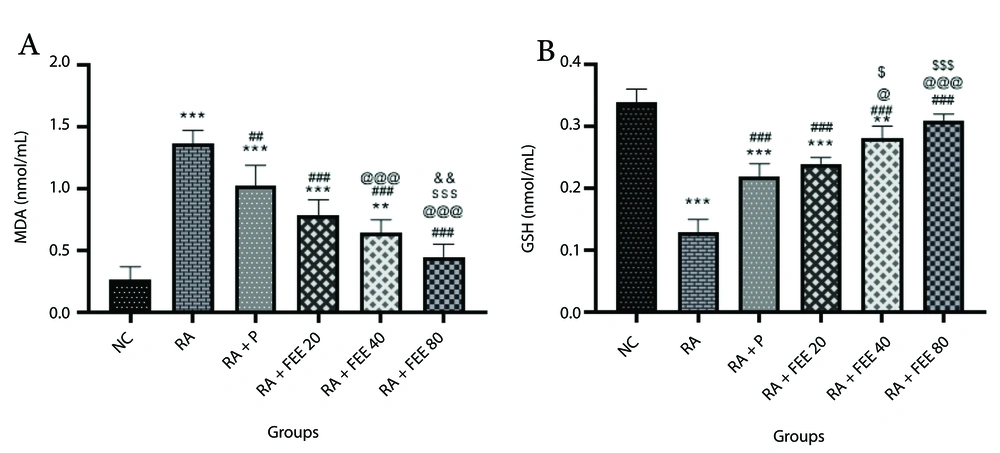
60). Increased MDA and decreased GSH levels in RA reflect oxidative stress-induced joint damage. Malondialdehyde, a marker of lipid peroxidation, promotes synovial inflammation and cartilage degradation, while reduced GSH weakens antioxidant defenses, making joint tissues more vulnerable to oxidative damage. This imbalance accelerates inflammation and RA progression, reinforcing the critical role of oxidative stress in disease pathology (
59,
62,
63).
So far, various alternatives have been employed in the treatment of RA. Nevertheless, none of the presently available therapies have demonstrated full efficacy while also being associated with a multitude of adverse effects (
12). Hence, drug discovery for RA requires multi-faceted approaches that affect various interactive mechanisms like inflammation, oxidative stress, etc., with lower side effects. Natural products have become popular in treating many diseases, especially autoimmune disorders linked to oxidative stress and chronic inflammation, due to their efficacy and reduced side effects (
64,
65). The clinical potential of FEE as a complementary RA therapy is notable (
25). With its potent antioxidant and anti-inflammatory effects, FEE may support conventional treatments by reducing oxidative stress, synovial inflammation, and cartilage degradation. Its regulation of MMP-2 and MMP-9 levels could help preserve joint integrity, slowing disease progression. Additionally, the anti-inflammatory properties of FEE might alleviate symptoms, possibly reducing the reliance on corticosteroids and NSAIDs and their associated side effects. However, further clinical studies are essential to validate its efficacy and safety in human RA patients.
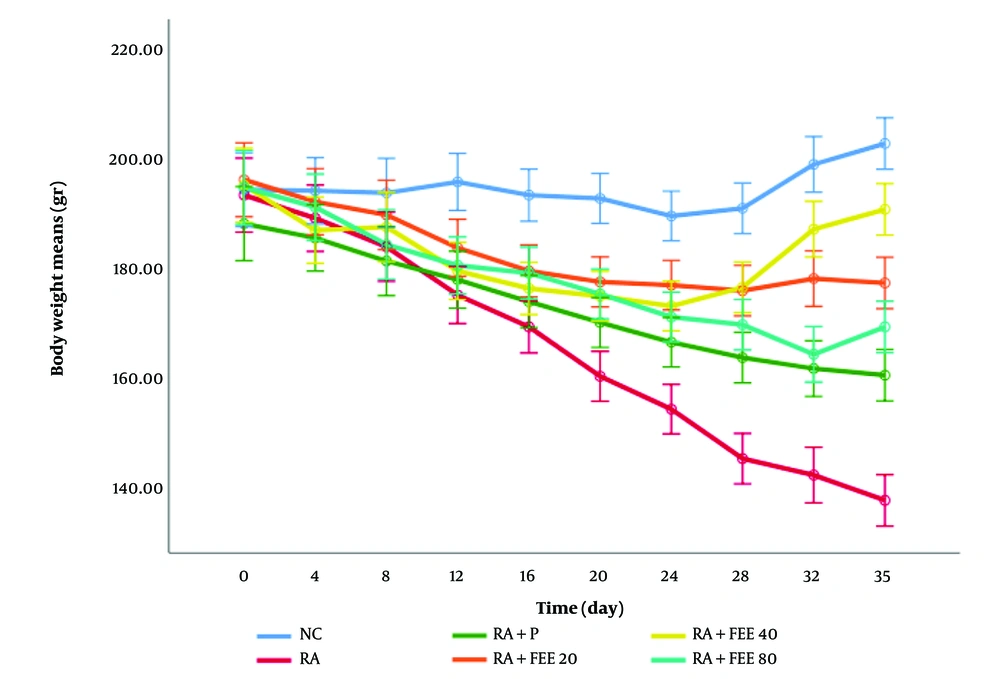
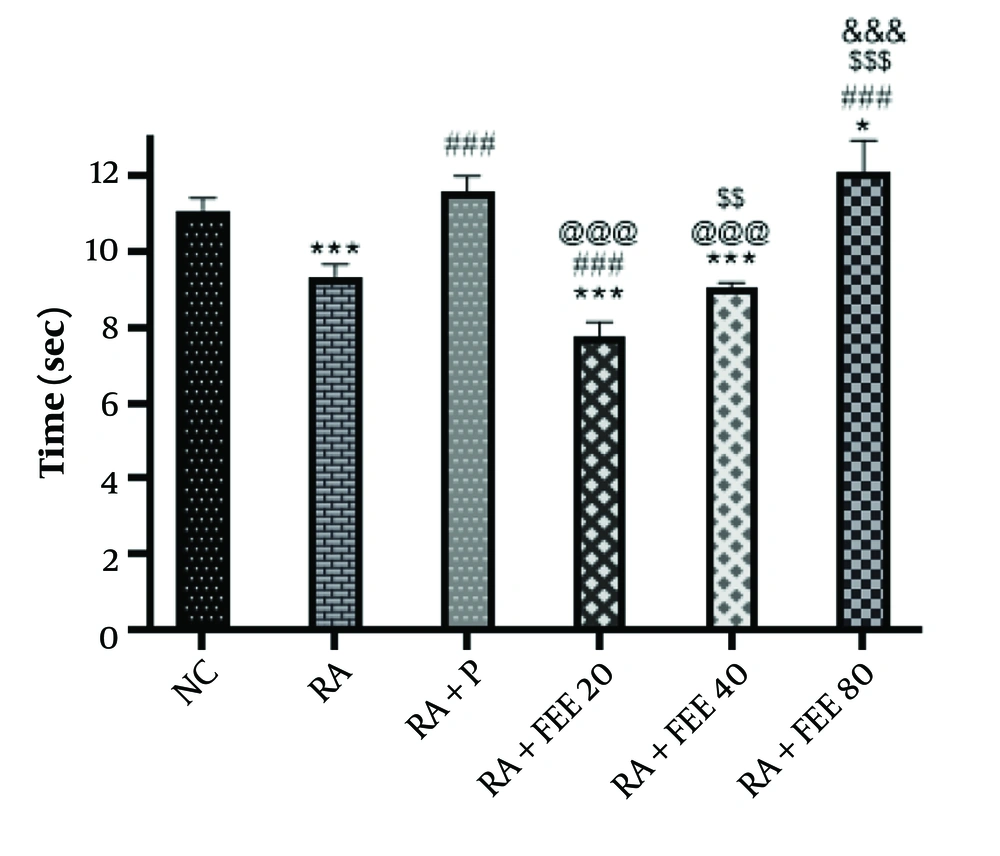
The present study utilized a CFA-induced rat model of RA to find the potential therapeutic efficacy of FEE. Upon the demonstration of swelling in the tibiotarsal joint of rats, the administration of treatment to the affected rats commenced. To probe the process of healing, different tests, including the hot plate test, biochemical analyses, and the measurement of rats’ weights, were employed. The results indicated that the group receiving treatment with FEE 80 mg/kg was able to significantly alleviate the principal symptoms of CFA-induced RA. Notably, the hot plate test demonstrated that FEE exhibited a dose-dependent analgesic effect, with the highest dose (80 mg/kg) significantly increasing withdrawal latency compared to the RA group (P < 0.001). This analgesic effect was comparable to prednisolone, suggesting that FEE effectively modulates pain perception.
Bark extract from
F. excelsior L. has demonstrated strong antioxidant and anti-inflammatory qualities (
23,
35,
66), potentially relieving oxidative stress and inflammation — two important contributors to RA development (
59,
60,
67). The therapeutic effects of FEE can be attributed to its hydroxycoumarin-rich composition, including isofraxidin, fraxetin, fraxinol, fraxidin, and their glycosylated derivatives, alongside lignans, flavonoids, polyphenols, and secoiridoids isolated from various Fraxinus species (
23,
31,
68). We confirmed the presence of isofraxidin 7-O-diglucoside in FEE via LC-MS/MS analysis (
23). These coumarins inhibit NF-κB activation, reducing expression of pro-inflammatory cytokines (TNF-α, IL-6, IL-1β), central mediators of synovial inflammation and cartilage destruction in RA (
35), while their antioxidant properties scavenge ROS, enhance GSH levels, and reduce MDA, mitigating oxidative stress-induced damage (
69). The neuroprotective effects of FEE are also noteworthy, given emerging links between RA-associated systemic inflammation and neuroinflammatory disorders (
23). Numerous pharmacological properties, such as antirheumatic, immunomodulatory, skin-regenerating, and antibacterial activities, further support its therapeutic potential (
23,
31,
68).
Although FEE showed promising effects, potential long-term toxicity remains unknown. While coumarin-containing extracts are generally well-tolerated, some coumarins are linked to hepatotoxicity at high doses (
70). Future studies should assess chronic administration to determine safety, particularly regarding liver and kidney function and drug interactions.
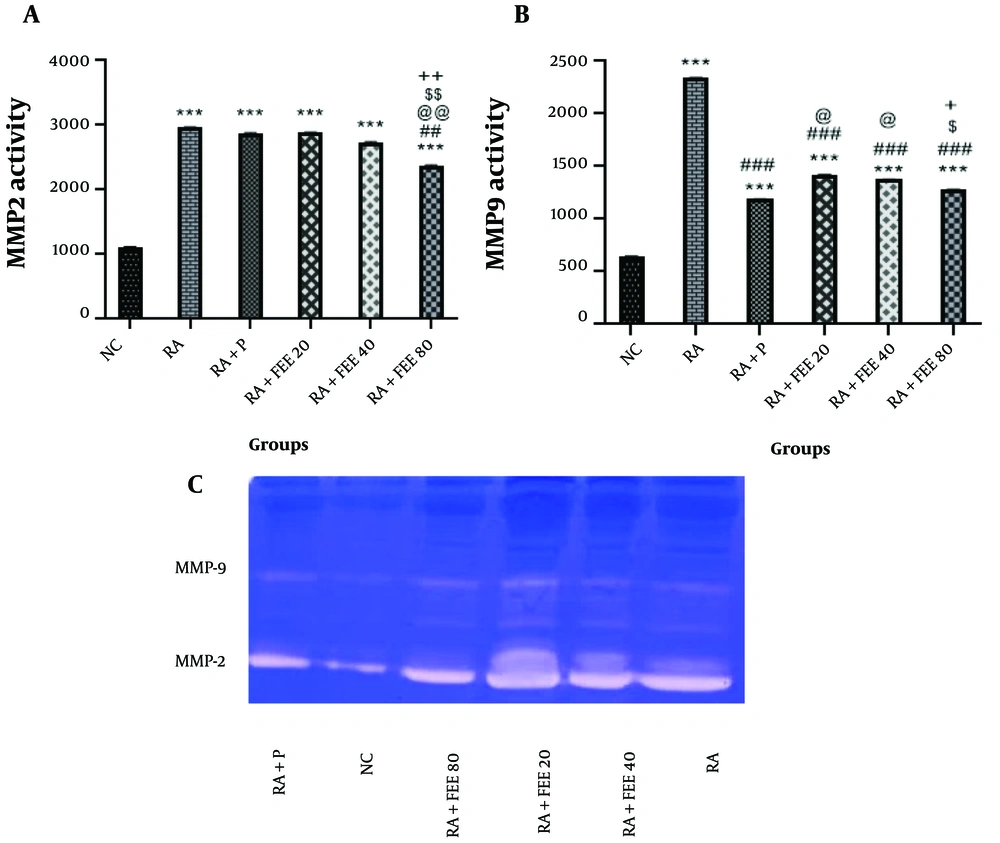
Regarding the role of MMP-2 and MMP-9 in RA, these gelatinases, typically expressed at low levels, increase in pathological conditions, driving synovial fibroblast-mediated inflammation and cartilage degradation by enhancing production of IL-1β, IL-6, IL-8, and TNF-α via activation of NF-κB, extracellular signal-regulated kinase, and c-Jun NH2-terminal kinases (
71,
72). MMP-9 levels rise more significantly than MMP-2 during RA progression (
73), and no effective gelatinase inhibitors have been introduced (
74). Our study showed that FEE reduced MMP-2 and MMP-9 activity, possibly via NF-κB inhibition, a key regulator of cytokine and MMP expression, limiting cartilage degradation (
75,
76). This suppression preserves joint integrity, as MMPs degrade extracellular matrix components (
77,
78). Further mechanistic studies are needed to confirm this NF-κB-mediated effect.
Both FEE and prednisolone significantly reduced inflammatory markers and oxidative stress in the RA model. However, FEE uniquely suppressed MMP-2 and MMP-9 activity, suggesting superior cartilage protection compared to prednisolone, which, while rapidly alleviating symptoms, is linked to adverse effects such as osteoporosis and immunosuppression. The dose-dependent improvement in reaction times during the hot plate test further indicates that FEE effectively modulates pain via its anti-inflammatory and antioxidant properties, reinforcing its potential as a natural analgesic agent for RA management. Beyond pain and inflammation reduction, FEE showed antioxidant effects — evidenced by increased GSH and decreased MDA levels — promoting joint health and possibly slowing RA progression. Moreover, neuroprotective benefits of FEE may address RA-related neuroinflammation, an area prednisolone does not target. While prednisolone remains vital for acute RA management, FEE, particularly at high doses (80 mg/kg), achieved results comparable or superior to prednisolone in some parameters, suggesting its potential as a complementary therapy to reduce corticosteroid reliance. Overall, FEE mitigates RA by modulating MMP-2 and MMP-9 levels, decreasing inflammatory factors, and preserving joint health.
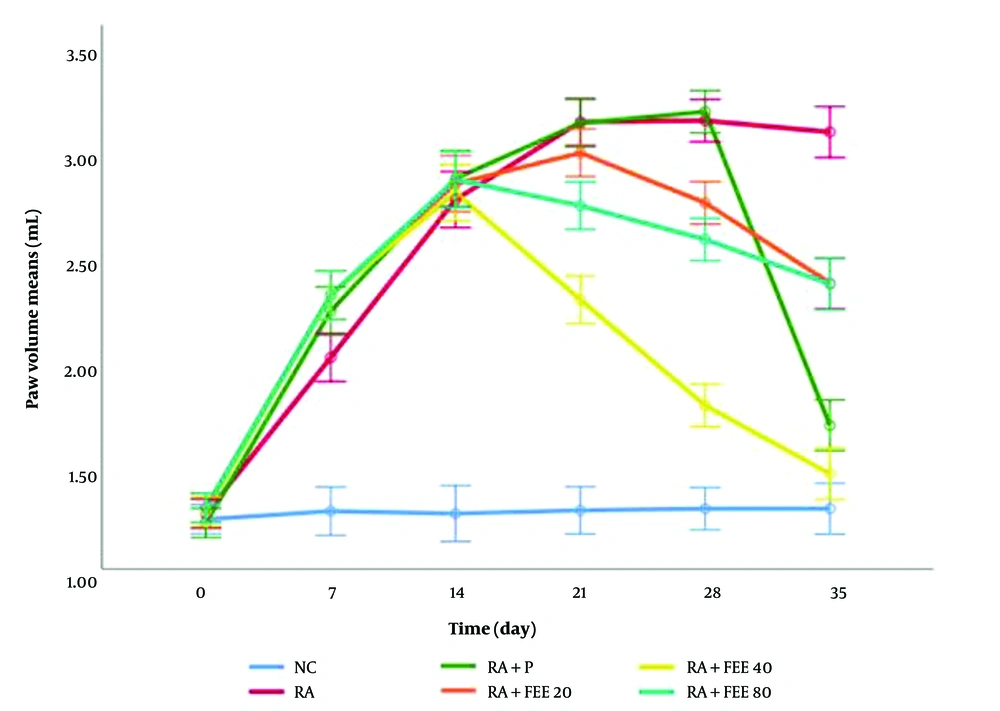
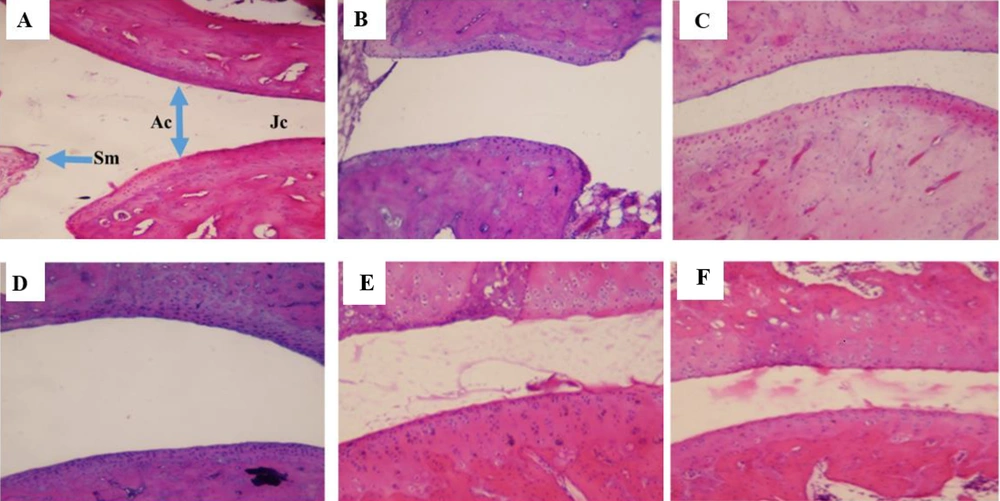
The study also revealed a generally dose-dependent effect of FEE (20, 40, and 80 mg/kg), with the 80 mg/kg dose consistently yielding the strongest outcomes across most measures, including pain relief, oxidative stress modulation, MMP inhibition, and histopathological improvements. However, the dose-response was not uniformly linear; the 40 mg/kg dose slightly outperformed 80 mg/kg in reducing paw volume (P < 0.001 vs. P < 0.01), suggesting an optimal effect for edema reduction. This may reflect pharmacokinetic saturation or target-specific mechanisms, where edema suppression plateaus earlier than MMP inhibition. These findings suggest that while higher doses enhance efficacy, optimal dosing may vary by outcome, necessitating further pharmacokinetic and mechanistic studies.
5.1. Conclusions
The present study found that treating RA mice with FEE reduced RA symptoms by lowering oxidative stress and inflammatory markers (GSH, MDA, and MMPs). Histopathological tests corroborated these findings. The FEE at a high dose (RA + FEE80 group) demonstrated the strongest therapeutic results, and in certain circumstances, it outperformed the standard treatment prednisolone (RA + P group). The observed functional improvements, together with its antioxidant and anti-inflammatory properties, highlight its potential as a treatment for RA. Given the significant therapeutic effects of FEE, particularly at high doses, it may serve as a complementary or alternative option to corticosteroids, potentially reducing the long-term dependency on these drugs and minimizing their associated adverse effects. Future research should prioritize clinical trials to expand on these findings and examine their application in treatment. Additionally, mechanistic studies are needed to elucidate the molecular pathways through which FEE exerts its effects, particularly its role in NF-κB signaling and MMP inhibition. Long-term safety evaluations should also be conducted to assess potential toxicity and establish a safe therapeutic dosage.