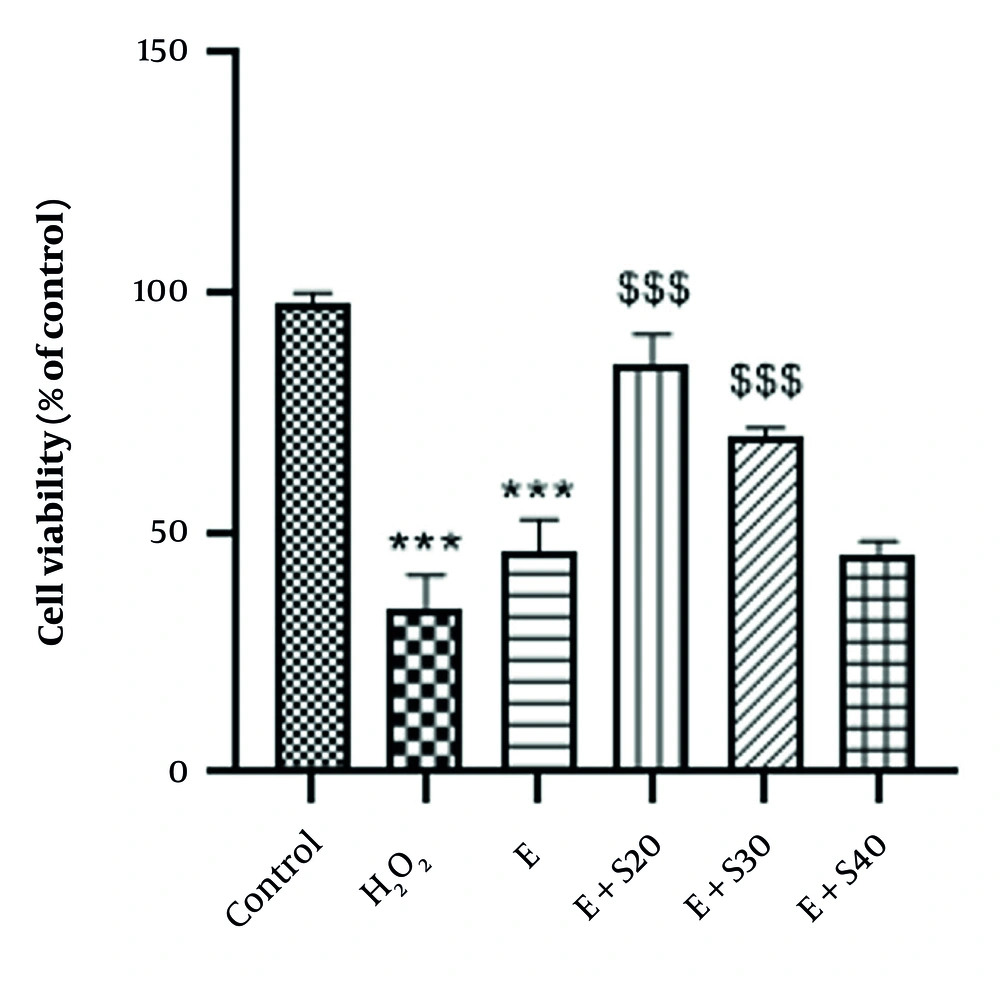
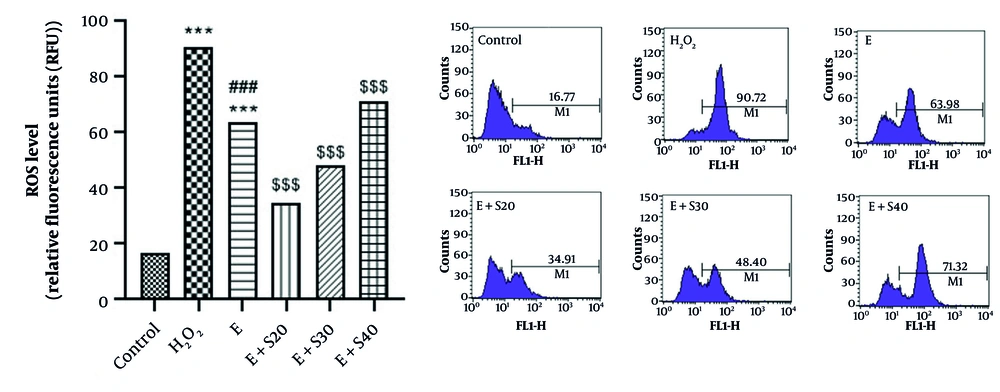
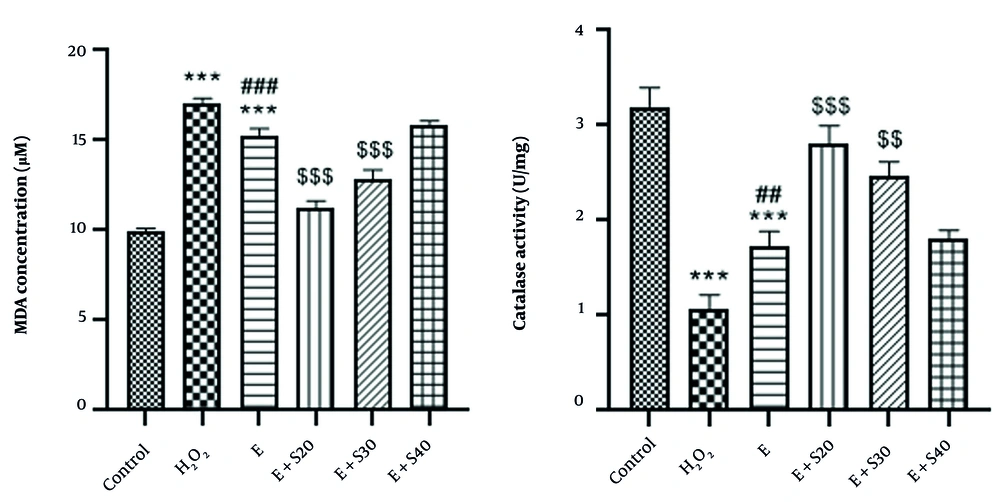
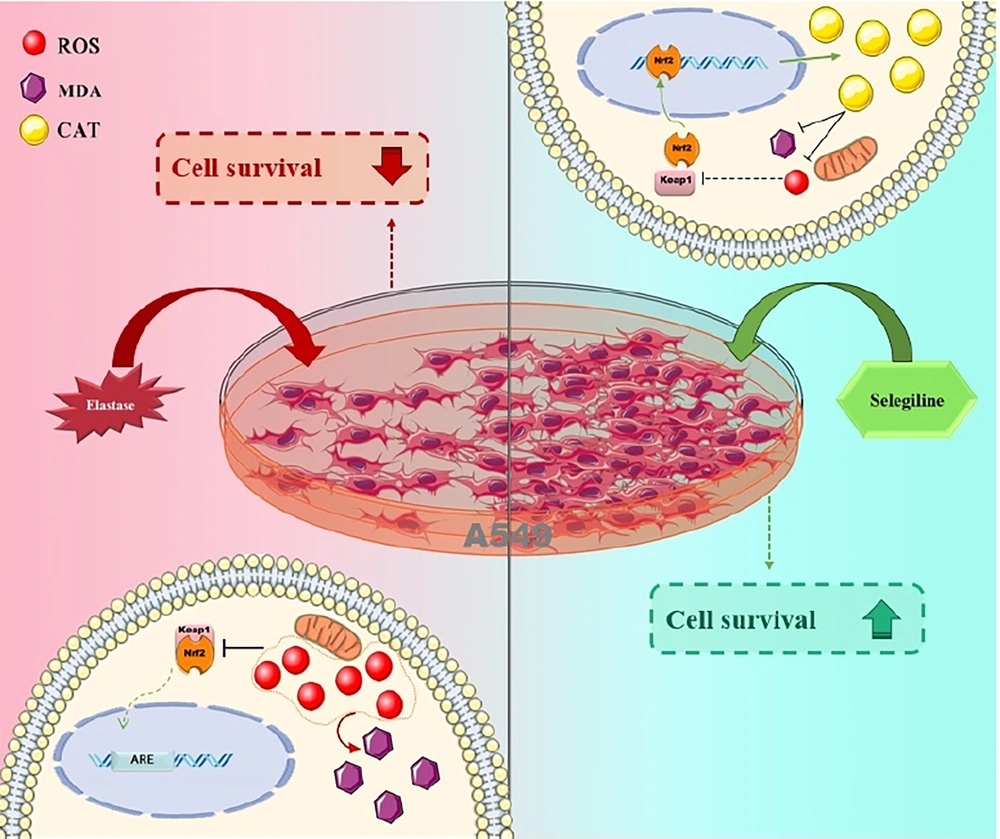
Elastase drives oxidative stress and emphysema by disrupting the protease-antiprotease balance and increasing ROS, effectively mirroring key pathological features of COPD. Previous studies have demonstrated that elastase exposure leads to increased oxidative stress and apoptosis in lung and intestinal epithelial cells, closely reflecting the clinical progression of COPD (
11,
12). Our findings revealed that PPE increased ROS production, which was associated with elevated MDA levels. Recent studies have established oxidative stress as a major pathophysiological element in respiratory system dysfunction caused by free radical imbalance. ROS, including oxygen, build up when adverse exposures like particulate matter or poisonous chemicals weaken the antioxidant defense system. High ROS levels in cells can peroxidize lipids, damage proteins, and DNA (
13).
In this regard, a study by Hou et al. showed that elastase-induced lung epithelial cell apoptosis and emphysema through the JNK and p38 MAPK pathway and oxidative stress. This study documented that the increase in growth factors-induced JNK and p38 MAPK pathways contributes to porcine pancreatic elastase-induced lung epithelial cell apoptosis and emphysema. Regulatory control of PlGF and agents against its downstream signals may be potential therapeutic targets for COPD (
7). Also, Bayati et al. revealed that exposure to elastase caused dose-dependent oxidative stress damage, which was linked to A549 cells' decreased expression of genes for the antioxidant defense system (
10).
Our research indicated that selegiline’s antioxidant effects likely stem from MAO-B inhibition and direct ROS scavenging, enhancing cellular defenses. Selegiline, chemically known as N-methyl-1-phenyl-N-prop-2-ynylpropan-2-amine, is a naturally occurring secondary metabolite. This compound acts as a selective MAO-B inhibitor and is widely used in treating Parkinson’s disease (
14). Beyond its role as an MAO-B inhibitor, selegiline is believed to provide neuroprotective benefits through mechanisms that do not solely rely on this inhibition. It has been shown to prevent neuronal cell death in various types of neurons, such as dopaminergic, cortical, and facial motoneurons, following different forms of injury. One proposed mechanism for its protective effects involves enhancing cellular antioxidant systems. Numerous studies have demonstrated that selegiline elevates the activities of SOD and CAT in various organs (
15).
The findings from the present study confirm that all tested concentrations of selegiline effectively mitigate oxidative stress in alveolar epithelial cells exposed to PPE, which correlates with increased levels of CAT in the cell supernatants. For instance, Qin et al. (2003) demonstrated that selegiline reduced cardiac ROS levels by approximately 30%, leading to decreased oxidative stress and apoptosis in heart failure, correlated with improved cardiac function. This supports the potential of selegiline to mitigate oxidative damage, consistent with our findings (
16). Furthermore, Tian et al.'s in vivo and in vitro investigation demonstrated that selegiline displayed antioxidative effects in the context of high-fat diet (HFD) and palmitic acid (PA) exposure in mouse liver and AML-12 cells. This was evidenced by a reduction in the levels of ROS and MDA, alongside an enhancement in antioxidant enzyme activity (
17) corroborating the findings of our current study.
Emphysema constitutes a significant aspect of COPD. It is marked by the destruction and expansion of the alveolar region, driven by chronic inflammation, oxidative stress, and an imbalance between proteases and antiproteases. The progression of airway inflammation and obstruction can occur gradually, making early diagnosis and intervention challenging due to the absence of distinctive clinical symptoms. The search for effective biomarkers for early detection and suitable therapeutic agents for COPD continues to be a complex endeavor (
18). Cigarette smoke, recognized as the primary contributor to COPD, has been shown to elevate the expression of NRF2/Keap1 (
19).
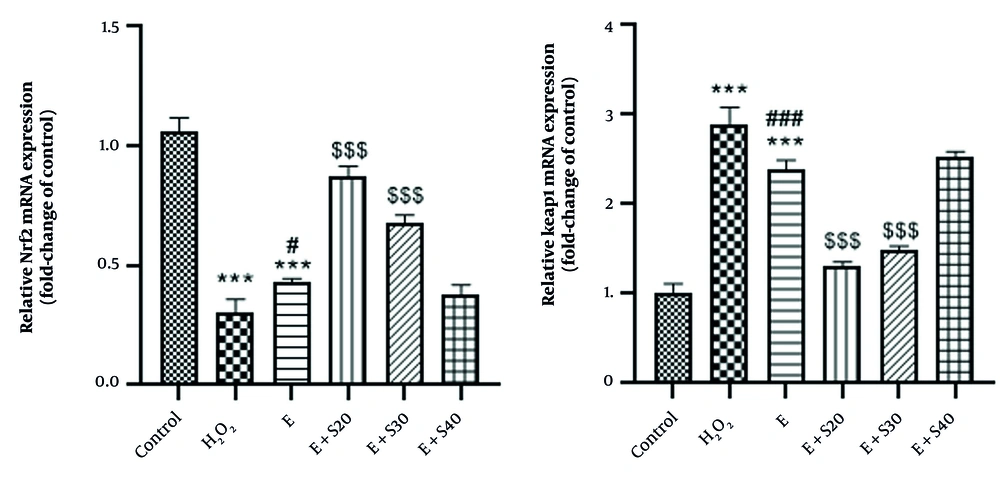
In the current research, we illustrated that the protease-antiprotease imbalance induced by PPE, a key pathogenic mechanism in emphysema, upregulates NRF2 and downregulates Keap1. Selegiline promotes antioxidant gene expression, counteracting oxidative stress in A549 cells (
Figure 5). An essential and biologically conserved intracellular defense mechanism that reduces oxidative stress is NRF2 and its intrinsic regulator Keap1. NRF2 is normally targeted for proteasomal destruction because cytoplasmic Keap1 binds it. However, NRF2 dissociates from Keap1 during oxidative stress and migrates to the nucleus, forming heterodimers with small Maf proteins. Antioxidant response elements (AREs), activator sequences found in the regulatory regions of NRF2 target genes, may be detected by these heterodimers, playing a crucial role in recruiting essential transcription factors (
20).
An illustration of the molecular mechanism behind elastase-induced oxidative stress in pulmonary epithelial cells and the protective effect of selegiline.
Numerous studies have demonstrated the interaction between NRF2 and NF-κB, emphasizing the significance of the NRF2/Keap1 pathway in the pathophysiology of various system dysfunctions, particularly in oxidative and reductive stress (
21-
23). Additionally, research has indicated that ROS regulates the NRF2/Keap1 pathway through intracellular silencing of information regulatory factors. Mice with a knockout of the gene for these regulatory factors exhibited elevated ROS levels and diminished NRF2 expression, suggesting a close relationship between ROS and NRF2 (
20). Under conditions of PPE exposure, ROS production is stimulated in cell mitochondria, which modulates the NRF2/Keap1 signaling pathway. The interplay between NRF2 and Keap1 is vital for the cellular response to oxidative stress. A decline in NRF2 levels typically leads to an elevation in Keap1, which acts as a negative regulator of NRF2. This dynamic results in diminished antioxidative responses, as NRF2 is critical for activating genes responsible for detoxification and cellular protection. On the other hand, the activation of NRF2 can reduce Keap1 levels, thereby enhancing the antioxidant defense mechanisms (
24).
Research conducted by Reisman et al. demonstrated that heightened NRF2 activation in the livers of Keap1-knockdown mice significantly boosts the expression of cytoprotective genes that are more effective in detoxifying electrophiles than in neutralizing reactive oxygen species (
25). Additionally, a study by Naidu et al. indicated that in lung cancer cells with a loss-of-function mutation in Keap1, NRF2 promotes the degradation of mitolysosomes, ensuring the efficient removal of damaged mitochondria (
26). Furthermore, treatment with selegiline was found to increase NRF2 gene expression while simultaneously decreasing Keap1 gene expression in PPE cells. In this context, the in vitro antioxidant research conducted by Nakaso et al. indicated that the cytoprotective properties of selegiline are partially reliant on the NRF2-mediated activation of antioxidative proteins (
27).
Furthermore, other studies reported that selegiline promotes the nuclear translocation of NRF2, thereby augmenting its binding to the antioxidant response element and facilitating the expression of antioxidant thioredoxin superfamilies. Additionally, selegiline enhances the activities of glutathione-dependent antioxidant enzymes and anti-peroxidative enzymes such as catalase and superoxide dismutase, aligning with the present study's findings (
3,
28). In this in vitro study, low-dose selegiline showed the most notable protective effect against elastase-induced damage in lung epithelial cells. These findings support the idea that initiating treatment with minimal doses may optimize therapeutic outcomes and reduce adverse effects, as suggested by another study (
29).
While various pharmaceutical and traditional therapies address respiratory system damage, many alternative treatments have complex, poorly understood mechanisms, underscoring the need for continued research. A key challenge in evaluating their protective effects is the limited availability of clinical and in vivo data. Although animal studies often demonstrate efficacy, translating these findings to human clinical settings remains difficult. This study investigated PPE-induced cellular damage and the protective role of selegiline via the NRF2/Keap1 pathway in human lung epithelial cells. However, in vitro models cannot fully replicate in vivo complexity, and the clinical relevance of selegiline’s protective effects remains unconfirmed. Furthermore, given that selegiline functions as a selective MAO-B inhibitor, it may exert off-target effects, including alterations in neurotransmitter levels, which should be carefully considered in future investigations. Therefore, further in vivo studies and clinical trials are needed to validate these findings and explore their translational potential.
4.1. Conclusions
In conclusion, this study demonstrates that selegiline mitigates elastase-induced injury in lung epithelial cells by enhancing antioxidant defense mechanisms via the NRF2/Keap1 pathway. Given its prior clinical approval, selegiline may represent a promising adjunct therapy for COPD. However, its translational potential must be validated through comprehensive in vivo investigations and clinical trials, particularly in COPD patients with elevated oxidative stress.