
Jundishapur J Nat Pharm Prod

Image Credit:Jundishapur J Nat Pharm Prod

Spirulina: A Potential Complementary Therapy for Pediatric Helicobacter Pylori-Induced Iron Deficiency Anemia

Author(s):
Zahra Nazari TalokiZahra Nazari TalokiZahra Nazari Taloki ORCID1, 2,*
1Non-communicable Pediatric Diseases Research Center, Health Research Institute, Babol University of Medical Sciences, Babol, Iran
2Department of Clinical Pharmacy, School of Pharmacy, Babol University of Medical Sciences, Babol, Iran

Jundishapur Journal of Natural Pharmaceutical Products:Vol. 21, issue 1; e167229
Published online:Dec 14, 2025
Article type:Letter
Received:Oct 15, 2025
Accepted:Nov 25, 2025
How to Cite:Nazari Taloki Z. Spirulina: A Potential Complementary Therapy for Pediatric Helicobacter Pylori-Induced Iron Deficiency Anemia.Jundishapur J Nat Pharm Prod.2025;21(1):e167229.https://doi.org/10.5812/jjnpp-167229.

Dear Editor,

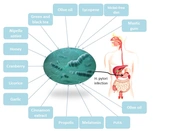
The global prevalence of Helicobacter pylori infection in children is approximately 32.3% (1). It is a well-established cause of iron deficiency anemia (IDA) (2), affecting up to 53.1% of infected pediatric populations (3). Helicobacter pylori is suggested to disrupt gastric acid secretion and compete with the host for iron, potentially through genes encoding major outer membrane proteins (OMPs) — a mechanism proposed to contribute to the pathogenesis of H. pylori-associated anemia (2). Although combining H. pylori eradication therapy with oral iron supplementation is effective, treatment adherence is often compromised by the gastrointestinal side effects of iron supplements, which can exacerbate infection-related distress (3, 4).

To address this challenge, we hypothesize that Spirulina — a nutrient-dense cyanobacterium — could represent a promising dual-action approach for managing H. pylori-induced iron deficiency in children. Spirulina is a rich source of protein, essential amino acids, carbohydrates, lipids, essential fatty acids, fiber, vitamins (such as β-carotene, vitamin C, D, E, and especially B vitamins), and minerals including calcium, magnesium, manganese, selenium, and zinc, with iron content ranging from 28.5 to 100 mg per 100 g (4, 5). Preclinical studies suggest that it may enhance iron absorption by forming soluble complexes with both heme and non-heme iron via its phycocyanin and polysaccharide components, and it has been proposed to upregulate divalent metal transporter 1 (DMT1) and promote ferritin synthesis in enterocytes (6). Its broad micronutrient profile could further support erythropoiesis and child development (7). Spirulina may compensate for iron deficiency or reduce the required dosage of iron supplements, thereby improving treatment tolerability.

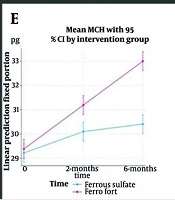
Some clinical studies indicate Spirulina’s efficacy in improving hematological parameters and alleviating anemia in children, pregnant women, and patients with ulcerative colitis, effects that may be related to its antioxidant, anti-inflammatory, and iron-mobilizing properties (4, 8-11). However, direct evidence in pediatric H. pylori infection is lacking. Additionally, preclinical research indicates that Spirulina-derived bioactive peptides and polysaccharides exhibit anti-H. pylori activity by inhibiting bacterial adhesion and colonization, protecting the gastric mucosa, and modulating oxidative and inflammatory pathways. These compounds interact with key H. pylori enzymes, such as alkyl hydroperoxide reductase (AhpC) and urease; suppress reactive oxygen species and NF-κB-mediated proinflammatory cytokines (TNF-α and IL-8); and enhance antioxidant defenses (12-15). Phycocyanin, a purified Spirulina protein, has been shown in vitro to suppress H. pylori-induced gastric epithelial hyperproliferation by modulating the ROS/MAPK signaling cascade and downregulating c-Myc and cyclin D1, highlighting its potential for further investigation in H. pylori-associated gastric disorders and carcinogenesis (16, 17).

Based on this emerging preliminary evidence, we propose the following hypothesis: Spirulina may play a dual role in attenuating H. pylori infection and enhancing iron metabolism. Its phycocyanin and polysaccharides could provide synergistic antioxidant, anti-inflammatory, and iron-boosting effects, potentially alleviating H. pylori-associated anemia by reducing bacterial iron competition and restoring host iron balance. We conclude that this safe, nutrient-rich supplement warrants rigorous randomized clinical trials — especially in children with H. pylori-induced anemia — to validate the proposed hypothesis and establish optimal dosing and efficacy.
Footnotes

References

  • 1.
    Yuan C, Adeloye D, Luk TT, Huang L, He Y, Xu Y, et al. The global prevalence of and factors associated with Helicobacter pylori infection in children: a systematic review and meta-analysis. Lancet Child Adolesc Health. 2022;6(3):185-94. [PubMed ID: 35085494]. https://doi.org/10.1016/S2352-4642(21)00400-4.
  • 2.
    Kato S, Gold BD, Kato A. Helicobacter pylori-Associated Iron Deficiency Anemia in Childhood and Adolescence-Pathogenesis and Clinical Management Strategy. J Clin Med. 2022;11(24). [PubMed ID: 36555966]. [PubMed Central ID: PMC9781328]. https://doi.org/10.3390/jcm11247351.
  • 3.
    Nguyen RN, Bui NQ, Nguyen KOT. Prevalence, Predictors, and Treatment Outcomes of Anemia in Vietnamese School-Age Children With Helicobacter pylori Infection. Cureus. 2024. https://doi.org/10.7759/cureus.69473.
  • 4.
    Marlina D, Nurhayati F. The effectiveness of spirulina compared with iron supplement on anemia among pregnant women in Indonesia. Int J Caring Sci. 2020;13(3):1783-7.
  • 5.
    Marjanović B, Benković M, Jurina T, Sokač Cvetnić T, Valinger D, Gajdoš Kljusurić J, et al. Bioactive Compounds from Spirulina spp.—Nutritional Value, Extraction, and Application in Food Industry. Separations. 2024;11(9). https://doi.org/10.3390/separations11090257.
  • 6.
    Gao F, Guo W, Zeng M, Feng Y, Feng G. Effect of microalgae as iron supplements on iron-deficiency anemia in rats. Food Funct. 2019;10(2):723-32. [PubMed ID: 30664135]. https://doi.org/10.1039/c8fo01834k.
  • 7.
    Masuda K, Chitundu M. Multiple Micronutrient Supplementation Using Spirulina platensis during the First 1000 Days is Positively Associated with Development in Children under Five Years: A Follow up of A Randomized Trial in Zambia. Nutrients. 2019;11(4). [PubMed ID: 30934863]. [PubMed Central ID: PMC6520735]. https://doi.org/10.3390/nu11040730.
  • 8.
    Othoo DA, Ochola S, Kuria E, Kimiywe J. Impact of Spirulina corn soy blend on Iron deficient children aged 6-23 months in Ndhiwa Sub-County Kenya: a randomized controlled trial. BMC Nutr. 2021;7(1):70. [PubMed ID: 34749821]. [PubMed Central ID: PMC8577024]. https://doi.org/10.1186/s40795-021-00472-w.
  • 9.
    Barennes H, Houdart L, de Courville C, Barennes F. Spirulina as a daily nutritional supplement of young pre-school Cambodian children of deprived settings: a single-blinded, placebo-controlled, cross-over trial. BMC Pediatr. 2022;22(1):701. [PubMed ID: 36476193]. [PubMed Central ID: PMC9727933]. https://doi.org/10.1186/s12887-022-03766-5.
  • 10.
    Abed E, Ihab AN, Suliman E, Mahmoud A. Impact of Spirulina on Nutritional Status, Haematological Profile and Anaemia Status in Malnourished Children in the Gaza Strip: Randomized Clinical Trial. Matern Pediat Nutr. 2016;2(2). https://doi.org/10.4172/2472-1182.1000110.
  • 11.
    Moradi S, Foshati S, Poorbaferani F, Talebi S, Bagheri R, Amirian P, et al. The effects of spirulina supplementation on serum iron and ferritin, anemia parameters, and fecal occult blood in adults with ulcerative colitis: A randomized, double-blinded, placebo-controlled trial. Clin Nutr ESPEN. 2023;57:755-63. [PubMed ID: 37739734]. https://doi.org/10.1016/j.clnesp.2023.08.019.
  • 12.
    Franca-Oliveira G, Hernández-Ledesma B, Martinez-Rodriguez A. Bioactive peptides as alternative treatment for Helicobacter pylori infection. Bioact Comp Health Dis. 2024;7(5):245-64. https://doi.org/10.31989/bchd.v7i5.1348.
  • 13.
    Ibrahim RM, Anees LM, El-Dein EK. Effect of Spirulina platensis on oxidative stress induced by gamma radiation and H-pylori infected rats. Int J Res Stud Sci Eng Technol. 2014;1(7):28-37.
  • 14.
    Fallahizadeh S, Yousefi M, Ghasemi A, Sadat SA, Mohtashemi M, Rezagholizade-shirvan A, et al. Antibacterial and biofilm inhibition of Helicobacter pylori using green synthesized MWCNTs/ZnO/Chitosan nanocomposites. Environ Technol Innov. 2025;38. https://doi.org/10.1016/j.eti.2025.104068.
  • 15.
    Loke MF, Lui SY, Ng BL, Gong M, Ho B. Antiadhesive property of microalgal polysaccharide extract on the binding of Helicobacter pylori to gastric mucin. FEMS Immunol Med Microbiol. 2007;50(2):231-8. [PubMed ID: 17521357]. https://doi.org/10.1111/j.1574-695X.2007.00248.x.
  • 16.
    Bi Y, Wu D, Wu X, Wang F, Yu H, Liu P, et al. Phycocyanin inhibits Helicobacter pylori-induced hyper-proliferation in AGS cells via activation of the ROS/MAPK signaling pathway. Ann Transl Med. 2022;10(4):176. [PubMed ID: 35280408]. [PubMed Central ID: PMC8908168]. https://doi.org/10.21037/atm-21-7045.
  • 17.
    Motamedzadeh A, Rahmati-Dehkordi F, Heydari H, Behnam M, Rashidi Noshabad FZ, Tamtaji Z, et al. Therapeutic potential of Phycocyanin in gastrointestinal cancers and related disorders. Mol Biol Rep. 2024;51(1):741. [PubMed ID: 38874869]. https://doi.org/10.1007/s11033-024-09675-3.

Crossmark
Crossmark
Checking
Share on
Cited by
Metrics

Purchasing Reprints

  • Copyright Clearance Center (CCC) handles bulk orders for article reprints for Brieflands. To place an order for reprints, please click here (   https://www.copyright.com/landing/reprintsinquiryform/ ). Clicking this link will bring you to a CCC request form where you can provide the details of your order. Once complete, please click the ‘Submit Request’ button and CCC’s Reprints Services team will generate a quote for your review.