
1. Introduction
Infectious diseases pose a major challenge to global healthcare, resulting in approximately 17 million deaths annually, 30 million hospital admissions, and 300 million outpatient consultations. Bacterial pathogens, particularly Staphylococcus aureus and Pseudomonas aeruginosa, are major contributors to both community-acquired and healthcare-associated infections and are notable for their prevalence, virulence, and multidrug resistance (1).
Staphylococcus aureus exhibits considerable clinical variability, causing infections ranging from mild skin conditions to severe systemic disease in immunocompromised patients (2). Clinical manifestations include localized abscesses and invasive bacteremia, which can lead to complications such as endocarditis and toxic shock syndrome. Pseudomonas aeruginosa is an opportunistic pathogen that is prevalent in vulnerable populations and is associated with serious nosocomial infections. This study evaluates the antibacterial efficacy of an essential oil from Citrus reticulata, which is rich in D-limonene, against drug-resistant bacteria from clinical environments (3, 4). The emergence of multidrug-resistant (MDR) pathogens has substantially affected infectious disease management (5). Resistance mechanisms include chromosomal mutations, beta-lactamase production, efflux pump activation, horizontal gene transfer, and biofilm formation. The clinical consequences are severe, with mortality rates from invasive S. aureus infections surpassing those of AIDS in some regions and MDR P. aeruginosa causing increased hospitalization and healthcare costs. This situation demands the urgent development of new antimicrobial strategies beyond conventional antibiotics (6, 7).
In response to antibiotic resistance, researchers are exploring plant-derived compounds, particularly essential oils, as alternative antibacterial agents. These oils have antibacterial and anti-inflammatory properties and act by disrupting microbial cell integrity, inhibiting nucleic acid and protein synthesis, and inducing oxidative stress. Unlike conventional antibiotics, essential oils can target multiple bacterial survival strategies, which may reduce the risk of resistance. Their long history of use in traditional medicine and their generally recognized as safe status for culinary and cosmetic applications further facilitate regulatory approval and clinical acceptance (8).
Citrus reticulata, or mandarin orange, is a key source of antibacterial essential oil derived from its fruit peels and primarily contains D-limonene, which constitutes 80% - 95% of its composition. This oil is used in culinary, cosmetic, medicinal, and food preservation fields and demonstrates significant antibacterial, antifungal, and antiviral properties. D-limonene disrupts microbial membranes while enhancing the antimicrobial efficacy of the oil through synergistic interactions (9, 10). In addition, the essential oil exhibits notable antioxidant capacity because of its terpenoid components, which help mitigate oxidative damage during infections (10, 11). The chemical composition of Citrus essential oils varies with multiple factors, necessitating careful characterization for therapeutic use. Ongoing research continues to explore their applications, including anti-aging effects and efficacy against various pathogens (12-14).
This study investigates the potential of C. reticulata essential oil as an antibacterial and antioxidant agent against multidrug-resistant strains of S. aureus and P. aeruginosa, addressing the challenge of antimicrobial resistance (AMR). The objectives include determining the phytochemical composition using GC-MS, evaluating antibacterial efficacy through MIC testing, and assessing antioxidant activity using the 2,2-diphenyl-1-picrylhydrazyl (DPPH) radical scavenging assay. This research aims to provide a scientific basis for the therapeutic potential of this essential oil.
2. Methods
2.1. Plant Material Collection and Essential Oil Extraction
Fresh peels of Citrus reticulata were cleaned, vacuum-dried, and subjected to steam distillation to extract the essential oil. Briefly, 250 g of dried material and 1.2 L of distilled water were boiled and simmered for 3 hours, producing approximately 1.2 mL of oil per batch, with a yield of 0.48% (v/w). The oil was stored at 4°C in sterile glass vials to prevent degradation.
2.2. Phytochemical Characterization Using Gas Chromatography-Mass Spectrometry
The chemical composition of Citrus reticulata essential oil was analyzed by GC-MS at the Chemical Analysis Centre in Iraq. Volatile compounds were identified and quantified using a Shimadzu GC-MS instrument under standardized conditions with an Rtx-5MS capillary column. The oven temperature was programmed from 60°C to 240°C at 3°C/min, with helium as the carrier gas at 1.0 mL/min. The injector and ion source temperatures were set at 250°C and 200°C, respectively. The mass spectrometer operated in electron impact mode at 70 eV, scanning a range of 40 - 500 m/z, and components were identified using the NIST11 library and retention index comparisons (17, 18).
2.3. Bacterial Isolation and Identification
This study included six multidrug-resistant S. aureus and five multidrug-resistant P. aeruginosa isolates obtained from patients with dermatological disorders at three hospitals in Baghdad. Isolates were selected based on resistance to at least three antibiotics, as determined by the Kirby-Bauer method. Staphylococcus aureus was isolated on mannitol salt agar and confirmed by VITEK 2 analysis, whereas P. aeruginosa was isolated on cetrimide agar and similarly confirmed by VITEK 2 (19). Isolates were classified as multidrug-resistant if they showed nonsusceptibility to at least one agent in three or more antimicrobial classes, as described by Magiorakos et al. (20).
2.4. Antibiotic Susceptibility Testing
The antimicrobial susceptibility of confirmed isolates was evaluated using the disc diffusion method (Kirby-Bauer assay) in accordance with clinical laboratory guidelines. Bacterial cultures were standardized to 0.5 McFarland turbidity (approximately 1.5 - 2 × 10⁸ CFU/mL) and evenly spread on Mueller-Hinton agar plates.
Antibiotic discs were placed on the agar to ensure proper contact, followed by incubation at 37°C for 16 - 24 hours. Zones of inhibition were measured in millimeters, and results were classified as susceptible, intermediate, or resistant according to clinical breakpoints (21).
2.5. Minimum Inhibitory Concentration Determination
The MIC of Citrus reticulata essential oil against multidrug-resistant bacterial isolates was determined using the agar dilution method according to Clinical and Laboratory Standards Institute (CLSI) guidelines. A stock solution was serially diluted from 500,000 ppm to obtain concentrations from 40,000 to 5,000 ppm, which were incorporated into molten Mueller-Hinton agar and inoculated with standardized bacterial cultures. After incubation at 37°C for 18 - 24 hours, the MIC was defined as the lowest concentration that completely inhibited visible bacterial growth. The assay was performed in triplicate and included positive (gentamicin) and negative controls (22, 23).
2.6. Antioxidant Activity Assessment by DPPH Radical Scavenging Assay
The antioxidant capacity of Citrus reticulata essential oil was evaluated using the DPPH free radical scavenging assay. Standard solutions of ascorbic acid were prepared at concentrations from 0 to 100 μg/mL, and serial dilutions of the essential oil were prepared in DMSO. Equal volumes of DPPH reagent (0.1 mM) and test solutions were mixed and incubated in the dark for 30 minutes. Absorbance was measured at 517 nm using a spectrophotometer.
A control containing only DMSO and the DPPH reagent was used for correction. A color change from violet to yellow/transparent indicated antioxidant activity, and the percentage radical scavenging activity (RSA %) was calculated using the following equation:
where A0 represents the absorbance of the DPPH control solution, and As represents the absorbance of the sample solution (24, 25). The antioxidant activity of the essential oil was evaluated using a v/v percentage dilution series. For comparison with the ascorbic acid reference standard, expressed in μg/mL, a 1% (v/v) concentration of the essential oil corresponds to a mass concentration of approximately 9.00 mg/mL.
2.7. Statistical Analysis
All experiments were performed in triplicate (n = 3), and results are presented as the mean ± standard deviation (SD). Statistical analysis was conducted using GraphPad Prism version 8.0. The antioxidant activity of the essential oil was compared with that of the ascorbic acid control using a two-tailed Student t-test, with P values below 0.05 considered statistically significant. The number of bacterial samples was selected to provide a fair assessment of the oil's effectiveness against critical resistant strains from the source laboratory.
3. Results
3.1. GC-MS Results and Phytochemical Composition
3.1.1. Major Volatile Components
As shown in Figure 1 and summarized in Table 1, Citrus reticulata mandarin peel essential oil was dominated by D-limonene (88.45%), with gamma-terpinene as the main secondary component, indicating a limonene-rich chemotype with only minor contributions from other mono- and sesquiterpenes. The first elution time of 7.859 minutes was indicative of monoterpenes, which are relatively volatile substances with molecular weights of approximately 136 Da. The sharp, symmetrical peak morphology indicated excellent chromatographic resolution and high purity of this primary component. The chromatogram showed a notable second peak with a retention time of 8.357 minutes, identified as gamma-terpinene (4.79%).
Table 1.
Volatile Compounds Identified in Citrus Reticulata Mandarin Peel Essential Oil by GC-MS, with Retention Times (Min), Relative Peak Areas (%), and Identification Quality Scores
| Number | RT (min) | Area% | Name | Quality (%) | CAS Number |
|---|---|---|---|---|---|
| 1 | 5.612 | 1.17 | alpha-Pinene | 96 | 007785 - 26 - 4 |
| 2 | 6.78 | 1.99 | beta-Myrcene | 97 | 000123 - 35 - 3 |
| 3 | 7.486 | 1.01 | o-Cymene | 95 | 000527 - 84 - 4 |
| 4 | 7.859 | 88.45 | D-Limonene | 99 | 005989 - 27 - 5 |
| 5 | 8.357 | 4.79 | gamma-Terpinene | 95 | 000099 - 85 - 4 |
| 6 | 16.073 | 0.06 | beta-Elemene | 96 | 000515 - 13 - 9 |
| 7 | 16.669 | 0.14 | Caryophyllene | 99 | 000087 - 44 - 5 |
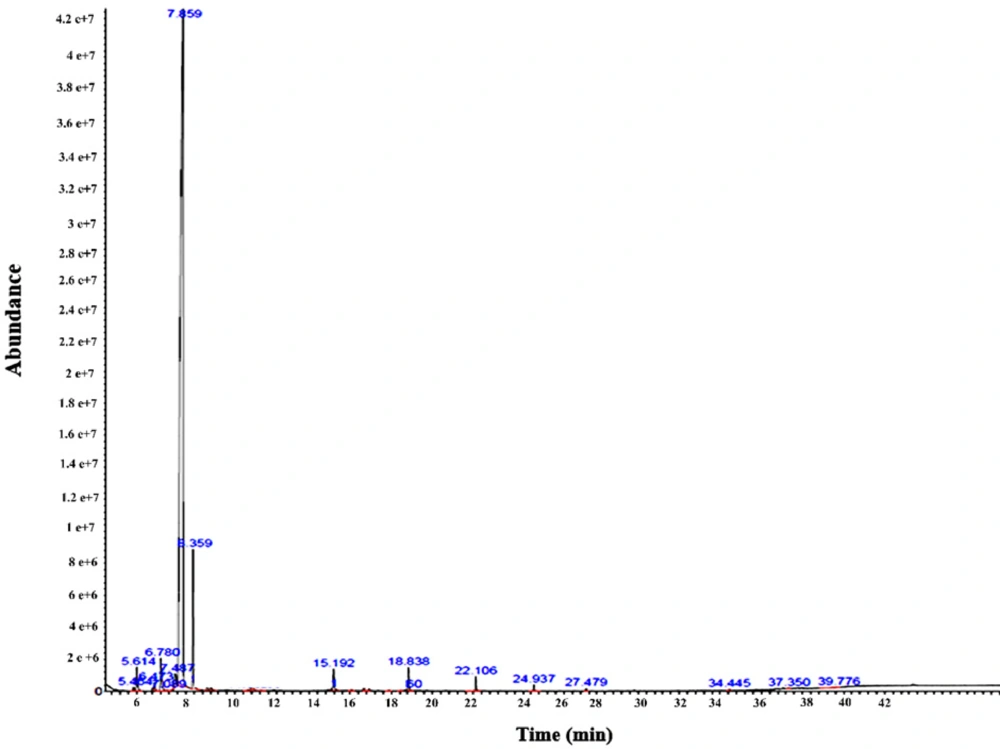
Figure 1.
Gas chromatography-mass spectrometry chromatographic profile of Citrus reticulata mandarin peel essential oil.
Despite being substantially smaller than the limonene peak, gamma-terpinene was the second most prevalent bioactive constituent in the essential oil. The close retention-time proximity to limonene, differing by only 0.5 minutes, indicates similar chemical properties of these monoterpene hydrocarbons, including comparable molecular weights and volatility characteristics (Figure 1).
3.1.2. Early-Eluting Monoterpene Hydrocarbons
A series of smaller, well-defined peaks appeared in the early retention-time window of 5 to 7 minutes, indicating the presence of lighter, more volatile monoterpene hydrocarbons that elute preferentially from the GC column because of their lower boiling points and reduced interaction with the stationary phase. Alpha-pinene was detected at a retention time of 5.612 minutes, comprising 1.17% of the total composition and representing the most volatile major component identified. Sabinene was identified at a retention time of 6.38 minutes, with a minimal concentration of 0.13%, appearing as a small but distinctly resolved peak. Beta-pinene was detected at a retention time of 6.474 minutes, comprising 0.36% of the volatile fraction and showing moderate peak intensity. Beta-myrcene was identified at a retention time of 6.78 minutes, constituting 1.99% and ranking as the third-highest peak among the early-eluting compounds, thereby representing the third most prevalent volatile component overall. o-Cymene was detected at a retention time of 7.486 minutes, accounting for 1.01% of the overall volatile content and appearing just before the predominant limonene peak.
3.1.3. Oxygenated Monoterpenes and Minor Components
After the prominent limonene peak, several weaker peaks were detected, indicating oxygenated monoterpenes and less volatile components. Terpinolene was detected at a retention time of 9.042 minutes, constituting 0.25% of the total volatile content as a minor monoterpene hydrocarbon. Linalool, an oxygenated monoterpene alcohol, was identified with a retention time of 9.229 minutes and a concentration of 0.21%. Terpinen-4-ol, an oxygenated monoterpene, was detected as a trace peak at a retention time of 11.035 minutes, comprising only 0.05% of the overall composition. The delayed elution times for linalool and terpinen-4-ol, relative to their hydrocarbon monoterpene counterparts, result from the presence of hydroxyl functional groups, which increase molecular polarity and strengthen interactions with the column’s stationary phase, thereby extending retention time (Table 1).
3.1.4. Sesquiterpene Constituents
A series of small peaks appeared in the latter segment of the chromatogram between retention times of 16 and 19 minutes, indicating sesquiterpene components with prolonged retention. Beta-elemene was detected at a retention time of 16.073 minutes (0.06%), caryophyllene at 16.669 minutes (0.14%), gamma-elemene at 16.918 minutes (0.07%), germacrene D at 17.889 minutes (0.05%), and 7-octen-4-one, 2,6-dimethyl- at 18.459 minutes (0.05%). These late-eluting compounds are sesquiterpenes with 15-carbon structures (C15H24), resulting in higher molecular weights of approximately 204 Da and markedly reduced volatility relative to monoterpenes. Their prolonged retention times indicate stronger interactions with the column’s stationary phase and higher boiling points than those of the dominant monoterpene fraction (Figure 1).
3.1.5. Quantitative Analysis and Relative Abundance
The relative peak areas in the chromatogram correlated directly with compound concentrations, indicating a markedly skewed distribution typical of Citrus reticulata peel essential oil. The pronounced predominance of the limonene peak, constituting 88.45% of the total volatile content, was readily apparent on visual inspection of the chromatogram. The second prominent peak, gamma-terpinene at 4.79%, was approximately 18 to 20 times smaller than the limonene peak in area. All remaining detected compounds were minor components, each comprising less than 2% of the total volatile composition.
This distinct distribution pattern reflects the biosynthetic pathways active in citrus species, which predominantly generate limonene through the enzymatic transformation of geranyl pyrophosphate mediated by (+)-limonene synthase, resulting in the marked dominance of this monoterpene in the essential oil.
3.1.6. Compound Identification Quality and Mass Spectral Matching
The mass spectral identification quality scores reported in the analytical data indicate excellent reliability of compound identification through NIST database library matching. D-limonene demonstrated a matching quality score of 99%, indicating near-perfect spectral correspondence with the reference database. Caryophyllene and terpinolene exhibited quality scores of 99% and 98%, respectively, confirming highly reliable identification.
Gamma-elemene achieved a 98% match quality, and beta-myrcene showed a 97% quality score, all exceeding the 90% threshold generally considered indicative of reliable compound identification. The lower match quality scores observed for linalool (58%) and terpinen-4-ol (46%), while still acceptable for trace components, are attributable to their minimal concentrations within the essential oil, which result in lower signal-to-noise ratios in the mass spectra and consequently greater difficulty in achieving optimal spectral matching with database reference standards. Overall, the high identification quality scores for the major and secondary components of the essential oil confirm the reliability of the phytochemical characterization performed in this investigation.
3.2. Bacterial Isolation and Identification
3.2.1. Sample Viability and Bacterial Production
Of the 32 clinical specimens obtained for bacterial isolation, 22 (68.75%) exhibited viable bacterial growth after purification and identification, whereas 10 specimens (31.25%) showed no detectable microbial growth. The isolation rate of 68.75% aligns with typical recovery patterns in clinical microbiology, indicating appropriate specimen collection and storage methods, as well as the intrinsic viability of bacterial populations in clinical samples. Preliminary identification of the 22 bacterial isolates was conducted based on colony morphology on selective media after incubation at 37°C. The isolates were categorized into four genera: Pseudomonas (6), Staphylococcus (10), Klebsiella, and Acinetobacter, enabling rapid presumptive identification for subsequent testing.
3.2.2. Confirmatory Identification Using VITEK 2
The VITEK 2 automated microbiological identification system was used for precise species-level identification of bacterial isolates, confirming 5 of 7 Pseudomonas spp. as P. aeruginosa and 6 of 11 Staphylococcus spp. as S. aureus. The remaining isolates were reclassified or identified with reduced confidence. This technique is valued for its high sensitivity and specificity, making it a standard method in microbiology. Two culture media were used: Mueller-Hinton agar for antibiotic susceptibility testing, in accordance with CLSI and European Committee on Antimicrobial Susceptibility Testing recommendations for accurate results, and nutrient agar for preliminary growth and isolation of several bacterial species. This methodological approach facilitates reliable pathogen isolation and accurate antibiotic resistance profiling, which are essential for effective clinical microbiology practice.
3.3. Antibiotic Susceptibility Testing and Multidrug Resistance Patterns
The clinical data revealed a high prevalence of multidrug resistance among the P. aeruginosa and S. aureus isolates subjected to Kirby-Bauer disc diffusion testing. Specifically, 80% of P. aeruginosa isolates (n = 4/5) and approximately 83% of S. aureus isolates (n = 5/6) were classified as MDR, demonstrating nonsusceptibility to at least three distinct antimicrobial classes. As illustrated in Figure 2 and detailed in Table 2, total resistance was observed in P. aeruginosa to beta-lactam agents, including cefepime (FEP) and ceftazidime (CAZ), and to amikacin (AK), although some susceptibility to gentamicin (CN) persisted. Similarly, most S. aureus isolates exhibited resistance to gentamicin, erythromycin (E), and azithromycin (AZM). The frequent absence of measurable inhibition zones across both species underscores a substantial clinical challenge characterized by limited therapeutic alternatives for these pathogen strains.
Table 2.
Antibiotic Susceptibility Profiles of Multidrug-Resistant Pseudomonas Aeruginosa and Staphylococcus aureus Isolates, Expressed as Inhibition-Zone Diameters (Mm) or Resistance (No Measurable Zone)
| Bacterial Type and Isolate No. | FEP (mm) | CAZ (mm) | AK (mm) | CN (mm) | E (mm) | AZM (mm) |
|---|---|---|---|---|---|---|
| Pseudomonas aeruginosa | ||||||
| 2 | Z | Z | Z | - | - | - |
| 3 | Z | Z | Z | - | - | - |
| 5 | Z | Z | 10 | - | - | - |
| 6 | Z | 10 | Z | - | - | - |
| 11 | Z | 11 | Z | - | - | - |
| Staphylococcus aureus | ||||||
| 1 | - | - | - | Z | Z | Z |
| 4 | - | - | - | Z | Z | Z |
| 8 | - | - | - | Z | Z | Z |
| 11 | - | - | - | 9 | Z | 23 |
| 14 | - | - | - | Z | Z | Z |
| 16 | - | - | - | Z | Z | Z |
Abbreviations: FEP, cefepime; AK, amikacin; CAZ, ceftazidime; CN, gentamicin; AZM, azithromycin; E, erythromycin. Z indicates no measurable inhibition zone (complete resistance); values are inhibition-zone diameters in millimeters.
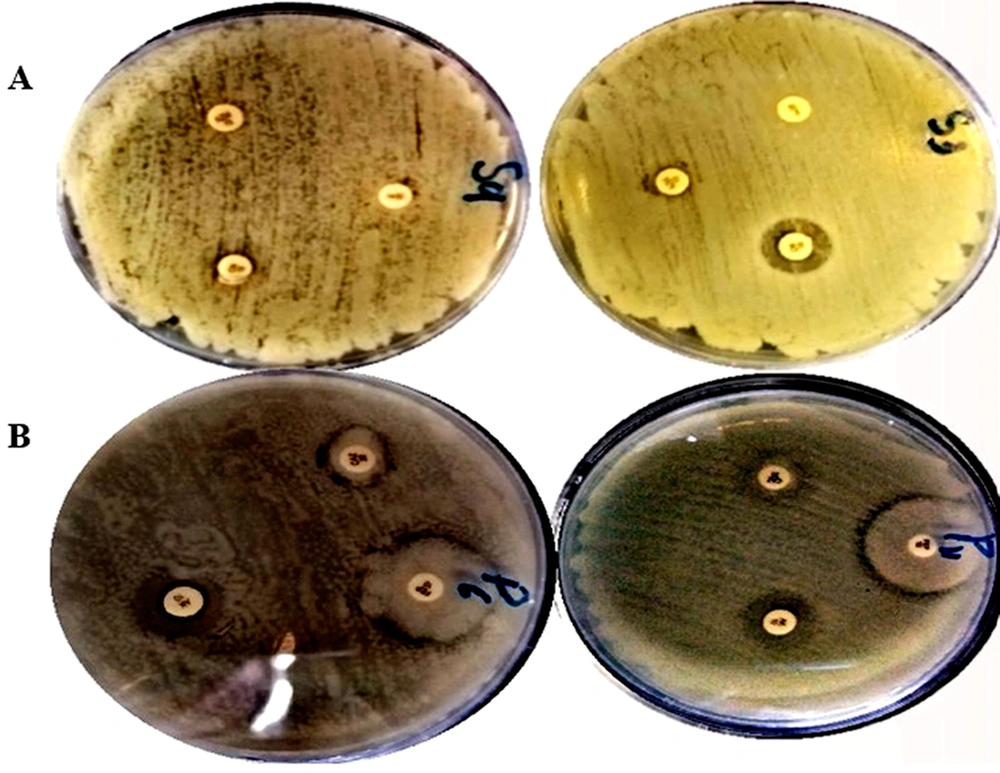
Figure 2.
Representative disc diffusion plates illustrating the high frequency of multidrug-resistant phenotypes among Staphylococcus aureus and Pseudomonas aeruginosa clinical isolates, with minimal or absent inhibition zones around most tested antibiotics. A, S. aureus MDR isolates displaying resistance to multiple antibiotic agents, indicated by absent or minimal inhibition zones around test discs. B, P. aeruginosa MDR isolates showing characteristic resistance patterns with restricted zones of inhibition. Visible zones of inhibition around discs indicate susceptibility; absence of clear zones indicates antimicrobial resistance.
3.4. Minimum Inhibitory Concentration of Citrus reticulata Essential Oil Against Multidrug-Resistant Pseudomonas aeruginosa Isolates
Using the agar dilution method in accordance with CLSI guidelines, the antibacterial efficacy of Citrus reticulata essential oil was evaluated against five highly multidrug-resistant isolates of P. aeruginosa (isolates 2, 3, 5, 6, and 11). The investigation revealed a clear dose-dependent inhibitory effect, establishing a uniform MIC of 40,000 ppm across all tested strains, which effectively neutralized complex resistance mechanisms such as efflux pumps and beta-lactamase production (Table 3 and Figure 3). Although subinhibitory concentrations of 20,000 ppm and 10,000 ppm resulted in graded growth suppression, complete bacteriostatic and bactericidal activity was achieved only at the 40,000 ppm threshold, suggesting that the essential oil is a potent antimicrobial agent against clinically problematic gram-negative pathogens.
Table 3.
Minimum Inhibitory Concentration of Citrus Reticulata Mandarin Essential Oil Against Multidrug-Resistant Pseudomonas aeruginosa Isolates, Expressed as Growth (+) or Complete Inhibition (-) at Each Concentration (ppm) a
| Treatment and Concentration (ppm) | Isolate 2 | Isolate 3 | Isolate 5 | Isolate 6 | Isolate 11 |
|---|---|---|---|---|---|
| Mandarin | |||||
| 40000 | - | - | - | - | - |
| 20000 | - | - | - | - | - |
| 10000 | + | + | + | + | + |
| Control | |||||
| 40000 | + | + | + | + | + |
| 20000 | + | + | + | + | + |
| 10000 | + | + | + | + | + |
a + indicates visible bacterial growth; - indicates complete inhibition (no growth).
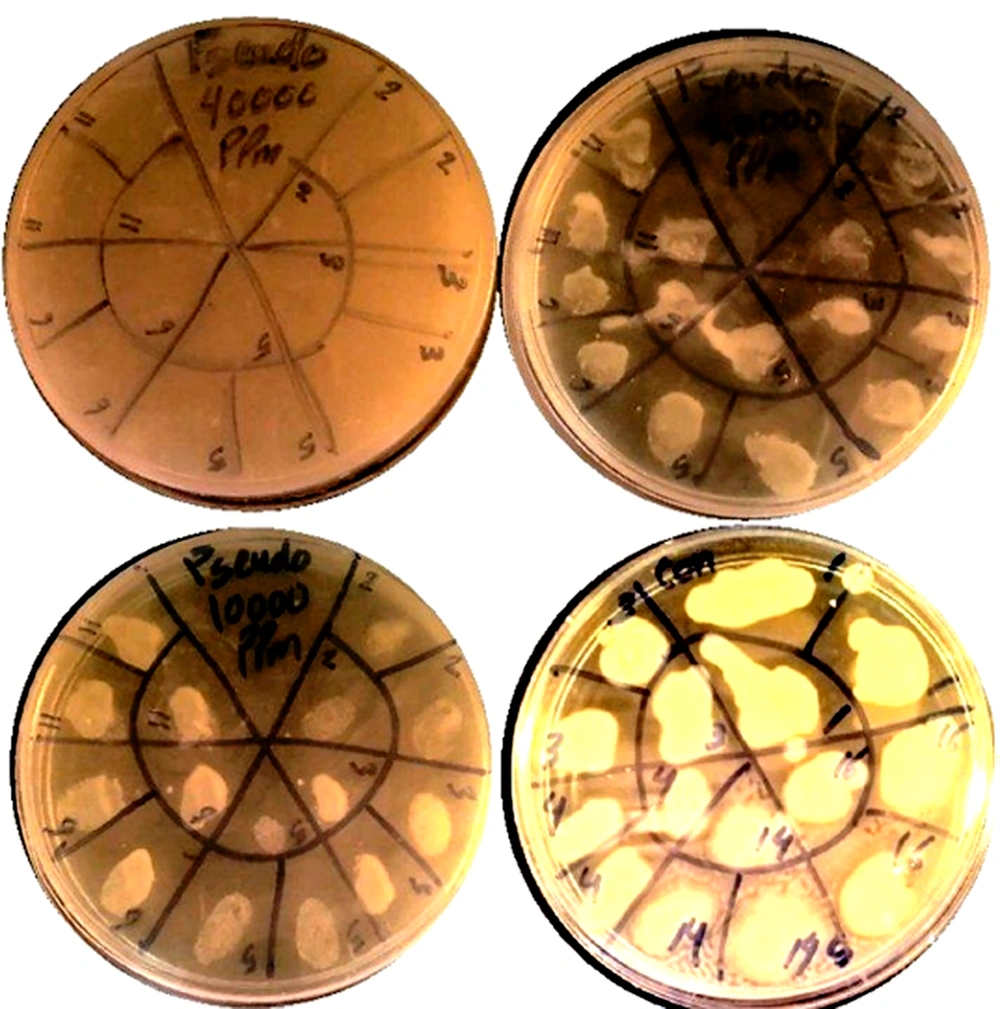
Figure 3.
Agar dilution plates showing that Citrus reticulata mandarin essential oil completely inhibited growth of multidrug-resistant Pseudomonas aeruginosa isolates at 40,000 ppm, with partial growth suppression at lower concentrations.
3.5. Minimum Inhibitory Concentration of Citrus reticulata Essential Oil Against Multidrug-Resistant Staphylococcus aureus Isolates
The evaluation of Citrus reticulata essential oil against six multidrug-resistant S. aureus isolates (1, 4, 8, 14, and 16) using agar dilution revealed a uniform MIC of 40,000 ppm, mirroring the efficacy previously observed against P. aeruginosa. This consistency in MIC across both gram-positive and gram-negative species suggests that the oil’s primary antimicrobial mechanism involves fundamental disruption of lipid bilayer integrity rather than targeting specific cell envelope components, such as peptidoglycan or lipopolysaccharides (Table 4 and Figure 4). Furthermore, the oil demonstrated a clear dose-response relationship, with complete growth inhibition achieved at 40,000 ppm and incremental suppression at subinhibitory concentrations of 20,000 ppm and 10,000 ppm. Given its ability to bypass established resistance to gentamicin, erythromycin, and azithromycin, these findings highlight the therapeutic potential of this essential oil as a robust candidate for antimicrobial stewardship in cases in which conventional antibiotic efficacy is compromised.
Table 4.
Minimum Inhibitory Concentration of Citrus Reticulata Mandarin Essential Oil Against Multidrug-Resistant Staphylococcus aureus Isolates, Expressed as Growth (+) or Complete Inhibition (-) at Each Concentration (ppm) a
| Treatment and Concentration (ppm) | Isolate 1 | Isolate 4 | Isolate 8 | Isolate 14 | Isolate 16 |
|---|---|---|---|---|---|
| Mandarin oil | |||||
| 40000 | - | - | - | - | - |
| 20000 | + | + | + | + | + |
| 10000 | + | + | + | + | + |
| Control | |||||
| 40000 | + | + | + | + | + |
| 20000 | + | + | + | + | + |
| 10000 | + | + | + | + | + |
a + indicates visible bacterial growth; - indicates complete inhibition (no growth).
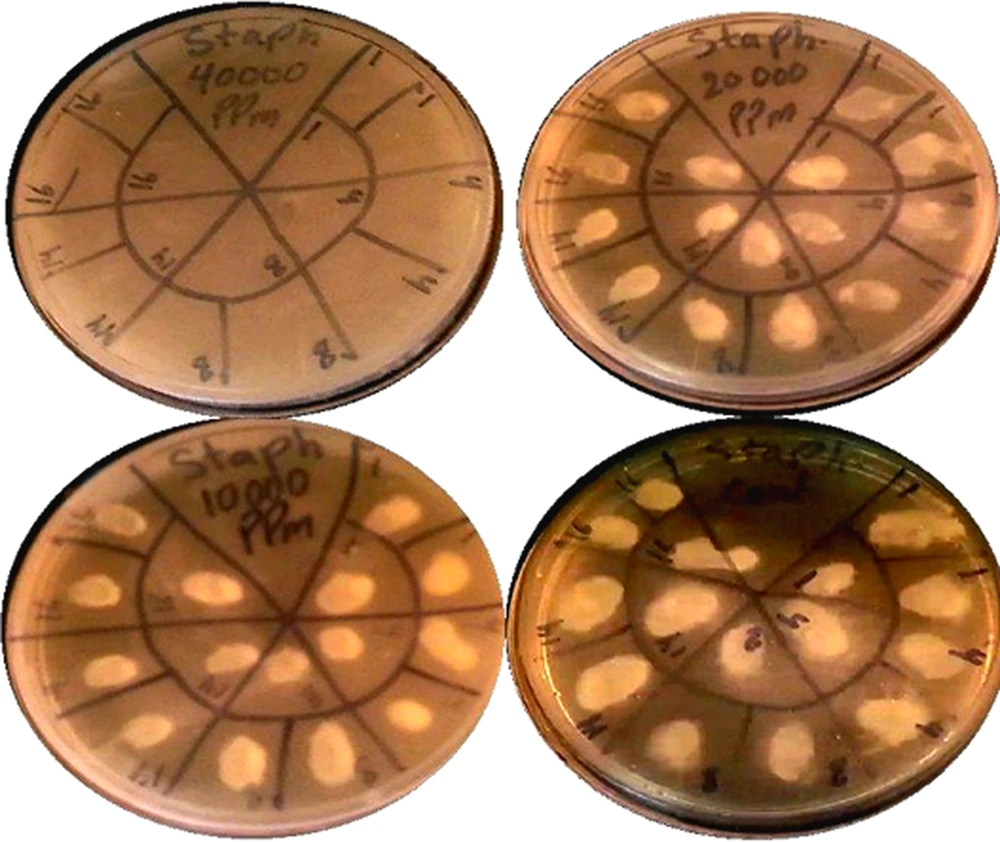
Figure 4.
Agar dilution plates demonstrating complete growth inhibition of multidrug-resistant Staphylococcus aureus isolates by Citrus reticulata mandarin essential oil at 40,000 ppm, with dose-dependent reduction of growth at lower concentrations.
3.6. Antioxidant Activity of Citrus Reticulata Essential Oil as Determined by DPPH Radical Scavenging Assay
The antioxidant capacity of Citrus reticulata essential oil was quantitatively assessed using the DPPH radical scavenging assay. As depicted in Figure 5 and quantified in Table 5, the results showed that the essential oil exhibited significantly higher radical scavenging activity than ascorbic acid, with maximum inhibition at 100% oil concentration and an activity of 60.5% ± 2.1% versus 54.1% ± 3.5% for ascorbic acid. This superior efficacy is attributed to its terpenoid composition, mainly limonene, along with other compounds such as gamma-terpinene, linalool, and alpha-terpineol, which stabilize and neutralize free radicals. The mechanisms underlying this antioxidant activity include direct scavenging of free radicals, detoxification of reactive oxygen species, and upregulation of antioxidant enzymes. In addition, these phytochemicals contribute to mitigating oxidative stress and preventing damage to cellular macromolecules, thereby influencing inflammatory responses linked to bacterial infections and tissue injury.
Table 5.
Radical Scavenging Activity (%) of Citrus Reticulata Mandarin Essential Oil Compared with Ascorbic Acid and DMSO (1%) in the DPPH Assay at Different Concentrations (%) a
| Concentration (%) | Mandarin oil | Ascorbic acid | DMSO (1%) |
|---|---|---|---|
| 100 | 60.05 ± 2.10 | 54.08 ± 3.50 | 1.05 |
| 75 | 48.12 ± 3.21 | 38.77 ± 1.40 | 1.05 |
| 50 | 38.21 ± 1.76 | 31.12 ± 2.80 | 1.05 |
| 25 | 30.15 ± 2.12 | 20.91 ± 3.10 | 1.05 |
a Values are expressed as mean ± SD.
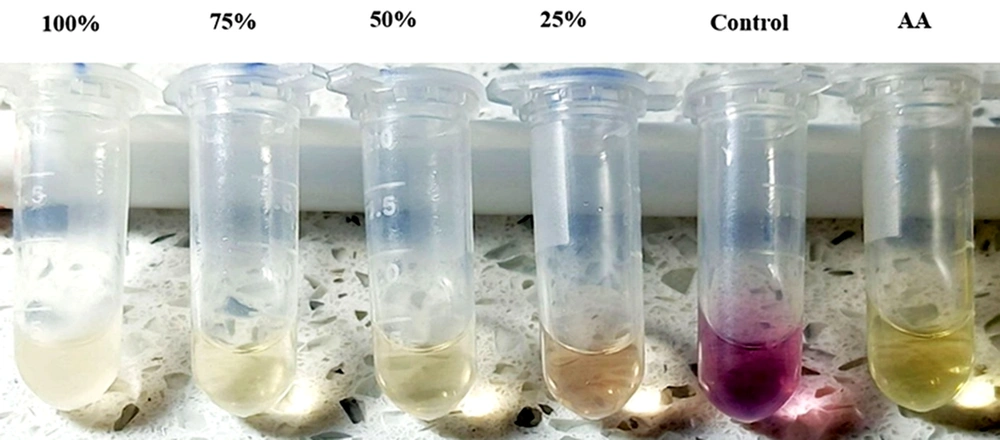
Figure 5.
Dose-dependent increase in DPPH radical scavenging activity of Citrus reticulata mandarin essential oil compared with ascorbic acid. Data are presented as mean ± SD (n = 3).
4. Discussion
This study investigated the essential oil from Citrus reticulata peel and identified a phytochemical profile consistent with that of mandarin and other citrus types, dominated by monoterpene hydrocarbons, particularly D-limonene. The limonene content of citrus oils varies between 51% and 85%, with notable secondary components such as gamma-terpinene, beta-myrcene, and beta-pinene. This high limonene content supports the taxonomic validity and quality of the oil, as reported in previous studies. The prominent monoterpenes, especially limonene and gamma-terpinene, suggest important biological properties, including antibacterial, antifungal, antioxidant, and anti-inflammatory effects (26).
Limonene-dominant citrus oils exhibit substantial free-radical scavenging and antibacterial activities, with their effectiveness attributed to limonene-mediated disruption of bacterial cell membranes. These effects encompass both gram-positive and gram-negative bacteria (26, 27). This study also identified trace oxygenated monoterpenes, such as linalool and terpinen-4-ol, which may enhance bioactivity despite their low abundance (28). Previous findings have linked limonene-rich oils to antifungal activity against Penicillium species and larvicidal effects against Aedes albopictus, underscoring the biological relevance of limonene (29). In addition, minor sesquiterpenes, such as beta-elemene and caryophyllene, may confer anti-inflammatory benefits. Overall, these findings emphasize the chemical profile of mandarin peel oil, indicating its potential as a source of standardized, bioactive, limonene-rich essential oil and warranting further pharmacological investigation (30).
Comparative analyses of citrus oils indicate that limonene-dominant fractions have significant free-radical scavenging and antibacterial activities, particularly against gram-positive and gram-negative bacteria, through membrane damage. Antimicrobial resistance is a critical global health issue, with bacterial AMR causing approximately 1.27 million deaths annually (31). The World Health Organization emphasizes the need for new therapeutic strategies. This study focused on multidrug-resistant strains of P. aeruginosa and S. aureus, highlighting high resistance rates and the multifactorial nature of their resistance mechanisms (32).
The Citrus reticulata essential oil, primarily composed of D-limonene, exhibited an MIC of 40,000 ppm against these bacterial strains, underscoring the challenges associated with managing resistant infections (33). The antibacterial effect is not solely attributable to limonene; rather, it likely arises from synergistic interactions among multiple phytochemicals. Furthermore, the antioxidant properties of the essential oil may enhance its medicinal potential by reducing oxidative stress, potentially supporting wound healing and minimizing tissue damage (34).
Investigation of synergy between essential oils, specifically that of Citrus reticulata, and conventional antibiotics suggests that these oils may enhance antibiotic efficacy against resistant bacteria, potentially reducing required dosages and side effects (35). The study indicates that Citrus reticulata essential oil has a high D-limonene concentration (88.45%), contributing to antibacterial activity with an MIC of 40,000 ppm against multidrug-resistant S. aureus and P. aeruginosa. It also demonstrates notable antioxidant activity (60% radical scavenging) compared with ascorbic acid (54.08%) (36). These findings support further research into the clinical applications of essential oils in combating AMR and highlight the importance of integrating traditional phytomedicine with modern antimicrobial strategies (37).
4.1. Study Limitations
The observed MIC of 40,000 ppm (4%) for this potential therapeutic agent is notably high, presenting challenges related to solubility, stability, and toxicity that may limit clinical applicability. Future research should investigate combinations with conventional antibiotics or nanoformulations to improve efficacy at lower concentrations. The study limitations include reliance on in vitro results, necessitating in vivo investigations to confirm efficacy, safety, and bioavailability. In addition, the research was limited to specific clinical isolates and did not assess the oil’s effects on a broader range of resistant strains. The findings may also not account for variations in essential oil composition due to season, cultivar, or geography, highlighting the need for further studies aimed at optimizing formulations for therapeutic use.
4.2. Conclusion
This study assessed the phytochemical content and antibacterial activity of Citrus reticulata (mandarin) peel essential oil against multidrug-resistant bacteria, specifically S. aureus and P. aeruginosa, and evaluated its antioxidant properties. The essential oil, which predominantly contains D-limonene (88.45%), shows potential as a natural antibacterial agent and therapeutic alternative as resistance to conventional antibiotics increases. Its antibacterial efficacy against all tested isolates, with an MIC of 40,000 ppm for both bacterial strains, suggests that it disrupts microbial membranes. Moreover, its antioxidant capacity surpasses that of ascorbic acid, which is attributed to its terpenoid content, particularly limonene. The multitarget antibacterial mechanisms of mandarin essential oil may reduce the risk of rapid resistance development. As it is generally recognized as safe, it may have applications in culinary and cosmetic fields, warranting further research into its synergistic effects with traditional antibiotics and its clinical efficacy against resistant infections.