
1. Background
Obesity is a complex, multifactorial condition characterized by excessive adipose tissue accumulation and is associated with increased risks of cardiovascular disease, type 2 diabetes, and decreased physical function, particularly among women (1). The pathophysiological mechanisms underlying obesity involve low-grade chronic inflammation, mitochondrial dysfunction, insulin resistance, and altered lipid metabolism. These alterations not only disrupt metabolic homeostasis but also impair exercise performance and overall quality of life (2).
Structured physical activity, such as spinning—a high-intensity form of indoor cycling set to music—has emerged as an accessible and efficient intervention for improving cardiometabolic health. Indoor cycling, commonly known as spinning, has gained widespread recognition as a high-intensity, low-impact aerobic exercise modality capable of improving cardiometabolic profiles, body composition, and physical performance in various populations (3). A 12-week randomized intervention involving women aged 40 - 60 with obesity (3 sessions/week, 55-minute sessions) demonstrated that regular indoor cycling significantly improved body composition and aerobic capacity and reduced body weight, fat mass, and the inflammatory marker CRP. These benefits were more pronounced in women with obesity than in their normal-weight counterparts, and lipid metabolism improved notably (e.g., increased HDL-C, reduced total cholesterol) (4). In a quasi-experimental study, sedentary overweight women experienced dose-response improvements across 24 to 36 indoor cycling sessions, including reductions in body weight (2.6 - 3.2%) and fat mass (4.3 - 5%) and increases in lean mass. Cardiorespiratory fitness also improved, with higher VO2 uptake and power output and a lower resting heart rate (5). Complementing these primary studies, a systematic review of indoor cycling modalities highlighted their capacity to enhance aerobic capacity, lower blood pressure, improve lipid profiles, and favorably modify body composition—suggesting that indoor cycling alone, or in combination with diet, is effective in reducing cardiometabolic risk (6).
Caffeine is one of the most widely consumed ergogenic aids and exerts multiple metabolic and performance-enhancing effects through both central and peripheral mechanisms (7). By acting as a non-selective adenosine receptor antagonist, it increases central nervous system excitation, catecholamine release, and intracellular cAMP, which in turn stimulates hormone-sensitive lipase and promotes lipolysis and fatty acid oxidation during exercise (8).
Despite the well-documented effects of exercise and caffeine individually, their combined impact—particularly within a structured program such as spinning—has received limited attention, especially in overweight and obese women. The synergistic potential of combining spinning and caffeine could involve amplified AMPK-PGC-1α signaling, enhanced lipolytic activity, increased mitochondrial content, and improved functional fitness.
2. Objectives
Therefore, this study aimed to compare the effects of eight weeks of spinning training and the actual and placebo effects of caffeine on lipid profile, body composition, and functional fitness markers in overweight and obese women.
3. Methods
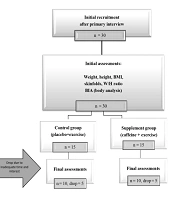
This study was designed as an 8-week randomized, placebo-controlled trial. The study was approved by the ethics committee (IR.IAU.SHAHROOD.REC.1401.072) and registered under the clinical trial registration code IRCT20220906055902N1. All participants provided written informed consent before enrollment, in accordance with the Declaration of Helsinki.
A total of 39 sedentary women aged 25 - 45 years, with BMI ranging from 25 to 35 kg/m2, were recruited through local advertisements and screened using health questionnaires and fasting laboratory tests. Exclusion criteria included regular physical activity (defined as < 150 min/week of structured physical activity for at least 6 months prior), cardiovascular or metabolic disorders, smoking, pregnancy, and current use of medications affecting lipid metabolism or body composition. Participants were instructed to maintain their habitual activity levels and dietary patterns throughout the study. Habitual caffeine consumption was screened via health questionnaires, and participants reporting caffeine sensitivity were excluded. However, we acknowledge that a quantitative assessment of baseline caffeine intake was not performed, which may have influenced individual responses to supplementation. This is a limitation of our study.
Participants were randomly allocated to one of four groups: 1) control, 2) caffeine, 3) spinning + placebo, and 4) spinning + caffeine, using the lottery method (a form of simple randomization). Each participant’s name was assigned a unique code written on an identical slip of paper, and slips were drawn from a sealed, mixed container by an independent researcher, who allocated participants sequentially according to the draw order.
This study was not double-blinded due to the nature of the exercise intervention. Participants receiving caffeine capsules or placebo were blinded to supplement allocation. The outcome assessor who processed the blood samples was unaware of group assignment. Data analysts were blinded during statistical analysis. The spinning instructor was necessarily aware of group assignment to monitor the exercise sessions. We acknowledge that the lack of complete blinding is a limitation and may have introduced performance and detection bias, particularly for functional tests. However, we used standardized protocols, objective measurement instruments, and blinded data analysis to reduce these potential biases.
Participants in both spinning groups (spinning + placebo and spinning + caffeine) completed an 8-week supervised indoor cycling program, following the progression outlined in Table 1. Training sessions were conducted three times per week under the guidance of a certified instructor. Each session began with a 10-minute warm-up at 30 - 40% of heart rate reserve (HRR), followed by the main workout, and ended with a 10-minute cool-down at 30 - 40% HRR combined with on-bike stretching. Training load was progressively increased every two weeks by adjusting cadence (revolutions per minute, RPM), resistance, session duration, and target intensity (%HRR), as shown in Table 1. Training intensity was monitored using a Beurer PM62 heart rate monitor (Germany). Participants were required to spend at least 80% of the main workout within the target intensity zone. During the main workout, participants cycled through various body positions according to a structured sequence that changed every two weeks to enhance muscular engagement and maintain variety. Positions were numbered 1 - 12 and defined by hand placement, posture (seated vs. standing), trunk inclination, and inclusion of rhythmic or resistance-based upper-body movements. The structured alternation between positions aimed to simulate real-world cycling terrain, increase cardiovascular load, and recruit multiple muscle groups (Table 2) (9). Participants received standardized instruction and supervised practice sessions before the intervention. Technical proficiency for complex positions was assessed by certified instructors, and participants were required to demonstrate safe execution before progression.
Table 1.
Spinning Training Progression
| Weeks | Cadence (RPM) | Resistance Level | Duration (minutes) | Target Intensity (HRR); (%) |
|---|---|---|---|---|
| 1 - 2 | 50 - 60 | 1 | 30 | 40 - 60 |
| 3 - 4 | 60 - 70 | 2 | 35 | 45 - 65 |
| 5 - 6 | 70 - 80 | 2 | 35 | 50 - 75 |
| 7 - 8 | 80 - 90 | 3 | 40 | 50 - 85 |
Table 2.
Cycling Positions and Descriptions
| Positions | Description |
|---|---|
| Position 1 | Seated, standard pedaling position |
| Position 2 | Seated, leaning slightly forward with forearms resting on parallel handlebars |
| Position 3 | Seated, arms extended to the end of the handlebars. |
| Position 4 | Leaning forward, forearms on parallel handlebars in climbing position (standing off the saddle and leaning forward) |
| Position 5 | Climbing position, hands on parallel handlebars, elbows bent |
| Position 6 | Climbing position with rhythmic side-to-side body lean |
| Position 7 | Seated, fully bent forward, hands close together on square handlebars |
| Position 8 | Standing, hands resting on parallel handlebars |
| Position 9 | Seated, leaning to the right, hands alternately on right parallel handlebars, center square handlebars, and left parallel handlebars |
| Position 10 | Standing with rhythmic single-arm punching sets of eight (opposite hand supporting on parallel handlebars); between arm changes, five pedal strokes with hands supporting for balance |
| Position 11 | Same as position 5 with push-up movements (every 6 push-ups followed by five pedal strokes with hands supporting) |
| Position 12 | Standing, jumping between front and rear handlebars, five pedal strokes forward and five backward (angle change) |
Caffeine supplementation (purchased from Merck, Germany; registration no. 0250/02584/1) was administered in capsule form at a dose of 5 mg/kg of body weight, given 60 minutes before each training session in the SC group and at the same time for the C group (7). This timing aligns with the ergogenic window for acute caffeine effects, as peak plasma concentrations occur 30 - 60 minutes after ingestion. The placebo capsules contained maltodextrin and were identical in appearance and taste. Supplement adherence was monitored via pill count and weekly verbal confirmation (10). We distinguished between the actual physiological effects of caffeine ingestion and placebo effects arising from perceived caffeine ingestion. We acknowledge that this design primarily captures acute caffeine ergogenic effects combined with chronic training adaptation, rather than chronic caffeine supplementation effects independently.
Anthropometric measurements were conducted at baseline and after the intervention, including body weight, height, BMI, waist circumference, and hip circumference. Body fat percentage was assessed using the three-site skinfold caliper method (triceps, supra-iliac, and thigh for women in millimeters) with a skinfold caliper (Model SH5020, Made in Korea). To ensure measurement reliability, all skinfold measurements were performed by the same trained assessor throughout the study. The percentage of body fat was calculated using the Jackson–Pollock three-site formula (11):
For women:
Σ3SF = sum of three-site skinfold
Fasting blood samples were collected between 7:00 and 9:00 a.m., 48 hours before the first and after the final training sessions, to minimize acute exercise effects. Samples were obtained from a peripheral vein and processed within 2 hours. Serum samples were stored at −80°C. Lipid profile measurements, including total cholesterol (12), triglycerides (TG), high-density lipoprotein cholesterol (HDL-C), and low-density lipoprotein cholesterol (LDL-C), were analyzed using enzymatic colorimetric kits purchased from Pars Azmoon (Iran) and measured with an automated analyzer (Roche Cobas c311; Raazi Laboratory) (13).
Functional fitness tests were performed using standardized protocols. Investigators were trained and calibrated. Blinding was not feasible; however, measurement bias was minimized through consistent procedures. Cardiorespiratory fitness was assessed using the Bruce treadmill protocol. Muscular strength was measured using one-repetition maximum (1RM) tests for the chest press and leg press. Muscular endurance was evaluated using upper- and lower-body endurance tests (repetition until exhaustion with 60% 1RM). The percentage change was calculated for all variables using the following formula, and between-group comparisons were made on this basis: (Post-test - Pre-test) × 100/Pre-test (14).
Data were tested for normality using the Shapiro-Wilk test. Repeated-measures analysis of variance (ANOVA) was used to assess within-group differences, and one-way analysis of variance (ANOVA) was used to assess between-group differences. When significant main or interaction effects were observed, Tukey's post hoc analysis was performed for normal data, and Dunn's post hoc analysis was performed for non-normal data. All statistical analyses were performed using GraphPad Prism software (version 10; GraphPad Software, San Diego, CA, USA), SPSS (version 24), and R (version 4.4.0). Statistical significance was set at P < 0.05.
4. Results
Out of the 39 participants initially enrolled, all completed the intervention and post-testing without adverse events. Baseline characteristics were comparable across all groups (P > 0.05), indicating successful randomization. Table 3 provides baseline and post-intervention values and the percentage change for each variable across groups. The table also indicates within-group differences and their significance levels.
Table 3.
Descriptive Statistics of Research Variables (Pre-Test, Post-Test, and % Change) a
| Variables | Control | Caffeine | Spinning+ Placebo | Spinning+ Caffeine | ||||||||
|---|---|---|---|---|---|---|---|---|---|---|---|---|
| Pre-test | Post-test | % Change | Pre-test | Post-test | % Change | Pre-test | Post-test | % Change | Pre-test | Post-test | % Change | |
| TG (mg/dL) | 115.0 ± 27 | 115.8 ± 29.4 | 0.4 ± 11.6 | 140.2 ± 34 | 137.3 ± 36 | -2.3 ± 4.6 | 110.7 ± 42.9 | 94.5 ± 35.2 | -10.5 ± 25.1 | 106.2 ± 56 | 99.9 ± 52.2 | -5.9 ± 14.1 |
| Cholesterol (mg/dL) | 157.0 ± 27.6 | 154.2 ± 21.2 | -0.2 ± 15.3 | 165.7 ± 51 | 168.4 ± 49 | 2.1 ± 4.1 | 167 ± 25.8 | 154.3 ± 15.4 a (P = 0.043) | -6.8 ± 6.5 | 169.6 ± 28.5 | 164.4 ± 29.5 | -3.1 ± 5.3 |
| LDL (mg/dL) | 101.4 ± 26.3 | 102.9 ± 29.7 | 1.8 ± 16.6 | 110.5 ± 20.3 | 109.8 ± 18 | -0.3 ± 4.6 | 95.7 ± 28.6 | 87.6 ± 21.8 | -7.1 ± 8.1 | 103.7 ± 24 | 100.1 ± 29.3 | -4.0 ± 12.3 |
| HDL (mg/dL) | 49.2 ± 3.7 | 48.1 ± 3.2 | -2.1 ± 3.2 | 50.6 ± 12.7 | 52.3 ± 12.1 | 3.7 ± 2.3 | 49.6 ± 6.4 | 50.6 ± 5.2 | 2.7 ± 9.3 | 47.1 ± 6.2 | 49.5 ± 8.1 | 5.0 ± 9.7 |
| Body Mass Index (kg/m2) | 28.3 ± 3.5 | 28.6 ± 3.4 | 0.9 ± 1.5 | 27.4 ± 2.4 | 27.3 ± 2.4 | -0.3 ± 1.2 | 28.4 ± 4.0 | 27.8 ± 3.7 a (P < 0.001) | -1.9 ± 1.9 | 27.4 ± 2.8 | 26.5 ± 2.5 a (P < 0.001) | -3.3 ± 1.0 |
| Weight (kg) | 72.6 ± 10.8 | 73.3 ± 10.7 | 0.9 ± 1.5 | 74.7 ± 7.2 | 74.5 ± 7.4 | -0.3 ± 1.2 | 78.7 ± 13.2 | 77.1 ± 12.3 a (P < 0.001) | -1.9 ± 1.9 | 75.2 ± 8.9 | 72.7 ± 8.4 a (P < 0.001) | -3.3 ± 1.0 |
| Waist Circumference (cm) | 89.9 ± 6.6 | 90.6 ± 6.3 | 0.8 ± 1.5 | 80.5 ± 7.4 | 80.4 ± 8.1 | -0.2 ± 1.4 | 88.8 ± 12.3 | 84.3 ± 11.4 a (P < 0.001) | -5 ± 1.9 | 91.0 ± 8.8 a | 85.4 ± 8.6 a (P < 0.001) | -6.1 ± 2.8 |
| WHR (Waist/Hip Ratio) | 0.9 ± 0.1 | 0.9 ± 0.1 | 0.6 ± 2 | 0.7 ± 0.1 | 0.7 ± 0.1 | 0.1 ± 1.5 | 0.81 ± 0.1 | 0.77 ± 0.1 a (P < 0.001) | -4.8 ± 2 | 0.8 ± 0.1 | 0.8 ± 0.1 a (P < 0.001) | -5.2 ± 2.8 |
| Abdominal Circumference (cm) | 92.7 ± 9.3 | 92.9 ± 9.1 | 0.3 ± 2.1 | 99.2 ± 9.8 | 98.8 ± 10.0 | -0.4 ± 1.1 | 97.5 ± 13.9 | 93.8 ± 12.1 a (P < 0.001) | -3.6 ± 2.5 | 99.6 ± 7.8 | 95.0 ± 8.6 a (P < 0.001) | -4.8 ± 3.1 |
| Body Fat Percentage (%) | 29.5 ± 7.1 | 29.5 ± 6.9 | 0.1 ± 3.5 | 28.8 ± 4.7 | 28.9 ± 4.6 | 0.4 ± 2.4 | 31.6 ± 7.1 | 25.9 ± 5.4 a (P < 0.001) | -17.1 ± 10.5 | 31.6 ± 6.9 | 24.5 ± 6.2 a (P < 0.001) | -22.5 ± 10.0 |
| Vertical Jump (cm) | 10.9 ± 3.7 | 11.6 ± 4.0 | 8.7 ± 16.3 | 11.2 ± 2.3 | 12.7 ± 2.5 | 13.8 ± 5.3 | 17.2 ± 6.9 | 21 ± 6 a (P < 0.001) | 29 ± 23.3 | 17.6 ± 5.7 | 21.3 ± 6.4 a (P < 0.001) | 22.5 ± 9.7 |
| Balance (seconds) | 6.1 ± 4.9 | 5.7 ± 4.4 | 8.4 ± 13.2 | 6.16 ± 2.0 | 7.1 ± 3.1 | 11.5 ± 22.2 | 6.2 ± 2.0 | 8.3 ± 2.6 | 35.9 ± 18.7 | 6.8 ± 8.9 | 13.4 ± 13.6 a (P < 0.001) | 157.4 ± 191.3 |
| VO2 max (mL/kg/min) | 31.3 ± 4.3 | 31.9 ± 3.7 | 2.1 ± 6.1 | 31.7 ± 1.8 | 34.4 ± 2.5 a (P < 0.001) | 8.4 ± 4.2 | 35.2 ± 3.7 | 38.7 ± 3 a (P < 0.001) | 10.3 ± 5.9 | 35.6 ± 3.9 | 39.7 ± 4.5 a (P < 0.001) | 11.6 ± 3.5 |
| Upper Body Strength (kg) | 25.9 ± 16.1 | 25.4 ± 15.2 | 1 ± 3.9 | 24.9 ± 7.7 | 26.9 ± 7.7 a (P < 0.001) | 8.6 ± 2.2 | 23.8 ± 3.9 | 25.1 ± 41 | 5.5 ± 3.2 | 23.6 ± 9.5 | 26.7 ± 8.9 a (P < 0.001) | 16.9 ± 17.3 |
| Lower Body Strength (kg) | 44.7 ± 20.8 | 44.8 ± 20.7 | 0.4 ± 2.3 | 55.2 ± 13.4 | 56.4 ± 13.2 | 2.4 ± 1.4 | 58.8 ± 18.4 | 63.4 ± 19.8 a (P < 0.001) | 7.9 ± 4.5 | 70.0 ± 19.6 | 78.5 ± 22.4 a (P < 0.001) | 12.1 ± 7.6 |
| Upper Body Endurance (repetition) | 15.3 ± 5.3 | 15.4 ± 4.9 | 1.5 ± 6.4 | 15.1 ± 2.2 | 16.7 ± 2.4 a (P = 0.005) | 10.8 ± 4 | 16.3 ± 2.9 | 19.4 ± 3.1 a (P < 0.001) | 19.7 ± 9.7 | 16.3 ± 4.5 | 18.4 ± 4.8 a (P = 0.014) | 13.1 ± 7.4 |
| Lower Body Endurance (repetition) | 27.6 ± 11.4 | 27.7 ± 11.7 | 0.3 ± 3.5 | 23.6 ± 3.4 | 24.3 ± 3.0 | 3.2 ± 2.3 | 28.3 ± 12.7 | 34.2 ± 19.5 a (P < 0.001) | 18.5 ± 11.4 | 30.5 ± 6 | 35.4 ± 7.6 | 16.0 ± 10.0 |
a Values are expressed as mean ± SD. Significant difference with pre-test (within group) according to repeated measures analysis of variance test
4.1. Biochemical Profile
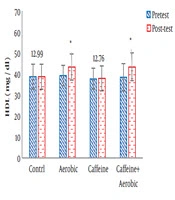
Figure 1 shows the percentage changes in plasma lipid variables after the interventions. Between-group differences in TG, HDL, and LDL responses were not statistically significant. Based on the graphical data, statistical comparisons showed a significant difference in total cholesterol between the caffeine and spinning groups (P = 0.0125), whereas no other between-group differences were statistically significant. Error bars indicate greater variability in the spinning and spinning + caffeine groups than in the control and caffeine groups.
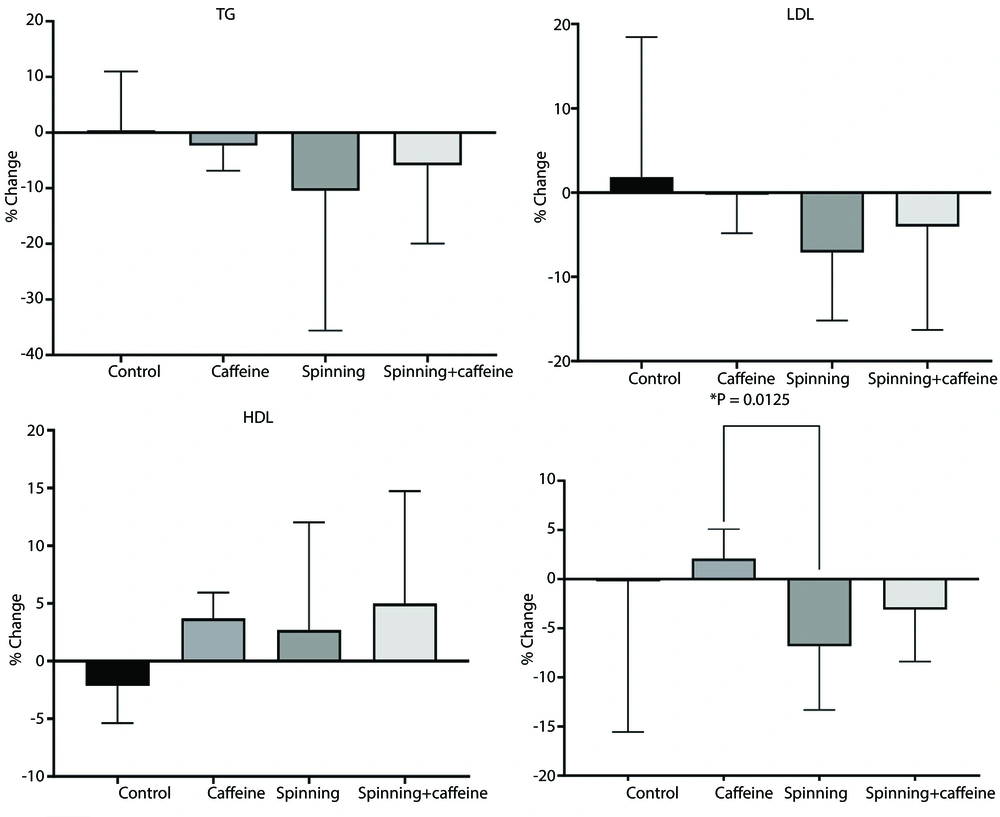
Figure 1.
Percent changes in TG, LDL-C, and HDL-C are shown for the control, caffeine, spinning, and spinning + caffeine groups. No significant group differences were observed for TG, LDL-C, or HDL-C. Total cholesterol decreased significantly in the Spinning group compared with the Caffeine group (P < 0.05), as indicated by a single asterisk in the figure.
4.2. Body Composition
Figure 2 presents percentage changes in anthropometric outcomes across groups. Body weight and BMI, which followed similar patterns, increased slightly in the control group, decreased modestly in the caffeine group, and decreased markedly in both the spinning and spinning + caffeine groups. All comparisons of the spinning and spinning + caffeine interventions versus the control were statistically significant (P < 0.001).
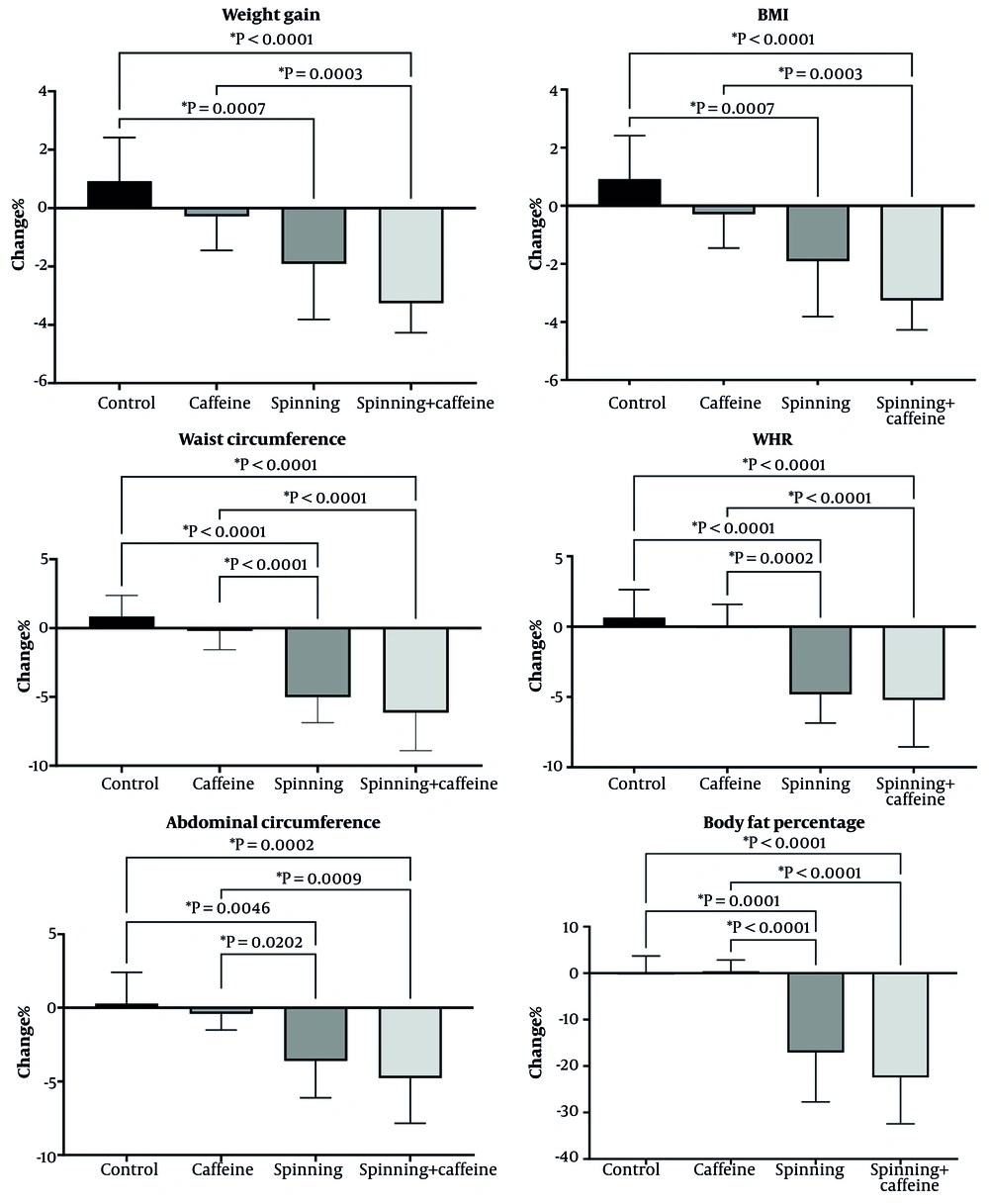
Figure 2.
Percentage changes in anthropometric parameters across the control, caffeine, spinning, and spinning + caffeine groups. The figure displays percent changes in weight gain, BMI, waist circumference, WHR, abdominal circumference, and body fat percentage following the intervention period. Statistical differences between groups are indicated by significance markers (*: P < 0.05).
For waist circumference and WHR, the spinning and spinning + caffeine groups showed significant reductions compared with the control and caffeine groups (P < 0.001).
Abdominal circumference followed the same pattern, with the largest reductions observed in the spinning and spinning + caffeine groups; both were significantly different from the control (respectively, P = 0.0046 and P < 0.001) and caffeine groups (respectively, P = 0.02 and P < 0.001).
Finally, body fat percentage showed the most pronounced anthropometric improvements, with large, highly significant reductions in both the spinning and spinning + caffeine groups (P < 0.001).
Overall, the spinning and spinning + caffeine interventions yielded the largest and most consistent reductions across all anthropometric variables.
4.3. Functional Fitness
Figure 3 summarizes the percentage changes in functional fitness parameters across intervention groups.
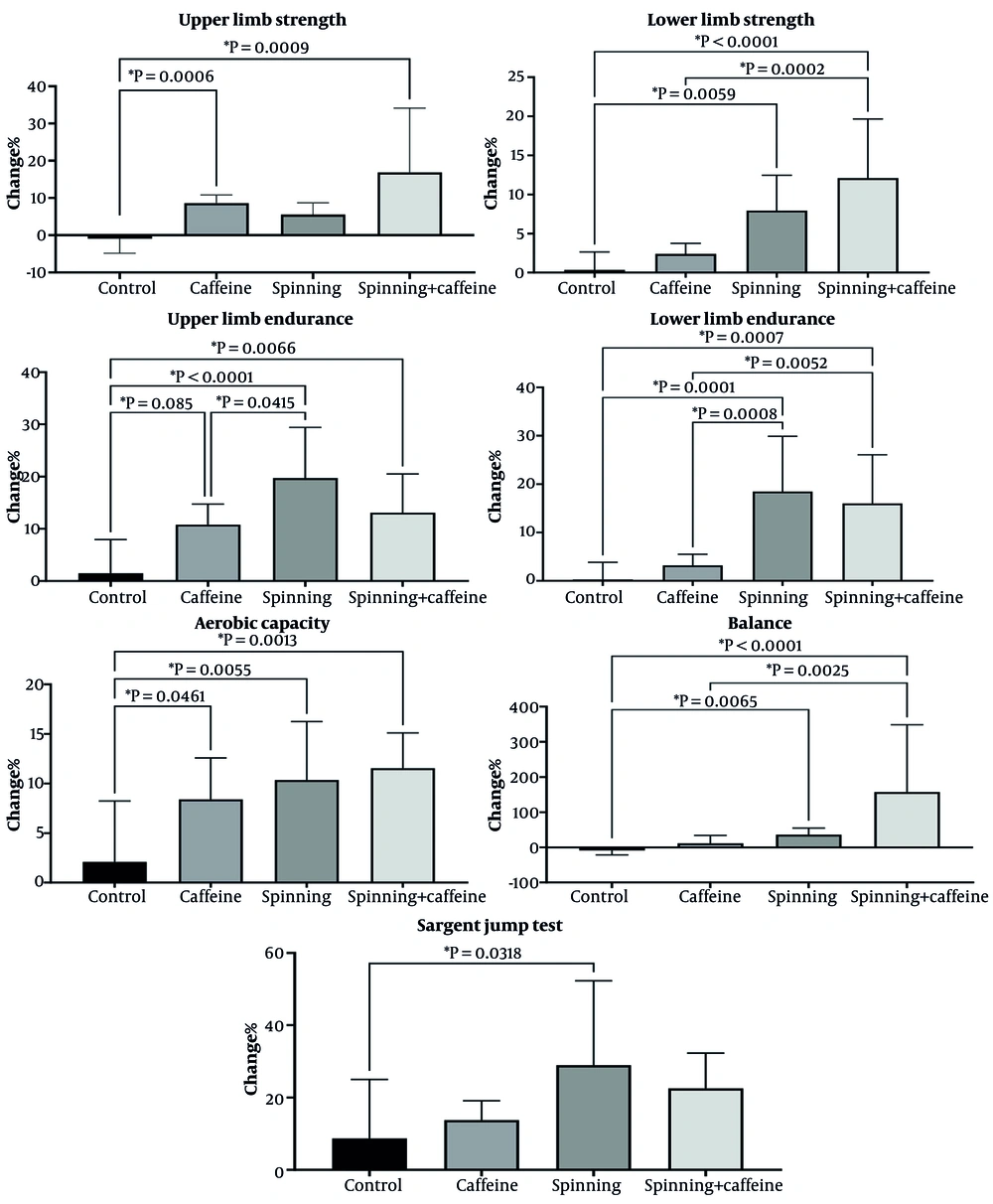
Figure 3.
Changes in upper-limb strength, lower-limb strength, upper-limb endurance, lower-limb endurance, aerobic capacity, balance, and Sargent jump performance across the four experimental groups (control, caffeine, spinning, and spinning + caffeine). Asterisks indicate significant differences between groups (*: P < 0.05).
Upper-limb strength showed significant differences between the caffeine and control groups and between the spinning + caffeine and control groups (P < 0.001).
Lower-limb strength followed a comparable pattern. Spinning induced a highly significant increase (P = 0.0059), and the spinning + caffeine condition produced an even greater enhancement relative to the control (P < 0.001) and caffeine alone (P < 0.001).
For upper-limb endurance, post hoc testing revealed significant differences for caffeine vs. control (P < 0.001), spinning vs. control (P = 0.0052), spinning + caffeine vs. control (P = 0.0385), and spinning vs. caffeine (P = 0.0415).
Both spinning and spinning + caffeine significantly increased lower-body endurance compared with the control and caffeine-only groups (P < 0.001).
For aerobic capacity, post hoc analysis indicated significant differences for caffeine vs. control (P = 0.0461), spinning vs. control (P = 0.0055), and spinning + caffeine vs. control (P = 0.0013).
Balance performance increased in the spinning group compared with the control group (P = 0.0065). Balance performance also increased significantly in the spinning + caffeine group compared with the control group (P < 0.001) and the caffeine group (P = 0.0025). The magnitude of change in the spinning + caffeine group was greater than that in the spinning group but was not statistically significant.
Vertical jump performance improved significantly only in the spinning group compared with the control group (P = 0.03).
Collectively, these findings indicate that caffeine supplementation and spinning exercise, particularly when combined, elicited significant improvements across multiple domains of physical performance.
5. Discussion
Although the present interventions elicited favorable but non-significant directional shifts in TG, LDL-C, and HDL-C, the most robust metabolic response was observed for total cholesterol. Spinning alone produced substantial and statistically significant reductions in total cholesterol compared with the caffeine group. These findings align with recent evidence indicating that structured aerobic exercise remains one of the most potent non-pharmacological strategies for improving global cardio-metabolic risk, even when short-term lipid changes are modest (15, 16). Previous studies support the lipid-modifying effects of indoor cycling. Twelve weeks of training (45 minutes, three times per week) reduced total cholesterol and, unlike the present findings, also decreased TG and increased HDL (17). Another study demonstrated that eight weeks of group indoor cycling (20 - 50 minutes, three sessions per week at 83 - 96% of maximum heart rate) significantly reduced total cholesterol and LDL levels. Moreover, a three-month indoor cycling program in women aged 40 - 60 improved total cholesterol and HDL only in the obese group, with no changes in TG (4).
Studies reporting significant HDL and TG changes typically employed higher exercise volumes (≥ 150 min/week) or longer durations (12 - 24 weeks), and some included dietary counseling as a co-intervention. Our study used a moderate-intensity, moderate-volume protocol (30 - 40 min, 3 times/week) without dietary control, which may have been insufficient. Additionally, differences in participants’ baseline lipid levels may affect responsiveness; populations with more severe dyslipidemia tend to show larger intervention effects. The lack of statistically significant differences among groups in individual lipid fractions is consistent with the current literature, which shows that short-duration interventions or modest weekly energy expenditure often fail to produce large changes in LDL-C or HDL-C (12, 18). HDL-C, in particular, is known to respond slowly and inconsistently to exercise unless accompanied by substantial weight loss or high weekly exercise volume (19).
The greater reduction in total cholesterol in the spinning group compared with the caffeine group is consistent with the established lipid-lowering effects of aerobic exercise. Potential mechanisms include increased lipoprotein lipase activity, enhanced AMPK-mediated fatty acid oxidation, and improved reverse cholesterol transport. However, these pathways were not directly assessed in the present study (20). As noted in the results, the error bars indicate greater variability in the spinning and spinning + caffeine groups than in the control and caffeine groups. This variability likely reflects individual differences in basal metabolic status, genetic variation in lipid metabolism, dietary patterns outside the intervention, and adherence to the exercise protocol.
The present findings demonstrate that spinning exercise, either alone or in combination with caffeine ingestion, elicited the most substantial improvements in anthropometric outcomes, including weight, BMI, waist circumference, WHR, abdominal circumference, and body fat percentage. These results align with a large body of evidence indicating that moderate-to-high-intensity aerobic exercise is among the most effective strategies for reducing adiposity and improving metabolic health (21, 22). Spinning, as a structured cycling-based modality, engages large muscle groups and induces substantial energy expenditure, contributing to reductions in fat mass and central adiposity—changes that were consistently observed in the current dataset.
The notable reductions in waist and abdominal circumference in the spinning and combined groups are clinically meaningful, given the strong link between visceral adiposity and cardio-metabolic risk. Consistent with the hypothesis that aerobic training preferentially reduces visceral fat even without substantial weight loss—through enhanced lipolysis, improved mitochondrial oxidative capacity, and increased post-exercise energy expenditure (23)—the robust decreases in body fat percentage observed in this study support this mechanistic framework. Furthermore, the spinning + caffeine condition did not substantially outperform spinning alone, suggesting that the exercise stimulus itself was the primary driver of improvement (24).
Limited studies on spinning or indoor cycling and body composition report that six weeks of spinning reduced body fat by approximately 6% (25). Another study showed decreases in BMI and body fat percentage after eight weeks of spinning (26). Sixteen weeks of indoor cycling improved BMI and waist circumference (27). Eight weeks of group indoor cycling (20 - 50 minutes, 3 days/week, 83 - 96% max HR) decreased body fat by ~13%, waist circumference, and waist-to-hip ratio but did not affect lean mass, hip circumference, or BMI (28). Six weeks of spinning in overweight and obese women resulted in weight improvements according to WHO standards (29).
The marked superiority of spinning over caffeine also reflects the central role of exercise-induced improvements in metabolic flexibility, insulin sensitivity, and skeletal-muscle oxidative efficiency—adaptations that are unlikely to be replicated by caffeine supplementation alone and that likely explain the observed differential outcomes (30). Consistent with systematic evidence showing that chronic caffeine supplementation does not substantially augment endurance-training adaptations (31), caffeine did not significantly potentiate the training response in this cohort. Although synergistic effects were initially hypothesized given caffeine’s acute ergogenic properties, the combined spinning + caffeine condition did not significantly outperform spinning alone for most outcomes, suggesting that the exercise stimulus itself was the primary driver of adaptation, whereas caffeine served as a modest adjunct with limited influence on chronic training adaptations.
The functional fitness outcomes of the present study indicate that spinning exercise elicited the most robust improvements across muscular strength, muscular endurance, aerobic capacity, balance, and explosive power. These findings are consistent with prior research demonstrating that rhythmic, cycling-based aerobic exercise imposes repeated submaximal loading on both upper- and lower-limb musculature, resulting in neuromuscular and cardiorespiratory adaptations that translate into performance gains (32, 33). In addition, six weeks of spinning increased VO2max, and 16 weeks of indoor cycling improved aerobic capacity, muscular strength, endurance, and balance. Eight weeks of group indoor cycling increased relative VO2max by ~11%. The significant increases observed in both upper- and lower-limb strength following spinning, as well as in the combined spinning + caffeine group, likely reflect improvements in motor-unit recruitment efficiency, increased mitochondrial density, and enhanced peripheral blood flow—mechanisms characteristic of endurance–strength hybrid adaptations (5, 34).
Lower-limb strength showed the greatest improvement, consistent with the biomechanical demands of spinning, which predominantly engage the hip extensors, knee extensors, and ankle plantar flexors through high-repetition, sustained force output. These repeated contractions can stimulate hypertrophic and neural adaptations even in non-resistance–trained individuals. The superior response to spinning compared with caffeine aligns with evidence showing that structured exercise, rather than stimulants, is the primary driver of neuromuscular enhancement (35, 36).
Muscular endurance outcomes further emphasize the efficiency of spinning as an intervention. The substantial improvements in upper- and lower-limb endurance following spinning are consistent with previous findings that continuous and interval-based cycling can markedly elevate oxidative enzyme activity, lactate clearance capacity, and fatigue resistance (37). Although caffeine elicited a small but significant improvement in upper-limb strength and endurance, this likely reflects caffeine’s well-documented ergogenic effects on central drive and perceived exertion rather than direct peripheral adaptations. However, caffeine did not enhance performance beyond spinning, consistent with meta-analytic evidence showing that caffeine rarely amplifies chronic training adaptations (38).
Aerobic capacity significantly improved across all active interventions (caffeine, spinning, and combined), likely attributable to increased cardiac output, enhanced skeletal muscle oxygen extraction, and improved ventilation efficiency associated with cycling-based protocols (39). The moderate enhancement observed with caffeine aligns with its acute stimulatory effects on catecholamine release and metabolic activation, although the effect remained smaller than that of structured exercise (40).
Balance performance significantly improved in the spinning and spinning + caffeine groups. Although spinning is not traditionally regarded as a balance-focused exercise, the continuous postural stabilization and core engagement required during high-cadence cycling can modulate proprioceptive pathways (41). The heightened focus, alertness, and cognition induced by caffeine (42), combined with exercise, may explain the greater (though non-significant) improvement in the spinning + caffeine group compared with spinning alone. The combined spinning + caffeine condition improved several outcomes over the control group but did not outperform spinning alone on any variable. The small improvements observed in balance for the combined group were not statistically greater than those for spinning alone.
Finally, improvements in vertical jump performance following spinning—but not in the caffeine or spinning + caffeine groups—suggest that muscular power may benefit indirectly from enhanced neuromuscular coordination and lower-limb endurance, rather than from caffeine-mediated acute potentiation. This contrasts with prior work demonstrating that caffeine can acutely improve jump performance, indicating that chronic adaptation mechanisms, rather than acute ergogenic responses, predominated in the current study (43).
Collectively, these findings confirm that spinning exercise provides comprehensive functional benefits across neuromuscular and aerobic domains. Thus, spinning constitutes a highly effective intervention for improving multidimensional fitness components, with implications for health, performance optimization, and exercise prescription.
5.1. Limitations
This study has several limitations that should be considered when interpreting the findings. First, the sample size was relatively small, which may have limited the statistical power to detect subtle but potentially meaningful differences, particularly in biochemical markers such as plasma lipids. Second, although the intervention period (eight weeks) was sufficient to produce measurable adaptations, it did not produce significant changes in some cardio-metabolic factors; therefore, we recommend that future studies extend the intervention period to 12 weeks and increase the weekly exercise volume to better capture lipid adaptations. Third, dietary intake and daily physical activity outside the intervention were not strictly controlled, which may have introduced variability in individual responses. Fourth, body composition was assessed via skinfolds rather than DEXA or BIA, which may limit precision. Finally, this study was conducted exclusively in overweight/obese women aged 25 - 45 years, which limits generalizability to men, older adults, or individuals with metabolic disorders.
5.2. Conclusions
Overall, the findings of this study indicate that spinning training, whether combined with placebo or caffeine, produces significantly greater improvements in body composition and functional fitness than caffeine intake alone in overweight or obese women. While changes in cardio-metabolic markers were largely non-significant, a notable reduction in total cholesterol was observed in the spinning groups. Moreover, no significant differences were detected between the effects of caffeine and placebo across most variables. These results underscore the primary role of exercise modality and intensity in driving chronic adaptations. Although caffeine may confer modest acute ergogenic benefits, it does not meaningfully enhance long-term training adaptations and should not be prioritized over training structure.