
1. Background
Sleep is an essential physiological need that plays a critical role in physical health, emotional regulation, cognitive performance, and overall quality of life. Chronic sleep disturbances have been associated with impaired attention and memory, mood disorders, metabolic and cardiovascular diseases, increased accident risk, and reduced academic and occupational performance. Despite its importance, sleep disorders remain highly prevalent across different populations (1, 2).
Epidemiological evidence suggests that approximately 15%-24% of the general population experiences some form of sleep disorder, with substantially higher prevalence reported among university students (3-5). Medical students, in particular, represent a high-risk group because of intensive academic demands, frequent examinations, night studying, clinical responsibilities, and psychosocial stressors (6, 7). Studies conducted in different countries have shown that sleep problems among medical and paramedical students are more common than those in the general student population and are often more pronounced among female students (8, 9).
Poor sleep quality and insomnia among students have been linked to daytime sleepiness, fatigue, impaired concentration, emotional instability, anxiety, depression, reduced academic performance, and unhealthy coping behaviors, such as increased caffeine consumption and irregular sleep patterns (10). Given their future role as health care providers, addressing sleep disorders among medical students is particularly important.
Although pharmacological treatments for insomnia are effective, they are often associated with adverse effects, including daytime sedation, tolerance, dependence, and cognitive impairment. These concerns have increased interest in nonpharmacological and complementary interventions, including cognitive behavioral interventions, relaxation techniques, herbal medicine, and aromatherapy (1, 2). Herbal and aromatic therapies have been used for centuries in traditional medicine systems and are generally perceived as safe and acceptable, particularly among young adults.
Rose (Rosa damascena) is among the most widely used medicinal plants in traditional Persian medicine and aromatherapy. Previous experimental and clinical studies have reported anxiolytic, sedative, analgesic, and autonomic-modulating effects of rose extracts and essential oil (11, 12). The proposed mechanisms include modulation of the gamma-aminobutyric acid (GABA) system, reduced sympathetic nervous system activity, and enhanced parasympathetic responses, leading to relaxation and stress reduction (13-16).
Clinical trials have demonstrated that rose oil aromatherapy may reduce anxiety, pain, and physiological stress responses in various populations, including surgical patients, individuals with chronic diseases, and menopausal women (16-19). Some studies have also reported improvements in sleep quality following rose aromatherapy, whereas others have found no significant effects, highlighting inconsistencies in the existing evidence (20, 21).
2. Objectives
Despite the growing body of literature, evidence regarding the effects of rose oil aromatherapy on sleep quality among medical students remains limited. Moreover, variations in study design, population characteristics, route of administration, and intervention duration complicate the interpretation of findings and preclude definitive conclusions. Therefore, this randomized controlled trial was conducted to investigate the effect of topical rose oil aromatherapy on insomnia severity and subjective sleep quality in female medical students residing in university dormitories.
3. Methods
3.1. Study Design and Setting
A randomized, double-blind, placebo-controlled clinical trial was conducted to evaluate the effects of topical rose oil aromatherapy on insomnia and sleep quality among female medical students. The trial was conducted at Ahvaz Jundishapur University of Medical Sciences, Ahvaz, Iran, between 2023 and 2024. The study protocol was approved by the Ethics Committee of Ahvaz Jundishapur University of Medical Sciences (IR.AJUMS.REC.1402.249) and registered in the Iranian Registry of Clinical Trials (IRCT20221227056938N3). All procedures were performed in accordance with the Declaration of Helsinki and its subsequent amendments.
3.2. Participants and Eligibility Criteria
The study population comprised Iranian female medical students residing in university dormitories. Eligible participants were women aged 18 - 40 years who provided informed consent and met the criteria for poor sleep quality and insomnia severity, as defined by the Pittsburgh Insomnia Rating Scale Short (PIRS-20).
Exclusion criteria included a self-reported history of psychiatric disorders, including depression or anxiety; chronic medical conditions known to affect sleep, such as migraine headaches or endocrine disorders; use of medications that influence sleep, including hypnotics or antidepressants, within 2 weeks before enrollment; known allergy or sensitivity to rose or aromatic products; and unwillingness to continue participation during the study period.
3.3. Sample Size Determination
The sample size was calculated based on previous randomized controlled trials investigating the effects of aromatherapy on sleep-related outcomes, assuming a moderate effect size, a power of 95%, and a 2-sided significance level of 0.05 (24). Based on these parameters and accounting for potential attrition, a total of 80 participants (40 in each group) was considered sufficient to detect significant differences between groups.
3.4. Randomization, Allocation Concealment, and Blinding
Students who met the entry criteria were randomly assigned to groups A and B using a computer-generated random number table with block randomization to ensure equal group sizes. Participants, the outcome assessor, and the statistical assessor were blinded. Allocation concealment was maintained using identical, opaque bottles coded by an independent pharmacist who had no role in recruitment, data collection, or analysis. Before filling, the treatment and placebo bottles were divided into 4 equal groups of 20 (2 intervention groups and 2 placebo groups) using a random number table with a block method, and the bottles were then filled with the treatment essence or placebo. Only the researcher could decipher the contents of each bottle using the initial randomization results. The research unit and the researcher were not aware of the type of medicine in the coded bottles. Furthermore, the results from the control and intervention groups were provided to the statistical analyst as groups A and B.
Group codes were revealed only after completion of data analysis, thereby ensuring double blinding (Figure 1).
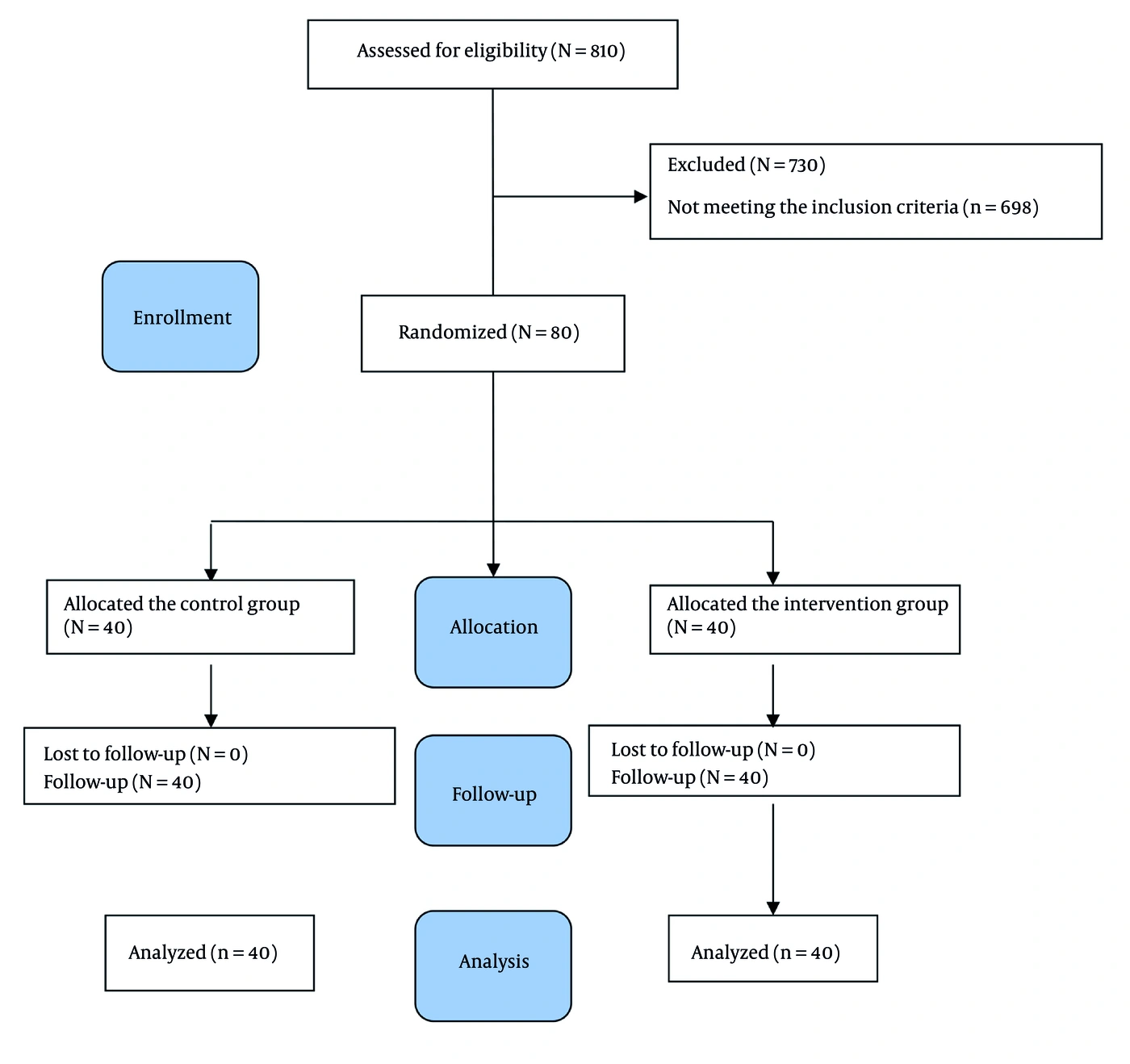
Figure 1.
The CONSORT flowchart
The success of blinding was assessed after the intervention by asking participants to identify their group allocation. To maintain blinding, oils with similar appearance and smell were provided.
3.5. Intervention Procedure
Fresh rose petals were obtained from an apothecary, and the authenticity of the herbal ingredients was confirmed by a pharmacist. Rose oil was prepared by infusing fresh Rosa damascena petals in olive oil at a ratio of 1:4 (rose petals to oil). The mixture was maintained under controlled warm conditions for 48 hours, filtered, and the process was repeated 3 times to enhance extraction. The final product was stored in opaque, light-resistant, high-density polyethylene containers at 4°C to prevent oxidation until use.
The chemical composition of rose infused oil was analyzed using gas chromatography-mass spectrometry (GC-MS) with the headspace solid-phase microextraction (HS-SPME) technique to identify volatile components and assess product quality. Compounds were identified by comparing their mass spectra with those in the NIST14 and Wiley9 mass spectral libraries using Agilent ChemStation software. The relative abundance of each compound was calculated based on the percentage of peak area (Table 1). The placebo oil consisted of paraffin oil with trace amounts (5 ppm) of rose essence added to match the color, texture, and scent of the rose oil, thereby preserving blinding. The placebo oil was prepared to be similar in texture, appearance, color, and odor to rosehip oil.
Table 1.
Volatile Compounds Identified in Perfume Samples Using HS-SPME/GC-MS Technique
| Peak | RT (min) | Compound | Area (%) | Match Quality |
|---|---|---|---|---|
| 1 | 8.116 | (E)-2-Heptenal | 0.73 | 91 |
| 2 | 8.786 | 1-Hepten-3-one | 0.68 | 49 |
| 3 | 9.135 | 1,6-Anhydro-β-D-glucopyranose | 0.99 | 64 |
| 4 | 9.369 | Decane | 2.32 | 91 |
| 5 | 10.073 | o-Cymene | 0.50 | 97 |
| 6 | 10.193 | Limonene | 0.58 | 98 |
| 7 | 10.371 | Benzyl alcohol | 2.43 | 97 |
| 8 | 10.789 | β-Ocimene | 0.50 | 91 |
| 9 | 11.075 | γ-Terpinene | 0.67 | 97 |
| 10 | 12.299 | Dimethyldodecane derivative | 0.42 | 53 |
| 11 | 12.425 | Nonanal | 1.52 | 91 |
| 12 | 12.820 | Phenethyl alcohol | 72.08 | 95 |
| 13 | 13.043 | Phenethyl alcohol (minor peak) | 0.99 | 38 |
| 14 | 14.336 | 3-Methylundecane | 0.30 | 83 |
| 15 | 15.183 | Dodecane | 5.82 | 93 |
| 16 | 15.704 | Cyclopropane derivative | 0.39 | 72 |
| 17 | 15.973 | Citronellol | 1.29 | 97 |
| 18 | 16.699 | Geraniol | 0.37 | 93 |
| 19 | 16.762 | Phenethyl acetate | 0.59 | 72 |
| 20 | 16.888 | (E)-2-Decenal | 0.46 | 86 |
| 21 | 16.940 | 10-Methylnonadecane | 0.52 | 72 |
| 22 | 17.558 | trans-Anethole | 2.29 | 98 |
| 23 | 17.924 | Tridecane | 0.25 | 95 |
| 24 | 18.319 | 2-Methoxy-4-vinylphenol | 0.41 | 96 |
| 25 | 20.539 | Tetradecane | 1.33 | 97 |
| 26 | 24.304 | TBHQ | 1.20 | 96 |
| 27 | 25.357 | Hexadecane | 0.36 | 96 |
Participants in both groups were instructed to apply 3 - 5 drops of the designated oil to the forehead with gentle massage each night immediately before bedtime for 7 consecutive nights. Standardized verbal and written instructions were provided to ensure consistent application across participants.
3.6. Outcome Measures
The primary outcome was subjective sleep quality and insomnia severity, assessed using the PIRS-20.
Secondary outcomes included sleep duration, sleep-onset latency, and bedtime.
Safety was assessed during the intervention period by asking participants to report any sensitivity, allergy, or skin reaction. In addition, before the intervention, participants were instructed to contact the researcher in the event of any complications.
3.7. Instruments
The demographic questionnaire included age, occupation, education, and other relevant information.
The PIRS-20 is a 20-item self-report questionnaire developed by the University of Pittsburgh Psychiatric Clinic. It is designed to evaluate the severity of insomnia symptoms over the previous week. It includes 12 questions on nocturnal symptoms and daily consequences of insomnia, 4 questions on sleep parameters, and 4 questions on sleep quality, depth, and regularity. Each question was scored on a Likert scale. The score for each scale ranged from 0 to 3, and a score of 3 on each scale indicated the greatest insomnia symptom severity. The total score ranged from 0 to 60. A score of 20 or higher indicates poor sleep, with higher scores indicating poorer sleep quality (25). The reliability and validity of the instrument have been reported to be adequate.
The BDI-II consists of 21 items scored on a 4-point scale (0 to 3). It is used to measure depressive symptoms in individuals older than 13 years. The domains assessed in this questionnaire include 11 items related to cognition, 5 items related to physical symptoms, 2 items related to emotion, 2 items related to overt behaviors, and 1 item related to interpersonal semiotics. These scales designate different degrees of depression, from mild to very severe. The score range is 0 to 63 (0 to 13: no or minimal depression; 14 to 19: mild depression; 20 to 28: moderate depression; and 29 to 63: severe depression) (22). Ghassemzadeh et al. found the validity of the Beck questionnaire to be 0.87 and its reliability to be 0.74 (23).
3.8. Statistical Analysis
Statistical analyses were performed using SPSS software version 23. Continuous variables were summarized as mean ± standard deviation, and categorical variables were expressed as frequencies and percentages. Baseline comparisons between groups were conducted using independent-samples t tests for continuous variables and chi-square tests for categorical variables.
Intragroup changes before and after the intervention were assessed using paired-samples t-tests. Intergroup differences in post-intervention outcomes were evaluated using ANCOVA, adjusting for baseline outcome values and potential confounding variables, including age, education level, economic status, employment during the study, regular physical activity, previous history of living in a dormitory, and consumption of tea and coffee. ANCOVA assumptions, including homogeneity of regression slopes and normal distribution of residuals, were assessed and met. In addition, a multivariate linear regression model was used for sensitivity analysis to evaluate the robustness of the findings. P values less than 0.05 were considered statistically significant. In this study, there were no dropouts; therefore, intention-to-treat and per-protocol analyses were identical.
4. Results
4.1. Participant Flow and Baseline Characteristics
In total, 810 female medical students residing in university dormitories were assessed for eligibility. Of these, 730 students were excluded because they did not meet the eligibility criteria (n = 698) or refused to participate (n = 32). Eighty eligible participants were enrolled and randomly assigned to the intervention group (rose oil aromatherapy, n = 40) or the control group (placebo oil, n = 40). All randomized participants completed the study, and none were lost to follow-up. The final analysis included data from all 80 participants (Figure 1). Participant demographic characteristics are presented in Table 2. The mean age was significantly higher in the intervention group than in the control group (28.32 ± 5.25 years vs. 24.65 ± 5.57 years; P = 0.03). Significant between-group differences were also observed in education level and previous dormitory residence (P < 0.001 for both variables). No statistically significant between-group differences were observed in economic status, employment during the study, regular physical activity, or tea and coffee consumption (P > 0.05).
Table 2.
Demographic Characteristics of Study Participants a
| Variables | Intervention Group (n = 40) | Control Group (n = 40) | P-Value |
|---|---|---|---|
| Age (y) a, b | 28.32 ± 5.25 | 24.65 ± 5.57 | 0.03 |
| Degree of education c | < 0.001 | ||
| Undergraduate | 6 (15) | 21 (52.5) | |
| Master's degree | 10 (25) | 11 (27.5) | |
| PhD | 13 (32.5) | 1 (2.5) | |
| GP | 4 (10) | 1 (2.5) | |
| Specialist | 7 (17.5) | 6 (15) | |
| Economic situation c | 0.92 | ||
| Weak | 4 (10) | 3 (7.5) | |
| Medium | 31 (77.5) | 32 (80) | |
| Good | 5 (12.5) | 5 (12.5) | |
| Work and education c | 0.43 | ||
| Yes | 11 (27.5) | 8 (20) | |
| No | 29 (72.5) | 32 (80) | |
| Regular physical activity c | 0.38 | ||
| Yes | 11 (27.5) | 7 (17.5) | |
| Low | 26 (65) | 27 (67.5) | |
| No | 3 (7.5) | 6 (15) | |
| History of living in a dormitory c | < 0.001 | ||
| Yes | 30 (75) | 13 (32.5) | |
| No | 10 (25) | 27 (67.5) | |
| Consumption c | 0.34 | ||
| Tea | 24 (60) | 30 (75) | |
| Coffee | 12 (30) | 7 (17.5) | |
| No | 4 (10) | 3 (7.5) |
a Values are expressed as mean ± SD or No. (%).
b Independent-samples t test.
c Chi-square test.
Abbreviation: GP, general practitioner.
No cases of skin sensitivity, allergic reaction, or other adverse effects were reported in either group during the intervention.
4.2. Sleep Timing Variables
Comparisons of sleep timing variables before and after the intervention are summarized in Table 3. At baseline and after the intervention, no statistically significant between-group differences were observed (P = 0.61 and P = 0.38, respectively). Intragroup analyses showed a significant improvement in bedtime in the intervention group after the intervention (P = 0.002), whereas no significant change was observed in the control group (P = 0.309).
Table 3.
Comparison of Mean Insomnia and Sleep Quality Scores Between the Intervention and Control Groups Before and After the Intervention a
| Variables | Intervention Group (n = 40) | Control Group (n = 40) | P-Value b |
|---|---|---|---|
| Time to go to bed (min) b | |||
| Before intervention | 24.87 ± 0.99 | 24.75 ± 1.07 | 0.61 |
| After the intervention | 24.50 ± 0.87 | 24.68 ± 1.00 | 0.38 |
| Mean difference | 0.37 ± 0.70 | 0.07 ± 0.46 | 0.001 |
| P value c | 0.002 | 0.309 | |
| Effect size (Cohen d) | 0.397 | 0.068 | |
| Elapsed time until the start of sleep (min) b | |||
| Before intervention | 33.07 ± 28.16 | 21.81 ± 19.60 | 0.04 |
| After the intervention | 29.59 ± 28.54 | 21.02 ± 23.45 | 0.14 |
| Mean difference | -3.47 ± 17.86 | -0.78 ± 17.21 | 0.49 |
| P value c | 0.22 | 0.77 | |
| Effect size (Cohen d) | 0.123 | 0.037 | |
| Sleep duration (h) b | |||
| Before intervention | 5.87 ± 1.35 | 5.75 ± 1.17 | 0.65 |
| After the intervention | 6.45 ± 1.44 | 5.91 ± 1.31 | 0.08 |
| Mean difference | 0.57 ± 0.91 | 0.16 ± 0.88 | 0.04 |
| P value c | < 0.001 | 0.25 | |
| Effect size (Cohen d) | 0.416 | 0.129 | |
| Mean total | |||
| Before intervention | 52.37 ± 9.45 | 45.60 ± 8.86 | 0.001 |
| After the intervention | 37.50 ± 7.35 | 43.55 ± 9.31 | 0.002 |
| Mean difference | -14.87 ± 10.93 | -2.05 ± 2.30 | < 0.001 |
| P value c | < 0.001 | < 0.001 | |
| Effect size (Cohen d) | 1.757 | 0.226 |
a Values are expressed as mean ± SD. Interpretation of effect size: Very small, 0.01; small, 0.20; medium, 0.50; large, 0.80; very large, 1.20; huge, 2.0.
b Independent-samples t test.
c Paired-samples t-test.
At baseline, sleep-onset latency was significantly longer in the intervention group than in the control group (33.07 ± 28.16 minutes vs. 21.81 ± 19.60 minutes; P = 0.04). After the intervention, sleep-onset latency decreased slightly in the intervention group to 29.59 ± 28.54 minutes; however, this reduction was not statistically significant within the group (P = 0.22). The post-intervention between-group comparison also showed no statistically significant difference in sleep-onset latency (P = 0.14). The mean change in sleep-onset latency did not differ significantly between the intervention and control groups (P = 0.49).
4.3. Sleep Duration
At baseline, mean sleep duration was comparable between the 2 groups (5.87 ± 1.35 hours in the intervention group vs. 5.75 ± 1.17 hours in the control group; P = 0.65). After the 7-day intervention, sleep duration increased in both groups; however, the increase was greater in the intervention group.
Within-group analysis demonstrated a statistically significant increase in sleep duration in the intervention group (mean change = 0.57 ± 0.91 hours; P < 0.001), whereas the increase in the control group was not statistically significant (mean change = 0.16 ± 0.88 hours; P = 0.25). The between-group comparison of mean changes showed a statistically significant difference in favor of the intervention group (P = 0.04).
4.4. Insomnia Severity and Overall Sleep Quality
At baseline, the mean total insomnia and sleep quality score was significantly higher in the intervention group than in the control group (52.37 ± 9.45 vs. 45.60 ± 8.86; P = 0.001), indicating poorer baseline sleep quality among participants assigned to the intervention group (Figure 2).
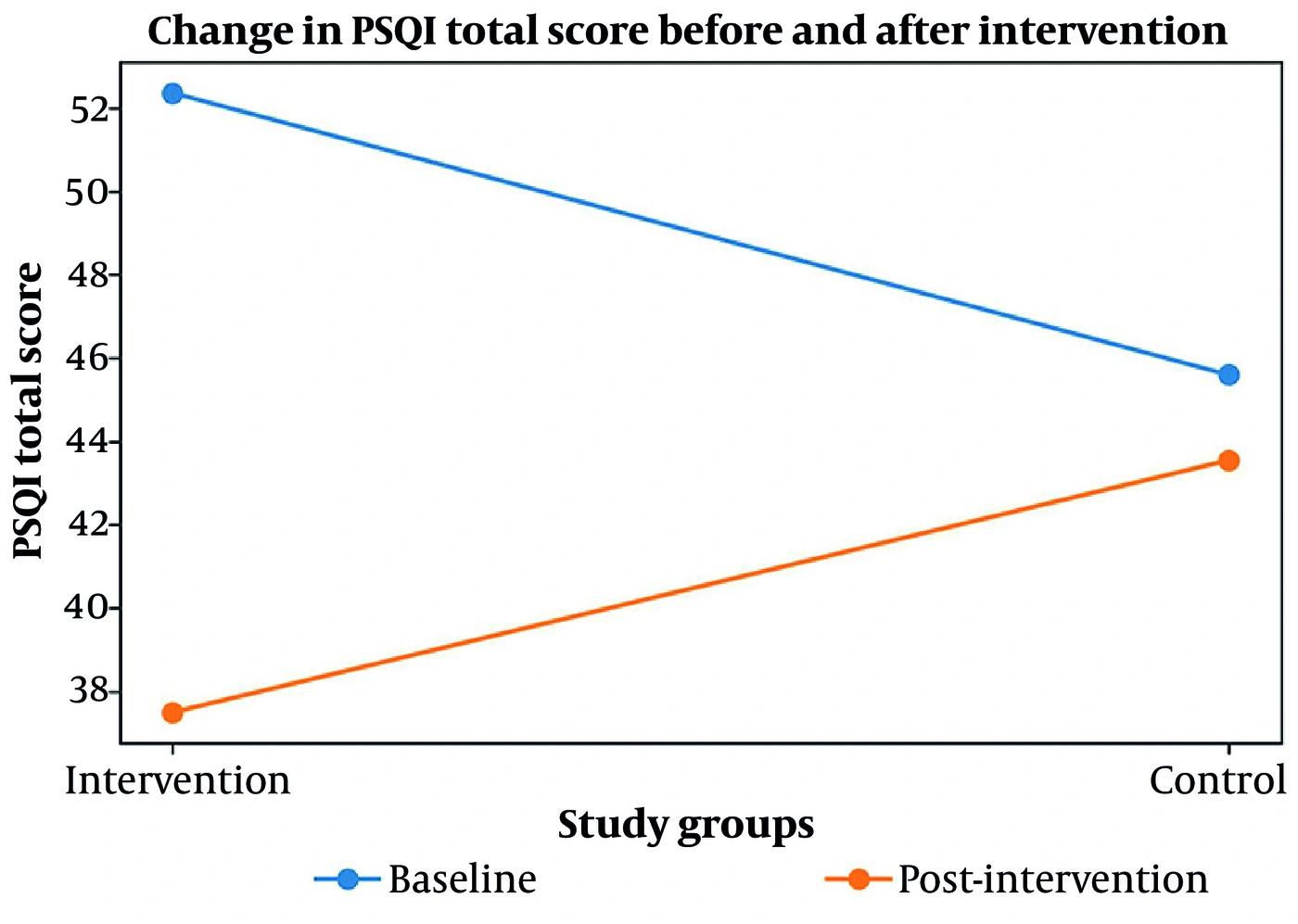
Figure 2.
Change in PIRS-20 total score before and after the intervention
Figure 2 illustrates changes in PIRS-20 total scores at baseline and after the 7-day intervention in the rose oil aromatherapy (intervention) and placebo (control) groups. Lower PIRS-20 scores indicate better subjective sleep quality. At baseline, the intervention group had poorer sleep quality than the control group. After the intervention, a marked reduction in the PIRS-20 total score was observed in the intervention group, whereas only a modest change was observed in the control group.
After completion of the intervention, the mean total score decreased substantially in the intervention group to 37.50 ± 7.35, whereas only a modest reduction was observed in the control group (43.55 ± 9.31). A statistically significant between-group difference was observed after the intervention (P = 0.002).
Intragroup analysis showed a significant reduction in the total insomnia and sleep quality score in both groups (P < 0.001 for both); however, the magnitude of improvement was considerably greater in the intervention group (mean change = -14.87 ± 10.93) than in the control group (mean change = -2.05 ± 2.30). Effect size analysis showed a very large effect of the intervention on insomnia severity and sleep quality (Hedges g = 1.757), whereas the effect size in the control group was small (Hedges g = 0.226).
4.5. Adjusted Analysis Using ANCOVA
To control for baseline imbalances and potential confounding factors, ANCOVA was performed with adjustment for age, education level, economic status, employment during the study, regular physical activity, previous dormitory residence, tea and coffee consumption, and baseline outcome scores (Table 4).
Table 4.
Insomnia and Sleep Quality After the Intervention Between the 2 Groups After Adjustment for Confounding Variables Using Covariance Analysis a
| Variables | Mean Adjusted, Intervention Group (n = 40) | Mean Adjusted, Control Group (n = 40) | β | 95% CI, Lower | 95% CI, Upper | P-Value |
|---|---|---|---|---|---|---|
| Time to go to bed (min) | 24.50 ± 0.84 | 24.68 ± 1.00 | -0.325 | -0.604 | -0.046 | 0.07 |
| Elapsed time until the start of sleep (min) | 32.32 ± 4.03 | 18.29 ± 4.03 | 14.03 | 1.82 | 26.24 | 0.02 |
| Sleep duration (h) | 6.49 ± 0.22 | 5.86 ± 0.22 | 0.62 | -0.05 | 1.31 | 0.07 |
| Mean total | 37.28 ± 1.30 | 43.76 ± 1.30 | -6.47 | -10.42 | -2.52 | 0.002 |
a Values are expressed as mean ± SD. β is the estimate of the regression coefficient; Confounding variables included the item score before the intervention, age, degree of education, economic situation, regular physical activity, history of living in a dormitory, and consumption. Abbreviations: CI, confidence interval; ANCOVA, analysis of covariance.
After adjustment, there was no statistically significant between-group difference in bedtime (β = -0.325, 95% CI, -0.604 to -0.046; P = 0.07). The adjusted mean sleep-onset latency was longer in the intervention group than in the control group (β = 14.03, 95% CI, 1.82 - 26.24; P = 0.02). However, this finding should be interpreted in the context of the baseline imbalance between groups, as participants in the intervention group had longer sleep-onset latency before the intervention. Although sleep-onset latency decreased within the intervention group during the study period, the reduction was not sufficient to eliminate the initial between-group difference. Although adjusted sleep duration was higher in the intervention group than in the control group (6.49 ± 0.22 hours vs. 5.86 ± 0.22 hours), this difference was not statistically significant (β = 0.62, 95% CI, -0.05 to 1.31; P = 0.07).
Importantly, the adjusted mean total insomnia and sleep quality score remained significantly lower in the intervention group than in the control group (37.28 ± 1.30 vs. 43.76 ± 1.30), supporting the robustness of the intervention effect on subjective insomnia severity and overall sleep quality after controlling for confounding variables (β = -6.47, 95% CI, -10.42 to -2.52; P = 0.002).
Multivariate linear regression analysis was consistent with the ANCOVA findings and confirmed the robustness of the main results.
5. Discussion
In this randomized, double-blind, placebo-controlled clinical trial, we evaluated the effects of topical rose oil aromatherapy on insomnia severity and subjective sleep quality among female medical students living in university dormitories. The findings suggested that 7 days of rose oil aromatherapy significantly improved self-reported sleep quality and insomnia severity compared with placebo. In contrast, changes in sleep-onset latency were modest and inconsistent, and improvements in sleep duration, although clinically noticeable in unadjusted analyses, did not remain statistically significant after adjustment for baseline imbalances.
Medical students are particularly vulnerable to sleep disturbances because of a high academic workload, stress, irregular sleep schedules, and lifestyle factors. Consistent with previous studies (24, 26, 27), participants in the present study exhibited poor baseline sleep quality, with mean sleep duration below recommended levels and elevated insomnia scores. These findings underscore the importance of identifying effective, safe, and acceptable nonpharmacological interventions to improve sleep in this group.
After adjustment, the primary finding was a significant decrease in the total insomnia and sleep quality scores in the intervention group compared with the control group; this difference remained statistically significant after adjustment for multiple confounding variables. This result suggests a short-term improvement in subjective sleep outcomes; however, long-term clinical efficacy remains uncertain. The large effect size observed in the intervention group further supports a potentially meaningful change in self-reported sleep quality. These results are consistent with several previous clinical trials reporting beneficial effects of rose oil aromatherapy on sleep quality in different populations, including cardiac patients, hospital personnel, and individuals experiencing anxiety- or stress-related sleep disturbances (28).
In contrast, the effects of rose oil aromatherapy on specific sleep parameters, such as sleep-onset latency, were less pronounced. Although a slight reduction in sleep-onset latency was observed in the intervention group, this change was not statistically significant in unadjusted analyses and was inconsistent after covariate adjustment. The adjusted analysis showed longer sleep-onset latency in the intervention group; however, this finding should be interpreted in the context of a significant baseline imbalance between groups. Participants in the intervention group had longer sleep-onset latency than the control group before the intervention. Importantly, sleep-onset latency decreased in the intervention group after the intervention, whereas little change was observed in the control group. Therefore, the adjusted between-group difference is unlikely to reflect a detrimental effect of the intervention and, despite statistical adjustment, is more likely to reflect residual effects of baseline imbalance. This finding aligns with previous studies reporting improvements in perceived sleep quality without significant effects on sleep initiation (20, 29). Collectively, these findings suggest that rose oil aromatherapy may primarily improve perceived sleep quality, such as restfulness and sleep satisfaction, rather than mechanisms related to sleep initiation.
Sleep duration increased significantly in the intervention group in unadjusted analyses, with an average increase of nearly 1 hour; however, this effect did not remain statistically significant after adjustment for baseline differences. This discrepancy highlights the influence of baseline imbalances and potential confounding factors, such as age, education level, and prior dormitory living history, which differed significantly between groups at baseline. The use of ANCOVA strengthened the internal validity of the findings by accounting for these differences, but residual confounding cannot be entirely excluded.
The mechanisms through which rose oil aromatherapy improves sleep quality are not fully understood but may involve modulation of the autonomic nervous system and central nervous system pathways related to stress and relaxation. Experimental studies have suggested that rose oil aromatherapy constituents, including citronellol and 2-phenylethanol (13), exert anxiolytic and sedative effects through interaction with GABA receptors and reduction of sympathetic nervous system activity (30). Given the close relationship between anxiety, stress, and sleep quality (31-33), particularly in medical students, these mechanisms may help explain the observed short-term improvements in sleep outcomes. However, mechanistic interpretations should be made cautiously, as physiological markers were not assessed in the present study.
5.1. Limitations
Several limitations should be considered when interpreting these findings. First, despite randomization, significant baseline differences were found between groups in variables including age, education level, dormitory living history, and baseline sleep quality scores, necessitating statistical adjustment. Second, the intervention period was relatively short (only 7 days), and the long-term effects of rose oil aromatherapy on sleep quality could not be evaluated. Third, sleep outcomes were evaluated using self-reported questionnaires, which may be subject to recall bias, reporting bias, and participants’ expectations regarding treatment. Objective sleep measures, including actigraphy or polysomnography, were not employed; therefore, the findings primarily reflect improvements in subjective sleep outcomes.
Despite these limitations, this study also has several strengths, including its randomized, double-blind, placebo-controlled design, complete follow-up, and use of validated assessment tools. To our knowledge, few randomized controlled trials have examined the effects of topical rose oil aromatherapy on sleep quality specifically in medical students, a population at high risk for sleep disturbances. Finally, the study population consisted exclusively of female medical students living in dormitories, which may limit the generalizability of these findings to other populations.
5.2. Conclusions
Findings from this randomized, double-blind, placebo-controlled trial suggest that short-term topical rose oil aromatherapy was associated with significant improvements in subjective sleep quality and insomnia severity among female medical students. Although modest improvements in sleep duration were observed, effects on sleep-onset latency were limited and inconsistent after adjustment for baseline differences.
Given the high prevalence of sleep disturbances among medical students and the favorable safety profile of aromatherapy, rose oil aromatherapy may be a useful complementary intervention for improving subjective sleep quality in this population. However, because of methodological limitations and the short intervention duration, these findings should be interpreted with caution. Future research with larger sample sizes, longer follow-up periods, objective sleep measurements, and standardized characterization of rose oil aromatherapy preparations is warranted to clarify the role of rose oil aromatherapy in the management of insomnia. As shown in Figure 3, rose oil aromatherapy was associated with significantly better sleep outcomes than placebo.
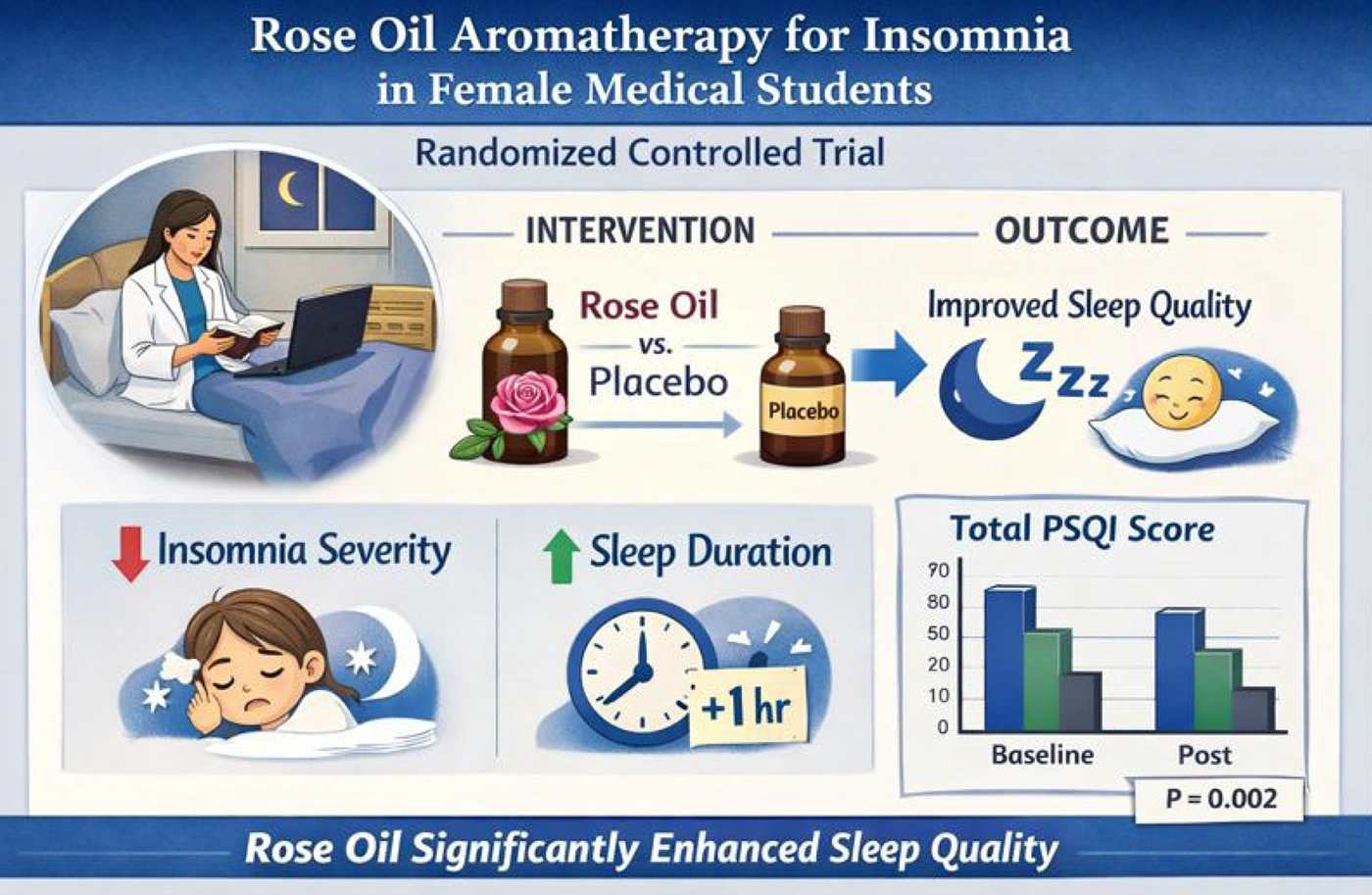
Figure 3.
This graphical abstract summarizes a randomized, double-blind, placebo-controlled trial evaluating the effects of topical rose oil aromatherapy on sleep quality among female medical students. Compared with placebo, 7 days of rose oil aromatherapy application was associated with a significant reduction in insomnia severity and improvement in overall subjective sleep quality, as measured by the Pittsburgh Insomnia Rating Scale Short (PIRS-20).