
1. Background
Obesity is a chronic, relapsing, multifactorial disease characterized by excessive accumulation of adipose tissue (1). Although Body Mass Index (BMI) is widely used to define obesity, other anthropometric indices, such as waist circumference, are more strongly associated with metabolic disorders, including insulin resistance, type 2 diabetes, dyslipidemia, and cardiovascular disease (2). The global prevalence of obesity has increased substantially and now affects more than one billion people worldwide (3). Excess adiposity, particularly visceral fat, contributes to chronic inflammation, oxidative stress, insulin resistance, and dyslipidemia, thereby increasing the risk of metabolic and cardiovascular disorders (4).
Management of obesity includes lifestyle modification, pharmacotherapy, and bariatric surgery (5). Bariatric surgery is the most effective treatment for severe obesity and obesity-related comorbidities and results in substantial weight loss and metabolic improvement (6). However, patients may experience postoperative metabolic complications, nutritional deficiencies, weight regain, sleep disturbances, depression, anxiety, and disordered eating behaviors, which can adversely affect long-term outcomes (7-9).
Crocin, the major water-soluble carotenoid in saffron (Crocus sativus L.), has antioxidant, anti-inflammatory, and metabolic properties (10). Experimental studies suggest that crocin may reduce adiposity and improve lipid metabolism (11). In addition, crocin has demonstrated potential neuropsychological benefits, including improvements in sleep quality, insomnia, anxiety, and depressive symptoms, possibly through modulation of neurotransmitter systems and its antioxidant and anti-inflammatory effects (12-15).
2. Objectives
Given the metabolic and psychological challenges experienced by some patients after bariatric surgery, adjunctive interventions may improve postoperative outcomes. Although crocin has demonstrated promising metabolic and neuropsychological effects in experimental and clinical studies, its efficacy in patients undergoing bariatric surgery remains unclear. Therefore, this clinical trial aimed to evaluate the effects of crocin supplementation on anthropometric, metabolic, inflammatory, sleep-related, and psychological endpoints following bariatric surgery.
3. Methods
3.1. Ethical Considerations
The study received ethical approval from the Ethics Committee of Sabzevar University of Medical Sciences (IR.MEDSAB.REC.1403.074). The study was also registered in the Iranian Registry of Clinical Trials (IRCT20241023063475N1). Written informed consent was obtained from all participants before enrollment. In addition, permission to continue the study and provide additional placebo tablets was obtained from the sponsoring company during the study period.
3.2. Participants
Participants in this randomized clinical trial were patients with obesity aged 20 - 60 years who were eligible for bariatric surgery based on specialist evaluation. The study was conducted between 2022 and 2024 at Ghaem Hospital and Imam Reza Hospital. Eligible participants were recruited before surgery and enrolled after providing written informed consent. Patients with incomplete clinical information or an unwillingness to continue participation during follow-up were excluded. Eligibility criteria included age 20 - 60 years, obesity with an indication for bariatric surgery, no known hypersensitivity to crocin, no history of alcohol consumption, and normal liver and kidney function. Patients with a chronic systemic disease that could independently influence hepatic or renal drug metabolism, systemic inflammatory status, or sleep-wake physiology—including active malignancy, chronic kidney or hepatic disease, and autoimmune or other inflammatory disorders requiring systemic pharmacotherapy—were excluded because these conditions and their treatments could confound the assessment of crocin pharmacokinetics and effects independent of the study intervention. Obesity-associated metabolic comorbidities, namely type 2 diabetes, hypertension, and dyslipidemia, were not grounds for exclusion because they represent core phenotypic features of the bariatric surgery population and do not typically require systemic pharmacotherapy known to alter drug metabolism or sleep architecture. Individuals receiving medications with a recognized direct pharmacological effect on sleep architecture were excluded at screening for the same reason: to prevent confounding of the primary sleep-related endpoint measures. In summary, participants were excluded for confirmed hypersensitivity to crocin, use of a sleep-affecting medication as defined above, or withdrawal of willingness to continue participation at any stage of the study.
3.3. Study Design
This randomized, double-blind, placebo-controlled clinical trial investigated the effects of daily crocin supplementation on biochemical, anthropometric, sleep-related, and psychological parameters in patients with obesity undergoing bariatric surgery. After ethical approval and trial registration, the random allocation sequence was generated using online computer-generated block randomization by an investigator who was not involved in participant recruitment or endpoint assessment. Eligible participants were enrolled by the study investigators and assigned to the intervention or placebo group according to the concealed allocation sequence. Allocation concealment was maintained using consecutively numbered, sealed, opaque envelopes. Participants, investigators, and endpoint assessors remained blinded to treatment allocation until completion of the statistical analysis. Baseline assessments were performed before surgery and repeated 3 months after the intervention. Participants received the assigned intervention from the day after surgery for 90 days. Age and sex were considered potential confounders. All enrolled participants underwent Roux-en-Y gastric bypass surgery performed by experienced bariatric surgeons according to the standard institutional surgical protocol. No other bariatric procedures were included in this study.
3.4. Sleep and Psychological Assessments
Sleep quality, sleep-related disorders, and psychological status were assessed using validated questionnaires, including the Pittsburgh Sleep Quality Index (PSQI), Epworth Sleepiness Scale (ESS), Insomnia Severity Index (ISI), STOP-BANG questionnaire, Restless Legs Syndrome (RLS) severity scale, Depression Anxiety Stress Scale-21 (DASS-21), and Beck Depression Inventory (BDI). The DASS-21 was used to assess the severity of depression, anxiety, and stress. Insomnia severity, daytime sleepiness, depressive symptoms, obstructive sleep apnea risk, and RLS severity were evaluated using the ISI, ESS, BDI, STOP-BANG, and RLS questionnaires, respectively. The PSQI assessed 7 components of sleep quality and overall sleep quality. All questionnaires were completed at baseline and at the end of the intervention period.
3.5. Anthropometric Measurements
Anthropometric assessments were performed at baseline and 3 months after bariatric surgery. Body weight, BMI, body fat percentage, lean body mass, soft lean mass (SLM), total body water, basal metabolic rate, neck circumference, waist circumference, and abdominal circumference were measured using standard anthropometric procedures and body composition analysis devices. All measurements were obtained under similar conditions by trained personnel.
3.6. Blood Sample Collection and Biochemical Measurements
Fasting venous blood samples were collected before bariatric surgery and 3 months after completion of the intervention. Samples were analyzed in certified laboratories affiliated with Mashhad University of Medical Sciences using standard methods. A comprehensive panel of hematological and biochemical parameters was assessed at both time points. Detailed measurements and results are provided in the Supplementary Material.
3.7. Crocin Supplementation
Following bariatric surgery, participants in the intervention group received one 15-mg crocin tablet (Krocina®, Pooyesh Darou Sina, Iran) daily with breakfast for 90 days. Each Krocina® tablet contained 15 mg of standardized crocin extract (≥ 98% purity), with microcrystalline cellulose, povidone, and magnesium stearate as excipients. Placebo tablets contained the same excipient base without crocin. Placebo tablets were manufactured by the same company and matched to the intervention tablets in hardness, thickness, color, odor, size, and packaging. The 15 mg/day dose was selected based on prior evidence of efficacy for sleep-related endpoints at a comparable dose (15.5 mg/day) in nonsurgical populations (16), combined with the standardized formulation of the available commercial product (Krocina®). Given the altered gastrointestinal physiology and restricted intake typical of the early postoperative bariatric period, a conservative dose was prioritized over the higher doses (30 - 176.5 mg/day) used in previous trials in nonsurgical populations to minimize the risk of gastrointestinal intolerance and support adherence. Participants in the placebo group received placebo tablets identical in shape, color, size, and packaging, and manufactured by the same company. Compliance with supplementation and possible adverse events were monitored throughout the intervention period. Adherence was assessed by the study nurse, who was blinded to treatment allocation, at the end of the 90-day intervention period using unused-tablet counts cross-checked against participant-completed diaries. Compliance for each participant was calculated as the number of tablets consumed divided by the number prescribed, expressed as a percentage, with ≥ 80% considered adherent.
3.8. Postoperative Nutritional Supplementation and Physical Activity Counseling
All participants at both study sites received an identical standard-of-care postoperative regimen, delivered by the same clinical teams blinded to treatment allocation regardless of study group, in line with established bariatric nutrition guidelines (17, 18). This regimen included a complete bariatric-specific multivitamin/mineral preparation; a daily protein target of approximately 60 - 100 g/day; elemental calcium 1200 - 1500 mg/day, preferably as calcium citrate; vitamin D dosed to maintain adequate 25-OH vitamin D status; iron 45 - 60 mg/day; vitamin B12 either 350 - 500 µg/day orally or 1000 µg intramuscularly monthly; folate 400 - 800 µg/day; thiamine at least 12 mg/day; and a fluid intake target of at least 1.9 L/day. Because this regimen was standardized and delivered identically to both groups, we consider it unlikely to have differentially influenced the between-group difference in fat-free mass (FFM) preservation. However, individual-level adherence to protein and micronutrient targets was not separately quantified for each participant, and residual variability in intake may have contributed to within-group variability in body composition outcomes, as acknowledged in the Discussion.
All participants also received routine postoperative physical activity counseling as part of standard clinical care, consistent with current expert recommendations for metabolic and bariatric surgery patients (19): Early ambulation from the first postoperative day, gradual reintroduction of low- to moderate-intensity aerobic activity as tolerated, and incorporation of resistance training once cleared by the surgical team. This counseling consisted of general lifestyle guidance provided identically to both groups rather than an individually prescribed, supervised, or monitored exercise program. Adherence was not tracked at the participant level, as acknowledged in the Discussion.
3.9. Statistical Analysis
Sample size estimation was based on a previous study by Kotanidou et al. using differences in BMI between intervention and control groups (20). Normality of the distribution of change scores (90-day value minus baseline value) was assessed for each endpoint in each study group using the Shapiro-Wilk test. When change scores were normally distributed in both groups, between-group differences were compared using an independent-samples t-test (Student t-test when Levene's test indicated homogeneity of variance and Welch t-test otherwise); the effect size is reported as Cohen's d with its 95% confidence interval. When change scores departed from normality in either group, the Mann-Whitney U test was used, and the effect size is reported as the rank-biserial correlation (r), together with the Hodges-Lehmann estimator of the median difference and its 95% confidence interval. Assuming a 20% dropout rate, 37 participants were included in each group (total n = 74). Because the sample size was calculated using the anticipated between-group difference in BMI, change in BMI was designated as the primary endpoint; all remaining anthropometric, biochemical, sleep-related, and psychological measures were considered secondary exploratory endpoints. Data were analyzed using SPSS version 26. Continuous variables are presented as mean ± standard deviation (SD), and categorical variables are presented as frequency and percentage. Comparisons were performed at baseline, after the intervention, and for changes during the study period. Statistical analyses were performed using a complete-case (per-protocol) approach. Participants who completed both baseline and 90-day follow-up assessments were included in the final analyses. Two participants, one from each group, were lost to follow-up before the post-intervention assessment and were therefore excluded from the analysis because no endpoint data were available. No imputation of missing data was performed. An intention-to-treat analysis was not performed because the 2 participants lost to follow-up (one per group; 2.6% of the randomized sample) had no post-baseline data for any endpoint, precluding standard imputation approaches (eg, last-observation-carried-forward or multiple imputation) without strong, unverifiable assumptions about missingness. Because this loss to follow-up was small, balanced between groups, and unrelated to treatment allocation, we consider it unlikely that an intention-to-treat analysis would have materially altered the results; nevertheless, the complete-case approach is acknowledged as a limitation.
4. Results
4.1. Participant Characteristics
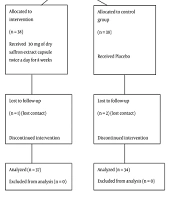
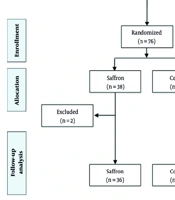
Of the 100 individuals assessed for eligibility, 24 were excluded before randomization (12 did not meet the inclusion criteria and 12 declined to participate), leaving 76 eligible individuals who underwent block randomization (38 per group) with a block size of 4. One participant in each group was subsequently lost to follow-up during the 90-day intervention, leaving 37 participants per group (n = 74) for final analysis (Figure 1). No protocol deviations requiring exclusion from the analysis occurred during the study. Medication compliance, assessed by tablet count and participant diaries, was 96.2% in the crocin group and 95.4% in the placebo group. No adverse events or serious adverse events related to the study intervention were reported in either group during the 90-day intervention. No participants discontinued the study because of treatment-related side effects. None of the 76 randomized individuals experienced a postoperative surgical complication during the study period. Baseline characteristics, including sex distribution, height, weight, age, and BMI, did not differ significantly between the intervention and control groups (Tables 1 and 2). The mean age was 32.00 ± 9.00 years in the intervention group and 33.00 ± 11.00 years in the control group (P = 0.233). Baseline BMI was also comparable between the intervention and control groups (42.45 ± 5.15 vs 42.20 ± 4.22 kg/m2, P = 0.265). Moreover, no significant between-group differences were observed in anthropometric or body composition parameters at baseline. After 90 days of intervention, there were no significant between-group differences in anthropometric measurements, body composition indices, BMI, body fat percentage, body weight, basal metabolic rate, or total body water. However, analysis of changes during the intervention period showed significant between-group differences in SLM and FFM (Figure 2A). The intervention group exhibited greater changes in both FFM (P = 0.004; Figure 2B) and SLM (P = 0.002) than the control group.
Table 1.
Baseline Demographic and Anthropometric Characteristics of Participants a
| Variables | Intervention Group (n = 37) | Control Group (n = 37) | P-Value |
|---|---|---|---|
| Sex | 0.658 b | ||
| Male | 5 (13.5%) | 6 (16.2%) | |
| Female | 32 (86.5%) | 31 (83.8%) | |
| Age (y) | 32.00 ± 9.00 | 33.00 ± 11.00 | 0.233 c |
| Weight (kg) | 113.20 ± 13.60 | 113.82 ± 18.63 | 0.558 c |
| Height (cm) | 163.00 ± 8.00 | 164.00 ± 9.00 | 0.643 c |
| BMI (kg/m2) | 42.45 ± 5.15 | 42.20 ± 4.22 | 0.265 c |
a Values are expressed as No. (%) or mean ± SD.
b Fisher exact test.
c Mann-Whitney U test.
Table 2.
Comparison of Anthropometric and Body Composition Parameters Before and After Intervention a
| Variables and Times | Intervention Group (n = 37) | Control Group (n = 37) | Between-Group P-Value | P-Value for Change |
|---|---|---|---|---|
| Neck circumference (cm) | 0.634 | |||
| Baseline | 37.60 ± 2.94 | 37.77 ± 2.95 | 0.458 | |
| 90 (d) | 41.72 ± 3.45 | 41.81 ± 4.35 | 0.621 | |
| Abdominal circumference (cm) | 1.000 | |||
| Baseline | 115.26 ± 11.82 | 116.84 ± 14.58 | 0.321 | |
| 90 (d) | 128.05 ± 11.42 | 130.22 ± 13.86 | 0.478 | |
| Waist circumference (cm) | 0.619 | |||
| Baseline | 105.31 ± 14.55 | 102.99 ± 17.03 | 0.521 | |
| 90 (d) | 120.38 ± 13.84 | 120.54 ± 15.88 | 0.216 | |
| Weight (kg) | 0.366 | |||
| Baseline | 113.20 ± 13.60 | 113.82 ± 18.63 | 0.558 | |
| 90 (d) | 96.06 ± 18.57 | 93.41 ± 15.35 | 0.651 | |
| Fat-free mass (kg) b | 0.004 | |||
| Baseline | 55.48 ± 9.79 | 55.37 ± 6.77 | 0.658 | |
| 90 (d) | 52.24 ± 10.31 | 49.15 ± 6.36 | 0.386 | |
| Soft lean mass (kg) b | 0.002 | |||
| Baseline | 51.83 ± 9.12 | 51.83 ± 6.28 | 1.000 | |
| 90 (d) | 48.87 ± 9.58 | 45.97 ± 5.96 | 0.534 | |
| Total body water (L) | 0.349 | |||
| Baseline | 40.89 ± 7.90 | 40.28 ± 5.20 | 0.378 | |
| 90 (d) | 37.53 ± 8.05 | 36.49 ± 4.86 | 0.237 | |
| Body fat (%) | 0.144 | |||
| Baseline | 51.25 ± 3.07 | 50.88 ± 3.74 | 0.684 | |
| 90 (d) | 45.29 ± 6.30 | 46.99 ± 5.15 | 0.321 | |
| BMI (kg/m2) | 0.379 | |||
| Baseline | 42.45 ± 5.15 | 42.20 ± 4.22 | 0.265 | |
| 90 (d) | 35.28 ± 4.93 | 35.10 ± 5.07 | 0.235 | |
| Basal metabolic rate (kcal) | 0.247 | |||
| Baseline | 1964.84 ± 2444.37 | 1951.46 ± 2372.90 | 0.248 | |
| 90 (d) | 1468.30 ± 319.71 | 1771.62 ± 1977.52 | 0.216 |
a Values are expressed as mean ± SD. Between-group differences in change scores were evaluated using an independent-samples t-test or the Mann-Whitney U test, selected for each endpoint based on Shapiro-Wilk normality testing (see 3.9. Statistical Analysis).
b Effect size for the change in fat-free mass (FFM): Hodges-Lehmann median difference = −2.20 kg (95% CI, −3.50 to −0.60); rank-biserial correlation coefficient = −0.39 (95% CI, −0.59 to −0.14). Effect size for the change in soft lean mass (SLM): Hodges-Lehmann median difference = −2.20 kg (95% CI, −3.50 to −0.70); rank-biserial correlation coefficient = −0.41 (95% CI, −0.61 to −0.17).
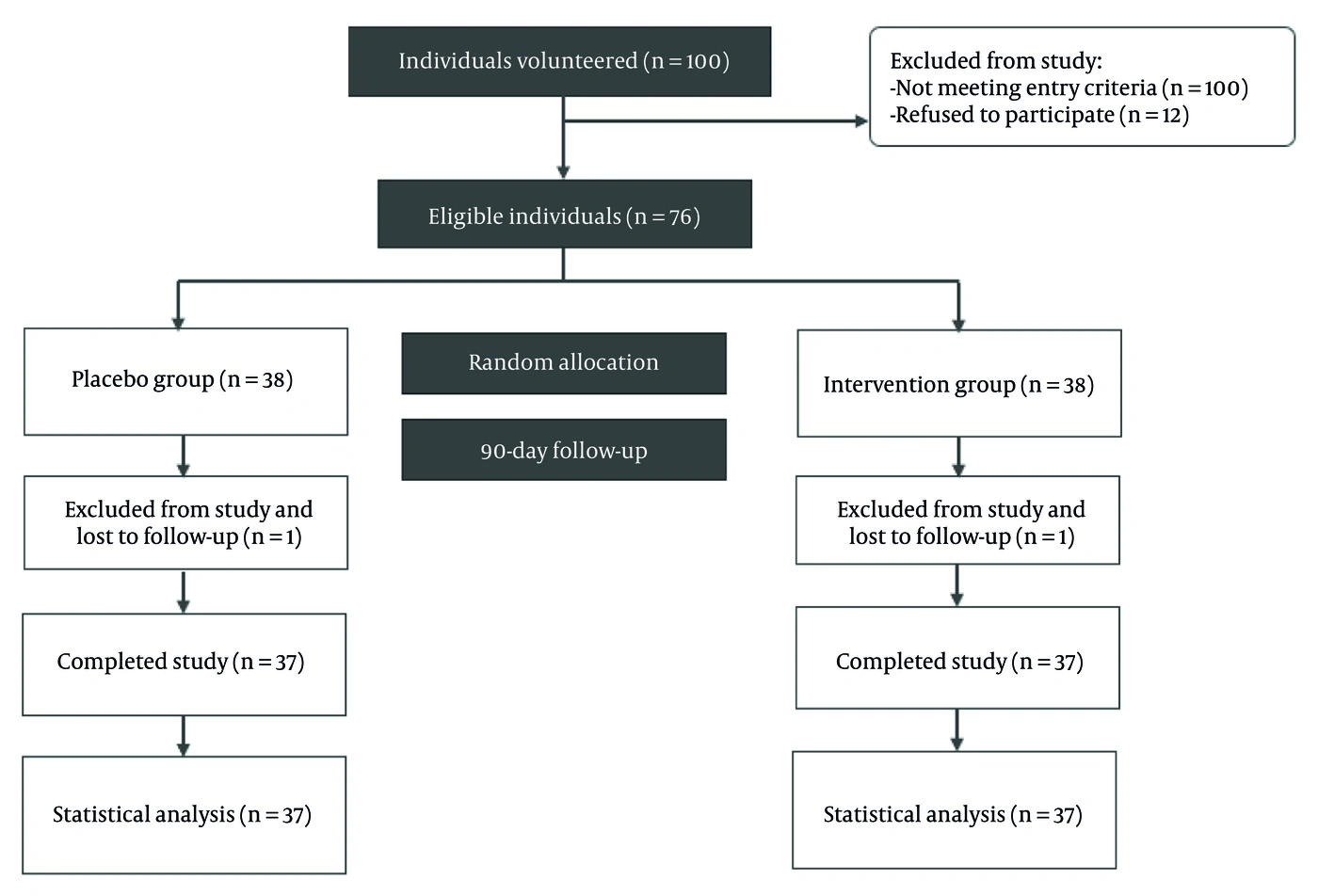
Figure 1.
Flow diagram of the study
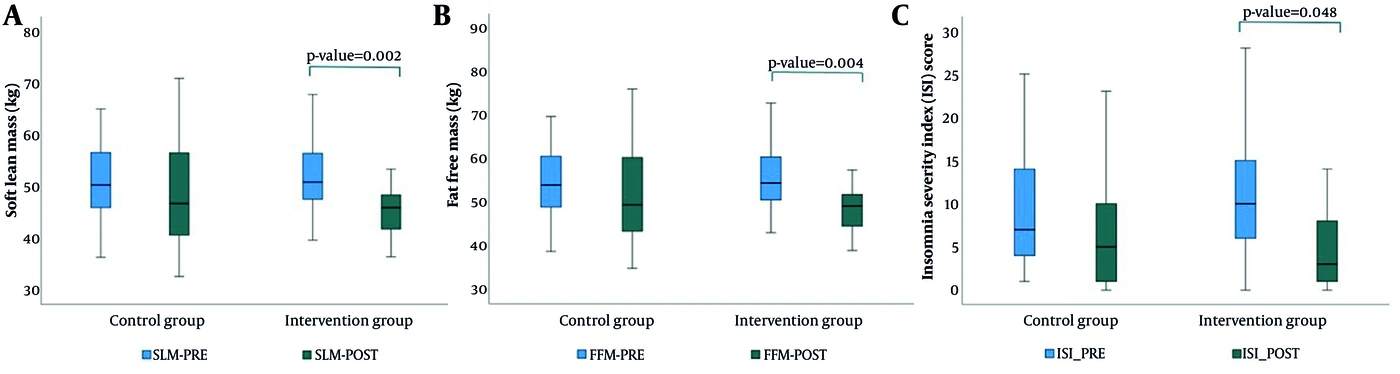
Figure 2.
Changes in primary endpoints following 90 days of intervention; A, Soft Lean Mass (SLM) before and after intervention; B, Fat-Free Mass before and after intervention; C, Insomnia Severity Index (ISI) scores before and after intervention.
4.2. Laboratory Findings
Baseline laboratory parameters were comparable between the 2 groups, with no substantial differences before the intervention. After 90 days, laboratory findings did not differ meaningfully between patients who received placebo and those who received crocin with respect to hematologic, metabolic, renal, hepatic, inflammatory, lipid, iron-related, electrolyte, or hormonal variables (Table S1 in the Supplementary Material). Likewise, there were no substantial between-group differences in the magnitude of changes in laboratory parameters during the intervention period.
4.3. Psychological and Sleep-Related Endpoints
Table 3 shows psychological and sleep-related outcomes associated with crocin supplementation. At baseline, no psychological or sleep-related measures differed significantly between the groups (all P > 0.05). After 90 days, there were no significant between-group differences in depression, anxiety, stress, daytime sleepiness, obstructive sleep apnea risk, restless legs syndrome severity, or BDI score. However, analysis of changes during the intervention period demonstrated a significant improvement in insomnia severity in the intervention group, with a greater decrease in ISI score in the crocin group than in the placebo group (P = 0.048; Figure 2C). The reduction in STOP-BANG score was borderline significant (P = 0.057). Changes in the other sleep-related and psychological endpoints did not differ significantly between the groups.
Table 3.
Comparison of Psychological and Sleep-Related Questionnaire Scores Before and After Intervention a
| Questionnaires and Times | Intervention Group (n = 37) | Control Group (n = 37) | Between-Group P-Value | P-Value for Change |
|---|---|---|---|---|
| DASS-21 Depression | ||||
| Baseline | 11.58 ± 11.15 | 10.27 ± 9.82 | 0.550 | 0.651 |
| 90 (d) | 8.70 ± 10.52 | 10.38 ± 11.86 | 0.078 | |
| DASS-21 Anxiety | ||||
| Baseline | 9.00 ± 6.72 | 11.41 ± 9.61 | 0.087 | 0.960 |
| 90 (d) | 5.08 ± 5.84 | 7.51 ± 7.71 | 0.466 | |
| DASS-21 Stress | ||||
| Baseline | 16.16 ± 10.73 | 16.22 ± 11.75 | 0.222 | 0.331 |
| 90 (d) | 10.59 ± 10.65 | 13.46 ± 11.73 | 0.423 | |
| Insomnia Severity Index (ISI) b | ||||
| Baseline | 9.43 ± 6.64 | 10.68 ± 6.72 | 0.749 | 0.048 |
| 90 (d) | 5.08 ± 5.34 | 7.14 ± 7.00 | 0.751 | |
| Epworth Sleepiness Scale (ESS) | ||||
| Baseline | 7.49 ± 4.56 | 7.65 ± 4.52 | 0.276 | 0.405 |
| 90 (d) | 5.41 ± 4.65 | 6.59 ± 5.23 | 0.810 | |
| STOP-BANG Questionnaire | ||||
| Baseline | 3.35 ± 1.46 | 2.97 ± 1.55 | 0.356 | 0.057 |
| 90 (d) | 1.49 ± 1.35 | 1.81 ± 1.37 | 0.871 | |
| Restless Legs Syndrome (RLS) Score | ||||
| Baseline | 7.84 ± 11.25 | 7.51 ± 10.47 | 0.511 | 0.547 |
| 90 (d) | 6.32 ± 7.74 | 7.92 ± 9.44 | 0.925 | |
| Beck Depression Inventory (BDI) | ||||
| Baseline | 13.51 ± 10.12 | 15.78 ± 9.38 | 0.834 | 0.786 |
| 90 (d) | 10.86 ± 9.85 | 12.58 ± 10.94 | 0.363 |
a Values are expressed as mean ± SD. Between-group differences in change scores were evaluated using an independent-samples t test or the Mann-Whitney U test, selected for each endpoint based on Shapiro-Wilk normality testing.
b Effect size for the change in Insomnia Severity Index (ISI): mean between-group difference = 3.30 points (95% CI, 0.03 to 6.56); Cohen's d = 0.47 (95% CI, 0.00 to 0.93).
4.4. Pittsburgh Sleep Quality Index Endpoints
The effect of crocin supplementation was evaluated using the PSQI questionnaire (Table 4). At baseline, there were no substantial between-group differences in the global PSQI score or its components. After 90 days, no significant between-group differences were observed in global sleep quality or individual PSQI components. However, analysis of score changes during the intervention period demonstrated a significant improvement in the global PSQI score in the crocin group compared with the placebo group (P = 0.015). Changes in individual PSQI components did not differ between the groups.
Table 4.
Comparison of Pittsburgh Sleep Quality Index Scores Before and After Intervention a
| PSQI Components and Times | Intervention Group (n = 37) | Control Group (n = 37) | Between-Group P-Value | P-Value for Change |
|---|---|---|---|---|
| Subjective Sleep Quality | ||||
| Baseline | 1.36 ± 0.90 | 1.32 ± 0.78 | 0.655 | 0.389 |
| 90 (d) | 1.11 ± 0.85 | 0.86 ± 0.75 | 0.278 | |
| Sleep Latency | ||||
| Baseline | 1.65 ± 0.98 | 1.46 ± 1.26 | 0.216 | 0.355 |
| 90 (d) | 1.03 ± 0.87 | 1.14 ± 1.21 | 0.231 | |
| Sleep Duration | ||||
| Baseline | 1.27 ± 1.12 | 1.03 ± 0.90 | 0.214 | 0.441 |
| 90 (d) | 0.73 ± 0.90 | 0.68 ± 0.85 | 0.254 | |
| Sleep Efficiency | ||||
| Baseline | 0.84 ± 1.21 | 0.76 ± 1.09 | 0.254 | 0.421 |
| 90 (d) | 0.22 ± 0.71 | 0.49 ± 0.93 | 0.257 | |
| Sleep Disturbances | ||||
| Baseline | 1.59 ± 0.50 | 1.32 ± 0.67 | 0.254 | 0.165 |
| 90 (d) | 1.05 ± 0.66 | 1.08 ± 0.68 | 0.794 | |
| Sleep Medication Use | ||||
| Baseline | 0.41 ± 0.96 | 0.11 ± 0.39 | 0.781 | 0.197 |
| 90 (d) | 0.14 ± 0.48 | 0.05 ± 0.23 | 0.781 | |
| Daytime Dysfunction | ||||
| Baseline | 1.35 ± 0.89 | 1.54 ± 1.02 | 0.945 | 0.687 |
| 90 (d) | 0.95 ± 0.91 | 1.08 ± 0.86 | 0.745 | |
| Global PSQI Score b | ||||
| Baseline | 8.54 ± 3.94 | 7.46 ± 3.63 | 0.721 | 0.015 |
| 90 (d) | 5.05 ± 3.15 | 6.57 ± 3.98 | 0.816 |
a Values are expressed as mean ± SD. Between-group differences in change scores were evaluated using an independent-samples t test or the Mann-Whitney U test, selected for each endpoint based on Shapiro-Wilk normality testing (see 3.9. Statistical Analysis).
b Effect size for the change in global Pittsburgh Sleep Quality Index (PSQI) score: Hodges-Lehmann median difference = −2.00 points (95% CI, −4.00 to 0.00); rank-biserial correlation coefficient = −0.33 (95% CI, −0.54 to −0.07).
5. Discussion
To our knowledge, no previous double-blind, randomized clinical trial has evaluated the effects of crocin supplementation on metabolic and inflammatory markers, anthropometric changes, sleep, and psychological status in patients recovering from bariatric surgery. In this study, 74 participants with obesity following bariatric surgery were allocated to 2 groups: an intervention group receiving 15 mg of crocin daily and a placebo group for 90 days. Anthropometric indices, laboratory parameters, and sleep- and psychological-related measures were evaluated before and after crocin or placebo administration. There were no significant baseline differences between the groups. Crocin supplementation did not significantly affect most anthropometric indices, laboratory parameters, or psychological measures compared with placebo. However, the intervention group exhibited a significantly attenuated decrease in FFM and SLM relative to placebo, along with significant improvements in insomnia severity and overall sleep quality, whereas the reduction in obstructive sleep apnea risk was borderline significant.
Findings from previous investigations of the effects of saffron or crocin on anthropometric measures are inconclusive. Our findings are partially consistent with a clinical trial in patients with coronary artery disease, in which 30 mg/day crocin improved several anthropometric and body composition indices, including reductions in BMI, waist circumference, FFM, and fat mass (21). In contrast to our findings, the intervention group in that study reportedly exhibited a greater decrease in FFM than the placebo group, whereas in the present study, crocin was associated with significant attenuation of FFM loss relative to placebo. Unlike the previous study, we did not observe significant reductions in BMI or waist circumference. This discrepancy may be explained by the substantial weight loss induced by bariatric surgery, which may have masked the independent effects of crocin on anthropometric measures. The present findings instead suggest a protective effect of crocin on lean body mass during the postoperative catabolic period, distinct from its effects on fat mass. Consistent with our results, another randomized, placebo-controlled trial in individuals with metabolic syndrome reported no significant changes in BMI or waist circumference following saffron supplementation (10). Proposed mechanisms include modulation of oxidative stress and appetite regulation, which may contribute to changes in body weight and body composition (10, 22).
The mechanism underlying the attenuation of FFM/SLM loss cannot be confirmed from our data, but 2 pathways are plausible. Crocin and crocetin suppress NF-κB-driven inflammatory and oxidative signaling, a recognized upstream driver of muscle proteolysis (23); however, we found no significant between-group difference in C-reactive protein (CRP), arguing against a strong systemic anti-inflammatory effect at the 15 mg/day dose. Alternatively, because acute sleep loss is known to reduce muscle protein synthesis and increase cortisol (24), the significantly greater improvement in sleep quality and insomnia severity in the crocin group may have supported a more favorable anabolic hormonal environment, indirectly preserving lean mass. Because neither pathway was directly measured, these explanations remain hypothesis-generating and warrant confirmation with hormonal and oxidative stress biomarkers in future trials. These proposed pathways are speculative and are offered only as candidate hypotheses.
Moreover, the absence of significant effects of crocin on glycemic indices, lipid profile, and inflammatory markers is consistent with previous randomized controlled trials. In patients with type 2 diabetes, saffron supplementation for 12 weeks did not significantly improve fasting blood glucose, HbA1c, insulin resistance indices, lipid profile, or inflammatory biomarkers, despite some reductions in waist circumference and oxidative stress markers (25). Similarly, supplementation with 100 mg/day crocin or saffron for 6 weeks did not significantly affect fasting blood glucose, insulin, HbA1c, hs-CRP, or lipid profile compared with placebo in patients with metabolic disorders (9, 12). In addition, studies in healthy individuals and animal models reported no significant changes in plasma lipid levels following saffron-derived compounds, although reductions in oxidized LDL and atherosclerotic progression have been observed (16, 26). Collectively, these findings suggest that short-term saffron supplementation provides limited metabolic, glycemic, or anti-inflammatory benefits.
Our findings indicate that crocin supplementation significantly improved insomnia severity and overall sleep quality, despite no significant effect on broader psychological parameters such as depression and anxiety. Baseline ISI scores in both groups corresponded to mild insomnia (8-14), and baseline global PSQI scores exceeded the threshold for poor sleep quality (> 5), confirming clinically meaningful baseline sleep disturbance. By 90 days, mean scores in the crocin group fell within the normal/good-sleep-quality range, whereas the placebo group remained at or above these thresholds, suggesting a clinically meaningful, and not only statistically significant, improvement. Consistent with our results, previous randomized controlled trials have shown that saffron supplementation improves multiple aspects of sleep quality, including sleep latency, sleep duration, insomnia severity, and global PSQI scores in individuals with sleep disorders (27-29). The mechanisms underlying these effects are not fully understood. However, experimental studies suggest that crocin may regulate cholinergic and histaminergic arousal systems, promoting non-rapid eye movement sleep (30). In addition, crocin may modulate the serotonergic system, which plays an important role in the regulation of sleep and sleep-related disorders (31, 32). Therefore, the beneficial effects of crocin on sleep may be mediated, at least in part, through serotonergic neurotransmission.
In contrast to our findings, previous clinical trials have reported significant antidepressant effects of saffron supplementation in patients with depression, with efficacy comparable to conventional antidepressant medications such as imipramine and fluoxetine (33-35). This discrepancy may be explained by differences in baseline psychological status. Whereas those studies included patients with clinical depression, our participants did not present with severe depressive symptoms at baseline, limiting the potential for measurable improvement. Therefore, although saffron may improve sleep quality in this population, its antidepressant effects may be more evident in individuals with established depressive disorders.
5.1. Study Strengths and Limitations
This study has several strengths. To the best of our knowledge, it is the first randomized, double-blind, placebo-controlled clinical trial evaluating crocin supplementation in patients undergoing bariatric surgery. The study assessed a broad range of endpoints, including anthropometric measurements, body composition, biochemical markers, sleep quality, sleep-related disorders, and psychological status, providing a comprehensive evaluation of postoperative recovery. In addition, baseline characteristics were comparable between the groups, supporting the validity of the findings. Several limitations should be considered. The 90-day follow-up period may have been insufficient to capture the long-term effects of crocin supplementation. Although the sample size was adequately powered for the primary endpoint, it may have been insufficient to detect smaller differences in secondary endpoints. In addition, the substantial weight loss induced by bariatric surgery may have masked the independent metabolic effects of crocin. Finally, the 2-center design may limit the generalizability of the findings. Concomitant medication use was not systematically recorded at the individual level, except for medications with a direct pharmacological effect on sleep architecture, which were an explicit exclusion criterion. Dietary protein intake, physical activity, and the success of blinding were likewise not formally assessed at the individual level. However, identical standard-of-care nutritional counseling, standardized postoperative micronutrient/protein supplementation, general physical activity guidance, and an appearance-matched placebo manufactured by the same company were provided identically to both groups by the same blinded clinical teams. This approach likely minimizes the risk of differential, allocation-related bias, although residual confounding from unmeasured individual-level variability cannot be excluded. The study population was also predominantly female, reflecting the sex distribution of patients undergoing bariatric surgery at our centers, and the generalizability of these findings to male patients, who may differ in body composition dynamics and postoperative lean-mass loss, remains uncertain and warrants dedicated evaluation in future trials with balanced sex representation. Sleep-related endpoints were measured using validated self-report questionnaires rather than objective methods such as actigraphy. Because this trial was not powered for these secondary endpoints and no correction for multiple comparisons was applied across them, the reported FFM, SLM, and sleep-related findings should be regarded as exploratory, pending confirmation in future adequately powered studies. The probability of at least 1 false-positive finding by chance alone is nontrivial, approximately 1 − 0.9520 ≈ 64% under a simplified independent-tests approximation.
5.2. Conclusions
Supplementation with 15 mg/day crocin for 90 days following bariatric surgery did not produce significant improvements in the primary endpoint or in most anthropometric measurements, metabolic biomarkers, inflammatory indices, or psychological endpoints compared with placebo. Although crocin supplementation was associated with improvements in sleep-related endpoints and attenuation of lean mass loss, these findings were observed among secondary endpoints and should be interpreted cautiously. Larger, adequately powered studies with longer follow-up and appropriate control of multiple comparisons are warranted to confirm these observations and determine their clinical significance.