
1. Introduction
Opioid addiction is prevalent worldwide, including in Iran. Chronic opioid use leads to tolerance and physical dependence, and abrupt cessation triggers a withdrawal syndrome characterized by symptoms such as anxiety, muscle pain, diarrhea, extreme irritability, and convulsions (1, 2). Evidence suggests that the dopaminergic and noradrenergic systems are involved in morphine dependence and withdrawal symptoms (3). Despite extensive research, the mechanisms underlying addiction remain incompletely understood, and the complexity of this condition contributes to treatment challenges and the risk of relapse even years after opioid abstinence (4). Concerns regarding the adverse effects and limitations of conventional medications have increased interest in plant-based therapies for opioid withdrawal symptoms (5). Opioid addiction is currently recognized as a chronic disease, with relapse representing one of the greatest obstacles to successful treatment outcomes (6-8). Although medications such as methadone, buprenorphine, and naltrexone are widely used as evidence-based treatments for opioid use disorder (OUD), their use may still be associated with side effects, prolonged dependence, withdrawal symptoms after discontinuation, and a continued risk of relapse (9, 10). The global use of herbal medicine has expanded considerably in recent decades. The World Health Organization estimates that nearly 80% of the world’s population relies on medicinal plants for primary healthcare needs (11). Herbal therapies generally have a long history of traditional use, a lower incidence of adverse effects, and greater patient acceptance and tolerability. Because withdrawal syndrome is a major contributor to treatment failure and relapse in opioid dependence, medicinal plants have attracted increasing scientific attention as potentially low-risk and effective therapeutic agents for alleviating withdrawal symptoms (9). Consequently, plant-derived natural compounds may offer promising complementary strategies for the management of opioid withdrawal syndrome (12, 13). Iran has substantial medicinal-plant diversity and a centuries-old tradition of using herbal remedies. Therefore, this systematic review aimed to synthesize preclinical evidence on the use of Iranian medicinal plants and phytochemicals for morphine withdrawal syndrome.
2. Methods
2.1. Search Strategy
In accordance with the PRISMA 2020 recommendations (14), we systematically searched the following databases: IRANMEDEX, PubMed (MEDLINE), Scopus, Google Scholar, MagIran, and SID from January 2000 to April 2026. Relevant MeSH terms and free-text terms aligned with the eligibility criteria, including scientific and Persian plant names, were combined using Boolean operators (AND/OR).
2.2. Eligibility Criteria
We included preclinical experimental studies conducted in Iran that investigated Iranian medicinal plants or phytochemicals for morphine withdrawal syndrome. Because the objective was to summarize evidence on Iranian medicinal plants, eligibility was limited to studies conducted in Iran. Only studies published in English or Persian were included. Reviews, clinical studies (none were identified), conference abstracts, editorials, letters, case reports or case series, and studies with insufficient methodological data were excluded.
2.3. Study Selection, Data Extraction, and Quality Assessment
After duplicates were removed, two reviewers independently screened titles, abstracts, and full texts according to the eligibility criteria. Disagreements were resolved through discussion or by consultation with a third reviewer. For data extraction, a standardized data-abstraction table was completed for each eligible study to capture the medicinal plant/phytochemical name, animal model, intervention protocol (dose, duration), withdrawal-related outcomes, and principal findings. The methodological quality of each included study was assessed independently by both reviewers using the SYRCLE Risk of Bias tool, and the results were summarized using a traffic-light plot.
For each SYRCLE domain, a judgment of low, high, or unclear risk of bias was assigned based on the information reported in each study. Domains were rated as low risk when the study explicitly described an adequate procedure (e.g., a defined method of sequence generation, allocation concealment, or blinding of outcome assessment); as high risk when the reported information indicated an inadequate or flawed procedure or an outcome likely to have introduced bias (e.g., incomplete outcome data without an adequate explanation); and as unclear risk when insufficient detail was provided to allow a confident judgment. Both reviewers applied these criteria independently, and discrepancies were resolved through discussion or consultation with a third reviewer before generating the final traffic-light plot.
2.4. Data Synthesis
Given the substantial clinical and methodological heterogeneity across studies, we judged that a meta-analysis was not appropriate and therefore conducted a narrative synthesis. Studies were grouped by medicinal plant, animal model, intervention, and outcome measurement. We interpreted the direction of effects and the overall strength of evidence in relation to study quality, consistency of findings, and study design. Heterogeneity was assessed qualitatively by comparing animal models, interventions, and outcome assessments.
3. Results
A total of 368 records were identified, of which 150 duplicates were removed. After screening 218 titles and abstracts and assessing 87 full-text articles, 27 preclinical studies met the inclusion criteria and were included in the final review (Figure 1).
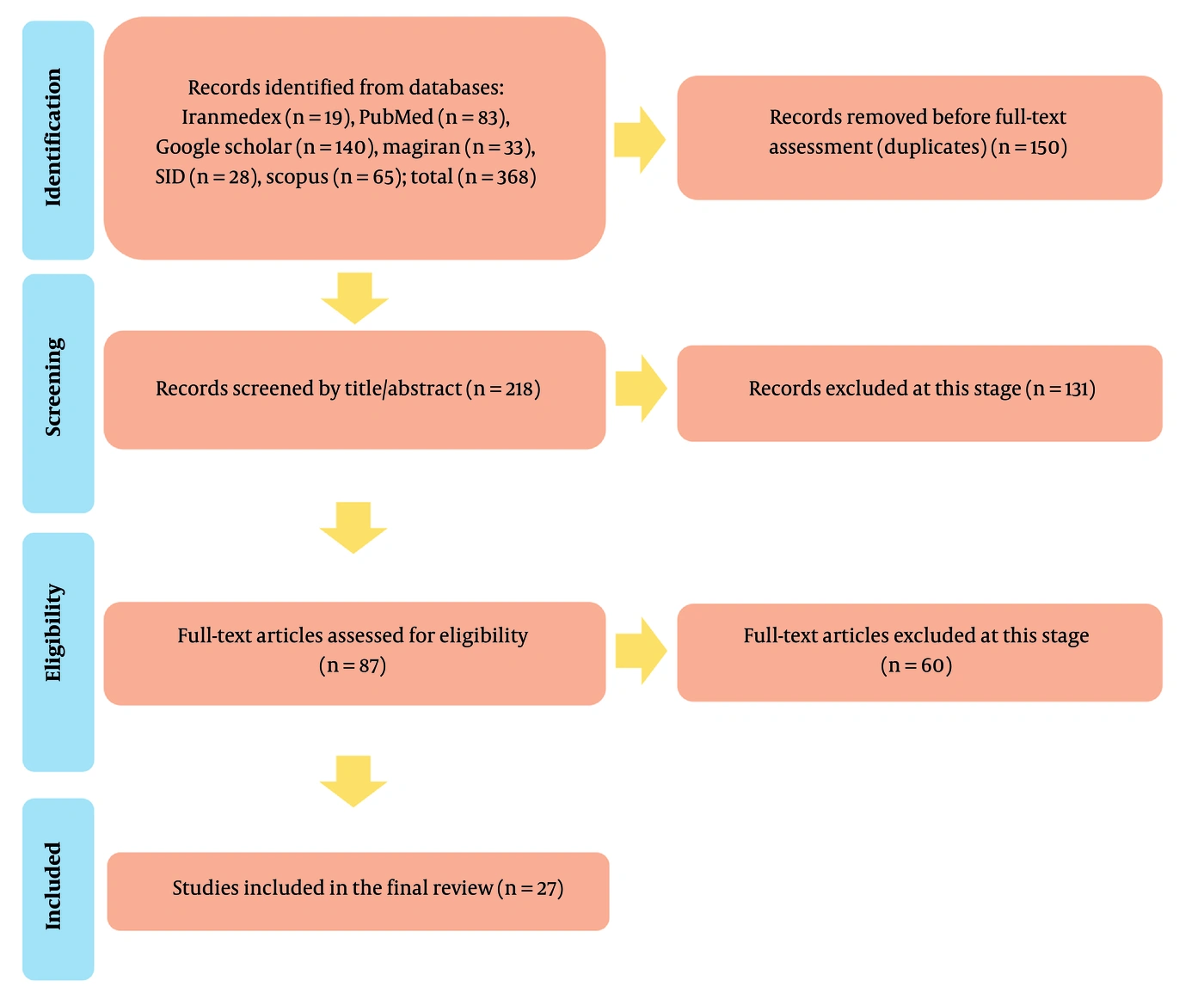
Figure 1.
PRISMA flow diagram of study identification, screening, eligibility assessment, and inclusion in the final review.
The characteristics of the included studies are summarized in Table 1, whereas the medicinal plants, their reported active constituents, the affected withdrawal manifestations, and the most effective observed doses are summarized in Table 2. Twenty-seven (n = 27) preclinical studies assessing the effects of medicinal plants/phytochemicals against morphine withdrawal syndrome were included in this systematic review. The selected studies used various animal models (mainly mice and rats) and evaluated distinct types of plant-derived products, ranging from hydroalcoholic, aqueous, ethanolic, methanolic, and fractionated extracts to pure phytochemicals (e.g., curcumin, rosmarinic acid, and berberine). The characteristics of all studies, including reference numbers, authors, publication years, medicinal plants/phytochemicals, and interventions, are presented in Table 1.
Table 1.
Characteristics of the Included Preclinical Studies Investigating Medicinal Plants and Phytochemicals for Attenuation of Morphine Withdrawal Syndrome
| Reference No. | Author(s) | Year | Article Title | Medicinal plant(s) / intervention |
|---|---|---|---|---|
| 5 | Esmaeili et al. | 2007 | Effects of Matricaria chamomilla Extract on Morphine Withdrawal Syndrome in Mice | Matricaria chamomilla |
| 15, 16 | Noroozi et al. and Ghaemi-Jandabi et al. | 2015 | Dendrosomal Curcumin Nanoformulation Attenuates Naloxone-Precipitated Morphine Withdrawal Signs in Rats | Curcuma longa (dendrosomal nano-curcumin) |
| 17 | Ahmadi et al. | 2014 | Evaluation of Acute Effect of Hydroalcoholic Extract of Hypericum scabrum on Morphine Withdrawal Signs in Male Mice | Hypericum scabrum |
| 18 | Heydari et al. | 2015 | Evaluation of the Effect of Hydroalcoholic Extract of Cinnamon on Morphine Withdrawal Signs in Rats | Cinnamomum spp. |
| 19 | Amin et al. | 2015 | Study of the Effect of Hydroalcoholic Extract of Flixweed on Morphine Withdrawal Syndrome Induced by Naloxone in Male Rats | Descurainia sophia |
| 20 and 21 | Molladazvand et al. and Liu et al. | 2023 | The Effect of Rosmarinic Acid on Occurrence of Morphine Withdrawal Syndrome in Mice | Rosmarinic acid |
| 22 | Karami and Alami | 2018 | Therapeutic Effects of Alcoholic Extract of Salvia limbata on Morphine Withdrawal Syndrome | Salvia limbata |
| 23 | Sabri Benhengi | 2006 | Evaluation of the Effect of Aloe vera Extract on Morphine Withdrawal Signs in Female Rats | Aloe vera |
| 24 | Hosseinzadeh et al. | 2011 | Evaluation of the Effects of Basil Plant Fractions on Morphine Withdrawal Syndrome in Mice | Ocimum basilicum |
| 25 | Vafaei et al. | 2011 | Evaluation of the Effects of Valerian, Savory, and Peppermint Extracts on Morphine Withdrawal Signs in Mice | Satureja hortensis, Valeriana officinalis, Mentha piperita |
| 26 | Hosseinzadeh et al. | 2006 | Evaluation of the Effects of Rosemary Aerial Parts Fractions on Morphine Withdrawal Syndrome in Mice | Salvia rosmarinus |
| 27 | Bakhtiyari et al. | 2016 | The Effects of Ethanolic Extract of Dill on Morphine Withdrawal Symptoms in Addicted Male NMRI Rats | Anethum graveolens |
| 28 | Abbasi Maleki et al. | 2016 | The Effect of Ethanolic Extract of Ziziphora tenuior on Morphine Withdrawal Symptoms in Male Mice | Ziziphora tenuior |
| 29 | Hosseinzadeh et al. | 2006 | Evaluation of the Effect of Zhumeria majdae Extract and Fractions on Morphine Withdrawal Syndrome in Mice | Zhumeria majdae |
| 30 | Jadidi et al. | 2010 | Evaluation of the Effect of Ferula persica Extract on Morphine Withdrawal Signs and Sleep Duration in Mice | Ferula persica |
| 31 | Abbasi Maleki et al. | 2014 | Effect of Hydroalcoholic Extract of Avena sativa on Morphine Withdrawal Signs in Male Mice | Avena sativa |
| 32 | Moradi Fard et al. | 2018 | Evaluation of the Effect of Chronic Administration of Marrubium vulgare Extract on Morphine Withdrawal Syndrome in Male Rats | Marrubium vulgare |
| 33 | Jafari et al. | 2004 | Effects of Aqueous Extract of Trachyspermum copticum on Morphine Withdrawal Syndrome in Rats | Trachyspermum copticum |
| 34 | Gheibi et al. | 2007 | Effects of Trachyspermum copticum Microinjection in Nucleus Reticularis Paragigantocellularis on Morphine Withdrawal Signs | Trachyspermum copticum |
| 35 | Jafari Barmak et al. | 2016 | Effect of Hydroalcoholic Extract of Trachyspermum copticum on Morphine Withdrawal Signs in Rats | Trachyspermum copticum |
| 36 | Charkhpour et al. | 2014 | Evaluation of the Effects of Artemisia austriaca on Morphine Withdrawal Syndrome in Rats | Artemisia austriaca |
| 37 | Nasiri Asl et al. | 2007 | Evaluation of the Effects of Berberis vulgaris Fruit Extracts and Berberine on Morphine Withdrawal Syndrome in Mice | Berberis vulgaris |
| 38 | Mousavi | 2015 | Evaluation of the Effect of Hydroalcoholic Extract of Plantago major on Morphine Withdrawal Signs in Male Mice (Master thesis, Islamic Azad University, Qom Branch) | Plantago major |
| 39 | Rauter et al. | 2010 | Effect of Crocus sativus Stigma and its Constituents, Crocin and Safranal, on Morphine Withdrawal Syndrome in Mice | Crocus sativus |
| 40 | Khalili et al. | 2008 | Evaluation of the Effect of Oral Administration of Datura stramonium Seeds on Morphine Withdrawal Signs in Rats | Datura stramonium |
Table 2.
Medicinal Plants and Phytochemicals Investigated for Attenuation of Morphine Withdrawal Syndrome in Preclinical Studies
| Common Plant Name and Study ID | Key Active Constituent(s) | Affected Withdrawal Symptoms | Most Effective Observed Dose |
|---|---|---|---|
| Turmeric (15, 16) | Curcumin | Teeth chattering, jumping, wet-dog shakes, diarrhea, locomotor signs | Dendrosomal nano-curcumin, 5 mg/kg |
| Chamomile (5) | Apigenin, alpha-bisabolol, chamazulene | Standing on two legs, jumping, climbing the wall, tremor | Extract, 30 mg/kg |
| Hypericum scabrum(17) | Hypericin, quercetin, apigenin | Standing on two legs, jumping, weight loss | Hydroalcoholic extract, 30 mg/kg |
| Cinnamon (18) | Eugenol, cinnamaldehyde | Depression-like behaviors, anxiety | Hydroalcoholic extract, 400 mg/kg |
| Flixweed (19) | Quercetin, kaempferol, alpha-linolenic acid | Scratching, writhing, weight loss | Hydroalcoholic extract, 400 mg/kg |
| Wild sage (22) | Rosmarinic acid | Jumping, diarrhea | Aerial-part methanolic extract |
| Lemon balm (20) | Rosmarinic acid | Jumping, defecation, standing on two legs | Rosmarinic acid, 20 mg/kg |
| Aloe vera (23) | Anthraquinones (especially aloin and aloe-emodin), polysaccharides (e.g., acemannan) | Stool form, agitation, ptosis, floppy eyelids, and body-mass variations | Aloe vera aqueous extract, 40 mg/kg |
| Basil (24) | Linalool, cineole, eugenol | Jumping | Petroleum-ether fraction |
| Summer savory (25) | Carvacrol | Jumping, defecation | Aqueous extract, 200 mg/kg |
| Rosemary (26) | Oleanolic acid, ursolic acid, luteolin | Jumping | Total extract, 1.68 g/kg |
| Dill (27) | d-Carvone | Jumping | Ethanolic extract, 500 mg/kg |
| Kakuti (28) | Pulegone | Jumping, teeth chattering, grooming, diarrhea, wet-dog shakes, standing on two legs | Ethanolic extract, 75 and 100 mg/kg |
| Zhumeria (29) | Miltirone, linalool, camphor, borneol | Jumping, depressive behaviors | Total extract, 1.96 g/kg |
| Sakbineh (30) | Linalool, eugenol | Yawning, defecation | Hydroalcoholic extract, 100 mg/kg |
| Oat (31) | Gramine, avenanthramides | Jumping, teeth chattering, diarrhea, wet-dog shakes, standing on two legs, grooming | Hydroalcoholic extract, 100 and 200 mg/kg |
| White horehound (32) | Acteoside, forsythoside-B, arenarioside | Jumping, tremor, grooming, teeth chattering | Methanolic extract, 20 mg/kg |
| Valerian (25) | Valerenic acid, linalin, hesperidin, valeranine, actinidine | Defecation, jumping | Aqueous root extract, 25 mg/kg (jumping) and 50 mg/kg (defecation) |
| Poley germander (19) | Apigenin, luteolin | Jumping, writhing | Hydroalcoholic extract, 600 mg/kg |
| Peppermint (25) | Menthol | Defecation, jumping | Aerial-part hydroalcoholic extract, 50, 100, 200 and 500 mg/kg |
| Ajwain (33-35) | Thymol, carvacrol | Jumping, diarrhea | Aqueous fruit extract, 10% v/v |
| Artemisia (36) | 7-hydroxycoumarin, eucalyptol | Overall withdrawal score | Total methanolic extract, 200 and 400 mg/kg |
| Barberry (37) | Berberine | Jumping, motor restlessness, yawning | Intraperitoneal berberine injection, 20 mg/kg |
| Plantain (38) | Apigenin, luteolin, aucubin, catalpol | Jumping, standing on two legs, climbing the wall | Hydroalcoholic extract, 75 mg/kg |
| Saffron (39) | Crocin, safranal | Jumping | Aqueous extract, 320 mg/kg |
| Jimson weed (40) | Scopolamine, hyoscyamine | Jumping, wet-dog shakes, ptosis, weight loss, diarrhea | Seed extract, 100 mg/kg |
Common plant name & study ID Key active constituent(s) Affected withdrawal symptoms Most effective observed dose
Turmeric (15, 16) Curcumin Teeth chattering, jumping, wet-dog shakes, diarrhea, locomotor signs Dendrosomal nano-curcumin, 5 mg/kg
Chamomile (5) Apigenin, alpha-bisabolol, chamazulene Standing on two legs, jumping, climbing the wall, tremor Extract, 30 mg/kg
Hypericum scabrum (17) Hypericin, quercetin, apigenin Standing on two legs, jumping, weight loss Hydroalcoholic extract, 30 mg/kg
Cinnamon (18) Eugenol, cinnamaldehyde Depression-like behaviors, anxiety Hydroalcoholic extract, 400 mg/kg
Flixweed (19) Quercetin, kaempferol, alpha-linolenic acid Scratching, writhing, weight loss Hydroalcoholic extract, 400 mg/kg
Wild sage (22) Rosmarinic acid Jumping, diarrhea Aerial-part methanolic extract
Lemon balm (20) Rosmarinic acid Jumping, defecation, standing on two legs Rosmarinic acid, 20 mg/kg
Aloe vera (23) Anthraquinones (especially aloin and aloe-emodin), polysaccharides (e.g., acemannan) Stool form, agitation, ptosis, floppy eyelids, and body-mass variations Aloe vera aqueous extract, 40 mg/kg
Basil (24) Linalool, cineole, eugenol Jumping Petroleum-ether fraction
Summer savory (25) Carvacrol Jumping, defecation Aqueous extract, 200 mg/kg
Rosemary (26) Oleanolic acid, ursolic acid, luteolin Jumping Total extract, 1.68 g/kg
Dill (27) d-Carvone Jumping Ethanolic extract, 500 mg/kg
Kakuti (28) Pulegone Jumping, teeth chattering, grooming, diarrhea, wet-dog shakes, standing on two legs Ethanolic extract, 75 and 100 mg/kg
Zhumeria (29) Miltirone, linalool, camphor, borneol Jumping, depressive behaviors Total extract, 1.96 g/kg
Sakbineh (30) Linalool, eugenol Yawning, defecation Hydroalcoholic extract, 100 mg/kg
Oat (31) Gramine, avenanthramides Jumping, teeth chattering, diarrhea, wet-dog shakes, standing on two legs, grooming Hydroalcoholic extract, 100 and 200 mg/kg
White horehound (32) Acteoside, forsythoside-B, arenarioside Jumping, tremor, grooming, teeth chattering Methanolic extract, 20 mg/kg
Valerian (25) Valerenic acid, linalin, hesperidin, valeranine, actinidine Defecation, jumping Aqueous root extract, 25 mg/kg (jumping) and 50 mg/kg (defecation)
Poley germander (19) Apigenin, luteolin Jumping, writhing Hydroalcoholic extract, 600 mg/kg
Peppermint (25) Menthol Defecation, jumping Aerial-part hydroalcoholic extract, 50, 100, 200 and 500 mg/kg
Artemisia (36) 7-hydroxycoumarin, eucalyptol Overall withdrawal score Total methanolic extract, 200 and 400 mg/kg
Barberry (37) Berberine Jumping, motor restlessness, yawning Intraperitoneal berberine injection, 20 mg/kg
Plantain (38) Apigenin, luteolin, aucubin, catalpol Jumping, standing on two legs, climbing the wall Hydroalcoholic extract, 75 mg/kg
Saffron (39) Crocin, safranal Jumping Aqueous extract, 320 mg/kg
Jimson weed (40) Scopolamine, hyoscyamine Jumping, wet-dog shakes, ptosis, weight loss, diarrhea Seed extract, 100 mg/kg
The studies included in the current review focused on Iranian medicinal plants and phytochemicals for preventing or alleviating naloxone-induced morphine withdrawal syndrome in animal subjects. The key characteristics and findings are summarized in Table 2.
3.1. Effects on Behavioral Withdrawal Signs
Studies by Noroozi et al. and Ghaemi-Jandabi et al. reported that dendrosomal nano-curcumin (5 mg/kg, i.p.) significantly reduced several naloxone-induced morphine withdrawal manifestations, including wet-dog shakes, teeth chattering, diarrhea, and locomotor alterations in morphine-dependent rats. However, the findings regarding its effect on jumping behavior were inconsistent across the two studies (15, 16).
Esmaeili et al. evaluated the effects of Matricaria chamomilla extract in morphine-dependent mice. Administration of the extract at doses of 10, 20, and 30 mg/kg significantly reduced jumping, standing on two legs, wall climbing, and tremor following naloxone administration (5). Ahmadi et al. investigated the hydroalcoholic extract of Hypericum scabrum. Administration of the extract at 30 mg/kg significantly reduced jumping, standing on two legs, and body weight loss associated with morphine withdrawal in male mice (17). Heydari et al. evaluated the hydroalcoholic extract of Cinnamomum zeylanicum at a dose of 400 mg/kg. The extract reduced anxiety-related behaviors and depressive-like manifestations associated with naloxone-induced morphine withdrawal (18). Amin et al. investigated the hydroalcoholic extract of Descurainia sophia. Oral administration of 400 mg/kg significantly reduced scratching, writhing, and body weight loss in morphine-dependent rats following naloxone administration (19).
Molladazvand et al. evaluated rosmarinic acid in morphine-dependent mice. Administration of rosmarinic acid (20 mg/kg) significantly reduced jumping, defecation, and standing on two legs during naloxone-induced withdrawal (20). In a separate study, Karami and Alami reported that the methanolic extract of the aerial parts of Salvia limbata reduced jumping and diarrhea in morphine-dependent animals (22). Sabri Benhengi evaluated the effects of an aqueous Aloe vera extract in morphine-dependent rats. Administration of the extract at 40 mg/kg improved stool consistency and significantly reduced agitation, ptosis, and body weight alterations following naloxone administration (23). Hosseinzadeh et al. investigated different fractions of Ocimum basilicum. The petroleum-ether fraction significantly reduced naloxone-induced jumping behavior in morphine-dependent mice (24).
3.2. Effects of Additional Medicinal Plants on Withdrawal Manifestations
Vafaei et al. investigated the aqueous extract of Satureja hortensis in morphine-dependent mice. Administration of the extract at 200 mg/kg significantly reduced naloxone-induced jumping and defecation compared with the control group (25). Hosseinzadeh et al. evaluated the effects of Salvia rosmarinus extract and its fractions on morphine withdrawal manifestations. The total extract reduced naloxone-induced jumping in a dose-dependent manner, with the greatest reduction observed at 1.68 g/kg; the chloroform fraction also attenuated withdrawal manifestations in morphine-dependent mice (26). Bakhtiyari et al. investigated the ethanolic extract of Anethum graveolens in morphine-dependent rats. Administration of the extract at 500 mg/kg significantly reduced naloxone-induced jumping behavior (27). Abbasi Maleki et al. evaluated the ethanolic extract of Ziziphora tenuior. Administration of 75 and 100 mg/kg significantly reduced jumping, teeth chattering, grooming, diarrhea, wet-dog shakes, and standing on two legs in morphine-dependent mice (28). Hosseinzadeh et al. investigated the methanolic extract of Zhumeria majdae. Administration of the extract at 1.96 g/kg significantly reduced jumping and depressive-like behaviors induced by naloxone in morphine-dependent mice (29). Jadidi et al. evaluated the hydroalcoholic extract of Ferula persica. Administration of the extract (100 mg/kg, i.p.) 30 minutes before naloxone significantly reduced yawning and defecation during morphine withdrawal in mice (30).
3.3. Effects on Withdrawal Severity and Associated Behavioral Outcomes
Abbasi Maleki et al. evaluated the hydroalcoholic extract of Avena sativa in morphine-dependent mice. Administration of the extract at doses of 100 and 200 mg/kg significantly reduced several naloxone-induced withdrawal manifestations, including jumping, teeth chattering, diarrhea, wet-dog shakes, standing on two legs, and grooming; the higher dose (200 mg/kg) also reduced rearing behavior during withdrawal (31). Moradi Fard et al. investigated the methanolic extract of Marrubium vulgare. Administration of the extract at 20 mg/kg significantly reduced several behavioral manifestations of morphine withdrawal, including jumping, tremor, grooming, and teeth chattering (32).
Vafaei et al. evaluated the aqueous root extract of Valeriana officinalis. The extract significantly reduced jumping at 25 mg/kg and decreased defecation at 50 mg/kg in morphine-dependent mice following naloxone administration (25). Amin et al. investigated the hydroalcoholic extract of Teucrium polium. Administration of the extract at 600 mg/kg significantly reduced jumping and writhing in morphine-dependent rats (19). In another study by Vafaei et al., the hydroalcoholic extract of Mentha piperita was assessed; administration of the extract at doses between 50 and 500 mg/kg significantly decreased jumping and defecation during naloxone-precipitated morphine withdrawal (25). Three studies investigated the effects of Trachyspermum copticum on morphine withdrawal syndrome. Collectively, these studies reported that the aqueous fruit extract reduced jumping and diarrhea in morphine-dependent animals following naloxone administration. Beneficial effects were observed after both systemic administration and microinjection into the nucleus reticularis paragigantocellularis (PGi) (33, 34, 35).
Charkhpour et al. evaluated the methanolic extract of Artemisia austriaca. Administration of the extract at doses of 200 and 400 mg/kg significantly reduced the overall withdrawal score in a dose-dependent manner (36). Nasiri Asl et al. examined the effects of Berberis vulgaris and its main alkaloid, berberine; intraperitoneal administration of berberine (20 mg/kg) significantly decreased jumping, motor restlessness, and yawning in morphine-dependent mice (37). Mousavi evaluated the hydroalcoholic extract of Plantago major. Administration of the extract at 75 mg/kg significantly reduced jumping, standing on two legs, and wall climbing following naloxone-induced morphine withdrawal in mice (38). Hosseinzadeh and Jahanian investigated the effects of Crocus sativus in morphine-dependent mice; administration of the aqueous extract (320 mg/kg) significantly reduced jumping behavior during naloxone-precipitated withdrawal (39). Khalili et al. evaluated the seed extract of Datura stramonium. Administration of the extract at 100 mg/kg significantly reduced naloxone-induced withdrawal manifestations, including jumping, wet-dog shakes, ptosis, weight loss, and diarrhea (40).
Figure 2 summarizes the methodological quality of the included animal studies assessed using the SYRCLE Risk of Bias tool. Overall, most studies demonstrated a low risk of bias regarding baseline characteristics, incomplete outcome data, and selective reporting. However, many studies had an unclear risk of bias for sequence generation, allocation concealment, random housing, and blinding of caregivers and outcome assessors because of insufficient methodological reporting. One study showed a high risk of attrition bias related to incomplete outcome data.
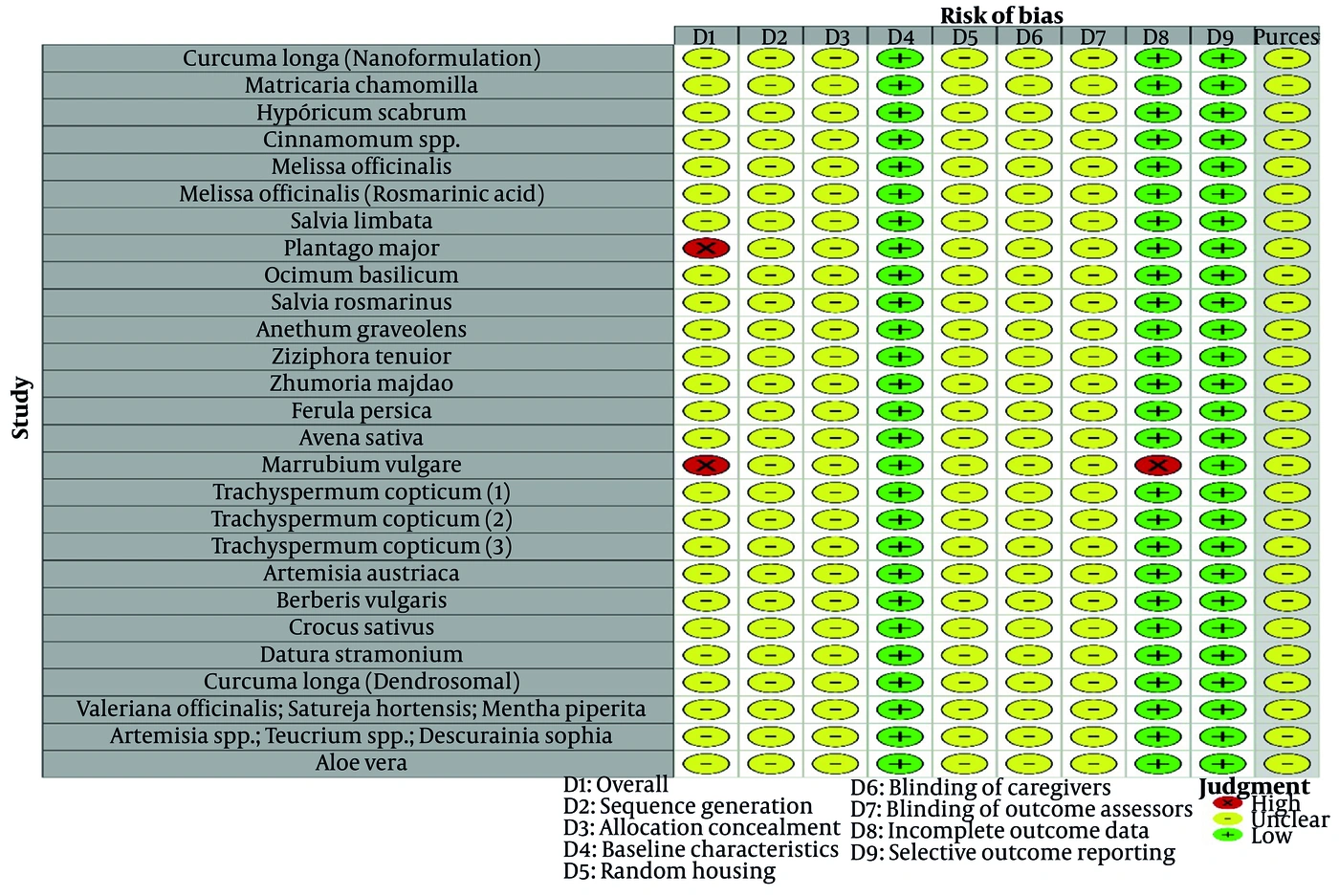
Figure 2.
SYRCLE Risk of Bias assessment of the included preclinical studies.
4. Discussion
Table 3 presents the major active constituents identified in the reviewed medicinal plants, the proposed mechanisms by which they may alleviate morphine withdrawal syndrome, and the plants in which these compounds are found. These proposed mechanisms are derived mainly from previous pharmacological studies and were not directly investigated in most of the included studies. Therefore, they should be interpreted as biologically plausible mechanisms rather than experimentally confirmed pathways in the reviewed animal models.
Table 3.
Active constituents with the greatest effects on morphine withdrawal syndrome.
| Active Constituent | Mechanism by Which the Active Constituent Alleviates Withdrawal Symptoms | Plants Containing the Active Constituent |
|---|---|---|
| Curcumin | Affecting the central serotonergic system and increasing serotonin levels | Turmeric |
| Apigenin | Affecting GABAergic activity and modulating the opioid system, leading to sedative and anti-inflammatory effects | Chamomile, oat, plantain, poley germander |
| Hypericin | Inhibition of the monoamine oxidase (MAO) enzyme, preventing the catabolism of adrenaline and noradrenaline | St. John’s Wort |
| Eugenol | Agonistic effect on the GABA(A) receptor and antagonistic effect on the NMDA receptor, causing opioid-independent neuropathic analgesic effects | Cinnamon, basil, sakbineh |
| Rosmarinic acid | Causing anti-inflammatory effects through selective inhibition of COX-2, pro-inflammatory cytokines, and matrix metalloproteinase-9 (MMP-9) | Marjoram, lemon balm |
| Linalool | Causing sedative and analgesic effects by enhancing the GABA(A) pathway and inhibiting NMDA receptors | Basil, sakbineh, zhumeria |
| Carvacrol | Inhibition of NMDA receptors and enhancement of the GABA system, leading to sedative and analgesic effects; also blocking voltage-gated calcium channels, causing reduced excitability | Summer savory |
| Oleanolic acid | Selective and potent inhibition of cAMP-dependent protein kinase-A (PKA), leading to modulation of withdrawal syndrome symptoms | Rosemary |
| d-Carvone | Causing reduced neuronal excitability and anticonvulsant effects by decreasing intracellular calcium levels (preventing calcium influx into neurons) | Dill |
| Pulegone | Postulated to cause analgesic and antidepressant effects via serotonergic and opioidergic pathways | Kakuti |
| Camphor | Inhibition of catecholamine release, including dopamine (by blocking nicotinic acetylcholine receptors), and inhibition of DMPP-induced calcium increase, leading to reduced excitability | Zhumeria, artemisia |
| Borneol | Inhibition of catecholamine release, including dopamine (by blocking nicotinic acetylcholine receptors), and inhibition of DMPP-induced norepinephrine release, leading to reduced excitability | Zhumeria, artemisia |
| Valerenic acid | Affinity for the 5-HT1A receptor (a serotonergic receptor involved in mood and circadian-rhythm regulation), leading to modulation of withdrawal syndrome symptoms | Valerian |
| Artemisinin | Causing anxiolytic effects by reducing calcium influx into neurons and decreasing excitability | Artemisia |
| Berberine | Affecting alpha-2 adrenergic receptors, causing inhibition of adrenergic system hyperactivity; also a potent inhibitory effect on the NOS enzyme, leading to modulation of withdrawal symptoms and modulation of the dopaminergic and glutamatergic systems | Barberry |
| Safranal | Causing anxiolytic effects and reduced excitability by enhancing the GABAergic pathway | Saffron |
| Menthol | Interaction with kappa opioid receptors, leading to reduced pain-signal transmission, inhibition of intracellular calcium influx, and decreased synaptic transmission, thereby elevating the stimulus threshold | Peppermint |
Active constituent Mechanism by which the active constituent alleviates withdrawal symptoms Plants containing the active constituent
Curcumin Affecting the central serotonergic system and increasing serotonin levels Turmeric
Apigenin Affecting GABAergic activity and modulating the opioid system, leading to sedative and anti-inflammatory effects Chamomile, oat, plantain, poley germander
Hypericin Inhibition of the monoamine oxidase (MAO) enzyme, preventing the catabolism of adrenaline and noradrenaline St. John’s Wort
Eugenol Agonistic effect on the GABA(A) receptor and antagonistic effect on the NMDA receptor, causing opioid-independent neuropathic analgesic effects Cinnamon, basil, sakbineh
Rosmarinic acid Causing anti-inflammatory effects through selective inhibition of COX-2, pro-inflammatory cytokines, and matrix metalloproteinase-9 (MMP-9) Marjoram, lemon balm
Linalool Causing sedative and analgesic effects by enhancing the GABA(A) pathway and inhibiting NMDA receptors Basil, sakbineh, zhumeria
Carvacrol Inhibition of NMDA receptors and enhancement of the GABA system, leading to sedative and analgesic effects; also blocking voltage-gated calcium channels, causing reduced excitability Summer savory
Oleanolic acid Selective and potent inhibition of cAMP-dependent protein kinase-A (PKA), leading to modulation of withdrawal syndrome symptoms Rosemary
d-Carvone Causing reduced neuronal excitability and anticonvulsant effects by decreasing intracellular calcium levels (preventing calcium influx into neurons) Dill
Pulegone Postulated to cause analgesic and antidepressant effects via serotonergic and opioidergic pathways Kakuti
Camphor Inhibition of catecholamine release, including dopamine (by blocking nicotinic acetylcholine receptors), and inhibition of DMPP-induced calcium increase, leading to reduced excitability Zhumeria, artemisia
Borneol Inhibition of catecholamine release, including dopamine (by blocking nicotinic acetylcholine receptors), and inhibition of DMPP-induced norepinephrine release, leading to reduced excitability Zhumeria, artemisia
Valerenic acid Affinity for the 5-HT1A receptor (a serotonergic receptor involved in mood and circadian-rhythm regulation), leading to modulation of withdrawal syndrome symptoms Valerian
Artemisinin Causing anxiolytic effects by reducing calcium influx into neurons and decreasing excitability Artemisia
Berberine Affecting alpha-2 adrenergic receptors, causing inhibition of adrenergic system hyperactivity; also exerting a potent inhibitory effect on the NOS enzyme, leading to modulation of withdrawal symptoms and modulation of the dopaminergic and glutamatergic systems Barberry
Safranal Causing anxiolytic effects and reduced excitability by enhancing the GABAergic pathway Saffron
Menthol Interaction with kappa opioid receptors, leading to reduced pain-signal transmission, inhibition of intracellular calcium influx, and decreased synaptic transmission, thereby elevating the stimulus threshold Peppermint
Several reports suggest the involvement of the central serotonergic system in opioid withdrawal syndrome. Serotonin levels have been shown to decrease in several brain regions during withdrawal compared with those observed after acute morphine administration (41, 42). Curcumin, one of the principal active constituents of turmeric, has been reported to act similarly to antidepressants by increasing serotonin levels, which may partly explain its beneficial effects on morphine withdrawal manifestations (15, 16, 43). St. John’s Wort contains hypericin, whose pharmacological activity has been associated primarily with the serotonergic and GABAergic systems (17). Eugenol has been reported to exert opioid-independent analgesic effects through activation of GABA(A) receptors and inhibition of NMDA receptors (44). Cinnamon is rich in eugenol and also contains cinnamaldehyde, which has been shown to produce sedative effects at higher doses (18).
Quercetin, identified in Descurainia sophia and Hypericum scabrum, has been reported to act as a positive allosteric modulator of GABA(A) receptors, thereby reducing central nervous system hyperexcitability (17, 45). Rosmarinic acid, present in Melissa officinalis and Salvia limbata, exhibits potent antioxidant and anti-inflammatory properties through inhibition of COX-2, pro-inflammatory cytokines, and matrix metalloproteinase-9 (MMP-9) (46). Because inflammatory mediators are believed to contribute to the development of morphine withdrawal syndrome (47), these pharmacological properties may partly explain the beneficial effects observed with these medicinal plants (20, 21). Consistent with a broader role for redox balance in opioid-related behavior, probiotic supplementation has been reported to modify morphine preference in rats through antioxidative/oxidative signaling pathways, underscoring the potential relevance of oxidative mechanisms to morphine dependence (62).
Aloe vera contains several bioactive compounds, including aloin, salicylic acid, vitamins, and enzymes, which possess anti-inflammatory and analgesic properties through inhibition of cyclooxygenase activity and modulation of prostaglandin synthesis (41). However, one study suggested that higher concentrations of Aloe vera may aggravate morphine withdrawal symptoms by increasing neuronal and muscular excitability in a dose-dependent manner (23). These findings indicate that the effects of Aloe vera may depend on the administered dose. The sedative and analgesic properties of linalool have been attributed to its ability to enhance GABA(A) receptor activity and inhibit NMDA receptors (44). Accordingly, Ocimum basilicum, which contains linalool, cineole, and eugenol, has been reported to possess antioxidant and anti-inflammatory properties through inhibition of reactive oxygen and nitrogen species (ROS and RNS) (24, 48). Likewise, Ferula persica L., another source of linalool and eugenol, has demonstrated antioxidant activity and may alleviate withdrawal symptoms through modulation of GABAergic and glutamatergic neurotransmission (30, 49). Satureja hortensis L. exhibits analgesic, anti-inflammatory, and sedative properties that have mainly been attributed to carvacrol and flavonoids (25, 50). Similarly, Mentha piperita produces analgesic and antispasmodic effects through menthol by modulating opioid receptors, reducing intracellular calcium influx, and attenuating synaptic transmission (25, 51). In addition, Valeriana officinalis enhances GABAergic neurotransmission through valerenic acid and related compounds, resulting in sedative, anxiolytic, and analgesic effects (25, 52). In morphine withdrawal syndrome, Salvia rosmarinus L. may modulate withdrawal manifestations through triterpenoids such as oleanolic acid and ursolic acid by inhibiting cAMP-dependent protein kinase A activity; furthermore, luteolin may contribute to its analgesic and anti-inflammatory effects (24, 53).
Anethum graveolens has been reported to alleviate withdrawal symptoms through the actions of d-carvone and linalool. d-Carvone decreases neuronal excitability by reducing intracellular calcium influx, whereas linalool enhances GABAergic neurotransmission and produces anticonvulsant and calming effects (27, 54). Pulegone and limonene, the principal constituents of Ziziphora tenuior L., have been suggested to exert analgesic and antidepressant effects through modulation of serotonergic and opioidergic pathways (28). Zhumeria majdae may reduce withdrawal manifestations through multiple pharmacological mechanisms: miltirone acts as a partial benzodiazepine receptor agonist, linalool reduces glutamate release, and camphor and borneol modulate dopaminergic neurotransmission by inhibiting catecholamine release and calcium-dependent neurotransmission (29). Avena sativa L. has been reported to exert antidepressant and anxiolytic effects through indole alkaloids, including gramine and avenanthramides, which influence dopaminergic signaling; in addition, flavonoids such as apigenin enhance GABAergic neurotransmission by increasing chloride influx, thereby reducing central nervous system excitability and restlessness (31, 55).
Active constituents isolated from Marrubium vulgare, including acteoside, forsythoside-B, and arenarioside, have demonstrated selective inhibition of COX-2 rather than COX-1, which may suppress inflammatory responses and consequently attenuate morphine withdrawal symptoms (32, 56). Thymol, the major active constituent of Trachyspermum copticum, has been suggested to reduce withdrawal-associated distress by modulating pain pathways and decreasing aspartate and glutamate levels within the PGi nucleus (33, 34, 35). Artemisia austriaca exerts anxiolytic and anti-withdrawal effects through sesquiterpene lactones that reduce neuronal excitability by decreasing calcium influx, inhibiting NMDA signaling, and reducing nitric oxide production; the presence of borneol and camphor may further contribute to its neuromodulatory properties (36, 57).
Berberis vulgaris has been reported to attenuate withdrawal symptoms mainly through berberine, which reduces adrenergic hyperactivity via α2-adrenergic receptor activation, inhibits nitric oxide synthase (NOS), and modulates glutamatergic and dopaminergic pathways (37, 58).
In Plantago major, flavonoids such as luteolin and apigenin have been reported to interact with the benzodiazepine-binding site of GABA(A) receptors, thereby reducing anxiety and restlessness associated with withdrawal. Its glycosides, aucubin and catalpol, also exhibit anti-inflammatory and neuroprotective properties by inhibiting NF-κB-mediated cytokine release and modulating BDNF expression, which may reduce neuronal damage during morphine withdrawal (38, 59). Crocus sativus L. (saffron) may influence morphine withdrawal through modulation of GABAergic and opioid pathways. Although crocin has been reported to reduce withdrawal signs, other studies have suggested naloxone-like antagonist effects that may precipitate more severe withdrawal manifestations in morphine-dependent animals, indicating that its mechanism is not yet fully understood and may be dose-dependent (39, 60). Datura stramonium contains tropane alkaloids, including hyoscine and scopolamine, which exert potent anticholinergic effects on both the limbic and autonomic nervous systems (61). These compounds have been reported to reduce opioid withdrawal symptoms; in a limited number of experimental studies, their effects on withdrawal scores were reported to be greater than those observed with methadone, although this observation is derived from small preclinical experiments and requires cautious interpretation (40).
At the molecular level, transcriptomic approaches such as RNA-sequencing have begun to characterize morphine-induced gene expression changes in reward-related regions, including the nucleus accumbens (63). Integrating such omics data with phytochemical investigations could help clarify the molecular pathways through which these medicinal plants act and support the identification of their active constituents.
Although the reviewed studies consistently demonstrated beneficial effects of various medicinal plants in reducing morphine withdrawal signs, these findings should be interpreted with caution. Most of the included studies showed an unclear risk of bias in several SYRCLE domains, particularly regarding randomization, allocation concealment, and blinding procedures. In addition, considerable methodological heterogeneity was observed across studies, including differences in animal species, morphine-dependence induction protocols, plant extracts, treatment doses and durations, and withdrawal-assessment methods. These methodological variations limit direct comparisons among studies and reduce the overall certainty of the available evidence. Another important consideration is that all included studies were conducted in animal models; therefore, the clinical applicability of these findings remains uncertain because interspecies differences, limited information on extract standardization, pharmacokinetic properties, long-term safety, and possible herb–drug interactions have not been adequately investigated.
A further limitation concerns the geographical scope of this review. Because eligibility was restricted to studies conducted in Iran, several medicinal plants used for opioid withdrawal in other regions, as well as studies of the same species performed elsewhere, were not captured. The present findings therefore reflect the Iranian research landscape and may not generalize to plants, chemotypes, or preparations originating from other regions, where differences in growing conditions, harvesting practices, extraction methods, and phytochemical profiles could alter biological activity. A broader systematic review incorporating non-Iranian studies would be needed to establish the wider applicability of these observations and to place the Iranian evidence within the global literature.
Overall, the available evidence suggests that several medicinal plants possess bioactive constituents with the potential to alleviate morphine withdrawal syndrome through multiple pharmacological pathways, including modulation of serotonergic, GABAergic, glutamatergic, adrenergic, and inflammatory signaling. Nevertheless, the proposed mechanisms are largely based on previous pharmacological evidence rather than direct mechanistic investigations in the included studies. Future well-designed preclinical studies using standardized experimental protocols, chemically characterized extracts, and mechanistic approaches, followed by adequately powered clinical trials, are needed to confirm the efficacy and safety of these medicinal plants for the management of opioid withdrawal syndrome. Flavonoids of the kind identified across these plants also display pharmacological activity well beyond the nervous system; for example, they have been explored as adjuncts in antiretroviral therapy (64). This breadth illustrates the broad bioactivity of this compound class, although such applications lie outside the scope of morphine withdrawal.
Overall, this review indicates that Iranian medicinal-plant extracts and their phytochemicals have shown promising preclinical efficacy in animal models of morphine withdrawal, in several cases producing effects comparable to reference agents within these experimental settings. It also offers an organized “constituent–mechanism–effect” framework that may inform the future development of polyherbal approaches designed to act on multiple neurological pathways. Future research should evaluate activity against different opioids and characterize possible drug interactions. A research gap also exists for Hyoscyamus niger L. in morphine withdrawal; its tropane alkaloids suggest potential activity, but preclinical studies are needed to evaluate its effects. Broader systematic reviews including non-Iranian studies are also needed to expand the evidence on medicinal plants for opioid withdrawal.