
1. Context
Asthma is one of the most common chronic diseases in the world and clinical features include wheezing, dyspnea and coughing. Asthma is a factor in disturbing the quality of life, physical activity and emotional activity. The prevalence rate of asthma varies in different parts of the world, such that this rate is higher in developed countries such as Australia, New Zealand and the United Kingdom (1). According to studies, the prevalence rate, morbidity, mortality and economic burden of asthma, especially in children, are on the rise. In Iran, the prevalence of asthma is between 2% (diagnosed by a physician) and 9% (caused by physical activity) (2). At present, more than 300 million people are suffering from this disease (1).
Asthma is characterized by increased airway response to allergens and increased mucosal secretions and eosinophilic inflammation. The pattern of inflammation in asthma is a characteristic of allergic diseases, and it affects inflammatory cells and many mediators (3-6). The therapeutic purposes of asthma are to prevent the onset of symptoms, establish normal lung function, help the patient in improving natural activity, prevent relapse of the disease, provide optimal drug therapy with minimal side effects and satisfy the patient and the family from treatment (7-9).
The drugs available for the treatment of asthma are divided into two groups:
The first group are drugs to prevent smooth muscle contraction, such as beta-adrenergic agonists (metaproterenol, terbutaline, albuterol, formoterol, bitolterol, salmeterol, pirbuterol), methylhexanthenes (theophylline, aminophylline, acepiphylline, diprophylline, proxophylline) and anticholinergics (ipratropium bromide, tiotropium bromide).
The second group are drugs to prevent and eliminate inflammation, such as corticosteroids (prednisolone, dexamethason, beclomethasone, dipropionate, dexamethason, budesonide, fluticasone), antileukotrienes (probilukast, iralukast, zileuton, montelukast, zafirlukast, pranlukast), and mast cell stabilizers (cromolyn sodium, nedocromil sodium).
The current medical treatment for asthma has some limitations. First, there is no known cure for asthma. In addition, patients continue to be at increased risk of exacerbation of symptoms. Finally, some of the side effects of drugs such as osteoporosis, cataracts, growth disturbances, arrhythmias and seizures can all be factors in finding treatments with fewer side effects, which are cheaper and more effective that can replace existing treatments (10).
2. Evidence Acquisition
First, these textbooks of Iranian traditional medicine including Al-Hawi, Al-qanun fi al-tibb, Zakhireh Kharazmshahi, Tohfat ol Momenin, were used to find plants which were used to treat asthma in traditional Iranian medicine. Then, scientific databases including PubMed, Science Direct, Google Scholar, SCOPUS, SID, IranDoc and MagIran were searched to find possible evidence of the efficacy of these plants for managing asthma. The data search was up-to-date as of October 31, 2017.
3. Results
3.1. Traditional Approaches to Asthma Management in Iran
Over the past two decades, there has been significant growth in the use of herbal medicines to manage and treat asthma around the world. In many countries, the use of traditional medicine is common for the treatment of diseases and the promotion of public health. On the other hand, attention to medicinal herbs are obvious in the production of drugs and the treatment of serious illnesses such as diabetes, atherosclerosis, cardiovascular disease, neurological diseases and cancer (10).
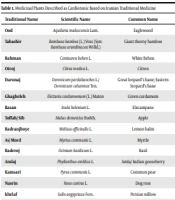
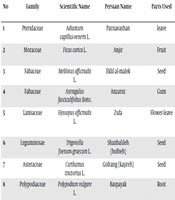
The proposed mechanism for the desired effects of plants to improve diseases is to make changes in the redox state. Some important compounds in plants include flavonoids, terpenes, alkaloids, and essential oils (10). Mucolytic agents have often been used to treat asthma because, according to traditional doctors especially Razi and Avicenna, thick and sticky sputum should be removed by diluent drugs. It should be noted that the effect of a drug type varies from person to person. Therefore, a drug that is effective for a person in the treatment of a disease may not be effective in someone else, and it is up to the medical doctor to select the appropriate drug for the patient by doing the test. The names of plants used in traditional medicine for the treatment of asthma and most commonly used in combination, some of which are listed in Table 1.
Table 1.
Plants Used to Treat Asthma in Traditional Iranian Medicine
| No | Family | Scientific Name | Persian Name | Parts Used | Active Component | Preparation And Administration | References |
|---|---|---|---|---|---|---|---|
| 1 | Pteridaceae | Adiantum capillus-veneris L. | Parsiavashan | leave | Flavonoid, mucilage, tannin | Boiled with anjir | (11-14) |
| 2 | Moraceae | Ficus carica L. | Anjir | Fruit | Alkaloid | Boiled with anison and parsiavashan | (13-15) |
| 3 | Fabaceae | Melilotus officinalis L. | Eklil al-malek | Seed | Flavonoid, tannin, resin | Boiled | (16, 17) |
| 4 | Fabaceae | Astragalus fasciculifolius Boiss. | Anzarut | Gum | Gum | Pill | (18, 19) |
| 5 | Lamiaceae | Hyssopus officinalis L. | Zufa | Flower-leave | Flavonoid, glycoside, tannin | Boiled with irsa, ferasion and shirin bayan | (11, 19) |
| 6 | Leguminosae | Trigonella foenum-graecum L. | Shanbalileh (holbeh) | Seed | Vit. C, minerals, mucilage, gum | Boiled with anjir before the meal | (11, 13, 18, 20) |
| 7 | Asteraceae | Carthamus tinctorius L. | Golrang (kajireh) | Seed | Mineral, glycoside | With almond oil | (13, 18) |
| 8 | Polypodiaceae | Polypodium vulgare L. | Baspayak | Root | Tannin, saponin, mannitol | Boiled with anison and shirin bayan | (12, 15, 18, 21) |
| 9 | Cucurbitaceae | Citrullus colocynthis | Hanzal | Fruit | Alkaloid, resin, pectin | Mixture with anison , an acinus before sleeping | (12-15, 21) |
| 10 | Brassicaceae | Brassica nigra (L.) | Khardal | Seed | Mucilage | With ghesa-al hemar, an acinus daily | (13, 18, 22, 23) |
| 11 | Umbelliferae | Pimpinella anisum L. | Anisun (badian roomi) | Fruit | Flavonoid (luteolin) | Boiled with anjir and parsiavashan | (11-13, 18, 20, 23) |
| 12 | Convolvolaceae | Cuscuta planifolia Ten. | Aftimun | Seed | Flavonoid (phytosterol) | a | (13, 15, 18) |
| 13 | Rutaceae | Ruta graueolence L. | Sodab | Extract | Flavonoid, glycoside, tannin | With grined zaravand | (12, 15, 24) |
| 14 | Burseraceae | Boswellia Carterii Bird. | Kondor | Gum | Gum, resin | a | (12, 23, 25) |
| 15 | Conifereae | Juniperus excelsa Bieb. | Abhal | Seed | Tannin, resin | Dry powder with honey and cow butter | (12, 15, 21, 25) |
| 16 | Leguminosae | Glycyrrhiza glabra L | Shirin bayan | Root | Flavonoid, mucilage, mineral | With hanzal, an acinus daily | (11, 15, 19) |
| 17 | Brassicaceae | Lepidium sativum L. | Tukhm shahi (tartizak) | Seed | Mineral | a | (12, 13, 15, 18) |
| 18 | Lauraceae | Laurus nobilis L. | Barg bu | Fruit | Essential fatty acids, mucilage | With honey, an acinus daily | (13, 15, 18) |
| 19 | Plantaginaceae | Plantago major L. | Barhang | Leave-root | Flavonoid, mucilage, alkaloid | a | (12, 25) |
| 20 | Rosaceae | Pyrus cydonia L. | Thum behdaneh | Seed | Flavons, mucilage, resin | Syrup contains behdaneh, shirin bayan root, zufa and banafsheh | (13, 15, 21, 25) |
| 21 | Iridaceae | Crocus sativus L. | Zaffaron | Flower | Crocin, safranal, mucilage | a | (13, 22, 23, 25, 26) |
| 22 | Zingiberaceae | Zingiber officinale Rose | Zanjafil | Root | Mucilage | Boiled | (15, 25) |
| 23 | Portulacaceae | Portulaca oleracea L. | Khorfeh | Seed-leave | Mucilage, alkaloid, glycoside | a | (12, 15, 21, 25) |
| 24 | Violaceae | Viola odorata | Banafsheh | Flower | Mucilage, alkaloid, gum | a | (13, 22, 23, 25) |
| 25 | Rosaceae | Rosa damascena L. | Gole mohammadi | Flower | Carotene, vit C, resin | a | (11, 13, 25) |
| 26 | Ranunculaceae | Nigella sativa Sibth. | Siah daneh | Seed | Mucilage, alkaloid, tannin | a | (13, 25) |
| 27 | Myricacea | Myrica sapida | Kaiphal | Bark | Quercetin | a | (25, 27) |
| 28 | Apiaceae | Carum carvi L. | Zire siah | Seed | Mucilage, tannin, resin | a | (13, 25) |
| 29 | Nitrariaceae | Peganum harmala L. | Espand | Seed | Alkaloid | a | (19) |
| 30 | Compositae | Anacyclus pyrethrum L. | Aqarqarha | Seed | Mucilage | a | (19, 25, 28) |
| 31 | Convolvulaceae | Operculina turpethum L. | Turbod | Root | Flavonoid | A mixture with khardal, aftimun, gazaneh and honey | (18, 19) |
| 32 | Labiatae | Lavandula stoechas L. | Ostaghodos | Branch | Flavonoid | Boiled before sleeping | (13, 17, 23) |
| 33 | Compositae | Chrysanthemum parthenium L. | Bokhore maryam | Underground caulis | Flavonoid (phytosterol), mucilage, | a | (13, 18) |
| 34 | Lamiaceae | Pulgium vulgare Mill. | Poneh | Leave | Tannin, resin | a | (11, 16, 19, 25) |
| 35 | Rhamnaceae | Zizyphus vulgaris L. | Unnab | Fruit | Mucilage, vit C, tannin | Boiled | (22, 23, 25) |
| 36 | Cruciferae | Raphanus sativus L. | Trob | Root | Essential fatty acids, Glycoside | a | (12, 24, 29) |
| 37 | Cucurbitaceae | Ecballium elaterium L. | Qetha al-hemar | Fruit | Essential fatty acids, alkaloid | Boiled with pichak sahraei | (12, 13, 18, 20) |
| 38 | Xanthorrhoeaceae | Aloe vera (L.) Burm. f. | Sabr zard | Aerial parts | Glycoside, resin | Mixture with aftimun and hanzal | (11, 15, 23, 24) |
| 39 | Compositae | Matricaria Chamomilla L. | Baaboonaj | Flower | Flavonoid, mucilage | a | (11, 13, 15, 25) |
| 40 | Fabaceae | Caesalpinia bonduc (L.) Roxb. | Fandoq hendi | Root | Flavonoid | a | (16, 17) |
| 41 | Umbelliferae | Ferula persica willd. | Sakbinaj | Gum | Gum, Resin | a | (18, 25) |
| 42 | Tamaricaceae | Tamarix mannifera Ehrenb. | Gaz anjabin | Fruit | Mucilage, sucrose | Boiled | (18, 25) |
| 43 | Costaceae | Cheilocostus speciosus (J. Koenig) | Qost shirin | Root | Mucilage | With afsantin | (17, 19, 25) |
| 44 | Convolvulaceae | Convolvulus arvensis L. | Pichak sahraei | Aerial parts | Tannin, glycoside, resin | Boiled with ghesa-al hemar | (15, 17) |
| 45 | Araliaceae | Hedera helix L. | Ashaqe | Fruit | Mineral, tannin, vit C | Boiled | (16, 17, 19) |
| 46 | Rosaceae | Prunus amygdalus (L) Stock | Badam shirin | Oil | Essential fatty acids, mucilage, vit C | a | (13, 15, 25) |
| 47 | Liliaceae | Veratrum album L. | Kharbagh sefid | Root | Gum, resin | a | (11, 22, 23, 25) |
| 48 | Liliaceae | Allium sativum L. | Sir | Onion | Mucilage, mineral, vit C, A | a | (11, 13, 18) |
| 49 | Umbelliferae | Opopanax chironium kochi | Javshir | Gum | Gum, malic acid | a | (12, 18) |
| 50 | Umbelliferae | Ferula galbaniflua Boiss. | Barijeh | Gum resin | Gum, resin | Mixture with honey | (14, 21) |
| 51 | Umbelliferae | Dorema Ammoniacum Don | Kandal | Gum | Resin | a | (18, 25) |
| 52 | Compositae | Achillea millefolium L. | Bumadaran | Flower | Flavonoid, alkaloid, | a | (18, 30) |
| 53 | Leguminosae | Cassia Fistula L. | Fulus | Fruit | Flavonoid | a | (18) |
| 54 | Boraginaceae | Echium amoenum Fisch. & Mey. | Gul gavzaban | Mucilage, alkaloid, vit C | a | (18, 31) | |
| 55 | Urticaceae | Urtica dioica L. | Gazaneh | Seed | Carotene, minerals | a | (11, 13, 18) |
aNo information available.
3.2. Evaluation of Plants Pharmacological Performance
Carum Carvi (caraway) is an herbaceous plant with pink flowers and contains carvon, a-pinene, B-pinene, and myrcene, which is used in traditional medicine for the treatment of gastrointestinal and respiratory system disorders in countries such as Germany and Iran. In a study, the bronchodilatory and anticholinergic effects of aqueous extracts, macerated and essential oils of the above plant were evaluated on isolated guinea pig trachea. The results confirmed the relative bronchodilatory effects of the plant, which is expected to have a stimulating effect on beta-2 adrenergic receptors and inhibitory effects on H1 receptors as the mechanisms of action for these effects (32).
Crocus sativus is a small, durable plant with hairy leaves and purple funnel shaped flowers, cultivated in many parts, especially in Iran and Spain. Some of the available phytochemicals include crocins, safranal, picrocrocin, ketoisophorone, isophorone, and glycosidic terpenoids (33, 34). In a study regarding the relaxant effect of the saffron hydroalcoholic extract and its active ingredient (safranal) on beta 2-adrenoceptors of guinea pig tracheal chains, it was observed that the extract and safranal have relative stimulatory effects on beta-2 receptors and may also be effective on tracheal chains through another proposed mechanism of action, i.e. the control of histamine H1 receptors. In addition, another study confirmed the inhibitory effects of extract and safranal on muscarinic receptors (33).
Zingiber officinale Rose, a plant root, is widely used as one of the most important oral spices and medicinal plants. In traditional medicine, ginger is used to treat a wide range of diseases, such as asthma, rheumatoid arthritis, neurological diseases, and diabetes (35, 36). Phytochemical studies have shown that ginger is rich in gingerols and shogaols; among these, 6-gingerol and 6-shogaol are powerful 5-lipoxygenase inhibitors (37-39). Ginger has the ability to inhibit the synthesis of some pro-inflammatory cytokines such as interleukin-1, 8 (IL-1 and IL-8), and tumor necrosis factor (TNF-α), and can impede T-helper1 (Th1) responses (40, 41). In addition, ginger can inhibit Th2-induced immune responses, which play an important role in the pathogenesis of asthma (42). In a study, the effect of ginger on asthmatic patients was evaluated and the results showed improvement in spirometric indices of PEF, FEV 1 and asthma control test (ACT) scores (9).
Myrica sapida is a type of tree with variable height between 3 and 15 meters that grows in subtropical regions, and contains myricetin-3, rhamnoside and quercetin glycosides that have properties such as inhibiting the release of histamine from mast cells and polymorphonuclear leukocytes, anti-smooth muscle spasm, anti-allergen, anti-anaphylactic activity and bronchodilation (43-47). During a study, the bronchodilator and anti-anaphylactic activities of the ethanolic extract of this plant were evaluated on experimental models of acetylcholine-induced bronchospasm in guinea pigs and egg albumin-induced anaphylaxis in guinea pigs. The results of this study indicate significant effects of anti-bronchospasm and anti-allergen, and the proposed mechanism for these events could be based on the reduction of bronchial hyper-responsiveness and potent inhibitory effect on immediate hypersensitivity reactions (27).
Portulaca oleracea L. is an annual tree containing antioxidants and omega-3 fatty acids (48, 49). A study evaluated the bronchodilatory effects of this plant compared to theophylline syrup and salbutamol spray in patients with asthma. It was observed that boiled extract increased all the lung function tests, including forced expiratory volume in one second (FEV1), peak expiratory flow (PEF), and maximal mid-expiratory flow (MEF25-75) (50). Finally, it can be concluded that Portulaca oleracea has anti-asthmal powers that can exert its effect through antioxidant and anti-inflammatory agents (50, 51).
Rosa damascena L. is a shrub with a height of about 1 to 2 meters containing carboxylic acid, terpene, myrcene, vitamin C, which is grown in different parts of the world and especially in the city of Kashan in Iran to provide rose water and essential oils (52, 53). In a study that investigated the effects of alcoholic extract and essential oils of the plant in comparison with different concentrations of theophylline on tracheal chains of guinea pigs, the potent relaxant effect of the plant was observed possibly via stimulation of beta receptors and inhibition of histamine H1 receptors and inhibition calcium channels and anti-inflammatory activity (54).
Viola odorata is a plant with dark purple flowers that is native to the Asian, North African and European regions and contains phytochemicals of alkaloids, glycosides, saponins, tannins, methyl salicylate, mucilage, comarine, vitamin C and flavonoids (55, 56). In a parallel double-blind randomized controlled trial, the effects of this plant flower syrup were investigated on coughing in children with asthma and the results revealed a significant reduction in coughing in children receiving violet syrup compared to placebo (57). In another study, the effect of alcoholic extract of Viola mandshurica was assessed on valbumin-induced asthmatic mouse model, and the results showed that alcoholic extract inhibited the increased serum levels of IgE, IL-4, IL-13 and bronchoalveolar lavage fluid (BALF) and the decreased eosinophilia, mucus hypersecretion (58).
Nigella sativa Sibth is herbaceous plant with blue-green flowers and tiny black seeds that contains ingredients of nigellidine, nigellicine, thymoquinone (TQ), dithymoquinone, thymol, and carvacrol (59-61). In Islamic medicine, it is mentioned that this plant is effective for the treatment of all diseases, except for aging and death. Its seed extract possesses anticough activity, anti-inflammatory and antioxidant properties, and its crude oil seeds have anti-histamine properties. In traditional medicine, this plant alone or with honey has been used to improve asthma and bronchospasm. Studies on the evaluation of the aqueous and organic extracts and carvacrol TQ of N. sativa on guinea pig trachea showed the effects of bronchodilatory, anticholinergic, relaxant, calcium antagonist, muscarinic and histamine receptors inhibition and B2 receptors stimulation (62).
3.3. Phytochemical Properties Evaluation
Phytoconstituents in medicinal plants are the main factor in their pharmacological properties, so that about 70% of over the counter (OTC) drugs are derived from medicinal plants and some of these phytoconstituents include flavonoids, xanthones, and phenols, alkaloids, terpenes, essential oils and glycosides. Some anti-asthma properties of flavonoids include inhibiting the platelet-activating factor (PAF), phospholipase A2 (PLA2) and phosphodiesterase (PDE), anti-allergen, anti-inflammatory, anti-spasm and antioxidant activities (63-67). In addition, flavonoids prevent the release of allergic mediators, including histamine, through the inhibition of mast cell degranulation (68). The phenolic compounds have anti-inflammatory properties, antioxidants and immune system boosters, and inhibit the accumulation of platelets. The alkaloids, terpenes and essential oils have anti-inflammatory properties, smooth muscle relaxant and immune-modulatory properties (69, 70).
Oxidative stress plays an essential role in the development of respiratory problems and some diseases, including aging (71), cancer (72), diabetes (73, 74), neurological disorders such as alzheimer’s and parkinson’s (75, 76), which are neutralized by the antioxidant activity of the phytochemical compounds of the plants.
4. Conclusions
The herbs for asthma treatment can be employed as the rich sources of compounds in producing new and innovative drugs. Formerly, medicinal plants had been used for the treatment of respiratory disorders. For example, Ma Huang plant used to treat respiratory disorders in China which contained ephedrine that was extracted from this plant since 1940 to treat asthma. Moreover, another drug to treat the asthma, called Cromolyn sodium as a mast cell stabilizer, has been prepared from the Khellin (Ammi visnaga) plant (10). It is also suggested that further studies are needed to investigate active compounds in herbs and their anti-asthma effects. This review attempts to bridge the gap in the existing indigenous knowledge of plants and therefore proposes wide range of various researches on the application of medicinal plants for asthma treatment.